Tuesday, September 15, 2020

23 of the Best Email Newsletter Templates and Resources to Download Right Now

If you had to guess, how many email newsletters do you think you're subscribed to? Ten? Twenty? Fifty?

To be honest, I've lost count -- and I know I'm not alone. Email marketers have a lot to compete with in their subscribers' inboxes. That's why a solid newsletter template is crucial to designing an email that people are encouraged to click through.

Best Email Newsletter Templates

  1. Pook by Litmus
  2. Sonata by Web Canopy Studio
  3. ZURB Ink
  4. Wire by HubSpot
  5. 99designs
  6. Webinar Invite by WorkCast
  7. ThemeForest
  8. Resonant by HubSpot
  9. Antwort
  10. Useful Notifications by TemplateMonster
  11. Sonata by HubSpot
  12. Themezy
  13. Email on Acid
  14. Ridge by HubSpot
  15. MailPortfolio by SliceJack
  16. Magazine Email by 24-7 inc.
  17. Material Design by Paul Goddard
  18. Briar by SliceJack
  19. EmailOctopus
  20. Root by HubSpot
  21. Postcards by Designmodo
  22. Feshto by Liramail
  23. HubSpot Template Marketplace

If done well, though, email newsletters can do wonders to help you build an engaged subscriber base, keep your business top-of-mind, and nurture leads that are already making their way down the funnel.

However, "done well" means more than just serving up great content. In fact, an often overlooked component of the newsletter creation process is the design.

Don’t have time to build out a custom template from scratch? We’ve scoured the internet for the best resources for email newsletter templates and compiled them below. Many of the templates have also been pre-tested for compatibility with major email service providers (ESPs) via Litmus — a web service that allows you to preview the way your email will look on different email clients and devices. 

Once you find one you like, download the template and customize it to fit your needs.

1. Pook by Litmus

Price: Free

Litmus offers a free email template collection -- from newsletter templates to account management templates. The marketing-specific theme, below -- referred to as "Pook" -- is modern and sleek, while still being kind of fun. All of the templates have been tested with Litmus, and you can easily check out how the email will appear in different email clients here.

While you are required to create a Litmus account with your email address to access the templates, the templates themselves are free of charge.
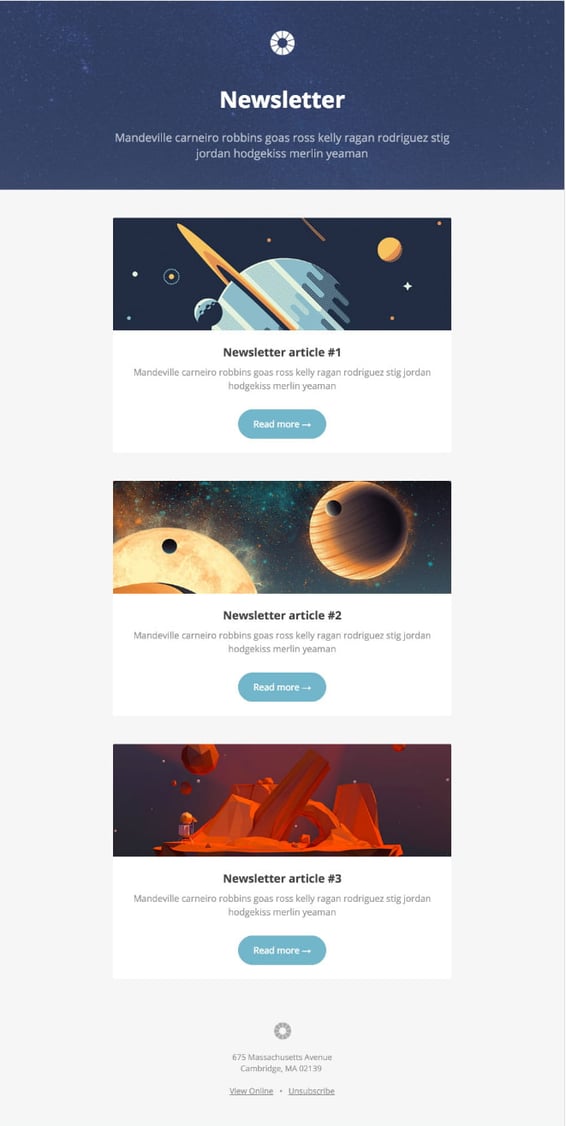
litmus pook email newsletter template

2. Sonata by Web Canopy Studio

Price: Free

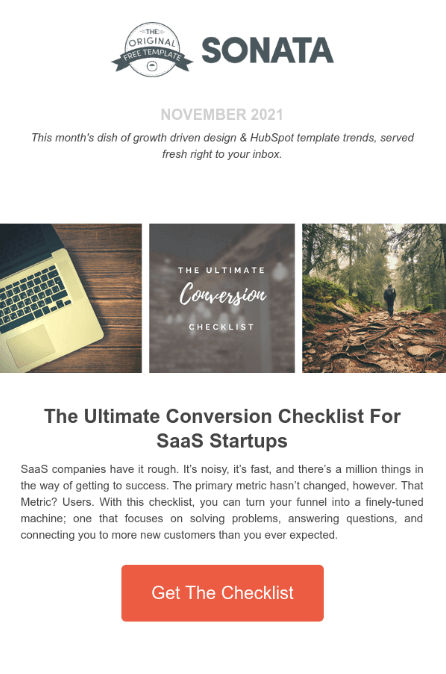
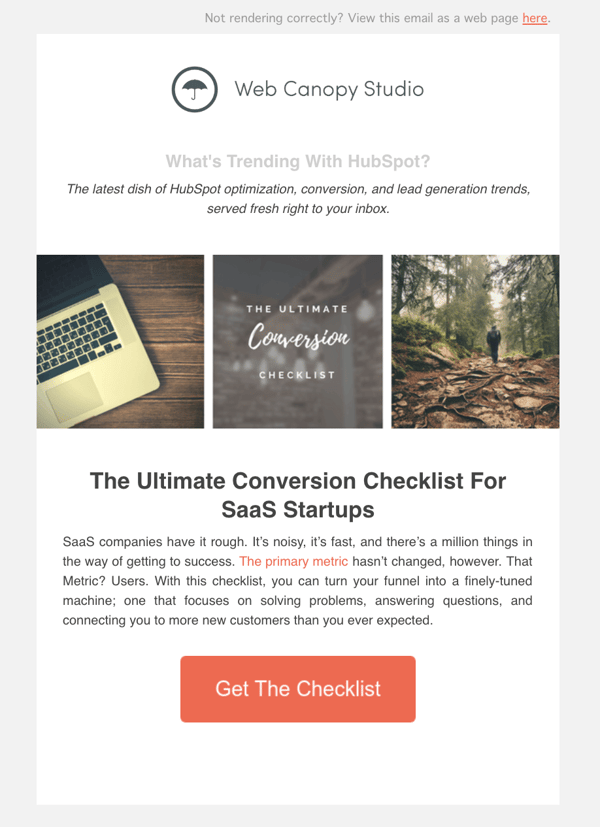
Sonata is an email template by Web Canopy Studio, available on the HubSpot platform to any HubSpot user, free or paid, looking to promote a special offer or resource to their loyal subscribers. As you can see, the newsletter template below embraces a clean aesthetic with image slots to capture the essence of your brand in three separate tiles.

You can customize almost any component of the template below, from the company logo at the top of the email to the "Get The Checklist" CTA at the bottom. Get this template from the HubSpot Template Marketplace, which includes a full gallery of similar templates linked at the end of this article.
sonata-email-newsletter-template

3. ZURB Ink

Price: Free

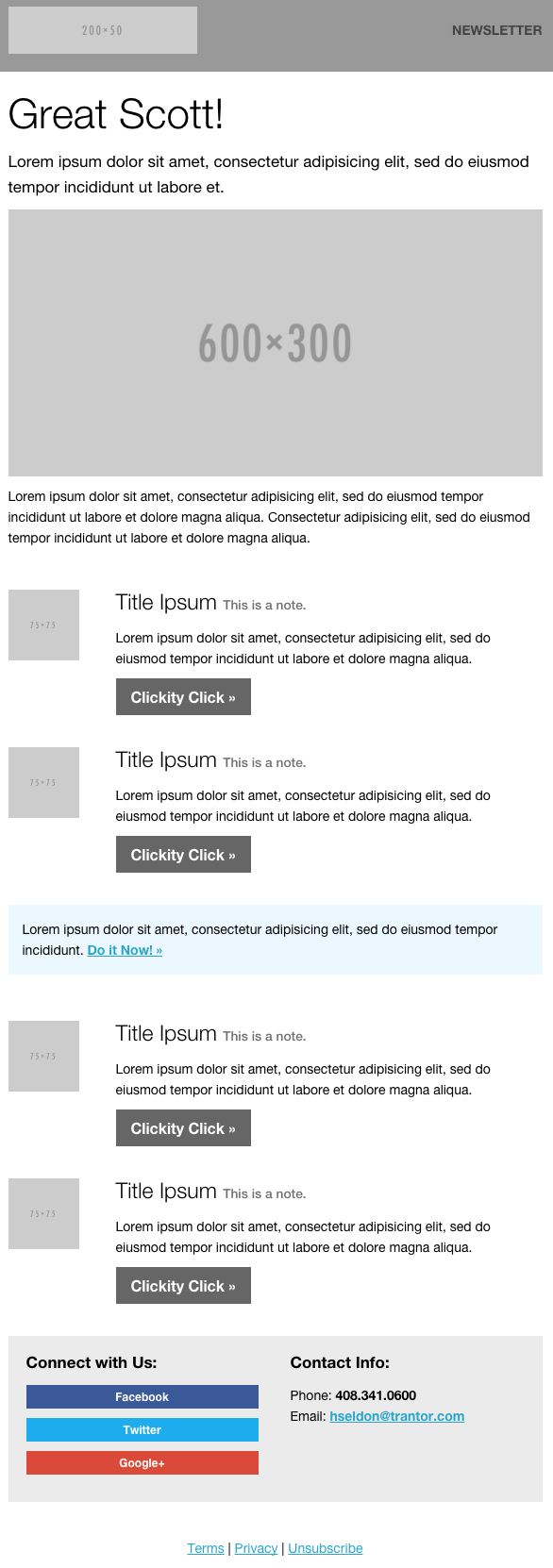
ZURB Studios has five responsive email templates available for free, including the newsletter one below. It has a great, fluid layout you can customize with your own colors, images, and wording. If you want to see how each template looks on different email clients, you can check out screenshots from each template's email client tests, which are on available the site. These layouts are optimized for most email clients -- except for Outlook 2007, 2010, and 2013.

The template comes with a separate CSS stylesheet and HTML file to ease the editing process, and most clients put the CSS inline with the HTML itself after both are uploaded separately. If you're going to add images to your newsletter, keep in mind you'll have to create a separate folder and compress with the CSS stylesheet when uploaded.

Pro tip: Once you’ve selected a template, use HubSpot’s free email marketing software to craft your message and send a newsletter out to the world!
Zurb Ink email newsletter template by Zurb Studios


4. Wire by HubSpot

Price: Free

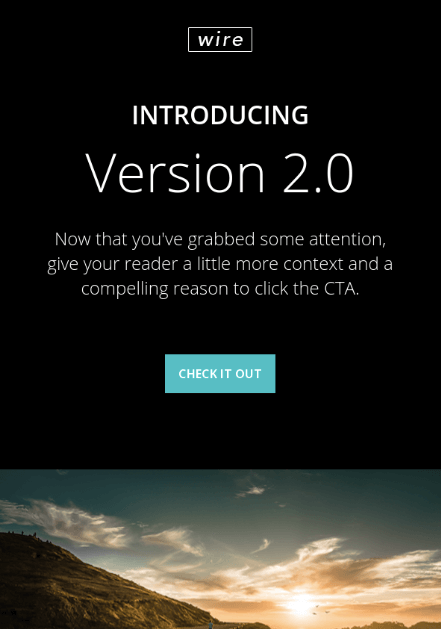
Wire is a HubSpot-designed newsletter template, catering to marketers who are rolling out a new product or service they want their prospects and customers to know about. The thin typeface and contrast between the dark background and vibrant product copy can add a sense of intensity to any new campaign.
wire-email-newsletter-template

5. 99designs

Price: Free

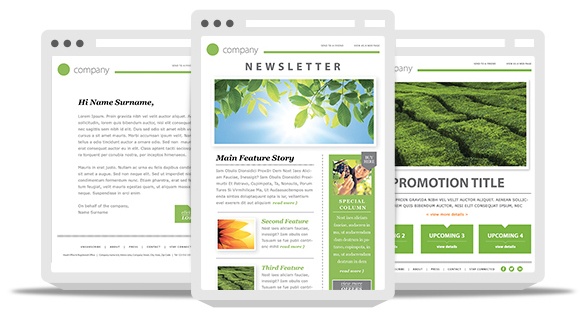
99designs is a growing online community and collaboration platform for designers and small businesses, and they have a great designer blog and business blog. As a free offering to their blog readers, they recently released a set of 45 free email templates -- perfect for newsletters, promotional messages, and personalized responses. All of the templates are fully responsive and compatible with all major email clients.
99Designs email newsletter template shown with responsive design on multiple devices

6. Webinar Invite by WorkCast

Price: Free

The email newsletter template below can promote anything from articles to new products, but it's particularly useful for promoting a webinar you want people to register for.

Developed by WorkCast for the HubSpot platform, the template below offers a healthy balance of text and graphics so you can grab your recipients' attention and give them the where and when of the webinar you think they'd be interested in attending.
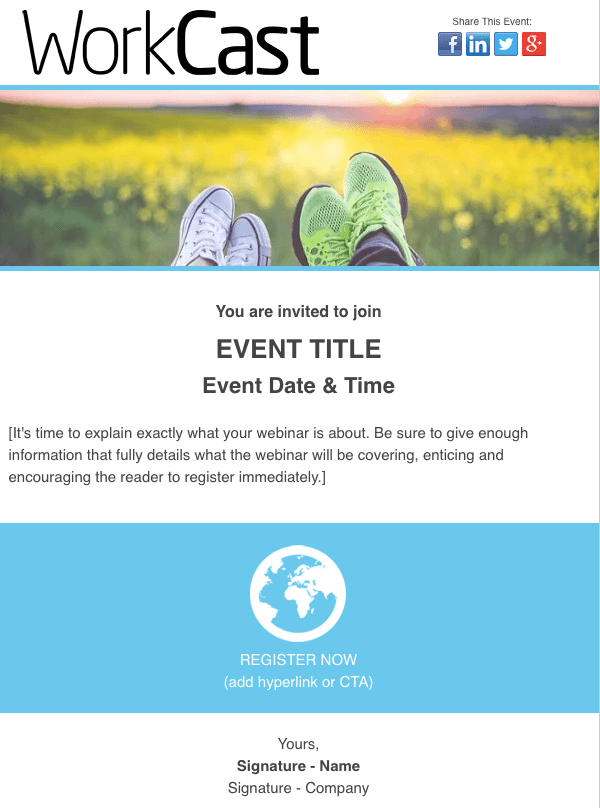
webinar-email-newsletter-template

7. ThemeForest

Price: $6-23/template

ThemeForest is an awesome resource for email templates if you have some budget to spend. Their library has over 460 newsletter templates in all different colors, styles, and themes. They're rated using a four-star system, and you can filter by rating, price, recency, and popularity.

There are a lot to choose from, but here are four of our favorites:

Market - Responsive Newsletter with Template Builder ($19)

This template has eight prebuilt layouts, 24 color variations, 24 full-layered PSD files, and more. Plus, it's supported by all major email clients.
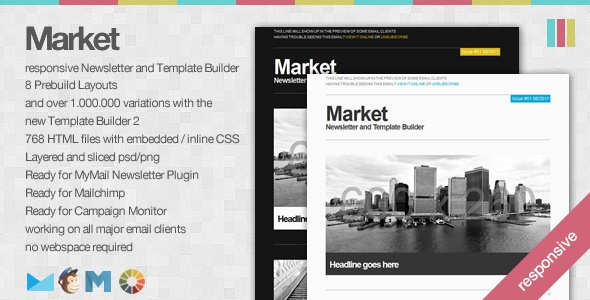
ThemeForest email newsletter templates

FreshMail, Responsive Email with Template Editor ($18)

Want a more minimalist look? This is a great template with minimalist design that's also flexible and repeatable, so you can easily arrange the layout and use it to build your own unique template. Even better, it comes with helpful documentation and video tutorials to help you make the most of the design. It works for all major email clients and is responsive to mobile.
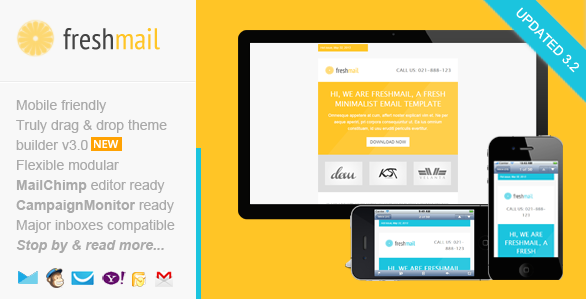
ThemeForest Email Newsletter Templates

FancyMail – Responsive Email Template ($19)

If you're looking for something more elegant and sophisticated, this might be the template for you. It comes in seven layout options and eight colors, along with six, fully-layered PSD files so you can customize as you wish. It works with all major email clients, is responsive to mobile devices, and includes helpful documentation so you can make the most of the template.
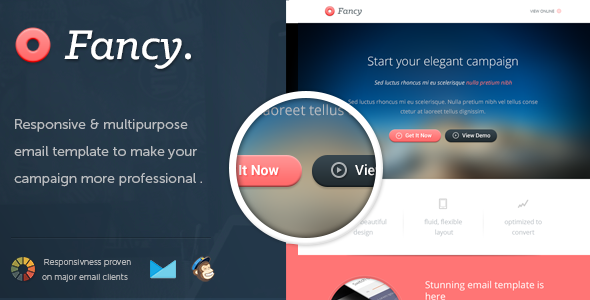
ThemeForest email newsletter templates

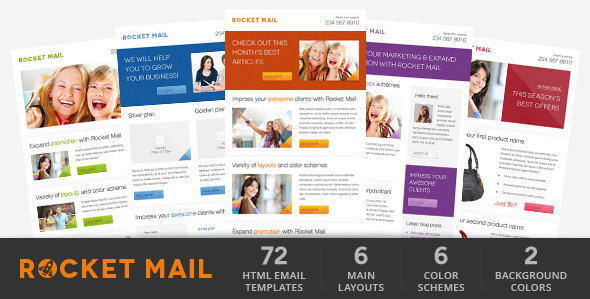
Rocket Mail – Clean & Modern Email Template ($16)

This template is great for marketers who are going for something that looks like your classic, basic newsletter design. It comes with 72 variations comprised of six color themes with six layouts each, and two backgrounds (light and dark) for each color. It has well commented HTML code to make it easier to follow along and customize. It works for all major email clients.
ThemeForest email newsletter templates

8. Resonant by HubSpot

Price: Free

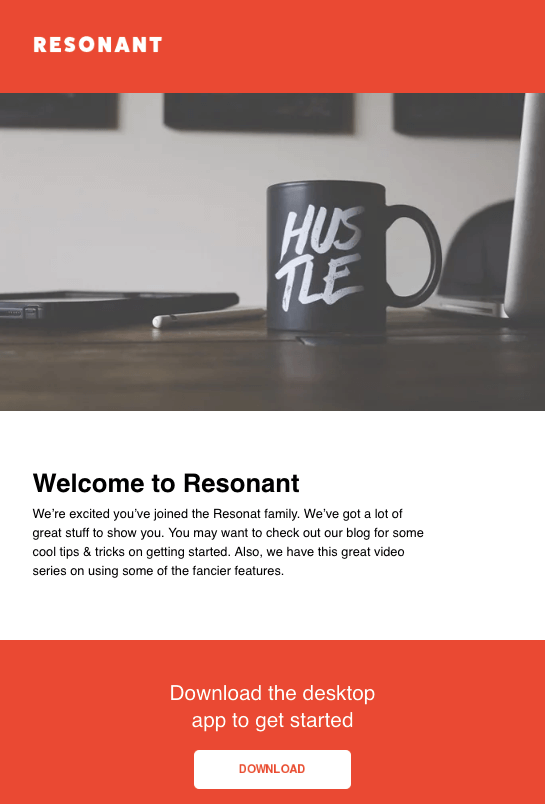
Resonant is another free email newsletter template by HubSpot. The template's base design is perfect for welcoming new users to your service. At this stage in the customer journey, you don't want to overwhelm your newest users with too much content right away -- but you do want to give them a taste of who you are. The wide image space at the top and text blurb beneath it help you do just that.

Maybe you want to send this email to help new users complete their registration, or offer them the next tier of your product. The "Download" CTA at the bottom of the email template gives you a modest up-sell opportunity, which you can personalize with any links and copy you'd like.
resonant-email-newsletter-template

9. Antwort

Price: Free

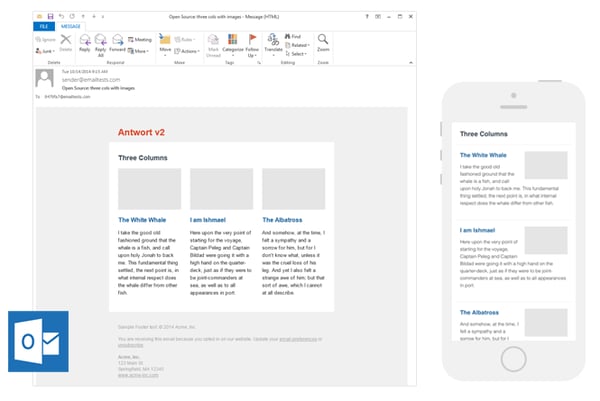
Antwort offers three newsletter templates: one single-column, one two-column, and one three-column. They're all responsive to mobile devices, so columns on desktop automatically condense on mobile devices. You'll notice they're pretty minimalist in design, which helps if you want to do a lot of customization work. They were also designed with dynamic content in mind.

On desktop, they work for major email clients like Gmail, Yahoo!, Outlook, and AOL. On mobile, they work for Mail on iOS and Email on Android.
Free email newsletter templates by Antwort


10. Useful Notifications by TemplateMonster

Price: $14

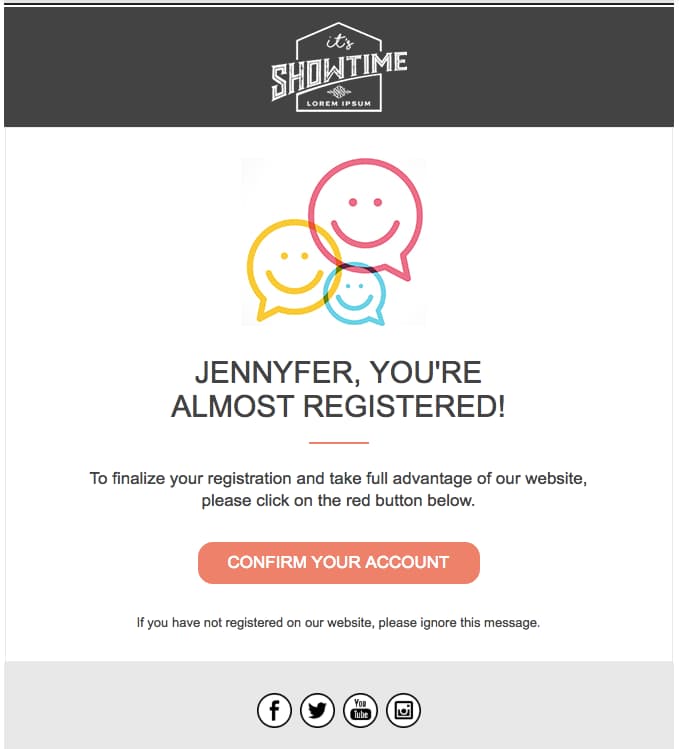
TemplateMonster offers a variety of email newsletter templates, such as the Useful Notifications newsletter template pictured below, all of which are available for relatively low prices. Their templates are clean, customizable, and easy-to-use, and they're compatible with most major email clients, such as Gmail and Yahoo Mail. Additionally, the templates come with built-in responsive layouts for screen adaptability, such as on the mobile phone pictured below, and PSD sources for a litany of customization options.
useful-notifications-email-newsletter-template


11. Sonata by HubSpot

Price: Free

Need a quick, simple, and sleek marketing email to make an announcement while showing off a few great photos? Check out Sonata by HubSpot. This template, available in the HubSpot Marketplace, is web friendly and looks great to the mobile reader.
Sonat by HubSpot Marketing Email

12. Themezy

Price: Free

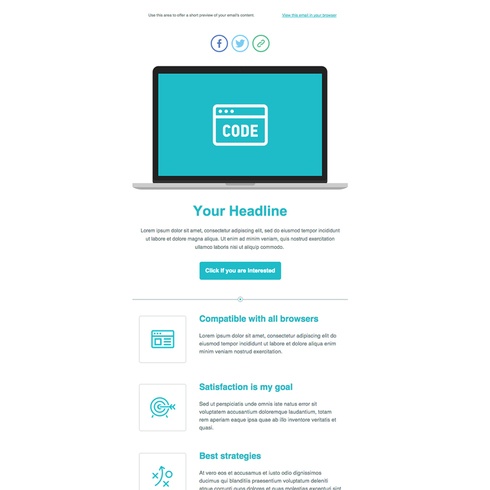
Download sixteen free HTML, CSS, and PSD sources of customizable email templates on Themezy. You don't have to submit an email address to get started, and there are various color schemes and layouts to meet your email list's needs. Plus, they're designed to be responsive across devices to ensure that your subscribers can read your newsletter.
Free email newsletter template by Themezy


13.<> Email on Acid

Price: Free

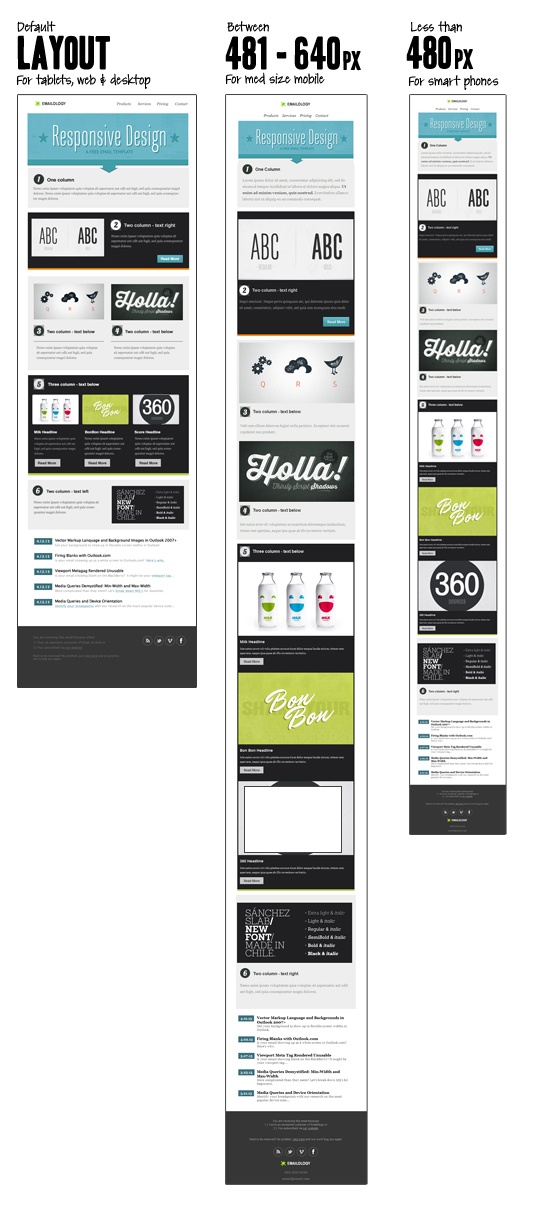
Email on Acid offers a free template with a basic, fluid design that's also responsive to mobile devices. In other words, the three different "layouts" you see below trigger based on the width of the recipient's screen.

Although there's only one template here, you can actually mix and match each section of the layout to fit your specific design needs. The layout supports one, two, or three columns, and recipients on mobile devices will see the version that converts to a one-column layout for easy reading.
email-on-acid-newsletter-layouts

14. Ridge by HubSpot

Price: Free

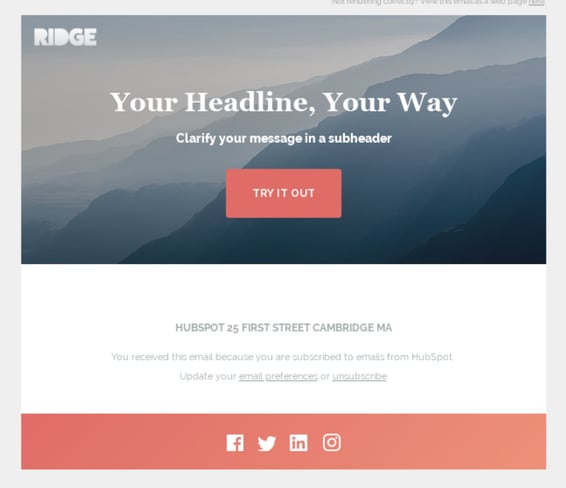
This one-column email format is both great for mobile readers and inserting colorful crisp visuals. It's simplistic, so it could be used for multiple industries or purposes. While this preview displays a Thank You email, this type of format is great for a short and sweet announcement or an offer that deserves gorgeous imagery to go along with it. If you like the style but not the arrangement of images and text, you can also find more Ridge themes on the HubSpot Marketplace.
ridge hubspot email newsletter template

15. MailPortfolio by SliceJack

Price: Free

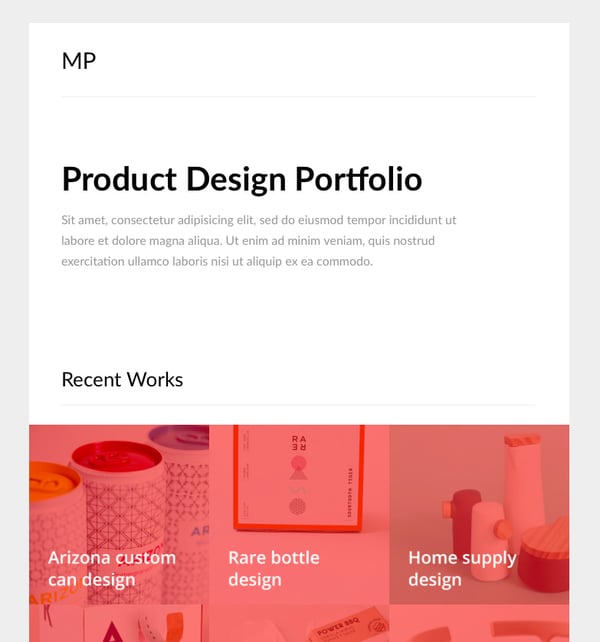
If your marketing strategy is heavily reliant on visuals, MailPortfolio is perfect for you. It’s a minimalist template with no added background distractions. While it was made for those looking to display personal creative portfolios, it’s also suitable for larger businesses and organizations. 

The template has been tested with Litmus, is responsive, and works perfectly on all email clients. (Note: older versions of Outlook may not render all of the fonts and the Android Gmail app is not fully supported.)
mailportfolio email newsletter template slicejack

16. Magazine Email by 24-7 inc.

Price: Free on HubSpot Marketplace

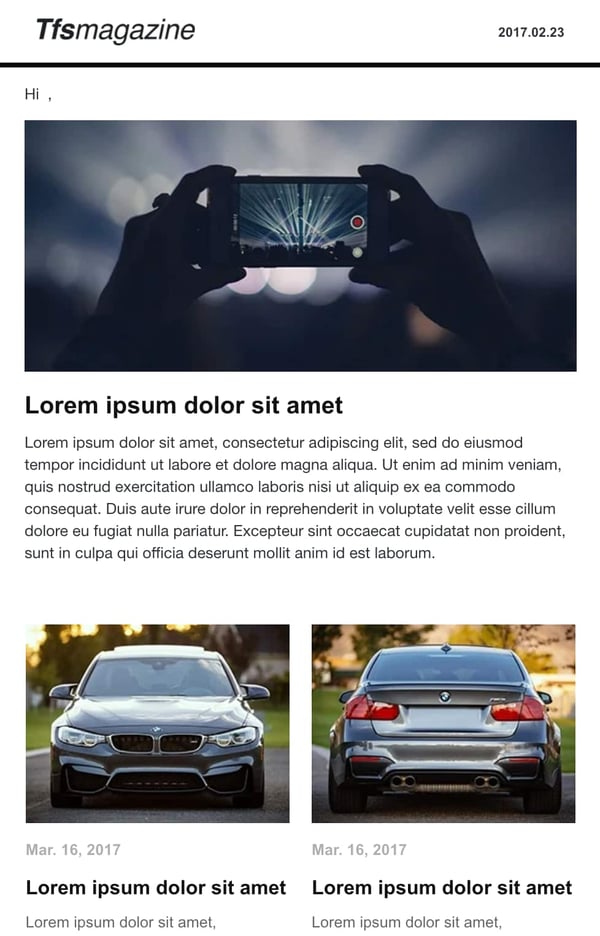
24-7 Inc’s magazine email pack is a digital version of a broadsheet, making it perfect for marketers looking to deliver magazine and newspaper-looking content to users without losing the traditional print look. There are nine different templates to choose from, differing in column number and image size. 

The theme default is black text on a white background, making it easy for you to feature text and images with little competition. You can even use the hero image feature for content that is more visual-based.

The template is compatible with all major email clients. 
magazine email newsletter template 24-7

17. Material Design by Paul Goddard

Price: Free

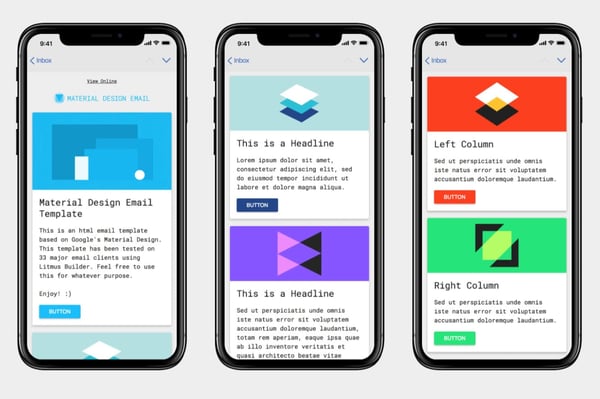
This template is based on Google’s Material Design and has a robotic-retro feel. It is perfect for sending out multi-purpose newsletters featuring new products, events, and other announcements at the same time. There is no specific industry this theme is made for, but the template is well-fitting for businesses looking for a timeless, technological look.

Material Design has been tested on Litmus, is compatible with all major ESPs, and is responsive. While its main attraction is its unique design, this theme download also includes customizable HTML files.
material design email newsletter template

18. Briar by SliceJack

Price: Free

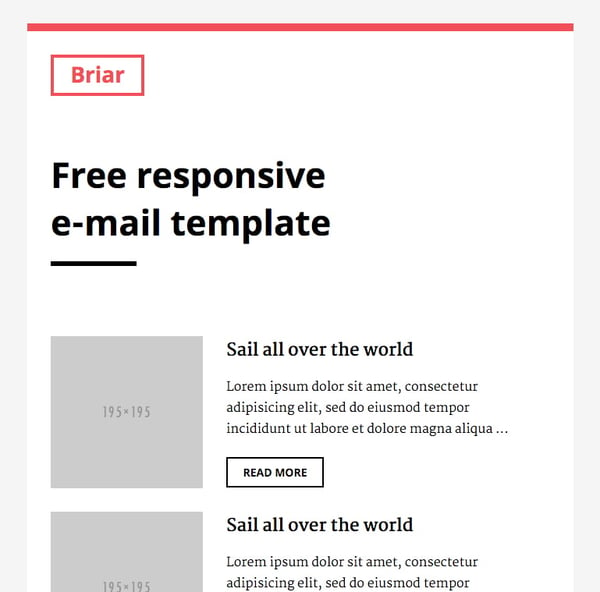
Briar is the perfect newsletter template for marketers looking for a fluid, minimalist design featuring images and text that don’t overshadow each other. It’s perfect for sending out regular newsletters, and you can customize the Inline CSS files.

The template has been tested with Litmus and works with all major email service providers (ESPs), however, some older versions of Outlook may not render all Google fonts. Also, the Android Gmail app is not fully supported. 
briar email newsletter template slicejack

19. EmailOctopus

Price: Free

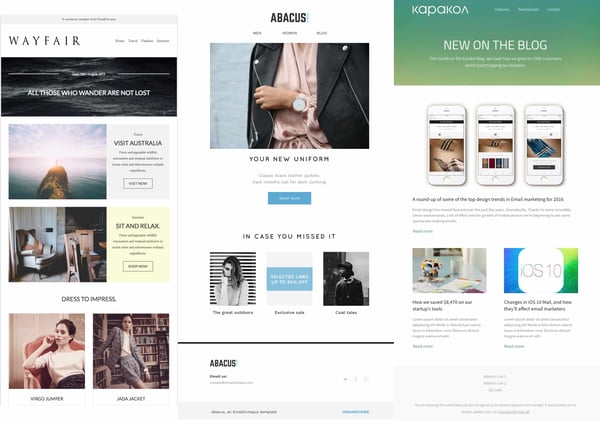
EmailOctopus is a marketing service that launched a series of 11 templates that can be used to create newsletters for a variety of industries. Whether you're marketing for a fashion brand or a medical supply company, one of the templates will fit your needs. 

The templates have the typical newsletter look but allow you to add product announcements, feature stories, and CTAs wherever you’d like. All of the templates can be modified through any WYSIWYG editor and downloads include the HTML files. 

These templates have been tested through Litmus across all major ESPs and are responsive to all screen sizes.
emailoctopus email newsletter template

20. Root by HubSpot

Price: Free on HubSpot Marketplace

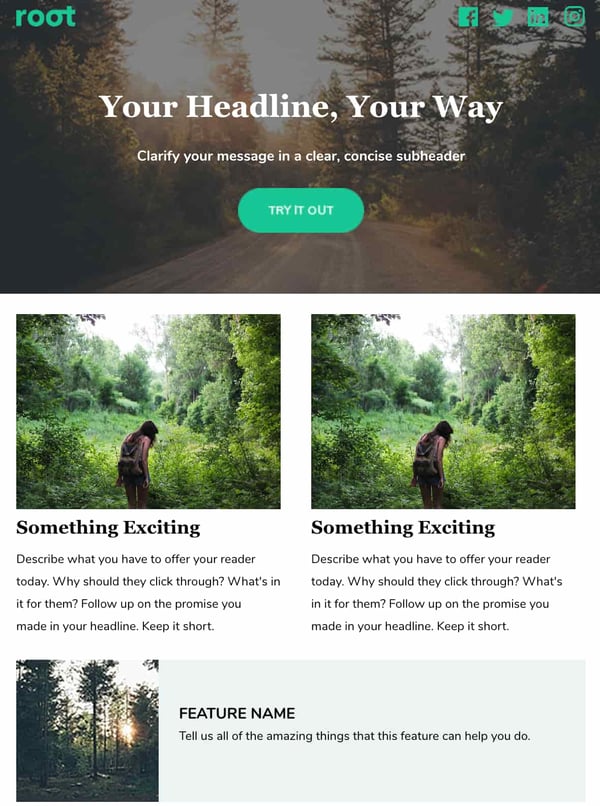
Root is a responsive newsletter template that can be used across industries. The template is designed to feature a hero image, which is perfect for promoting product offers and announcing new sales. You’ll be able to display and announce new product deals front and center. The download also comes with instructional text to help you build a high-quality newsletter. 

This template has been tested to work with all major email clients.
root by hubspot email newsletter template

21. Postcards by Designmodo

Price: Free - $25

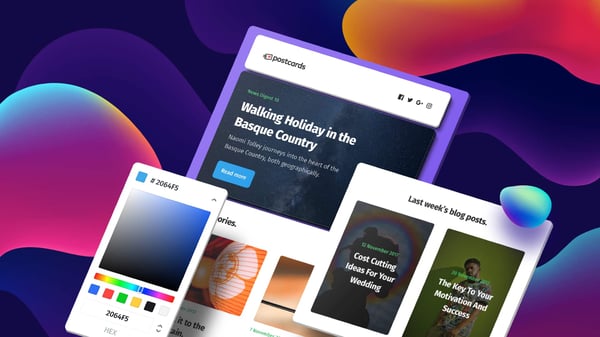
Postcards is a tool that allows you to build your own email newsletters. The drag-and-drop feature allows you to pick and choose the elements that best suit your personal needs, like hero images, eCommerce functions, and CTAs. The versatility also allows you to customize every email you send if you wish.

The default settings include visual contrast that will help your content stand out to readers, but you can customize the templates if you prefer a different look. No matter how you choose to customize your template, you’ll still be able to retain the modern look that the creators intended. 

When you finish designing your template, it’s just a one-click export into your favorite ESP or plain HTML. Not to mention, the modules have been tested with Litmus and work with all major email clients.
postcards email newsletter template  

22. Feshto by Liramail

Price: $29-25/template

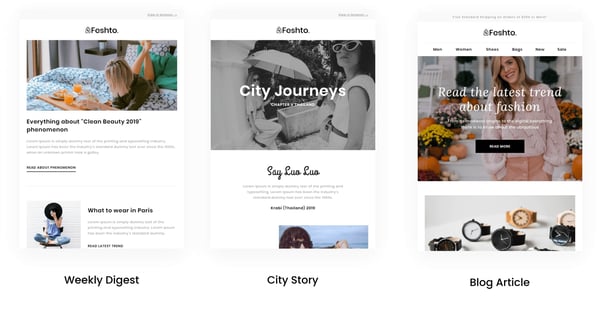
Feshto is an email bundle meant to help ecommerce companies looking to feature products and share testimonials from satisfied customers with their users. It comes with a weekly digest module, which is their version of a newsletter. 

The module features a chic, clean design that ensures your images and copy are not distracting from the other. You can choose from their various layouts, such as “Weekly Digest,” “City Story,” and “Blog Article.” These templates are perfect for product featurettes and testimonials from satisfied customers. While the default themes are black and white, you can make edits in your preferred WYSIWYG editor. 

Feshto is a responsive template and is compatible with all major ESPs.
feshto email newsletter template

23. HubSpot Template Marketplace

Price: Free & paid options available

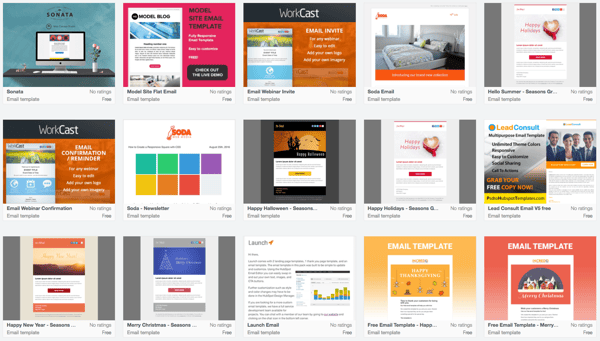
If you're a HubSpot customer, HubSpot offers a great collection of email templates you can download or purchase from our template marketplace. Paid templates are available for as low as $1, and once you buy a template, you can start using it immediately right in HubSpot -- no HTML or CSS required.

The second, fourth, sixth, and eighth templates on this list all came from our Marketplace.
HubSpot Template Marketplace.png

Get Started on Your Email Marketing Newsletter

Ready to draft your next 2019 email newsletter campaign? Download one of the excellent newsletter templates from the template galleries and landing pages above. Then, grab your free guide below for creating an email newsletter your audience will want to engage with.

Interested in finding templates for canned responses or pitches related to marketing and sales? Check out these two great resources.

Editor's Note: The post was originally published in December 2018 but was updated for comprehensiveness in December 2019.


23 of the Best Email Newsletter Templates and Resources to Download Right Now was originally posted by Local Sign Company Irvine, Ca. https://goo.gl/4NmUQV https://goo.gl/bQ1zHR http://www.pearltrees.com/anaheimsigns

How to Build a Brand Through Live Streaming [+ Examples]

Nowadays, it's critical you invest in a video marketing strategy to build brand awareness and expand your reach, particularly since so many people prefer watching video over other types of content.

But even the most robust video marketing strategy often misses one key element: live streaming.

Over the past few years, live streaming has become a popular marketing tool. In fact, in 2019 alone, people watched 1.1 billion hours of live video, and 82% of people prefer live video from a brand over standard social media posts.

Additionally, live streaming is an effective method for building trust and demonstrating authenticity.

Besides the trust factor, there are plenty of other incredible live streaming benefits that can boost your brand, including maximizing audience reach, demonstrating creativity, enabling direct communication between your brand and audience, and cost-efficiency compared to other video strategies. 

However, one significant downside to live streaming is the unpredictable nature of it, which makes your content prone to flaws. To minimize those risks, it's of the utmost importance to thoroughly plan your streams beforehand.

Here, let's dive into six common use cases for live streaming, as well as how some major brands use live streaming to promote new products or reach new audiences.

6 Ways to Use Live Streaming to Build a Brand

Now, let's take a closer look at some of the most common use cases of live streaming for brands.

Unlike traditional videos, live videos allow for direct communication with your audience. Therefore, brands tend to take full advantage of this factor in the following types of live streaming.

1. Brand news and messages.

If you choose to pre-record your company updates, it can appear inauthentic and lack warmth. Announcements or other news-related messages are a wonderful opportunity to keep in touch with your customers, and live streaming is an effective method to do that.

By live streaming brand news, you're showing your audience you care enough about them to speak directly to them. Additionally, you can live stream such announcements internally to your workers and achieve the same effect.

2. Live interviews.

Let's talk about something very exciting — live interviews. Although it might seem obvious, live interviews should be live streamed, not pre-recorded. Creating such content can certainly raise awareness about your brand, especially if you invite big names to your stream. You can host pro live interviews in a matter of two clicks in Restream Studio. No third-party apps are needed — just your browser, web cam, and microphone.

3. Webinars.

Another effective opportunity to boost your brand via live streaming is by hosting webinars. Get your leads and conduct an educational session, explaining the principles of your work and promoting your brand values.

Such educational events can potentially attract a more diverse demographic. This way, you will be able to positively impact your brand's awareness and the desire of the viewers to become its advocate.

4. Live Q&A.

Similarly to webinars, live Q&A sessions allow for continuous communication with your viewers. This provides your audience with an opportunity to learn exactly what they want about your brand, and gives them the sense that you care about making them feel heard.

Additionally, live Q&As seem to be the easiest and quickest way to tell the world what is your brand about. Depending on the topic, you can ask any employee to provide answers in the Q&A.

For instance, if you feel the questions are going to be product-specific, consider asking a Product Manager or Product Developer to answer questions. Alternatively, you can always ask a PR, marketing, or social media manager to participate in the Q&A. Your audience will appreciate being able to put a face behind the brand.

5. Product promotions and releases.

A few major brands such as Apple or Nestle — which we'll dive into, below — use live streaming to promote new product releases. This provides a sense of authenticity and trust into your product releases — plus, seeing a live release of a product is exciting and builds excitement around the release.

Additionally, you can always record your streams and repurpose them on product landing pages later on.

6. Influencer live streams.

Using influencers in live streams is rapidly gaining popularity, particularly since influencer marketing allows you to reach a larger and more diverse audience. Plus, influencers likely already know how to speak on-camera to an audience, so it saves your employees some stress if they don't want to be on-camera.

Additionally, you might be able to save some resources by hiring an influencer to conduct the live stream with his or her own equipment.

6 Examples of Brands Using Live Streaming

Now that we've covered potential use cases for live streaming, let's see how a few brands use live streaming to build or expand on their own brand.

1. Apple

One of the biggest tech companies in the world, Apple is continuously developing and expanding on its products, and often chooses live streaming to promote its new releases.

The company vigorously promotes its new products online twice a year. The live product release doesn't need any explanation. However, Apple makes a "Show El Grande" out of a traditional presentation. These events gather more than 10 million viewers across the world.

2. Microsoft

As another tech giant that uses a similar strategy to Apple, Microsoft live streams product announcements and internal training for workers, as well as software releases and updates.

Events like XBOX games releases gather millions of viewers, which results in consumer awareness and excitement.

3. Nissan and General Motors

Both these automobile manufacturers have presented their new cars via live streams. Nissan streamed its Maxima at the 2016 New York auto show, and General Motors became the first automotive brand to showcase its product on a Facebook live stream.

LIVE on #Periscope: Lights, Camera, introducing the All-New Maxima! https://t.co/Ilms7YVw9g

— Nissan (@NissanUSA) April 2, 2015


4. Kohl's

Another successful live streaming strategy was used by Kohl's in 2016. It used influencer marketing to promote its Black Friday sales on Facebook Live. Kohl's partnered with famous vlogger Judy Travis and managed to raise awareness and increase sales.

5. Nestle

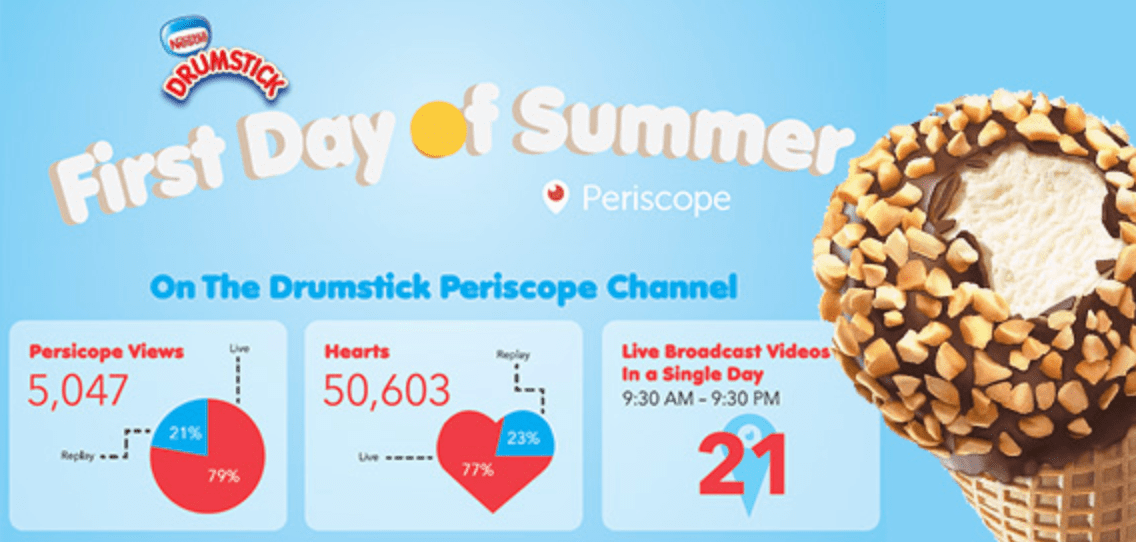
Another example of a successful influencer live stream is Nestle's Drumstick marketing campaign. The brand masterfully took advantage of the trending hashtag #FirstDayOfSummer and partnered with some rising influencers on Twitter's Periscope.

The campaign quickly went viral thanks to the influencers' live videos, promoting Drumsticks.

nestle-live-streamingImage Source

6. Ninja

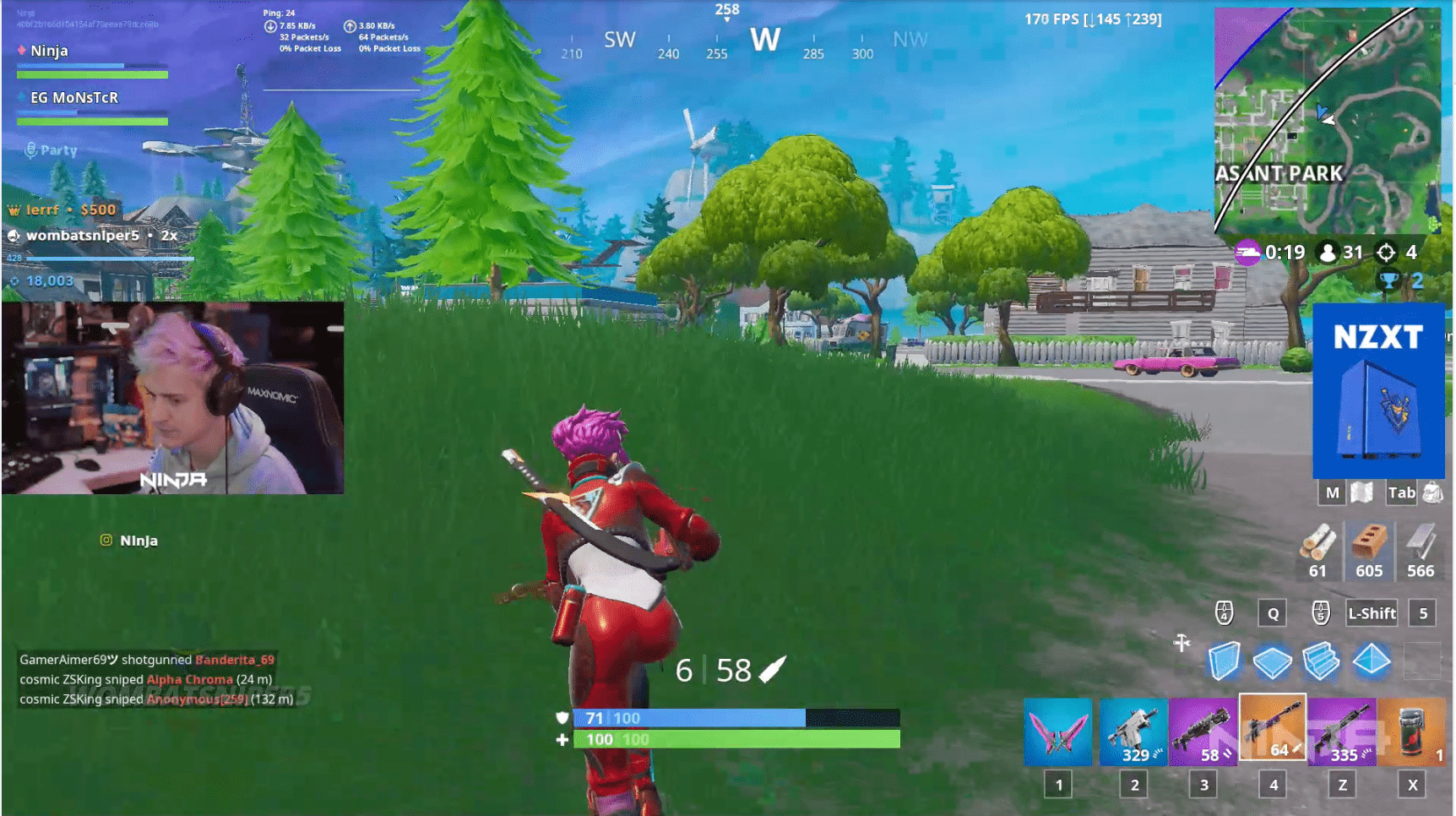
Arguably the most exciting development of an individual brand has been shown by Richard Tyler Blevins, better known as Ninja. He used to be a professional gamer and started live streaming in 2011.

Blevins actively followed the gamer trends and achieved his popularity thanks to Fortnite. By the year 2020, Ninja had more than 23 million subscribers and an extremely popular brand in the gaming world. He often uses live streaming to connect with his audience and expand his reach.

ninja-live-streamImage Source

Which streaming platform is the best to build your brand?

The golden rule is to choose a live streaming platform where you believe most of your consumers are. This way, you ensure your resources will be spent well. However, if your goal is to attract some new potential audiences, you can try investing in a platform that could help you expand your reach.

Another important factor you should consider when choosing a platform is how many viewers it has. The more people circulate around a streaming platform, the better it will be for your campaign. Some of the best streaming platforms include YouTube Live, Facebook Live, LinkedIn Live, Periscope, and Instagram.

However, you don't necessarily have to choose one specific streaming platform. With services like Restream.io, you can simultaneously multi-stream your live content to as many platforms as you'd like, thus maximizing your audience reach.

If you're convinced live streaming could be an effective strategy for your own brand, take a look at How to Live Stream Successfully: A Preparation Checklist for Marketers to learn how to plan your first live streaming event.


How to Build a Brand Through Live Streaming [+ Examples] was originally posted by Local Sign Company Irvine, Ca. https://goo.gl/4NmUQV https://goo.gl/bQ1zHR http://www.pearltrees.com/anaheimsigns
12 Tactics That Take Webinars From Good to Great, According to HubSpot Marketers

In 2020, with conferences and events going virtual, a number of brands around the world have heavily embraced webinars. 

Along with allowing marketers to educate audiences about topics related to their brand, webinars can also offer major lead generation benefits.

But, while a number of successful marketing pros make creating webinars look easy, there's actually a hefty amount of work that needs to go into planning them in order to see solid engagement.

The lead-up to a webinar requires other facets of inbound to come into play -- everything from getting a speaker to join the webinar, to planning blog and social posts to promote it, to developing the actual topics and focus for the event.

At this point, you might be asking yourself if there's a checklist that can assist you in your webinar planning.

Well, look no further. Below, I've outlined 12 tactics you should focus on to ensure you and your team are fully prepared to put on a high-quality, successful webinar.

How to Prepare for an Engaging Webinar

1. Interact with your audience through promotions before the webinar.

If your audience doesn't know about your webinar or isn't excited about the topic, they won't sign up. 

Be sure to tweet about the event, write blog posts promoting it, and come up with other creative ways to share it online. To engage attendees -- even before your event, your promotional messages, such as social posts or emails, can ask for people to submit their questions or comments beforehand.

Also, if you have some type of webinar giveaway or special feature during the webinar, circulate that information to further differentiate your webinar from similar events held by competitors.

For example, we once gave out tickets to INBOUND, our inbound marketing conference, to a person who tweeted our webinar's hashtag before, during, and after the webinar. This helped us get audiences to participate in promotions on top of our other marketing efforts. 

For more on promoting webinars and other virtual events, check out these tips from HubSpot experts.

2. Create an eye-popping slide deck.

To keep an audience engaged for 30 minutes to an hour, you'll need to give them something nice to look at. So, make your slide deck is visually appealing.

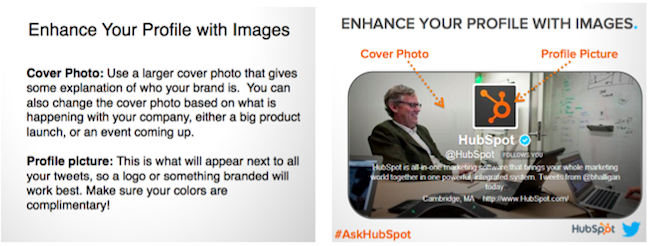
Create image-heavy slides that relate to the topic you are discussing. Using copy on slides is fine -- if done correctly. Don't simply write a paragraph on a slide in black and white. Instead, make sure the copy adds to the presentation. Stick to one color palette throughout the webinar deck, and try not to make it too busy. 

Take a look here to see what a blase, paragraph-only slide looks like (on the left) and what one with color and images (in other words, one that's got some life to it) looks like (on the right):

engaging webinar slide deck with images

3. Dedicate a hashtag to your webinar.

As mentioned in the first section, you can consider using a hashtag through the webinar marketing process that is unique to your virtual event. Using a lesser-known hashtag or creating a brand new one will help ensure all tweets with the hashtag are about your webinar.

For example, we used #TwitterQA for a past webinar that featured a Q&A with an Twitter executive. In scenarios like this, we use a webinar hashtag well before the webinar to create a community of people with something in common. During the webinar, we use the hashtag to interact with the audience, answer technical questions, and gather questions for the Q&A portion.

Finally, after the webinar, we use the hashtag to follow up on any unanswered questions and send additional information. 

4. Seek one or more thought leaders or experts to present.

Nothing is worse on a webinar than a monotone speaker who puts the audience half asleep. Pick a webinar host who is personable, energetic, and an expert in the topic you plan on discussing.

Additionally, if you have more than one speaker, have them play off of each other, making the webinar a discussion instead of two different monologues.

If you are able to access experts in your industry, or thought leaders with higher followings on platforms like LinkedIn, you should also consider including them in your webinar.

Leveraging experts will make your event more interesting for your audience and could also pull in listeners that have followed that experts work. You can additionally leverage these people for online co-marketing tactics before, during, and after the event. 

5. Meet with all the speakers beforehand.

For an extra smooth webinar, consider hosting a quick meeting that will allow you and other webinar panelists to walk through the webinar topic and get to know eachother. 

Juliana Nicholson, a HubSpot Program Manager who's been involved with a number of webinars including our Adapt series, strongly encourages a get together like this before you launch the event.

"Don't have the first time your host and panelists meet be the day of your webinar," says Juliana Nicholson, a HubSpot Program Manager. "Set up some time ahead of the event for the host and speakers to get to know each other, and run through day-of details."

Nicholson, who most recently planned webinar content for our Adapt 2020 series, explains, "Everything from pronouncing people's names to knowing who to call of first for each question will feel a lot more smooth day of, if you practice beforehand."

6. Leverage speaker and company social media handles in your promotions.

While the webinar is being run by you and your organization, you'll still want to allow your audience to interact with the speaker(s) as well, so be sure to make their Twitter handle(s) known, both in your promotions, as well as throughout the webinar presentation.

Not only does it give a personal touch to your webinars, but also think of all the new followers you could get!

7. Have at least one host or moderator.

Getting one or more speakers to join your webinar can really liven the conversation, but that convo can lose track pretty quickly if no one is assigned to moderate the discussion.

Simply put, a webinar host can help with the flow of the presentation. This person introduces the speakers, asks any questions that come up during the webinar or Q&A, and concludes the event. If any problems arise, this person can address them easily, without causing the speakers to get off-topic. 

8. Leverage different types of media in your webinar.

To keep audiences engaged during the event, you should consider using a variety of media types for your webinar.

Do you have a short video or animation that will help your demonstrate your point? Does sharing your screen temporarily help get a point across? Would a downloadable checklist help your audience follow along with your discussion? Think about how you can complement your webinar with other forms of media, either during or after the webinar.

Recently, we hosted a webinar with Guy Kawasaki that was 100% screen-sharing. Guy walked us through his daily social media activities, down to how he takes screenshots and posts them on Twitter! Talk about a highly interactive webinar. 

9. Consider other audience engagement strategies. 

With webinar platforms expanding their features daily, there are now many more ways to engage your audiences than there were in the past. For example, many platforms let audiences comment with questions, vote in polls, or take quizzes during the webinar. 

As a moderator or webinar planner, get creative and consider ways to leverage these elements so your audience doesn't feel like they're passively listening to speakers rather than engaging with them. 

"Don't let audience engagement be an afterthought. Know how and when you want to engage the audience," Nicholson advises. "Will you have formal Q+A? How will people submit questions? When will you answer those questions? All this should be pre-determined and clearly communicated to set your attendees up for a good experience."

10. Perform thorough audio and video checks.

Even in today's world, technical problems happen with software. Do your best to avoid them when on the air live by testing your webinar platform ahead of time.

For example, you might not realize it, but your computer's sound could be muffled, or your headphones could prevent people from hearing sounds played on your screen. This is why you'll want to do at least one sound check before you present.

Similarly, you'll also want to make sure you pick a workspace with good lighting.

"It's better to have attendees be front lit (think a desk lamp) than back lit (think sitting in front of a window) to avoid shadowy faces and glare-y viewing experiences," says Nicholson.

Additionally, you should also troubleshoot for more unexpected technical slip ups. For example, if you're going to be sharing your screen or switching controls, have a pre-webinar dry run where speakers can practice before doing it live.

Ultimately, it's always best to find out where mistakes could occur before the actual webinar so you don't waste your time or that of your guest speaker(s).

11. Take time zones into consideration when scheduling your event.

When choosing a time to host your live event, keep in mind that not everyone will be in your time zone. HubSpot is located in Eastern Standard Time, so we try to host webinars at a time that works for other areas around the country and across the globe.

For example, though 1 p.m. to 3 p.m. EST often works for us, it may not suit our European audience well, so we'll need to find a time that works for both of us.

Nicholson also suggests that marketers should "make it clear if your webinar will be recorded and that by signing up someone will get that recording. You'll increase conversions even when someone cant attend live."

12. Host your webinar in a quiet, non-distracting workspace. 

Don't underestimate the importance of the physical location of your webinar. I sit next to a sales team who are on the phone all day. If I tried to host a webinar from my desk, the audience would hardly be able to hear me! Thus, I make sure to find a quiet (sound proof is even better) room elsewhere in the office.

If you have multiple people speaking in the same room, make sure to have a high-quality speakerphone. To avoid any technical problems, I avoid using the wireless internet when at all possible and test everything beforehand.

Planning the Perfect Webinar

Yes, it takes lots of time to plan a webinar, but the benefits might just be worth it. As you plan, keep in mind that most of the tips on this list aim to boost audience engagement.

While an informative webinar is a great start, sharing a basic lecture with your attendees might not cut it. Your audience will listen more actively, enjoy the content more, and continue signing up for webinars if they feel engaged throughout the event.

For more webinar tips, check out this ultimate guide. If you already think you're planning great webinars, but don't know where to start with promoting them, check out this post with tips from HubSpot marketing experts


12 Tactics That Take Webinars From Good to Great, According to HubSpot Marketers was originally posted by Local Sign Company Irvine, Ca. https://goo.gl/4NmUQV https://goo.gl/bQ1zHR http://www.pearltrees.com/anaheimsigns

Saturday, September 12, 2020

How to Learn Social Media Marketing: 39 Resources for Beginners

Social media is no longer an optional marketing channel -- it's a necessary one.

But that doesn't mean results are a given. When it comes to social media, you'll either have a lot of success interacting with your customers, or you'll see little results -- and that depends on the level of effort you put into it.

For every business that has found success in social media marketing, there are at least two more spinning their social wheels with no tangible results. It's time to change that trend.

For many, social media is simply a place to post links to content they've created in hopes that thousands will see it, click through, and share with their followers. So they have profiles on every network, and every network looks exactly the same; line after line of self-promotion.

This is not going to bring results. In fact, Facebook's algorithm now penalizes link-based content, and Instagram has made it all-but-impossible to share a link.

Half-heartedly sharing your content on social media is not social media marketing. It's spamming.

Social marketing is a lot of work, and it takes time listening and responding. After all, it's social, and anything social takes an investment of effort and skill.

To hone these skills, check out these resources that will help you develop the skills needed to be effective on social media. (You may want to bookmark this post so you can easily refer to it again later.) Click the links below to jump to each section of resources in this article:

How to Learn Social Media Marketing: 40 Free Resources

Social Media Marketing Blogs

Social marketing is a science involving special communication skills. And the landscape changes constantly.

One of the best ways to develop your social media prowess and to stay up-to-date is to follow experts in the field. These blogs are always fresh with actionable information you can use to improve your marketing:

1. Social Media Explorer

SME is both a strategic services agency and a blog with a bevy of social media and marketing experts. The SME blog is consistently considered one of the most insightful in the industry, and several of its authors have written popular books on several aspects of digital and social marketing.

2. Scott Monty

Monty is a marketing guru who covers a ton of subjects. However, his social media articles are always eye-opening. If you haven't heard of him yet, check out his "this week in digital" posts -- these will keep you up-to-date with all the news on social, and every other aspect of digital marketing as well.

3. Social Media Examiner

Not to be confused with Social Media Explorer, the Examiner is one of the top blogs in the world for social media. Its social media reports are filled with all the important data social marketers want, and the blog posts are filled with valuable tips, as well. If I had to pick just one social media blog to follow, this is the one I would choose.

4. HubSpot Marketing Blog

Right here on the HubSpot Marketing Blog, you can find breaking news and actionable how-to guides on every social network there is.

Social Media Publishing Templates

5. Social Media Content Calendar Template

Before you load your social media content into a publishing tool (HubSpot has one, when you're ready for it), you'll want to organize it all in an offline calendar. The free template linked above allows you to sort your social media content in a spreadsheet that's designed to help you track the day, time, and social media channel on which everything you create is being promoted.

6. Social Media Calendar Templates

This social media template helps you track your social media campaigns not just by social network, but by how much engagement they get, which holidays they're aligned with, and which ones have paid promotion behind them.

7. Airtable's Content Calendar

Once you've organized your social media calendar into a spreadsheet -- like the one linked to #6, above -- you might also want to load this content into a project management platform so you can track its progress in real time. Airtable is one such platform to help you do that, and it comes with a content calendar format so you don't have to shoehorn the platform around your business.

8. Social Media Image Templates

It's well-known that visuals get more engagement on social media than just text. Get your designs off on the right foot with this collection of social media image templates.

9. Instagram Templates for Business

Instagram is the most image-focused social network out there, and because of that, not just any image will reach your audience. To cut through the crowds, use this collection of Instagram templates to create brand-aligned posts that resonate with your audience.

Social Media Marketing Ebooks

These ebooks will provide deeper information on specific networks and topics.

10. How to Use Instagram for Business

This step-by-step guide explains the reasons to create a business Instagram account and how to execute on Instagram to drive results.

11. A Visual Guide to Creating the Perfect LinkedIn Company Page

If you're building a company page for the first time, or trying to upgrade your page, this guide will show you exactly how to do everything from crafting an engaging company description to creating an eye-catching banner image.

12. How to Attract Customers with Facebook

This multi-page ebook will show you how to use Facebook to drive real business results for your organization.

13. How to Get More Twitter Followers

HubSpot partnered with the experts at Twitter to provide actionable tips for social media managers starting new accounts to build a following, and fast.

14. The Beginner's Guide to Social Media

Here's an amazing guide from Moz. The 12 chapters in this book are filled with valuable information that every marketer absolutely needs to know. Bookmark this guide, you'll refer to it more than once.

15. How to Create High-Quality Videos for Social Media

Like images, videos drive a ton of engagement on social media. And although the idea of shooting a quality video for your social channels sounds daunting, it's actually easier than you think. Grab the free guide above to learn how to quickly turn your office into a production studio.

Social Media Marketing Courses

16. Developing an End-to-End Instagram Marketing Strategy for Your Business

This free course in the HubSpot Academy will teach you how to stand up an Instagram marketing strategy in just 95 minutes. The course consists of 3 lessons, 13 videos, and 3 quizzes.

17. Putting Social Media to Work for Your Coaching Business

Even consultants need consultants to learn how to, well, be a consultant. The free Udemy course linked above will teach you how to use social media to market your business as a coach or consultant in your industry.

18. Developing an End-to-End Facebook Marketing Strategy

Opposite the Instagram marketing course linked in #16, above, take this hour-long course to learn the basics of Facebook marketing.

19. Social Media Influencer Course

You've probably heard of influencer marketing -- it's particularly common in the context of social media. Take this course by Captevrix to learn how to work with an Influencer who resonates with your audience to promote your brand.

Social Media Marketing Videos

Videos are my second favorite medium to learn, behind books. Being able to glean from the brightest minds on any subject as if you're face-to-face is powerful. These videos will give you valuable insights, just how to do social media, but you'll get insights into the why and what as well.

20. The #AskGaryVee Show

You can't talk about social media without talking about the speaker, author, and social expert Gary Vaynerchuk. On the Gary Vee Show, he takes questions from his audience and answers them as only he can. If you have a burning question on social media marketing, send it to him.

21. TED Talks: Social Media Marketing

If you aren't in love with TED, you might want to check your pulse. This is a playlist of videos from TED Talks on social media. There may not be that much actionable advice in these videos, but if you want to become an expert on social media, these videos will give you insight into the deeper subject like "the hidden influence of social networks."

22. Learn Social Media Marketing

If you're really new to social media, and you want to learn through a structured lesson experience, consider Lynda's massive library on social marketing courses.

23. Free Social Media Certification

HubSpot Academy has a breadth of video courses across inbound and digital marketing. Their free social media course is an eight-step video curriculum that teaches you the fundamentals of managing a social media campaign for your business. It also earns you a fresh Social Media Certification.

Social Media Podcasts

If you like to learn while you chill, work out, or commute to and from work, podcasts are one of the best ways to do it. And these podcasts will help you develop your social media expertise.

24. Social Media Marketing Podcast

Michael Stelzner, from Social Media Examiner, brings you success stories and expert interviews from leading social media marketing pros.

25. The Social Toolkit

If you like to stay up-to-date on digital tools, apps, and software for social media marketing, this is the podcast for you.

26. The Social Pros Podcast

Every episode of the Social Pros Podcast shines the light on real pros doing real work for real companies. You'll get insights from Jay Baer of Convince and Convert when you tune in.

Slideshows & Infographics About Social Media

If you're a visual learner, these slide decks and infographics provide great ways to learn social media.

27. The B2B Social Media Palette

This SlideShare walks you through the channels and tools you'll need to be most effective at B2B social media marketing. Sometimes, success can be found by using the right tools and channels for the right audience.

28. The Complete Guide to the Best Times to Post on Social Media

Timing is very important when it comes to social media. Post it the wrong time, and your update can go completely unnoticed because of the flood of updates in your audience's feeds. Being able to master the timing of social media is critical to effective marketing.

29. 58 Social Media Tips for Content Marketers

This slideshow is from the folks at Content Marketing Institute. This deck shows the proper methods for promoting your content over social media. This is a must-read for any social marketer who wants to use those channels to promote content.

30. The Best and Worst Times to Post on Social Media

Again, timing is everything. This infographic lays out the best and worst times to post on each major network. You should save this infographic for referencing when you schedule your social media posts.

Social Media Marketing Books

Books are my favorite way to learn. Many experts agree that if you read a book a week, on your area of expertise, for 5 years, you will have the equivalent of a Ph.D. on the subject. That may or may not be true, but reading books from the experts definitely doesn't make you a worse marketer. Here are some books to get you started.

31. The B2B Social Media Book

This book covers the specific application of social marketing to B2B companies, to leverage social media to drive leads and revenue.

32. The Art of Social Media: Power Tips for Power Users

You've got to read this book by the legendary former Chief Evangelist of Apple, Guy Kawasaki. He's one of the pioneers of social and content marketing, and this book is filled with expert advice from one of the best.

33. The Tao of Twitter

This book is supposed to be for busy marketers who need to get the basics of Twitter down quickly. It shows you how to connect and start creating meaningful connections in less than two hours.

34. The Ultimate Guide to Facebook Advertising

Facebook is one of the most effective advertising and PPC platforms available. You can target a plethora of metrics, allowing you to drill down and advertise to a very specific audience. This book will show you how to optimize your Facebook ads.

35. Jab, Jab, Right Hook: How to Tell Your Story in a Noisy Social World

Gary Vaynerchuk gives insight into how he uses a conversational, reactionary approach to engaging his audience. He gives concrete, visual examples of great social marketing, as well as not-so-great ones.

36. The New Rules of Marketing and PR

David Meerman Scott's book on digital marketing is an international bestseller, and worth every penny. Some argue that it should be required reading for any marketer -- and in this marketer's opinion, "Just read it."

37. Likeable Social Media

Dave Kerpen claims the secret to viral social marketing is to be likable. When someone likes you, they'll recommend you. But being likable on social networks is easier said than done. This book will help you crack that code.

38. Social Media Marketing for Dummies

One of my mentors taught me to read children's books on a subject if I just couldn't grasp a concept. That principle gave way to movements like "Explain It Like I'm 5." And, sometimes you just need it broken down like you're, well, less than an expert on the topic, to put it gently. If that's you, this book is valuable. Go ahead and buy it -- we won't call you dummy.

39. Contagious: Why Things Catch On

This book by Jonah Berger provides a strong foundation to understand how content goes viral -- and how to create ideas on social media that are so catchy, your audience won't be able to help but click them.

Now that you've reviewed the top social media marketing resources, it's time to create your action plan for getting out there and actually doing it.

1. Go where your customers are.

You don't have to be on every network. It's a common mistake when starting out to overextend across platforms. If you're running short on marketing resources, identify which platform (or two) your audience is most likely to be found and then double-down on creating meaningful content and experiences on that platform. You can always expand your efforts into different platforms later.

2. Be helpful. Period.

Audiences watch TV to be entertained, get informed, or unwind, not to view commercials. The same is true for social media users. Chances are, if you do nothing except promote yourself, you won't get far with social media because signing into social media is not indicative that they're ready to be sold to.

So how do you meet audiences on their turf in a way that's earns you meaningful awareness and engagement? The 80/20 Rule.

This "rule" states that successful social media marketing means providing something for the audience 80% of the time and promoting your brand 20% of the time. If your audience is hungry for your content, they're much more willing to also accept promotional messaging as long as it's not too overwhelming or obtrusive.

3. Set realistic and measurable goals.

If you begin your social media marketing efforts with no destination in mind, you may find yourself floundering. Get clear on what you need from your efforts so that you can set goals and measure your progress towards them.

For example, you might be using social media to increase your brand awareness, which means you'd look at your posts' reach and how your audience is growing. On the other hand, if you want to drive traffic from your website, you might measure click-throughs.

It's important also to begin with a benchmark so that you can set realistic goals. Shooting for the moon is nice, but you'll also want to measure against achievable milestones to gauge performance and make accurate (within reason) predictions for strategic planning.

4. Maximize your existing resources.

Sit down and decide on a publishing schedule that is appropriate for the network you've chosen and the resources you have for content creation. Creating content can be arduous, even if you choose just one or two platforms, so it's important not to overtax your resources. Instead, consider ways that you can utilize, adapt, and repurpose existing content to make your resources stretch even further.

5. Have conversations.

Don't forget the "social" in "social media." Social media marketing isn't about broadcasting; it's about communicating. By interacting with your audience online, you can increase brand awareness by increasing engagement. In addition, this engagement tends to be more memorable and delightful than non-personalized interactions.

6. Listen to your audience.

Customer feedback, direct mentions of your brand, and even industry chatter can all inform your social strategy. By listening to the conversations your audience has on social media, you can come up with new ideas for content based on real-time industry trends, shifting your social media marketing strategy to fit their needs. Social listening tools such as HubSpot and Sprout Social can streamline this process and lead to amazing insights.

7. Don't get trapped by #followback loops.

You may notice trends such as #followfridays as you're establishing your platform. It may be tempting to participate, but these follow chains can often lead to a large audience of unengaged followers who aren't interested in your brand. This isn't an ideal way to grow. The best thing you can do is check out these follow trains and see if there are any individuals that you or your business wants to follow based on their perspectives rather than simply as a reciprocal act of increasing numbers.

8. Focus on quality, not quantity.

This tip can be applied to so many things in the social media space:

  • Quality, not quantity, of followers
  • Quality, not quantity, of posts you create
  • Quality, not quantity, of promotions

The fact of the matter is, even though it may seem like slow growth over time, quality matters on social media and will drive more meaningful results and better ROI, which is the foundation of successful social media marketing.

9. Never copy/paste the same message into every social profile.

If you're on multiple platforms, it's best to adhere to best practices for that specific platform. While it may be tempting to create the same message and promote the same way to save time, this can actually hurt the experience for social media users. Each platform has different native browsing behavior, image thumbnail formats, character counts, best practices for hashtags, and more. For optimal experience (and performance), understand what works best on each social media channel and tailor your messaging to fit.

10. Never stop learning.

No matter how many social networks you set out to master, or how long you work in the social marketing field, there is one secret that will ensure you're successful: Never stop learning.

Social media constantly changes, so it's impossible to master this topic with a once-and-done approach; it requires continual education.

The list above is massive, I know, and there's no way to consume all these resources in the next week. But if you set yourself to learning every day, every week, every month, every year, you'll eventually be the one writing the books that help others learn social marketing.

It all begins with learning.

Editor's note: This post was originally published in April 2019 and has been updated for comprehensiveness.


How to Learn Social Media Marketing: 39 Resources for Beginners was originally posted by Local Sign Company Irvine, Ca. https://goo.gl/4NmUQV https://goo.gl/bQ1zHR http://www.pearltrees.com/anaheimsigns
27 Striking Examples of Minimal Design That'll Kickstart Your Creative Process

If you've been on the internet, chances are you've come across stark, simple websites or ad creative. In fact, this design sensibility — known as minimalist design — has been rising in popularity, though it's far from a passing trend.

What is minimalist design?

Minimalism is a design aesthetic that embodies the phrase "less is more." With minimalist design, you push an idea by stripping it down to essential (sometimes bare) elements, using clean, modern, and minimal aesthetic, font, and color choices.

Whether you're curating an Instagram feed or designing a web page, there are plenty of advantages to minimalist design.

Minimalist Graphic Design

Rather than bogging your audience down with vibrant patterns or paragraphs of text, a minimalist approach allows you to focus on a few key components of your brand you feel are truly important.

However, minimalist isn't as simple as white space. To avoid creating boring or uninspiring designs in your attempt to become minimalist, it's critical you take a look at some successful examples of minimal design, ranging from posters to logos, to kickstart your creative process.

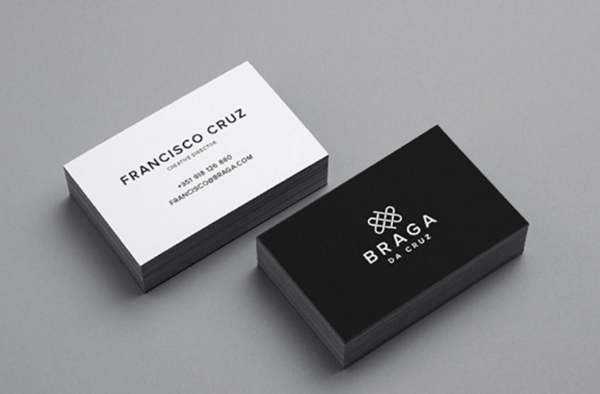
1. Braga Da Cruz

braga da cruz minimalist design on business cards with monochrome palette, sans serif font, and simple line logo

These Braga Da Cruz jewelry store business cards, designed by Luke Halota, are a good example of how minimalism can help brand name stand out on the page. Halota uses grids to center the company name on one side, with a small, unobtrusive logo placed above. On the back, he makes sure to use simple white space to make Francisco Cruz the focal point.

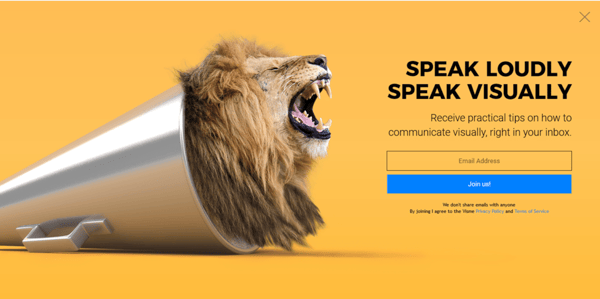
2. Visme

visme minimalist design with striking image but simple one-color background

Minimalism doesn't have to be boring. Here, Visme created a pop-up ad where the primary focus remains on the "Join us!" blue button, which contrasts nicely against the orange background. Additionally, to grab the viewer's attention, Visme placed a large lion's head image on the left side of the ad.

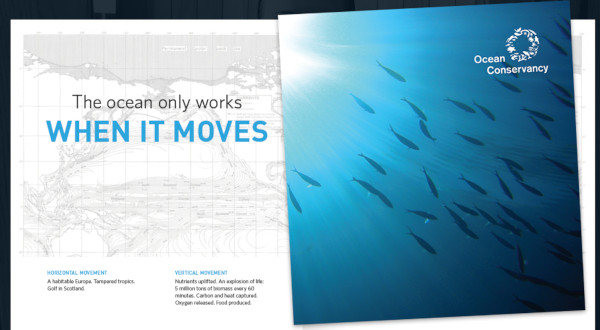
3. Heather Shaw Book Design

heather shaw minimalist ad with a large photo of the ocean and a large tagline

Heather Shaw ensures true simplicity in her Ocean Conservancy book, which grabs the reader's attention with minimal text and colors. The information is plainly outlined and easy-to-follow. Additionally, there's a lightly outlined sketch of an ocean behind the text -- while not overbearing, it adds texture to the design.

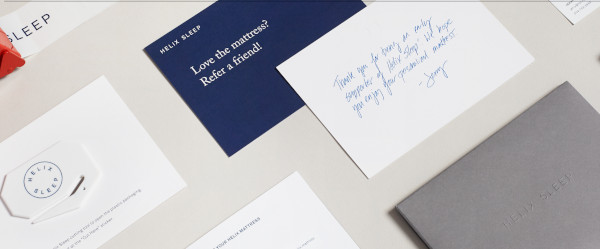
4. Helix Sleep by Stefanie Brückler

helix sleep minimalist design with solid colors and thin blocky lettering

These Helix Sleep referral cards look both sleek and helpful. Stefanie Brückler uses contrasting colors and clean font to ensure the cards can do their jobs without seeming unoriginal.

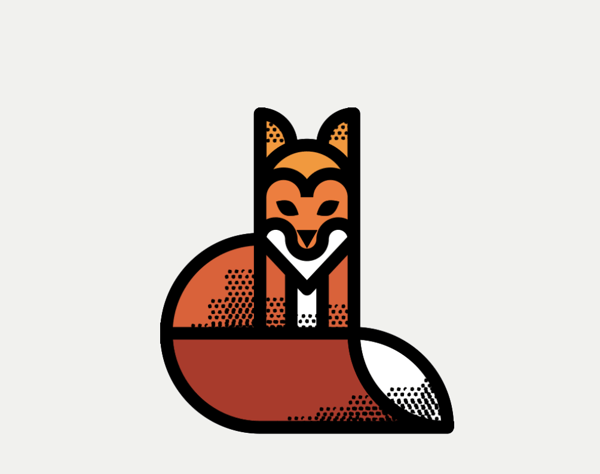
5. Pixite by Peter Komierowski

minimalist design with flat design line work

On his page, Komierowski explains, "I was asked by Pixite to create a set of nature-inspired shapes for their app Fragment." Ultimately, his design is aesthetically-pleasing and fun, with simple, cohesive lines that form the shape of a fox.

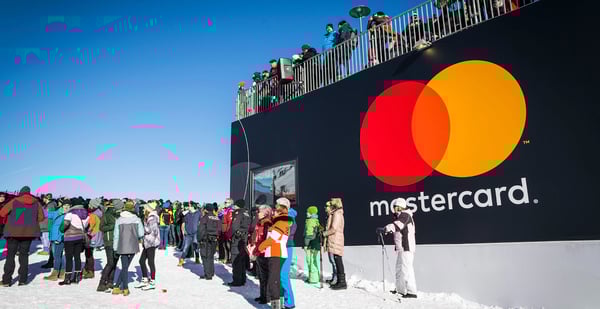
6. Mastercard by Pentagram

mastercard minimalist logo on billboard

One of the most iconic minimalist designs, Mastercard's financial design is undoubtedly a staple of the brand. The simple red and orange circles signify connectedness and seamlessness. The circles are recognizable enough that Mastercard can use the icon in place of any brand text, and still convey its ownership.

Minimalist Web Design

You can take the tenets of minimalist design and apply them to brand websites, resulting in clean interfaces that guide users where you need them to go. Here are great examples of minimalism used on the web:

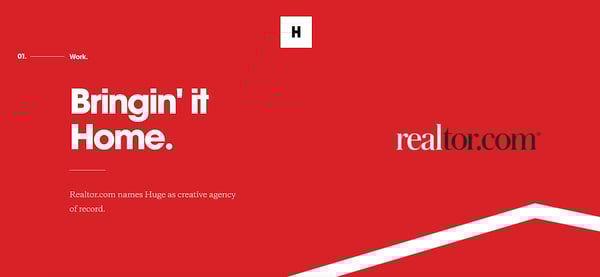
1. Huge Inc.

minimalist web design with three simple colors, a short tagline, and some line work

Huge Inc.'s homepage is clean and polished, with minimal text to ensure a new viewer doesn't feel overwhelmed by the page. Additionally, the small details -- like the black that appears in the logo as well as the second half of realtor.com, and the small jagged line in the bottom right corner -- signify a sense of cohesiveness.

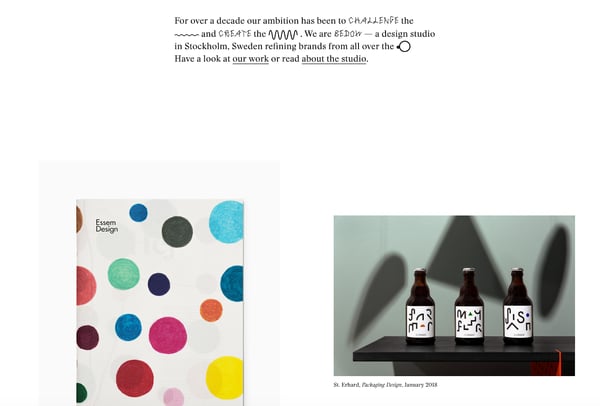
2. Bedow

minimalist web design without elements, opting for text and images only

Bedow, a Stockholm-based design studio, knows its viewers priorities, and thus doesn't waste time with a busy homepage -- instead, they include a short blurb about their studio, and then leave a section of white space before displaying some of their designs.

3. Reducing the Obvious

minimalist web design relying on font for aesthetics

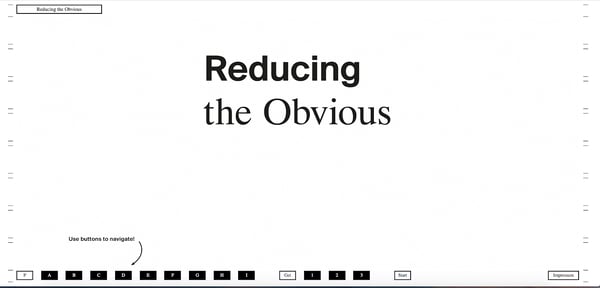
One of the more simple designs in the list, Reducing the Obvious's design is compelling and mysterious, with little information displayed on the homepage. However, the page is still helpful and inviting, with a small "Use buttons to navigate!" command in the bottom left.

4. Jorgeriera Flores

minimalist web design with just a menu and a face

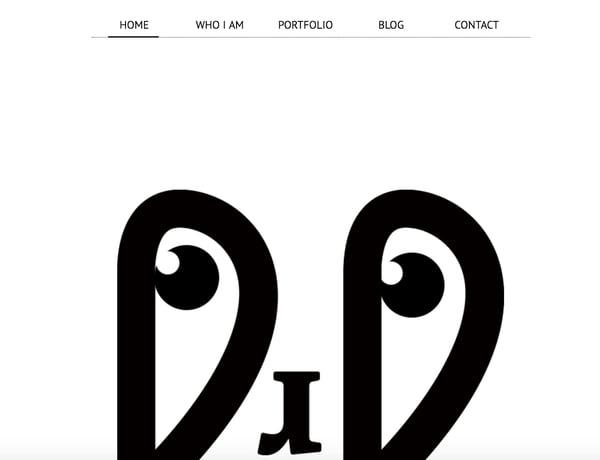
Jorgeriera Flores' page is fun and inviting, with a blinking, life-like design and a clean navigation bar. Additionally, the creature's nose serves as a "J", demonstrating Flores' attention-to-detail.

5. Design Co.

minimalist design with text over linework

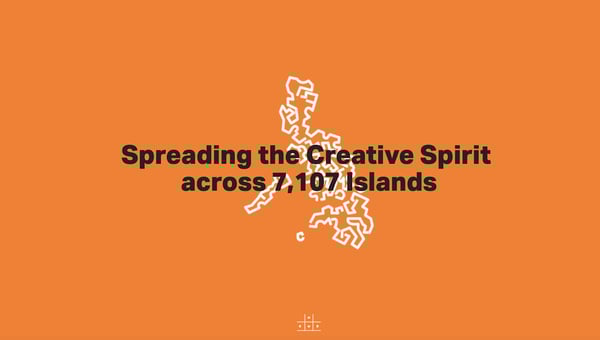
Oftentimes, minimalist design enables a brand to convey its purpose more powerfully than it could with a busier page. Design Co., for instance, is able to capture the viewer's attention with its compelling message -- spreading the creative spirit across 7,107 islands -- by ensuring its background, while colorful, is devoid of distracting add-ons. Additionally, the small white logo serves to reinforce their main point.

6. Evoulve

evoulve minimalist web design with just the logo and the hamburger menu

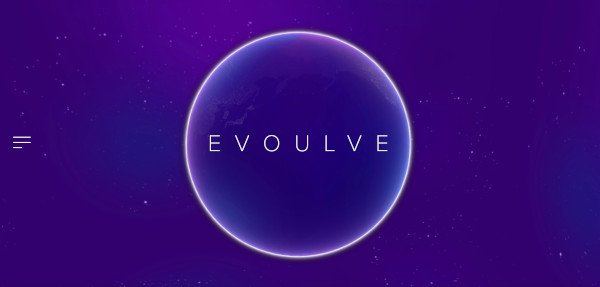
It's impossible to see a page like this and not find yourself curious to explore further. Evoulve does a good job expressing a sense of innovation and sleekness -- with its world-icon and bright, futuristic design -- without needing any additional text or imagery to compel the user to explore further.

7. Tim Brack

minimalist design with just text and name

Brack's use of white space and overlapping elements serves to create a clean and inviting homepage. Additionally, the photo of himself with a pig highlights a sense of playfulness and humor, and you're able to obtain most relevant information -- including Tim's title as art director -- instantly, without any distraction.

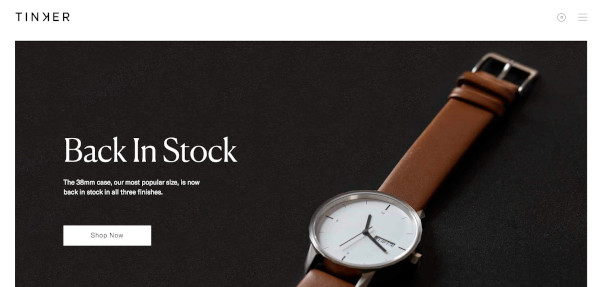
8. Tinker

tinker minimalist web design with product photo and simple tagline

Minimalism is often accomplished best when a brand knows exactly why a visitor might come across their website. In this case, Tinker understands its viewers are looking to browse and potentially purchase a watch, so it aims its design-elements to drive attention toward that single purpose.

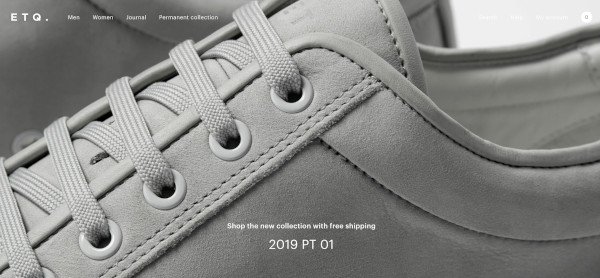
9. ETQ Amsterdam

etq amsterdam minimalist web design with few words and a large product photo

The close-up of the shoe offers a new viewpoint, making ETQ's homepage intriguing and original even in its simplicity. Additionally, the small white font looks simple and clean against the photo background.

Minimalist Logo Design

The logo is one of your most important elements in your design arsenal. You don't want a beautiful minimalist design to be supported by a clunky and overdone logo. These brands used minimal logos to support the feel of the rest of their brand:

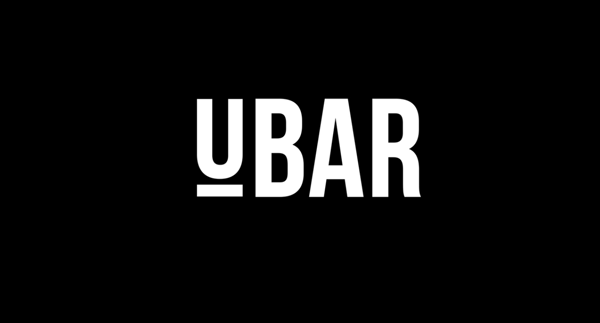
1. UBAR

minimalist monochrome logo with a line underneath the first letter

The bold block text and black-and-white contrast lends itself well to Simon McWhinnie's UBAR design. The simplicity allows the text to dominate the logo and evokes a sense of power and strength.

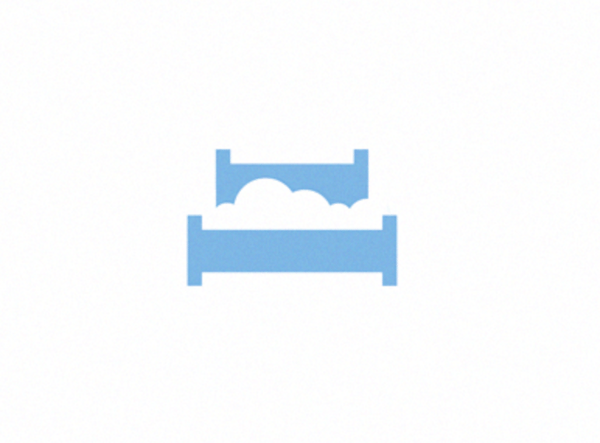
2. Cloud Bed by Michael Spitz

minimalist logo with a blue bed and a cloud made from negative space

If you have one product you sell well, why complicate it? This logo, designed by Michael Spitz, communicates the brand's product -- bedding -- without text. Additionally, it's clean and calming, particularly with the use of light blue and white, which ensures a sense of calmness for the viewer.

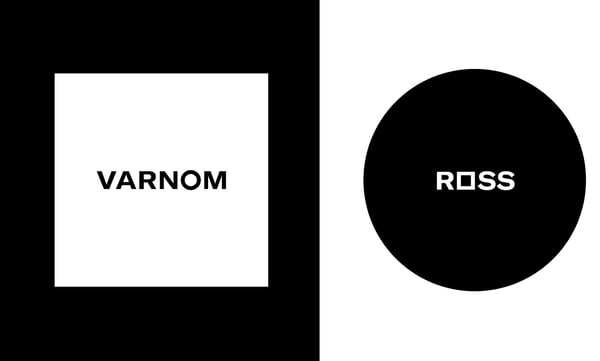
3. Varnom Ross by Bibliothèque

minimalist logo design with monochrome and geometric shapes

Varnom Ross's logo is bold, powerful, and striking. Additionally, the replicated box shape around the Varnom, used again as the "o" in Ross, signifies a sense of cohesiveness.

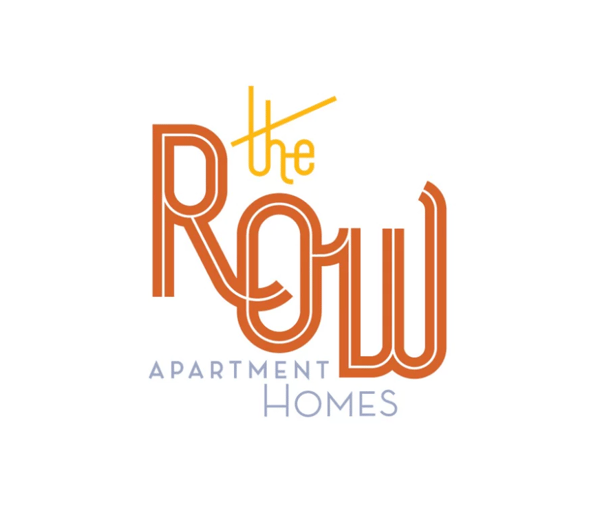
4. The Row Apartment Homes by PurdyLogo

minimalist logo with vintage vibe

This logo looks retro and funky, but it uses plenty of white space, as well as white lines within the letters, to maintain simplicity. Additionally, the colors work well together, ensuring "Row" stands out most prominently in the logo.

Minimalist Poster Design

Posters need to say a lot in a finite amount of space. That's why minimalism works so well in poster design. Here are some great examples that support this idea:

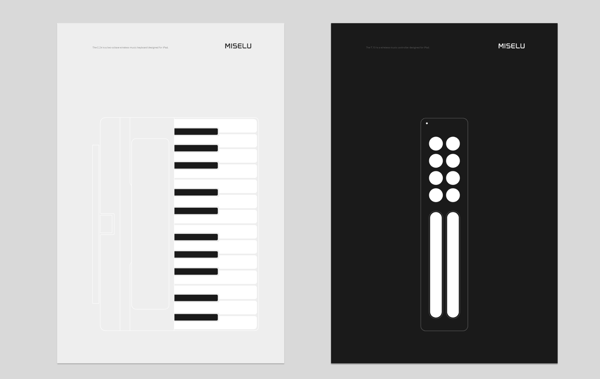
1. Miselu

minimalist poster design with deconstructed piano and guitar

Miselu's graphic design undoubtedly supports the notion that less is more. On their page, Miselu explains the design as "simultaneously edgy, approachable, and clearly expresses our core business: music". Ultimately, these posters, along with their other designs, reinforce their core products while remaining simple enough to be adaptable as their brand changes over time.

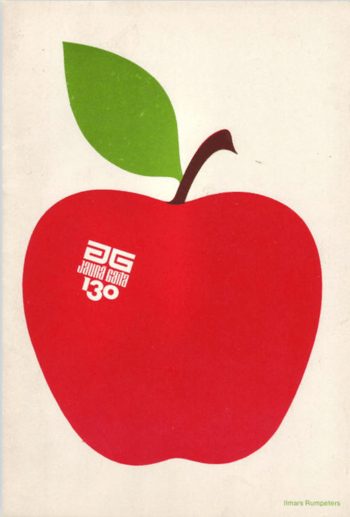
2. Ilmars Rumpeters

minimalist design with flat design apple and funky text

Ilmars Rumpeters created multiple simple covers for Jauna Gaita magazine, and this one in particular stands out as attention-grabbing and bold, with its vibrant colors and intriguing font. With minimalism, you want your focus to be on one or two elements -- in this case, Rumpeters succeeded in drawing primary attention to the apple, and then to the magazine title itself.

3. Paul Rand

paul rand minimalist poster with three colors and simple shapes

Paul Rand, a famous logo creator and graphic designer, created this poster to advertise the International Design Conference in Aspen, 1966. Ultimately, the piece is intriguing and complex even in its minimalism, causing viewers to likely pause and wonder over the significance of the black splatters or egg-shape in the background.

Minimalist Text Design

You'll notice in each of the designs above, the text is chosen intentionally and displayed in a way that adds rather than detracts from the visual elements. With a minimalist design, one of the first things you'll want to consider is the font choices used throughout the website or marketing collateral. You'll want to choose fonts that are:

  • Crisp
  • Clear
  • Legible
  • Easy to read (even at small sizes)
  • Simple
  • Consistent
  • Geometrical

Here are some examples of fonts used in minimalist design:

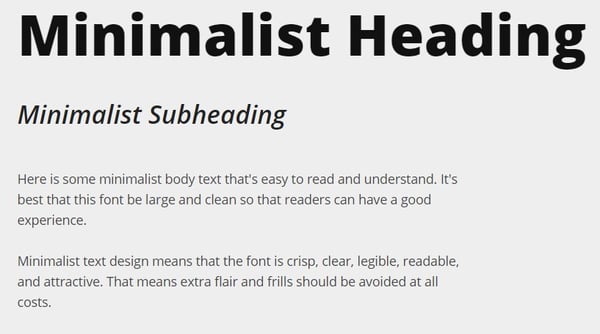
1. Open Sans

minimalist text design with heading, subheading, and body font in open sans

Because serifs can be more difficult to read, especially on the web, minimalist designs often use sans-serif fonts. Open Sans is the quintessential sans-serif font (except perhaps Arial) and is easy-to-read and modern. The body text in particular is particularly crisp, making it ideal for long-form text in a minimalist setting (like a blog).

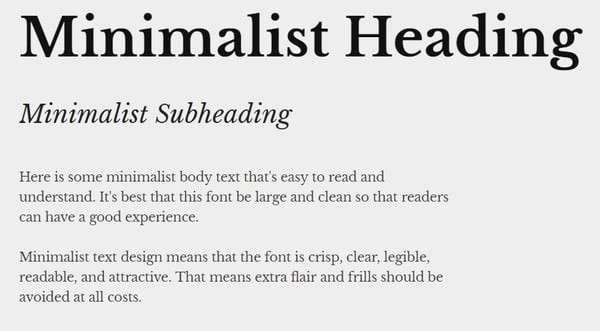
2. Libre Baskerville

minimalist text design with heading, subheading, and body font in libre baskerville

Even though sans-serif fonts are a staple of minimalist design, serifs still have their place. Libre Baskerville does a great job of providing an air of elegance and class without sacrificing readability. The body text is just as easy on the eyes as Open Sans, and even the italicized subeading text is legible (though you wouldn't want to rely on it too much).

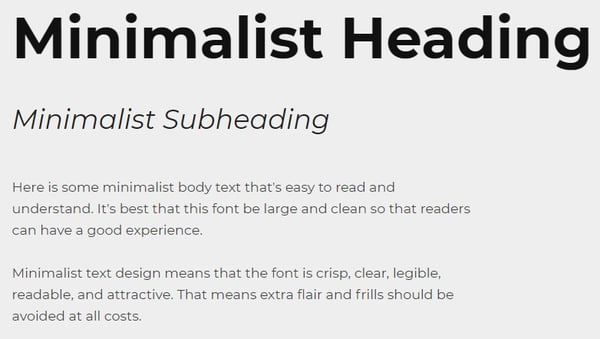
3. Montserrat

minimalist text design with heading, subheading, and body font in montserratMontserrat has some lovely rounded lines, making the letter shapes easily recognizable, and the italicized subheading provides a more dynamic look when paired with the bold headers and clean body font.
4. Poppins

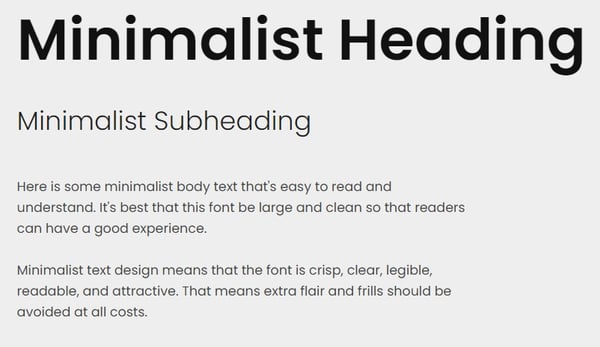
minimalist text design with heading, subheading, and body font in poppins

Minimalist text design certainly doesn't mean devoid of personality, as you can see from the graphic, web, and poster designs above. Poppins is a great font family that adds a bit of fun to the minimalist style with overly rounded and almost cartoonish letters. At the same time, it looks modern and professional.

5. Overpass

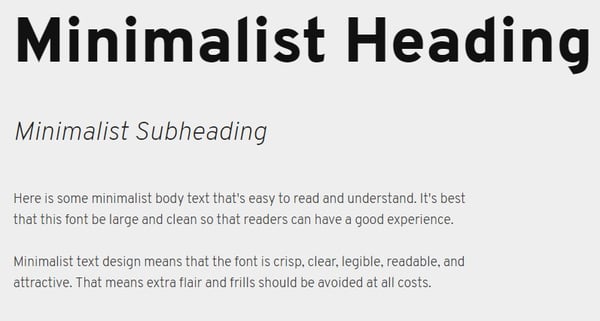
minimalist text design with heading, subheading, and body font in overpass

Overpass provides a more industrial look with its narrow letter shapes and sharp corners.

Now that you've seen several iterations of what minimalist design looks like in action, you can begin to create your visual marketing strategy and design marketing materials that supports your brand in a clean and modern but still attractive way.

Editor's note: This post was originally published in February 2019 and has been updated for comprehensiveness.


27 Striking Examples of Minimal Design That'll Kickstart Your Creative Process was originally posted by Local Sign Company Irvine, Ca. https://goo.gl/4NmUQV https://goo.gl/bQ1zHR http://www.pearltrees.com/anaheimsigns