Wednesday, October 27, 2021

What Is Content Intelligence?

All marketers want a content marketing strategy that helps them generate influence and a large audience. Case in point — “how to develop a content marketing strategy” was the fifth most searched question about content marketing in 2020.

Unfortunately, no concrete formula will help you generate incredible content with consistent results, yet it is essential to create incredible content with consistent results. Competitive intelligence poses a solution to this issue, yet only 23% of marketers leverage it in their content creation strategy.

In this post, discover what content intelligence is, and the benefits that it will bring to marketers leveraging it as a tool to create their own content marketing strategy.

It is essentially a GPS that leads you to a high-quality content strategy that drives leads, conversions, and revenue. You don’t have to guess what will be of interest to your audience because the data shows you what performs well with your audience based on market and competitor analysis.

Why is content intelligence important?

benefits of content intelligence

Many marketers use content marketing to communicate with their audiences and draw them in, and content intelligence helps them do so effectively. Some additional benefits include:

  • Generating a deep understanding of your target audience and the type of content they enjoy based on competitor data and analysis.
  • Data from market research helps you create content that is entirely centered around your users and what they enjoy.
  • Gain insight into various content types and how they should be created, like video content intelligence that lets you know actions within videos that drive results.
  • AI analyzes content for style, tone of voice, and other important metrics to eliminate guesswork and the trial and error that often goes into creating content.
  • Ability to predict the effectiveness of your content based on the historical performance of your competitors.
  • Generate authority in your niche through high-quality, informative content that helps you get more visitors, increase conversion rates, and gain visibility in search results.


Content Intelligence Software

While it’s possible to conduct competitive intelligence on your own, software automates the process and generates results quickly. Let’s go over some high-quality tools you can leverage in your process.

1. BuzzSumo

BuzzSumo uses a strategy of research and discovery to obtain insights about the content created by your market and industry competitors to help you understand what performs best with your audience.

The tool analyzes a variety of social media feeds and web content to provide you with viral trends to leverage, business-related content you should consider covering, and target keywords to use when you begin creating.

content intelligence software: buzzsumo

Image Source


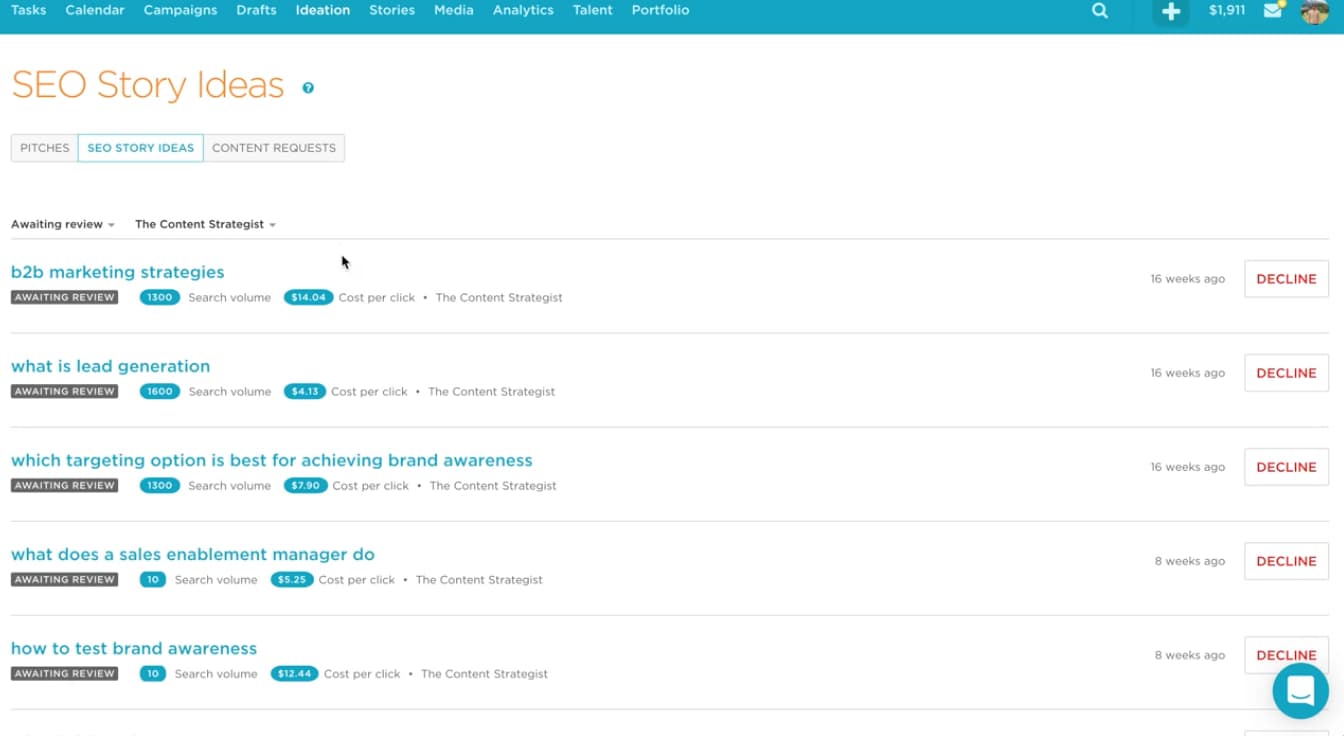
2. Contently

Contently uses StoryBook™, its proprietary technology, to analyze and predict the content that will have the most significant impact on your business. This data will then help you create a content strategy that aligns with your audience interest — SEO, voice and tone, and your brand guidelines are all considered in every recommendation. Then, when you create your content, you’ll get analytics to show what performs and drives ROI to further focus your efforts.

content intelligence software example: contently

Image Source

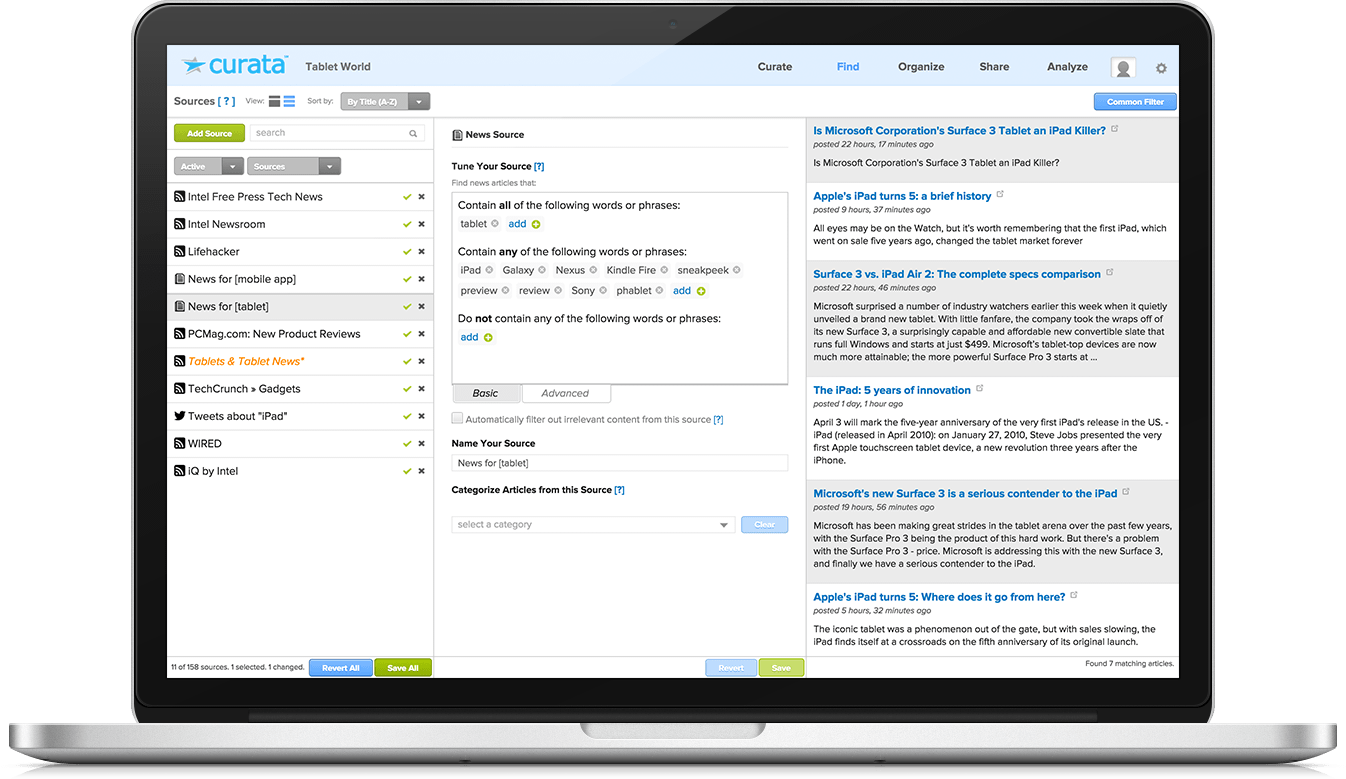
3. Curata

Curata’s self-learning engine helps you discover the best performing content and understand why audiences like it and how you can create your own top-performing content. You’ll also get SEO assistance to help you curate your content and share it in the most relevant and impactful channels.

content intelligence software example: curata

Image Source


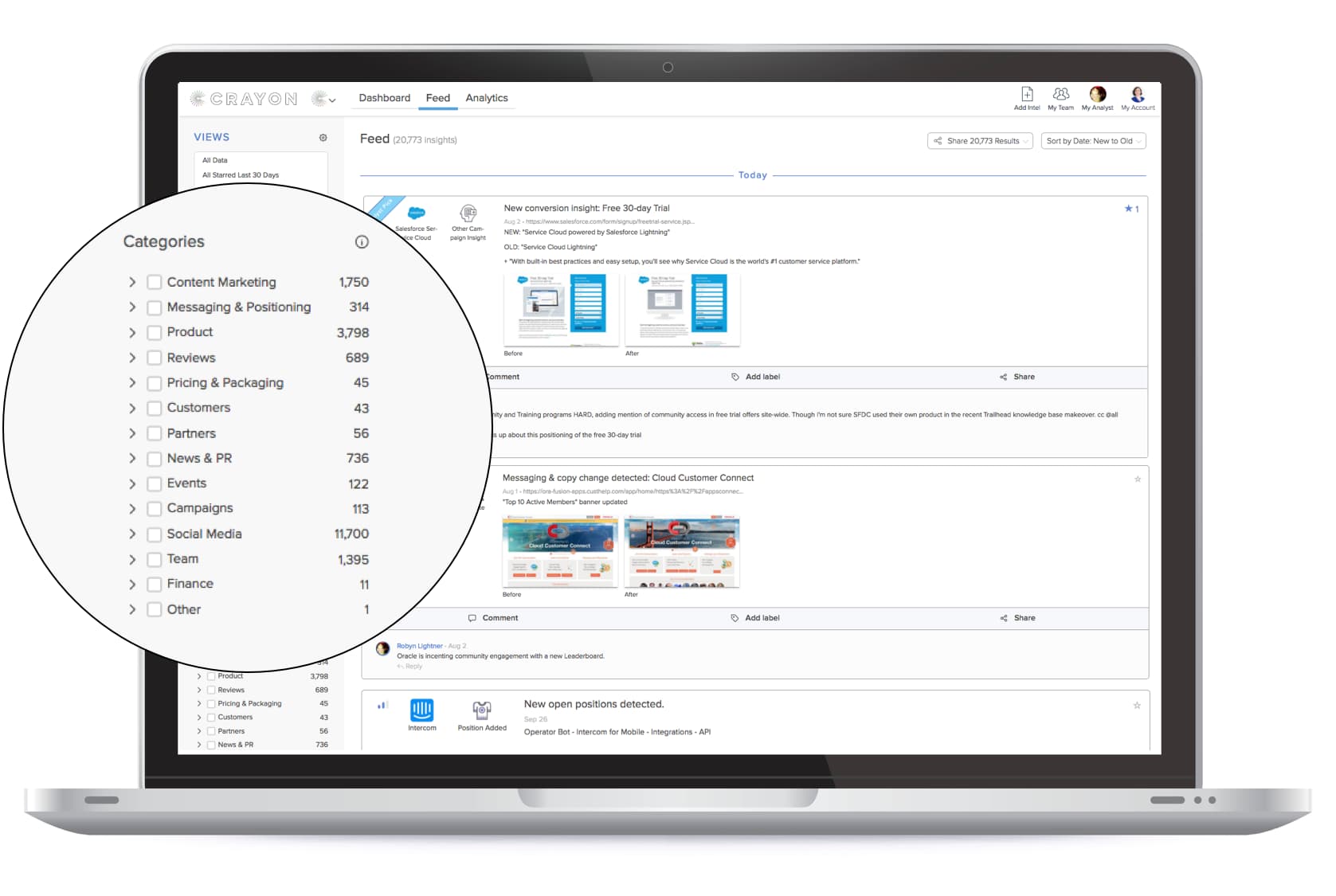
4. Crayon

Crayon’s software provides you with competitive intelligence that will help you use actionable insights to create a high-quality content strategy. You’ll gain an understanding of what works for your competitors, from social channels to review sites, and discover key messaging that performs best that you can adapt to your content strategy.

content intelligence software example: crayon

Image Source


Over To You

The content strategy you choose to create should depend entirely upon your business needs, but it can become even stronger if it’s made using content intelligence tools. Pick a software option that’s right for you, and begin generating your influence.

Blog - Content Mapping Template
What Is Content Intelligence? was originally posted by Local Sign Company Irvine, Ca. https://goo.gl/4NmUQV https://goo.gl/bQ1zHR http://www.pearltrees.com/anaheimsigns

What Responsive Display Ads Are + How to Create Them [Step-by-Step]

Imagine spending time and resources to create an ad campaign just to get meager results. It's can be discouraging but also difficult to assess.

Wouldn't it be great if you could mix and match different ad components and see which one performs the best without dishing out more time and resources?

Free Guide, Template & Planner: How to Use Google Ads for Business

With responsive display ads, you can.

Discover how they work, what you need to get started, and the steps to launch one in Google Ads.

Benefits of Using Responsive Display Ads

One of the biggest advantages of using responsive display ads is that it can help you reach a broader audience.

Because you can adjust various elements in your ad, you can maximize where it can be seen by your target audience.

Additional benefits include the following:

  • You can use video – When you use responsible display ads, you can add video and use that in place of images when appropriate.
  • It's a time-saver – Don't have to keep creating new ads, can let Google Ads create combinations based on its algorithm and what can produce the best results.

It's great for small businesses that may not have the in-house team or the resources to create multiple ad images, sizes, etc. With responsive display ads, the work is done for you.

The major downside to using responsive display ads is that you lose some control. Google chooses the ad combination and it may not represent your brand to its fullest potential.

For instance, your ad may have little to no branding and seem generic, which also means it may be harder for it to stand out and get clicks.

What You Need to Create a Responsive Ad on Google Ads

Before you can run your responsive ad, you must first upload your assets: your visual elements and your text. Let's get into the specifics of each.

1. Visuals

With responsive display ads, you can have up to 15 images in your ads.

Google Ads recommends having at least five images, as that can lead to higher conversions. Here are a few more tips on image ads:

  • Have high-definition sizes.
  • Use the most popular sizes:
    • 300 x 250
    • 728 x 90
    • 160 x 600
    • 320 x 50
    • 300 x 600
  • To create interactive or animated images, use HTML5.

If you do not add upload a logo (you can add up to five), Google Ads will provide a neutral one, which can be an icon or the first letter of your brand name. As for the aspect ratio, upload 1:1 and 4:1 versions with transparent backgrounds.

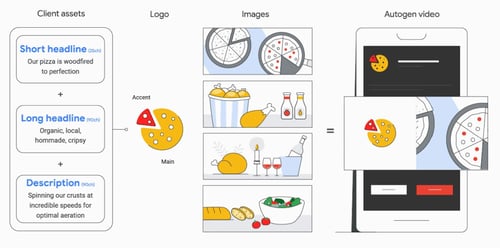
If you don't upload a video, you can choose the advanced format option in which Google generates a video based on the visual and text assets you have on file.

responsive display ads

Image Source

2. Text

  1. Headlines – For your ad, you can have up to five short headlines of 30 characters or fewer. You can also have a long headline up to 90 characters long. One thing to note is that your headline will not always show up with your description, so it should be compelling enough to attract clicks.
  2. Descriptions – You can create up to five descriptions that will be shown based on what Google believes will perform best.
  3. Call-to-action Your CTA should be action-oriented (ex: Join Now) or value-oriented (ex: Start Learning Today).
  4. A business name – This should be the name of your brand, spelled and capitalized correctly.
  5. A URL – This is where users will land after clicking on your ad. Google Ads allows you to add tracking or custom parameters to your URL for better reporting.

If your ad is dynamic, you can also add promotion text and a price prefix to potentially increase conversions.

Your ad may get rejected if:

  • You have text that covers more than 20% of the image.
  • You have content that is:
    • Irrelevant
    • Misleading
    • Sexual
  • Your images are low-quality.
  • You don't follow trademark use policies.

Responsive ads are a great opportunity to diversify your ads in a cost-efficient way. Whether you're a small business with limited resources or a larger brand with low ROAS, it's a strategy worth considering. 

New Call-to-action


What Responsive Display Ads Are + How to Create Them [Step-by-Step] was originally posted by Local Sign Company Irvine, Ca. https://goo.gl/4NmUQV https://goo.gl/bQ1zHR http://www.pearltrees.com/anaheimsigns

Tuesday, October 26, 2021

How to Create a Comprehensive How to Guide [+Examples]

The irony doesn't escape me that I'm currently writing a how-to guide on … how-to guides.

Fortunately, I've had my fair share of experiences writing how-to guides for HubSpot over the years — some of my favorites include How to Give a Persuasive Presentation, How to Develop a Content Strategy: A Start-to-Finish Guide, and How to Write a Request for Proposal.

Here, we'll explore the right structure to use when making a how-to guide and how to write a comprehensive how-to guide. We'll also take a look at some impressive examples of how-to guides for inspiration. Let's dive in.

Download Now: 150+ Content Creation Templates [Free Kit]

Benefits of Creating a How-To Guide

How-to guides are valuable opportunities to reach new audiences with useful, high-quality content. For both B2B and B2C businesses, how-to guides are often necessary for a healthy lead generation strategy.

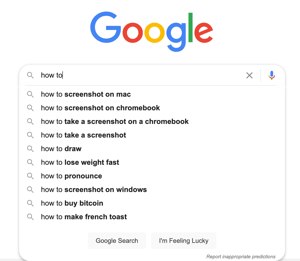
For instance, consider how many people search "How to [fill in the blank]" on Google each day:

someone searching "how to" on Google

These search queries demonstrate one of the primary reasons people turn to the internet: to learn how to do something.

If your business can reach those consumers with informative, relevant answers to their questions, those users will begin to see your brand as an authority on the topic.

Down the road, those same readers you first attracted with a how-to guide could become customers and loyal brand advocates who spread the word about your products or services.

Suffice to say: How-to guides are worth adding to your content arsenal.

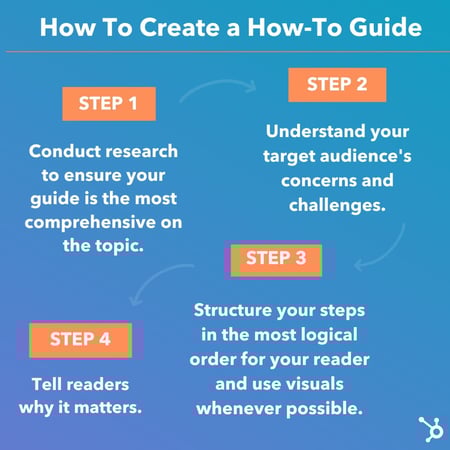
How to Make a How-To Guide

how to make a how to guide in 4 steps

1. Conduct research to ensure your guide is the most comprehensive piece on the topic.

Depending on the topic, you want to write something that caters to the specific audience you're targeting. For instance, if you're writing a how-to guide targeted toward mechanics, there are certain terms and descriptions you can forgo, as you assume a mechanic is already well versed in this.

However, if you were targeting the average vehicle owner, your content will have to be jargon-free and descriptive enough to resonate with that audience.

As such, it's important that your first step in how to make a how-to guide is making sure your content is comprehensive. Here's how to do it:

  • Conduct keyword research to see what people want to learn.
  • Use Arel="noopener" target="_blank" hrefs, SEMrush, or another SEO tool to identify similar keywords and queries. This can help you create a well-rounded piece that will answer all your readers' questions, and help you rank on Google.
  • Look at your competitors to see how they write their guides.

For instance, let's say you're writing a blog post, "How to Make an Omelette." Upon conducting research, you find Simply Recipe's post is at the top of Google.

Diving into the post, you'll see Simply Recipe has covered sections including "French Verses American Omelettes," "The Best Pan for Making Omelettes," and even "Ideas for Omelette Fillings."

If you want to create your own how-to guide on omelettes, then, you'll want to cover all – if not more – of the sections Simply Recipe has in its post.

Even if you know a topic incredibly well, research isn't a step you should skip. In fact, knowing a topic well can make it more difficult to write a how-to guide on the topic, as you might make assumptions about what should be covered.

For that reason, rely on your research to ensure you're including all relevant information.

2. Understand your target audience's concerns and challenges.

For this step, leverage online community forums like Quora or internal, historical data to identify the concerns or challenges your target audience might have. That information will help you identify content to include in your guide.

If you're writing "How to Create a Content Marketing Strategy," for instance, you could follow these steps:

  1. Start by looking at responses to "What is content marketing?" on Quora. These user-generated responses can help you identify common themes, misconceptions, or confusion around content marketing.
  2. Reach out to your research marketing team to identify common pain points or questions they've seen in surveys or focus groups regarding "content marketing." For instance, you might find that most of your audience says content marketing is a priority for them — but they don't know how to do it on a budget.

Conducting qualitative research like this arms you with the information necessary to ensure your how-to guide addresses all relevant concerns on a given topic.

3. Structure your steps in the correct order for your reader, and when possible, use screenshots.

Your readers will bounce from your page if it's too difficult for them to quickly find the answer to their question. With this in mind, deliver it as quickly as possible — and in the right order.

Many readers will use your how-to guide as a list of instructions. For instance, if you're writing, "How to Take a Screenshot on a Mac," you'll want to write down each specific action necessary to take a screenshot. When possible, use visuals like GIFs, images, screenshots, and videos to supplement your instructions.

For less tactical, more ambiguous topics, use bullet points and examples for easy readability and understanding

4. Tell the reader why it matters.

The last step in writing a how-to guide is asking yourself: "Why do my readers need, or want to know, this?"

Understanding the high-level purpose behind a topic can encourage you to write with empathy. Additionally, it will help you create content that accurately meets your reader's expectations and needs.

For instance, when writing "How to Create a Facebook Group for Your Business," I took some time to identify that readers might search this topic if a) they are seeking out new ways to connect with customers or want to create a stronger sense of brand community, or b) they want to raise awareness about their products or services.

As a result, I wrote:

"A group is a good idea if you're interested in connecting your customers or leads to one another, you want to facilitate a sense of community surrounding your brand, or you're hoping to showcase your brand as a thought leader in the industry. However, a group is not a good idea if you want to use it to raise awareness about your products or services, or simply use it to post company announcements."

In the example above, you can see I targeted a few different segments of readers with diverse purposes to help readers determine whether this how-to guide would even help them meet their own goals.

Ultimately, understanding the purpose behind your how-to guide is critical for ensuring you target all the various components or angles of the topic at hand.

How to Write a How-To Guide

Once you're ready to start writing your how-to guide, you might wonder if your tone or writing style should differ, compared to other types of posts.

In short: Yes, it should.

When people search "How to …" they're often in a rush to find the information they need, which means it's critical you write in short, concise sentences to provide an answer quickly.

Additionally, how-to guides need to offer tactical, actionable advice on a topic so readers can begin implementing the steps immediately.

There's a world of difference between readers who search "What is an RFP?", and those who search "How to write an RFP."

While the former group is looking for a definition of RFPs and maybe an example or two, the latter group likely already has a fair understanding of RFPs and needs to create one ASAP.

When writing a how-to guide, here are some best practices to keep in mind:

  • Use verbs when writing out steps. Say, "Write a company background" rather than "Your RFP should start with a brief background on your company."
  • Use numbered lists, headers, and bullet points to break up the text and make your content as easy to skim as possible.
  • Use both screenshots and written text for readers who can't load the image on their screen or don't understand what you're trying to tell them from the image itself.
  • Link out to other relevant blog posts, pillar pages, or ebooks so readers can find follow-up information on certain topics mentioned in your how-to guide.
  • Provide examples to show your readers what you mean.
  • Write with empathy, acknowledging it can be frustrating when learning or refining a new skill.

How-to guides often attract a wide range of readers, all with varying levels of expertise.

"How to Create a YouTube Channel," for instance, likely attracts YouTube beginners who are simply interested in creating a channel to watch and comment on friends' posts.

However, it probably also attracts professional marketers who need to create a channel for their business to attract and convert leads.

With such a diverse audience, it's critical you write clearly, but not condescendingly, to ensure you retain readers regardless of skill level or background experience.

Is there a difference in how you would write a tutorial vs. a how-to guide?

Tutorials and guides are often used interchangeably to define content that explains how to complete a particular task. While some argue that one is more descriptive than the other, you'll find that it varies from one brand to the next.

Perhaps the most distinctive difference is between a how-to guide and a user manual. A how-to guide is typically a top-of-the-funnel piece of content meant to attract users and generate leads.

A user manual is typically created for someone who has already purchased a product or service and needs step-by-step instructions on how to use it.

While one falls under marketing materials, the other relates more to the product.

How-To Guide Examples

1. The Recipe How-To Guide

the recipe how-to guide

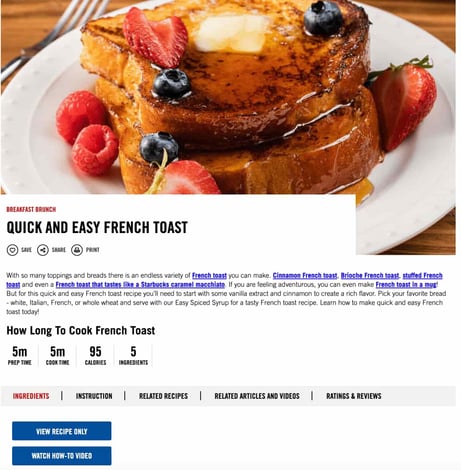
McCormick's "How to recipe guide on french toast" is neatly organized so readers can quickly determine a) how long the recipe will take, b) the ingredients they'll need, and c) how to find the recipe.

If a reader already knows the ingredients necessary for french toast, they can click on "Instructions" to get started right away.

Alternatively, say a reader prefers viewing instructions rather than reading, they can click on "Watch How-To Video." This offers a good variety for visitors who consume content differently.

Takeaway: as you're structuring your own how-to guide, consider how you can best organize it so readers can jump straight to what they need. In addition, account for the medium that your target audience will prefer.

2. The B2B How-To Guide

90 day plan how to guide on Atlassian

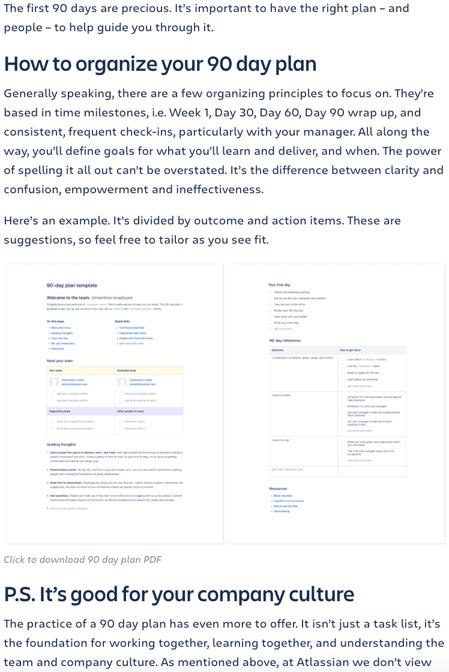
Atlassian's "How to Write the Perfect 90-Day Plan" provides important contextual details to the 90-day plan, including "What is a 90-day plan?" and "What should be included in a 90-day plan?" The piece is well-researched and written with empathy.

Best of all, the guide provides a downloadable 90-day plan PDF, so readers can immediately download and use Atlassian's plan with their own team.

Takeaway: Consider what ebooks, PDFs, charts, Canva designs, or Google Sheets you can create internally and offer to readers to download. Readers will appreciate the option to immediately apply what they've learned.

3. The B2C How-To Guide

b2c how-to guide on how to become a freelancer

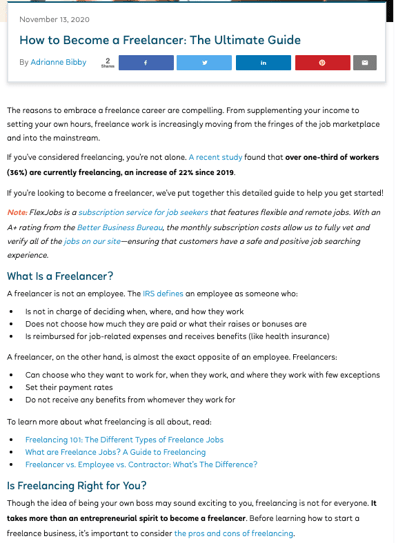
This "How to Become a Freelancer" guide from FlexJobs does a good job providing relevant links and data to create a comprehensive overview of what freelancing is.

Additionally, the post uses action verbs to inspire the reader.

Under "How to Start a Freelance Business." you'll see tips such as "Do Your Homework," "Create a Brand," and "Plan Ahead." The language used in this post goes a long way toward encouraging readers to get started immediately.

Takeaway: Use action verbs and concise language to keep a reader engaged. When possible, start with a verb instead of a noun when listing out steps.

4. The Product-Related How-To Guide

product how-to guide example

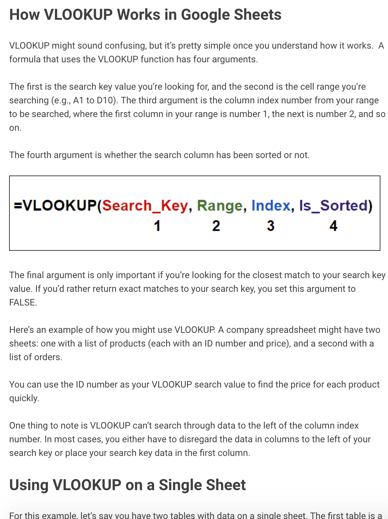
This article by How-To Geek, titled "How to Find Data in Google Sheets with VLOOKUP," isn't necessarily the most interesting topic.

However, the brand effectively keeps the content engaging with empathetic statements like, "VLOOKUP might sound confusing, but it's pretty simple once you understand how it works."

Additionally, How-To Geek includes useful, original images to demonstrate each tip they're describing.

These images don't have to be state-of-the-art visuals created by a professional design team, either — as this post proves, a few simple screenshots go a long way toward helping readers understand a complex topic.

Takeaway: When possible, create your own visuals/screenshots to walk readers through each step-by-step instruction.

5. The Lifestyle How-To Guide

lifestyle how-to guide

I recently saw this post in Medium titled, "11 Ways to Quickly Stop Stress in Your Life."

I clicked on it expecting a few quick, easy tips for stopping stress. Instead, I was engrossed in the first section of the post, "The Effects of Stress in Your Life."

While I previously mentioned the importance of starting with a quick answer to the searcher's how-to question, there are exceptions to that rule.

In this case, it's important readers understand the why before the how.

Takeaway: Play around with structure. Consider what your readers need to know in order for the rest of the post to matter to them. For instance, you might start with a section, "What is XYZ?" and "Why XYZ matters" before diving into, "How to do XYZ." This way, your readers are fully invested in finding out how these tips can improve their lives in some small (or big) way.

Editor's note: This post was originally published in March 2021. It has been updated for freshness and accuracy.

content templates


How to Create a Comprehensive How to Guide [+Examples] was originally posted by Local Sign Company Irvine, Ca. https://goo.gl/4NmUQV https://goo.gl/bQ1zHR http://www.pearltrees.com/anaheimsigns

What Is CPM and Why Your Marketing Team Should Care

As an advertiser and marketer, it's important to understand the impact of your campaigns and content on your target audience.

It's also important to know how much money you need to invest to ensure those campaigns and content are actually seen by your audience.

You may have heard of CPM before — it's a formula and metric that tells you exactly that.

Get Started with HubSpot's Ads Management Software for Free

In this article, we'll review what CPM is, how to calculate it, and tips on how you can get the best CPM.

CPM Meaning

CPM in marketing is cost per thousand, also known as cost per thousand impressions or cost per mile. It's a formula that calculates the total ad spend per 1,000 impressions on a web page.

How does CPM work?

CPM is often used in advertising, marketing campaigns, social media, and digital marketing. It tells you the total ad spend for every 1,000 impressions. An impression in CPM is how many views/ engagements an ad receives — it's when an ad is successfully displayed to a visitor or audience member on a web page.

Impressions are small units of measure in marketing which is why they're calculated by the 1,000 — this gives advertisers and marketers a better idea of the impact their work is having on audience members.

CPM is an effective top-of-funnel strategy because it helps advertisers garner a lot of attention from a large audience on one piece of content, all on a pre-determined budget.

As a result, you'll increase brand awareness and recognition as well as develop an understanding of which ads and content types are most successful among your audience so you can improve upon

CPM Advertising

Advertisers often use CPM. They select an ad publisher to work with based on where they want their ads published and the specific audience they want to get those ads in front of. Then, advertisers pay the ad publisher, often $1-$10+, for every 1,000 ads that are displayed to viewers.

This method of advertising allows advertisers to stick to a set budget while ensuring their target audience is seeing their ads and campaigns on a large scale. Especially when used on mobile — CPM ads are an effective way for advertisers to determine the impact of their in-app ads.

How to Calculate CPM

To calculate CPM, you need to use the following formula which states CPM is equal to the total amount spent/ total ad spend divided by total impressions multiplied by 1,000.

CPM Formula

cpm formula

How to Get the Best CPM

There are a number of tips and techniques you can apply to help you get the best CPM possible — here are some examples.

1. Choose an ad network.

There are several networks and publishers available for your CPM ads. Here are five popular options:

  • Google AdSense: Video ads, mobile ads, display ads, text, in-feed ads, in-article ads, matched content ads, games ads
  • Criteo: Digital ads, contextual ads, mobile app ads, dynamic ads, video ads, self-service ads
  • BuySellAds: Native ads, sponsored content, podcast ads, display ads
  • Media.net: Contextual ads, display ads, native ads,
  • SmartyAds: Rewarded videos, native ads, banners

2. Pick an ad tool.

You'll also want to identify a CPM and ad tool to help you plan, run, monitor, and analyze your campaigns.

CPM Software

CPM software is typically ad software — meaning it can help create, publish, and report on your ads.

For instance, you might choose to use HubSpot Ads Software to support your CPM strategy.

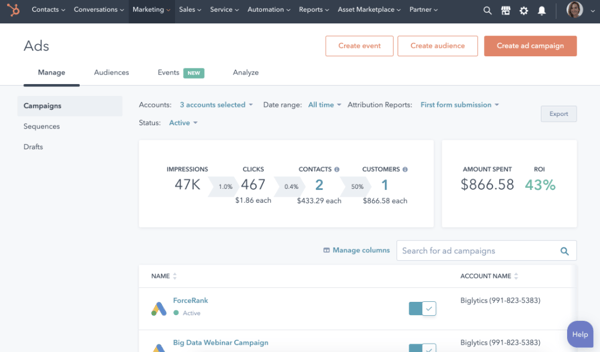
CPM software: hubspot ads software

Get Started with HubSpot's Ads Management for Free

HubSpot is unique because it enables CRM-powered marketing — meaning, you can use the data from your CRM to create personalized and targeted ad campaigns and report on the ads that are turning prospects into customers.

With HubSpot Ads Software, you can also...

  • Segment audiences.
  • Personalize ads.
  • Report on leads and ROI generated by every Facebook, LinkedIn, or Google ad.
  • Understand attribution of revenue from specific ad campaigns and platforms.
  • Log lead information into your CRM automatically.
  • Create journey-based advertising campaigns for Facebook audiences.
How to Apply CPM Software to CPM Ads:

Here are some specific examples of how you could apply a tool like HubSpot Ads Software to your CPM strategy and ads.

  • Refer to your contact data to effectively target your audience.
  • Apply the results of past campaigns to create ads that you know will resonate with your audience.
  • Use the knowledge you've gathered from your CPM campaigns about what works best among your audience to create and share more specific campaigns through HubSpot (since CPM campaigns are broad — more on this below).
  • Review your CPM results alongside your attribution of revenue from your other ads and campaigns in HubSpot to determine overall ad spend versus your budget.
  • Input contact data gathered from CPM ads in HubSpot so all contact and customer data across the entire business are organized in a single platform.

3. Use CPM in broad ad and marketing campaigns.

CPM campaigns are best for broad marketing ads and campaigns. That's because their main function is raising brand awareness and recognition. They offer the insight and data businesses need to then get more specific with follow-up ads and who they're targeting with those ads.

4. Highlight your point of difference.

Since your CPM ads are bound to be broad, be sure to highlight your product's point of difference.

For instance, if you're running a CPM ad on a training sneaker, ensure your ad makes the training shoe's unique feature(s) (e.g. it's ideal for all CrossFit athletes for X reason).

5. Think about ad format and placement.

When it comes to your CPM ads, it's critical you consider ad format and placement.

Perform research on your buyer personas and target audience as well as competitive intelligence— this will provide an understanding of what will work best among your audience as well as what's working well for your competitors.

This research will also help you decide which ad publisher you'll use to share your CPM ads based on the audience you can target via that publisher as well as the format in which you can publish your ads (e.g. display ads, mobile ads, etc.). 

6. Consistently analyze your results.

Similar to all strategies in business, you need to analyze your results. Be sure to track the success of your CPM ads and campaigns — report on what's working and what isn't hitting the mark.

You can do this by calculating your CPM regularly (while ads are live and once campaigns end), sharing that information with team members, and iterating as needed. Most ad software also has reporting capabilities that can help you track, record, store, and share CPM results.

You can also log this information in your marketing software and/or your CRM so all things related to your marketing work and your customers are stored in a single platform.

Start Calculating CPM

CPM is a valuable metric for marketers and advertisers — it gives you an accurate understanding of your impressions.

As a result, you'll gain insight into your level of brand awareness, which of your content and campaigns are being viewed the most, and what's working well among your audience.

advertising tool


What Is CPM and Why Your Marketing Team Should Care was originally posted by Local Sign Company Irvine, Ca. https://goo.gl/4NmUQV https://goo.gl/bQ1zHR http://www.pearltrees.com/anaheimsigns

Monday, October 25, 2021

7 Steps to Create a Complete Marketing Strategy in 2021

How many times have you seen a killer marketing strategy and thought to yourself, "Wow, I wish I would've thought of that!"

(Glossier, I'm looking at you.)

We've all been there. The truth is, when you're just starting out, it can be tough to know whether your strategy is as comprehensive and powerful as it can be.

→ Download Now: Free Marketing Plan Template

To help ease some of that uncertainty, we've created this guide that'll show you step-by-step how to create a marketing strategy that leaves no stone unturned.

Let's dive into the critical components of a complete marketing strategy in 2021, followed by some examples for further inspiration.

The Importance of Customer-Driven Marketing Strategy Steps

A robust marketing strategy will reach your target audience – this includes those who have never heard of your brand all the way to those who have purchased from you before.

Without a defined strategy, you’ll essentially be throwing things to the wall to see what sticks. And it’s costing you cost, time, and resources.

A marketing strategy will:

  • Align your team to specific goals.
  • Help you tie your efforts to business objectives.
  • Allow you to identify and test what resonates with your target audience.

There are seven key steps to crafting a successful marketing strategy: Build your marketing plan, create your buyer personas, identify your goals, select the tools, review your existing resources, audit and plan media campaign, and lastly, execute your strategy.

Let’s get into the details of each step in the next section. Or you can jump to the section you're most interested in.

1. Build a marketing plan.

Wait, I have to make a plan for my strategy? What's the difference?

Your marketing strategy provides an overview of the reasons why your marketing team will need certain resources, take certain actions, and set certain goals over the year. Your marketing plan is the specific actions you'll take to achieve that strategy.

Not sure where to start? This free marketing plan template can help.
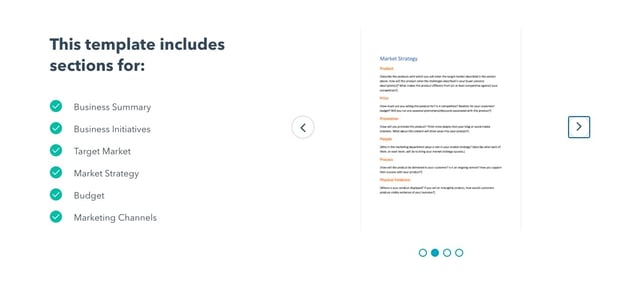
how to create a marketing plan

Image Source

The right template can help you build a marketing plan that identifies your budget for the year, the initiatives your marketing organization needs to tackle, and the marketing channels you'll use to implement those initiatives.

Plus, it’ll tie everything back to a business summary, to keep you aligned with overarching company goals.

2. Create buyer personas.

If you can't define who your audience is in one sentence, now's your chance to do it. A buyer persona is an example of your ideal customer.

For example, a store like Macy's could define a buyer persona as Budgeting Belinda, a stylish working-class woman in her 30's living in a suburb, looking to fill her closet with designer deals at low prices.

With this description, Macy's Marketing department can picture Budgeting Belinda and work with a clear definition in mind.

Buyer personas have critical demographic and psychographic information, including age, job title, income, location, interests, and challenges. Notice how Belinda has all of those attributes in her description.

You don't have to create your buyer persona with a pen and paper. In fact, HubSpot offers a free template you can use to make your own (and it's really fun).

Buyer personas should be at the core of building your strategy.

You can also use a platform like Versium, which helps you identify, understand and reach your target audience through data and artificial intelligence.

3. Identify your goals.

Your marketing strategy goals should reflect your business goals.

For example, if one of your business goals is to have 300 people attend your annual conference in three months, your goal as a marketer should be along the lines of boosting online registration by 10% at the end of the month to stay on track.

Other marketing goals might be to increase brand awareness or generate high-quality leads. You might also want to grow or maintain thought leadership in your industry or increase customer value.

Whatever your goals, identify what they are and how your marketing organization can work to achieve them over the next year.

4. Select the appropriate tools.

Once you have your goals identified, make sure you have the right tools to measure the success of those goals.

Online software like social media schedulers gives you analytics to help you keep track of what your audience likes and doesn't. Alternatively, you might consider Google Analytics to measure blog and web page performance.

Additionally, make your goals SMART – to do so, take a look at How to Write a SMART Goal [+ Free SMART Goal Template].

Here are a few tools that can help you track and measure the success of your marketing goals:

HubSpot Marketing Hub

The Marketing Hub allows you to consolidate all of your marketing tools into one centralized platform.
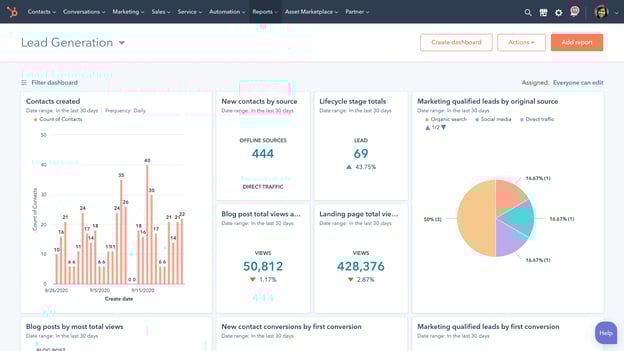
hubspot marketing hub dashboard

Too often, you’ll find a tool that’s powerful but not very easy to use. With this tool, you can attract users with blogs, SEO, and live chat tools. You can then convert and nurture those leads through marketing automation, the landing page builder, and lead tracking features.

With custom reporting and built-in analytics, you can analyze your data and plan out your next move. Plus, HubSpot Marketing Hub integrates with over 500 tools.

Pricing: Free; Starter, $45/month; Professional, $800/month; Enterprise, $3,200/month.
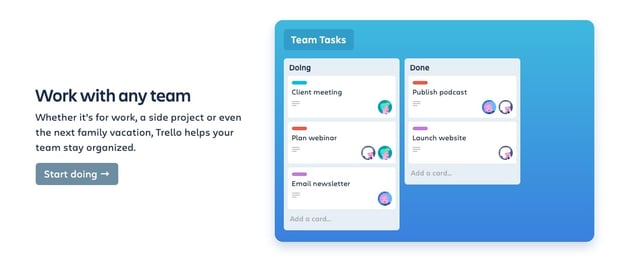
Trello

trello-for-marketing-planning

Trello keeps your marketing team on track and openly communicating about the projects they're working on. Create boards for individual campaigns, editorial calendars, or quarterly goals.

Built-in workflows and automation capabilities keep communication streamlined, and simplicity keeps your marketing team focused on the work that matters.

Pricing: Free; Business Class, $9.99/user/month; Enterprise, $17.50/user/month for 100 users.
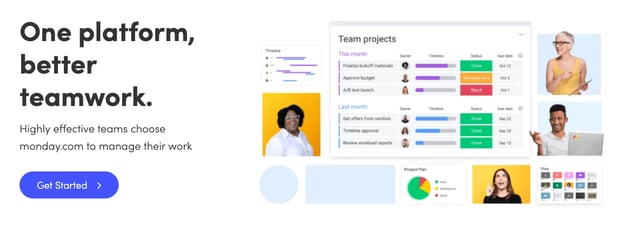
Monday.com

monday.com hubspot integrationEverything on Monday.com starts with a board or visually driven table. Create and customize workflows for your team and keep groups, items, sub-items, and updates synced in real-time.

You can also transform data pulled from timeline and Gantt views to track your projects on Monday.com and ensure deadlines have been met. Plus, with more than 40 integrations — from SurveyMonkey to Mailchimp and, of course, HubSpot — you can visualize your data and ensure your whole company is collaborating.

Pricing: Basic, $8/month/seat; Standard, $10/month/seat; Pro, $16/month/seat; Enterprise, contact for pricing.
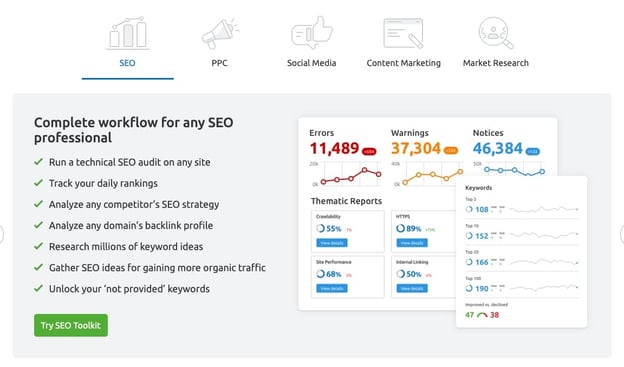
SEMrush

semrush dashboardSEO continues to be a huge factor in the successful ranking of your website.

SEMrush allows you to run a technical SEO audit, track daily rankings, analyze your competitor's SEO strategy, research millions of keywords, and even source ideas for earning more organic traffic.

But the benefits don't stop at SEO. Use SEMRush for PPC, building and measuring an effective social media strategy, content planning, and even market research.

Pricing: Pro, $99.95/month; Guru, $199.95/month; Business, $399.95/month.
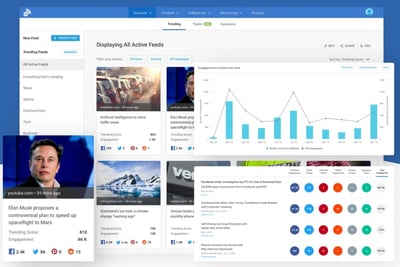
Buzzsumo

buzzsumo marketing strategy tool

BuzzSumo allows you to analyze data to enhance and lead your marketing strategy, all while exploring high-performing content in your industry.

Use the platform to identify influencers who may help your brand reach, monitor comments, and find trends to make the most of every turn.

As your needs evolve, you can also leverage their crisis management and video marketing tools.

Pricing: Pro, $99/month; Plus, $179/month; Large, $299/month; Enterprise, $499+/month.
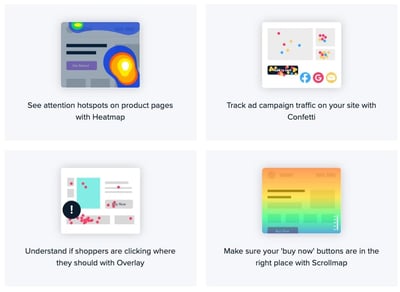
Crazy Egg

crazyegg website optimizationNeed to optimize your website this year? Consider getting started with Crazy Egg. You'll be able to identify "attention hotspots" on your product pages, track ad campaign traffic on your site, and understand if shoppers are clicking where you want them to.

You can even make sure your "Buy Now" buttons are in the best place.

Crazy Egg also offers recordings, A/B testing, and more to help ensure your website is offering the best user experience.

Pricing: Basic, $24/month; Standard, $49/month; Plus, $99/month; Pro, $249/month; Custom options available upon request.

5. Review your media.

Decide what you already have in your arsenal that can help you create your strategy. To streamline this process, think of your assets in three categories – paid, owned, and earned media.

  • Paid media means any channel you spend money on to attract your target audience. This includes offline channels like television, direct mail, and billboard to online channels like social media, search engines, and websites.
  • Owned Media refers to any of the media your marketing team has to create: pictures, videos, podcasts, ebooks, infographics, etc.
  • Earned media is another way to say user-generated content. Shares on social media, tweets about your business, and photos posted on Instagram mentioning your brand are all examples of earned media.

Gather your materials in each media type and consolidate them in one location to have a clear vision of what you have and how you can integrate them to maximize your strategy.

For example, if you already have a blog that's rolling out weekly content in your niche (owned media), you might consider promoting your blog posts on Twitter (paid media), which customers might then reTweet (earned media). Ultimately, that will help you create a better, more well-rounded marketing strategy.

If you have resources that don't fit into your goals, nix them. This is a great time to clean house and identify gaps in your materials.

6. Audit and plan media campaigns.

Cleaning house segues straight into this step. Now, you must decide which content is going to help you.

Focus on your owned media and marketing goals. For instance, will updating the CTAs at the end of your blog posts help you increase RSVPs to your event?

Next, look at your buyer personas. Let's say you work for a video editing software company. If one of your persona's challenges is adding clean sound effects to their videos but you don't have any content that reflects that, make a 15-second demo video for Instagram to show how great your product is at solving that challenge.

Finally, create a content creation plan. The plan should include topic clusters, goals, format, and channel for each piece of content. Be sure to include which challenge it's solving for your buyer persona.

For ideas on content creation or a more in-depth look at how to create a content plan, check out our post, The Ultimate Guide to Content Creation.

7. Bring it to fruition.

At this point, your market research and planning should help you visualize how your strategy will be executed – and by which teams.

The final step is to bring that all together and assign actions to your plans.

Create a document that maps out the steps you need to take to execute your campaign. In other words, define your strategy.

Think long-term when creating this document. A standard strategy document is 12 months. This structured timeline should be the home base for your strategic marketing efforts.

To paint an example, let's go back to the video software company.

Maybe in January, you will launch a software update that improves the exportation process for users. In April, you want to publish an ebook that explains editing terms to your buyer personas, and in September, you plan to launch an integration with other software.

Remember, your digital strategy is unique to your business, so the document should be as well. As long as the strategy includes the pertinent details outlined in previous sections, you'll be set.

Now that we've explored the critical steps of a complete marketing strategy, let's look at some "Why didn't I think of that?" strategies to inspire your own.

Examples of Successful Marketing Strategies

1. Regal Movies

Digital strategy: Owned media

Regal Movies took the Halloween spirit to a new level, even renaming its Twitter account to reflect the spirit of the season. This "Monster Madness" poll is a fun, interactive way to get followers invested in Regal's content:

regal movies' owned media

Image Source

Regal's tweet is an example of owned media because the company was in full control of the answers followers gave (and, apparently, American Werewolf didn't stand a chance).

Regal effectively kept true to their brand by using only classic movies in their poll while still putting a modern spin on it.

This is also a good example of how retweets don't necessarily equal success. While four retweets aren't that big of a deal, check out the votes: 461. That means there were over 400 interactions with a single tweet.

2. Pipsnacks

Digital strategy: User-generated content, earned media

User-generated content is one of the best ways to gain traction in your strategy.

It demonstrates your appreciation for loyal customers and also incentivizes other users' to promote your products for the chance at a similar shout-out.

Plus, sometimes the content your brand loyalists create is really, really good.
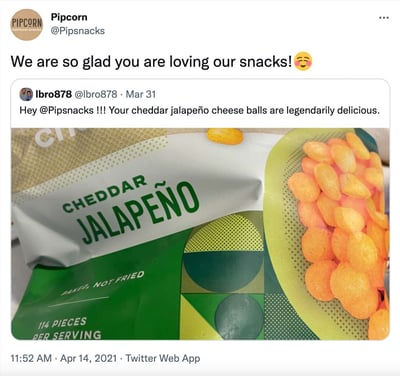
pipcorn marketing strategy example

Image Source

In this case, the consumer is praising the brand’s product. Doesn’t get better than a fantastic review like that.

3. Small Girls PR

Digital strategy: Event marketing

Wait, is that Keke Palmer?

small girls pr twitter

Image Source

Small Girls PR is a boutique PR company based in New York, and one of the company's talents is throwing amazing events for their clients, like Olay. This event recap carousel on Instagram is an effective event marketing example, as it boosts awareness for your brand and offers social proof by featuring a public figure.

4. Superside

Digital strategy: Paid media

Design agency Superside launched an Instagram ad to promote a lead magnet: Their digital ad design guide. While the brand may have created the guide specifically for paid promotions, it’s also possible that they repurposed a high-performing blog post into a downloadable ebook.
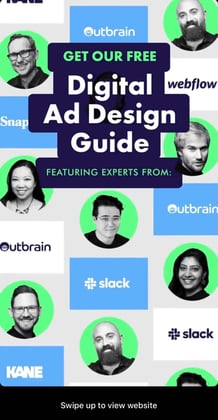
marketing strategy paid media example

In this case, all they had to do was repackage their current content, build an ad around it with creative assets, and run it.

In previous sections, we discussed the power of leveraging multiple forms of media in your marketing strategy. This is a great example of it.

5. Target

Digital strategy: Paid media, Twitter cards

If you've got the budget for paid media, take full advantage of it.

Paid media is when you pay social channels, like Twitter, to promote your content on their site. By doing this, your content reaches new audiences you might not be able to reach organically:

target marketing strategy example

Image Source

This inclusive ad from Target about fall shopping uses Twitter cards to promote the brand and make shopping easy with the click of a button.

More social channels are offering ways for shoppers to purchase in-app or close to it, driving sales and boosting exposure for brands.

What to Expect After Following Your Marketing Process Steps

Ultimately, creating a complete marketing strategy isn't something that can happen overnight. It takes time, hard work, and dedication to ensure you're reaching your ideal audience, whenever and wherever they want to be reached.

Stick with it (and use some of the resources we've included in this post), and over time, research and customer feedback will help you refine your strategy to ensure you're spending most of your time on the marketing channels your audience cares most about.

Editor's note: This post was originally published in October 2019. It has been updated for freshness and accuracy.
Marketing Plan Template


7 Steps to Create a Complete Marketing Strategy in 2021 was originally posted by Local Sign Company Irvine, Ca. https://goo.gl/4NmUQV https://goo.gl/bQ1zHR http://www.pearltrees.com/anaheimsigns
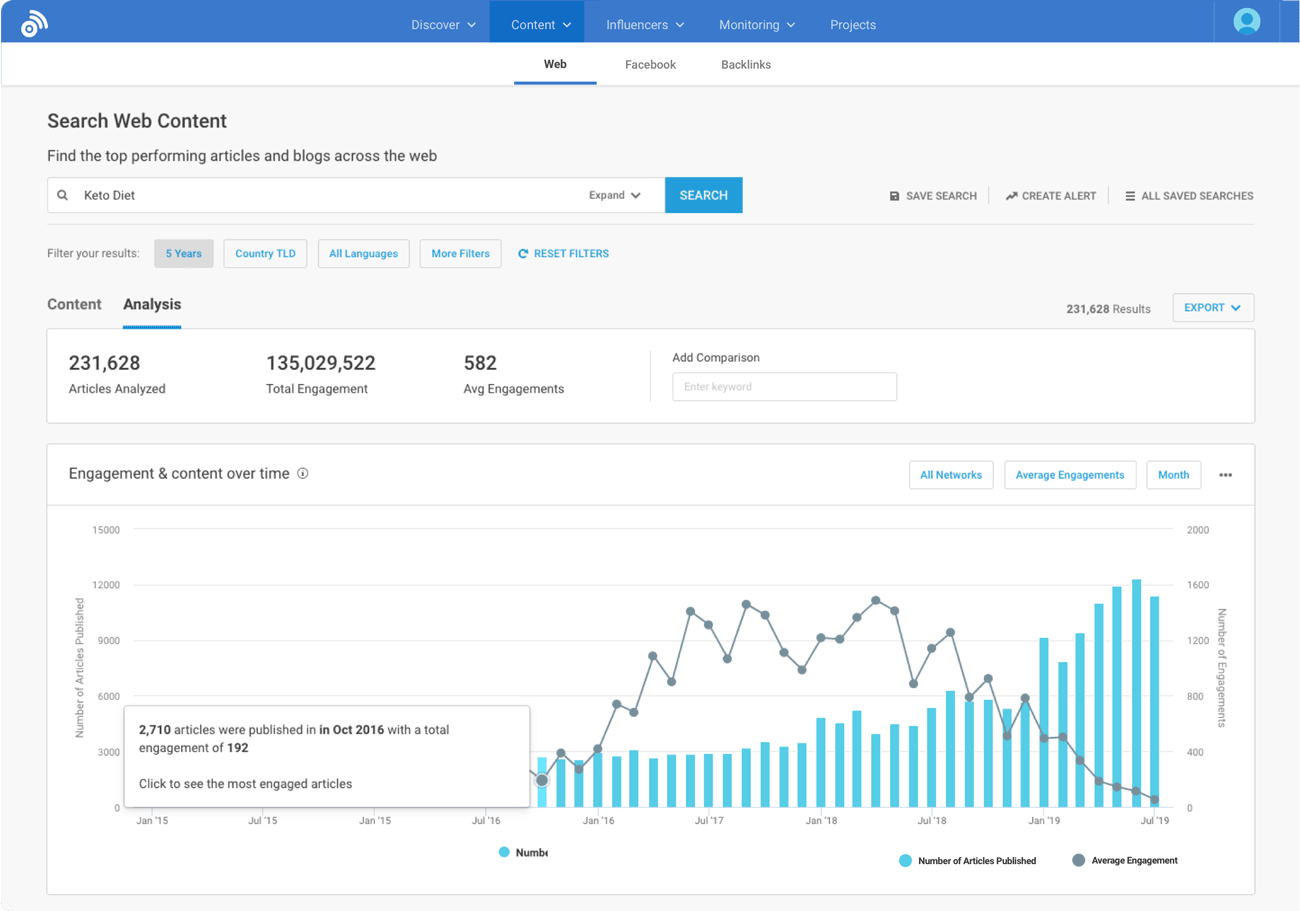
Content Mapping 101: The Template You Need to Personalize Your Marketing

Content mapping allows you to deliver highly targeted, personalized content at every stage of the buyer’s journey, pushing leads and prospects toward a purchase decision. In this post, we’ll go over what a content map is and how you can start content mapping for your brand.

Let’s get started.

Download Now: Free Content Marketing Mapping Template

Why are content maps important?

Creating a content map is important because it personalizes your audience’s experience with your brand. They’re not receiving a one-messaging-fits-all offer or email. Instead, they get content that speaks to them at the right moment.

The idea of a content map may seem new, but it’s not. Marketers hear it all the time: The content you create needs to be personalized. It needs to be aligned with the wants and needs of your customers (and prospective customers). It needs to resonate with them. It needs to feel like it was created just for them.

On its surface, this sounds like great advice. Personalization, giving people content that they're actually interested in ... it makes perfect sense. But coming up with the actual topics that make for a highly targeted content strategy isn't that easy.

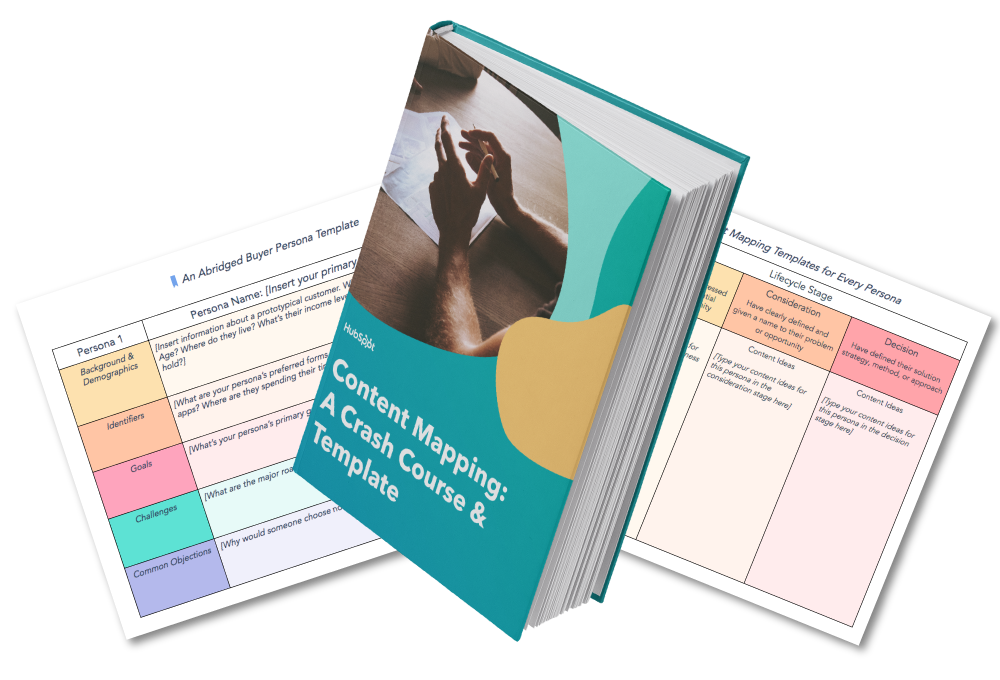
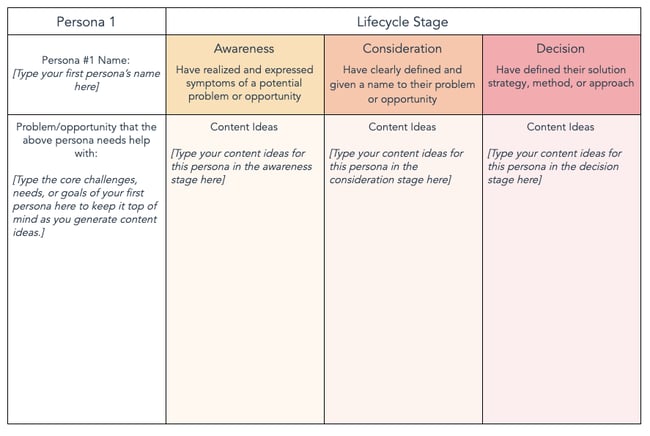
To help you brainstorm and map out content ideas for targeting specific segments of your audience, we've created a new free template resource: Content Mapping Template: Using Buyer Personas & Lifecycle Stages to Create Targeted Content.

content mapping template

Download Your Free Template Now

I'll talk more about how you can use this template in a bit. But first, let’s take a look at how this whole "content mapping" business works.

And when you have this concept down, you'll want to check out HubSpot Academy's free content marketing training resource page to learn how to map a content strategy for your business.

Content mapping supports the customer journey and creates a more cohesive, personalized customer experience.

When it comes to content, one size rarely fits all. To ensure that your company's content is effective at generating and nurturing leads, you need to deliver the right content, to the right people, at the right time. Content mapping is the process of doing just that.

With content mapping, the goal is to target content according to:

Let’s go over these two qualities right now.

Buyer Personas

Buyer personas are fictional, generalized representations of your ideal customers. They help you understand your customers (and prospective customers) better, and make it easier for you to tailor content to the specific needs, behaviors, and concerns of different groups.

The strongest buyer personas are based on market research as well as on insights you gather from your actual customer base (through surveys, interviews, etc.). Depending on your business, you could have as few as one or two personas, or dozens. If you’re just getting started with personas, don’t go crazy! You can always develop more personas later if needed.

Lifecycle Stages

The buyer persona you target with your content is just one half of the content mapping equation. In addition to knowing who someone is, you need to know where they are in the buying cycle (i.e. how close they are to making a purchase). This location in the buying cycle is known as a lifecycle stage.

For the purposes of our Content Mapping Template, we’re divvying up the buying cycle into three lifecycle stages: Awareness, Consideration, & Decision.

  • Awareness: In the awareness stage, a person has realized and expressed symptoms of a potential problem or opportunity.
  • Consideration: In the consideration stage, a person has clearly defined and given a name to their problem or opportunity.
  • Decision: In the decision stage, a person has defined their solution strategy, method, or approach.

By combining buyer personas with lifecycle stages, you can really hone in on specific segments of your audience and tailor content to resonate with each of those segments.

As you get more acquainted with content mapping, you’ll want to consider website content mapping as well.

Website Content Mapping

Website content mapping is the process of planning the pages, blog posts, and offers you’ll publish on your site and identifying which buyer personas those pages and posts will serve. Website content mapping also identifies which pages and posts address different lifecycle stages.

Website content mapping is a key element of website personalization. In essence, you’ll create different pages, posts, and offers to address different buyers at different points in the buyer’s journey.

But before you can write all of that content, the content map comes first. Luckily, you don’t have to create one from scratch.

With the right content mapping template, you can get create a content map that resonates with your audience.

Content Mapping Template

content mapping template

Download Your Free Template Now

To help you create a content map for your own team, we've created a downloadable content mapping template. The template includes an introduction to content mapping, a crash course on buyer personas and lifecycle stages, a content mapping template (plus examples), and bonus buyer persona templates.

With the template, you'll:

  • Learn how to understand buyer personas and lifecycle stages.
  • Identify problems and opportunities that your audience needs help with.
  • Brainstorm highly targeted content ideas that incorporate personas and lifecycle stages.

This template is available in both Google Docs and Microsoft Word.

Whether you want to download our content mapping template or create your own, let's dive into the structure of a content mapping template.

HubSpot Content Mapping Template: How to Use

In our content mapping template, we created a simple grid system. The buyer persona (and a key problem or opportunity that persona is struggling with) is at the start of the grid. As you move from left to right, you're effectively moving down the funnel.

HubSpot content mapping template

Here’s how to fill out each of the sections in the template.

Awareness Stage Content

Your awareness stage content should target the top of the funnel (TOFU). People in this segment are just becoming aware that they have a problem. At this stage, don't try to beat them over the head with product-focused content. Instead, think of how your content can help people become more informed about the problem in general, and you'll (hopefully) find that they continue moving down your funnel as they search for solutions.

Consideration Stage Content

Your consideration stage content, in comparison, can more explicitly mention how your product or service could potentially solve a problem. Keep in mind, however, that at this point in the buying cycle, people are still evaluating their options. So while case studies and demo videos are fine, save your more sales-focused content (estimates, free trials, etc.) for the next stage.

Decision Stage Content

At the decision stage of the game, you can really lean into marketing your products or services. If someone has reached this stage, they've already identified a problem and a solution, and are now getting ready to pull the proverbial trigger. You can begin to send more “salesy” emails and offers that push the buyer toward a purchase decision.

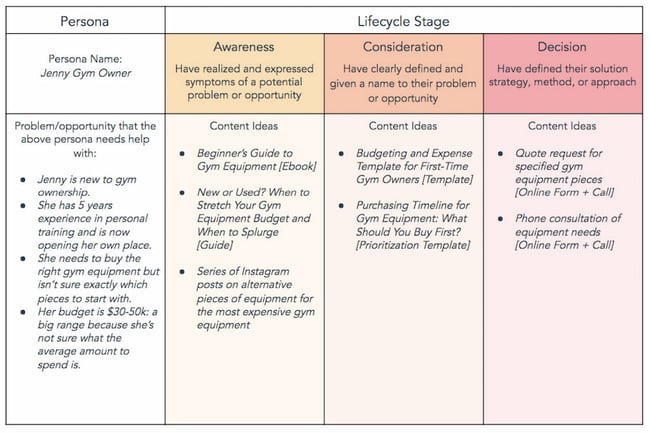
Unsure of what this all can look like when put together? Let’s take a look at an example below.

Content Mapping Example

Content mapping examples from HubSpot

You now know what content mapping is, and you have the template you need to get started. What type of tools can you use to start content mapping?

Content Mapping Tools

Content mapping may seem like a difficult task that requires highly specialized software. It’s not true — it requires simple business tools you may already be using in your day-to-day.

We’ll start with the most basic tools you need to start content mapping, such as word processors and visualization tools. Then we’ll move into the tools that will get you the data that you need to address different buyers, such as a CRM.

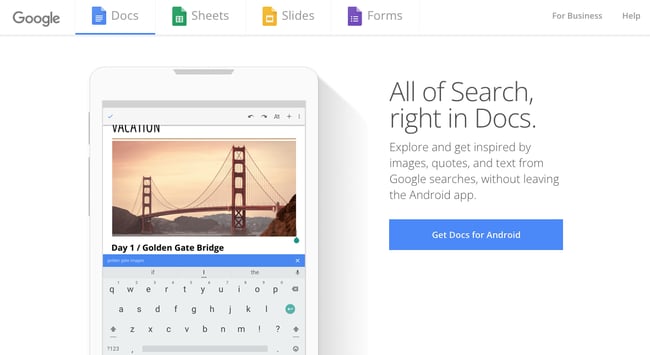
1. Google Docs

Content mapping tools: Google Docs

First up in your content mapping tech stack is your preferred word processor. This is where you’ll outline your content map and write out the actual content once it’s time to create it. We highly recommend Google Docs because it makes it easier to share work across your team, and you never have to worry about backing up your content map.

Pricing: Free

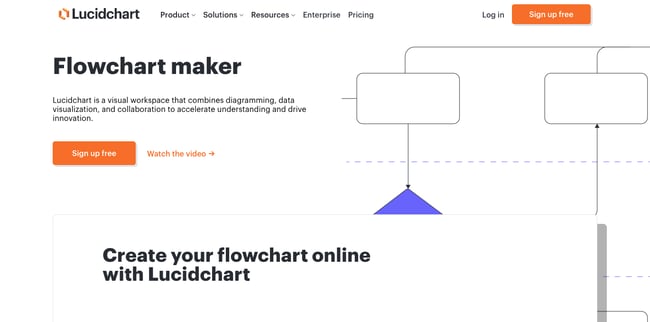
2. Lucidchart

Content mapping tools: Lucidchart

If you’re more of a visual person, then a flowchart tool is a must. Also, if you’d prefer to create an actual content map — with lines and diagrams — then you need a more sophisticated tool than Microsoft Paint (and Microsoft Paint is great, but it may not be what you need). Lucidchart’s flowchart maker is a top-of-the-line tool that also allows you to connect different apps and services. Like Google Docs, it allows you to work collaboratively.

Pricing: Free; $7.95/month (Individual); $9/month (Team); Custom (Enterprise)

3. HubSpot

Content mapping tools: HubSpot's CRM HubSpot’s CRM is the one tool you need to compile all of your data from current and prospective customers. You’ll have access to names, emails, prior engagements, and website visits all in one intuitive place. HubSpot will allow you to discern different lifecycle stages and pinpoint commonalities between customers who are ready to purchase — and customers who are not. As such, you’ll be able to make data-driven decisions as you create your content map.
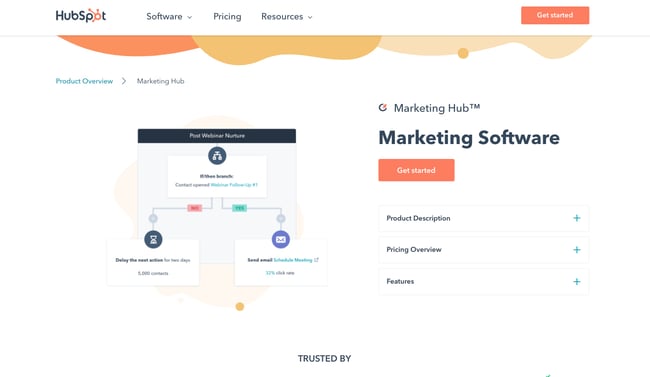

Pricing: Free

4. Marketing Hub

Content mapping tools: Marketing Hub

Once you have access to the customer data that you need, it’s time to write the content and distribute it. For that, you need a marketing automation tool. Marking Hub comes bundled with everything you need to create a personalized experience for your leads and prospects, such as email marketing tools. It’ll help you execute your content map once it’s ready for deployment.

Pricing: $0/month (Free); $45/month (Starter); $800/month (Professional); $3,200/month (Enterprise)

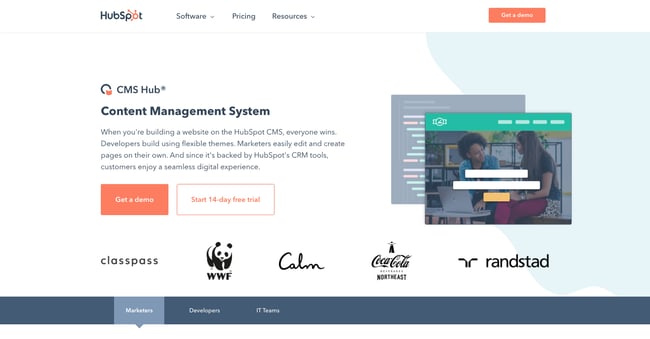
5. CMS Hub

Content mapping tools: CMS Hub

A content management system is probably the most important tool for your content mapping efforts. A CMS will allow you to publish personalized content that targets different site visitors at — you guessed it — different stages of the buyer’s journey.

CMS Hub is fully integrated with HubSpot’s CRM platform and Marketing Hub, allowing you to create a seamless experience for your customers as they receive the content you’ve designed for them. It will help you execute your content map flawlessly. Even more importantly, with CMS Hub, you can continue testing and re-testing your content for better results.

Pricing: $23/month (Starter); $360/month (Professional); $1,200/month (Enterprise)

Not quite convinced that content mapping is worth it? Let's hear from some marketers who are actually doing this stuff ...

Content Mapping Tips From the Pros

1. Educate your audience.

Content mapping tip from Adanna Austin“We all have to create compelling content to attract our ideal clients, build an active and engaged audience, and get daily sales. Spend time building your audience by educating them and engaging with them. No one has built a business by posting the same image or type of image everyday on socials and not having convoys with their audience. It is not just about showing up, but doing so with intention so you can attract your ideal clients who will buy from you.”
- Adanna Austin (Business Coach and Consultant, Marketing Dynamics Business Solutions)

2. Give your prospects the information they need before they ask for it.

Content mapping tip from Laura Hogan"With content mapping, you can give your prospects the information they are asking for before they even ask for it. Buyer personas and lifecycle stages allow you to be one step ahead of the game by mapping out what your prospect's next steps are and delivering them the content from numerous different avenues.
We create buyer personas as part of our onboarding process and everything we do from content offer to daily tweets is centered around that document. We also always ask ourselves, 'Would business owner Bob open this email, click this tweet, or download this offer?'"

- Laura Hogan (Founder, Digital Atlas Marketing)

3. Provide different conversion paths for different personas.

Content mapping tip from Marc Herschberger"When mapping out content for your site's visitors, it's important to remember that when it comes to purchasing decisions (BOFU conversions, especially for B2B and high-priced items), there are some personas out there who would rather speak to someone on their terms rather than fill out a form for a consultation. Understanding how they are most comfortable when it comes to making decisions can help you understand what points of conversion will be the most relevant and successful for that persona.
Optimizing your site pages (landing and thank you pages, as well), TOFU & MOFU offers, and workflows with direct contact information (phone #, email, etc.) is a great way to ensure that visitors, prospects and leads who may shy away from form submissions still have readily available, alternate means of converting."

- Marc Herschberger (Director of Operations, Revenue River Marketing)

4. Create specific content that appeals to specific personas.

Content mapping tip from Spencer Powell"Mapping out buyer personas and lifecycle stages is extremely important when creating content. In terms of buyer personas, it's easy to see that a Marketing Director will have different questions, information needs, and interests compared to a CEO. Both of these personas may be searching for your product or service, but they'll be looking for different topics. By creating content that appeals to each audience, you can be more effective in attracting that specific audience.
By the same token, each persona of yours may be in a different stage of the buying process, so it's important to think through and create content that appeals to someone looking for basic, high-level information such as an ebook, as well as specific information like a pricing guide or case study.

One tip I'd suggest for anyone with pretty different personas would be to dedicate an entire section of your site to each audience. That way, when you pull in your audience, all the content is directed toward them.

We actually took this concept and went a step further by creating unique brands for each one of our vertical markets. Each brand has its own section of the website, its own blog content, and its own premium content (downloadable offers). It's really helped us attract and convert visitors at a higher rate because all the content is more relevant to that persona."

- Spencer Powell (Chief Executive Officer, Builder Funnel)

4. Pull content topics from your sales process.

Content mapping tip from Diona Kidd"By taking the buyer and buying stage into account when creating content, you can be sure that you're designing content to help move them through the buying process.
In addition to mapping content to the buyer profile and buying stage, we regularly pull topics from the sales process. Then we offer the content in later sales calls. This helps us not only evaluate the relevancy of the content but also the interest of the buyer. We encourage clients to do the same."

- Diona Kidd (Managing Partner, Knowmad)

Content Mapping is Key to Your Company’s Growth

Delivering the right content at the right time can do wonders for your company’s growth. By meeting prospects’ needs based on their persona and lifecycle stage, you’re delighting them at every turn, boosting your chances of winning a loyal customer and turning them into a brand evangelist.

Editor's Note: This post was originally published in March 2014 and has been updated for accuracy and comprehensiveness.

Blog - Content Mapping Template

content mapping template

Content Mapping 101: The Template You Need to Personalize Your Marketing was originally posted by Local Sign Company Irvine, Ca. https://goo.gl/4NmUQV https://goo.gl/bQ1zHR http://www.pearltrees.com/anaheimsigns