Tuesday, June 29, 2021

The Top 7 Free Alternatives to Adobe Illustrator of 2021

Adobe Illustrator is a popular tool for designing vector graphics, logos, icons, and more.

But when you’re a web or graphic designer with a small budget, you probably can’t afford Adobe Illustrator’s steep $239.88/yr pricing.

Luckily, there are plenty of top-notch free alternatives on the market, some of which offer features unparalleled by Illustrator. In this post, we’re sharing the top seven free alternatives to Adobe Illustrator so you can produce beautiful designs on a budget.

Take the crash course in visual content creation that delights customers on every digital channel.

If you’re shopping for a program that offers features comparable in quality to Adobe’s product, check out our list of the top free alternatives to Illustrator.

1. Inkscape

One of the most comparable substitutes to Adobe Illustrator, Inkscape has plenty of similar sketching, illustrating, and editing tools, including keys to move and rotate by screen pixels, bitmap tracing, color painting over objects, and edit gradients with handles.

You can create complex textures and gradients in Inkscape, too. Unlike some free tools, this tool allows layering, grouping, and locking objects so you can completely customize the look and feel of a project while maintaining a streamlined workflow.

Inkscape is a quality product for pro- or semi-pro web designers working within SVG file format. It also offers an open source vector graphics package, so if you have the technical skills, you can incorporate Inkscape into your other software programs.

Best for:

Pro and semi-pro illustrators and web designers

Platform:

Mac, Windows, Linux

Inkscape Free Adobe Illustrator Alternative

Image Source

2. GIMP

GIMP, which stands for GNU Image Manipulation Program, has limited vector functions but has similar tools to Photoshop, making it an impressive image editor with powerful image manipulation options. Better still, GIMP provides options for customization and third party plug-ins, so if your image editing needs are somewhat unique, you might want to check this tool out.

GIMP is free and open source, so there is a market of third party plugins to enhance your productivity and design capabilities. If this sounds technically advanced, GIMP offers tutorials for newcomers to the tool so you get the most out of it.

Best for:

Advanced designers who need a custom tool to create illustrations and graphics

Platform:

Mac, Windows, Linux

GIMP Free Adobe Illustrator Alternative

3. BoxySVG

BoxySVG runs as an extension in Google Chrome, so it’s easy to store vector graphics including icons, charts, and illustrations on the web. It provides options for Google Fonts integration and has an Open Clip Art Library, as well as illustrator tools including pens, bezier curves, groups, shapes, text, and more.

Ultimately, BoxySVG is simpler than Illustrator, and while this means less advanced tools, it also means a quicker and easier process for creating vector graphic files.

The intuitive user interface gives you a clean workspace so you can complete your workflow without clutter or overlapping toolboxes. Keyboard shortcuts keep tools accessible without switching between tabs or searching through several icons.

The 15-day free trial includes these features. After that, you’ll have the option to purchase either the premium or standard plan.

Best used for:

Designers who produce a low volume of designs, but still need a quality tool

Platform:

Mac app, Windows app, Chrome app, Web app

BoxySVG Free Adobe Illustrator Alternative

4. Pixlr

Pixlr offers plenty of features for editing, creating, and sharing creative images. While it’s less advanced in function than Illustrator, it’s cloud-based and supported on mobile, desktop, or the web.

Pixlr has two options: Pixlr E for photo editing and Pixlr X for graphic design. Pixlr X includes regularly updated templates for social media, presentations, resumes, business cards, newsletters, and event invitations. Pixlr E includes a photo collage maker that combines your favorite photos into a clean, cohesive design.

Best used for:

Individuals whose position requires them to work from different devices to create images

Platform:

Windows, Mac, Web, Mobile

Pixlr Free Adobe Illustrator Alternative

5. Gravit

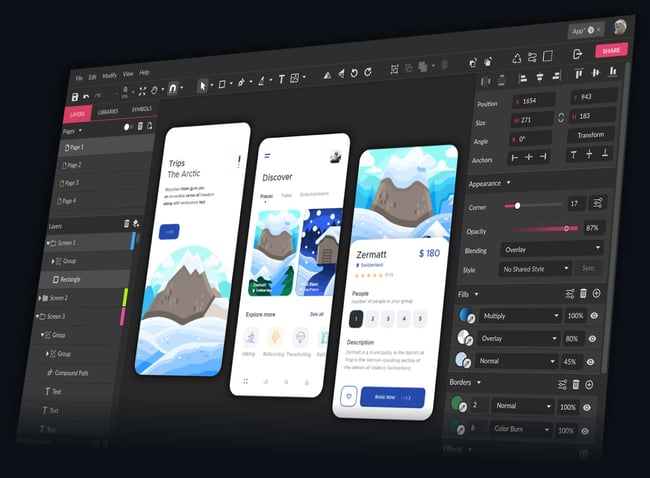
You’ll find plenty of your basic vector-editing tools in Gravit, including pen, line, knife, slice, bezigon, gradient editor. It also has more advanced features, such as boolean operations, symbols, international text support, and more.

Plus, it’s designed in a user-friendly interface and offers video tutorials. Gravit works from right within any browser, which means you can edit and export your files anywhere with wifi. It also supports cmyk rendering, so you can print quality images without downloading anything.

You can also import and export files in a variety of formats including pdf, png, jpg, svg, and sketch — which makes this option more flexible than Illustrator.

Best used for:

Freelance illustrators and designers who need a robust design tool

Platform:

Mac, Linux, Windows, Chrome, Any Browser

Gravit Free Adobe Illustrator Alternative

6. Affinity Designer

With rasterizing controls, infinite zooming, a precision-engineered pen tool, automatic snapping points, colors that pop, and an extensive array of vector editing tools, this system truly compares in design and function to Adobe Illustrator. The full version is $49.99, but the 90-day trial version is free and offers plenty of the full version tools.

What’s unique about this tool is that it supports vector and raster workspaces — with the click of a button you can switch between the two for a versatile design experience.

Your workflow is the foundation of a great design, so Affinity Designer gives you unlimited artboards, detailed version history, customizable keyboard shortcuts, and the ability to save your file in the most popular vector and raster formats.

Best used for:

Experienced designers with a need for advanced vector and raster tools

Platform:

Mac, Windows, iPad

Affinity Design Free Adobe Illustrator Alternative

7. DesignEvo

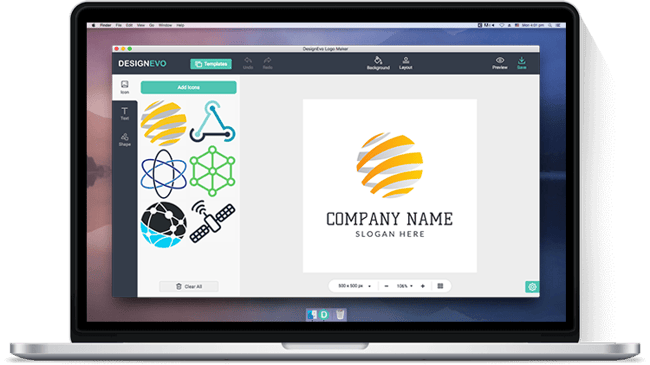
Although this design tool is free, it brings a lot of value. With over 10,000 design templates to get you started, this app is ideal for the designer who’s just starting out. DesignEvo helps you perfect your style, develop your workflow, and build your portfolio — all without spending a penny on expensive software.

You’ll have access to royalty-free fonts, color schemes, and an easy-to-use logo editor (plus dozens of logo categories). When you’ve designed the perfect vector, logo, or icon, export it from DesignEvo and into your preferred storage cloud in the most popular high-resolution formats.

Best used for:

Individuals starting a business who need a logo and other assets

Platform:

Mac

Design Evo Free Adobe Illustrator Alternative

Adobe Alternatives for Any Budget

Creating professional vector graphics doesn't have to be an expensive line item in your budget. If you're just starting out in the graphic design field or if you're an experienced designer looking for budget-friendly tools, one of these free alternatives is sure to work well for you.

Editor's note: This post was originally published in June 2018 and has been updated for comprehensiveness.

download 195+ free design templates


The Top 7 Free Alternatives to Adobe Illustrator of 2021 was originally posted by Local Sign Company Irvine, Ca. https://goo.gl/4NmUQV https://goo.gl/bQ1zHR http://www.pearltrees.com/anaheimsigns

12 Tips on How to Become a Manager: From 5 People Who Did

So, you want to become a manager.

The million-dollar question is, how do you get noticed?

Some say it's by taking on big projects. Others believe face-to-face interactions with upper management are key. The truth is, it's a combination of those two steps and many others.

→ Click here to download leadership lessons from HubSpot founder, Dharmesh Shah [Free Guide].

We'll cover them all in this article, featuring five HubSpot managers who share their journeys to becoming managers and what they now look for in managerial candidates.

1. Add value to your team.

The number one way to get noticed as management material is by adding value to your team in your current role.

What does that look like? Well, it depends on your position.

For Diversity, Inclusion, and Belonging Team Manager at HubSpot Ashley Ladd, it started by volunteering for presentation slides on diversity and inclusion during quarterly meetings.

"It's very easy for our leadership team to be like, 'I can do that,' or 'our chief legal officer can do that,' or 'somebody could do it,'" said Ladd, then program manager, "but I was able to raise my hand and say 'Hey, I'm willing to take on this part of the presentation' or 'I'd love to have that opportunity.'"

Ladd said it pushed her outside of her comfort zone but also gave her visibility with upper management. Furthermore, it allowed her to share more about what she did, and show why she was passionate about her work.

"Those were some of the things earlier on that set me up for being seen as a leader in our space," said Ladd.

Carina Carlos, product expert manager at HubSpot, added value by identifying a problem in her previous company's ticket management system and solving for it.

"Solutions aren't just waiting," said Carlos. "They're not just there, you have to think about them, be creative and cover them."

And that's exactly what she did. After brainstorming and developing a solution, Carlos pitched it to management and reduced ticket volume by around 40%.

"Taking ownership [is what gets you noticed for management roles], leading projects and thinking of projects that can have a bigger impact in terms of scalability and solving for the root," she said.

Christopher Simmons, small business sales manager at HubSpot, says adding value looks like a combination of the following:

  • Being successful in your role
  • Aligning with the company strategy
  • Filling in gaps leadership may have
  • Giving your perspective proactively
  • Speaking up on behalf of people

He believes it requires shifting from an individual contributor mindset to a team one. But as you identify these opportunities, make sure you're not stepping on other people to do it.

"A key to adding value is dropping pretense," Simmons says. "What often happens is that people can feel like you are using them as a piece to get to wherever you're trying to go."

Whether you start small or go big, there's always an opportunity for you to add value without pushing others to the side.

2. Volunteer for projects that give you visibility.

One of the best ways to be noticed by upper management is by working on projects your leadership team cares about.

"I was always raising my hand for something because I knew it would give me experience as well as exposure to what I wanted to do and what I didn't want to do," said Customer Success Manager at HubSpot Davey Jones.

"So, I had my shortlist of non-negotiables for whatever my next opportunity would be, even if I was leading people," she continued, "and that came from raising my hand and volunteering."

Your first step is identifying what those projects are, through company meetings and conversations with your managers and other leaders. Next, break the projects up into two categories: small, low-commitment versus long, high-impact.

Jones emphasizes the importance of having measurable goals to prevent overextending yourself. Because then, you end up underperforming.

The formula is this: Identify projects you'd like to work on and decide how many you will work on per quarter.

"It circles back to leveraging those additional opportunities because a lot of that has a leadership undertone in its own right," said Jones. "And when you take advantage of those opportunities, you realize 'Do I want to manage people?'"

During this process, Ladd offers a key piece of advice: zoom out and up.

"As a manager, you have to be able to take yourself out and up and be like, 'Who is this impacting? Who else do I need to talk to and who else do I need to collaborate with?' she said.

She continued, "I think sometimes in those moments where I felt that sense of urgency to get something done, I definitely missed the opportunity to say 'How else can I think about this from a global perspective or a manager perspective?'"

Being solution-oriented is great, but make sure you don't rush. Have conversations with your colleagues about the best ways to move forward, get their input, and go from there.

Jones adds one more thing to keep in mind when volunteering for projects: Don't be afraid to change your mind in the middle of it, if it goes beyond the original scope.

"Having a conversation or ongoing conversations with your manager helps because then, they can say, 'What's on your plate and what do you want to take off of your plate?'" said Jones. "And then, you look at your projects and say, 'I don't like this one, so I'm going to take it off.'"

This is where leveraging your manager's help is key.

3. Take calculated risks.

When I asked Vrnda LeValley, customer training manager at HubSpot, if there's a particular moment that stands out to her as a manager-making moment, this is what she answered.

"Yes, a lot of them do and usually they were linked to 'This might be the day I lose my job,'" she says.

Needless to say, risky moves get you noticed.

"I actually prefer people who do too much. I would rather reel you back instead of push you out there because leadership is a vulnerable position," said Simmons. "When you're a leader, you're going to have to step out and be vulnerable and be exposed."

He continues, "And it's a lonely place so, I want people who kind of push the boundaries a little bit. Then, we can teach, tailor, and cultivate."

However, taking risks doesn't mean being reckless or a bully.

You need to have a pioneering spirit to be an effective leader, Simmons says, so shrinking back isn't the answer.

Pay attention to what the business needs and be ready to act on it. This can mean having difficult conversations or stepping up when it's the right thing to do.

"Ask yourself, 'How can I do this in a way that is authentically who I am and honors people at the same time?" says Simmons.

If it seems scary to take the risk, Carlos suggests looking at the bigger picture and framing it as a service to the company, your customers, and the team.

And if you mess up, own up to it.

"There needs to be a self-awareness there and an opportunity for you to raise your hand and say 'I didn't do something well,'" said Ladd. "Being able to apologize as a manager – it's humbling work and you have to be able to say, 'I totally messed that up' and 'Here's my action plan going forward,' I think that builds trust."

4. Mentor and be mentored.

Every manager I interviewed spoke of a commitment to mentor and/or be mentored.

Why is mentorship vital to becoming a manager? LeValley says it helps you broaden your thinking.

"You won't know when you're thinking small cause you don't know what big is, so you need a sounding board for that," she said.

The question is, how do you identify the right people to seek out mentorship from? LeValley suggests asking yourself who impresses you.

"Who do you see that is making the moves that matter and that is coming up with the ideas that are implemented?" says LeValley.

From there, she has a pro-tip: Meet with the leaders' executive assistants within your first 90 days because they know what matters most to their supervisors.

"They're designed to have their finger on the pulse," LeValley says. "They're designed to assist, so it's right up their alley."

However, that's not the only route toward mentorship. Simmons got informal mentoring at first.

"I went to a group, had a leader – she was amazing, phenomenal [and] she mentored me but it wasn't labeled as a mentoring relationship," he said. "Once I decided to move toward management, I went and got formal mentoring."

He reached out to his then-VP for advice on how to take the next step in his career and asked for mentorship.

Figuring out who to meet with is only one step of the process, the next step is having an action plan for these conversations.

"Whenever I would work with him (my mentor), I would bring what I wanted to talk about. I was proactive," said Simmons. "I didn't want to be another deduction from his time, another liability. I wanted to be an asset."

Simmons didn't necessarily want answers to specific tactical questions but instead, learn how a leader thinks.

"I wanted to first connect to the story. We learn best through stories," he said. "So, I want to hear their career path, what their journey has been like. If I can figure out how you think, I can replicate the results."

He also leveraged peer mentors.

"That really is the secret sauce for me," said Simmons. "We would kind of mentor each other informally and teach each other things. And I adopted that throughout my career."

When Simmons came to HubSpot, he adds that his first step wasn't meeting with the directors, it was networking across with his fellow managers. In particular, those who could offer diversity of thought.

"I am trying to think with people who can supplement my weaknesses or development areas. I know I'm strong in the art of leadership so, I like talking to people who like being in that space," he said.

"But I am also trying to think like a person who loves systems. So, I'm trying to find people who can think about the business systems, [and learn about] the processes they used."

With mentoring, there's humbleness in knowing that you don't know everything and a willingness to learn from both your peers and your leaders.

5. Speak up and be bold.

Speaking up can be hard, especially at work. But, these five managers agree it's necessary to become a manager.

"You need to be the voice of reason and fairness on the team you're on," said LeValley. "You need to be the person who says, 'Hey, that's not nice and that's not necessary,' and 'Let's hear the idea out.'"

Simmons echoes this sentiment and thinks back to his own experience.

"There were moments early in my career when I had a platform and I didn't say what I know I needed to say, my gut was saying 'Say something' but I was like, 'Oh they can't handle this,'" he said. "Those were missed opportunities because leaders have a pioneering spirit, that's part of the DNA of the best leaders that I've studied."

Simmons' point is that leaders can handle a little pushback.

If you feel scared, Ladd says it helps to think of the bigger picture.

"it's very easy to get very granular and be like 'This impacts me and this is the issue I'm having' but what I try to do is take a step back and realize that this can't be just a me thing," she says. "I could be feeling this way, but I bet you, eight or 10 other people are feeling this way, too."

It's about lending your voice to be that bridge between all these voices, she says, and articulating it in a way that feels it doesn't feel like an attack but empowering instead.

Ladd recalls last year being a pivotal moment for her to speak up when the conversation around social justice was at the forefront.

"I could just continue to do my job, keep doing what I'm doing and giving feedback here and there," she said, "but I was able to step up and say 'It's not just about me anymore, it's about our community here."

Speaking up can (and should) also extend to your customers.

In her role in customer success, Jones fiercely advocated for her customers.

"When I think back to my role as an individual contributor, it was mostly around doing what was right for the customer, no matter how many people disagreed with me," she said, "and being able to advocate for them in a way that somebody else, who was a little bit shyer or didn't think they had enough buy-in or support, would."

And because she did that, customers returned the favor by singing her praises to upper management.

One thing you want to keep in mind though is your timing. LeValley had to learn that lesson.

"I would ask these questions in a group and the whole group would reel and I'd be like 'I just wanted to know' and not realizing the impact," said LeValley. "So, be very aware of your influence as you're building your brand."

It won't always be clear when the right time is, but consider what stage the company is in and what its priorities are.

6. Connect with your leadership team.

Part of becoming a manager is forging connections with the leaders at your company and understanding the bigger picture.

"Put yourself in the rooms that matter when you can," said LeValley, "even if it's 'Hey I just want to touch base for 15 minutes,' or 'I had an idea about this,' 'Can you explain the strategy behind this?'"

This requires some visibility, which some would say it's harder to get these days as working remotely is the new norm. You can't exactly start a conversation with upper management after a meeting, or have a quick word while getting coffee in the communal kitchen or get to know them at a happy hour.

But LeValley thinks it's actually easier now: fewer interruptions and distractions.

Set up an initial coffee chat with those key people you're interested in speaking with and go from there.

LeValley pro-tip: Call your first meeting a coffee chat and everything thereafter a strategic touch base or something similar.

"Don't marginalize yourself by calling it a coffee chat after the first one."

It's all about framing your conversations in a strategic light because that's how you want to be viewed.

7. Be a resource to others.

One thing Simmons learned from his mentors is the importance of supporting your peers.

"My leader would say, 'Whenever we promote someone, we want everybody in the org to say, 'OK, that makes sense," he said. "It makes sense for that person to be in that role because they've been adding value for so long.'"

Jones did it by always making herself available to assist her colleagues.

"I was called somewhere between like the 'mama bear' on the team and then also be a first responder," said Jones, "because whenever there was an issue, somebody would call me in and say, 'Davey, I know you're not a part of this thing, but can you help us put this fire out?' And I'm like, 'OK, give me the problem.'"

She also got involved with new hire onboarding, unofficially mentoring others on her team.

"Typically, what happens before somebody goes into leadership, you're going to ask somebody else, 'Hey, tell me about X. Have you worked with them before? What were your experiences?' Simmons said. "And if you're a person who burns bridges because you're not people-smart, then we should know that before."

Wondering what are some actions you can take today to support your colleagues? Listen to their concerns, offer to help when you can, and provide resources.

8. Have career conversations with your manager.

As you start making plans to become a manager, leverage your manager's insight and support.

"Every single day, I would ask my manager, 'What can I do to make your job easier,?' which is different from 'How are you?'" said LeValley. "I asked my manager and my skip-level, whom you should definitely be meeting with at least once a quarter, 'What could I learn or be good at that would make this organization better?' and then you do it."

This is an opportunity to make your aspirations clear with your manager and find opportunities to show what you're made of.

"Being able to make the space and time for conversations with your manager is the thing that helps move the needle," said Ladd.

Start by asking your manager for quarterly career chats. Then, prepare talking points and areas of focus. Lastly, keep your manager informed on your progress, the projects you're working on, and leverage their help to identify career development opportunities.

9. Act with empathy and vulnerability.

Now more than ever, having empathy is central to being a good manager.

"I think companies tend to hire managers because they're functional, right? You can get the job done right. You had experience in this thing for three to six years," said Jones, "but they never really have the behavioral questions in there like, how do you manage your people and how do you manage the culture of your team?"

During the height of the COVID-19 pandemic and the fight for social justice, Jones was hiring managers and she looked for people who made concessions for their team, ones that weren't mandated by HR.

"How do you show up for somebody in a way that you may not have considered had you not gotten to know them a little bit more?" she says.

Managing people is a very delicate balancing act, adds Carlos, so it requires someone who can be vulnerable, create psychological safety, and show up for their team.

"Being able to bring out the best performance in them is a dance you have to learn to do each time," she says.

So, how do you practice empathy? It starts in your role. Look at how you speak to customers. Do you understand their struggles? Do you prioritize their needs?

What about your peers, do you listen actively to their ideas and concerns? Do you ask questions to get to the root of their problems?

These are all ways to lead with empathy before you step into a managerial role.

10. Know the bigger picture.

1When you become a manager, your priorities take a backseat and the company's needs take the wheel.

This requires understanding the company's broader strategy and investing in projects that align with them.

It begs the question: Does your purpose align with your company's?

That's why before you seek out that management role, LeValley recommends getting clear on your 'why.'

"If you ask me why I want to get promoted and why I want to become a manager, [the answer is] because before I retire, I want to be responsible for supporting 15 people from marginalized communities to senior manager level," she says. "You can't argue with that answer."

Once you identify your 'why,' mean it, voice it, and take action.

"I look for why they come to work, why they say the things that they do, why they support the decisions they support, why they speak up on behalf of others," LeValley says. "If they do, I look a lot of what really motivates them, because if it's money, you're not my type of manager."

For LeValley, your 'why' should go beyond yourself. It should be a desire to elevate others and support their success.

A big red flag is me-statements.

Phrases like: "I can do it but I don't see how this is going to get me noticed," or personal success stories that don't mention anyone else.

"People that see the train heading off the tracks, and maybe they get off, but they don't bring anybody else with them," says LeValley.

Carlos says another concern is someone focused on just hitting their own goals.

"It would be a little concerning if someone was not looking at things holistically, [saying things like] 'I hit like this metric of X tickets, therefore, I should be a manager,' she said. "It's not just about that, there's a lot more to consider."

She adds that you have to focus on empowering those around you.

"What the mindset shift for a manager is, how do you multiply your impact through these people and empower them, work through them, lead them toward this conclusion and this performance?" says Carlos.

11. Learn and practice.

Who better to learn from than people who have done it before?

You already know this, of course, that's why you're reading this article. But let's explore how our HubSpot managers learned and practiced leadership before they stepped into their roles.

"One of my mentors would say the call to leadership is a call to preparation," Simmons said. "So, one of the things I would do, and I'm kind of maniacal about this, is read everything I could on leadership, watch videos, listen to talks.

Simmons' favorite books on leadership include "Start With Why" by Simon Sinek, "Multipliers" by Liz Wiseman, "Extreme Ownership" by Jocko Willink and Leif Babin, and "The Ideal Team Player" by Patrick Lencioni. Oh, and anything by John Maxwell.

Simmons also volunteered for leadership roles outside of his company.

"Following the 10,000-hour rule, I was spending two hours every Saturday for eight years,

not only facilitating conversation within the group but also taking leadership roles, organizing community service projects," he says.

"[Part of that preparation] is volunteering out the time to become a better leader because again, you are a leader before you actually have the role."

On her end, Ladd leaned on her colleagues who exhibited behaviors she wanted to replicate.

"Doing the work before you get there is so important," she says. "For me, it was 'What's that thing Maggie does to ensure that folks feel psychologically safe in meetings?' I want to make sure I do that, too."

She continued, "How do you facilitate an in-depth conversation like Alex does and make sure that it's something that folks want to engage with?"

Learning from your peers is as valuable as learning from the greats. Once you learn the strategies, practice, practice, practice.

12. Network across.

One of the biggest missed opportunities you can make on your journey to becoming a manager is not connecting with your peers.

LeValley recalls her own experience with this.

"I was in an environment where I was considerably older than the colleagues in my office and I wasn't into what they were into. So, I did a lot of separating myself because look, I'm here to do a job [and] I'm going to go to work," she says, "but that wasn't good because I didn't receive feedback like 'Are you a fit?' That shouldn't matter, but it does. Are you a fit for management?"

She was trustworthy, professional, and capable, but one thing she hadn't thought about was the social aspect of being a manager.

"When we go out for beers as a management team, do we want you there? And I contrast that with my friend who doesn't drink at all, but they still wanted her there," LeValley adds. "So it's not that you have to drink."

Not only is networking important for getting that approval from your peers, but also getting to know them.

"One indication of a good manager is what they know individually about all the other people that they used to work with," Jones says. "If you don't know much about them, like their individual working styles, then that tells me that you are managing them in a one-size-fits-all approach."

Being a manager means understanding that it takes different tactics to manage different people. You'll only know what those are by getting to know everyone on a personal level.

At the core of all these tips is a commitment to elevating those around you and being aligned with the company's needs.

By using a combination of the tactics outlined above, you'll become a manager in no time – just as these five managers did.
New Call-to-action


12 Tips on How to Become a Manager: From 5 People Who Did was originally posted by Local Sign Company Irvine, Ca. https://goo.gl/4NmUQV https://goo.gl/bQ1zHR http://www.pearltrees.com/anaheimsigns


Monday, June 28, 2021

9 Business Challenges Every Small Business Struggles With (And How to Fix Them)

In the first few years of business, small companies come up against a lot of different challenges. Some are harder than others to overcome — and, according to the U.S. Bureau of Labor Statistics, about 20% of small businesses fail by the end of their first year. By the end of their fifth year, 50% go under; and by the tenth year, that number rises to 80%.

With those survival rates, it’s easy to see why folks face the first few years of business with trepidation. But, many common business problems and challenges are actually fixable. Many times, you’ll find you need to take a step back, assess your pain points, and rethink your strategy. 

In this post, we’ll discuss common challenges that small businesses may face, along with tactical advice about how to fix them.

Download Now: State of Marketing in 2021 Report

1. Finding Customers

This first one isn't just a small business problem. The marketers at well-known companies like Apple, Toyota, and McDonald's don't just sit around waiting for the leads to come in — even the biggest, most successful companies have people working hard every single day to find new customers.

But, for small businesses, the challenge is even more significant. How can you find customers when you’re not a household name? And, there are so many channels to focus on for acquisition, but how do you know what to prioritize?

In addition, acquisition costs are incredibly high, and small businesses may not have the same spending power as larger, more established businesses. In fact, the cost of acquiring new customers has increased almost 60% over the past six years. If this is something you’re struggling with, you’re not alone: 49% of companies report that customer acquisition is their primary marketing objective. 

How to Fix It:

Finding customers starts with figuring out who your ideal customer is. Spraying and praying doesn't work for anybody — you need to make sure you're spreading the word to the right people.

Craft an idea of what your target customers look like, what they do, and where they spend time online by building your buyer personas. This free guide will walk you through the process and provide customizable templates to fill out and create representations of your ideal customers.

Creating very specific templates can dramatically improve your business results. Once you’ve built your personas, you can begin creating content that caters specifically to your target demographic and share it in the channels you know they’re in, with the messages you know they care about.

2. Increasing Brand Awareness

If your customers don't know who you are, how will they buy from you? Statistics show that, in terms of success, 70% of brand managers say that building an audience is more valuable than direct sales, and, because of this, marketers in 2021 say that their primary goal for running marketing campaigns is building brand awareness. 

This focus is largely because building brand awareness helps generate trust with your audience, helps them associate your brand with your products and services, and those factors combined help drive sales and build a base of loyal customers. 

As a small brand, it can sometimes seem like today's biggest names seemed to have popped up out of nowhere. How did they become a household name? How did they grow that quickly? Can your business grow like that, too?

Of course, most of these companies' hard work, failures, and rejections happened behind the scenes. But, there are strategies for spreading the word about your brand and building an excellent reputation that you can start using right away.

How to Fix It:

There are many ways to spread brand awareness, but the three I'll touch on here are PR, co-marketing, and blogging.

  • PR: Public relations is less about paying for a spot in a news blog and more about focusing your voice and finding your place in the market. I recommend reading this great post from FirstRound Capital on what startups and small businesses often get wrong about PR. The piece also includes some tactical tips on how to figure out who's covering your industry, building relationships, and working with reporters. You can also download our free public relations kit to learn how to maximize your public relations efforts with inbound marketing and social media.
  • Co-marketing: Partnering with another brand will help you inherit some of their image and reputation and create brand evangelists outside your circle. It's a fantastic way to gain a large volume of new contacts alongside your organic marketing efforts. You can read our ebook on how to get started with co-marketing for more helpful information.
  • Blogging: Running a consistent, high-quality blog will also help you build brand awareness. Not only does a blog help drive traffic to your website and convert that traffic into leads, but it also enables you to establish authority in your industry and trust among your prospects. It'll also help you build an email list, which brings us to our next point...

3. Building an Email List

To move prospects along their buyer's journey to eventually become your customer, you need to build trust through consistent nurturing, staying top of mind, and continuously providing value. Marketers say that one of the best ways to do this is by getting prospects on your email list. 

Email marketing is still ranked as the most effective marketing channel, and for every $1 you spend on email marketing, you can expect an average return of $42. In addition, 59% of consumers say that marketing emails can either directly influence their purchasing decisions.

Despite these statistics, the average email marketing database degrades by about 22.5% each year. As a marketing team, it is your job to find ways to maintain and constantly add fresh, new email contacts to your list. 

But, what many people call "building an email list" is buying an email list — and buying an email list is never a good idea. I repeat: Never a good idea. Not only will your email deliverability and IP reputation be harmed, but it's also a waste of money. If your current strategy is to buy or rent email lists, it's time to regroup and find better places to put those resources.

How to Fix It:

Instead of buying or renting lists, build opt-in email lists. An opt-in email list is made up of subscribers who voluntarily give you their email address so you can send them emails. These customers are already interested, and interested customers are more likely to make purchases, especially with nurturing.

The act of opting in necessitates website functionality that captures their email address. You can achieve this with a form builder or other conversion tool (more on that later).

You can also leverage social media platforms that you know your audience is already on, like Facebook or LinkedIn, and create enticing content that inspires them to sign up for your email list. 

The other piece of the puzzle is creating demand. As mentioned above, you can do this by creating great blog content and making it easy for people to subscribe. In turn, blogging will help you increase your online presence, build up search authority, and create evangelists from your content.

You can also revive older lists that you think are mostly decayed by creating an engaging opt-in message and sending it to your old list encouraging contacts who wish to re-opt-in, and promising to remove all contacts who don't respond.

Growing your email list doesn't necessarily translate into increasing your list of sales-qualified leads, which brings me to my next point...

4. Lead Generation

Another problem most small businesses share is lead generation — specifically, generating enough leads to keep the sales team happy. Marketers also report that this is a top priority, but, at the same time, 58% also indicate that lead generation is a key challenge that business leaders face.  

Given this, generating leads that are both high quantity and high quality is an important objective. A successful lead generation engine turns website visitors into prospective customers and provides a steady stream of sales prospects while you sleep.

How to Fix It:

To make the lead generation process work for your business, you need to first optimize your existing website for conversions. Your website is the most essential tool you have for turning prospects into customers. Look through your website and ask yourself:

  • Do each of your webpages clearly guide visitors to take action, or do they leave them wondering what to do next?
  • Do you use a tool that automatically pulls the submissions from your forms and puts them into your contact database, like HubSpot's free lead generation tool?
  • Are you creating custom landing pages for every single campaign that you run?
  • Do you have lead generation CTAs on each of your blog posts? (Do you have a blog at all?)

Prioritize the most popular pages on your website first. Most businesses have a few specific pages that bring in most of their traffic — often the homepage, "About" page, "Contact Us" page, and maybe one or two of your most popular blog posts. This blog post will help you figure out which pages to prioritize and how to optimize them.

Then, implement conversion tools such as: 

Finally, be sure to take advantage of free lead management software and apps for startups. Affording marketing, in general, is a big challenge in and of itself, so finding and implementing the most robust free marketing tools can be a game-changer.

5. Delighting Customers

Customer satisfaction is a great goal, but customer delight is even better: 

Unfortunately, as a small business, it can be tough to delight customers in the way they desire. A lack of employees or dedicated service teams to help customers can make it challenging to keep up and solve their issues. A lack of capital can make it challenging to create programs that customers enjoy, like loyalty programs. 

To achieve true customer delight so that your customers become promoters of your business, you must surpass expectations and deliver an unmatched experience.

How to Fix It: 

It takes work to continue solving for your customer in a way that turns them into raving fans. Here are some steps to get you in the right mindset: 

  • Understand why your customers chose you and what they need
  • Set concrete expectations at the start of the engagement
  • Deliver on those expectations (and satisfy your customers' needs)
  • Innovate how you can provide unexpected extras that go above and beyond
  • Continue to measure satisfaction and improve the customer experience

When you understand your customers’ needs, expectations, and cater to their desires, it will pay off, as you will reduce customer churn and instead inspire loyalty. 

6. Hiring Talented People

52% of respondents to a CNBC study stated that the most significant problem facing small businesses was labor quality. This is a tough statistic to consider, especially since most of the challenges on this list can’t be overcome without a fantastic team that understands business goals and can work together to meet them. 

To begin with, 76% of hiring staff say attracting quality candidates is their biggest challenge. In addition, the cost of onboarding can average more than $4,000 per new employee, which is troubling for those operating with smaller budgets. If you have high employee turnover, you’re spending more money hiring talent than you would like.

How to Fix It:

It’s easy to hire with a short-term mindset: send out a job description, screen applicants, and make a decision. But, because of the high costs of hiring, it's crucial to invest a significant amount of time in the hiring process. Don’t settle for good employees when you can find great ones, even if it takes longer. It's the great employees that will help your company get to the next level.

Just like you create buyer personas for your customers, create candidate personas for your job candidates. Your personas should be different for each role you’re hiring for but will share some underlying traits around company culture.

Next, take ownership of attracting candidates to your company's brand and make them interested in learning more. This will help you build a recruiting pipeline that will give hiring the same predictability as sales. Then, turn those leads into applicants.

Employer brand also plays a significant and critical role in hiring and attracting top talent. Well-regarded brands can bring down training expenses by as much as 50%, and 50% of employers and businesses with strong employer brand report more qualified applicants. This helps potential candidates feel excited about the possibility of working for a brand with an established presence, and the employees that you do have will feel proud of the work that they’re doing and proud to represent your business. 

Focusing on branding to help you attract top talent will pay off, as strong branding is associated with a 28% reduction in organizational turnover.

7. Managing Workflow

Once you have the people to make the magic happen, the next challenge is managing workflow. You want to ensure that your team has the processes and tools to do good work and do it efficiently. 

At the same time, you can't be everywhere at once as a business leader. So how do you focus on the business while ensuring that everyone working in the business has what they need? This is why a common challenge for small businesses is effectively managing workflow, especially as your business scales. The good news is that, when done right, it does pay off: marketing automation can bring more than 400% revenue increment.

How to Fix It:

The best way to diagnose the roadblocks your team faces and increase efficiency is by creating ways for them to provide feedback. You can do this through: 

  • Employee satisfaction surveys
  • Frequent one-on-one meetings with direct reports
  • Ensuring your direct reports implement one-on-one meetings with their direct reports
  • Occasional skip-level meetings
  • Asking about threats to the business and the issues that give them the most "pain" in their roles
  • Finding the commonalities in the feedback you receive and the bottlenecks

Understanding how your employees feel and any roadblocks they may face will help you identify areas that would benefit from automation. As mentioned above, implementing time-saving strategies can be a significant benefit to improving performance and achieving overall business success.

8. Financial Planning

More resources increase ability, efficiency, and quality. Unfortunately, access to many of these resources comes through having capital, but small businesses reported that a lack of capital or cash flow was their number one challenge

In addition, small business loan approval at big banks is significantly low - 13.5% as of March 2021. Given this, financial planning with limited resources and a budget can be complex for small businesses.

How to Fix It: 

Every business will be different, but you'll want to use business credit wisely, cut costs where possible, and manage cash flow by staying on top of invoices and bookkeeping. Business accountants and financial advisors can help you analyze your financial situation and help you make good decisions.

9. Scaling

"There's this mix of building scalability early, versus doing what you have to do to get it all done," according to Nick Rellas, co-founder and CEO of Drizly.

This is a tricky one, especially since every situation is different. You'll see this problem arise in all areas of business: in product development, in marketing and content creation, in hiring, and so on.

For example, many business executives will push growth at all costs. But if you grow your company too quickly, you'll find yourself having to hire quickly, which directly feeds into the small business challenge of finding and hiring top-quality talent. 

In addition, you may land a large client that makes you feel hopeful for the future, but it then becomes difficult to keep up with their needs. Because of this, a small business challenge is being able to scale and managing the side effects that come with scaling. 

How to Fix It:

Unfortunately, there's no perfect answer here. "Depending on where you are in your business' lifecycle," says Rellas, "the scale will tip one way or the other, but I do think you need both at different times."

What it comes down to is not obsessing over every detail but the right details. Closely monitoring product perfection, for example, might not be as important as doing so over customer service. It's better to put your fears aside and launch a product that isn't perfect because you can always update and improve it. After all, once your products are in the hands of your customers, you can learn much more quickly what's working and what isn't.

Obsessing over customer service, however, is worth the extra effort. Amazon CEO Jeff Bezos puts it well in his 2016 letter to shareholders: "There are many ways to center a business. You can be competitor-focused, you can be product-focused, you can be technology-focused, you can be business model-focused, and there are more. But in my view, obsessive customer focus is by far the most protective of Day 1 vitality."

("Day 1" is what he refers to as a period of growth and innovation, whereas "Day 2" is stasis, irrelevance, and slow demise.)

While these are just a few of the many business challenges facing small businesses every day, there are many others out there. Many of them can be planned for and mitigated with the proper planning and strategy.

Editor's note: This post was originally published in July 2018 and has been updated for comprehensiveness.

state of marketing


9 Business Challenges Every Small Business Struggles With (And How to Fix Them) was originally posted by Local Sign Company Irvine, Ca. https://goo.gl/4NmUQV https://goo.gl/bQ1zHR http://www.pearltrees.com/anaheimsigns
The Ultimate Guide to Relationship Marketing

There are plenty of studies that highlight the importance of customer retention — oftentimes, customer retention has been found to be even more critical to your company's success than customer acquisition.Frederick Reichheld of Bain & Company found as little as a five percent increase in customer retention can result in an increase in company revenue by 25-95%.

Adobe learned that returning customers spend more than newer customers. Why? Because existing customers understand the value of your products and services and they're invested loyally in your brand. If a customer feels satisfied with their interaction with you, it’s a no-brainer for them to turn to your business for their needs, again and again.

No matter if you’re a team of one or leading a scaling enterprise, you can cultivate a deeper relationship with your existing audience without the typical costs associated with acquiring new customers. The key is strategic relationship marketing.

→ Download Now: Free Marketing Plan Template

“But isn’t all marketing relationship marketing?” Not exactly. Some marketing tactics are solely about gaining traffic and conversions to get potential customers into the customer flywheel. From there, you’ll have even more marketing tactics that get that potential customer to make their first purchase.

The perfect time to start a relationship marketing strategy is when the customer has made a purchase (or several). Your goal with relationship marketing is to get these new customers to become brand-loyal patrons of your business. To do that, you’ll want to take a personalized approach and become integrated into their lives in a way that feels natural and genuine.

Here, let's take a look at some relationship marketing examples and the tactics they use to make this strategy work. Then, we’ll explore how you can implement a strong relationship marketing strategy today.


1. Capital One

Capital One understands its customers deeply — all the way down to the small inconveniences that plague them most. One of those annoyances is the long TSA line at the airport.

Capital One reimburses all venture cardholders up to $100 when they pay the TSA PreCheck fee. All they have to do is pay for it with their Capital One credit card.

TSA PreCheck expires after five years, and this benefit can be used every time the cardholder wants to renew their PreCheck status. This benefit speaks to a relevant pain point for Capital One customers and makes keeping an account open with Capital One well worth it in the long run.

2. Fairway Independent Mortgage Corporation

Any homeowner knows that purchasing a home is one of the biggest and most important decisions one can make. Mortgage lenders know this, too. During the process of buying a home, buyers typically shop around for the lowest rate, but they’re also shopping for a reliable team that will make the process as smooth as possible.

Fairway Independent Mortgage Corporation is a great example of a business that takes the relationship marketing approach to customer relations. When the real estate market is moving quickly, Fairway stands out and offers its buyers more than just low interest rates. For example, I received a birthday email from Fairway which came right around the time I needed to make some decisions about my lender. In addition to that, the loan consultant was sure to send over some marketing documents with their value proposition and benefits for me as a buyer.

All of this showed me that the company was committed to being responsive, respectful, helpful, and most importantly — closing on time. This is a recipe for success in the mortgage industry as referrals are the “bread and butter of any successful loan officers business.”

3. GE

Relationship marketing is ultimately about offering both new and existing customers valuable content regardless of where they are in the buyer’s journey. Good relationship marketing should appeal to the first-time viewer as powerfully as it appeals to your long-term customers to ensure your customers can grow with you over time.

GE does a great job of diversifying its content, and the platforms on which it promotes, to ensure it satisfies as many people as possible. For instance, GE created two sponsored podcasts in the sci-fi genre. It seems strange, but GE positions itself as an “inventor of the future of industry,” so it makes sense that the company might dabble in the world of what-ifs in the sci-fi genre. Additionally, the company has a popular YouTube channel that features historic, innovative stories from the perspective of GE employees. Whether you’re an existing customer or a prospective employee, content like this places GE directly into the lives of customers in a natural, helpful, and even entertaining way.

By consistently offering a diverse range of quality content, GE shows its desire to satisfy its long-term customers even at the expense of short-term wins.

4. Domino's

In the past couple of years, Domino's has taken its fair share of risks for the sake of innovation and improvement, including a series of ads called Pizza Turnaround, in which they showcased a series of negative customer reviews, read by real Domino's employees, before promising a new and improved recipe.

These self-deprecating ads appeal genuinely to viewers but clearly go against any traditional sales playbook... which is why they work. By admitting an area of opportunity, Domino's re-invented its brand as transparent and honest — and who wouldn't want to buy from a company like that?

Additionally, Domino's has conducted other genius marketing campaigns like the Domino's wedding registry, in which soon-to-be-married couples can create their own pizza registry, and Avoid the Noid, where the company partnered with every state in the US to repair potholes to limit the number of damaged pizzas being delivered. Domino's has also done a fantastic job tapping into their digital audience — at one point, the company even allowed people to order pizza using a simple pizza emoji. Now, 70% of Domino's sales are through digital channels.

Ultimately, there are plenty of innovative steps Domino's has taken to cultivate a loyal, long-term customer base. They accepted short-term losses for long-term gains by slowly and strategically re-inventing their product and their brand while still engaging with their customers on their favorite digital platforms.

5. Panera

Panera’s commitment to health and convenience has resulted in 40 million Panera loyalty members.

In 2014, Panera issued a statement promising its customers it would remove all artificial flavors, sweeteners, and preservatives from all Panera products by the end of 2016. The company remained transparent throughout the process, publishing progress reports to demonstrate a level of accountability and transparency to its customers.

Undoubtedly, it was a risky decision to admit they'd previously used unhealthy ingredients in their food — but it paid off big-time in 2016 when the brand could officially say "100% of our food is 100% clean".

Additionally, the brand continues to focus on cultivating strong relationships with its customers through personalization. For instance, Panera alerts loyalty members about new food offerings they feel will meet the member's "flavor profile" based on past purchases.

The company also meets its customers where they are — starting an online grocery business as a result of the Covid-19 pandemic. Panera even offers home and business delivery, rapid pickup, and catering in an effort to better serve its customers.

6. Marriott

Undoubtedly, a 35-minute film is not the most traditional avenue a hotel can take when it wants to increase sales — and yet, that's exactly what Marriott chose to do with their film, "Two Bellmen Three".

This film enables Marriott to appeal to a younger demographic and build brand awareness on dominant platforms like Snapchat. Best of all, their content rarely resembles an advertisement and is typically focused on providing an audience with fun, or helpful, information on various travel destinations.

7. ArmorSuit

ArmorSuit's warranty policy begins like this — "Most warranties are limited to 30 days or one year, but with our Lifetime Replacement Warranty, our customers can request for a replacement screen protector for a lifetime. This way, you never need to purchase a whole new kit when a replacement is needed."

This way, you never need to purchase a whole new kit — a phrase you'll likely never hear in traditional sales transactions. ArmorSuit's lifetime warranty represents the company's steadfast commitment to keeping its customers satisfied. While it might seem ridiculous to offer a lifetime warranty, it makes sense for building strong relationships with ArmorSuit's customers — when the company's customers then need other products related to tech, they'll most likely check out ArmorSuit's website first.

Next, let’s explore how you can create a strong relationship marketing strategy for your own business.


1. Provide personalized, customer-focused service.

When you're creating a relationship marketing strategy and engaging with your customers, your primary concern should never be focused on your product or service. Instead, your concerns should always revolve around the customer — Would the customer want to see this ad? Would the customer be excited about this Instagram post? Does our new product delight the customer?

Additionally, it's critical that you create channels for direct support when your customers need help. Perhaps you implement a Facebook Messaging Bot for service-related concerns. Alternatively, maybe you answer your customer's questions via Instagram DM. By meeting your customers on platforms they use most, you're proving your willingness to help them despite the hassles it might entail for your overall business process.

2. Engage with the customer where they are.

The reason Marriott's strategy works isn't only because of the content they create — it's also where they post that content. Creating videos specifically for Snapchat enables Marriott to appeal to a younger demographic on a platform already popular with that audience.

Research which platforms are most popular for your ideal demographic. By reaching out to them through their preferred channels, you're demonstrating a level of helpfulness and understanding that will encourage those users to interact with your brand.

3. Incorporate technology to work more effectively.

Technology might seem counterintuitive to building organic relationships that are personalized, but it can be the key to solving customer pain points. As your company grows, it’ll become increasingly more difficult to connect one-on-one with each customer.

Using an automated marketing system can ensure that every customer receives communication from your business and has the opportunity to engage. Tools like HubSpot’s Marketing Hub can automate workflows and email cadences so that you never miss a customer milestone.

4. Offer incentives and rewards for customer loyalty.

To cultivate a long-term relationship with your customers and create lasting brand loyalty, continue engaging with customers even after they've purchased a product. Consider what you can offer them once they've become customers — perhaps they can get a discount on additional products, or receive personalized recommendations based on their preferences.

By creating a loyalty rewards program, Panera continues to incentivize its customers to purchase additional products and slowly forms a more meaningful relationship by gathering information about each customer and then using that information to offer unique suggestions depending on their individual food preferences.

5. Create valuable content that tells a compelling story.

If a customer has already purchased your product, they don't need to see additional product advertisements to become brand loyalists — instead, they need to feel your business offers value regardless of their purchase intent.

Marriott's film isn't meant to immediately convert a viewer into a paying customer. Instead, its purpose is to increase brand awareness, so that down the road, when that viewer is ready to book a hotel for an upcoming trip, they'll remember the compelling film they saw once and think of Marriott.

6. Collect feedback regularly.

A relationship works two ways — to truly develop a meaningful connection with your customers, then, it's vital you ask them for feedback. What do they want to see from your brand? What do they like about your product? What do they wish you wrote about on your blog? This information improves your relationship marketing strategy to best fit the needs of your specific audience.

Play the Long Game With Relationship Marketing

There’s a time and place for quick marketing wins and they’re paramount in hitting goals and KPIs each quarter. However, your marketing, sales, and service teams work much better together at playing the long game. Relationship marketing won’t score you consistent quick wins that you can measure with hard numbers in a dashboard. But you’ll find that staying the course and nurturing the customer will yield happier and more loyal brand advocates for quarters to come.

Editor's note: This post was originally published in February 2019 and has been updated for comprehensiveness.

Marketing Plan Template


The Ultimate Guide to Relationship Marketing was originally posted by Local Sign Company Irvine, Ca. https://goo.gl/4NmUQV https://goo.gl/bQ1zHR http://www.pearltrees.com/anaheimsigns

4 Easy Steps to Get a Custom Email Domain [+ Key Features to Look For]

There are a few things in life that can earn you that "official" status.

For me, it's anytime I see someone with a blazer or suit. I think "Oh, that person is definitely handling business today." Probably because in Miami, the only time anyone subjects themselves to multiple layers in this heat is for official business.

→ Download Now: The Beginner's Guide to Email Marketing [Free Ebook]

Online, a verification badge gives you some official points. A great-looking website takes it that much further. But a custom email domain? Well, that's peak official. It signals structure and organization.

Let's talk about the benefits of getting a custom email domain and how to get one.

Personalized email domains can be used for both your employees and the departments in your company.

There are two types of personalized email domains:

  • A regular custom email domain – This includes an inbox and has all the features of a regular email service.
  • A forwarding email domain – This is only a customer-facing alias used to forward emails and doesn't have an inbox. Ex: You set up support@yourcompany.com and have all emails sent to that address forwarded to martina@yourcompany.com or martina@gmail.com.

If you're a small business and don't anticipate a high volume of emails, you can start out with a forwarding custom email domain. It looks professional and you don't have to sift through a separate inbox, as all emails will go to another inbox.

However, as your company grows, you'll likely need to invest in a separate inbox for your business emails.

Benefits of a Custom Email Domain

We've already covered how a personalized email domain looks "official," but let's talk about what that means in concrete terms.

Back in 2016, GoDaddy ran a survey and found that 75% of Americans think a domain-based email is a key factor in trusting a small ecommerce business. They even ranked it as three times more important than having an active social media channel.

The report also revealed that some consumers (about 24%) would hesitate to share their personal information with a seller using a personal email address.

It's likely that these figures have gone up recently, given the prevalence of email phishing attacks. Today, consumers may be a little bit warier of a business without a custom email domain and with one that doesn't match its website.

When you have a custom email domain, it adds to your credibility and serves as another way to show consumers that you are a reputable company.

In addition, a personalized email domain helps you organize your incoming emails based on the various departments within your company.

For instance, you can have info@yourcompany.com for consumers to send their general inquiries. You could have shipping@yourcompany.com for order-specific inquiries, and countless others based on your business needs.

This can be incredibly helpful in managing incoming and outgoing emails, especially as your company grows. You may also want to designate a team member to be the directly responsible individual (DRI) for that email account.

Lastly, it's important to have a separate email domain for your business to streamline your email marketing efforts. As you develop a plan for your email communications with your consumers, You'll likely invest in email marketing software to manage, track and analyze your activities.

Having a custom email domain will ensure your personal data doesn't get mixed in with your business analytics and dirty your data.

Before you select your email provider, here are a few things to know and features to consider:

  • The cost per user – Some email providers charge by user while others offer unlimited users for one monthly price.
  • The storage size – Email providers typically offer various packages, each with a different storage amount, ranging from 5GB to unlimited. Consider the volume of emails you expect to receive and use that to guide which one you select.
  • Aliases – If you want to use a forwarding email, look for an email provider that allows you to create domain aliases that can be sent to other inboxes.
  • Spam filter – Look for a provider with advanced filtering capabilities to avoid filling up your inbox with spammy emails.
  • Your website domain – Most providers require you to have a website domain associated with your custom email domain.

1. Select an email provider.

There are many email providers to choose from, including Google Workspace (formerly G Suite), Microsoft 365, Hostinger, and Ionos.

Many web hosting and designing companies like Wix and GoDaddy allow you to create your own custom domain right on the platform (usually from Google Workspace and Microsoft 365) and connect it with your website.

This feature can be included in your current package or available at an additional monthly cost, depending on the platform.

2. Purchase or connect your domain.

Once you select a provider, you'll likely have to connect it to your website domains.

Google Workspace, for instance, requires users to have a linked website to create a custom email domain.

In most cases, you can connect the provider to an existing domain or purchase one on the spot.

3. Select your users and/or aliases.

Now that you have your personalized email domain, it's time to select your users.

Let's say you have employees, you may need to create accounts for them. This is something only an administrator can manage through your admin dashboard. Some providers only allow a certain number of users per plan.

Now, onto the departments. Decide if you want to create aliases for specific departments that get forwarded to other email addresses or want designated email addresses.

For instance, if you're a small team, you may create a support@yourcompany.com email that goes right in your personalemail@gmail.com inbox. If the volume gets high, you may want to make support@yourcompany.com its own user to have a designated inbox for all support-related inquiries.

Knowing what you'll need ahead of time will help decide which provider and plan best suits your business needs.

4. Choose an email address format.

When you have custom email addresses, consistency and simplicity are key. This makes it easy for people to reach you.

For your employees, you can have the following formats:

Select the one that makes the most sense for your business.

For your departments, try to keep it to one or two words. Here are a few examples:

  • General inquiries – info@, contact@, hello@, questions@
  • Customer service – support@, billing@, shipping@, returns@, orders@
  • Sales – sales@, demo@
  • Marketing – press@, media@, pr@
  • Human Resources – hr@, jobs@, careers@

Getting a personalized email domain for your business is a key step in achieving an "official" stamp from your audience online. It's a worthy investment that can strengthen consumer trust in your brand and make them more likely to purchase from you.

New Call-to-action


4 Easy Steps to Get a Custom Email Domain [+ Key Features to Look For] was originally posted by Local Sign Company Irvine, Ca. https://goo.gl/4NmUQV https://goo.gl/bQ1zHR http://www.pearltrees.com/anaheimsigns

How Consumer Spending Habits Could Change in 2021 [New Data]

As businesses and economies closed down due to the COVID-19 pandemic in 2020, consumers also tightened up their budgets.

According to data from McKinsey, most consumers were more conscientious about purchases than before the pandemic. Because of this, most households primarily budgeted around essential products and services.

But, now, as economies begin to swiftly reopen following mass vaccinations, business owners and marketers might also be wondering what this could mean for the next year of revenue.

Specifically, many business leaders are asking, "Will consumers continue to spend cautiously, or will they spend more freely in 2021?"

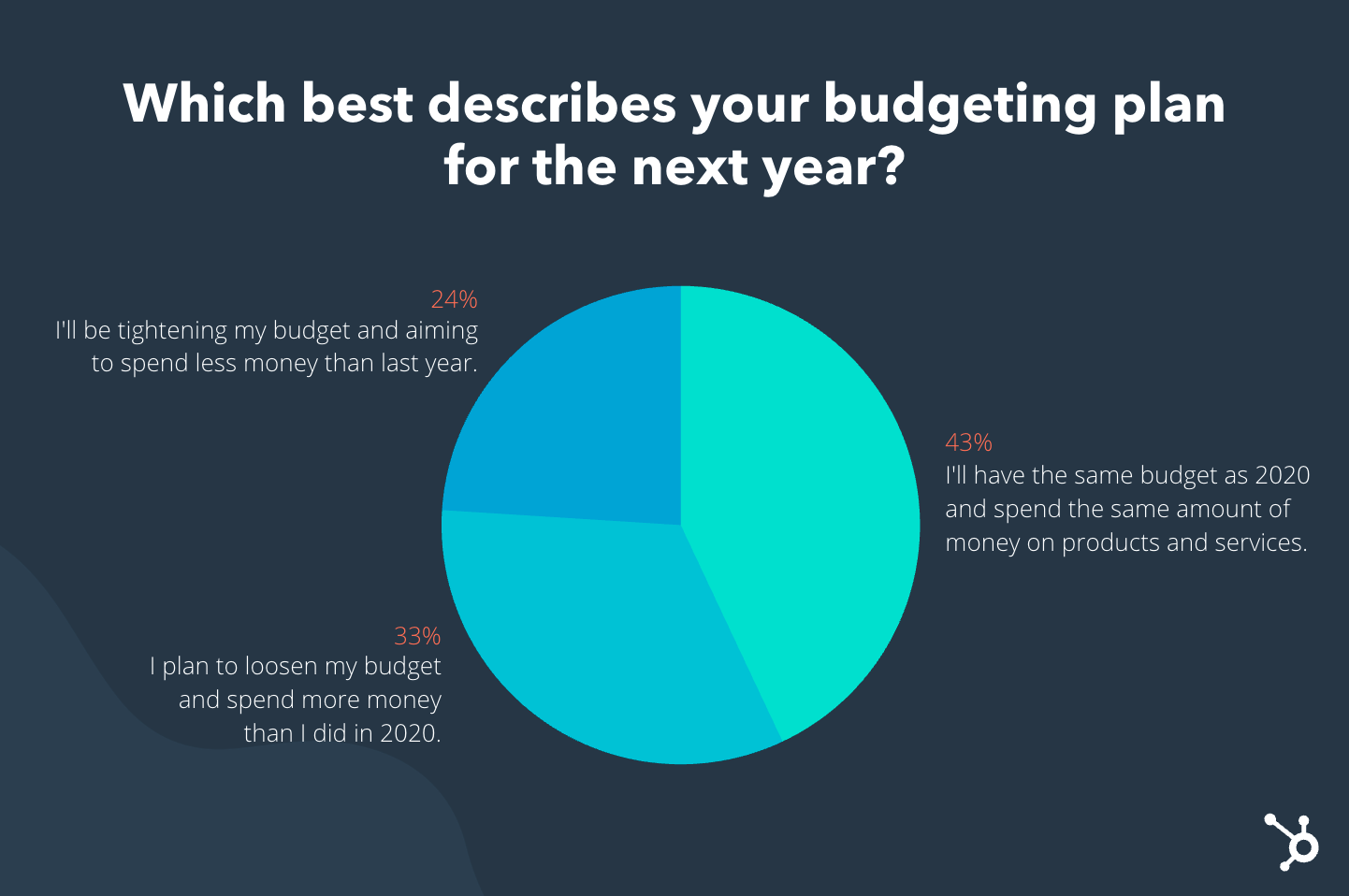
To help businesses prepare and navigate for the coming months, I asked nearly 300 random consumers, "Which best describes your budgeting plan for the next year?"

Here's what they said and tips for how to navigate future spending behaviors.

Download Now: State of Marketing in 2021 Report

How Consumers Will Spend Money in the Next Year

As economies reopen, people return to work, and household revenues start to rise again, you might think that people will be racing to online or physical stores to shop for all the things they didn't have the budget for in 2020.

However, when looking at the results of our small survey, it seems that people are cautiously optimistic about their 2021 budget.

Although one-third of respondents say they plan to "loosen" their budgets and spend more money than they did in 2020, a whopping 43% plan to keep the same budget they had in 2020. Meanwhile, nearly one-quarter of respondents will tighten their budget and spend less money in the next year.

poll results for the question which best describes your budget plan for the next year with most respondents saying their budget will remain the same.

Data Source

If you sell non-essential products or services or rely on your customers to have a larger budget, you shouldn't panic just yet. Keep in mind that this is just one small survey of a random consumer group. Additionally, had we polled people in different industries, locations, or age ranges, the results might have been different.

However, what this survey does remind us of is that people are still more conscientious than ever about the products and services they're purchasing -- and likely will remain that way for months to come.

Ultimately, to turn audiences into customers, it's still more important than ever to market your offering's value -- even if you don't sell something that's considered "essential."

Tips for Marketing Your Product or Service in Uncertain Financial Times

1. Make your value proposition a priority.

When someone is on a tight budget, each dollar they spend has to be worth it. This means that the products or services they buy have to help them do something essential, solve a common pain point, save them time or money, or fulfill other major needs.

As a marketer or business owner, it's important to learn the ins and outs of your buyer persona, their needs, and what motivates them to make a purchase. Then, you must use your messaging to explain why your offering will be worth their money.

2. Differentiate yourself from competitors.

As a budget-minded person myself, I -- like many others -- do detailed research before purchasing a product or service. When I decide I need to buy something, I look at all the brands that sell it, their reviews, and the product's cost. While I might buy the cheapest version of something, I also might consider a higher-end version of a product if something about it is better quality than the more affordable option.

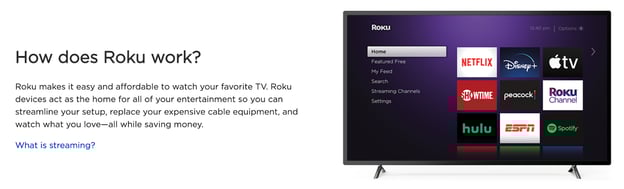
For example, I recently helped my parents pick out their first smart TV. While almost all of today's smart TVs have similar apps and features, we chose a Roku TV because Roku's marketing emphasized a simple, easy-to-understand user interface and setup. While it was also quite affordable, the UX alone was the reason for purchasing it over other competitors.  

Roku TV web page showing Roku UX and how the product easily works.

As a marketer, it's important to remember that people look into many different factors when making a purchase decision -- especially when it will be a larger investment. And, sometimes, the price of the product isn't the only deciding factor. That's why it's important to market elements of your product that are different or better than a competitor's.

3. Leverage customer-generated content.

If you're struggling to differentiate your product or service, but know you have loyal customers who love your brand, leverage them in your marketing.

Research shows that prospects trust customer reviews, videos, how-tos, and other user-generated content similarly to how they'd trust a word-of-mouth recommendation. Ultimately, when a prospect sees that someone like them has benefited from your brand's offerings, they trust that you sell something of good quality and value and might be more motivated to buy your product than a cheaper alternative from a competitor with poor or minimal reviews.

Need some examples of how to collect and market excellent UGC, testimonials, or reviews? Check out this guide

4. Consider discounts or sales.

If your brand can afford to offer small discounts or sales, this can be a great way to attract people with tighter budgets to your brand. Even if your discounts or sales are temporary, a prospect might purchase an on-sale product, love its quality, and return to the brand later because they've gained a sense of trust and loyalty to it.

If it isn't possible to offer sales or discounted services, you could also consider a customer loyalty or rewards program that allows frequent shoppers to eventually receive a free or heavily discounted product. This way, they might feel like every penny they spend could go towards a reward in the future.

5. Highlight your brand's mission or purpose.

In 2020, the same McKinsey survey mentioned at the beginning of this post, also found that people were beginning to also shop at brands that shared a similar set of values to their own. With this in mind, it's becoming more common for brands to invest in purpose-driven marketing, or campaigns that highlight a mission, purpose, or set of values the company is serious about.

For example, Kréyol, a Black woman-run fashion brand, embraces Haitian culture and global female empowerment with its clothing and product lines. The company's "For women, by women" mission aims to improve the lives of women, artisans, and entrepreneurs around the globe by featuring their clothing and designs on the Kréyol site.

"The whole idea behind Kréyol was for me to be able to provide a platform for artisans, specifically women of color, to be able to highlight the wonderful work that they do,” CEO Joelle Wendy Fontaine said in an interview.

While Kréyol's marketing and business strategy spreads awareness of beautiful artisan fashion, prospects might also be more driven to support the brand because of its trustworthy and authentic mission to improve the lives of women around the world.

Navigating Changing Purchasing Behaviors

As the world continues to reopen and evolve following the pandemic, so will spending habits. While some people will start to begin spending more, others will remain cautious for the next year or beyond.

As a marketer or business owner, you'll need to listen to your audiences and continue to follow data about your target persona's to learn how their approaches to money are changing and what efforts you'll need to take on to continue to win them over.

To learn more about the latest marketing trends and consumer behaviors, check out our recently published State of Marketing Report.

state of marketing


How Consumer Spending Habits Could Change in 2021 [New Data] was originally posted by Local Sign Company Irvine, Ca. https://goo.gl/4NmUQV https://goo.gl/bQ1zHR http://www.pearltrees.com/anaheimsigns