Thursday, March 3, 2022

How To Create a Google Sheets Drop-down Menu

A lot of the data you enter into your Google Sheets tables may be repetitive, like tracking whether an influencer you’ve reached out to for a partnership has agreed to working with you or not.

It can get tedious to go in and type each yes or no as time goes on, which is where a critical tool, the drop-down list, becomes your best friend.

In this post, we’ll go over how to add a drop-down list to your own Google Sheets data set to help save time.

→ Access Now: Google Sheets Templates [Free Kit]

How to Add a Drop-down List in Google Sheets

As mentioned above, a drop-down list can help you easily change elements of a cell when the content is repetitive.

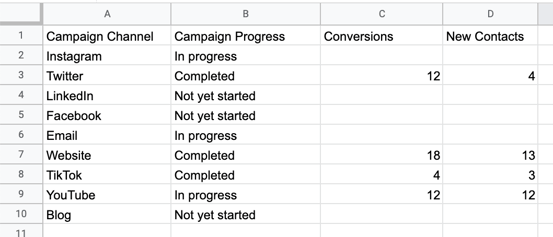
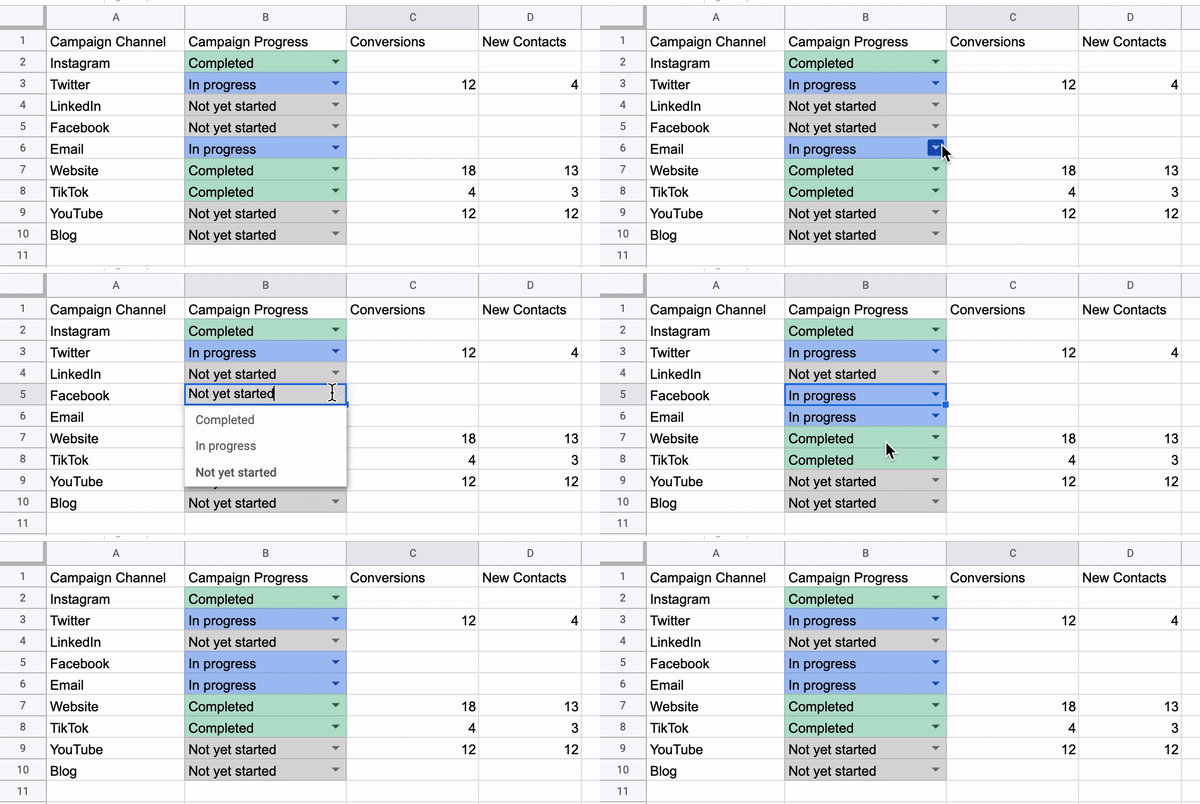
The example data set for this walkthrough (as shown in the image below) is tracking the progress of marketing campaigns on different channels and the stage they’re in; not yet started, in progress, or completed. I want to create a drop-down menu so I can easily go in and change the status of the campaign as time goes on.

table in google sheets with a drop-down menu

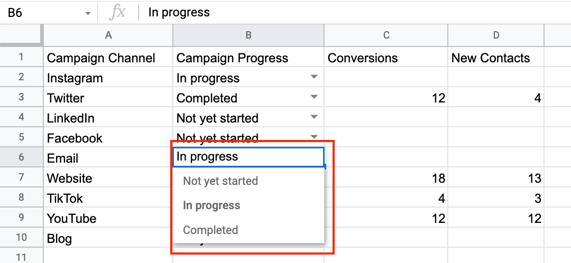
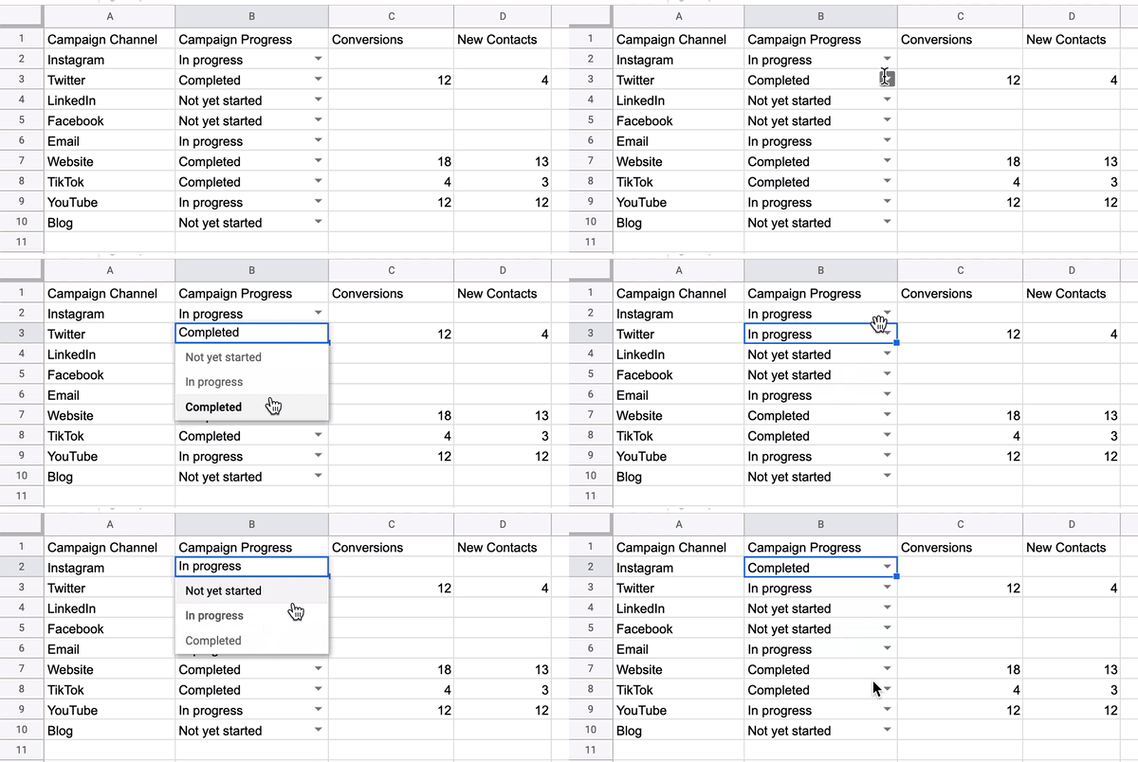
Before going through the steps, it might be helpful to see what a drop-down menu looks like so you can contextually understand each instruction. The gif below shows a final drop-down menu and how it applies to the sample data set.

completed drop down menu

Let’s go over how to add a drop-down list to your Sheet.

1. In the toolbar header, click Data.

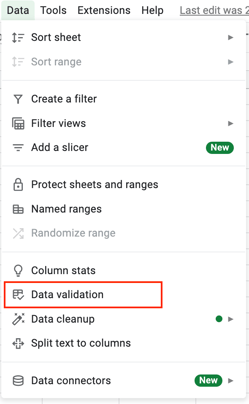
2. In the drop-down menu, as shown in the image below, select Data validation.

google sheets drop-down menu step 1: select data in the header toolbar

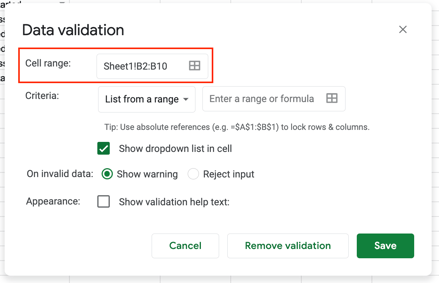
3. In the Data validation dialog box, enter the range of cells you want to have a drop-down menu in Cell range. For this example, I’m entering B2:B10 for cells 2-10 in column B.

google sheets drop-down menu step 3: add your cell range

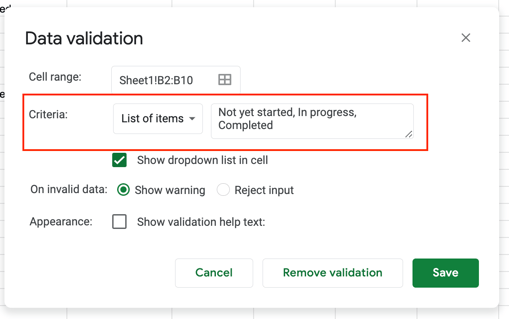
4. The next step is to enter the data range that you want to be included in the drop-down menu. Select List of items, and add in your menu values. For this example, this is where I would input Not yet started, In progress, and Complete.

Once you’ve entered your values, click save.

google sheets drop-down menu step 4: enter your list item criteria

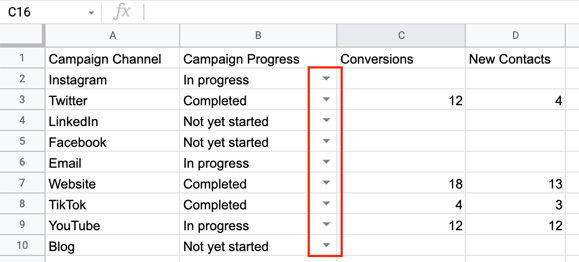
5. Each of your cells should now have a clickable down arrow, as shown in the image below.

google sheets drop-down menu arrows

For the example table, I can click on each down arrow and change the status of my campaigns as time goes on.

step 6-1

How to Edit a Drop-down List in Google Sheets

If you need to make changes to your drop-down menu, the process is rather simple.

1. In the toolbar header, click Data and then Data validation.

2. In the Data validation dialogue box, simply input the changes you want to make. For example,

  • If you want to change the items in your drop-down menu, navigate to Criteria, and make your desired changes.
  • If you want to change the column the drop-down menu is in, change the cell numbers in Cell range.
  • If you want to delete your drop-down menu altogether, select the column the menu is currently in and click Remove validation.

Always click save after making all changes.

Color Code a Drop-down List in Google Sheets

Color coding is helpful when it comes to interpreting results at a glance. You can do this with your drop-down list by creating conditional formatting rules, and below we’ll explain how.

1. Select the cells your drop-down menu is in and click Format.

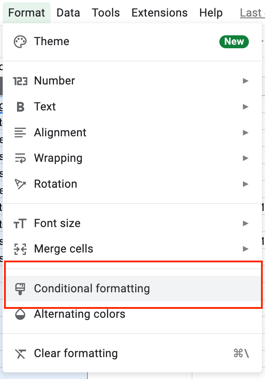
2. Select Conditional formatting from the dialogue box, as shown in the image below.

color code google sheets drop down menu step 2: click format in header toolbar

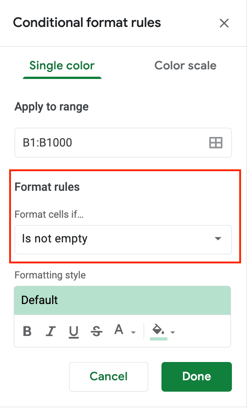
3. In the Conditional formatting rules sidebar on the right-hand side of your screen, navigate to the Format rules section.

color code google sheets drop down menu step 3: select format rules

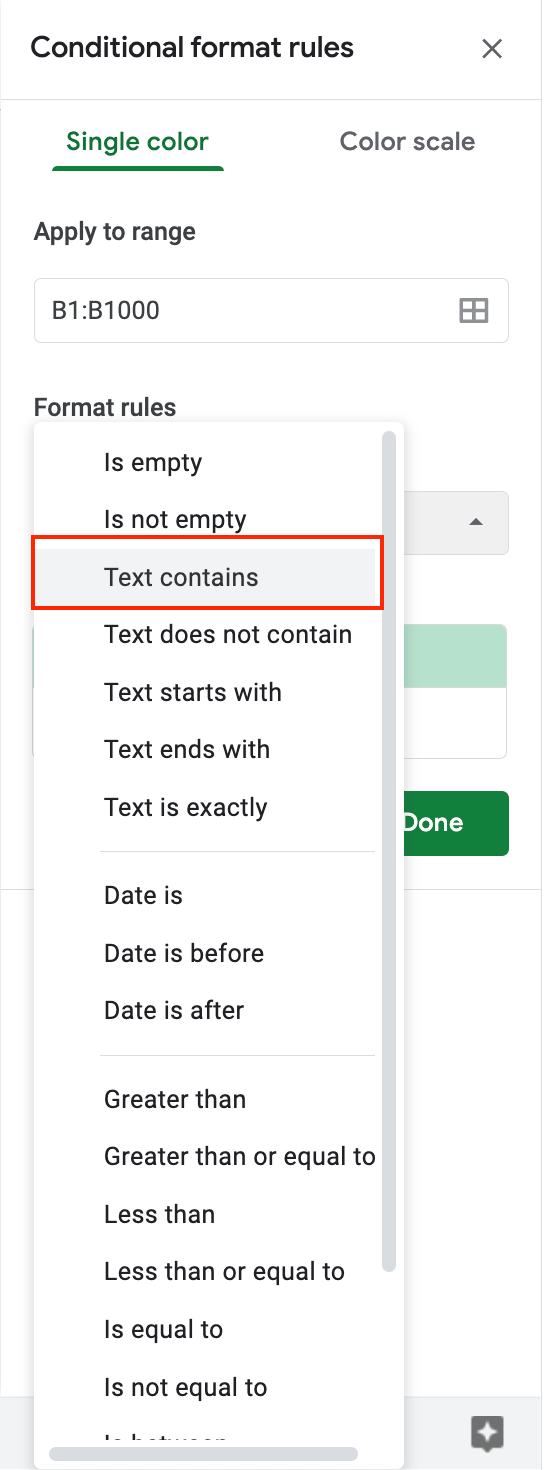
4. In the Format cells if menu, select Text contains…

color code google sheets drop down menu step 4: select text contains

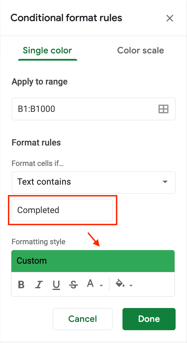
5. Enter the first element in your drop-down list that you want color-coded. In the image below, I’ve entered Completed as my value and set the color to Green.

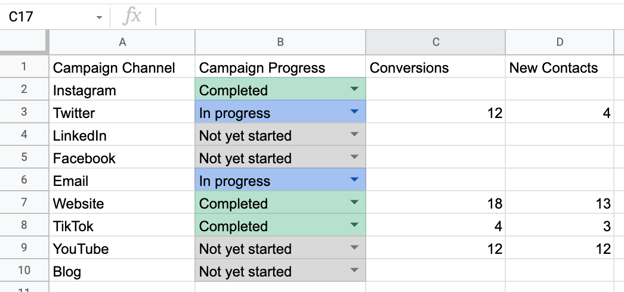
6. To set a color for each of your list items, select + Add another rule and repeat step 5 for each value. For my chart, I’ve set In progress to Blue, and Not started to gray.

color coded google sheets drop-down menu

7. After you set each of your rules, changing the drop-down menu item to a different value will automatically change it to the correct color. For example, if I change Not yet started to In progress, it turns from gray to blue.

step 19

Once you’ve created your drop-down menu and color-coded it for easy interpretation, you can continue to track the progress of your different marketing activities and save time while doing so.

business google sheets templates


How To Create a Google Sheets Drop-down Menu was originally posted by Local Sign Company Irvine, Ca. https://goo.gl/4NmUQV https://goo.gl/bQ1zHR http://www.pearltrees.com/anaheimsigns

Wednesday, March 2, 2022

Mastering Facebook Ads In 2022 Through Incrementality

There are many resources out there telling you how to optimize your Facebook ads to scale your business's growth. And while I'm sure they can help in some aspects, you're probably optimizing your campaigns based on the wrong metrics.

In 2022, Facebook has 1.79 billion daily users. There are plenty of opportunities to create Facebook ads that will drive impressions, link clicks, leads, and more. However, these metrics only scratch the surface of how much impact your Facebook ads can truly have on your business.

Sign Up for HubSpot Academy's Free Facebook Ads Training Course

As more industry experts focus their media buying on incremental gains, marketers can better measure their Facebook ads' positive, negative, or neutral impact on their business.

What is incrementality in Facebook Ads?

Incrementality allows marketers to understand how Facebook ads impact their business. Often, advertisers make optimizations to campaigns based on certain metrics, which can dramatically affect the end goal.

It's crucial for businesses to identify what's working and what isn't — especially since Facebook's ad revenue worldwide was $84.2 billion in 2020. Whether you have a large or small Facebook advertising budget, you want to make sure it's generating results.

Advertisers can measure incrementality by using control tests and comparing the results from those exposed to an ad versus those who have not. Once the tests have been completed, the results can help your business make smarter decisions on your Facebook ads and optimize your campaigns accordingly.

Why should marketers track incremental return on ad spend (iROAS)?

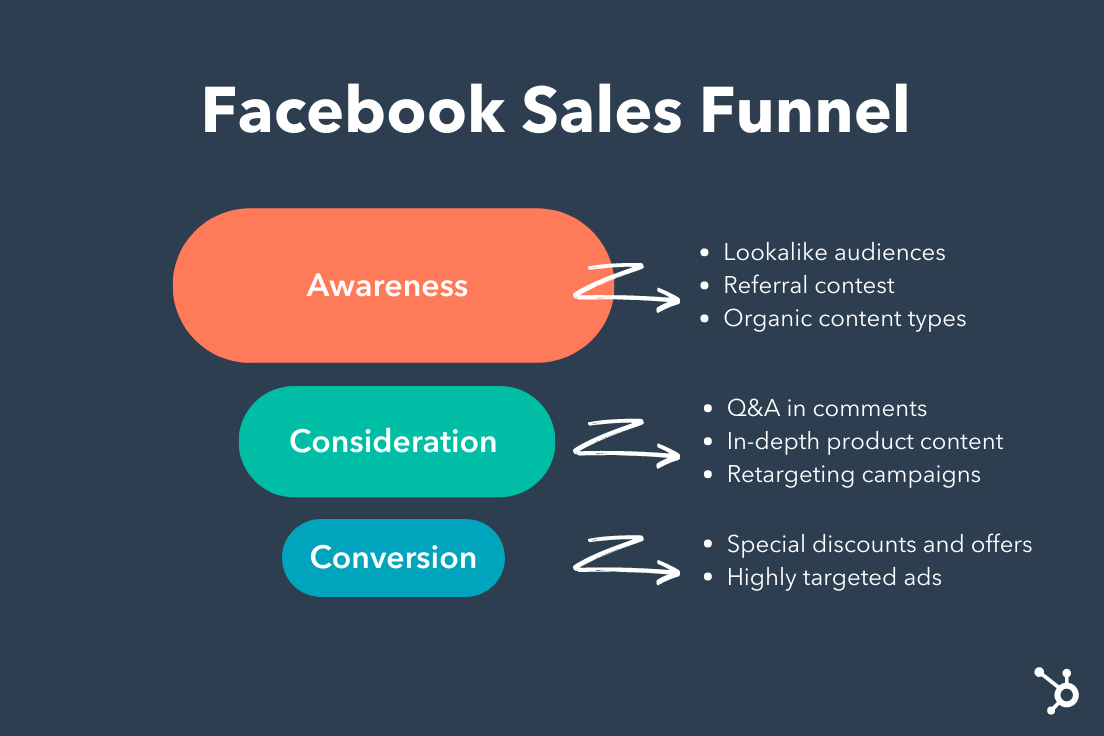
One minute you're a marketer, and the next, you're a data analyst. All jokes aside, information overload is very real in 2022. With all of this data available, there’s the assumption that it should be easy for marketers to pinpoint the best audience to target, understand what point they are at in the Facebook sales funnel, and the best methods to convert them.

Facebook Sales Funnel

However, data dumps and compiling all of this information is incredibly time-consuming. And as digital marketing continues to expand, time is not always on our side. Businesses need to refocus their efforts from heavy reliance on data collection to doubling down on finding the right data—that can assist in smart optimizations and actionable insights to fuel your Facebook campaign's bottom line.

How to Calculate Incremental Return on Ad Spend

The method for calculating iROAS is different for every publisher. The most methodical approach is by applying a holdout to your Facebook campaign. The holdout on your campaign will act as a control group for Facebook users that will not see your ads. The remaining group of users will be the test audience for your Facebook campaign.

After the test is complete, marketers can compare the results from the test group to the control group. The difference in the results will be your conversion lift, representing the incremental impacts on your conversions.

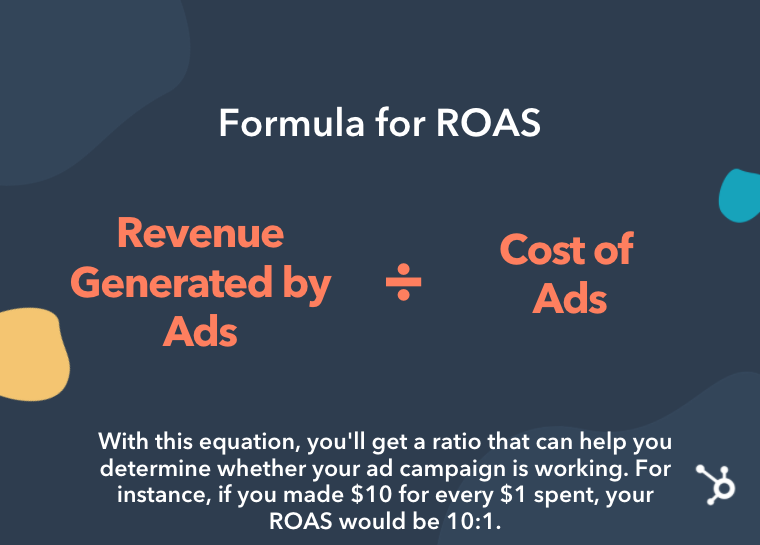
How to calculate return on ad spend ROASiROAS is calculated similarly to ROAS, which is revenue divided by cost. However, this measurement allows your business to understand which Facebook campaigns are working and which aren't. The calculation for iROAS is Incremental Revenue / Ad Spend = iROAS.

In the YouTube video below, HubSpot details how to determine ad spend by understanding the bidding system used by ad networks.

3 Simple Ways to Increase Your Facebook's Ads Incrementality in 2022

Frequently data dumps fail due to the sheer amount of information available. Marketers may find many valid insights, but the delivery of this information can get lost in translation — especially if there is no clear direction. Brands looking to increase their Facebook ads incrementality should work with a leading marketing agency with proven experience.

However, if you're looking to get started on your own, below we'll walk you through the top three ways to increase your Facebook ad's incrementality to exceed your 2022 growth goals.

1. Audience Targeting

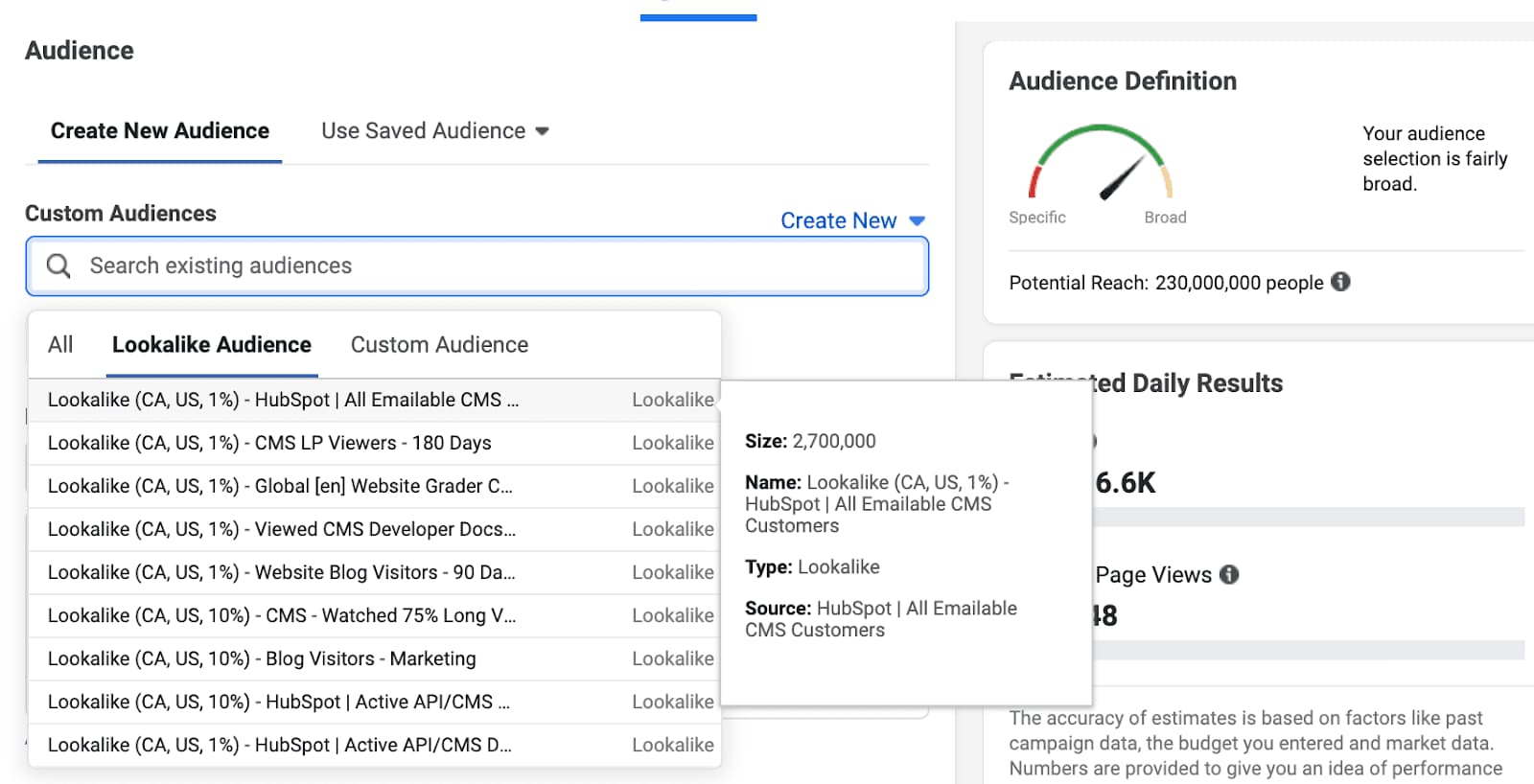
Facebook users at the top of the funnel versus the bottom will yield very different incrementality results. For example, you will see very different results if you're using a 5% lookalike audience of customers who purchased in the last month vs. remarketing to customers who purchased in the last few years.

Creating audience for Facebook Ad targetingTargeting new customers should be your most incremental audience segment since they would not have converted and made the purchase had it not been for your Facebook ad.

This can also affect your bid strategies and budgets for remarketing audiences. For example, a customer who has purchased from you recently may not need a Facebook ad to prompt another purchase — this will depend on your product or service buying situation.

Three Class of Buying Situations:

  • Routine decision-making: involves purchases that require very little thought after the original decision has been made. Such as gum, a chocolate bar, or a soft drink.
  • Limited decision-making: involves purchasing products that require a moderate amount of time and effort to compare models and brands before making a choice. This could be comparing which phone you are planning to upgrade to.
  • Extensive decision-making: involves an extensive consumer decision regarding whether or not to purchase a product. Examples include cars, homes, and education.

2. Ad Creative

I'm sure every marketer has heard about the study that found that the average attention span has decreased from 12 seconds to 8 seconds—while a goldfish holds a 9-second attention span. There is so much noise and clutter on social media that often, consumers will scroll right past your ad.

Advertisers need to create Facebook ads that grab the viewers' attention and drive action. Facebook ad creative is one of the top ways to increase your incrementality.

Learn from the best! We've collected the 50 best Facebook ads to inspire your next campaign. Check out this exclusive lookbook to get a head start on crafting the perfect ad to drive incremental revenue.

3. Facebook Placements

There are several placements for advertisers across Facebook, Instagram, Messenger, and Audience Network. But, not every placement works with every type of campaign.

For example, an ad on audience network may spark brand awareness or interest but not drive an immediate conversion. The same goes for device targeting, often people are in discovery mode on mobile but complete the transaction on desktop.

Most advertisers still recommend combining placements to maximize the results, but it is beneficial to understand where your most incremental audience is.

New call-to-action


Mastering Facebook Ads In 2022 Through Incrementality was originally posted by Local Sign Company Irvine, Ca. https://goo.gl/4NmUQV https://goo.gl/bQ1zHR http://www.pearltrees.com/anaheimsigns

What is Context Marketing? Why It Matters in 2022 [+Examples]

While it's fair to say most marketers are on-board with the importance of content marketing, there's still an aspect of marketing that doesn't get as much love: context marketing.

Whether you know what context marketing means or not, I'm willing to bet you want to deliver the right campaigns to the right customers at the right time. That’s what context marketing is all about.

Here, we're going to introduce the concept of context marketing and dive into strategies you can use to implement it into your overall marketing strategy.

Free Resource: Content Marketing Planning Template

My favorite context marketing definition is delivering the right content, to the right people, at the right time.

Let me explain what I mean by context a little more, though. When you have context around something, you have a larger, more telling picture — you know, those little details that lend more clarity to things that would otherwise be pretty general, unspecific, and, well, uninteresting.

The best marketers leverage context about their audience, leads, and customers in their content marketing. They create audience profiles and buyer personas and use that information to create more effective marketing and advertising campaigns.

Now that we have a basic understanding of context marketing, you might be wondering what the difference is between content marketing and context marketing. Let’s take a look below.

A marketer using context would know more about a lead than her first name. They might also know what industry she works in, what kind of content she likes best, through which channel she prefers to consume content, whether she's currently using another solution to meet her needs, and whether her company has budget at this time of year.

As a marketer, if you were asked to "market" to someone, and all you were given was a first name and the type of company your lead works at, wouldn't your first question be ... what else do we know about her? Probably, if you want to do your job way better.

That's the idea behind context marketing: Using what you know about your contacts to provide supremely relevant, targeted, and personalized marketing.

Why is context marketing important?

Context marketing is important for many reasons, but there are two top ones that make its importance even more salient. Let’s go over them below.

Context marketing converts better.

When you're creating marketing that's targeted at people's point of need, it stands to reason that marketing will perform much better for you, because you aren't delivering marketing content that's misaligned with their interests or stage in the buyer’s journey.

Think about it: If you know that a B2B lead is getting a new budget in January and it's December, you're able to send her insanely targeted content that addresses her needs — like, say, an offer for a custom demo of your product with a rep that specializes in the finance industry. That's content that she's pretty likely to convert on, especially if she's downloaded a buying guide and visited your product pages.

Hot tip: Keeping track of your prospect’s activity using marketing automation software will make context marketing easier. You’ll know which products your prospect is most interested in and how many times they’ve visited your website.

Context marketing increases retention.

When you have context around your relationship with a contact, you're able to provide more personalized and relevant marketing content that's targeted to their needs.

This is great for two reasons: Personalized and relevant marketing is the foundation for creating content people love and engage with. What's more, personalized and relevant marketing is typically not the kind of marketing that annoys people into clicking "unsubscribe". If they feel like you’re out to solve their problems specifically, customers are much more likely to stay with you.

Why not use the context around your relationships with your contacts to create marketing that they love and convert on? Let’s take a look at how you can get started.

How to Start Context Marketing

Alright, how does this "context marketing" theory manifest itself? What would it look like for you, as a marketer? With the help of marketing automation software, here are some examples of where you'd actually use the principle of "context" in your marketing.

1. Create specific offers for specific posts and pages.

One easy way you can start context marketing? Create offers that extend the value of your website. Bonus points if these offers answer a specific pain point or problem that a customer is trying to solve for when visiting that page.

Most blog posts in HubSpot’s library feature an offer that’s directly related to the topic of the article. For instance, in our blog post about creating a marketing plan, you can download a marketing plan template — which is something that someone wanting to create a marketing plan might need.
context marketing example: specific offer on HubSpot blog post

Come up with content offers that will benefit your readers and website visitors depending on the page they’re visiting. For instance, if you sell hiking shoes and you’re writing a blog post about going on a solo hiking trip, you might feature an offer for downloading a solo hiking checklist.

2. Add smart calls-to-action (CTAs) to your website.

You can take personalized offers to the next level by featuring smart calls-to-action. Let’s say you have a variety of offers you want to use to convert traffic into leads, leads into qualified leads, and qualified leads into customers.

To increase your lead conversion rates, you probably don't want leads visiting a case study webpage (typically an action you'd perform further along in your buyer's journey), and finding a CTA leading them to a blog post (which is meant for people earlier in the buyer's journey).

However, not everyone who visits a case study page on your website is necessarily ready to talk to a salesperson. You don't want to turn them away, either, by offering a CTA that's too pushy.

Fortunately, with smart CTAs, you can actually surface a CTA that automatically aligns with the visitor's stage in the sales cycle ... or any other host of criteria you want to set. Think industry, business type, location, and past activity/behaviors.

For instance, if you have already downloaded an offer from HubSpot, you might see this CTA on certain social-media-related posts:
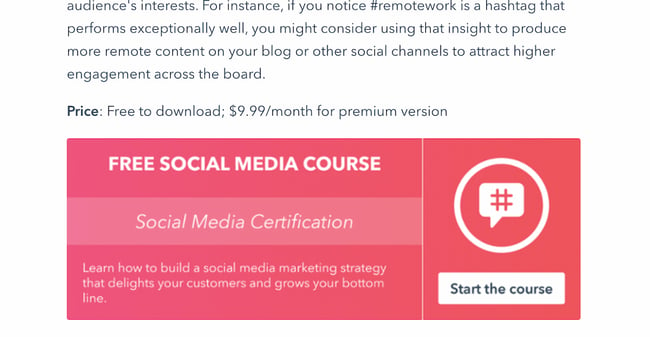
context marketing example: smart cta

But if you haven’t downloaded an offer before, you’ll see the default CTA:
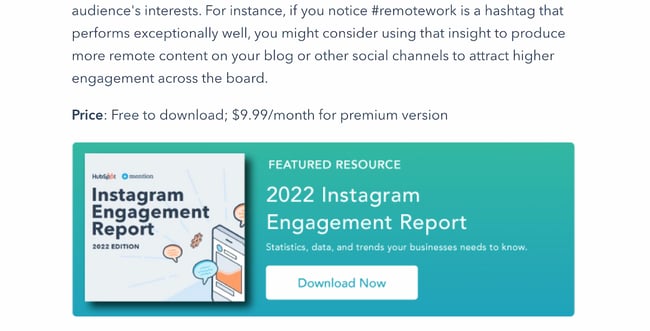
context marketing example: default cta

This type of smart content can help you capture your audience’s information at all stages of their buyer’s journey.

Hot tip: HubSpot’s marketing automation software lets you easily create a smart calls-to-action with little technical knowledge.

3. Create smart forms that shorten the conversion cycle.

Smart forms know if someone has already filled out the form fields you're asking for. If you use smart forms, for instance, your site visitors won't see "First Name" and "Last Name" every time they fill out a form — instead, they'll answer those questions once, and then never again.

This will help you glean new information about your leads each time they fill out a form, instead of just more of the same stuff. It also helps you create a more seamless, personalized user experience that leverages prior interactions with your website as context.

Here’s one example from HubSpot Academy. This is what I see when I’m logged into the HubSpot CRM:
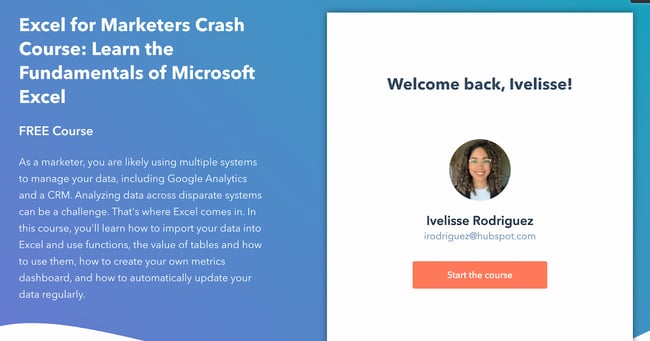
context marketing example: smart form

The form knows I’m a current HubSpot customer and doesn’t require me to create a new account. I only have to click one button: “Start the Course.”

But this is what I see when I’m not logged in:
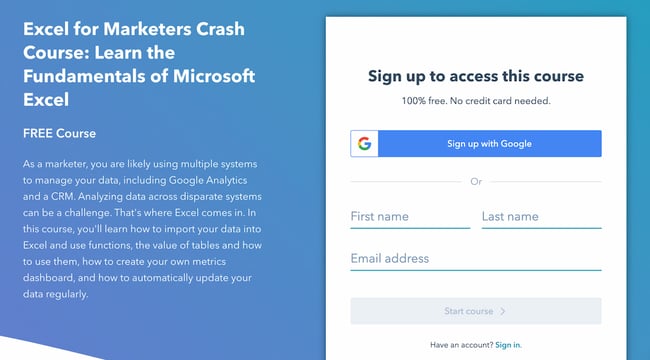
context marketing example: default form

Ultimately, smart forms will help you gather even more context about your visitors, leads, and customers, and help increase conversion rates over time.

Hot tip: You can easily create smart forms inside HubSpot’s marketing automation software.

4. Leverage dynamic email content and workflows.

Your forms and offers aren't the only things that need to be smart. Your email database — especially if you want to maintain your space in people's coveted inboxes — needs to be segmented into highly targeted lists, as well.

I happen to be subscribed to Grammarly emails on both my work and personal emails. Because I only use the Grammarly Chrome extension at work, I receive emails like this:

context marketing example: grammarly segmented emailIn my personal account, however, I use Grammarly’s web app regularly and review thousands of words for a personal project. Here’s the email I get:

context marketing example: grammarly second segmented emailThroughout the email, Grammarly prompts you to upgrade to the premium version and take advantage of its other tools. Because I don’t use the Chrome extension in my personal email account, it includes a call-to-action to install the extension. It’s delightful to receive an email that uses my account activity as context.

Beyond email segmentation, your email lists need to be smart enough to know when to pull in a contact, and certain information you have in your database about that contact, into your email marketing campaigns.

Remember, a great context marketer delivers the right content, to the right person, at the right time. So to send emails that are contextually relevant, you need to use their activity and background to deliver personalized content that delights them and prompts them to convert.

Context Marketing Examples

While context marketing may sound complicated, it’s actually quite simple in practice. In fact, as a customer, you may have seen or enjoyed context marketing yourself. Let’s take a look at some examples.

1. Google’s Product Ads Carousel
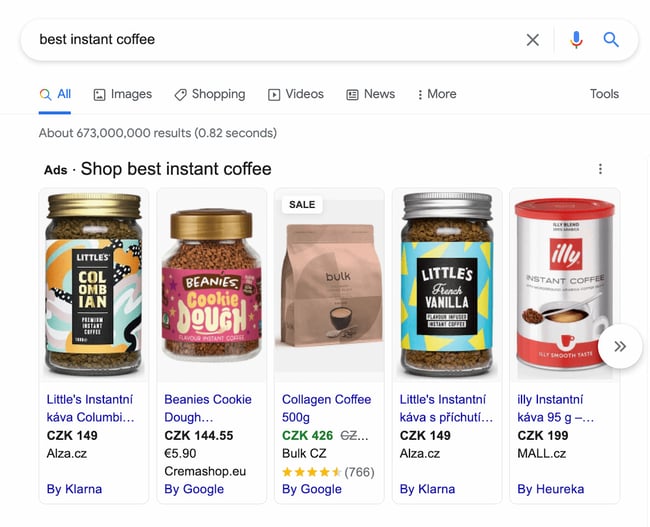
context marketing example: google product carousel ads

Have you ever looked up a product on Google and see a carousel at the top (as opposed to just the plain search results)? The products you see are typically ads for the exact same thing you searched for.

This is a prime contextual marketing example. Google uses your behavior and search query to deliver ads that are contextually relevant. Imagine if, when searching for instant coffee, Google delivers ads for french presses instead. While you might be interested in French presses and even searched for them before, you’re looking for instant coffee right now.

That’s why it’s important to answer for your customer’s specific pain points and queries, and to do so at the right time. And you don’t have to be a highly sophisticated search engine to do so. Remember those offers we spoke about in the previous sections? That can function in the same way as Google’s product carousels.

2. Asana’s New Feature Pop-Up
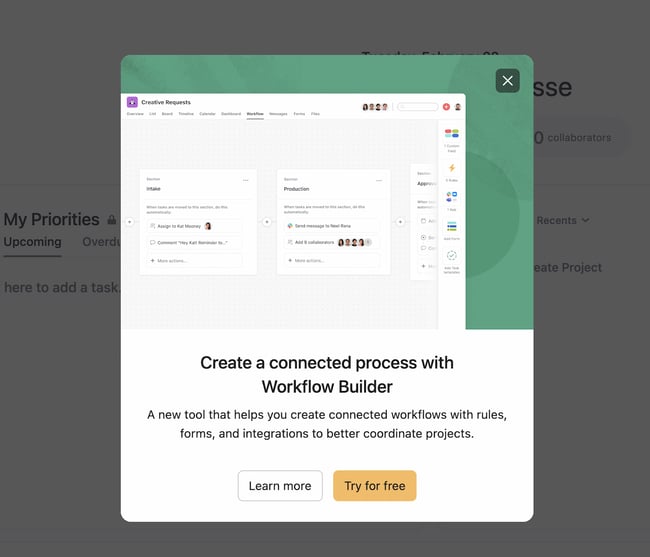
context marketing example: asana feature popup

There’s no more powerful place to carry out contextual marketing than right within your own product, website, or store. Asana’s example shows that you can upsell customers easily by marketing a new feature and prompting them to try it for free.

This is an excellent example of contextual marketing because you wouldn’t be interested in trying this new feature unless you were a current Asana user. For instance, if Asana had placed this pop-up on their homepage, they likely wouldn’t have much success with it. But because it pops up after you log in, you’re more likely to say, “Sure, I’ll try it.”

You can achieve something similar by instituting a website personalization campaign. When people visit your product page, for instance, they might see a popup to schedule a meeting with a salesperson. But when they’re on the blog, they might see a popup to subscribe. These simple changes can help you capture more leads and use the context from their activity to deliver an offer they won’t resist.

3. LinkedIn Company Page Sidebar Ad
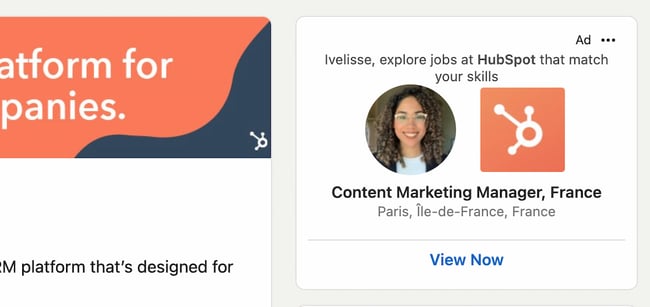
context marketing example: linkedin sidebar ad on company page

When you visit a company page on LinkedIn, it provides a little sidebar ad that prompts you to find roles at that company that match your skills.

LinkedIn does this because it knows that you might be open to opportunities even if you don’t list it on your profile. And if you’re looking at a company page, you might be interested in working at that firm. LinkedIn uses this context to deliver a relevant ad that you can’t help but click on.

Another reason this is such a great example is that it also lists a job title that relates to yours. So if you’re a financial advisor and are looking at JP Morgan Chase’s company page, LinkedIn will automatically advertise financial advisor roles at the firm.

Context Marketing is the Next Evolution of Content Marketing

Without context, you risk reaching the wrong people at the wrong time. Begin using context in all of your marketing and advertising campaigns, and you’ll see an exponential increase in conversions, helping you exceed your lead acquisition goals and increase revenue at your company.

Editor's note: This post was originally published in March 2013 and has been updated for comprehensiveness.  
New Call-to-action


What is Context Marketing? Why It Matters in 2022 [+Examples] was originally posted by Local Sign Company Irvine, Ca. https://goo.gl/4NmUQV https://goo.gl/bQ1zHR http://www.pearltrees.com/anaheimsigns

Tuesday, March 1, 2022

3 Roles Marketing Leaders Plan to Recruit in 2022 [New Research + Expert Insights]

The new year can be an exciting time to consider how you might expand your team to reach new goals in 2022.

But it can also be stressful for that very same reason. With a limited budget, how can you ensure you're making the right hire?

HubSpot's Blog Research uncovered the top three roles marketers are planning on hiring in 2022. Let's explore why those three roles matter, according to experts.

Download Now: Free State of Marketing Report

The Top 3 Roles Marketing Leaders Plan to Hire in 2022

1. Creative Director

Nowadays, brands are expected to create top-notch content across platforms. To successfully reach new audiences and increase sales, you'll want to have strong social media, content marketing, and video marketing strategies — to name a few.

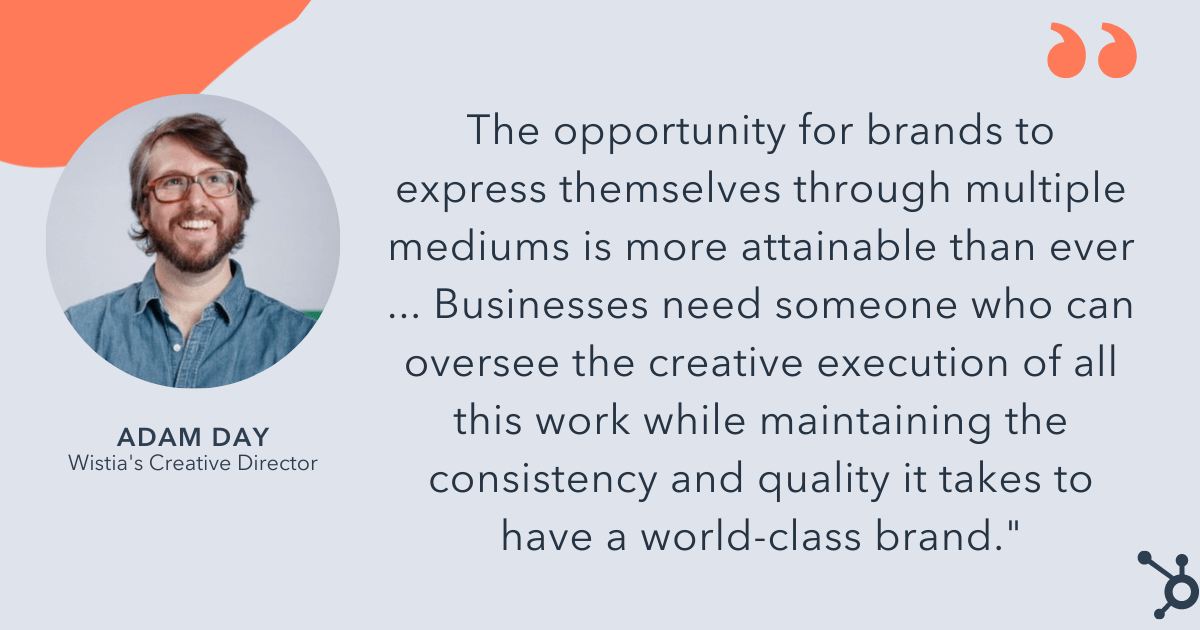
As Wistia's Creative Director, Adam Day, puts it, "In the context of today's media landscape, the opportunity for brands to express themselves through multiple mediums is more attainable than ever — and consumers are demanding more than ever, too."

Day adds, "It's not just about blog posts anymore. Video consumption, alone, is up 121% from 2019, and in a recent survey of Wistia customers, we learned that most companies are increasing their production budgets by more than 10% this year. Businesses need someone who can oversee the creative execution of all this work while maintaining the consistency and quality it takes to have a world-class brand."

That's all well and good. But what, exactly, does a creative director do?

"A great creative director develops a clear and engaging visual identity for your brand," Mark Tanner, Co-Founder and COO of Qwilr, told me. "Visual consistency communicates professionalism, attention to detail, and builds buyer confidence in a brand's capabilities."

Tanner told me, "The creative director should 'own' how a brand is represented across all visual assets, from your website to ads to product brochures to sales proposals."

Tanner continues, "And if you think the impact of a creative director is limited to aesthetics, think again. According to a study by McKinsey, design-driven companies consistently outperform their competitors, demonstrating the ROI potential of a good design experience."

A creative director can ultimately help your business hit its sales goals by ensuring your marketing materials are highly optimized, effective, and on-brand. 

As Tanner told me, "One out of three buyers are influenced by the quality of your sales materials, and that influence can either be positive, or cause your buyer to go with your competition, instead. It's no wonder the U.S. Bureau of Labor Statistics projects creative director demand to grow by 11%, faster than the average for all occupations."

Among other things, you can expect a creative director to guide your overarching content strategy; build and manage a successful production process; lead, inspire, and nurture your creative team to drive brand direction forward; and own specific KPIs related to content marketing.

Jenny Coppola, Head of Brand & Communications at Teamwork, says, "Creative directors should focus on ensuring that all brand touchpoints are cohesive and consistent, both visually and in terms of messaging, while also shepherding the idea of experimentation and concerted risk-taking within the team."

Coppola says, "Your team's creative director should always be thinking ahead to what the future could look like for the brand and the market as a whole, which means pushing ideas further and challenging the status quo of what's expected."

Coppola adds, "Equally as important, creative directors should be close to the customer, understanding what makes them tick inside and out. Knowing your target customer and being able to see the world through their eyes is the best way to build a brand that resonates with them."

If you can only hire one new marketer in 2022, you'll want to strongly consider the importance of having a creative director if you don't already have one. Even a small but mighty team of marketers needs a creative director to nurture their strengths and guide the overarching vision.

Additionally, if your business works with freelancers, agencies, or contractors, a creative director can help streamline those processes and ensure consistency across marketing channels.

adam day on top marketing role of 2022

2. Creative Assistant

The second most-voted for role in 2022 is a creative assistant.

If you already have someone in a director-level or manager-level role, it makes sense to consider how you might help alleviate some of their responsibilities by hiring an assistant.

A creative assistant is an entry-level professional who will create promotional materials for your brand — those materials could include promotional videos, advertising campaigns, press releases, or social media posts.

A creative assistant will also help your creative director or manager by handling the day-to-day creation of specific marketing materials — for instance, they might write copy, produce designs or infographics, or conduct market research to identify future trends and campaign ideas.

A creative assistant can be a strategic, long-term play for your team. A creative assistant is an entry-level position, which means it's someone who is often new to the field of marketing.

You might hire a creative assistant with impressive design skills, or a strong knowledge of the various social media platforms, and foster his or her growth on your team.

Simply put, a creative assistant is a hire who will continue to grow on your team and could ultimately have a strong impact on the future of your brand's marketing strategy. 

3. Content Marketing Manager

"Let's face it," Dan Seavers, Talkwalker's Content Marketing Manager, told me,

"Consumers are rapidly changing. They are savvier, smarter, and more active in their research. And they no longer want to be sold to. They want to be educated, entertained, excited, enthralled, anything … but not sold to."

Seavers told me that this shift in consumer behavior has led to content marketing as an essential component for any business' bottom line.

And a strong content marketing strategy needs a content marketing manager.

Why? Well, as Seavers puts it, "To do [content marketing] properly, you need content. A lot of content. We're talking blogs, videos, podcasts, tweets, reports, case studies, TikTok dances, and more — all weaved into an epic journey that leads consumers from discovery to purchase."

Unbounce's VP of Marketing, Meg Sakakibara, agrees that a content marketing manager is vital for any marketing team. 

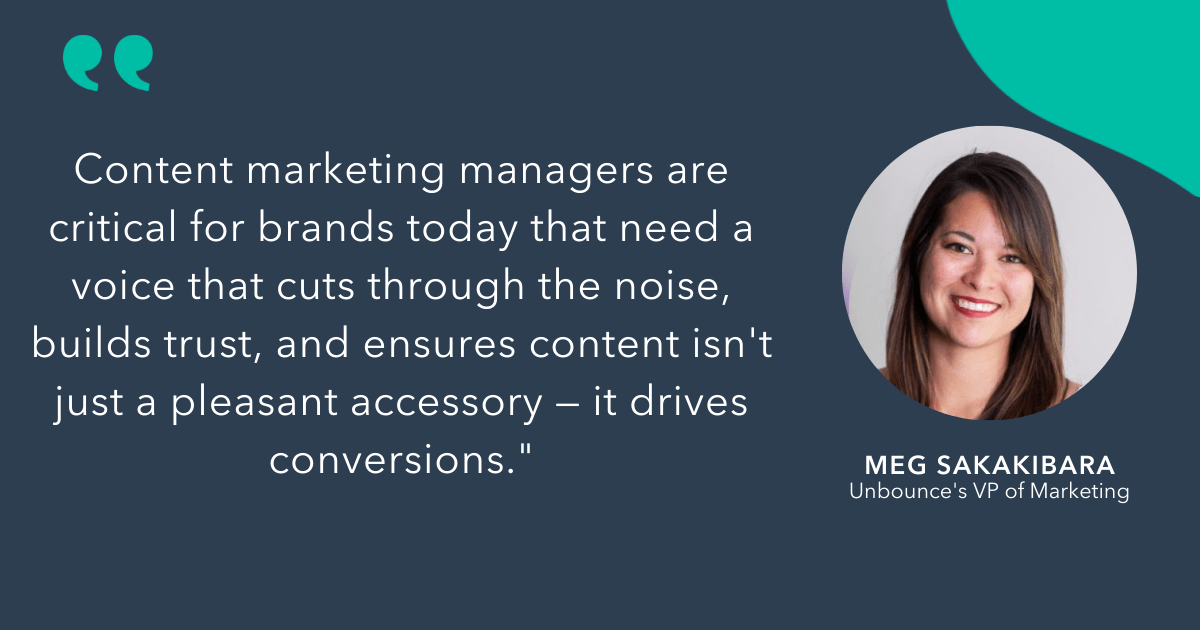
Sakakibara says, "Content marketing managers are critical for brands today that need a voice that cuts through the noise, builds trust, and ensures content isn't just a pleasant accessory — it drives conversions."

Sakakibara adds, "After analyzing the most influential elements for conversion in 40,000 landing pages, Unbounce found that copy influenced conversion more than 2X as much as design did. Content isn't just the king/queen — it's the whole kingdom. By investing in content marketing and new technologies like Unbounce's Conversion Intelligence Platform, people are using content and optimization to convert more leads, sales, and sign-ups to win in this competitive space."

meg sakakibara on top marketing role of 2022

So what should you look for in a content marketing manager?

Among other things, an effective content marketing manager will execute digital content strategies across platforms, drive traffic and engagement, have a deep understanding of what types of content perform best on which channels, and consistently evaluate how each campaign performs — and shift when necessary.

Additionally, Seaver told me, "To be good, your content marketing manager should always have one eye on your consumers' ecosystem. Where do they cluster online? What do they talk about? What are they looking for in a product? What problem do they have that you can solve? Their content strategy will answer all of these questions, piece by piece. Slowly building that brand and consumer relationship from awareness — to having your consumers wonder how they can go on without you."

Finally, a good content marketing manager needs to be a strong fit for your brand and goals. Content marketing is about delivering unique value to your intended audiences — which means your marketing manager needs to know, inside and out, who your target audience is and what they care about.

As Microsoft's Group Marketing Manager Nora Xu puts it, "It goes beyond a single touchpoint with an action to purchase your product, to a flywheel of inspirational and educational content that meets them where they are. On the Microsoft Advertising brand marketing team, I look for people who can get into the mindset of our audience and create content that makes them feel seen and connected with our brand."  

Ultimately, you know what's best for your business needs. Take a careful look at your team's current strengths, and aim to identify a role that can help fill in the gaps.

Once you're ready to begin the recruitment process, take a look at these 17 marketing job descriptions to attract the right hire. 

state of marketing


3 Roles Marketing Leaders Plan to Recruit in 2022 [New Research + Expert Insights] was originally posted by Local Sign Company Irvine, Ca. https://goo.gl/4NmUQV https://goo.gl/bQ1zHR http://www.pearltrees.com/anaheimsigns

How 500 Marketers are Leveraging Instagram Shopping Tools [Data]

Does anyone remember the days when all we saw on Instagram were poorly lit pictures our friends took and memes we didn’t want our parents to see on Facebook? Well, we’re long gone from then.

The platform has evolved from a simple image-sharing social platform to a money-making content curation one. With the addition of Instagram’s shopping tools, it’s steering more toward ecommerce and less on the social aspect.

New Data: Instagram Engagement Report [2022 Version]

So what does that mean for brands? We surveyed over 500 marketers to learn more about their Instagram strategy. Find out below what we found out as it relates to the social platform’s shopping tools.

The Benefits and Challenges of Instagram’s Shopping Tools

When we asked marketers the biggest benefit of using Instagram’s shopping tools, their number one answer was the increased product discoverability.

In the past, users had to navigate to a brand’s website to get product or service details. Today, they can learn everything they need to know about it. In addition, Instagram’s "wishlist" feature also allows users to save products they like to a specific folder on the app.

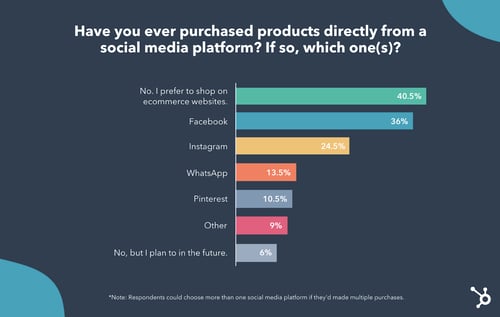
lucid poll asking "do consumers shop on social media?" Results show that 24.5% say they have shopped on instagram.

Image Source

The second biggest benefit is the simplified shopping experience. Gone are the days when you need to leave the app to make the purchase. You can discover a brand and make a purchase all in the same breath. This means a more enjoyable process for consumers, which can lead to more purchases for brands.

Another key advantage Instagram’s shopping tools offer is the ability to easily partner with influencers.

Currently, creators can tag easily the products they’re promoting and send traffic directly to the brand’s Shop page.

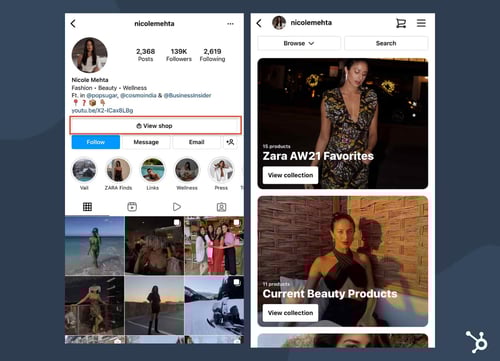
In addition, Instagram is currently testing an affiliate program, in which influencers have their own Shop page.

instagram affiliate program for influencers

This allows users to easily find products recommended by their favorite influencers and make a purchase seamlessly.

Now, onto the not-so-great obstacles of Instagram’s shopping tools.

The biggest thing marketers surveyed complained about is supply-chain issues following many purchases. Since the pandemic, this has been a common hurdle for many businesses, as manufacturers deal with month- or year-long backlogs.

Another concern marketers are facing is not generating enough revenue from utilizing Instagram’s shopping tools or having access to certain features.

37% of marketers also complained about Instagram’s selling fees, which is currently 5% per shipment, or a flat fee of $0.40 for shipments of $8.00 or less. For brands, this is an additional cost that they could avoid by directing traffic to their website instead.

Another big concern is the loss of user data. When Instagram serves as the end-to-end platform, brands can lose valuable data to inform future strategies.

Now that you know the pros and cons of the shopping tools, let’s break down how marketers are using them.

How Marketers Leverage Instagram Shopping Tools

From the marketers we surveyed in our HubSpot Blog Research, 32% currently leverage Instagram Shops in their marketing strategy, and 48% plan to increase their investment in 2022.

While some brands tried the shopping tools as soon as it was introduced, others are just now diving in. In fact, 36% of marketers will be increasing their investment in Instagram Shops for the first time this year.

Meanwhile, 14% of marketers will be prioritizing Instagram Shops above all other features in 2022.

However, one thing to note is that when compared to all the features available on Instagram, marketers say its shopping tools don’t offer a high ROI when it comes to leads. Posting content and going live offer much better results.

With that said, while it may not be ideal for driving leads, it may work well for meeting other marketing goals.

instagram shopping tools

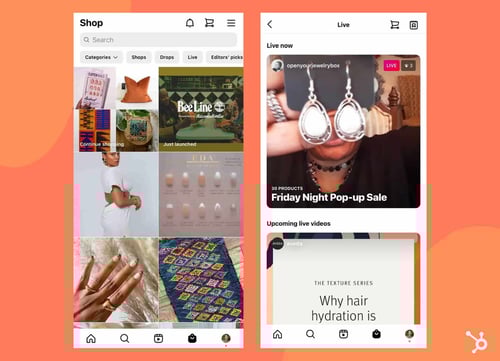
Out of all shopping features available on Instagram (Shop tab, product tagging, guides, Live shopping), the Shop tab is the most used tool by 47% of marketers surveyed.

However, in terms of ROI, it’s in the #2 spot. What’s on top? Instagram Shopping from Creators, which allows influencers to tag the products they’re using in an image or video.

As for shopping tools by format: It looks like in-feed shopping, Stories shopping, and Guides shopping are used at the same rate by over one in three marketers.

How Marketers Approach Product Launches on Instagram

One of the most interesting findings from our research is that for many brands, Instagram’s shopping tools are their sole ecommerce platform.

In fact, 41% of marketers surveyed said most of the brands they work with use the platform’s shopping tools exclusively. The other 59% say their brands have a presence outside of the social platform via an ecommerce website.

instagram in-feed shoppable post

So the question is, how do Instagram’s shopping tools impact a product launch? One in four marketers says it’s much better to launch a product exclusively on the platform.

In fact, 83% of marketers surveyed say they have worked with a brand that launched a product exclusively on the platform.

Conversely, 15% say launching a product/service exclusively on Instagram is worse than launching elsewhere.

We’ve covered a lot here. One fact that’s clear is that more marketers will invest in Instagram’s shopping tools than they have in the past. What works well for one brand may not work for another, based on the audience, the audience, and more.

So, don’t be afraid to experiment with all the features and analyze your data to figure out what offers the best return on investment for your company.

Improve your website with effective technical SEO. Start by conducting this audit.  


How 500 Marketers are Leveraging Instagram Shopping Tools [Data] was originally posted by Local Sign Company Irvine, Ca. https://goo.gl/4NmUQV https://goo.gl/bQ1zHR http://www.pearltrees.com/anaheimsigns

What is a Media Mix & The Most Effective Types [HubSpot Blog Data]

I’m willing to bet that today, the typical campaign at any brand uses a media mix.

This refers to the process of using multiple channels to meet marketing goals. The question is, how exactly does it help brands better plan campaigns?

Free Ebook: The Marketer's Guide to TikTok for Business [Download Now]

Let’s dive into how it works, review some stats, and see some brand examples.

A media mix is another term for an overview of the channels businesses choose to execute their marketing strategies on. Ultimately, media mix optimization is the process of analyzing the performance of those channels.

Think about the last campaign you saw from one of your favorite brands. What did they do differently that really clicked with you? By incorporating a media mix into your yearly planning, you can narrow down what resonates with your audience.

Media Mix Example

To see how a media mix works for a campaign, let’s use makeup brand The Lip Bar’s latest campaign: "Something BAWSE is coming."

To build anticipation around its latest product launch and celebrate its 10-year company anniversary, The Lip Bar launched a multi-channel campaign that reached audiences both online and offline.

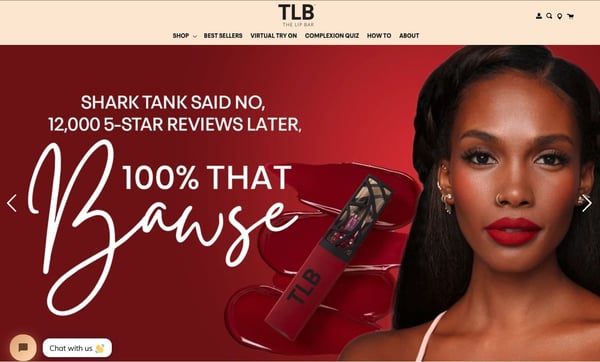
First up, website.

media mix example showing makeup brand's campaign on their website

Image Source

When you land on the brand’s homepage, you’ll see an image of the CEO with the following sentence "Shark Tank said no, 12,000 5-star reviews later, 100% that bawse."

Upon clicking on the image, you’ll arrive at a landing page that has a timeline of the brand. From launching in 2012, to opening its flagship store in 2019, then expanding to 1500+ stores in 2021. Once you get to 2022, you see the tagline "Something Bawse is Coming."

As you continue scrolling, you reach a section that offers a launch date and time for the brand’s newest product.

The second digital channel the brand leveraged for this campaign is YouTube, publishing a 45-second video showing the CEO’s journey over the last 10 years.

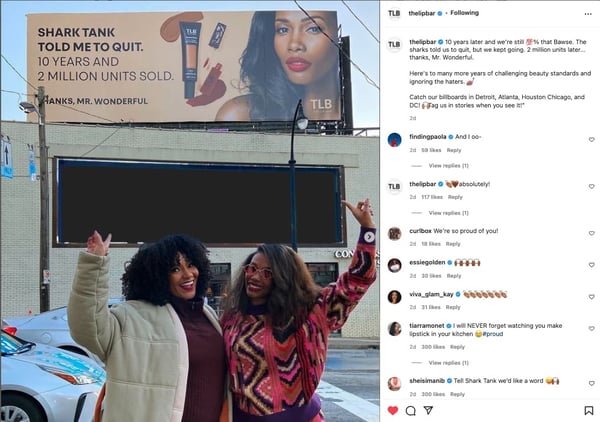
Moving offline, the brand also published billboards in five cities to continue the campaign.

Note how the billboard didn’t use the tagline we saw on social media platforms.

media mix example showing makeup brand's billboard campaign

Image Source

The benefit of using a media mix is to leverage different strategies to see which tactics work and lead to better conversions.

The Lip Bar’s latest campaign is a great example of how any brand can leverage channels differently to reach the same marketing goal.

Media Mix Stats in 2022

In January 2022, we surveyed over 600 media planners to discover their strategies, goals, and challenges. Here are some interesting findings:

  • 84% of media planners surveyed leverage a mix of organic and paid media.
  • Email marketing is the most leveraged media channel, used by 1 in 2 media planners.
  • 41% of media planners surveyed will change their media mix in 2022, while 45% will keep it the same.
  • 14% of media planners currently leverage non-fungible tokens (NFTs) while 16% plan to use them for the first time in 2022.
  • 39% of those who use NFTs in their media planning say they have the best ROI of any channel in their media mix.
  • 39% of marketers surveyed say determining the most effective media mix is the biggest challenge of media planning.

Media Mix Optimization

Media mix optimization provides businesses with an understanding of how their messages are coming across to customers. It allows a brand to invest more time and money into marketing strategies that are best suited for their audiences.

Marketers might consider optimizing their media mix if they want to gain some helpful insight into what time and capital is needed to target their audience in a way that gives customers a personalized experience.

But, while media mix optimization is a powerful opportunity for methodizing data collection online, it's not the best strategy for marketers who employ a lot of traditional marketing techniques, since you can't really measure the success of a billboard or newspaper ad.

However, to make guided decisions such as what font to use in creative design, when to publish social media posts on various channels, or where to invest resources, this method can be helpful.

Optimizing a media mix means looking at the analytics and ROI of various marketing strategies. This can be anything from engagement data of social media platforms to views on the newest commercial.

That's where media mix modeling comes in. If media mix optimization is the "what," modeling is the "how." Every model can (and should) look different, depending on your marketing and broader business goal.

Media mix models can be used to analyze the relationship between a dependent variable and an independent variable.

For instance, let's say a business has a question like, "How did paying for a sponsored tweet affect overall blog traffic?" The business's media mix model should then accurately depict how a dependent variable – like overall blog traffic – relates to an independent variable, such as investing in Twitter.

For businesses still deciding if a media mix optimization is a good idea for them, we've put together key tips to guide you when creating a media mix model. Let's explore those, next.

Tips for Optimizing Your Media Mix

1. Collect personal level data.

The goal here is to find and focus on analytics that will help provide an accurate picture of how customers engage with your media mix.

Analytics software is expansive and offers an array of tools for use. If you're in the market for one, the HubSpot Marketing Hub is a great place to go.

Having too many metrics can be confusing and lead to inaccurate data. The best plan is to have an idea of which metrics need to be tracked so they can be right at the beginning.

A normal media mix optimization process can take anywhere from a few months to a year. So, collecting the right information at the beginning contributes to getting the most accurate information overall.

2. Have a robust reporting process.

When using a media mix, you often combine online and offline strategies. With this in mind, it can be more difficult to measure the impact of a billboard compared to a paid social ad.

That means you’ll have to think outside of the box when evaluating your media mix. For instance, while an online ad will have clear conversion rates you can find, a billboard may require some creative tracking.

Perhaps, you can track the uptick in branded search volume or improved brand recall.

This requires having a robust reporting process that accounts for the events you’ll be tracking – both online and offline.

3. Choose the right platform.

Marketing teams that use CMS or analytics software are already ahead of the game. Software like this is essential to optimizing a media mix because it can give you numbers that would otherwise take some time to figure out manually.

A brand can analyze its media mix with the use of platforms that collect engagement data in real-time and compile that data into tracking reports.

Look for a platform that can give a holistic view of results across the board, so results will maintain consistency. It's also good to choose software that specializes in the marketing channels being used at the time.

Because optimizing is measuring a lot of different data at once, stick to as few systems as possible.

For businesses that are in the market for a CMS, HubSpot offers tools that are easy to use for brands of any size.

4. Analyze the data.

We've been talking a lot about the kind of data and analyzing that needs to be done in a media mix optimization, but another important factor is being able to interpret and understand that data.

It's no secret that in the marketing world, there is an abundance of processes and acronyms floating around. While first getting into the groove of understanding them and what they mean can be intimidating, it's important to know the data being collected and how to use it to your advantage.

For instance, if a marketing team had especially high click-to-open rates for weekly newsletters, that's useful information to infer that the next campaign could benefit greatly from an email-marketing rollout. Alternatively, if a marketing team has no idea what a click-to-open rate is, those numbers aren't going to be helpful — just a little confusing.

Reading data to understand its usefulness is just as important as collecting it.

5. Consider public perception.

Knowing how the public perceives your brand can help fill in some interpretation gaps during the modeling process. In the media mix model, think about how to fit in customer opinion. That way, the numbers will have some customer opinions to define them.

There are a couple of ways to do this.

To better understand your brand perception, monitor your brand mentions on social media. Take note of the positives, the negatives, and the questions. You can also create a survey to know how your customers feel about your company and its services and use a net promoter score.

An NPS asks customers how likely they are to recommend a business to a friend. Knowing this will aid in figuring out how a business fares among the competition in the market. It will also assist in future marketing endeavors.

For instance, if customers fill out your survey and ask for more personalized Instagram stories, your team could take that knowledge and include it in your next campaign.

This method ultimately gives the media mix optimization reigns to the customer.

Media mix optimization can help your marketing team figure out which distribution channels will best promote an upcoming campaign, and can ultimately help strengthen your marketing strategy as a whole.

Editor's Note: This post was originally published in Feb. 2020 and has been updated for comprehensiveness.

Blog - Content Mapping Template


What is a Media Mix & The Most Effective Types [HubSpot Blog Data] was originally posted by Local Sign Company Irvine, Ca. https://goo.gl/4NmUQV https://goo.gl/bQ1zHR http://www.pearltrees.com/anaheimsigns