Friday, December 10, 2021

Everything You Need to Know About LinkedIn Retargeting

Yes, you own or work for a business that sells products or services. However, you are also a consumer. For just a moment, take off your business hat and put on your consumer hat.

Every day, you research items from pet shampoo and carpet cleaner in your personal life to CRM systems and social media schedulers for your professional life.

Download Now: How to Run LinkedIn Ads

Our world is filled with hundreds or thousands of items for anything your heart desires. With so many options, we become easily distracted, following the next shiny object to another site, another company, or another method of meeting our needs altogether.

Marketers know this, and so they’ve had to find a way to recapture our attention when we’ve been squirrelled by another option. Once they’ve got our attention, they have another opportunity to sell their products to us.

You can put your business hat back on. Isn’t it frustrating when you see how many people visit your website and look at a product, and leave without ever making a purchase? You’ve managed to attract them to your business, but what good is paid advertising and a beautiful website if shoppers don’t convert to customers?

Thankfully, marketers have a solution for this. It’s called "retargeting" and you’re about to learn everything you need to know about LinkedIn Retargeting.

LinkedIn Retargeting

If you own a business, work for a business, or are looking to be hired by a business, you know that LinkedIn is a necessary platform. While you may opt out of more "social" social media like Facebook or Instagram, employers look to LinkedIn to find new employees and vet potential candidates, and most professionals use LinkedIn as a networking tool.

In the third quarter of 2020, LinkedIn reported more than 690 million users. Like many types of social media, it could be considered a "necessary evil." Fortunately, it can also present an opportunity to recapture the attention of prospective clients and customers.

What are Linkedin Retargeting Ads?

LinkedIn retargeting ad example

Image Source

Also known as remarketing ads, LinkedIn retargeting ads allow you to reach LinkedIn users who may have previously interacted with your brand in some way (so they have some level of interest), yet they haven’t purchased from you.

How to Retarget on LinkedIn

Retargeting through LinkedIn is a 7-step process (with a potential 8th step):

  1. Users see an ad in their LinkedIn feed.
  2. The user clicks on the ad.
  3. They are brought to your website.
  4. They interact in some way, perhaps filling out a form in exchange for an offer.
  5. The user becomes a lead in your system.
  6. Their history is stored in cookies and the data is sent to LinkedIn.
  7. Retargeting ads are shown to the user.

And hopefully…

The user takes the steps to become a customer.

You might be wondering how the cookies know how to communicate with LinkedIn. This is done through a piece of code called an Insight Tag that gets installed on your website. The pixel is able to track conversions, website audiences, and website demographics for all your LinkedIn ad campaigns. It then passes this data from your website to LinkedIn, letting it know that you’ve got someone interested who needs to be reminded you exist.

LinkedIn Retargeting Cost

Any smart business person is going to wonder if Linkedin Retargeting ads provide a worthwhile ROI. Before you learn how to create these ads, you’ll be pleasantly surprised to know:

In their pilot study, Linkedin’s 2,000+ Matched Audiences campaigns reported an average of:

  • 30% increase in click-through rate (CTR) with Website Retargeting ads.
  • 14% decrease in post-click cost-per-conversion (CPC) with Website Retargeting ads.
  • 37% increase in CTR with contact targeting.

Retargeting allows you to capture and convert leads that would otherwise be lost. Because of this, successful Linkedin retargeting campaigns will also increase your conversion rate and lower your average cost-per-lead (CPL).

Sound like something you could benefit from? Read on to learn the "How."

Creating LinkedIn Retargeting Ad Campaigns

Thankfully, you don’t have to be a tech genius to set up a LinkedIn Retargeting Ad. They’ve made it fairly user-friendly so as long as you have access to your website code, and basic knowledge of how to navigate inside it, this is doable. With good directions (they’re coming, don’t worry), you can be well on your way in a short period of time. If you have access to a website designer who will help you, that’s great too.

Let’s take a look at the overview first and then we’ll dive into specifics:

  • Create a LinkedIn advertising account
  • Build LinkedIn Retargeting Audience
  • Use Matched Audiences in a LinkedIn Retargeting Campaign

How to Create a LinkedIn Advertising Account

If you are not yet using Linkedin Campaign Manager, start here and follow the prompts to set up your account.

How to create a LinkedIn ad account for retargeting

Then, you can set up your campaign:

Creating a LinkedIn ad campaign for retargeting

If you are new to Linkedin ads and would like some assistance creating and managing campaigns, consider using a program like Rollworksto help.

Assuming you’ve done all of that and are already running LinkedIn Ads, let’s look at how to set up a Linkedin pixel.

How to Install a LinkedIn Advertising Pixel

Earlier, we mentioned the Insight Tag. This is the most important piece of the retargeting ads puzzle because, without it, your website and LinkedIn won’t communicate.

Using the insight tag when creating a LinkedIn retargeting ad

  1. To find your unique Javascript code, head to Linkedin Campaign Manager.
  2. Check the box next to your business account and then look at the Campaigns tab.
  3. From the Account Assets tab dropdown, click on Insight Tag.
  4. Select Install my Insight Tag.
  5. Choose I will install the tag myself.

Installing an insight tag for LinkedIn retargeting

  1. Copy all of the tag code.
  2. Choose I’m Done.
  3. Go to your website and paste the Insight Tag code at the end of the <body> tag in the global footer.

Once this is done, it’s time to check each page to make sure the Insight Tag has been installed properly.

  1. Head back to the Campaign Manager and look for the Insight Tag under Account Assets. When a tag has been installed correctly, it will send a signal from your website to Linkedin. Whenever a LinkedIn member visits that page, the domain name will appear here.
  2. It may take up to 24 hours for a page visit to verify, so you may need to come back and check the connection later.
  3. Check the Status column for all verified domains (they’ll show up as active/green).

Verified domain for LinkedIn retargeting

LinkedIn Advertising Pixel for Google Chrome

The next step is necessary to ensure that this system works with any users on Google Chrome. They have more safeguards in place to prevent third-party cookies, so you’ll need to do an extra step to make this work.

  1. Make the SameSite attribute ‘None.’
  2. Add the Secure label to your cookies.

If you’re not sure how to work with SameSite attributes, it may be good to bring in a developer for help. Once this step is done, Google Chrome users will join the party.

Linkedin Retargeting Options

With the Insight Tag installed, we can begin Building Linkedin Retargeting Audiences. All the options are on one page, so it’s fairly easy to do.

LinkedIn retargeting campaign manager

  1. If you’re not already there, log into your Linkedin Campaign Manager and select the account you’ll be working with.
  2. On the Campaigns page, find the Account Assets tab and select Matched Audiences.
  3. Click on Create Audience on the right side of the Matched Audiences page.
  4. Select the audience type you’d like to build.
  5. Follow the rest of the page’s flow and then choose Create to build a new audience.

Keep in mind that it takes 48 hours to build an audience. You also need at least 300 members before you can send retargeting ads to those users. Different audience pages will look slightly different so we’ll review these next.

Website Audience Set Up

This variation will retarget users who visited a page on your website using Website audiences. You’ll need the Insight Tag for this audience.

Create a website audience for LinkedIn retargeting

  1. Name your audience. You’ll have to remember this name later in your campaigns, so be specific.
  2. Add key pages from your website under Match a URL that… You can add multiple links to one audience.
  3. Pay attention to page rules:
  • Equals – this is the exact URL you list and is great to use when you want to restrict subpages.
  • Starts with – includes all pages starting with whatever you enter.
  • Contains – you’ll be asked to type in a word or string. This option would make it easy to group URLs in a pattern, like related products, service offerings, or blog topics whose URL string includes the same keyword or phrase.
  • AND/OR: Use AND to retarget users who both visit a page URL and visit another URL containing a word you specify. Use OR to group URLs and retarget people who visit any page listed.

Video Audience Set Up

To retarget users who viewed a video ad, follow these steps.

  1. Name the audience.
  2. Choose viewing percentage (25%, 50%, 75%, or 97% of the video).
  3. Select lookback period (30, 60, 90, 180, 365 days in the past).
  4. Click the checkbox next to the video campaigns you want to include.
  5. Hit Create.

Create video audience for LinkedIn retargeting

Lead Gen Form Audience Set Up

Follow these steps to retarget audience members who opened or submitted a lead gen form.

  1. Name your audience.
  2. Choose the engagement level. This can be anyone who opened your lead gen form (including submissions) or only people who have submitted your lead gen form.
  3. You can specify how long ago the audience members engaged with this form: between 30 days to a full year.
  4. Check the box next to the campaign(s) you want to retarget.

Create lead gen form audience for LinkedIn retargeting

Company Page Audience Set Up

To set up an audience of users who have interacted with your company’s LinkedIn page, follow the process below.

  1. Name the audience.
  2. Choose an engagement type. Engagement on a company's Linkedin Page includes a page view or a click on your page’s header CTA.
  3. Select how recently audience members engaged.
  4. Click Create.

Create company page audience for LinkedIn retargeting

Event Audience Set Up

Do you host events on LinkedIn? Retarget LinkedIn members who RSVP to your event (you can do this for past and upcoming event registration).

  1. Name the audience.
  2. Check the boxes next to Event names to include the events you want.
  3. Click Create.

Create event audience for LinkedIn retargeting

How to Use Matched Audiences for LinkedIn Retargeting

Want to use a matched, or lookalike audience for LinkedIn retargeting? Here’s how to set it up:

  1. Create a Linkedin Campaign.
  2. Use Matched Audience in Campaign.
  3. Scroll to Who is your target audience.
  4. Select Audiences > Retargeting.
  5. Select from one of the options of Matched Audiences.
  6. Choose the Matched Audience under that type.
  7. Finish the campaign setup.
  8. Create your ads and launch the campaign.

Defining target audience for LinkedIn retargeting

LinkedIn Retargeting Best Practices

You’ll want to get the most bang for your buck when it comes to LinkedIn Retargeting Ads. Follow these best practices to make sure your advertising dollar stretches as far as possible.

  • Refine your ad content over time. If you notice certain pieces of content aren’t resonating with your audience, don’t be afraid to refresh it until you figure out what works. Images and ad copy should reflect the retargeting audience you’re trying to reach.
  • Create multiple ad formats depending on the stage your prospective customers are in. Continue testing formats and use the format that will best move them towards your objectives.
  • Be flexible. You’ll be learning what works and what doesn’t as you go. When you discover something isn’t creating the results you want, change it.

Final Thoughts

There’s no need to accept lost leads. When someone heads to your website, downloads content, or interacts with your brand in any way, it’s because they are interested in what you offer and how you can help them.

Rather than counting them out if they don’t immediately convert, focus some of your advertising dollars on recapturing their attention and gently guiding them back to your company and what you can do for them. You have the solution to their problem — make sure they know it.
New Call-to-action


Everything You Need to Know About LinkedIn Retargeting was originally posted by Local Sign Company Irvine, Ca. https://goo.gl/4NmUQV https://goo.gl/bQ1zHR http://www.pearltrees.com/anaheimsigns


How to Perfectly Manage a PPC Campaign [Template]

In the world of search engine marketing (SEM), more and more marketers are buying into PPC campaigns. Google Ads specifically has increased its revenue from year to year. In 2021, Google advertising revenue accounted for $53.1 billion — 81% of Alphabet's overall sales.

Properly investing in PPC can result in nearly guaranteed ad placement in the search engine result pages of their choice. And this placement can help generate leads. If your ads tool is tightly integrated with your CRM, you can even leverage ads data to nurture these leads across their buyer's journey.

As you prepare to create a PPC campaign, it's important to get a rundown of what a successful campaign entails and identify management missteps that you'll want to avoid.

Free Guide, Template & Planner: How to Use Google Ads for Business

Building a successful PPC campaign includes a few key steps:

  • Determine your PPC campaign structure.
  • Identify, build, and refine your campaign's landing pages.
  • Create a keyword strategy based on your research.
  • Create ads based on insights from the steps above.
  • Share your campaign plan with stakeholders.

The problem is, many marketers have poor PPC campaign management, which ends up costing them way more money than they need to spend and delivering underwhelming lead generation results.

Here are a few ways marketers could go wrong with PPC campaign management:

  • Coming up with keywords on the fly without doing prior research.
  • Only building one basic campaign without utilizing Google Ads' Ad Groups tool.
  • Attaching unengaging landing pages — or a homepage that generates no leads — to the campaign.
  • Not adding "negative keywords" or monitoring campaigns to avoid wasting budget.
  • Creating campaigns, setting budget caps, and going live without telling internal or external stakeholders.

So, how do you manage a PPC campaign properly so that you get leads at a reasonable cost? It comes down to intelligent campaign structure.

How do you master intelligent campaign structure? You use a template!

PPC Plan Template

We've created a free PPC campaign management template that will help you and your clients set up a full-funnel campaign structure that follows PPC best practices. Once you do that, you'll be better positioned to maximize the return on your PPC investment.

If you're running PPC campaigns for someone who doesn't understand the importance of an organized campaign structure, this template will also act as a PPC campaign management task checklist that will enlighten your boss or clients.

PPC Campaign Template

We're going to show you how to use that PPC template in this blog post — so download it now and follow along.

Steps for Using This Template

Before we get started, let's go over a few tips that'll make using this template even easier:

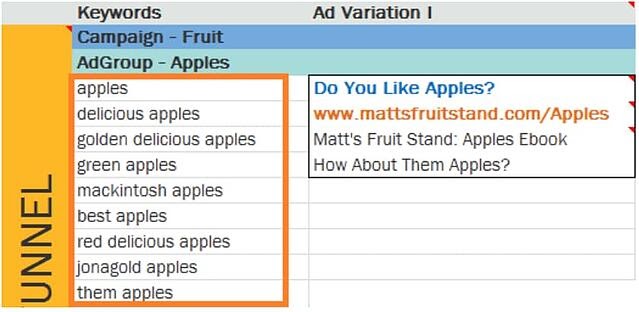
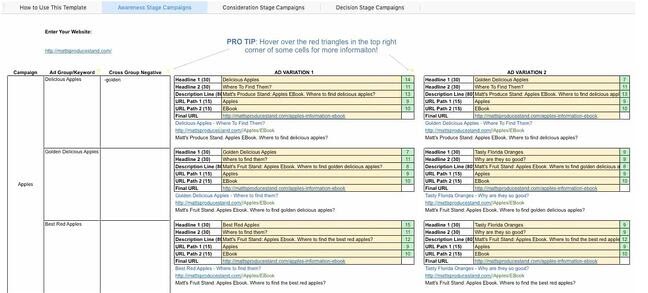
  • You will want to clear out the example data I have in the template such as keywords, campaign and AdGroup names, ads, and destination URLs.
  • Be careful not to erase columns E, G, and I. They contain formulas that will help you in subsequent steps.
  • Click on the red markers in the top corners of the cells. They contain helpful tips and FAQs. If you ever forget what a cell is used for, they will remind you.

Step 1: Choose your PPC campaign management tools and software.

There are several places to begin your PPC campaign strategy, but my advice would be to start with one platform and expand to another until you cover each channel your audience visits. This tactic works because it keeps your costs low in the initial stages of PPC planning. Rather than paying for an external campaign management tool, you can manage your campaigns natively within the platform on which you're running the ads.

However, as you expand your strategy to include more sites, you'll want to scale to a PPC campaign management software that can help you keep track of each platform, each budget, and each set of creative all in one place.

Here are some of our favorite tools for the job:

  • Marin Software: Integrates with Google and Facebook — two of the most popular PPC platforms.
  • Wordstream Advisor: Analyzes Google and Facebook ad spend for you to keep you on budget.
  • SpyFu: Analyze your competitor's campaigns to build a well-rounded strategy.

Step 2: Understand PPC campaign structure.

Before we do anything with this template, it's important to understand PPC campaign structure. Far too many marketers will just set up an account, create an ad, direct the ad to their home page, pick some keywords and hit go. This is not the way to do things.

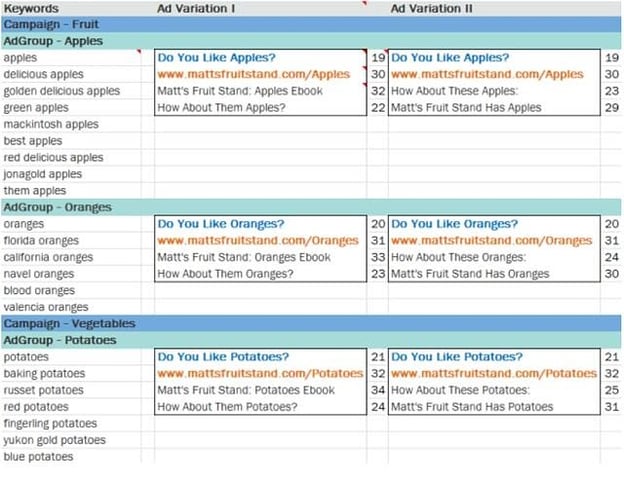
With Google Ads, you have the opportunity to create multiple campaigns. Each campaign may contain several AdGroups, and each AdGroup may contain a few ads and multiple, similar keywords.

It's wise to create multiple campaigns because you can set daily budget caps, day-parting, and select geo-targeted regions at the campaign level. If you're bidding on generic keywords and branded keywords, you'll want to put these in separate campaigns because the economics around these two types of keywords will likely be very different.

As you can see, your template reflects these best practices, providing space for several different campaigns, AdGroups, and ad variations within those AdGroups.

PPC Campaign Template step 2Download this Template Free

Step 3: Identify your landing pages.

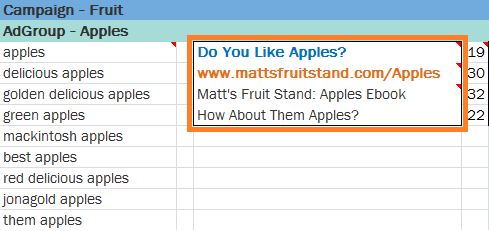
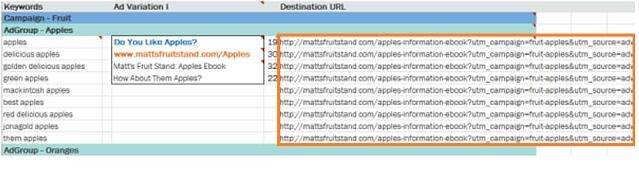
The "Destination URL" is the place on your website where you want the PPC traffic to end up. Because there is a marginal cost associated with each PPC visitor you attract, I recommend you choose a landing page URL as your destination URL.

Do not drive them to your home page or a blog in hopes that they will stumble upon a lead generation form. That's the job of organic search. Drive them to a landing page with a form on it. Don't forget to put in a tracking token so you know where these leads are coming from.

PPC Campaign Template step 3

You will notice that the Destination URL within the AdGroup is the same regardless of the keyword or ad. If you really want to drive a keyword to a different landing page, then create another AdGroup. If you want to get even more specific, create another campaign for that keyword.

You should also keep your sales funnel in mind when you identify these landing pages. Think about which part of the sales funnel each landing page and offer speaks to.

For example, an educational PDF about an industry concept would be appropriate for a top-of-the-funnel offer, while a coupon or a demo would be at the bottom of the funnel.

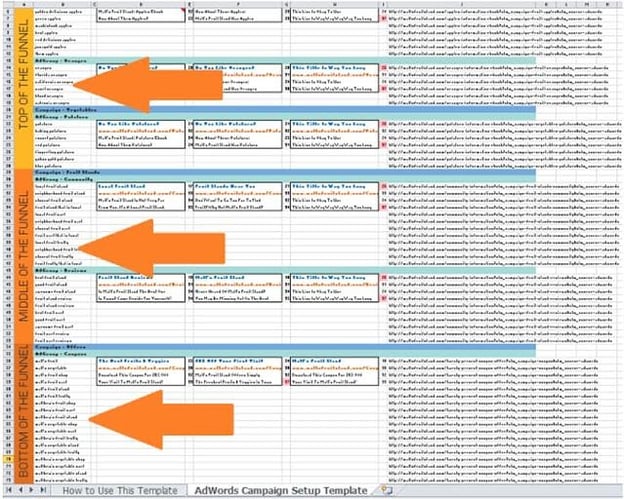
Manage and create separate campaigns for each part of the funnel. If you scroll down in your template, you'll see that there's dedicated space allotted for campaigns in all of these funnel stages.

PPC Campaign Template step 4a

Step 4: Build your keyword strategy.

Next, select the keywords that are relevant to the landing page and offer. Make sure to keep them as relevant as possible to increase the chance that each visitor you pay for completes the form on the landing page.

Yes, it would be nice to rank for certain keywords, but if the landing page doesn't answer the keyword query, think twice. Or better yet, create another offer and landing page that speaks more directly to the keyword.

PPC Campaign Template step 4

Download this Template Free

To understand search volumes and costs around each keyword you want to select, you can use free tools like the Google Ads Keyword Tool or — if you're a HubSpot customer — our keywords tool.

If this is your first time managing a PPC campaign, it would be wise to read up on how to design a keyword strategy. In the case of Google Ads, you might also want to learn more about keyword quality scores.

Step 5: Create your ads.

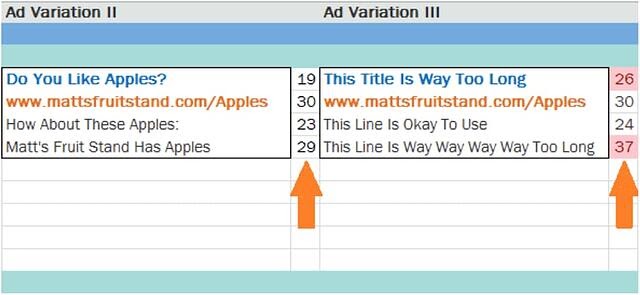
This is the fun part! Both Google Ads and Microsoft Ads allow you to create more than one ad for each Ad Group (hence the "group" terminology). The service will rotate them until it notices that one appears to drive a higher clickthrough rate (CTR). This is how A/B (and C and D) testing works. While this is optional, you should take advantage of the ability to create more than one ad.

Keep in mind that you are allotted 25 characters for the title of the ad, 35 characters for the display URL (the URL that's displayed in the ad, not to be confused with the destination URL), and 35 characters for each line of copy. But if you're using this template, we'll keep track of that for you.

PPC Campaign Template step 5

In my experience, the title has the greatest influence on an ad's CTR. It's wise to include a keyword in the headline to draw a user's attention to your ad. An even better practice would be to use dynamic keyword insertion.

A good rule of thumb is to simply try to provide a cohesive experience for searchers — from seeing your ad in the search engine results to completing the form on your landing page — everything should align with the goal of getting them to click through.

PPC Campaign Template step 5

Finally, there's the tricky matter of the display URL. You're only allowed 35 characters here, but it's unlikely that your destination URL, the actual URL for your landing page, will be that short. So the search engines allow you to create a display URL, which may not even be an actual URL on your website. The domain in your display URL must be the same as the domain in your destination URL so that users end up in the right place when they click.

Step 6: Share the completed template with stakeholders.

Whether you're doing PPC for your business or a client, your completed template will ensure alignment between the stakeholders' expectations with the realities of a productive PPC campaign. If you're the stakeholder of a PPC campaign, this template will help you think about what you're doing with the money you're spending on PPC.

By doing so, you'll have created a congruous user experience that search engines like to see. This can benefit you in terms of your positioning in the SERPs and, ultimately, your costs. It will also grant you the agility you need to swiftly reallocate and modify your budget as you respond to changes in the marketplace, and drive the maximum return on your PPC spend.

PPC Campaign Management

Understanding where your audience is spending most of their time online is key, in addition to figuring what kind of ads work best for your business. It’s imperative to familiarize yourself with the different platforms available to run your PPC campaigns. Let’s continue by looking at some of the most prominent online ad platforms: Google, Microsoft (Bing), Facebook, Twitter, and YouTube.

Google PPC Campaign Management

Google has been the dominant player in the search engine space for more than 20 years and it still produces some of the most innovative ad experiences on the market. Here's a look at a couple of the most popular ways to serve ads on Google.

Google Search Ads

One of the most popular types of Google ads is the search ad. These ads appear at the top and bottom of the search results for specific keywords that you bid on. Google search ad campaigns are usually run with the goal of driving traffic to a specific webpage — like a landing or product page.

Google Display Ads

Have you ever visited a website that has advertising on the banner, sidebar, or footer of the page? Then you've probably crossed paths with a Google display ad. These types of ads are typically visual, featuring colorful graphics, videos, and sometimes audio. Google display ads are helpful for retargeting customers who have visited your website before without making a purchase.

Microsoft Ads (Formerly Bing Ads) PPC Campaign Management

Overall, Microsoft Ads works very similarly to Google Ads. However, here are a few tips that can help get the most out of your PPC campaign strategy for Microsoft Ads.

Bing Keyword Suggestions

If the bulk of your PPC efforts live in Google Ads and you decide to start bidding on Microsoft Ads, you might be tempted to use the same keywords that you’re already bidding on in Google. The issue here is that Google and Bing are different search engines and it’s possible that your Google keywords won’t see the same search volume in Bing.

Bing’s keyword research and suggestion tool will give you more accurate search volumes for your keywords. You can still use your original list of keywords from Google to start with, but utilize this tool to verify whether you should be bidding on the same keywords, or something similar that yields more traffic.

Lower CPC

Ad bids can end up being quite costly for a business so many marketers are constantly working to decrease ad spend. Wordstream tested the cost of running ads on both search engines and found that Bing’s average CPC was 33% lower than Google's. Since bidding on Microsoft Ads is less competitive in comparison to Google, it’s likely that you won’t end up spending as much of your budget on this platform.

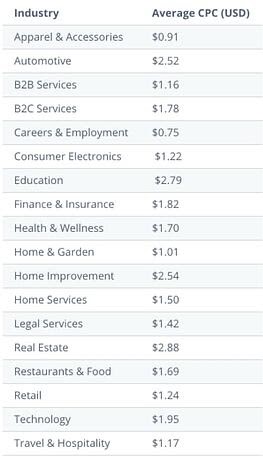
So if you’re able to find a high MSV keyword to bid on there’s a good chance that you’ll see a positive shift in your return on investment. This may be especially true for specific industries. The table below shows the average industry CPC according to Microsoft Ads.

8-1

Image Source

For a deeper dive into Microsoft Ads check out this tutorial.

Facebook PPC Campaign Management

Facebook Ads Manager is a platform that connects 1.6 billion people worldwide to businesses on Facebook. It’s a great tool to target specific audiences and to promote brand presence.

Some of the most popular ads you can incorporate into your Facebook campaigns are:

Story Ads

Stories are thriving on social media platforms, so why not develop a few ads to meet your audience where they’re already spending time?

Stories are only posted for 24 hours so these types of ads are best to use when you have a specific promotion occurring. Like personal stories, story ads can be shared in the form of a video with a link or a series of still photos that lead the viewer to take a specific action.

Playable Ads

Gamification is always an innovative way to catch a lead’s attention. Facebook’s playable ads allow you to create a brief interactive version of a game or app so users can get a feel for what your product is like.

You’ll want to keep the functionality as simple as possible, so you won’t deter any potential customers, and of course, make it fun!

Messenger Ads

If you’ve ever used Facebook’s messenger tool, you’ve probably seen an ad appear among your conversations. The great thing about this is that a potential customer could choose to instantly connect with your business directly from their messages.

So, if you have a sales customer service team that connects with people via chat this is a great way to establish an instant connection. You can also send a lead to your site or a specific landing page from the ad.

To start building your own ad campaign on Facebook check out HubSpot’s Facebook Ads Training Course.

Twitter PPC Campaign Management

Twitter Ads Manager makes it easy to plan the ad you’d like to run on Twitter while providing reporting on campaign performance.

People spend 26% more time viewing ads on Twitter than on any other leading platform, so you’ll want your ads to be catchy enough to stop someone mid-scroll. Some of the types of ads you can include in your Twitter campaign are:

Promoted Tweets

The only difference between a regular tweet and a promoted tweet is that you’re spending money for the promoted tweet to appear in the feeds of people who aren’t following your business. This allows your business to convert users, or simply gain new followers which will help with your brand’s awareness

Promoted Moments

Twitter moments are several tweets that focus on a specific topic or event. Essentially you want this collection of tweets to communicate a story for your audience. These are great for more fun or trendy topics since Moments includes categories such as trending, sports, entertainment, and more.

Promoted Trends

If you’re someone that loves seeing what’s trending on Twitter you may want to experiment with promoting a trend for your target audience to interact with. This will be displayed in the timeline, the explore tab, and the “Trends for you section.”

Once someone clicks on the promoted trend they’ll see various search results for the specific trend or topic and your brand’s promoted Tweet. If your business has identified an engaged Twitter audience you may be sitting on an untapped goldmine.

Learn more about Twitter Ads Manager for your business and get to tweeting!

YouTube PPC Campaign Management

Including YouTube in your ad campaign strategies is a must. If your business can create something catchy enough to convince someone not to click ‘skip,’ you’re already winning.

As part of the Google Display Network, YouTube has become a core part of marketers’ ad strategies. With over a billion active users and the ability to be accessed in 76 languages, there’s no denying that YouTube is reaching a massive amount of people on a daily basis.

Let’s take a look at some of the different types of Youtube ads.

Skippable In-Stream Ads

These are probably the ads that you’re most familiar with already because we’ve all clicked that magical little button that says “skip ads” to start viewing what we searched for as soon as possible.

The ads can play before the ad even begins, which means the viewer never sees it, or they’ll have to wait five seconds before they can skip. Five seconds isn’t much time to convince some not to hit skip, so make sure the hook of your ad is immediately enticing. The good thing about this is that if they skip within those first five seconds, you don’t have to pay for the ad.

Non-Skippable In-Stream Ads (Including Bumper Ads)

Since so many people opt to skip ads on YouTube, advertisers have the option to create non-skippable ads. If you’ve developed a strong creative as you feel will resonate with your target audience this may be the option for you.

However, make sure that you’re avidly measuring results to ensure you’re getting what you’re paying for. If the results aren’t in your favor, you may want to revert to a skippable ad instead.

Video Discovery Ads (Formerly Known as In-Display Ads)

Discovery ads are what users see in the search results. Remember, YouTube is the second largest search engine and shows more than 1 billion hours of video to users each day – so you’ll want those ads appearing in search results too!

These ads will include a thumbnail and a few lines of text as a description. Since many people prefer visuals over text this is an opportunity to get someone to view your video instead of reading a competitor’s textual resource.

Start Your PPC Campaign Today

PPC management is all about researching, budgeting, testing, reporting, and doing it over until you get the results you need. You don't have to do it alone, though. With the right tools and instructions outlined in this guide, you'll be able to implement a PPC campaign that yields results for your business.

Editor's note: This post was originally published in May 2019 and has been updated for comprehensiveness.

New Call-to-action

How to Perfectly Manage a PPC Campaign [Template] was originally posted by Local Sign Company Irvine, Ca. https://goo.gl/4NmUQV https://goo.gl/bQ1zHR http://www.pearltrees.com/anaheimsigns
Wednesday, December 8, 2021

4 Essential DOOH Advertising Trends You Need to Know | 2022

Digital out-of-home (DOOH) advertising has been on a rollercoaster, going from one of the biggest ad trends in 2019 to experiencing a dramatic downfall in 2020.

Business Insider highlighted in 2019 that DOOH was the main growth driver of out-of-home (OOH) advertising worldwide. While Insider Intelligence also revealed DOOH accounted for 28.3 of all OOH ads that year. From that, we predicted DOOH was set to take further steps as networks were set to expand in 2020.

However, with Covid-19 restrictions forcing consumers indoors, Global DOOH spend declined. According to independent analysis firm PQ Media, spending fell 16.6% in 2020 to $14.6 billion. Meanwhile, Digiday says OOH media experienced its worst-ever revenue decline during 2020, it was down 13.3% from 2019 to $51.6 billion.

What about the future of DOOH advertising?

Despite a tough time through the pandemic, DOOH is building to become a big advertising player once again. In fact, PQ has forecast OOH ad revenue to reach over $55 billion in 2021. That’s a 6.6% rise – with a compound annual growth rate (CAGR) of 7.3% from 2021 to 2025. The exciting thing for DOOH? This growth is being super-charged by digital. DOOH alone is set to reach revenue heights of $25 billion in 2025 – that’s 32% of overall OOH ad expenditure.

This, combined with the results of a DPAA study showing that 81% of advertisers will recommend DOOH in their media plans in 2022, shows things are looking up.

Now shopping footfall is returning to pre-pandemic numbers and digital tech has experienced a surge. It’s once again an exciting time to invest ad spend in DOOH!

In this guide, we’ll look at the four biggest DOOH advertising trends. Each of which will help you understand where you should place your brand’s ad budget in 2022.

Four important DOOH advertising trends for 2022:

  1. Post-pandemic return of footfall
    • What can we expect from 2022?
  2. DOOH growth – surge in digital technology
  3. Dynamic DOOH – taking things to the next level
    • The role of dynamic digital content
  4. Ad tech improvements

1. Post-pandemic return of footfall

Although still slightly down in comparison to pre-pandemic numbers, shopping footfall has been on the rise across the world. In the UK alone, footfall was up 4% in October compared to September according to YouGov, showing positive signs as we move closer to key shopping dates.

These rising numbers mean brand advertising is being noticed more widely. OAAA-commissioned research shows over four in 10 people are noticing OOH more than pre-pandemic, while the number of people noticing it ‘much more’ is up 9% from September 2020.

Recognition is translating too, as revenue for OOH increased 38% in Q2 of 2021, with DOOH responsible for much of that resurgence. In fact, DOOH increased by nearly 80% in comparison to the same period in 2020.

What can we expect from 2022?

From the PQ forecast, we can see DOOH advertising is due to hit $25 billion in revenue by 2025. As DOOH is the main driver for out-of-home growth and the CAGR of OOH is set to be 7.3% between now and 2025, digital can expect a fruitful 2022. But where should you focus your spend?

According to the OAAA-commissioned research, retail (63%), fast food (62%) and food and beverage (60%) OOH ads are the most relevant for consumers. Grocery shops offer the biggest opportunity, with 85% of consumers saying they will visit weekly or more in 2022. Retail outlets are the next best target, with 57% planning at least one weekly visit.

Travel will also continue to grow into 2022 – 78% of people are expected to commute at least part-time in the first half of the year. Meanwhile, holidays and air travel could be a big growth area. 72% say they will ‘vacation travel’ and 51% plan to fly in the next year.

And with these eye-opening numbers, DOOH advertising will increase, as shopping and travel footfall (hopefully) continue on this upward trend.

2. DOOH growth – surge in digital technology

Statista predicts global DOOH advertising expenditure will grow to $15.9 billion in 2027 – that’s a projected increase of $9.2 billion from 2019. As advertisers invest more spend in digital ads, we’ll also see OOH screens replaced by digital ones.

In fact, PwC predicts the CAGR of digital out-of-home advertising will be 8.44% between 2018 and 2023.

As the technology becomes more advanced, marketing and advertising professionals must keep pace. No wonder 77% of advertisers have worked to increase their understanding of DOOH over the past 18 months, according to the DPAA.

Knowledge and insight, in combination with elevated tech capabilities,  means digital tech in the OOH space could help your ROI to skyrocket.

3. Dynamic DOOH – taking things to the next level

Data-driven DOOH advertising is increasingly important to help your ad creative target the right people, at the right time, and convert. This is one of our key DOOH trends!

For your brand to increase ROI and engage with your audience, your ads must have context. Not only that but they must be relevant and timely.

Dynamism and the use of quality data is central to achieving these things. Data from smartphones, apps consumers are registered to, smartwatches and more will transform the DOOH space. Dynamic OOH advertising can use location data and traffic patterns from consumers in the area to better understand the content and advertising they might engage with.

With access to masses of content in the palm of our hands, many people today feel static advertising just doesn’t cut it. Your content must capture attention and increase awareness of your brand or product. It also has to be powerful enough to encourage recollection and prompt action for engagement.

Therefore, ensuring your brand’s marketing team is utilising data for dynamic DOOH will be essential as we move into 2022 and beyond.

The role of dynamic digital content

Video and other dynamic content continually proves itself as engaging. Thus it’s little wonder DOOH advertising spend will grow hugely!

When we investigated the impact video has on ads, we discovered that – in comparison to a static ad – video can provide 85% higher CTR.

Targeting consumers on public transport, in retail venues, or generally out in the world with engaging content is a winning combination. With no choice to cancel or fast forward, consumers are more likely to engage, and remember your creative (and convert).

4. Ad tech improvements

There have been incredible improvements in ad tech in the past two years. From a single platform, you can create compelling creative for the biggest and the smallest screens. By automating production, you can reproduce your creative for all ad sizes in minutes for true cross-channel experiences.

With Bannerflow’s Creative Studio ad creator, AI-powered scaling ensures your campaigns are optimised perfectly, right down to the last pixel. It’s also possible to add rich media, such as animation and video, in seconds to boost engagement.

Cater for all ad formats, and ad sizes, from this one platform, too. For instance, your brand team can control all your in-store signage across chains and locations with real-time data. Include special offers or event details and update digital displays to be as detailed and specific as you need. No matter where your digital signage is, your team can create and update motion ads with complete creative control.

Whether your digital displays are in busy shopping centres, on public transport systems or by the highway, powerful ad tech makes DOOH advertising simple.

Key takeaways for DOOH advertising trends

Covid-19 created a tough landscape for this advertising format to thrive. However, as we move into 2022, with increased shopping and travel footfall, digital growth, dynamic capabilities and improvements in ad tech, DOOH advertising will prosper.

By acting on these DOOH advertising trends, you can ensure your ad campaigns target the right people, in the right place, at the right time. Investing a portion of your ad spend in this burgeoning space will position your brand ahead of the competition.

 
Want our latest articles to your inbox? Subscribe today!
 

Want to test the theory first? Simply request a demo to experience our platform in action and one of our specialists will be in touch to guide you through the process.

The post 4 Essential DOOH Advertising Trends You Need to Know | 2022 appeared first on Bannerflow.


4 Essential DOOH Advertising Trends You Need to Know | 2022 was originally posted by Local Sign Company Irvine, Ca. https://goo.gl/4NmUQV https://goo.gl/bQ1zHR http://www.pearltrees.com/anaheimsigns
5 Key Programmatic Advertising Trends to Know in 2022

Programmatic advertising is experiencing a period of change and if there ever was a time to be aware of the latest trends in this ad space, it’s now.

With third-party cookies on the way out, there’s a scramble to establish what a ‘cookie-less world’ will look like. This will see evolution within programmatic advertising, but its position as an integral digital marketing tool will remain strong.

In fact, programmatic ad spend is positioned to move past $150 billion globally by the end of 2021 after hitting heights of around $129 billion during 2020, according to Statista.

And with tech capabilities advancing every year, the combination of enhanced software and algorithms continues to make programmatic advertising an exciting space. But what will progress look like in a post-cookie landscape?

In this guide, we’ll discuss the latest programmatic ad trends, including the slow death of the cookie, the possibilities for connected TV and the re-emergence of creativity. Read on to find out more.

The programmatic advertising trends you need to know for 2022:

  1. Slow death of the cookie
    • Post-cookie solutions
  2. Connected TV (CTV) and post-pandemic programmatic growth
  3. Growth of mobile gaming for programmatic display
  4. The re-emergence of creativity to reach customers within display
  5. Next-level campaign management

1. Slow death of the cookie

The depreciation of third-party cookies has been dragging on for some time – the so-called ‘death’ of the cookie has been postponed over and over again. But when Google’s plan to remove third-party cookies finally arrives, there will be alternatives for programmatic marketing.

Although cookies have been heavily relied on within the industry (as of July 2021, 83% of US marketers said they were reliant on third-party cookies), solutions are being sought.

Post-cookie solutions

Google is still going to allow first-party data, so regulated first-party cookies are a focus for programmatic advertising. Harnessed with precise detail, first-party data can provide incredible value for advertisers – from browsing behaviour to preferences.

According to Digiday, there are three key methods for getting the most out of first-party data:

  • Launching registration walls
  • Widening your user data pool
  • Segmenting your audience and the use of contextual targeting

In fact, their data shows that 51% of marketing professionals are investing more in contextual targeting, while 43% of advertisers say they’re optimistic about the future of this method.

There are multiple identification methods in the offing too, with advertisers seeking solutions that allow them to target users when they visit apps or sites. Unified ID 2.0 is a current front-runner. The open-source system will give users a login that they can use to identify their preferences for the ads they wish to see – this will then create an ID.

It’s expected that spending on identity solutions from will reach $8.2 billion by 2024 in the US, and $4.1 billion in Europe.

However, Statista found that 60% of marketers across the US think having multiple solutions is the answer – 74% are also in collaboration for first-party data sharing purposes.

2. Connected TV (CTV) and post-pandemic programmatic growth

During the height of the pandemic in 2020, TV watching and online streaming soared. According to Ofcom research highlighted by BBC News, UK media habits were transformed by the pandemic restrictions. And we believe it to be among the programmatic advertising trends worth exploring in 2022.

Nearly 40% of waking hours were spent in front of a screen, with the public spending double the amount of time per day watching streaming services compared to pre-pandemic numbers. Viewing figures for video streaming was also up 71% on figures recorded in 2019 and adults spent over six hours per day watching TV and online video.

Not only that, but an Unruly CTV survey found that 82% of the UK can access a connected TV. Plus, 77% of consumers would rather watch their favourite shows for free with ads rather than pay for ad-free content. This makes CTV growth one of the biggest programmatic ad trends for 2022.

While this development has occurred over a short period of time, the opportunity for further growth within programmatic advertising is wide-ranging. The buying process, tactics and measurement all require reassessment for this space.

Traditional practices within TV advertising will not apply to programmatic for CTV. This surge in CTV access will spell a reinvention of the whole process of TV advertising – from planning to measurement and optimisation. As it’s in its infancy, the advertisers who make the right tweaks and stay ahead of the curve will be the ones who capitalise.

3. Growth of mobile gaming for programmatic display

In our summary of the shifts online advertising may experience in 2022, we look at gaming platforms as advertising channels and unearth some eye-opening statistics.

In 2021, there’s an estimated 3.24 billion gamers globally – unsurprisingly, this translates into a gaming turnover of $159 billion. Plus, Adjust data insights found that gaming makes up 50% of total industry ad spend. The gaming industry as a whole is experiencing a purple patch, which has transformed these spaces into effective advertising platforms.

But what about mobile gaming as its own entity? In the first quarter of 2021, there were approximately 477,877 mobile gaming apps available on Google Play – an increase of almost 12% from the previous quarter. A GlobalData report also found that after reaching an industry value of $98 billion in 2020, mobile gaming is predicted to reach $272 billion by 2030.

These figures show both sides of the coin – yes, there’s an incredible amount of opportunity, but the mobile space is overflowing, so targeting must be pinpoint. That’s where programmatic advertising steps in.

Increasing competition in mobile gaming advertising means your creative campaigns have to reach the right audience, at the right time and in the right place. Harnessing the power of programmatic marketing will offer an invaluable helping hand to scale appropriate ads to the users you want to target. This will be key for successful campaigns and can help achieve impressive ROI in 2022.

4. The re-emergence of creativity to reach customers within display

The next of programmatic advertising trends is easier said…than done. Marketing teams are poised to work smarter in a world without third-party data. Industry experts are also operating in competitive spaces where ad fatigue or ‘banner blindness’ is in play. The solution? Creative and impactful advertising supported by powerful programmatic capabilities to reach your audience.

Our four key strategies for overcoming advertising fatigue root themselves within creativity:

  1. Personalisation – the use of data feeds and dynamic creative can target your audiences on a wider scale and result in higher conversion rates.
  2. Using video – our display trends research this year found that ads using video during 2020 received an 85% better CTR.
  3. Mobile-first – more people are using smartphones, which means digital ad spend for mobile is increasing. Creating dynamic mobile ads could see you outsmart the competition.
  4. Test and optimise – this will be especially important in a world without third-party cookies. Test what you’ve done and optimise accordingly for better CTR.

Using creative marketing to provide your audience with an inspiring experience is key – programmatic advertising is all part of this. Once you understand what your audience needs from your brand to connect emotionally, programmatic tactics will help reach them where they want to be found.

Many elements feed into effective creative marketing, including:

  • Branding – make sure you branding fits your business.
  • Customer experience – prioritise at every stage of the consumer journey.
  • Content marketing – tell stories your audience wants to hear
  • Social media marketing – optimise your efforts to spread the word.
  • Team management – check your team has the appropriate skills and the right structure is in place. In-housing might be key, for instance.
  • Tech and tools – the right equipment can help you keep pace with what you want to achieve.

5. Next-level campaign management

Having the use of a powerful campaign management tool could be invaluable to your marketing team’s ability to heighten CTR and maximise ROI. This is definitely an essential programmatic advertising trend!

Being able to schedule ads, publish in real-time and use live data feeds for key dates in the calendar can be transformative for what you’re able to achieve.

For instance, according to our research, Black Friday has a 57% better CTR compared to the average shopping day. However, consumer and retail brands see massive increases on both Black Friday and Cyber Monday. In 2019, Black Friday saw a 93% better CTR while Cyber Monday experienced a 140% uplift – the same dates in 2020 saw 450% and 231% higher CTR respectively.

It’s not just sectors such as consumer and retail that stand to benefit from an agile campaign management platform. A competition such as the Euro 2020 football tournament has proven results for both display advertising impressions and CTR.

On Tuesday 29th June 2021, when England were playing Germany, there were 30% more impressions than the average day and iGaming was the industry that managed to benefit most.

Being agile and adaptive is crucial on these dates. Scheduling is the first step to success –amending live listings and deals in real-time will then set you apart from your competitors. When it comes to events such as Euro 2020 – brands that combined tech were the most successful. Automated production created ads quickly, data feeds provided of-the-moment reactions and real-time campaign management was effective for scheduled ads.

Key takeaways for programmatic advertising trends

Programmatic advertising is going through a transformative period with the depreciation of third-party cookies at the forefront. However, there will be effective alternatives to turn to when the slow death of the cookie finally comes to pass.

First-party data will be crucial for brand success and tapping into exciting segments such as CTV and mobile gaming could be the key to programmatic marketing moving into 2022.

Being creative, staying on the pulse of programmatic ad trends and utilising the power of a next-level creative management platform will be essential.

 
Want our latest articles to your inbox? Subscribe today!
 

Want to try our platform for yourself? Book a demo with us today and a specialist will reach out to help you experience Bannerflow in action. See what our technology can do for your ROI.

The post 5 Key Programmatic Advertising Trends to Know in 2022 appeared first on Bannerflow.


5 Key Programmatic Advertising Trends to Know in 2022 was originally posted by Local Sign Company Irvine, Ca. https://goo.gl/4NmUQV https://goo.gl/bQ1zHR http://www.pearltrees.com/anaheimsigns
How to Build an Event Website That Drives Registrations

Crafting a one-page event website that generates countless registrations takes imagination, creativity, and some good old-fashioned common sense. You don’t just want potential attendees to be interested — you want them to be inspired to learn more, click through, and to sign up and attend your brand’s event.

In this post, we’ll explain why you need an event website and how to build one for your business. We’ll also throw in some examples of successful event websites as well as a few templates that you can use to get started.

Download Now: Free Website Proposal Template

Why should you create an event website?

An event website is a great way to get people interested in your event. While it’s a good idea to advertise for your event on your primary website, there’s typically not enough space to cover all the details without cluttering your site and making it difficult to navigate.

By creating a one-page event website, you’re able to point people in the right direction to get all of the information they need. This might take the form of links or banner advertisements, marketing emails with event details, or social media posts directly advertising your event.

 By driving all traffic to the same site, you can both track visitors to your page and see how many make the move from interest to action to registration.

5 Tips to Improve Your Event Website

While creating an event website is the first step in generating interest, simply having a site isn’t enough on it’s own. To convince users they should learn more about your event and choose to register, you need to capture, hold, and cultivate their interest. 

Here are five tips to do just that.

1. Understand your audience.

Chances are if someone is on your event website it’s not by accident — they’ve clicked through from your webpage or via social or email links. But even though they’re part of your target audience this doesn’t mean you’re guaranteed a registration, especially if they can’t quickly find what they’re looking for.

Best bet? Put yourself in their shoes. What kind of information would you want to know about an event the moment you landed on the page? Details such as date, time, and location stand out along with an easy way to sign up. By understanding your audience, you improve your impact.

2. Promote your brand.

Regardless of your brand’s role in the event — maybe you’re the one hosting or you may simply be a sponsor — make sure that your logo, imagery, and other branding materials are front-and-center. Even if visitors choose not to sign up, great branding can help them remember your company.

3. Keep your event website simple.

Simple, simple, simple. When it comes to event websites, this can’t be overstated.

The goal here is to make critical information obvious and available without cluttering it with additional details. For example, you might have a full speaker agenda for your two-day event. Rather than listing every speaker on the main event page, highlight the keynote and then offer links back to your main site or other resources for visitors to learn more.

4. Make your site fast.

When you’re designing a one-page event website, speed is key. This isn’t meant as a replacement for your primary landing page so don’t clutter it with digital resources that take a long time to load. 

Instead, opt for speed — users should be able to quickly access and scroll through your site to get the information they need on-demand.

5. Make it easy to navigate.

The ultimate goal of your event website? Convincing users to register. 

As a result, you need to make it as easy as possible for visitors to complete this task. Include prominent call-to-action buttons that take users directly to sign-up pages and space them throughout your page. A common approach is to place one at the top for those who already want to sign up, one in the middle as a reminder, and one at the bottom for visitors who want to read all the information first.

14 Ingredients That an Event Website Must Have

1. The Event's Name

Tell people right off the bat whether or not it’s a conference for them. If the name doesn’t spell it out, include a short description near the top where they can see it.

2. Date and Location

Be sure to include dates (include the year!), the full location, and any relevant off-site info.

3. Events Calendar

There's no easier way to keep attendees in the know than with a calendar that clearly showcases upcoming events and all the pertinent details. Use a plugin like The Events Calendar to make quick work of adding a calendar to your website.

4. Reasons to Attend

Give visitors defendable reasons that are meaningful to them, and their boss (who’s probably paying for it).

5. Speakers and Activities

Showcase the superstars and heroes you’re featuring, and any extra-curricular breakfasts, receptions, happy hours, etc. that attendees can go to.

6. Agenda or Schedule

Whet their appetites with a list of speakers. And, as soon as you’ve nailed that agenda – get it up there. Don’t wait for every session to be finalized, rather update as you go. 

Keep the information current. Post notices and send out alerts letting your prospects and past attendees know who else is coming (The room assignments can come later).

7. Register Now Buttons

Put lots of them everywhere — don’t just leave a link in the navigation or a button on the home page. Leave no doubt as to where and how people can sign-up.

8. Alerts, Notifications, or Email Newsletter Signup

If a visitor isn’t ready to register, don’t let them go without signing up for alerts or a newsletter so they can keep learning more. Offer to send them a special free download of one of the talks if they give you their email.

9. Social Media Sharing Buttons

Don’t wait until the day-of to spread the word about your conference. Create a #hashtag and promote it heavily before, during, and even after the event.

10. Mobile Interface

Pinch and zoom is gone. Today you need your site to be easy to read and navigate on a mobile device with one finger.

Streamline your forms — registration and payment forms, newsletter / alert sign up forms, etc. — so they require a minimum of keystrokes. Consider social sign-on as a way to make the registration process easier.

11. Video Content

If you’ve held a conference before, posting videos on your site with snippets of past sessions can go a long way toward showing off the quality of the event. Encourage social sharing for these videos so attendees can show their friends.

12. Floor Map(s)

So many sites leave this out and yet it’s one of the first things people search for once an event starts. It’s also the first thing a potential exhibitor looks for when deciding whether or not to buy a booth at a show.

Don’t forget to make these accessible and easily readable. If it’s too big a file, turn it into a PDF and let them download it.

13. Site Analytics

Be sure you’ve set up analytics to track your site’s and your marketing campaigns’ performance. Check them often so you can tweak your pre-promotional campaigns to dial up your efforts in the right places.

14. Advertiser/Exhibitor/Sponsor Information

Few publishers forget to do this, but don’t bury it down at the bottom. There’s no reason why it should be hidden. Consider putting a link in your main navigation – they’re your customers too!

Examples of Great Event Apps

The most innovative event managers are creating apps for their events so attendees can choose sessions, see their schedule, chat, and network with other attendees. They also want to learn about after-hours conference events, nearby restaurants, and places of interest, so they’ll have places to share photos and videos that they take at the conference. Those apps integrate with the users’ social media accounts so it’s quick and easy to share on social without ever leaving the conference app.

Putting together a great website takes a tremendous amount of thought and effort. It also doesn’t happen overnight. We took a look at a number of publishers that put on events and picked out some of our favorites to share with you. We hope they provide some inspiration for your next event website.

1. Advantage Media: Continuity Insights East

Advantage media event site

What We Like Best: Clean layout, bold register button, upfront reasons to attend, and keynote presentations are front and center. There are good social sharing icons, and use of testimonials. The sponsor info is located in the main navigation, there are hashtag suggestions, and a newsletter subscription CTA.

2. UBM Canon: HBA Global

UBM Canon event site

What We Like Best: This site has a smart and attractive, “above the fold” one-page design. It's mobile responsive, highlights benefits for attending, has a cool countdown clock, nice CTAs for registration, and a separate in-depth navigation section for sponsors/exhibitors.

3. Advantage Media: 2015 R&D 100 Awards

Advantage media 2015 RD event site

What We Like Best: This site has a striking design, good use of social media, a clear description of what they’re about, and clear CTAs (both in-text and graphic) for entering a product into the competition. There's also a section for keynote speaker highlights and an email update subscription form.

4. AdAge: Small Agency Conference Awards

Adage event website

What We Like Best: This site has a minimalist design and nice graphic CTAs for award submissions and registration for the event. It has an embedded map and mobile-responsive interface with simplified forms and clear descriptions of purpose and benefits.

5. Incisive Media: Energy Risk Summit USA

Incisive media event site

What We Like Best: This site has an appealing design for a buttoned-up audience, clear benefits statements, and speakers are front and center on the page. There's good social media integration, video access to past sessions, animated CTA for registration, use of testimonials, mobile responsivity that’s beautifully done, ease of use, and simple to register.

6. HMP Communications: SAWC Fall

HMP communications event site

What We Like Best: This site has a gorgeous design, fabulous use of color and images, and a simple layout that’s easy to navigate. This mobile responsive site includes upfront exhibitor info, strong CTAs for registration, and a nice integration with social media streams for sharing. Not to mention, the site translates perfectly on mobile thanks to its responsive design.

Event Website Templates

Colorlib

Colorlib offers a host of event website templates to help your site stand out. From business conference themes to concerts and festivals, Colorlib has you covered. A single template download costs $19, a yearly membership is $129, or you can get lifetime access for $349.

Wix

Cloud-based development platform, Wix, makes it easy to find an event template that suits your needs. Choose from a variety of compelling pages that can be easily customized and integrated with your social media feeds for maximum impact. Unlimited template access starts at $14 per month, while VIP plans with premium support start at $39.

Themefisher

Themefisher doesn’t have the same volume of event templates as some of the other options on this list, but it does have a mix of free and for-pay options depending on your needs. For example, the HTML5 “Vixcon” template costs $39, while the Eventre site is free.

Themeforest

Themeforest offers a template marketplace with event themes from multiple designers. The result is a site with something for just about everyone — templates range from clean and simple to bright and bold, and prices range from $7 to $50 depending on the features offered.

Need help putting it all together? ACMS lets you design, create and manage your brand’s web presence from a single dashboard to help you get the most from your online efforts.

Making the Most of Your Event Website

Good event websites drive interest — great event websites compel action. By designing your site for simplicity and speed, leveraging great templates, and making it easy for users to register for your upcoming event, you can capitalize on curiosity and turn it into conversion.

website proposal template


How to Build an Event Website That Drives Registrations was originally posted by Local Sign Company Irvine, Ca. https://goo.gl/4NmUQV https://goo.gl/bQ1zHR http://www.pearltrees.com/anaheimsigns
Is Email Marketing Inbound or Outbound? 10 Examples & Top Differences

Forget the dress debate that broke the internet a few years ago. Forget whether you heard Yanny or Laurel from a computer-generated voice. The matter we are settling in the next great debate — is email marketing inbound or outbound?

Download Now: Email Marketing Planning Template 

There are many ways to market a product or service, including search engine marketing (SEM), content marketing, social media marketing, and email marketing. The concept of inbound and outbound applies to most of them, but how does it apply to emails?

Read on to learn more about inbound and outbound emails and how these methods are applied to marketing today.

Inbound marketing is a business methodology that attracts customers by creating valuable content and experiences tailored to them. It includes blog posts, social media posts, infographics, and — you guessed it — emails.

Email marketing is the process of targeting your audience and customers through email. The statistics on email are impressive and lend to its importance as a marketing tool. With 4 billion daily email users, it is necessary to focus on strategy and best practices to reap the benefits of improved sales, generated traffic, increased leads, and more.

Is email marketing inherently inbound? Melanie Attia of Campaigner states, “Email marketing is about engaging in a dialogue which is both inbound and outbound.” However, Justin Premick of AWeber Communications would tell you that “if you’re doing email marketing right, it’s inbound.”

To better understand the differences between inbound and outbound email marketing, we’ll look at three aspects for each:

  • Audience & Engagement
  • Reach & Speed
  • Cost

Inbound Email Marketing Audience & Engagement

Inbound email marketing follows the marketing funnel — a content plan for every stage of the buyer’s journey. The steps are attracting strangers, engaging prospects, and securing customers.

The first stage of this process is to build brand awareness through blog posts, social media, and SEM. It trickles into the second step where customers express interest. They opt in to join email lists or follow a social media account. Inbound email marketing takes place during this stage. Because inbound marketing sends messaging to interested parties, marketers increase their chances of having customers complete the buyer’s journey with a purchase.

Inbound Email Marketing Reach & Speed

With inbound marketing, the goal is to attract an interested audience. Content, such as blog posts and social media posts, is meant to draw in potential customers. This process takes time. It can take months and years to build an email list of thousands. The same growth happens a lot more quickly for outbound email marketing.

Inbound Email Marketing Cost

While cost does not affect whether email marketing is inbound or outbound, there is a difference between the two methods. Inbound marketing costs 62% less than outbound marketing for a few reasons. First, the ROI is higher since you’re targeting a warm list of leads. Second, inbound lists tend to have fewer subscribers, which keeps email service provider costs down, since they often charge by number of email sends.

How does outbound email marketing compare to inbound email marketing?

In general, outbound marketing involves reaching out to potential customers to gauge interest in a product or service. Outbound marketing is interruptive in that it finds an audience regardless of whether the audience sought it out or not. Examples of this are TV ads, radio ads, billboards, banner and display ads, telemarketing, and outbound emails.

Outbound Email Marketing Audience & Engagement

The most significant difference between inbound and outbound email marketing is how they target audiences and interact with them.

Whereas inbound email marketing only targets customers who’ve expressed an interest in your product or service, outbound email marketing does not require recipients to opt-in to receiving emails. Companies will acquire email lists and essentially “cold call” their audience with information. The purpose behind this tactic is to reach as many people as possible, regardless of expressed interest.

The benefit of inbound email marketing is that it interacts with an interested audience; however, outbound email marketing has an added benefit of reach and speed.

Outbound Email Marketing Reach & Speed

Another significant difference between inbound and outbound email marketing is each method’s reach and speed. With outbound email marketing, you would see a larger reach in a shorter amount of time.

Why? Because the goal of outbound marketing is to push. Marketers push the message to as many people as possible. As such, outbound email marketing lists tend to have a greater reach than inbound email marketing lists.

Although outbound tactics can build a larger list in a shorter period, they lead to more unsubscribers. Outbound emails are unsolicited emails. It is more likely your audience will unsubscribe from something they did not ask for compared to something they have shown interest in.

Outbound Email Marketing Cost

There is an added cost associated with outbound tactics. Email marketing platforms such as Mailchimp and Sendgrid have increased costs associated with the number of contacts and number of emails you send. Ultimately, the more people you have on your email list, the more you pay for email marketing. With outbound emails targeting a wider audience, this explains the difference in cost.

Understanding the differences between inbound and outbound email marketing is the first step to creating a successful email strategy.

Inbound and outbound email marketing have differences in:

  • Audience & Engagement: Inbound email marketing targets a small list of interested subscribers, while outbound email marketing targets anyone it can send a message to.
  • Reach & Speed: Inbound email marketing lists are typically slower to build and much smaller to start. Outbound email marketing lists are much larger, and you don’t have to build them from scratch, specially if you purchased an email list.
  • Cost: Inbound email marketing costs less on average due to a smaller subscriber count and increased ROI. Outbound email marketing costs more because the more emails you send, the larger your expenditure. It also doesn’t turn a lot of recipients into costumers; thus, the ROI is significantly lower.

Audience and engagement, reach and speed, and cost are understood differences between inbound and outbound email marketing. In the coming examples, you can see the differences.

Inbound Email Marketing Examples

If you have made a purchase on a website or opted in to an email list, chances are your inbox is flooded with examples of inbound email marketing. Once a company can establish a relationship, they follow up with emails meant to drive you to purchase and keep you interested in what they have to offer.

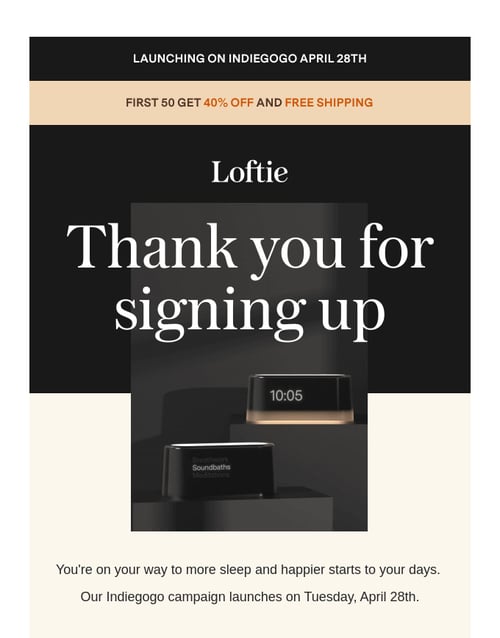
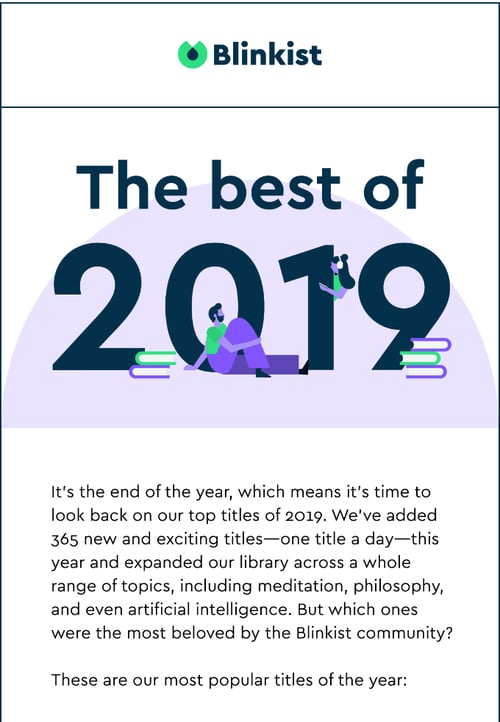
Welcome Email

inbound email marketing example: welcome email

Welcome emails are usually the first line of communication in email marketing. Users opt-in to receive emails, and in a few minutes, they receive a welcome from the company. This style of email usually involves:

  • Thanking your subscriber
  • Introducing them to the company
  • Setting expectations
  • Creating a call to action

Abandoned Cart Email

inbound email marketing example: abandoned cart email

When a customer fails to complete a transaction, companies often follow up with an abandoned cart email. Shopify recommends sending three abandoned cart emails — after the first hour, after the first day, and on the third day. These emails typically include an image of the item and a clear call to action (CTA). You will find that some abandoned cart emails attempt to entice the customer with an added discount.

Curated Email

inbound email marketing example: curated email

Curated emails combine the best content your company has to offer. The content is gathered over a specific time or covers a particular topic. These emails include articles, images, links, and any other content that suits your subscribers.

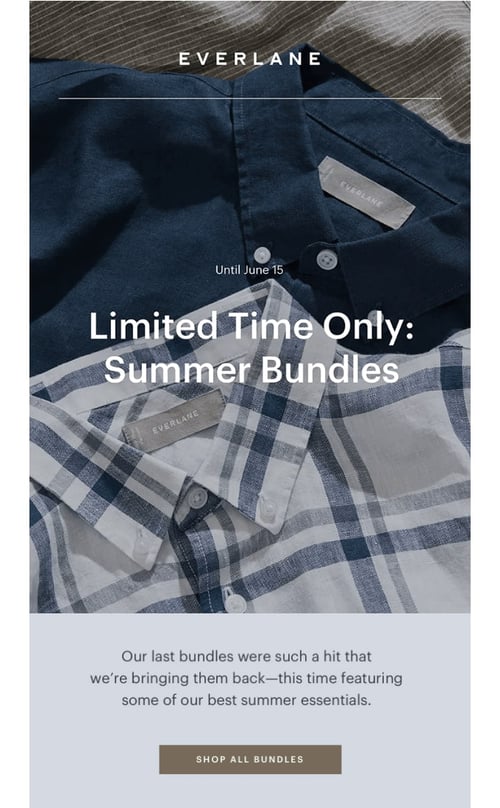
Promotion Email

inbound email marketing example: promotional email

The purpose of a promotional email is simple — promote your product or service to secure a sale. It improves customer retention and increases brand awareness as well. Promotional emails always include a clear CTA and are often enhanced with a promotional code to entice shoppers.

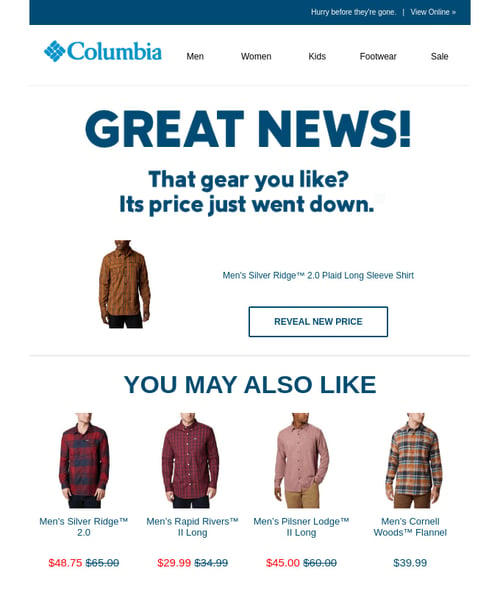
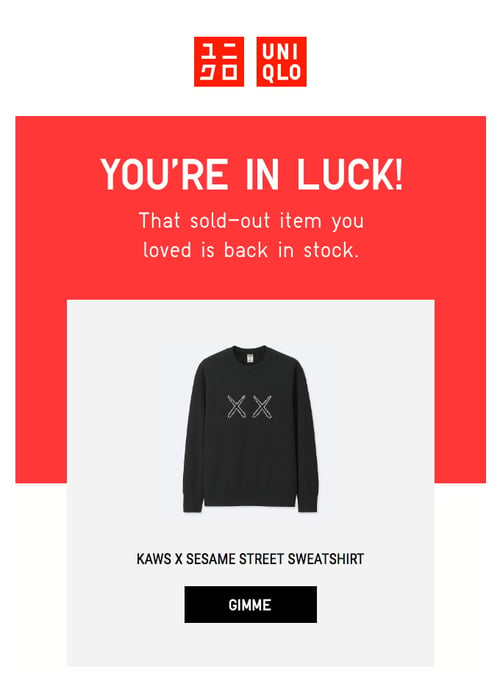
Back In Stock Email

inbound email marketing example: back in stock email

Many companies offer customers the opportunity to be notified when an out-of-stock item is back in store. If and when that item returns, the list receives a “back in stock” email. This email format focuses on one product and should create a sense of thankfulness or urgency in the customer.

Outbound Email Marketing Examples

As previously mentioned, most email inboxes overflow with examples of inbound marketing. Alternatively, outbound emails filter to many spam or junk folders. It occurs because outbound emails are often sent in bulk, and servers like Gmail and Yahoo flag these emails as unsolicited. With outbound emails, the first goal is to get through spam folders. The second goal is to keep your potential customer reading until they get to your CTA.

While outbound emails are typically frowned upon in marketing, they’re a useful prospecting technique for salespeople. Most deals begin with a cold email, which can take on the following formats.

The Attention Grabber

The AIDA formula is an effective email template to follow for outbound sales emails. The acronym stands for attention, interest, desire, and action. First, get their attention. Ask a question or state a fact. Second, build their interest. Tell a story to get them invested. Third, create the desire to buy from you. Purposely leave out a crucial piece of information. Invoke a sense of FOMO — fear of missing out — within them. It leads to the fourth step — action. Be very clear in your CTA. Instead of prompting for more information, these emails should drive a specific action, such as downloading a document or visiting a website.

The Bridge

You are at point A. You need to get to point B. Here is your bridge. Bridging the gap is one common tactic of an outbound email. Describe the current reality of your potential customer. Present them with a depiction of how their situation would change if you solved the problem. Lastly, give them the bridge. How will your product or service get them there? Research suggests that rewards may be more effective than punishments. Pose your solution as a reward for their efforts.

The People Pleaser

People love compliments. In the outbound email we’ve dubbed “the people pleaser,” reel them in with a compliment. Don’t be over the top, but keep it simple and sincere. Follow up with a practical example of a relevant problem. Here was a problem, and this is what happened when we were able to fix it — cause and effect. Now, make a request. Give them an idea of how your company can benefit them, and close this email with a CTA to get more information.

The Problem Solver

“It gets worse before it gets better.” In this type of outbound email, it’s your job to make it worse. Let’s pretend we’re headhunters. Present a problem. For example, a potential customer has a difficult time filling an in-person job position within their company. Make it worse. Mention statistics on the growing trend to work from home. Now, be their problem solver. Offer a solution for how you can help. People find value in products or services that make their lives easier, and solving their problems is significant and valuable.

The “Do What You Want”

In psychology, this is the “but you are free” technique. In the art of persuasion, you’re trying to convince someone to believe something you want them to. It means you’re “threatening their freedom” to choose. While this sounds extreme, an important tactic is giving them back their choice by reminding them that they can do what they want.

Offer them your product or service. Make a request. Before you close, give them an out. This might seem counterintuitive, but Psychology Today reported that 42 studies with nearly 25,000 participants found that the “but you are free” technique increases compliance.

Email marketing is inbound and outbound.

Email marketing is both inbound and outbound; however, it is up to you to decide which method is effective and productive for your business. Inbound email marketing allows you to build on a relationship that your customer sought out. Outbound email marketing asks potential customers to form a new relationship. They follow different methodologies, but both have been proven successful.

Editor's note: This post was originally published in January 2010 and has been updated for comprehensiveness.

New Call-to-action

Is Email Marketing Inbound or Outbound? 10 Examples &amp; Top Differences was originally posted by Local Sign Company Irvine, Ca. https://goo.gl/4NmUQV https://goo.gl/bQ1zHR http://www.pearltrees.com/anaheimsigns