Tuesday, November 23, 2021

5 Key Entertainment Display Advertising Trends | 2021

As a brand in the entertainment space, tapping into display advertising trends for 2021 and beyond could be key to maintaining relevance and customer loyalty.

The in-home entertainment industry has experienced a boom across the board over the past two years as a result of the Covid-19 pandemic. As cinemas and other venues closed, consumers turned to smartphones, tablets, TV, radio, newspapers and magazines for entertainment. As a result, the services and products of your entertainment brand have likely experienced growth in customers and subscriptions.

This is because consumers have turned to content they can access at home, via their smartphone or tablet. Statistics show brands have benefitted from these changes. Here, we review the data to investigate the display advertising trends entertainment brands can use to maintain success.

What will our entertainment display advertising guide cover?

  • The entertainment boom explained
  • The 5 key entertainment display advertising trends
    1. Tap into key shopping days
    2. The use of video in ad production
    3. The power of data feeds
    4. A mobile-first approach
    5. Design for all ad sizes

The entertainment boom explained

Forbes has reported digital entertainment as the leader in entertainment revenue growth, with an increase of 31% totalling $61.8 billion. Its findings also show there are now 1.1 billion online video subscribers globally, which is a 26% increase from 2019.

Recent findings from Ofcom, highlighted by the BBC, show adults in the UK alone spent almost a third of the time they were awake in 2020 watching TV and online content.

The data shows more households had a subscription to Netflix than they had a paid TV account for the first time. Internet-connected, or smart, TVs have also become increasingly common, with nearly 80% of households having one.

Radiocentre also found radio – another of the entertainment industry’s key players – benefitted from lockdowns and subsequent working-from-home audiences. It discovered that eight million adults working from home listen to commercial radio every day.

As the world opens up, consumers will have their attention drawn to other entertainment possibilities. How can your brand maintain the loyalty of audiences gained during the pandemic, stay on the pulse and remain relevant? Having strategies in place to get the most from your entertainment display ads could be crucial.

The 5 key entertainment display advertising trends

1. Tap into key shopping days

Don’t hesitate to align your campaigns with key shopping days – they aren’t reserved exclusively for traditional retailers. If you have a service, subscription or product to market to your customers, why not?

Shopping days such as Black Friday and Cyber Monday show incredibly positive revenue trends, so they should form a part of your entertainment display advertising strategy.

All advertisers in the digital space understand the importance of producing creative that performs. In the lead up to Christmas, especially, consumers are ready to buy, so you need to be ready to sell.

Case study – Supla+

Audiobook subscription service Supla+ provides a case study for the success an entertainment brand can enjoy on key shopping days with the right creative and strategy.

Its Black Friday campaign won our Autumn 2020 award for the best display advertising campaign, and for good reason. Designed specifically for Black Friday, the campaign was live for just 24 hours and featured a countdown timer widget.

This entertainment ad tapped into shopping trends, created urgency using HTML5 animation, and packed a visual punch with exemplary design.

2. The use of video in ad production

The entertainment industry and visuals such as video go hand in hand – so it’s no surprise one of the best entertainment ad trends is to use video in campaign creative.

Video is proven to increase engagement and influence click-throughs, and the numbers certainly bear highlighting to underline the point. Compared to static ads without dynamic content, our research shows video offers 85% more click-throughs.

Stat for video in retail display ads trends

Between January and August 2021, entertainment ads featuring video experienced a click-through-rate (CTR) uplift of 442.86% compared to average display creative.

Uplift for Black Friday for consumer ads

This is up from 2020, which itself saw a CTR uplift of 138.10% for video ads. Data such as this serves to prove that the use of rich media is vital in the world of entertainment display advertising.

If you’re an entertainment brand decision maker and your ad spend portfolio doesn’t currently use enough video or other rich media, you’ve got untapped potential at your fingertips. The use of ad creators, such as Bannerflow’s Creative Studio, makes it incredibly simple to add video to your campaigns – so you don’t need to miss out on those all-important clicks.

3. The power of data feeds

One of the biggest entertainment display advertising trends for 2021 is the use of data feeds. As a digital leader for your brand, you could use this exciting development to help meet conversion targets.

Between January and August 2021, our research shows entertainment display advertising with data feeds experienced a 64.9% better CTR compared to those that don’t.

Stat for uplift in entertainment blog

In fact, 19% of impressions for entertainment ads during 2021 so far have come from those that contain data feeds. That’s up from 12% in 2020 and 1% in 2019 and 2018 – an incredibly positive trend.
If your creative team cast doubt over the importance personalisation to your brand, these numbers work to shine a clear light on the facts. They show data feeds are an effective and efficient tactic for reaching the right people at the right time.

Data feed stat for entertainment display advertising trends

Powerful information for any brand – but especially a brand in the competitive entertainment and media space.

How Bannerflow can help

With Creative Studio, your brand has the power to design and animate entertainment ads bespoke to your vision. This includes adding automatic and live data feeds to creatives.

As entertainment ad trends go, this is high on the list, as data feeds make your campaigns hyper-relevant thanks to the inclusion of live content.

While automatic feeds use spreadsheets to update ad content, live feeds can deliver up-to-the-moment information about your products and services.

Using the assistance of software such as Bannerflow Creative Campaign Management, these types of ad campaigns can be seamless to work with. Across ad sizes and variations, at scale.

4. A mobile-first approach

It’s also important to note the weight and power that focusing on mobile could have for your brand. If tapped into effectively, entertainment brands can experience quality conversions, incredible CTR and surging ROI when they invest in mobile ad spend.

It’s clear more people are spending increasing amounts of time on mobile devices. During 2020, there was a 13% rise in mobile ad views. The impact of the pandemic is clear in this statistic, but it’s behaviour that’s been maintained, with a slight growth in mobile views during the first two quarters of 2021.

state for retail display Advertising trends

If entertainment brands can ensure their display ads are mobile-optimised, the possibilities are wide ranging. This may be especially true when campaigns are deployed to align with key dates in shopping, entertainment and shared experiences, too.

For example, during the European Championship football tournament held in the summer of 2021, the share of mobile impressions grew to 70%. When the data was recorded on 26 June, desktop’s share was 26% in comparison.

Euro 2020 stat for display advertising trends

Combining technologies can produce amazing results. Success here is a melting pot of automated production, using data feeds, campaign management in real-time and thinking mobile-first.

5. Design for all ad sizes

With ad views rising for mobile, it’s clear that being mobile-first when creating entertainment ads could be crucial for success. The gold stamp will certainly fall with brands that ensure they design ads for a variety of screen sizes and swiftly automate ad production.

Mobile ad sizes are currently dominating the display advertising space. The most popular and most frequently used across both 2020 and 2021 so far are 300×250 and 320×320.

Why not opt for less popular ad sizes, too? It will be easier for your team to deliver campaigns and reduce your CPM as there’s less competition for these sizes. Plus, your demand side platform (DSP) will also perform better.

Creating for mobile and a range of sizes and formats is one of the most important entertainment ad trends. Design for all ad sizes and your brand can scale each campaign for multiple versions and screen sizes. Automation and the use of an ad creator will be key for your brand to outsmart competition moving into 2022.

Case study – Readly

Creative production automation can be crucial when you’re working across multiple sizes of entertainment ads. If you’re wondering how making multiple sizes of display ad quickly and efficiently could work for you, check out our catch up with Readly.

The digital newspaper and magazine subscription service is fantastic at making numerous entertainment display ads, fast. Active in nine markets across the world, Readly needs to make each campaign work in five languages. This equals the need for over 100 creatives for every one of its campaigns. By using Bannerflow, Readly manages this seamlessly.

Key takeaways

Entertainment display advertising is experiencing a purple patch – but to keep customers loyal and remain relevant it will be key to be on the pulse of trends.

Consumer loyalty will be seamless if you reach customers where they want to be found. Thinking mobile-first and creating cross-platform ads, in different sizes, will be vital. As will be innovative use of data feeds and featuring rich media such as video in your entertainment ads. Planning relevant campaigns around key dates can also be invaluable.

Combining these trends will see the CTR and conversions rise for your entertainment ads and the ROI for your efforts will come to fruition.

Download our 2021 Display Advertising report to gain the full picture and discover how your marketing team can get ahead of the competition and boost its display advertising performance.


Interested to see how our total solution Creative Management Platform could work for your brand, or any of our products – such as Creative Studio? Get in touch with our team to book a demo and experience the power and agility of Bannerflow for yourself.

The post 5 Key Entertainment Display Advertising Trends | 2021 appeared first on Bannerflow.


5 Key Entertainment Display Advertising Trends | 2021 was originally posted by Local Sign Company Irvine, Ca. https://goo.gl/4NmUQV https://goo.gl/bQ1zHR http://www.pearltrees.com/anaheimsigns


11 Recommendations for Marketers in 2022 [+More Data from Our Marketing Industry Survey]

As many marketers know, the months of November through January can be the most pivotal for a business.

Why? This is when many marketing teams dive deep into planning for the next year. 

At this point, you're probably starting to get overwhelmed by all the market research, industry news, competitive analysis, and/or team metrics you need to sift through as you plan for 2022. And, this overflow of information can make it incredibly hard for teams to determine what they need to focus on.

→ Download Now: Free Marketing Plan Template

To help marketers plan for 2022, I recently published findings from the HubSpot Blog's Marketing Industry Trends Survey, where I collected data from more than 1,000 global B2B and B2C marketers -- and aimed to answer questions like:

  • Which industry trends and tactics are marketers investing in?
  • What challenges are they facing?
  • And, what are their plans and expectations for 2022 and beyond?

To help readers distill and act on this helpful information even further, I've gone deeper through the survey data and made a list of some of the key recommendations marketers should consider in 2022.

Here are just a few suggestions, based on our data:

11 Data-Backed Marketing Recommendations for 2022

1. Produce short-form videos.

Short-form video is popular, effective, and still growing, with 31% of marketers currently leveraging short-form video and 29% planning to leverage it for the first time in 2022.

More than half of marketers (51%) who leverage short-form video plan to increase their investment in 2022, while 38% plan to continue investing the same amount.

Short-form video also has the highest ROI of any social media marketing strategy and 30% of social media marketers plan to invest in it more than any other trend in 2022.

Why do consumers engage with short over long-form content? When done right, short-form content is quick, but still concise, enabling fast-paced web users to get most of the information they need very quickly. And, if a short-form video doesn't pack all the information a person needs to convert in it, it usually forces marketers to point out the most important facts that will make viewers eager to learn more.

One example of a great short-form video is from the Instagram account Miss.Excel (a company that offers Microsoft Excel courses). In this quick video, company founder and CEO, Kat Norton, demonstrates her credibility as an Excel coach by showing viewers how to convert a list of names in all caps to proper text.

If you plan to leverage short-form content in the next year, read up on the latest trends and tips from experts in the video space to get inspiration for your strategy.

2. Partner with influencers.

Influencer marketing is the most popular and effective trend, with the biggest ROI. This trend will keep growing in 2022 with 21% of marketers planning to leverage it for the first time.

Additionally, 46% of marketers who leverage influencers will increase their investments in 2022, while 40% will continue investing the same amount.

While you might expect brands to invest in high-priced, macro-influencers with the largest following possible, we actually saw that many marketers are instead opting to hire more affordable, but still highly-engaging nano or micro-influencers.

This wasn’t all that shocking to the Blog team. Because nano and micro-influencers aren’t celebrities with the highest budget content out there, they’re more relatable and trustworthy, which can lead to persuasive and effective product or brand endorsements.

Want to leverage influencer marketing, but don't know where to start? Check out this handy checklist.

3. Prioritize LinkedIn, Facebook, and Instagram -- but keep TikTok on your radar.

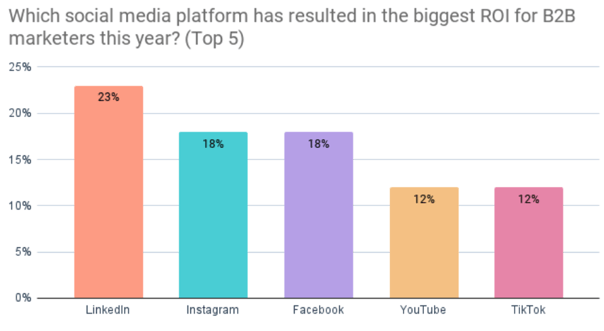
B2B brands might want to focus their social media marketing strategies on LinkedIn, Facebook, and Instagram -- these platforms have the highest ROI for B2B businesses.

Screen Shot 2021-11-19 at 5.45.56 PMWhile just 40% of B2B social media marketers leverage TikTok, 65% of those who do plan on increasing their investment in 2022, the highest increase of any social platform. Meanwhile, 43% and 51% of marketers who use Facebook and Instagram will increase those platform investments in the next year.

In the B2C world, our survey found that 24% of marketers say Facebook returns the biggest ROI, while 19.5% and 12.1% point to Instagram and TikTok respectively. However, 62% of B2C marketers plan to increase investments in TikTok next year, compared to 44% of marketers who use Facebook and 56% of those using Instagram.

4. Leverage audio for engagement rather than ROI.

In the last year, audio platforms like Clubhouse, Twitter Spaces, and Spotify (for podcasting) showed us just how viral audio content can be -- even when it’s branded.

And, in 2022, audio trends won’t be toning down.

While only one in three content marketers leverages podcasts or other audio content at the moment, 53% of them say it’s the most effective media format they use.

Investment in podcasts or other audio content will grow in 2022, despite low ROI, our survey found that:

  • 26% of content marketers plan to leverage podcasts or other audio content for the first time in 2022.
  • 51% of those who already leverage podcasts or other audio content will invest more in 2022
  • 43% of those who already leverage these strategies plan to invest the same amount in 2022.

When it comes to audio chat room platforms like Clubhouse or Twitter Spaces, just 14% of social media marketers use them, but 68% of those marketers say it’s the most effective social media marketing strategy they use.

Despite having low ROI, similarly to podcasts and other audio content, investment in audio chat rooms will continue to grow in 2022.

Nearly 50% of marketers who already use audio chat rooms plan to increase their investment in 2022, while 47% plan to maintain their current investment.

5. Go live.

Live video combines the visual and informative benefits of video marketing with the authenticity of unedited and uncensored content. By going live, consumers can see, hear from, and develop an authentic sense of trust from a brand that has decided to put their product, mission, or expertise out on social media for the world to see.

Today, the use of live video is growing, with 32% of social media marketers in our survey planning on leveraging it for the first time in 2022. And, of the 28% of social media marketers who currently leverage live video, 59% say it is the most effective social media marketing strategy they use.

6. Use marketing automation software to streamline strategies.

Automation is no longer a high-priced, inaccessible technology used by giant corporations. In fact, it can help with most areas of marketing, from running complex predictive analytics reports to personalizing marketing emails, to simply streamlining basic tasks to give marketers more time for complex strategies or tactics that require the human touch.

Our survey found that 70% of marketers use automation in their roles, while 33% plan to start in 2022.

7. Champion social responsibility.

While just one in four marketers currently devote resources to social responsibility, professionals we surveyed recognize its importance, with 27% planning to actively embrace it for the first time in 2022.

In 2022, 10% of B2B marketers plan to invest more in social responsibility than any other trend.

As we noted above, social responsibility helps your customers and prospects know what you stand for and that they share similar values or missions as you. For more on why the blog team encourages taking social responsibility, check out this post

8. Use an omnichannel approach.

Today, 81% of marketers leverage 3 or more marketing channels, and 89% of social media marketers leverage 3 or more social channels.

In a separate Social Media Trends survey, which I’ll report on in an upcoming post, we found that 82% of social media marketers repurpose content across various social channels. However, 69% of B2B companies repurpose content across social media channels, lagging behind B2C companies (89%).

9. Align sales and marketing teams with account-based marketing (ABM).

Just over 27% of marketers struggle with sales-marketing alignment, or smarketing, strategies. Although this challenge is not new to companies, tactics like account-based marketing, or ABM, can help.

Account-based marketing is a sales and marketing alignment tactic where marketers create campaigns, assets, and tactics based on data and feedback directly from the sales floor.

Today, 62% of marketers use ABM in their role, but 27% of marketers who haven’t leveraged it plan to start in 2022.

10. Focus on building hybrid strategies.

In 2022, employees might not be rushing back to the physical office full-time. But, many businesses and marketers will opt for hybrid work environments.

At the moment, half of the global marketers we surveyed are hybrid employees, while just 28% are fully remote.

As you plan for 2022, consider building strategies that work best for a dispersed workforce as some employees will work from home or a remote location either part-time or full-time, while others might rush back into the office.

11. Make the most of your marketing budget.

Between 2020 and 2021, 41% of marketers say their budget increased, while 45% of marketers operated on the same budget from the previous year.

Marketers likely saw their budgets stay fully intact or increase from 2020 to 2021 due to the economic and virtual business landscapes that were accelerated by the pandemic.

For example, businesses with high-priced products saw a lack of sales floor performance as decision-makers needed to spend more cautiously. Meanwhile, online marketing provided exceedingly solid traffic and conversion opportunities as consumers and prospects were stuck inside on the web.

As we move into 2022, the events of the past two years have placed more importance on marketing. For this reason, it's not too shocking that nearly half of marketers (48%) expect their budget to increase in 2022, while 39% expect it to stay the same.

If you're on a team that has seen an increase in budget, it's important to leverage it wisely and build effective strategies that will justify more budget considerations for your team in the future. 

Want more recommendations?

After conducting our Marketing Industry Trends Survey, we aren't just stopping after this recommendations post. To help marketers dive deeper into data-backed tactics, we'll continue to publish content around specific findings, trends, and strategies highlighted in our survey. 

Below are just a few of the posts we've written recently about specific trends and tactics discovered in our research. 

Need even more guidance for your marketing planning? We've got you covered with the free resource below. 

Marketing Plan Template


11 Recommendations for Marketers in 2022 [+More Data from Our Marketing Industry Survey] was originally posted by Local Sign Company Irvine, Ca. https://goo.gl/4NmUQV https://goo.gl/bQ1zHR http://www.pearltrees.com/anaheimsigns
How to Make an Ad: A 15-Step Guide

Advertising is changing — in 2021, companies are on track to spend more than $450 billion dollars on digital advertising.

The challenge? Massive variety in the digital advertising market — from differing platforms and ad types to target audiences — can frustrate efforts to capture customer interest and drive ROI.

Download Now: Free Ad Campaign Planning Kit

How do you choose the right medium to promote your platform? What metrics matter? And once you decide, how do you actually make the ad?

Our comprehensive ad-making guide has you covered. Let’s go.

Featured Resource: Advertising Planning Templates & Kit

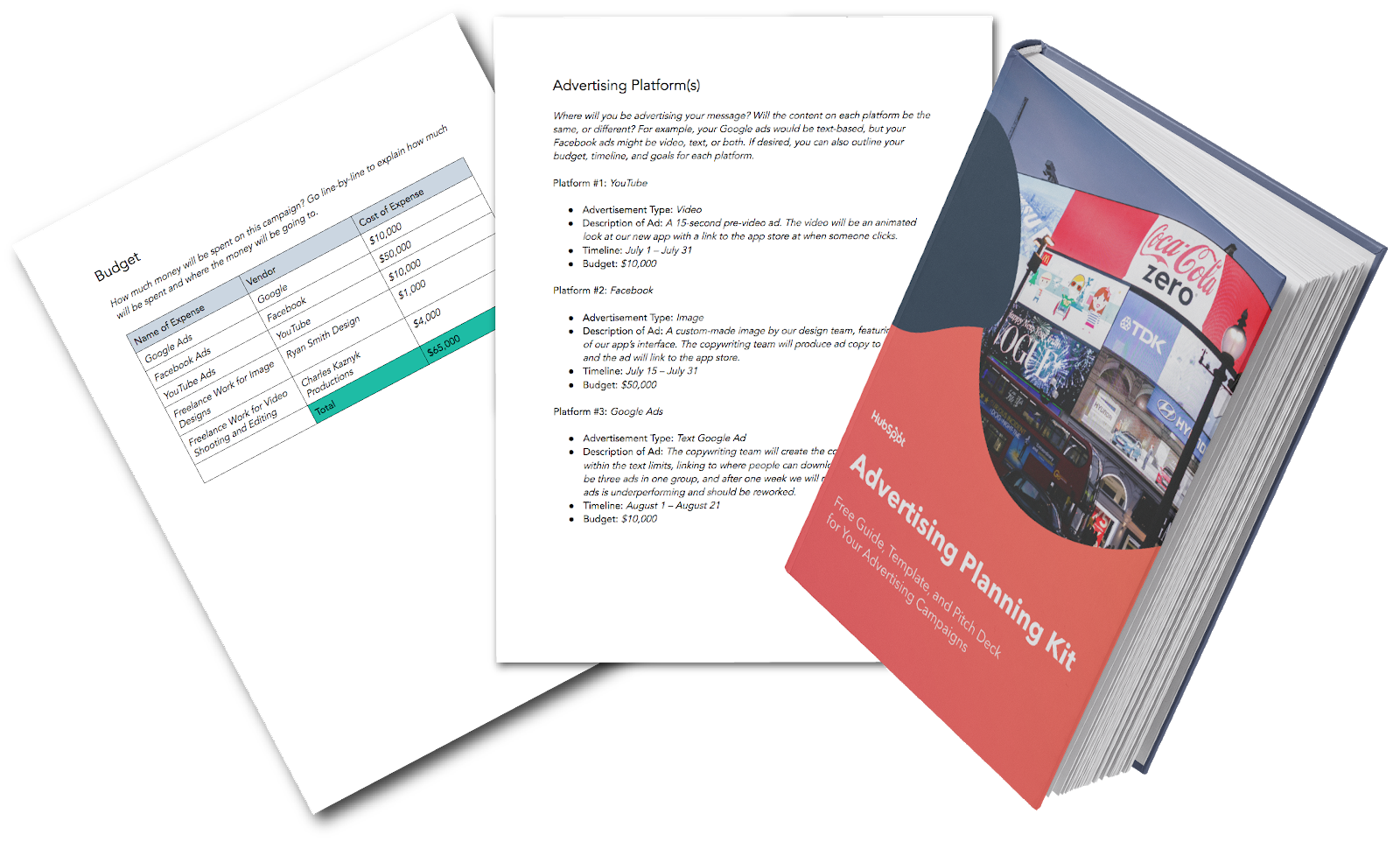
To make your advertising planning easier, use HubSpot's free Advertising Planning Kit. Included are templates to help you plan and present your ad pitch, schedule your release dates, and inform your stakeholders. We've also thrown in an advertising best practices guide to help you choose the advertising method that works best for your business.

1. Choose Your Target Audience

When making an ad, you'll first need to decide the audience you're making the ad for. Target the right market and you’ll find customers naturally inclined to engage with your brand and product. Cast too wide a net and you may find yourself lost in the digital noise.

One way to help your ad find the right audience is to get granular on whom you want to target with your messaging, which will help you incorporate the best messaging and select the best advertising platform. This should be based off of your buyer personas — semi-fictional representations of your ideal customer based on market research and real data about your existing customers.

If you need help building your personas, try using HubSpot's Make My Persona tool.

2. Conduct Marketing Research

Market research is an essential part of campaign promotion. Feeding into your buyer personas, market research can answer key questions about your target market, such as:

  • How old are they?
  • What do they spend most of their time doing?
  • What social media platforms do they use, if any?
  • Do they live in suburban, urban, or rural areas?

Knowing the above information about your target audience can help you answer questions like — TV or YouTube? Instagram or LinkedIn? Billboard or bus? — because you'll understand more about how to appeal to the right people.

You can use this Market Research Guide and Set of Templates to get started on market research for your ad.

3. Choose Your Platform

Your market research should give you the insight and confidence you need to choose the most effective platform to reach your target audience. You should also do some supplemental research on the costs, ROI, and benefits of certain ad platforms and methods.

You may come to the realization that using multiple ad platforms and methods would be the right move for your campaign – such as social media and search engine ads. This is actually a great strategy, as it casts a wider net and opens up the possibility of reaching even more prospects where they already are.

4. Decide on a Budget

For advertising, you need to spend money to make money.

Getting your budget approved can be difficult, so make it easier to get what you need by clearly outlining:

  • The total budget you need
  • How the costs are broken down
  • A projected ROI (or business impact)

Be sure to come to any budget meeting prepared to answer whatever questions could be thrown at you and to defend the specifics.

For instance, saying "We need $10,000 to run a Google Ads campaign" doesn't sound nearly as compelling as "We'd like to run a series of ads on Google. Here's a list of our keywords and negative keywords, their monthly search volume, and our preliminary bids for each. With these projections, we're expecting to bring in 400 new contacts next month for a total cost of $10,000."

5. Craft a Message

By this point, you know your target audience and your preferred platform, but you're still not sure what you're saying. Here's where you'll want to think about the broad purpose of your campaign to inspire your ad.

Do you want people to come to your store, or visit your website? Is your immediate goal to drive free signups for your software, or ebook downloads? Think about the message and how that can feed into the end goal(s) of your ad campaign.

6. Get People Talking

While your message needs to include your brand purpose and tie in with long-term marketing goals, it also needs to be something people remember.

Here’s why: As more advertising shifts to social media sites such as Facebook, Instagram and even Twitter, brand marketing needs to get to the point ASAP to drive customer interest and social sharing. If your message — whether it’s text, images, or videos — can make users stop, look and share with their connections, you’ve got a much better chance of creating organic interaction and driving more traffic to your site.

7. Decide What You’re Building

Ads can build brand awareness and product awareness — but not simultaneously. As a result, it’s worth taking the time to think about your advertising goals for new marketing campaigns.

For example, if brand awareness is the goal, you may want to consider a set of ads that tell a story or help customers learn more about what makes your brand unique. Here, the goal is to engage with customers over a longer period of time to help them engage with your brand from the first time they see your ad to eventual conversion. Ideally, your brand story will help create a long-term, reciprocal customer relationship.

Product awareness ads, meanwhile, are designed to highlight new products or services, call out seasonal specials or help drive specific action from customers. They’re often one-off or a short series of ads that run over a small period of time.

8. Include a CTA

While building awareness is critical for ads to be effective, it’s not enough in isolation.

That’s why all your ads also need a call-to-action (CTA) that provides information for consumers on what to do next. In some cases — such as an ad on your webpage — the CTA may be simple and direct, such as “sign up for our newsletter” or “click here to buy now.”

If you’re advertising on social sites, meanwhile, reaching for an immediate sale or asking for user contact data may actually drive customers away. Here, your CTA needs to be more subtle but no less clear. For example, you might opt for “click here to learn more” or “explore what we have to offer.” In practice, the goal is to avoid presuming what users want — instead, your CTA provides a path to more information if they’re interested. And if you’ve crafted a great ad, they will be.

9. Don’t Forget the Details

They’re small things — the smallest, in some cases — but can have significant impacts for your ad campaign: The details.

Consider an advertisement for a concert or event that your company is hosting. You’ve done the work: Identified the right market, crafted a great message, and created a CTA that will drive customer action.

But…

You’ve forgotten the details. Your ad doesn’t mention where or when the event is happening. Sure, customers could click through and see the specifics on your website, but there’s no guarantee they’ll take this step. Put simply, when it comes to creating a great ad, you have to account for the forest and the trees: You need big-picture advertisements that are visually compelling, content-rich and engaging, but it’s just as critical to double-check that you’re not missing the details.

10. Create Test Ads

Before launching your ad campaign, it’s worth trying your hand at making an advertisement for your brand. Here’s why: Not all ad designs look as great on the screen as they do in your head. By creating basic mock-ups, you can see what works, what doesn’t, and what needs to improve.

One of the most popular options for simple ad creation is Adobe Photoshop. Not sure where to start? Here’s a quick look at how to make an ad in Photoshop.

How to Make an Ad on Photoshop

Let’s say you want to create a Facebook ad on Photoshop. Follow these steps:

  • Create a new document in Photoshop.

how to make an ad on photoshop

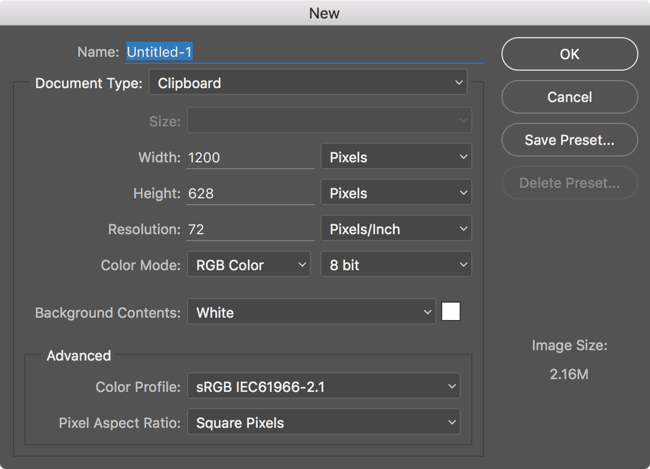
Open Photoshop, select “File,” and then click “New” from the drop-down menu. You’ll see the screen above. Here, you can select the size of your new ad, along with the color profile you want to use.

  • Insert your image.

Next, you’ll want to insert an image to work with. Simply drag-and-drop the image of your choice into the Photoshop workspace and you’re ready to go.

  • Add some text.

how to make an ad on photoshop: add text

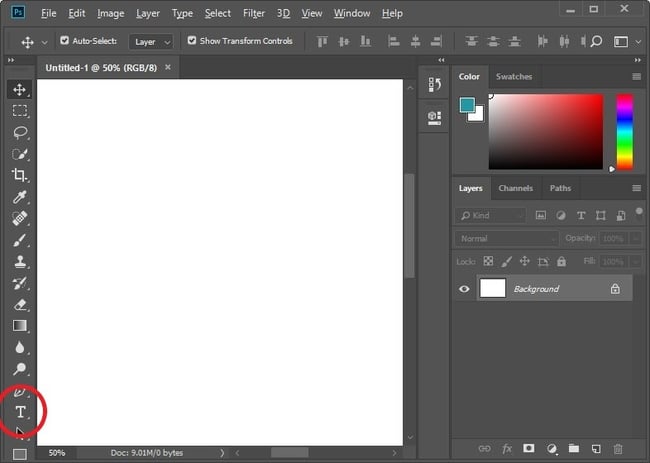
Next, add some text to your image by selecting the “T” button in the bottom left-hand corner. You can choose vertical or horizontal text, depending on what works best for your image.

  • Add a CTA.

Once you’re happy with your text placement, consider adding a CTA. Select one of the shape tools from the left-hand side menu and insert that into your image. Resize as needed, then head back to the text tool and insert your CTA.

  • Consider the 20% rule.

Facebook used to have a hard-and-fast 20% rule that stated no more than 20% of your image could contain text. While this is now a strong suggestion rather than an absolute rule, it’s worth keeping your text to a minimum since Facebook rates ads based on their text volume — the more text you have, the lower your chances of getting seen.

  • Save your file.

Finally, save your new ad. Head to “File”, then “Save As,” and then “Format.” It’s worth saving it as both a Photoshop document (.psd) and a .png file, which makes uploading to Facebook easier.

11. Develop Creative Assets

Whether it's copy for a Google Ad or a flashy landing page from your in-house designers, all ads need creative assets. Chances are, most of the ads you run will need one or more of the following:

  • Short, promotional copy (for image ads and online ads)
  • Long-form copy (for video scripts)
  • Photographs (for online ads)
  • Custom-designed images and/or animations (for online ads and video ads)
  • Video (for...video ads)
  • GIFs (for online ads)

All of these assets can be overwhelming, and if you're thinking “I'm not a videographer/writer/designer/photographer!”, that's totally fine. If these resources aren't available to you in-house to help make your ad, consider hiring a team of freelancers or an agency to help you produce these deliverables and make an outstanding advertisement, or use an online marketing design tool like Canva to help streamline the process.

12. Determine Measurements of Success and Set Up Tracking

No matter if your ultimate goal is Page Likes, online purchases, or promo code uses, you should never launch an ad without first being crystal clear on two questions:

  • What do we want to see in order to call this ad successful?
  • How are we measuring success?

You already thought of your advertisement's goal in Step 7, so now, make the expectations of your campaign known by setting up the proper ad tracking.

If you're advertising online, there's a good chance the platform you're using — like Facebook, Google, or LinkedIn — has an ad management and tracking platform, allowing you to see how many interactions your ads have had and how much they cost.

However, you'll also want to take a few extra steps to aid in your analysis down the line:

  • Use an automated free ad tracking platform to measure advertising ROI and see how your ads tie into larger marketing projects and campaigns. You can also use this platform to compare ads from different sites; say, if you were running ads on both Instagram and Twitter.
  • Set up a custom tracking spreadsheet offline to measure engagements with your ad and other data points like cost, conversion, and advertising ROI, especially if your ad is online.
  • Use custom tracking tokens for links promoted in your ad so that you can analyze engagement and conversions on your own website.

13. Launch Your Ad

The stage is set, and you can finally launch your ad for the world to see.

Needless to say, the process of launching an ad on Google is different than on Bing. The same can be said for every social media channel, TV ads, or transportation ads.

Here's a list of the more detailed, step-by-step process for launching an ad on some of these platforms. Click through to learn more about the platform or platforms that you're creating an ad for:

14. Track & Analyze Performance

For campaigns that have a set run time (transportation, television, etc.), determine how the ad's results performed against expectations. Since it's difficult to draw a one-to-one comparison for these ad types, you may want to look at general business trends, change in revenue, or even social media/press mentions to gauge success.

For online ads, this process is a bit easier. Results start coming in immediately, so you can see how well your ads are performing instantly, and over time. Take note of the ads that are bringing in high numbers at low costs and — just as importantly — ads that are costing a lot but not performing that well.

Remember, you can take the headache out of the manual ad tracking with a free online ads tracking tool.

15. Make Changes, Rinse, and Repeat

Once your ad campaign is over (or if it's an ongoing online campaign), take your learnings and apply them to your next advertisement.

For instance, maybe you realized your online ads that were wordier performed worse than ads that were more concise, or that YouTube just didn't work this time around. Lean into what worked (or is working) and abandon what's not to continue to strengthen your company's advertising program.

It All Ads Up

And there you have it — our comprehensive guide to planning, creating, launching, and analyzing your new ad.

Looking to streamline the process? Use an advertising planning template to outline your ad campaign, keep all contributors informed, and rally behind the same end goal for your business.

Editor's note: This post was originally published in October 2019 and has been updated for comprehensiveness.

advertising plan


How to Make an Ad: A 15-Step Guide was originally posted by Local Sign Company Irvine, Ca. https://goo.gl/4NmUQV https://goo.gl/bQ1zHR http://www.pearltrees.com/anaheimsigns

Monday, November 22, 2021

13 Businesses With Brilliant Global Marketing Strategies

Guess what? Global marketing is no longer reserved for brands with deep pockets, nor is it a huge hassle for marketing managers who handle all marketing efforts.

In fact, a global presence is possible for any business with a creative strategy and an understanding of world markets. Let’s go over what a good global marketing strategy looks like and the best examples worldwide.

Download Now: The Global Marketing Playbook [Free Guide]

What Is Good Global Marketing?

Global marketing is the act of focusing a product on the needs of potential buyers in other countries.

Like most types of marketing, though, a global marketing strategy comes down to one thing: audience. Knowing who needs your product, what form they need it in, and how to market it in a way that strengthens the brand are core ingredients of awesome global marketing.

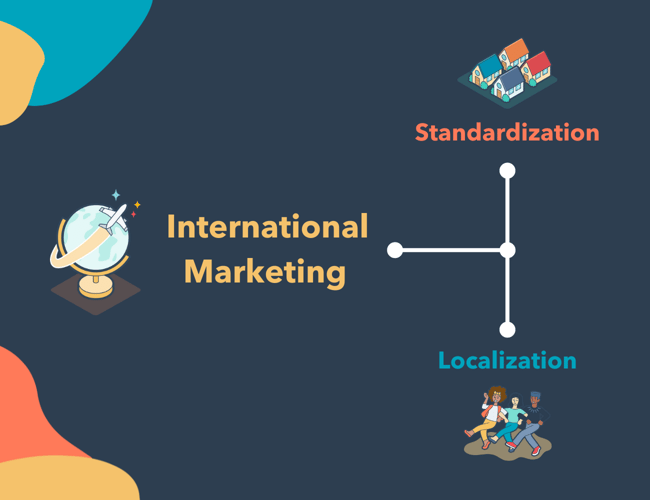
Typically, a global marketing strategy requires a business to do new market research, identify countries where the business's product might be successful, and then localize the brand to reflect the needs of those communities. However, localization is not always necessary. Some brands adopt a global standardization strategy instead.

No matter where you visit those brands, the experience and imagery is virtually the same.

In contrast to localization, where there's a more differentiated marketing approach to each market, global standardization provides significant cost benefits as a result of less messaging and fewer campaigns.

However, the key is in knowing when a global standardization strategy will be effective. Because it banks on a universal appeal despite cultural or locational differences, you'll need to research whether customers use or think about your products differently depending on their market. If there's no difference between the usage and understanding from country to country, a global standardization approach is practical.

Choosing localization or global standardization is one aspect of creating a great global marketing strategy.

International marketing

To give you an idea of what a great global marketing strategy looks like, we've compiled a list of brands that totally "get it."

From adapting their social strategies to translate across multiple languages to adjusting their menus to appeal to the cravings of a diverse group of people, these brands are taking positive steps toward creating a solid presence across the globe.

So, if you're looking for inspiration on how to craft a successful international marketing strategy and expand your business' reach, check out these examples from the world’s most successful companies.

1. Red Bull

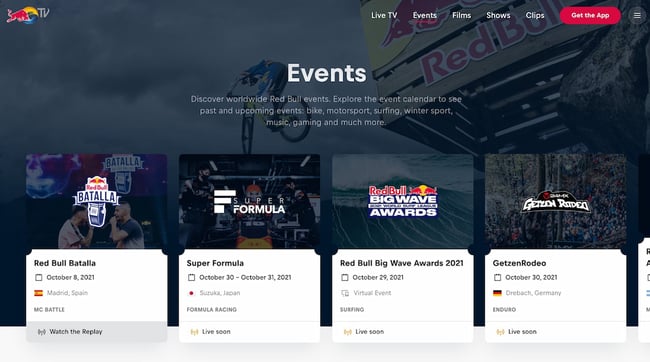
global marketing strategy example by red bull

Austrian company Red Bull does such a great job with global marketing that many Americans assume it’s a local brand. How?

One of its most successful tactics is to host extreme sports events all over the world. From the Red Bull Indianapolis Grand Prix to the Red Bull Air Race in the United Kingdom to the Red Bull Soapbox Race in Jordan, the brand's powerful event marketing strategy takes them here, there, and everywhere.

Aside from events, Red Bull's packaging also plays a part in its global appeal.

"Red Bull really looks like a product from a global economy. It doesn't look like a traditional American soft drink — it's not in a 12-ounce can, it's not sold in a bottle, and it doesn't have script lettering like Pepsi or Coke. It looks European. That matters," explains Harvard Business School professor Nancy F. Koehn. Though it's since diversified its product selection since that article was published, the fact remains that Red Bull's consistent packaging has helped this brand go global.

How to Imitate Red Bull’s Strategy

For smaller brands, reaching Red Bull’s level of international awareness might seem out of reach, but you can imitate the brand’s strategy by offering one notable product — the product you’ll most be known for. Then, be sure to keep the packaging the same no matter where you distribute it.

You can also host virtual events across different time zones and regions, which the pandemic has made more possible and trendier than ever.

2. Airbnb

Airbnb, a community marketplace for people to list and book accommodations around the world, was founded in 2008 out of San Francisco, California.

Since then, Airbnb has grown to 1,500,000+ listings in 34,000+ cities worldwide. A large contributor to the company's explosive global success? Its video campaign titled “Made Possible by Hosts.”

Airbnb launched the campaign to bring its worldwide community of hosts and guests closer in the wake of COVID-19. The company referred to the campaign as a way to highlight "the magical experiences that hosts bring to guests." To create the campaign, Airbnb took real videos and photographs from guests and put them in a video to create the “sense of nostalgia” we feel when we travel.

Over 3 million people worldwide have engaged, created content, or talked about the campaign. Just one of its videos has over 3.5 million views.

How to Imitate Airbnb’s Strategy

Airbnb is inherently an international brand because its guests and hosts hail from a wide variety of locations worldwide. Even if you identify as a more local brand, there are ways to globalize your efforts.

First, bring the focus to different customers in different regions when you create a testimonial or case study. You can also ask your international customers to contribute a photo or video of your product in use, and feature that in your social media content.

3. Dunkin Donuts

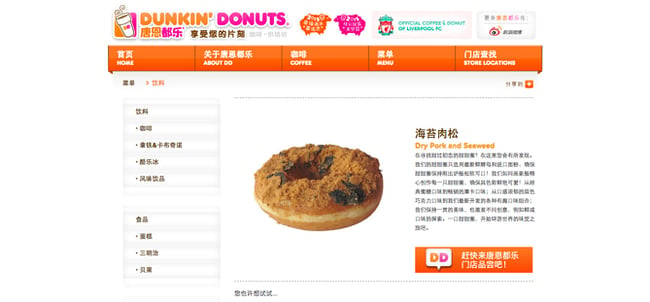
global marketing strategy example by dunkin donuts

National Donut Day happens every year in June. While we get our hands dirty with a Boston creme (or two) here in the States, Dunkin Donuts China serves up a fresh batch of dry pork and seaweed donuts.

With over 3,200 stores in 36 countries outside of the U.S., Dunkin Donuts has evolved its menu to satisfy the sweet tooth of its global customers.

From Korea's Grapefruit Coolata to Lebanon's Mango Chocolate Donut to Russia's Dunclairs, it's clear that Dunkin Donuts isn't afraid to celebrate cultural differences in an effort to strengthen its international presence.

How to Imitate Dunkin Donut’s Strategy

If you run a restaurant business, Dunkin Donut’s strategy should draw plenty of inspiration. To globalize your restaurant brand, try to serve regional or cultural menu items during special holidays for those cultures and regions.

You don’t necessarily have to expand to international regions first, but if it’s financially viable, opening new locations or launching regional websites can help you become a global brand.

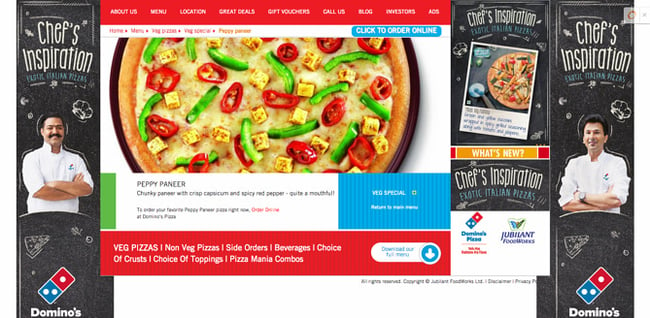
4. Domino's

global marketing strategy example by dominos

Similar to Dunkin Donuts, Domino's has prioritized menu innovation as a means of increasing international interest and awareness.

“The joy of pizza is that bread, sauce, and cheese works fundamentally everywhere, except maybe China, where dairy wasn’t a big part of their diet until lately,” explains Domino’s CEO J. Patrick Doyle.

“And it’s easy to just change toppings market to market. In Asia, it’s seafood and fish. It’s curry in India. But half the toppings are standard offerings around the world.”

By making a conscious effort to gain a better understanding of the preferences of the markets it's trying to break into, Domino's can deliver pies diverse enough to gain international attention.

How to Imitate Domino’s Strategy

Domino’s strategy is another you’ll want to use as inspiration if you run a restaurant business. Try to invite chefs from different cultures and regions, then have them cook your menu items in their regional style and with regional ingredients.

Highlight the chefs in your social media profiles. By doing so, you’ll show your followers in those regions that they’re also top-of-mind, expanding your global reach.

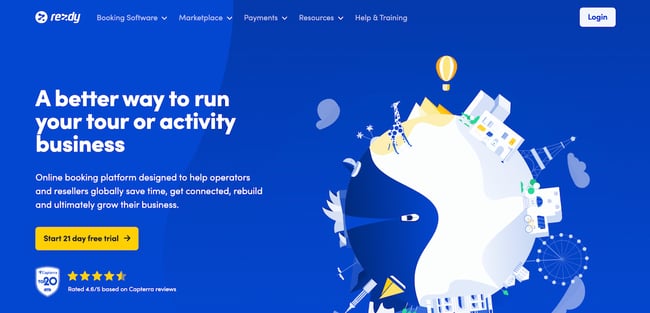
5. Rezdy

global marketing strategy example by rezdy

Some companies may not be trying to attract global markets directly, but if their clients are, they better know how. Rezdy is an Australian-based reservation software designed to make online booking smoother for tourists and agents alike.

Though Rezdy's clients are Australian-based, the company needs to cater to its clients' international visitors. On its homepage, it says it works for operators and agents in over 100 countries.

The service is designed to be used globally, with hundreds of personalization options for the tool’s timezone, language, and currency. Rezdy’s website and marketing collateral is English, so it caters to English-speaking tour operators, particularly in Australia, the UK, and North America. But it knows its customers’ target audience are in other countries abroad. It thus emphasizes its tool’s internationalization capabilities.

How to Imitate Rezdy’s Strategy

Rezdy effectively globalizes its services by taking into account that its customers’ target audience will be in other countries. Even if your company is marketing to other regional companies, consider their global customers as if they were your own. If your product, tool, or software can be used abroad in a wide variety of applications, be sure to add that to your marketing collateral — even if you operate regionally.

6. World Wildlife Fund

global marketing strategy example by world wildlife fund

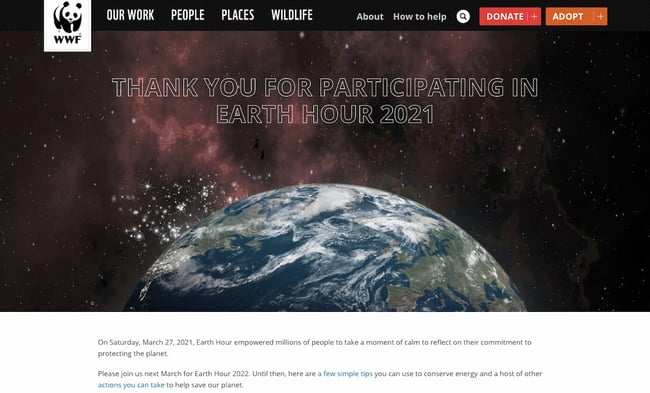
World Wildlife Fund takes the literal approach to global marketing by having hundreds of offices worldwide, each with highly localized goals for each region. It goes global every year with its Earth Hour initiative — a voluntary worldwide event where participants turn off their lights for an hour to show how easy it can be to battle climate change.

It specially promoted its Earth Hour event in Norway. Scandinavian countries like Norway experience extreme daylight hours in different seasons, making the country a prime candidate for WWF's Earth Hour campaign. Using digital agency Mobiento, the nonprofit placed the Earth Hour Banner across Norway's top media sites to promote the event. With one tap of the banner, the screen went black. Finger swiping the black screen slowly revealed the Earth Hour countdown. The banner attracted roughly 1,000,000 impressions and the campaign received three MMA Global Mobile Marketing Awards.

How to Imitate WWF’s Strategy

WWF has hundreds of offices that make it easier for the non-profit to go global, but thanks to the internet, its easier than ever to connect with international audiences, especially for a certain initiative you might want to launch, like Earth Hour.

If you have a cool idea, don't be afraid to try it out on one international market — just make sure it's the appropriate audience. (Also, don't be afraid of the dark.)

7. Pearse Trust

global marketing strategy example by pearse trust

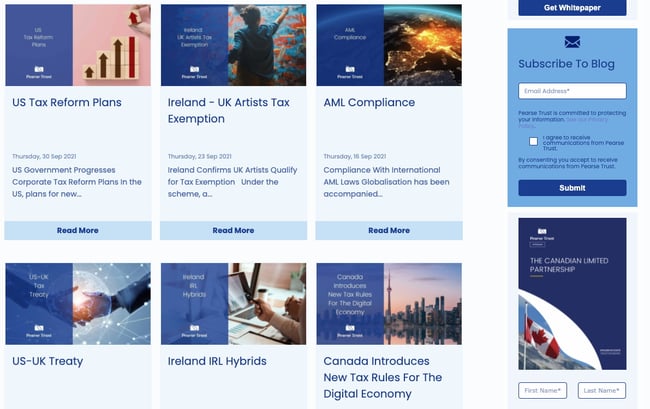
With offices in Dublin, London, Vancouver, Atlanta, and Wellington, Pearse Trust has grown to be an international authority on corporate and trust structures. But it takes more than offices all over the map to reach an international audience.

That's why Pearse Trust keeps content flowing on its blog that engages its various markets. In the screenshot above, you can see Pearse Trust posts a lot of content featuring international affairs relating to the company's practice.

It also levels out external articles with Pearse Trust content, featuring news from places like Germany, Ireland (where it has a Dublin office), and the U.K. (where it has a London office).

How to Imitate Pearse Trust’s Strategy

This is a great example of focusing on common interests shared among your company's various markets while also making the content relatable to customers by region. Globalizing your marketing can be as simple as creating content that caters to different target audiences in different target regions.

8. Nike

global marketing strategy example by nike

Nike has been able to evolve its global presence through the careful selection of international sponsorships, such as its previous long-standing relationship with Manchester United.

Although sponsorship spending can be fairly unpredictable — demand costs tend to surge due to triggers like championships and tournaments — these partnerships have certainly helped the brand capture the attention of a global audience.

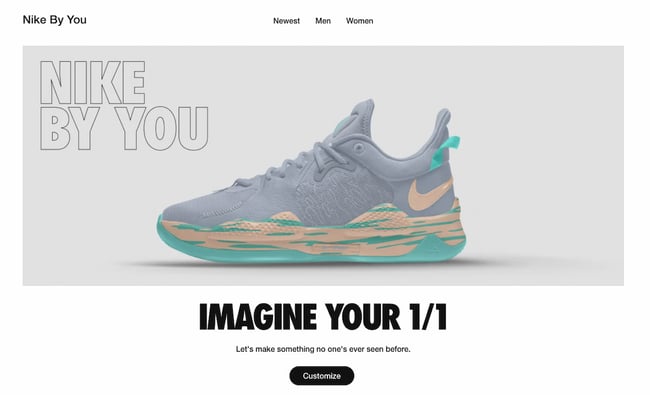
Nike's “Nike by You” co-creation platform serves as another strategy that the company is using to appeal to international markets. By putting the power of design into the hands of the consumer, Nike is able to deliver customized products that align with different cultural preferences and styles.

How to Imitate Nike’s Strategy

Partner with other brands, influencers, and ambassadors in your international target markets. Choose them carefully. For instance, Manchester United is a prominent cultural force in the UK, and that certainly helped Nike grow in that country.

If you sell a consumer product, why not give the option for your audience to customize — and resell — the products as well? You’ll end up capturing a much larger audience, and consumers from different regions will much better capture their region’s preferences and tastes.

9. McDonald's

global marketing strategy example by mcdonalds (mcarabia)

Image Source

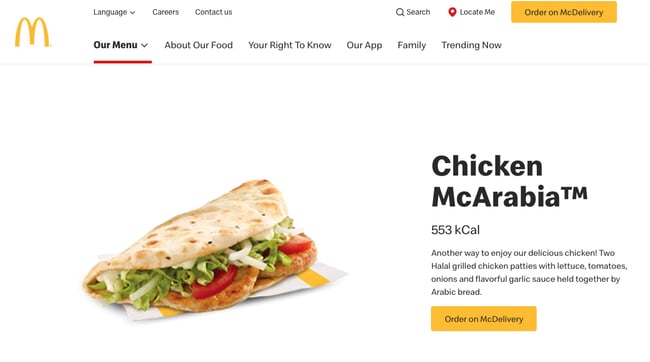
We all know McDonald's is a successful global brand. While keeping its overarching branding consistent, McDonald's practices "glocal" marketing efforts. No, that's not a typo. McDonald's brings a local flavor to different countries with region-specific menu items. For instance, McDonald's offers the McArabia, a flatbread sandwich, in its restaurants in the Middle East.

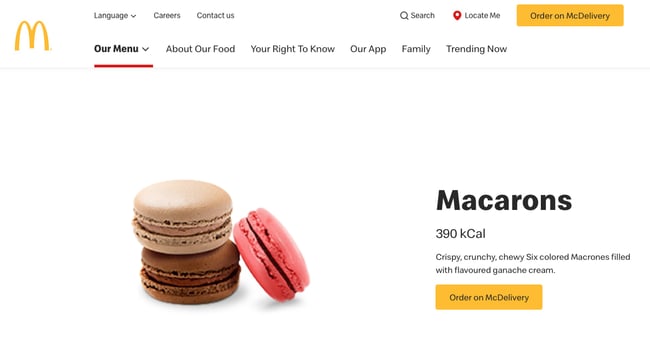
McDonald's has also introduced macaroons to its French menu:

global marketing strategy example by mcdonalds (french macarons)

Image Source

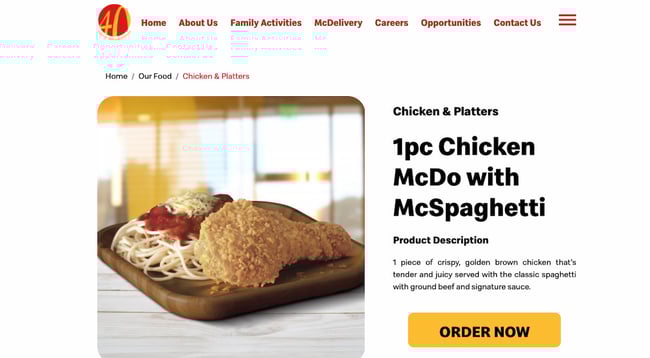
And added McSpaghetti to its menu in the Philippines:

global marketing strategy example by mcdonalds (mcspaghetti)

Image Source

No matter what, there’s something to learn from the giant.

How to Imitate McDonald’s Strategy

Like the other restaurant examples on this list, opening restaurants in other regions may be the first and most natural answer. But if that’s not feasible, especially if you run a regional brand, celebrate the flavors of the world by hosting an “International Day” and posting about it on your website and online. This will get you on the radar of those who may enjoy those foods daily and help you spread the word in other markets.

10. Innocent Drinks

global marketing strategy example by innocent drinks

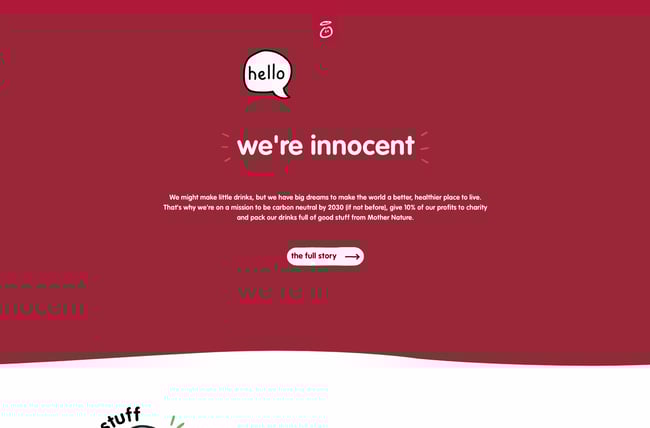
Innocent Drinks is the leading smoothie company in the U.K., but that's not the only place you'll find its products. In fact, Innocent products are now available in 15 countries across Europe.

And despite its widespread reach, the company's friendly branding remains consistent across the board. For instance, the website is very bubbly, with contact information that prompts to the viewer to "call on the banana phone" or "pop by Fruit Towers," the name for its corporate office.

While global expansion and rapid growth can sometimes distract a company from consistent branding, Innocent Drinks has managed to remain true to itself. By ensuring that the brand's voice is interpreted the same way around the world, Innocent is able to create a more recognizable brand.

How to Imitate Innocent Drink’s Strategy

Stay true to your brand voice even as you expand to other markets. Innocent Drinks is immediately likeable because of its tone on its website and social media. Friendliness makes you feel more approachable — and thus more accessible to a global audience. Plus, if your brand is consistent across the board, audiences across regions won’t feel like they’re getting cheated out of everything your brand can offer.

11. Traffic Ticket Clinic

global marketing strategy example by traffic ticket clinic

The phrase "glocal" can be defined as "Think Globally, Act Locally." But what happens when you switch the two around?

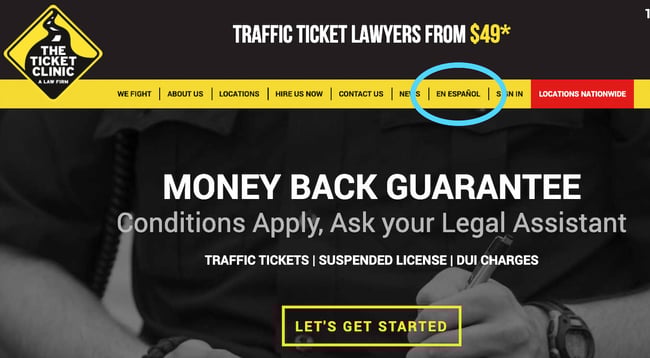
Traffic Ticket Clinic is a traffic ticket law firm that defends drivers in the state of Florida. Not very global, right? Well, Traffic Ticket Clinic understands that America is a melting pot and that Florida is bursting at the seams with different cultures and languages.

Though a domestic service, the firm's website is available in English and Spanish. With those options, Traffic Ticket Clinic can cater to Florida's nearly 3.5 million Floridians who speak Spanish. Don't miss out on expanding your client base — sometimes you don't have to look far to attract international business.

How to Imitate Traffic Ticket Clinic’s Strategy

One of the easiest ways you can begin global marketing is by offering your website in different languages. If you own a WordPress website, you can do that by using a translation plugin. But remember: Look at your target market first to figure out the best languages you should offer on your site. For instance, don’t offer Swahili if you don’t serve East Africa.

12. Coca-Cola

Coca-Cola is a great example of a brand that’s well-known for its international marketing efforts. Though a large corporation, Coca-Cola focuses on small community programs and invests a lot of time and money in small-scale charity efforts.

For example, in Egypt, Coca-Cola has built 650 clean water installations in the rural village of Beni Suef and sponsors Ramadan meals for children across the Middle East. In India, the brand sponsors the Support My School initiative to improve facilities at local schools. Not to mention, the brand sticks with selling an emotion that can't get lost in translation: happiness.

How to Imitate Coca-Cola’s Strategy

In your marketing efforts, try to promote your values by investing in communities worldwide. You can start small, such as with a yearly sponsorship or recurring donation, and then work your way up to launching a charity effort on the ground.

Try to appeal to a universal human feeling as well. If you’re a marketer at a hospital, you might appeal to grief and hope in a 1-minute video about a hospital visit. These are feelings that trascend countries and languages, automatically helping you reach a global audience.

13. Spotify

global marketing strategy example by spotify

Spotify is considered one of the best global companies in the world, according to Interbrand. We've all heard of Spotify (no pun intended), but how did it suddenly, and so quickly, expand from Sweden into other countries?

Spotify's business model is focused on helping you find something new.

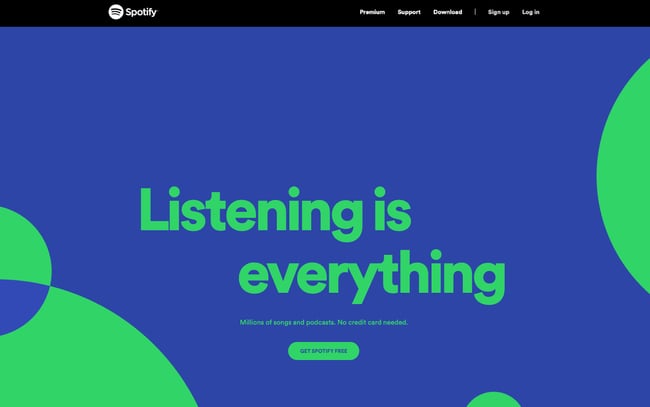
It's one thing to select a genre of music to listen to — it's another thing to select a "mood" to listen to. In Spotify's "Browse" page, you can listen not just to "country" and "hip-hop," but also music that caters to your "workout" or "sleep" preferences.

By changing how they describe their content, Spotify gets users to listen to music that goes beyond their favorite genres, and instead satisfies habits and lifestyles that people share all over the world. This allows international artists to access listeners from other countries simply because their product is being categorized a different way.

Spotify now has offices in more than fifteen countries around the world.

How to Imitate Spotify’s Strategy

Spotify’s example is a winner because its global marketing strategy is entirely product-based. It offers music, podcasts, and media in so many languages, the audiences in those countries couldn’t help but start using the product. If your product lends itself to that, try featuring items or products that will appeal to the people of different regions and countries.

Start Global Marketing in Small Steps

If you have global aspirations for your business, you need to find out what customers in different communities have in common — and how to localize your product for these different markets. Your first step? Take inspiration from one of the businesses above. Start small, then work your way up as your business grows.

Editor's note: This post was originally published in January 2019 and has been updated for comprehensiveness.

global marketing ideas


13 Businesses With Brilliant Global Marketing Strategies was originally posted by Local Sign Company Irvine, Ca. https://goo.gl/4NmUQV https://goo.gl/bQ1zHR http://www.pearltrees.com/anaheimsigns

Why Twitter Fleets Were Discontinued [+Alternatives for Brands That Used It]

The social media landscape is constantly changing with new features being introduced, and old features being retired constantly.

Sometimes though, a new feature doesn’t quite do what the platform developers intended. Maybe it doesn’t work properly, or perhaps it just doesn’t have the outcome they were expecting. When that’s the case, it’s removed to make way for newer and better.

Download Now: Social Media Trends in 2022 [Free Report]

This is exactly what happened with Twitter Fleets. That’s right, after just 10 short months, Twitter Fleets have been discontinued.

The Short Life of Twitter Fleets

When the production team over at Twitter designed Twitter Fleets, they were hoping to increase the number of new people joining Twitter. Fleets were highlighted at the top of the screen and were similar to Instagram Stories and Snapchat in that posts disappeared in 24-hours.

Ilya Brown, VP of Consumer Product said in a Twitter blog post from July 14th that, "We built Fleets as a lower-pressure, ephemeral way for people to share their fleeting thoughts."

Snapchat has been building loyal followers since it debuted in July of 2011, and Instagram Stories became a thriving feature for users of the platform in August of 2016, allowing them to share images and videos with their audience which disappear within 24 hours. The idea that Twitter users might enjoy the same low-pressure posting seemed reasonable enough.

The main goal for the feature was to attract more users, Brown said, "Although we built Fleets to address some of the anxieties that hold people back from Tweeting, Fleets are mostly used by people who are already Tweeting to amplify their own Tweets and talk directly with others."

The announcement in early July had many people wondering why Twitter Fleets was discontinued. Well, after implementing the feature and testing it out for several months, they saw no notable increase in the number of new people on Twitter and decided to ax the project.

It’s now back to the drawing board for Twitter as they look for new ways to inspire people to join the conversation, not only by sharing others’ Tweets but also by creating their own. Brown said that they are using what they learned during this experiment to optimize some of their other features and improve the experience for their users. They found that the top of the timeline is still a great spot to highlight what’s happening now so users will still see Spaces up there when someone they follow is "hosting or speaking in a live audio conversation." They’ll also explore different updates to improve photos and videos such as the full-screen camera, text formatting options, and the use of GIF stickers.

Social media platforms don’t usually act that quickly to remove a feature that’s producing sub-par results. While Twitter Fleets may not have done what it was intended to do, it has shown the world that if something isn’t working, it can be shut down quickly.

Alternatives to Twitter Fleets

With Twitter Fleets gone, many social media users are looking for alternatives. For now, it looks like Snapchat, Instagram Stories, and Facebook stories are the best options for those looking to post quick pieces of content that are live for 24 hours.

For brands looking to stay connected with their communities on social media, Instagram stories are currently best for reach. According to Rival IQ, brands that have the highest engagement on Instagram post stories approximately 16 times per month, sharing one to three frames each time.

As mentioned before, the social media landscape is constantly changing. There could be an existing platform adding new functionality, or an entirely new social media platform in the works as we speak. We’ll just have to wait and see what’s next on the horizon.

New call-to-action


Why Twitter Fleets Were Discontinued [+Alternatives for Brands That Used It] was originally posted by Local Sign Company Irvine, Ca. https://goo.gl/4NmUQV https://goo.gl/bQ1zHR http://www.pearltrees.com/anaheimsigns

Why Millions of U.S. Employees are Quitting Their Jobs and How Companies Can Navigate

The past two years have been anything but consistent.

The pandemic left the United States in the worst recession in history. People struggled to adjust to remote work, and what we defined as "normal" varied day-by-day.

And yet: Out of that turmoil and inconsistency, we now see a record number of people quitting their jobs in pursuit of better opportunities.

According to the U.S. Bureau of Labor, 4 million people quit their jobs in April 2021, and July saw another 4 million leave.

Which leads me to question: Amidst the past two years of unpredictability — and a resulting lack of security — why are so many people taking the leap now?

Here, we'll explore what employee turnover is, how much it could be costing your business, and how to calculate employee turnover. Plus, how employers can minimize the effects of what's being called the Great Resignation, according to experts.

Download Now: Free Company Culture Code Template 

What is employee turnover?

Employee turnover refers to the percentage of employees who leave your company during a given period of time.

Your company's employee turnover rate includes anyone who leaves for anyreason. This includes resignations, terminations, or retirements. However, turnover rate typically doesn't include internal movement, such as an employee switching teams or being promoted.

Turnover can cost a business thousands — if not millions — of dollars, and can negatively impact team morale and performance.

All of which is to say: The lower your turnover rates, the better. Low turnover rates signal a healthy, engaging company culture— which is critical for any business' long-term success.

To determine how your company's turnover rates compare, let's explore average turnover rates by industry next.

Employee Turnover Rates in 2020 (By Industry)

Employee turnover rates vary by industry, so you'll want to do your own research to determine how your company's turnover rates stack up against competitors.

However, to give you a sense for an appropriate range, let's take a look at a few turnover rates by industry as reported by the U.S. Bureau of Labor(it's important to note, these turnover rates are from 2020, which had unusually high turnover rates):

  • Professional and business services: 69.2%
  • Health care and social assistance: 45.2%
  • Trade, transportation, and utilities: 60.5%
  • Retail trade: 69.7%
  • Leisure and hospitality: 129.3%
  • Government: 24.2%
  • Real estate and rental and leasing: 49.4%

Next, let's look at average employee turnover rates.

Average Employee Turnover Rates

In 2021, the overall turnover rate across industries was 57.3% — but that drops to just 25% when considering voluntary turnover alone.

Voluntary turnover trends continue to rise. In fact, the Work Institute's 2020 Retention Report states that there's been an 8% increase in turnover rates since 2018, and an 88% increase since 2010.

Average turnover rates varies significantly depending on your industry. However, a 90% employee retention rate is generally considered good — which means the closer you can get to a 10% turnover rate, the better.

Cost of Employee Turnover

The cost of employee turnover is broken down into the costs of four factors — the cost to terminate, the cost to hire a replacement, the vacancy cost (i.e. how many days the job is open multiplied by the average value of the job per day), and the productivity cost (i.e. how long it takes the new hire to get up to speed).

Josh Bersin of Deloitte says the cost of losing an employee can range from tens of thousands of dollars to 1.5-2X the employee's annual salary. This means, if you lose an employee who was making $70,000, you can expect to lose upwards of $140,000.

Alternatively, the Work Institute cites the cost of employee turnover at roughly 30%of the employee's salary — meaning, if you lose an employee who was making $70,000, you'll expect to lose closer to $21,000.

Employee Benefit News suggests a similar turnover cost at roughly 33% of a worker's annual salary.

So, whichever way you slice it … you stand to lose a lot of money with each individual employee who leaves. Of course, turnover costs are so difficult to quantify because they're so specific to each employee's role and salary.

When determining your own turnover costs, you'll also want to keep in mind the negative impact high turnover rates can have on company culture and employee productivity — which could lead to even more lost revenue down the line.

How to Calculate Employee Turnover [Plus High and Low Rates]

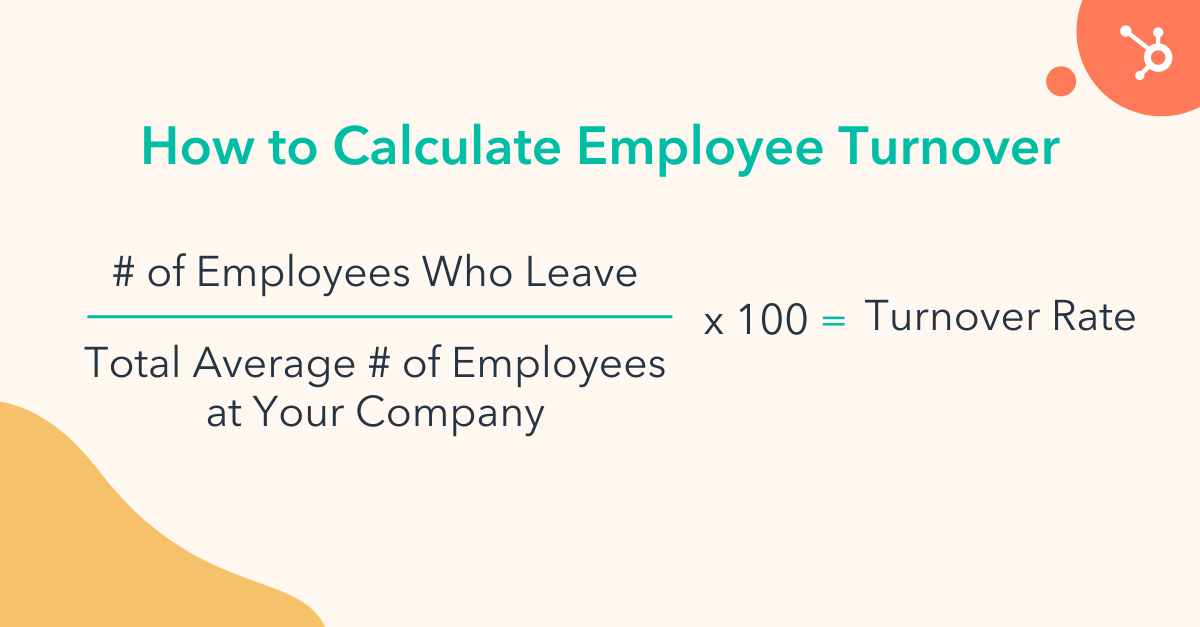
To calculate your turnover rates, you need to divide the number of employees who leave your company by the total average number of employees, and then multiply by 100.

And, to find your average number of employees, you'll want to take the number of active employees at the beginning and end of each period, and then divide by two.

how to calculate employee turnoverTo understand this concept, let's consider an example. If you have 1,200 employees at the beginning of the month, and 1,250 at the end of the month, your average number of employees on a monthly basis is 1,225 (1,200 + 1,250 / 2).
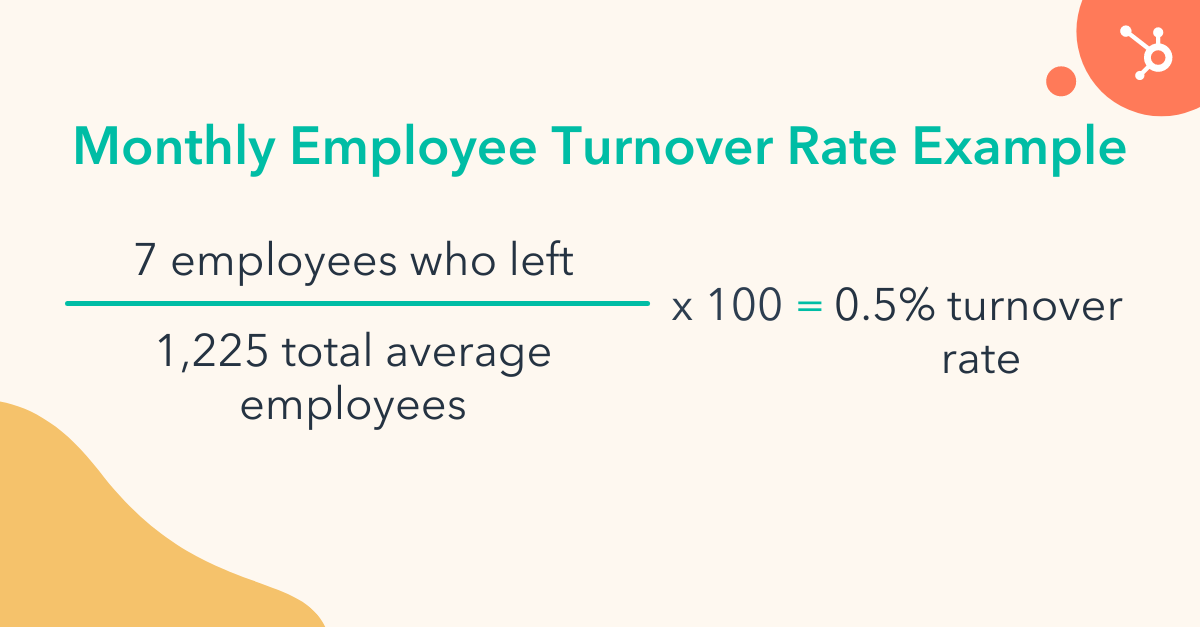
Now, let's calculate your monthly turnover rate. In the month of September, if 7 people left your company, your turnover rate formula looks like this:

how to calculate employee turnover monthlyTo calculate annual turnover (which is typically the number companies use when assessing employee trends), you'll want to find your average number of annual employees. If at the beginning of 2021 you had 1,200 employees, and at the end of 2021 you had 1,500 employees, your average number of employees is 1,350 (1,200 + 1,500 / 2).
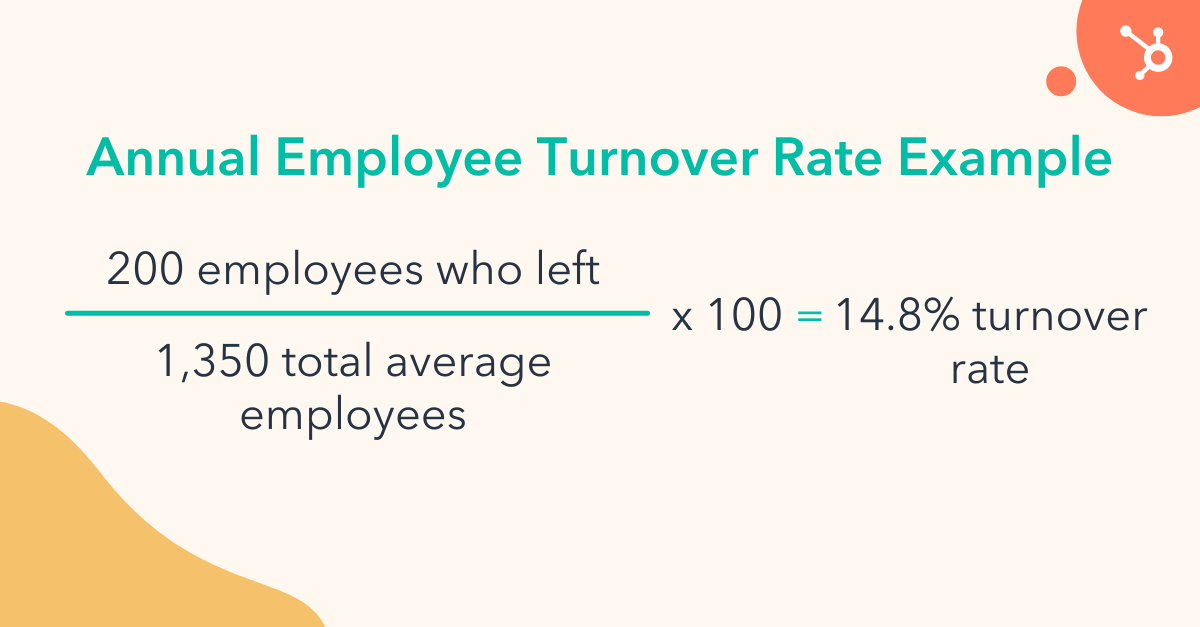
Now, let's calculate your annual employee turnover. If you had 200 employees leave in 2021, your annual turnover rate formula looks like this:

how to calculate employee turnover annualTo put these numbers into context, you'll want to determine what a high and low turnover rate for your industry looks like, since turnover rates vary greatly depending on industry. For instance, retail and e-commerce saw a 30.7% turnover rate in 2021, while the technology industry's turnover was roughly 20%, and financial services was closer to 15%.
Why is turnover so high?

To reduce employee turnover, we first need to understand what's causing it.

For starters, we're seeing employee turnover increasing on a national scale. The Labor Department reports that job openings outnumbered the unemployed by more than 2 million in July as companies struggled to fill positions.

Additionally, Microsoft's 2021 Work Trend Index predicts 40% of the global workforce will consider leaving their employer this year.

This extreme workplace shift — being called the "Great Resignation" — is due to a variety of factors.

To better understand the high turnover rates of the past year, I spoke with Lily Zheng, a Diversity, Equity & Inclusion Strategist and Consultant.

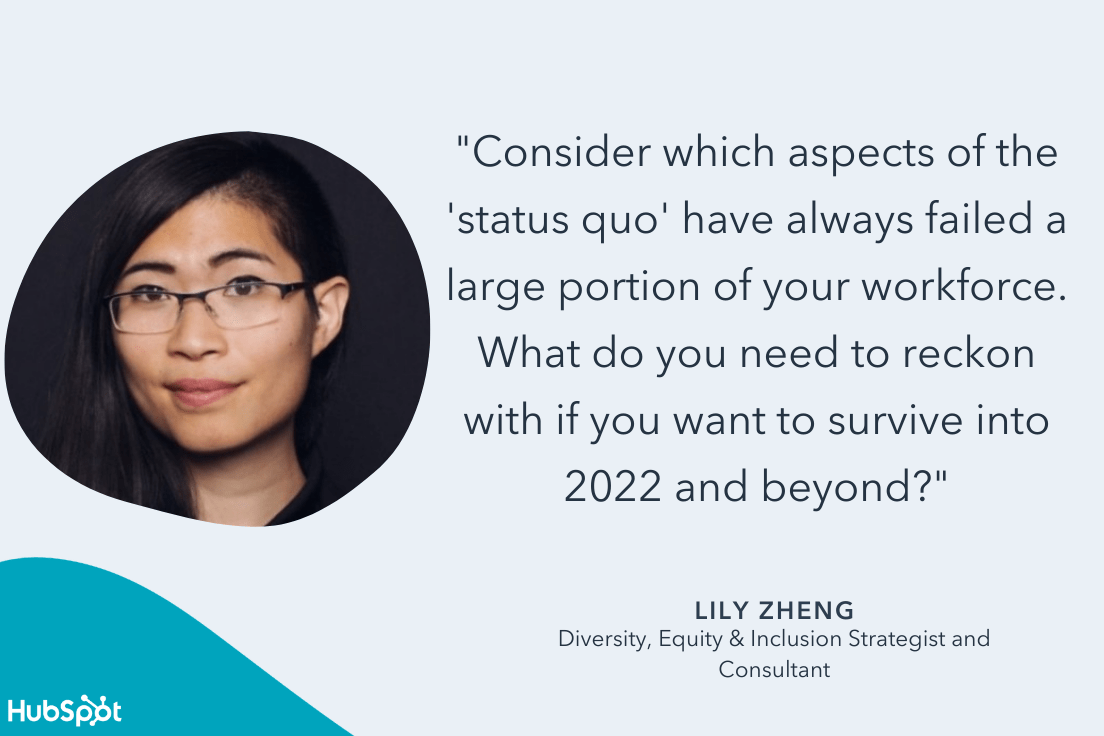
Zheng told me, "We call it a great resignation but it's more of a great correction. These are employees who had already resolved to leave in 2020 but felt they couldn't."

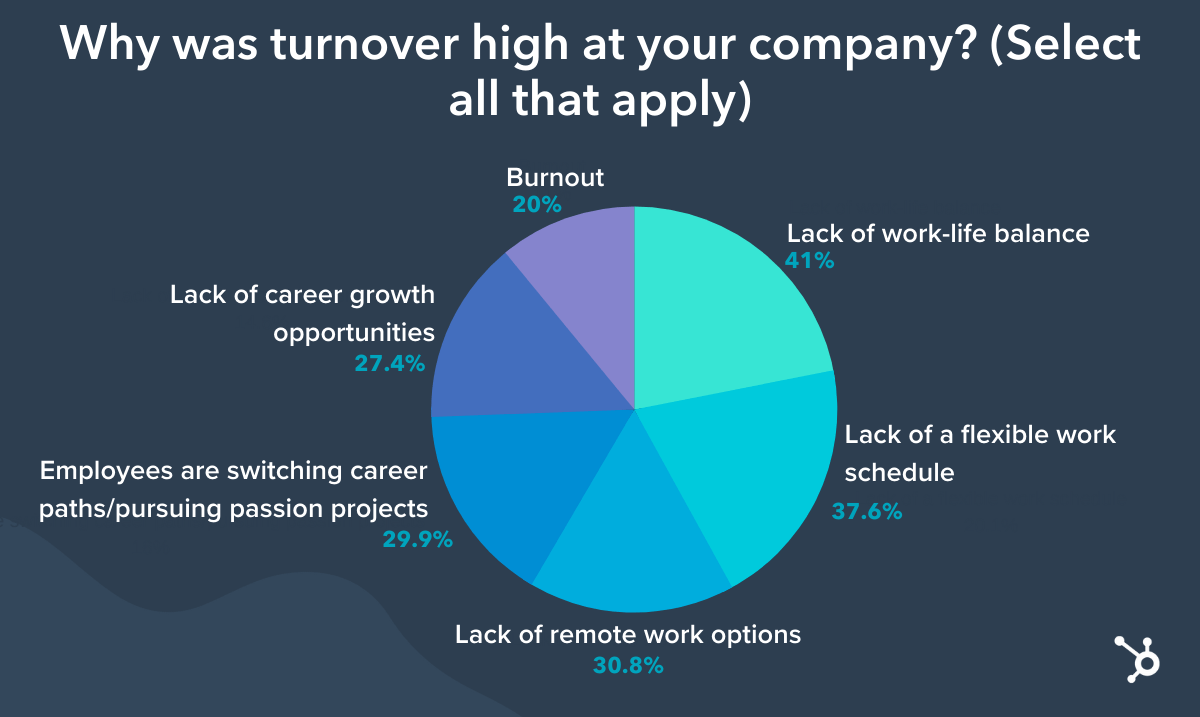
Our HubSpot Blog analyst further investigated this issue by polling 500 marketing professionals to learn why turnover was high at their companies. (Those polled belong to both B2B and B2C companies.)

As shown below, 41% of respondents cite lack of work-life balance as the primary reason for high turnover. Another 37% additionally cite a lack of flexible work schedules.

why was turnover high in 2020 and 2021

HubSpot Blog Research

In 2020 and 2021, flexibility, autonomy, and the ability to work from anywhere became a necessity as the world shifted to a pandemic and post-pandemic workforce. And even as offices begin to re-open, we see employees continue to prioritize work-life balance and flexibility.

A few other factors? Lack of remote work options, lack of career growth opportunities, burnout, and employees switching careers to pursue other passions.

For better or worse, the pandemic permanently shifted people's mindsets when it comes to what they value. And one of the biggest value shifts is a newfound prioritization of time.

Simply put, people will work hard for your company if you enable them to choose when, where, and how they work best.

Next, let's explore a few tips for reducing employee turnover at your organization.

How to Reduce Employee Turnover

1. Give employees a remote or hybrid option (if conducive to your business and work culture).

Now that people have settled into a remote lifestyle, many of them don't want to return to the office. In fact, when HubSpot surveyed roughly 500 marketers, 40% of respondents said they'd like to continue working remotely full-time even when given the option to return to the office.

A remote lifestyle enables employees to dedicate more time to priorities outside of work. For instance, I have one colleague who now spends her mornings journaling and meditating — which greatly outweighs her old mornings of being stuck in traffic on her commute to work.

I have another colleague who spends lunch break with his kids.

People have recognized the amount of valuable time they win back when they're fully remote. So if your company doesn't offer remote or hybrid options, some of your employees will inevitably leave.

2. Prioritize your employees' well-being.

Promoting wellness at work has been proven to result in better productivity and less employee turnover — which is why it's a critical strategy to consider when aiming to reduce turnover.

As Lily Zheng writes in her LinkedIn post with over 19,000 reactions, "Your employees aren't leaving just because they've found better opportunities elsewhere. They're leaving because this is the first chance they've gotten to re-balance the scales of their own wellbeing and success, scales that you and your company swung out of whack during the pandemic."

Seeing as the post received over 19,000 reactions, I'm willing to bet many employees — and employers — agree that, in some instances, well-being wasn't prioritized by companies in 2020.

To invest in your employees' well-being, consider creating a wellness program, which includes strategies aimed at increasing physical activity, reducing employee stress, and offering information on nutrition and health.

Additionally, a few big factors that contribute to a positive workplace experience include flexible work hours, an emphasis on autonomy, an investment in diversity and inclusion, and a focus on employees' mental health and psychological safety above all else.

3. Foster a sense of belonging.

If you want to reduce turnover, take belongingness seriously.

A sense of belonging is undeniably critical for long-term employee satisfaction. In fact, there's a 91% correlation between employees who say they belong and those who stay engaged at work, and a 50% drop in attrition among employees who report a sense of belonging.

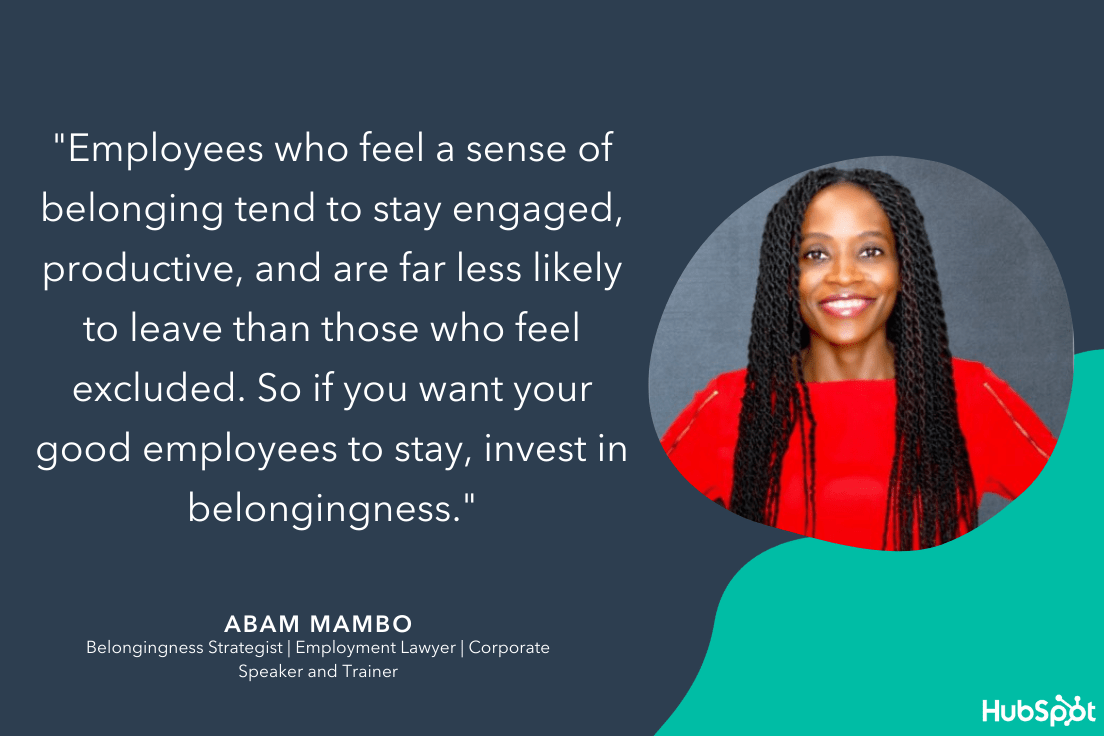
As Belonging Strategist and Managing Director of BelongingIQ Abam Mambo puts it, "Employees who feel a sense of belonging tend to stay engaged, productive, and are far less likely to leave than those who feel excluded. So if you want your good employees to stay, invest in belongingness."

How can you invest in belongingness? While this list isn't exhaustive, Mambo lists a few strategies you can implement to begin facilitating a sense of belonging on your team:

  • Appoint and pipeline inclusive leaders
  • Recruit and empower a diverse workforce
  • Implement fair and equitable employment practices
  • Reward performance
  • Reframe your 'speak-up' program to ensure employees are heard, treated fairly, and not retaliated against

Ultimately, a sense of belonging contributes to an employee's sense of pride, happiness, and satisfaction at work. So investing in belonging won't just help your turnover rates — when done right, it will also positively impact your bottom line, as employees who belong are also employees who are engaged.

abam mambo quote on turnover rates-1

4. Use a net promoter score to measure employee satisfaction.

A net promoter score (NPS) survey can help you measure your employee satisfaction, and how likely your employees are to suggest your workplace to friends or family.

The survey uses a 0-10 scale, and those in the high range (between 9-10), are your most loyal and engaged employees who will help fuel your growth through word-of-mouth. The next batch (scoring between 7-8), are satisfied but slightly more indifferent — these are employees who are more susceptible to competitors' offers.

And, finally, you have your lower scorers (between 0-6). This signifies a group of employees who aren't fully satisfied at your company. These people are less engaged and more willing to leave.

To lower turnover rates, it's vital you determine what's working for your employees, and what isn't. If you aren't measuring employee satisfaction, there's no way for you to know how to improve it. A NPS can help you determine weak spots in your current culture and opportunities to strengthen your employee offerings, which will enable you to keep more employees around for the long-haul.

5. Offer competitive pay and benefits.

Earning more money is the top reason people leave jobs. In fact, PayScale research found 25% of people surveyed left their jobs for higher pay — ranking far above people who left because they were unhappy, wanted more flexibility, or needed to relocate.

Offering competitive pay depends on a variety of factors. You'll want to consider your geographic area and industry to determine a baseline competitive rate.

Additionally, it's important to keep in mind the level of expertise for which you're hiring, as well as supply and demand — for instance, if you're looking for a senior developer and you know the pool of developers is relatively small in your area, you might need to increase base pay to compete.

If you can't increase base rate, consider offering competitive benefits packages, instead. Tuition reimbursement, PTO, flexible hours, fitness discounts, and parental leave are all factors to consider when creating a comprehensive employee benefits package.

6. Provide professional development opportunities.

Learning and professional development matters for long-term employee satisfaction.

Consider, for instance, how 94% of employees would stay at a company longer if the company invested in helping them learn.

Additionally, did you know Gen Z learners watched 50% more hours of learning content in 2020 compared to 2019?

Ultimately, the desire to learn and grow is fundamental to human nature. So investing in training and development opportunities is vital for reducing employee turnover.

As Greenhouse's Director of Talent Acquisition Ariana Moon puts it, "Investing in growing and up-skilling employees is especially important in the context of our rapidly evolving digital environment today."

Moon says, "Recognizing the talent you have and prioritizing internal mobility is not only key for retention and engagement, but also a win-win for your company due to opportunities to cross-pollinate knowledge and skills across teams."

While Moon acknowledges the hesitations some team leaders might feel when considering internal mobility programs (due to anxiety about vacancies they'll have if people move off their teams), she says it's ultimately critical for the success of the business as a whole. 

As Moon puts it, "Companies need to think holistically about how internal movement can benefit the overall business — through improving morale and productivity, elongating tenure due to new opportunities for growth, and developing employees who have multifaceted skill sets and are more resilient to change."

At HubSpot, we offer development and training courses that focus on clear communication, leading effectively, giving and receiving feedback, and expanding impact. These trainings are offered by HubSpotters, for HubSpotters.

To create an effective learning and development program, you'll want to map out a clear career growth plan for each department. Next, you'll need to determine which skills are vital for each role. Once you have a list of skills, you can begin mapping out a plan that includes training and development opportunities for each of those necessary skills.

7. Be thoughtful and strategic when hiring new candidates.

Retention rates will vary greatly depending on your hiring process. The more time and effort you can put into finding the right candidate(s) who will fit well into your existing organization, the less likely you are to see high turnover rates. 

As Co-Founder and CEO of Crosschq Michael Fitzsimmons puts it, "Historically, hiring managers have been incentivized to increase headcount as fast as possible, but the data shows that approach is a losing proposition. As recruiters work quickly to keep pace with filling roles, they rely on imperfect gauges for candidate quality — including resume claims, interview feedback, and perhaps traditional reference checks."

"Unfortunately, these methods are scattered at best, introducing bias and frankly, noise. In fact, Crosschq's research has shown only a 9% correlation between interview scores and the quality of a hiring decision."

Fitzsimmons adds, "The finish line isn't the new hire's first day on the job ... it's the productivity, culture fit, and retention of that hire for months and years to come. It's important to align what you're hiring for with what you're expecting on the other side."

To improve your hiring strategy, Fitzsimmons recommends modernizing your hiring tools and processes to better leverage data insights for improved hiring decisions. 

Additionally, it's vital you're clear and honest upfront with candidates about a role. Even though it might be tempting to paint an unrealistic picture of a role to secure high-quality candidates, it's better in the long-run if you ensure your candidates are fully aware of both the perks and challenges of each role before they're hired.

Ariana Moon agrees that hiring is vital for long-term retention — as is onboarding.

She told me, "Many industry surveys have shown that over 85% of new hires make the decision [to stay or leave] within the first six months of employment. That number can be traced back to the onboarding experience. 69% of employees will stay for longer than 3 years if their onboarding experience is good, while 1 in 5 will leave within 45 days if it's bad."

To improve your onboarding process, Moon suggests taking a hard look at your programming through the lens of various employee personas, and focus on creating experiences where each new hire can feel heard, represented, supported, and enabled for success.

8. Develop an inclusive culture for distributed teams.

Inclusivity is undeniably paramount for ensuring each employee feels valued — but as the workplace changes, you'll need to adjust your approach to ensure you're still creating an inclusive environment for a hybrid or fully remote team.

"To create an inclusive culture," Zheng told me, "I'd first encourage employers to show humility and admit you don't know the best solutions for a new, hybrid environment. Host focus groups and listening sessions, and ask your employees what would be ideal for them — and then collect the data."

As Zheng describes, an inclusive workplace will look different for everyone. Perhaps your data shows your team wants to return to the office — in which case, the ideal solution is to support a return-to-office policy.

Alternatively, maybe your workforce has people who want to feel a greater sense of connection, but don't necessarily want to return to the office. "In that case," Zheng says, "maybe you'd benefit from considering a model where you ask people to come back to the office for social activities or team-building activities, but outside of those activities you support remote work."

Of course, if you have a distributed team with employees across the globe already, you'll want to brainstorm how you can create a more inclusive culture in a fully remote environment.

Reducing employee turnover will likely require more than just the eight tips mentioned above. Employee satisfaction varies between industries and individual companies, so you'll want to take the time to research what truly drives people towards — or away from — your business.

lily zheng quote on turnover rates

And, as Zheng reminds me — reflection is key. "It's important for employers to recognize that employees have a lot of power right now, and so it's not the time to be complacent … And, [as you reflect on your employees' experience], go back and consider which aspects of the 'status quo' have always failed a large portion of your workforce. What do you need to reckon with if you want to survive into 2022 and beyond?"

Ultimately, the pandemic shifted people's perspectives and values when it comes to work. And that's not necessarily a bad thing. If you notice your turnover rates are higher than normal, consider what you need to change to remain competitive in a post-pandemic landscape.

company culture template


Why Millions of U.S. Employees are Quitting Their Jobs and How Companies Can Navigate was originally posted by Local Sign Company Irvine, Ca. https://goo.gl/4NmUQV https://goo.gl/bQ1zHR http://www.pearltrees.com/anaheimsigns