Wednesday, May 26, 2021

The Top 3 Buyer Persona Myths, and How They Hurt Your Marketing Efforts

Meet Elizabeth: a 27-year-old nurse who drives a Honda Civic, enjoys making TikToks, and spends most of her time with her beautiful 9-month-old baby.

Elizabeth desperately wants to make more time for herself, but struggles to find the balance between work and home responsibilities. She tries to give herself moments of self-care, but these moments are few and far between. Elizabeth needs a way to recharge, relax, and care for herself.

By this description, you know Elizabeth's age, profession, gender, desires, struggles, and pain points. All of this information helps you place her in a category in your mind — but none of that information tells you why she buys your product.

Buyer personas typically include descriptions like Elizabeth's, along with other demographics and personality information.

In the early days of customer segmentation, this would have been more than enough to inform marketing campaigns and product development. But with growing markets and increased consumer awareness, companies need to go beyond standard buyer personas to reach their audiences.

If we can apply what we've learned about how people make decisions, and how we as companies group people together, we'll be able to reach customers like Elizabeth with empathetic solutions that help her, rather than stereotypical cure-alls that are easily overlooked.

Here, let's dive into three myths of the buyer persona — and what you can do, instead. 

Download Our Free Buyer Persona Guide + Templates 

Standard Buyer Personas Aren't Enough

The first mention of audience segmentation was by Wendell Smith in 1956. Smith defined market segmentation as, "the adjustment of market offerings to consumer or user requirements."

Smith knew that creating segments would lead to higher consumer/user satisfaction. But Smith's idea of segmentation was years before we had a clear understanding of psychology, behavioral economics, unconscious bias, and deeper knowledge about how to provide consumer satisfaction.

Since Smith's discussion on segmentation, we've had major discoveries in the way people think, rationalize, and categorize others. Daniel Kahneman and Amos' Tversky's 1974 research paper A Judgement Under Uncertainty: Heuristics and Biases revealed the way people process information, and are influenced. And Clayton Christensen first shared his jobs-to-be-done theory in 2003.

Both of these studies on human behavior, purchasing, and thinking have made a lasting impact on the way we create ad copy, price products, introduce call-to-actions, and influence many other marketing activities — but have yet to influence our way of creating buyer personas.

Using the lessons from Kahneman, Tversky, and Christensen, there are three myths of the standard buyer persona that could be detrimental to your marketing and customer relations. Let's dive into those, now. 

Myth #1: Your Buyer Persona Needs a Name

We've all seen the old advice to give your persona a name that is memorable. Names like Sally Sales Girl and Mary the Marketer will bring your persona to life and create a more concrete persona in your mind and marketing — or so we're told.

Fact: Naming your buyer persona introduces bias.

The problem with giving your buyer personas a fake name is that you could introduce bias into your marketing.

Introducing naming bias in your marketing means that consciously you've determined a particular person as your best customer. That's good! The problem is you might also unintentionally exclude people who could be a good fit for your product but may not resemble the person you envisioned. And that's bad.

If Elizabeth is your best fit customer, then you're more likely to seek out customers who meet your unconscious idea of who Elizabeth is, rather than seek out customers who actually use your product or service.

Studies show that when someone has an easier-to-pronounce name, they are judged more favorably than someone with a harder-to-pronounce name.  And while most studies on unconscious name bias focus on resumes and job applications, we can apply those lessons to buyer personas, as well.

Ease of pronunciation varies depending on where you live or what language you speak. But remember, a name that sounds familiar to you might not sound familiar to your audience.

Solution: Name personas based on segmentation data.

When we create buyer personas, we're grouping a large number of people into one category. Instead of naming your personas after a person, try naming them after the traits they share. 

Do the majority of these best-fit customers enjoy soccer? Great! Name them 'The Soccer Players.' Or maybe they're using your product to free-up time in their scheduling processes. Wonderful — let's call them the Free Timers.

Naming this group of people according to their segment, or their need, helps to eliminate any bias that could exist.

This helps focus buyer personas on the category of people you're serving, not just one pretend person.

Myth Two: Your Buyer Persona Needs a Photo to Make Them More Relatable and Realistic

Most buyer personas have a stock photo on the first page. I've even heard of companies using cardboard cutouts of buyer personas in their office.

While I admire the effort to bring to life a category of people, assigning one picture or person to represent a large group of people lays a foundation for bias in your marketing.

Fact: Your buyer persona doesn't need a face to be realistic.

The buyer persona's picture most likely represents who you believe your ideal customer looks like, but it's not likely a good determination of your entire audience. If you've given your Elizabeth persona a picture of a middle-aged white female, and 100% of your audience isn't middle-aged, white, and female, you've inaccurately portrayed your audience. 

When we give our personas a stock photo it could introduce racial, gender, or beauty bias. These kinds of biases are so ingrained in our minds that we follow bias patterns even if we don't logically believe the bias to be true.

This phenomenon is known as the bias blind spot. Studies show that 95% of cognition happens below the threshold of conscious thought. Meaning, you may not be racist, misogynistic, or ageist, but there are patterns ingrained in your mind that influence your decision-making whether you realize it or not.

A Google Image search when searching for 'Buyer Personas' blatantly shows the issue with assigning pictures to buyer personas. There's not a lot of diversity in these images, and that lack of diversity hurts a company's growth.
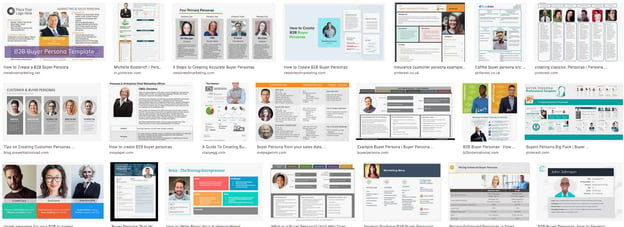
A 2019 survey by the Female Quotient, Ipsos, and Google found "64% of people surveyed said they took some sort of action after seeing an ad that they considered to be diverse or inclusive. Those numbers increase for Latinx+ (85%), Black (79%), Asian/Pacific Islander (79%), LGBTQ (85%), millennial (77%), and teen (76%) consumers."

Solution: Forget the photo.

Leave the stock photo out of your buyer personas. This isn't going to harm or hurt any of your marketing efforts and functions. It will be a step toward eliminating unconscious bias. Instead of using a stock photo, get straight to the crucial information.

You may have the urge to add a cartoon character, but that doesn't alleviate the problem. Skip the pictures altogether, and get straight to the information that will help you resonate, reach, and sell to your customers.

This is the first step in acknowledging that your customers look like a wide variety of races, genders, shapes, and sizes.

When your marketing better represents your audience, your product, messaging, and communications will resonate more clearly.

Myth Three: Buyer Personas Should Describe Character Traits

Most B2B buyer personas are created to inform marketing teams and executives on who their customers are and keep promotional efforts consistent, but limiting buyer personas to only character traits, demographics, and socio-graphic information limits your audience and ability to reach the right people in the right way.

Fact: Buyer personas should tell you why people buy a product or service.

The best way to resonate with your audience is to understand them and empathize with their pain points. Understanding your audience begins with how you build and segment your buyer personas.

If you're segmenting your audience based on attributes such as brands they like, habits they have, or job titles, then you are grouping people together based on fleeting attributes. 

For instance, say our persona example, Elizabeth, changes jobs, moves to a new city, or changes any trait about her life. As a result, you might unnecessarily shift Elizabeth out of your customer demographic. She loves your product,  and would still buy your product, but now you're no longer invested in marketing to her segment.

Solution: Segment according to the job-to-be-done.

Instead of building your personas around demographics and character traits, base your personas on what your customers have hired your product/service to do for them.

For example, Elizabeth is a mom, loves long baths, and buys Suave deodorant. The reason she buys Suave has nothing to do with her age, job title, or love of baths. She buys Suave because she's used it for years, loves the smell, and the way it makes her feel. She is 'hiring' Suave deodorant to keep her feeling and smelling great.

Clayton Christensen was the first person to discuss the concept of people hiring products and services for a particular job. 

Combining the emotional psychographic information of buyer personas with a jobs-to-be-done approach will help to inform your marketing efforts and open up your market in a way that allows you to serve all kinds of people. According to Christensen, "Companies that develop offerings centered on jobs, instead of customer attributes and buying behaviors, can excel in the market and avoid disruption."

The Best Buyer Personas Will be the Tool that Grows Your Business

It's time buyer personas caught up with our knowledge of how people think, behave, and purchase. When undertaking your next buyer persona project, ditch the fake name and picture, and focus on what your customers hire your product to do for them.

Your marketing deliverables will be more inclusive to a wider audience, while still being narrowly focused and empathetic. Creating better buyer personas will lay a foundation of better marketing practices that resonates with your audience and grows your business.

Blog - Buyer Persona Template [Updated]


The Top 3 Buyer Persona Myths, and How They Hurt Your Marketing Efforts was originally posted by Local Sign Company Irvine, Ca. https://goo.gl/4NmUQV https://goo.gl/bQ1zHR http://www.pearltrees.com/anaheimsigns

A Non-Designer's Guide to Visual Hierarchy [Best Practices + Examples]

Ever click on a website, take one look and say "Hm, that's going to be a no" while you look for the exit button?

For me, it's usually because of three reasons: the site looks outdated, crowded, or hard to navigate.

Bad design can keep your target audience from gaining any interest in your brand.

Download Now: 150+ Content Creation Templates [Free Kit]

That's why it's important to understand the key design principles that will help you draw your audience in, keep them on the page, and generate conversions.

Here's an easy guide on a specific design principle: visual hierarchy. We'll cover all the elements that contribute to visual hierarchy and look at good and bad examples.

Visual hierarchy affects what you look at and focus on in a design, whether it's an image, graphic design, or web design. It's a key player in ct (i.e., how information is organized and displayed for easy understanding and navigation) and can greatly impact the user experience (UX).

When thinking about visual hierarchy, you want to ask yourself a few questions:

  • What do we want to draw attention to?
  • What actions do we want our users to take?
  • Where does the eye naturally go to and where do they land?

Asking these questions will help you use the principles outlined below to create a clear visual hierarchy.

What constitutes bad visual hierarchy?

When it comes to visual hierarchy, there's a golden rule: If every element appears important, nothing will seem important.

Visual hierarchy serves as a way to rank the information you're consuming. If there is no way to differentiate between the elements, that is considered poor hierarchy.

Take this example:

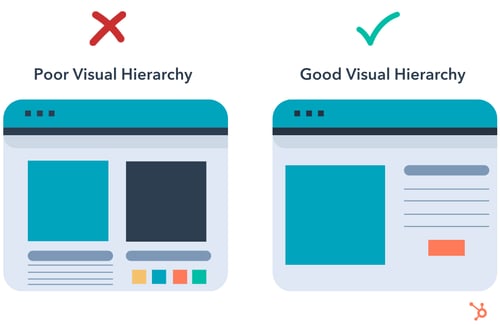
visual hierarchy example

On the left, there's a lot much going on. The two main elements are the same size, there are many different colors. It makes it hard to know where to look. Your eyes glaze over everything, creating some uneasiness and lack of direction.

On the right, your eye is automatically drawn to the main blue box on the left, then naturally goes to the elements on the right before landing on the orange call to action (CTA).

A poor visual hierarchy:

  • Confuses the user.
  • Makes it unclear where to look.
  • Creates a bland design.

Instead, create a visual structure that facilitates understanding and guides the user.

1. Consider reading patterns.

When designing, you want to note your target audience's natural eye patterns.

Across all cultures, we read top to bottom. However, there is some variation in how we read horizontally. Western cultures tend to read from left to right, while some Semitic and Indo-Aryan languages, such as Arabic, Hebrew, and Urdu are read right to left.

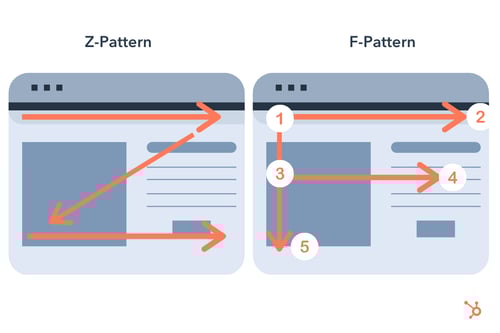
With this in mind, it impacts how we scan and understand designs. For instance, Western users usually follow an F or Z reading pattern.

Visual hierarchy reading patterns

Knowing this information will help you design projects that convert, particularly in landing pages.

2. Users notice bigger elements more easily.

Size plays an important role in visual hierarchy. It's one of the main ways to rank elements in a design.

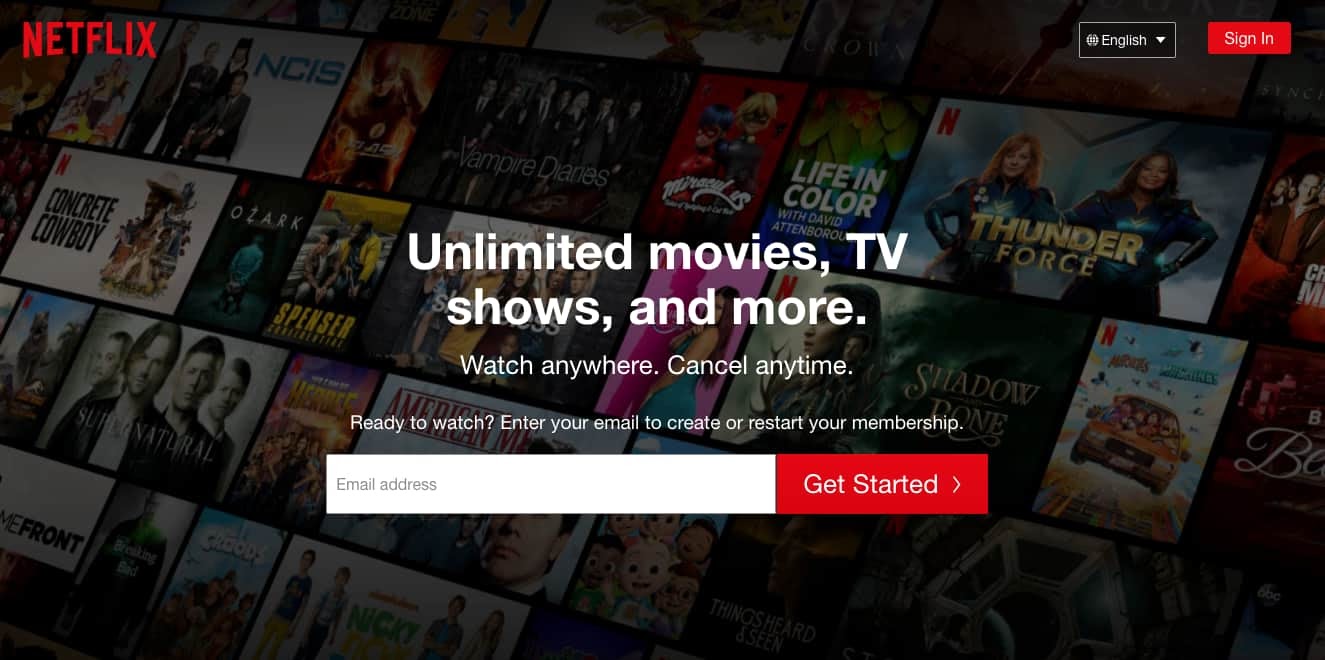
Take this example from Netflix.

visual hierarchy size example from Netflix

Image Source

The first thing you'll read when looking at this image is "Unlimited movies, TV shows, and more."

Then you'll read the next line, and then the next before you explore the other elements on the page.

Size signifies importance. The bigger an element is, the more attention it draws, and then more likely you'll look at it first.

As you design your webpage, consider what you want your audience to look at first and use that to guide your strategy.

3. Color and contrast draw the eye.

The second principle to keep in mind is color.

We know that color can evoke emotion and can have certain cultural and social connotations. Just look at logos by industry, and you'll notice a trend. Food brands tend to have reds and yellows, while financial institutions tend to be in blue.

In design, color is great at drawing attention.

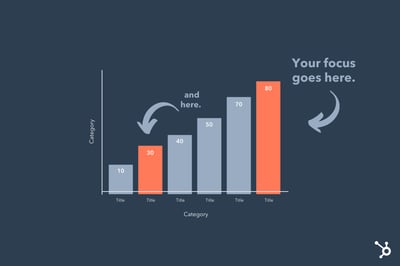
visual hierarchy color example

In the example above, you'll see that the elements that stand out the most are in orange. It's only after looking at them that you'll scan the other elements on the page.

On a website, you can use this to draw focus to your CTAs.

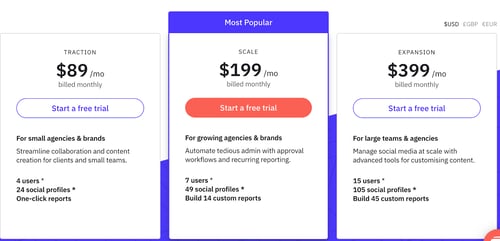
visual hierarchy color CTA example

In the example below, the CTA that stands out the most is in the middle. The brand likely wants users to choose this option. The other CTAs are still visible but muted compared to the orange.

To create the most visual impact with color, use it sparingly. That will make the elements stand out more, as seen in the above example.

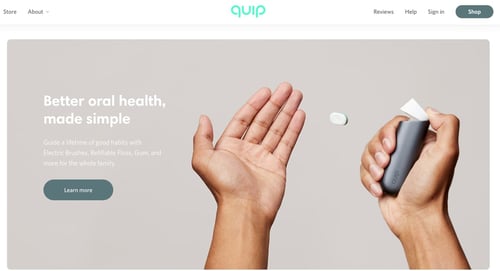
4. White space creates emphasis.

White space refers to the empty space within a design.

visual hierarchy white space example from Quip

Image Source

Sometimes, there is a desire to fill the space with as many elements as possible. However, this goes back to the concept of importance: If they all seem equally important, none of them are perceived as important.

This is why adding white space to your web design is key in pulling in your visitors.

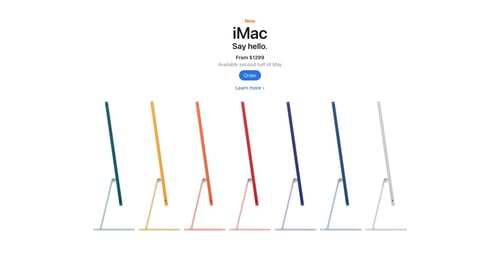
Apple is also well known for its use of white space.

visual hierarchy white space example from Apple

Image Source

The brand offers a simple user interface, which creates more emphasis on the elements on the page. Apple's use of white space also reflects a brand's identity.

5. Proximity and repetition create unity.

When you put several elements together, it tells the user the concepts are related.

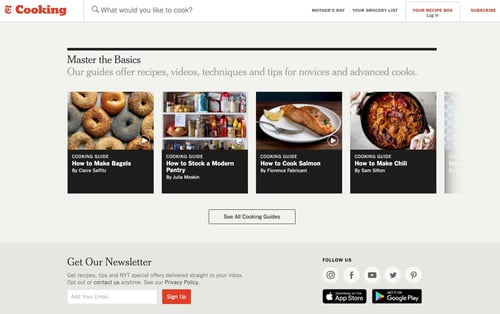
visual hierarchy proximity and repetition example from NYT Cooking

Image Source

This design offers many examples of proximity.

Take the elements under "Master The Basics." By having these boxes all grouped closely together, the visitor can understand they fall within the same category.

The same goes for the icons under "Follow Us." If the icons were all spread out randomly on the page, it would be difficult for users to understand their purpose.

If you're not sure how to group certain elements, you can employ certain UX research strategies, such as card sorting, to group elements based on your audience's expectations.

Examples of Good Visual Hierarchy

1. Visme.co

Visme example of good visual hierarchy

Image Source

Visme.co has a striking pop-up that encourages users to sign up for their newsletter.

The brand successfully uses white space, color, size, and contrast to make key elements stand out. You'll also notice that the elements are designed following the Z-pattern, making it more likely that users will convert.

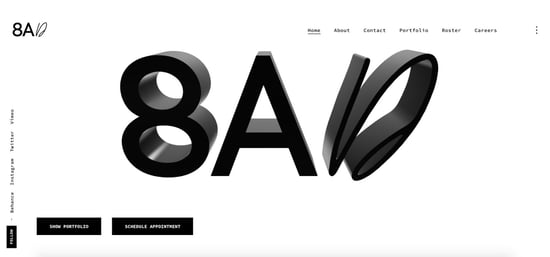
2. Studio 8AD

In designing their website, this brand leverages white space to focus users' attention on three key elements: the image and the two CTAs located on the bottom left.

Studio 8AD example of good visual hierarchy

Image Source

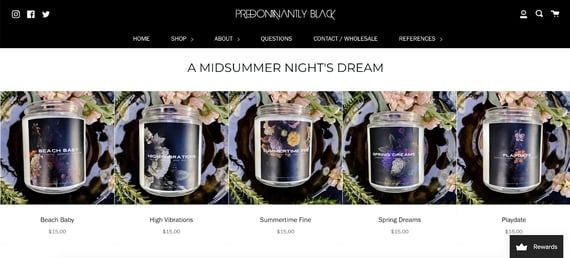
3. Predominantly Black

This brand offers a great example of proximity to create visual hierarchy. PredominantlyBlack.com example of good visual hierarchy

Image Source

By organizing all products under the main title and leaving little space in between, visitors quickly understand that these products fall within the same category.

Visual hierarchy is all about ranking your elements by order of importance. Once you narrow down what you want to focus on and consider your audience's needs, you can create designs that produce the desired impact.

content templates


A Non-Designer's Guide to Visual Hierarchy [Best Practices + Examples] was originally posted by Local Sign Company Irvine, Ca. https://goo.gl/4NmUQV https://goo.gl/bQ1zHR http://www.pearltrees.com/anaheimsigns

The Top 3 Buyer Persona Myths, and How They Hurt Your Marketing Efforts

Meet Elizabeth: a 27-year-old nurse who drives a Honda Civic, enjoys making TikToks, and spends most of her time with her beautiful 9-month-old baby.

Elizabeth desperately wants to make more time for herself, but struggles to find the balance between work and home responsibilities. She tries to give herself moments of self-care, but these moments are few and far between. Elizabeth needs a way to recharge, relax, and care for herself.

By this description, you know Elizabeth's age, profession, gender, desires, struggles, and pain points. All of this information helps you place her in a category in your mind — but none of that information tells you why she buys your product.

Buyer personas typically include descriptions like Elizabeth's, along with other demographics and personality information.

In the early days of customer segmentation, this would have been more than enough to inform marketing campaigns and product development. But with growing markets and increased consumer awareness, companies need to go beyond standard buyer personas to reach their audiences.

If we can apply what we've learned about how people make decisions, and how we as companies group people together, we'll be able to reach customers like Elizabeth with empathetic solutions that help her, rather than stereotypical cure-alls that are easily overlooked.

Here, let's dive into three myths of the buyer persona — and what you can do, instead. 

Download Our Free Buyer Persona Guide + Templates 

Standard Buyer Personas Aren't Enough

The first mention of audience segmentation was by Wendell Smith in 1956. Smith defined market segmentation as, "the adjustment of market offerings to consumer or user requirements."

Smith knew that creating segments would lead to higher consumer/user satisfaction. But Smith's idea of segmentation was years before we had a clear understanding of psychology, behavioral economics, unconscious bias, and deeper knowledge about how to provide consumer satisfaction.

Since Smith's discussion on segmentation, we've had major discoveries in the way people think, rationalize, and categorize others. Daniel Kahneman and Amos' Tversky's 1974 research paper A Judgement Under Uncertainty: Heuristics and Biases revealed the way people process information, and are influenced. And Clayton Christensen first shared his jobs-to-be-done theory in 2003.

Both of these studies on human behavior, purchasing, and thinking have made a lasting impact on the way we create ad copy, price products, introduce call-to-actions, and influence many other marketing activities — but have yet to influence our way of creating buyer personas.

Using the lessons from Kahneman, Tversky, and Christensen, there are three myths of the standard buyer persona that could be detrimental to your marketing and customer relations. Let's dive into those, now. 

Myth #1: Your Buyer Persona Needs a Name

We've all seen the old advice to give your persona a name that is memorable. Names like Sally Sales Girl and Mary the Marketer will bring your persona to life and create a more concrete persona in your mind and marketing — or so we're told.

Fact: Naming your buyer persona introduces bias.

The problem with giving your buyer personas a fake name is that you could introduce bias into your marketing.

Introducing naming bias in your marketing means that consciously you've determined a particular person as your best customer. That's good! The problem is you might also unintentionally exclude people who could be a good fit for your product but may not resemble the person you envisioned. And that's bad.

If Elizabeth is your best fit customer, then you're more likely to seek out customers who meet your unconscious idea of who Elizabeth is, rather than seek out customers who actually use your product or service.

Studies show that when someone has an easier-to-pronounce name, they are judged more favorably than someone with a harder-to-pronounce name.  And while most studies on unconscious name bias focus on resumes and job applications, we can apply those lessons to buyer personas, as well.

Ease of pronunciation varies depending on where you live or what language you speak. But remember, a name that sounds familiar to you might not sound familiar to your audience.

Solution: Name personas based on segmentation data.

When we create buyer personas, we're grouping a large number of people into one category. Instead of naming your personas after a person, try naming them after the traits they share. 

Do the majority of these best-fit customers enjoy soccer? Great! Name them 'The Soccer Players.' Or maybe they're using your product to free-up time in their scheduling processes. Wonderful — let's call them the Free Timers.

Naming this group of people according to their segment, or their need, helps to eliminate any bias that could exist.

This helps focus buyer personas on the category of people you're serving, not just one pretend person.

Myth Two: Your Buyer Persona Needs a Photo to Make Them More Relatable and Realistic

Most buyer personas have a stock photo on the first page. I've even heard of companies using cardboard cutouts of buyer personas in their office.

While I admire the effort to bring to life a category of people, assigning one picture or person to represent a large group of people lays a foundation for bias in your marketing.

Fact: Your buyer persona doesn't need a face to be realistic.

The buyer persona's picture most likely represents who you believe your ideal customer looks like, but it's not likely a good determination of your entire audience. If you've given your Elizabeth persona a picture of a middle-aged white female, and 100% of your audience isn't middle-aged, white, and female, you've inaccurately portrayed your audience. 

When we give our personas a stock photo it could introduce racial, gender, or beauty bias. These kinds of biases are so ingrained in our minds that we follow bias patterns even if we don't logically believe the bias to be true.

This phenomenon is known as the bias blind spot. Studies show that 95% of cognition happens below the threshold of conscious thought. Meaning, you may not be racist, misogynistic, or ageist, but there are patterns ingrained in your mind that influence your decision-making whether you realize it or not.

A Google Image search when searching for 'Buyer Personas' blatantly shows the issue with assigning pictures to buyer personas. There's not a lot of diversity in these images, and that lack of diversity hurts a company's growth.

A 2019 survey by the Female Quotient, Ipsos, and Google found "64% of people surveyed said they took some sort of action after seeing an ad that they considered to be diverse or inclusive. Those numbers increase for Latinx+ (85%), Black (79%), Asian/Pacific Islander (79%), LGBTQ (85%), millennial (77%), and teen (76%) consumers."

Solution: Forget the photo.

Leave the stock photo out of your buyer personas. This isn't going to harm or hurt any of your marketing efforts and functions. It will be a step toward eliminating unconscious bias. Instead of using a stock photo, get straight to the crucial information.

You may have the urge to add a cartoon character, but that doesn't alleviate the problem. Skip the pictures altogether, and get straight to the information that will help you resonate, reach, and sell to your customers.

This is the first step in acknowledging that your customers look like a wide variety of races, genders, shapes, and sizes.

When your marketing better represents your audience, your product, messaging, and communications will resonate more clearly.

Myth Three: Buyer Personas Should Describe Character Traits

Most B2B buyer personas are created to inform marketing teams and executives on who their customers are and keep promotional efforts consistent, but limiting buyer personas to only character traits, demographics, and socio-graphic information limits your audience and ability to reach the right people in the right way.

Fact: Buyer personas should tell you why people buy a product or service.

The best way to resonate with your audience is to understand them and empathize with their pain points. Understanding your audience begins with how you build and segment your buyer personas.

If you're segmenting your audience based on attributes such as brands they like, habits they have, or job titles, then you are grouping people together based on fleeting attributes. 

For instance, say our persona example, Elizabeth, changes jobs, moves to a new city, or changes any trait about her life. As a result, you might unnecessarily shift Elizabeth out of your customer demographic. She loves your product,  and would still buy your product, but now you're no longer invested in marketing to her segment.

Solution: Segment according to the job-to-be-done.

Instead of building your personas around demographics and character traits, base your personas on what your customers have hired your product/service to do for them.

For example, Elizabeth is a mom, loves long baths, and buys Suave deodorant. The reason she buys Suave has nothing to do with her age, job title, or love of baths. She buys Suave because she's used it for years, loves the smell, and the way it makes her feel. She is 'hiring' Suave deodorant to keep her feeling and smelling great.

Clayton Christensen was the first person to discuss the concept of people hiring products and services for a particular job. 

Combining the emotional psychographic information of buyer personas with a jobs-to-be-done approach will help to inform your marketing efforts and open up your market in a way that allows you to serve all kinds of people. According to Christensen, "Companies that develop offerings centered on jobs, instead of customer attributes and buying behaviors, can excel in the market and avoid disruption."

The Best Buyer Personas Will be the Tool that Grows Your Business

It's time buyer personas caught up with our knowledge of how people think, behave, and purchase. When undertaking your next buyer persona project, ditch the fake name and picture, and focus on what your customers hire your product to do for them.

Your marketing deliverables will be more inclusive to a wider audience, while still being narrowly focused and empathetic. Creating better buyer personas will lay a foundation of better marketing practices that resonates with your audience and grows your business.

Blog - Buyer Persona Template [Updated]


The Top 3 Buyer Persona Myths, and How They Hurt Your Marketing Efforts was originally posted by Local Sign Company Irvine, Ca. https://goo.gl/4NmUQV https://goo.gl/bQ1zHR http://www.pearltrees.com/anaheimsigns

How to Get Started with Agile Marketing [+ Examples]

In 2019, DoorDash was losing money on the average order and reported an operating loss of $616 million on $885 million in revenue. By the end of 2020, their revenue jumped to $2.89 billion — a 226% gain.

Why the sudden success?

For one, the global pandemic spiked the demand for food delivery. But DoorDash also responded to customers' needs right from the start. They delivered COVID test kits and launched the #OpenforDelivery campaign to support restaurants by the end of March, made it easier to filter customer ratings in April, and released a Gifting feature to send loved ones food over the holidays.

Simply put, they figured out what customers desired and rapidly delivered.

Now more than ever, customers expect brands to understand and respond to their needs. In a survey of global consumers, 58% of people remembered a brand that quickly pivoted and 82% ended up doing more business with that company as a result.

→ Download Now: Free Marketing Plan Template

But a lightning-fast response only happens if your team can handle abrupt change.

Agile marketing is a strategic approach that focuses on quickly executing projects by working in short sprints. It makes room for marketers to shift their focus, adapt to customer needs, and change priorities alongside expectations.

With Agile, what once took months to deliver can take weeks.

Adopting this approach takes work, but this post shares how to get started with Agile marketing by explaining the process, sharing examples, and showing you how to automate your efforts.

What is Agile Marketing?

Agile marketing is a strategic marketing approach that prioritizes creating high-value deliverables, working in short, intense bursts to achieve goals, and rapidly iterating.

By the end of each burst — often called a 'sprint' or an 'iteration' — teams complete their outlined deliverables and begin testing so they know how to improve during the next iteration. Data collection and analytics allow teams to incrementally refine and improve the results over time.

Agile marketing embraces failure. It also requires teams to learn from their mistakes and make adjustments to continuously get better. This mindset isn't always easy for teams to instantly adopt. That's why it's important to understand the core values outlined in the Agile Marketing Manifesto before switching to this approach.

  1. Validated learning over opinions and conventions.
  2. Customer-focused collaboration over silos and hierarchy.
  3. Adaptive and iterative campaigns over Big-Bang campaigns.
  4. The process of customer discovery over static prediction.
  5. Responding to change over following a plan.
  6. Many small experiments over a few large bets.

When these values play out in real-world projects, the impact can be massive.

Research by McKinsey found that digital marketing organizations using Agile have seen a 20-40% increase in revenue. Agile has also cut down the time it takes for companies to turn an idea into an offer — from multiple months or weeks to less than two weeks.

You may think this acceleration leads to sloppy deliverables and disappointment. It's the opposite. Agile marketing can improve performance and quality by creating space for clear goals, frequent feedback, continual testing and iteration, on-time deliverables, and inevitable impact.

To get those results, you have to dive into the nitty-gritty details.

Agile Marketing Process

No marketing team follows the exact same Agile approach. Some stick to the traditional frameworks while others pick and choose which parts work for them to create a hybrid method.

The method you choose can depend on the goals you want to accomplish. While its roots are in web and software development, 77% of companies using Agile rely on it for creative services, content creation, and operations.

The main methodologies for Agile marketing teams are Scrum and Kanban.

Scrum

The Scrum framework revolves around sprints. Each sprint lasts for two to six weeks and is organized by the team doing the work. Depending on the size of your project, you may need to break it up into multiple smaller sprints to tackle it bit by bit.

The goal of each sprint is to rapidly deliver small projects that can be combined into a larger project over time. Once a sprint is set, the team shouldn't change its goals or reprioritize until the sprint is complete.

To make sure your sprints stay on track, you need to establish a few key roles and meetings.

Roles

1. Scrum Master
This person is responsible for keeping the team on task. They know the Scrum framework and use it to facilitate meetings, remove roadblocks, help team members use the framework, and make sure everyone on the Scrum team is collaborating and communicating.


2. Product Owner
This person understands the reason for the work and makes sure the process is being done at the right time. They understand the customers better than anyone else, and they collaborate with the stakeholders and team to ensure the deliverables provide value to the business and to customers.


3. Developer
Everyone else on the team falls under the Developer role. Ideally, the people in this role are cross-functional and contribute a unique set of skills needed to accomplish the sprint. You want to choose at least one person from each department that your project touches.

Meeting

1. Planning

A planning meeting kicks off every sprint to decide what the team can achieve. Everyone looks at the priorities the Product Owner has put together and agrees on which to include in the sprint.

The project(s) are divided into tasks, given deadlines, and assigned to individual team members so people know exactly what to work on when they leave the meeting. These meetings take time, so dedicate at least one hour per week of the total sprint time (i.e., a three-hour meeting for a three-week sprint).

At your first planning meeting, emphasize that Agile is a new way of working and the typical rules don't apply. Reiterate the need to focus on the customer above all else and highlight the need for speed, collaboration, data, and accountability.

2. Stand-up

The daily stand-up gets your team together for a brief (15 minutes or less) check-in. The aim is to make it very clear where everyone is on progress, roadblocks, and tasks. Everyone on the team answers:

  • What they accomplished yesterday
  • What they plan to do today
  • Any blocks in their way

3. Review

The review is the time to show off what your team has achieved during the sprint. It's open to anyone interested in the results and is a good time to show off campaign materials, demo content, or share early testing data.

Make note of feedback and add or adjust your priority list as needed, but don't get wrapped up in additional approvals or new ideas. The point is to share insight into what your team is working on and highlight the impact.

4. Retrospective

Headed by the Scrum Master, this meeting is a chance for the Scrum team to reflect on work from the latest sprint. Everyone shares what went well, what didn't, what can be improved, and lessons learned. Make sure people don't point fingers in the meetings, and assign action items as a way to continually improve before the next retrospective.

Kanban

If your marketing team is full of visual learners or does work that won't fit well into a predetermined sprint timeline, Kanban may be the Agile framework for you.

Kanban is made up of three main components: visualizing workflow, setting WIP limits, and meeting cadences.

1. Visualizing workflow

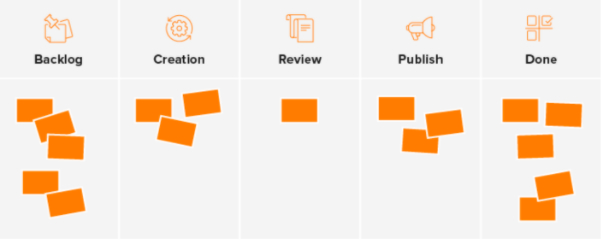
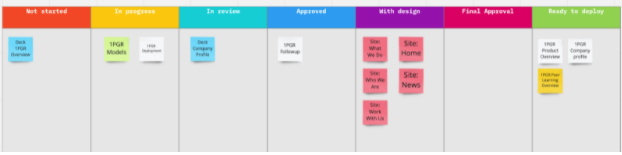
Unlike Scrum, Kanban uses visual cues to track progress. A Kanban board is how people track the progress of user stories (i.e., tasks) to be accomplished. The board is divided into columns, each their own stage in a workflow.

The simplest boards have To-Do, Doing, and Done columns, but the more complex your workflow, the more columns you may need. (One of my favorite tools for building boards and tracking progress is Miro).

The Kanban Methodology explainedSource

Each card on the board represents a task to be completed. For example, if you're planning a social calendar for the upcoming quarter, you would list each task that needs to be accomplished on its own card (i.e., choose topics, assign copy, write copy, schedule posts, and so on).

As the task is being completed, you move the card into the corresponding column. A quick glance at the board and everyone on your team knows how the project is progressing and what still needs to be done.

2. Setting WIP limits

When people have too much on their plates, nothing gets accomplished. This is why Kanban uses WIP limits — boundaries that outline how people will work on the tasks within each column on the Kanban board.

Placing limits on how many tasks can be in one column or how much time people have to accomplish a task. Let's say you want your social coordinator to schedule the posts for each month before they begin reviewing posts for the following month. That rule means they can't move the "Review posts" task into the "Doing" column before the "Schedule posts" are in the "Done" column.

Setting ground rules helps people focus on finishing a specific goal or task before starting another one. In a world of context switching and mental burnout, limitations are a way to achieve your goals without juggling too many tasks at once.

3. Meeting cadences

Similar to Scrum, Kanban is designed to help teams work better and accomplish their goals. It incorporates planning meetings, daily stand-ups, and retrospectives to make sure a project is on task and continually refined.

The one meeting that's different from Scrum is the delivery meeting, a time to plan when to release the content or project. Since Kanban works on longer timelines than Scrum, the delivery meeting is the place to bring in other groups that may need to help get the work out.

While a small team may own a project, a successful Agile marketing strategy relies on everyone. It's helpful to bring in outside team members to collaborate on timelines, share feedback, and assist in launching the work your team accomplishes.

Agile Marketing Examples

Most Agile marketing efforts break down into a few simple steps.

  1. The team makes a list of priority projects to work on.
  2. The steps to tackle a project are planned out in a sprint.
  3. The team checks in every day in a stand-up meeting.
  4. Everyone accomplishes their specific tasks and testing begins.
  5. Data from the testing is collected and used to improve the project.

Let's look at how this process can play out in real-world Agile marketing examples.

1. Scrum Example

The United Kingdom-based Santander bank struggled to produce efficient marketing campaigns due to long production lead times and expensive creative costs. In an effort to increase efficiency, they adopted an Agile marketing method for their "Unlock you London" campaign. The bank's goal was to convince customers to download and use their mobile app.

They "put everyone together around shared objectives, shared KPIs, and a budget in the middle of the table" and agreed to tweak the campaign on a weekly basis. Instead of dedicating a massive spend working with a creative agency that would take months to develop everything needed for the campaign, they began spending a few thousand pounds at a time. This swap allowed them to make changes quickly and test an idea on customers.

If something resonated, they'd keep it. If not, they'd make a small change and test again.

The new Agile approach produced incredible results. By the end of the campaign, the bank saw a 12% increase in loyalty, a 10% increase in account satisfaction, the highest Net Promoter Score in 17 years, and the highest positive sentiment (90%) among customers.

2. Kanban Method Example

A technology startup recently revamped its brand and wants to update essential marketing materials. The creative team puts together a small Agile team to revamp the website and create new marketing materials.

They include a designer, copywriter, sales rep, creative director, product lead, content coordinator, and a member of the legal team. The team chooses tasks to be completed, decides on a six-week timeline, and lays out the work in a Kanban board.

An example of a Kanban boardSource

The team lays out the individual tasks associated with each task in a project management tool and tracks the progress of each project in a Kanban board.

Six weeks later, the Agile team has designed five new web pages, six one-pagers, and two decks. While more complex projects like the website will need another sprint or two in order to build out simpler materials — like the one-pagers — for the sales team to use. What once took an entire quarter to complete has been condensed into several weeks.

Agile Marketing Automation

Having the right type of technology for Agile marketing automation is crucial for collecting data and conducting analytics.

A well-designed CRM platform can help you collect, organize, test, and manage data about your customers and sprint iterations. It can automate campaign delivery and send messages to customers, feeding tracking and performance metrics back to you.

Above all, automation improves your ability to react to customer requests. In a survey of C-suite executives, 41% said they hoped to implement more digital technology in order to respond quickly to customer needs. So if you need to convince your boss that automation technology is worth the investment, explain how it's essential to collect data that allows you to share the most relevant messages and offers.

Let's say you decide to turn an idea for an email campaign into reality using your newly established Agile marketing team. You gather a copywriter, designer, analyst, developer, operations lead, and email lead. Before starting the sprint, you'll want to make sure you have the following tools to automate your efforts.

  • A collaboration tool
  • A tool to review copy, design, and development
  • A way to collect feedback
  • An email marketing tool
  • A way to gather data and analyze it

Look into the following Agile marketing automation tools to see which one works for your team. Evaluate the features, user interface, customer support, integrations, resources, reviews, and pricing.

Once you have the technology you need to automate your Agile efforts, you can focus on the tasks at hand and make sure every sprint or board stays on track.

Switching from a traditional project management approach to Agile marketing may seem intimidating. But the switch will be simple if you keep a few rules in mind. Start with what you want to accomplish (your goals), get buy-in from the senior marketing leaders who can advocate for you with the rest of the team, bring together a small group of people, and explain this new way of working to them. Finally, set up the technology you need to collaborate, collect feedback, and analyze data.

Soon, you'll be finished with your first project — and gaining momentum that lets your Agile marketing efforts stay focused, grow faster, and get better results than ever before.

Marketing Plan Template


How to Get Started with Agile Marketing [+ Examples] was originally posted by Local Sign Company Irvine, Ca. https://goo.gl/4NmUQV https://goo.gl/bQ1zHR http://www.pearltrees.com/anaheimsigns

7 Features You Need in a Bulk Email Service [+ Top 5 Best Providers]

When it comes to email marketing, there's no denying how powerful this channel can be.

According to a 2019 Campaign Monitor report, for every $1 you spend, you earn $42 – an astonishing return on investment.

→ Download Now: The Beginner's Guide to Email Marketing [Free Ebook]

If you're scaling a business, you may have relied on personal or business email providers like Gmail and Outlook in the past. However, they're not equipped to manage large volumes of email and provide the data needed to track performance.

That's where a bulk email service can come in.

Discover the key features you should find in a bulk email service and the top providers in the market.

A mass email service helps you reach a large audience and nurture them one email at a time. In addition to getting direct access to your customer base, you can also track how your emails perform and test various methods to increase clicks and conversions.

While traditional advertising methods, such as print ads and direct mail, can have high return on investment (ROI), it can be difficult to understand how consumers are interacting with your materials. With a bulk email service, you can find out what attracts consumers and what elements lead to higher conversions.

Furthermore, many bulk email services offer automation tools – think workflows and sequences – to help you move leads down the funnel and retain your current clients.

Using a personal or business email can work in the first few months of starting a business but will quickly become ineffective as you grow.

Reasons to Send Bulk Emails

Not sure if it's the right time to try a bulk email service? The first question you should ask is, "Is our brand investing in email marketing this quarter/year?"

If the answer is yes, then that's your sign to invest in an email service.

Here are specific examples of when you would send out a mass email to your subscribers:

  • Sales promotion – Say you want to promote discounts on certain products or services, sending a mass email to your subscribers is a great way to generate sales.
  • Newsletter – Do you want to send out exclusive content to your subscribers? Then a newsletter is the way to go.
  • Product updates – A great way to announce a new product feature or line is via email. You can include previews to build some excitement and include calls-to-action (CTA) for conversions.
  • Announcements – Are you updating your hours, prices, or services? Or perhaps there's been a change in your policy. Notifying your subscribers in an email blast is an effective way to spread the news.

With every email you send to subscribers, you'll want to keep in mind your goals, your audience, the time and day, personalization, and compliance with data protection laws.

You want to invest in an email marketing service, but you're not sure what to look for - here's your guide.

These are the key features you should look for in a bulk email service. Some of these features will only be available in a premium package. However, others will be included in the standard or free versions.

1. User Behavior Tracking

The number one tool you'll need in any bulk email service you select is reporting capabilities. Because what's the point of investing your time in designing and sending emails if you can't see how they performed?

You should be able to track key email metrics, such as:

  • Open rate
  • Unique clicks
  • Click-to-open rate (CTOR)
  • Clickthrough rate (CTR)
  • Unsubscribe rate
  • List growth rate
  • Bounce rate

Email providers with advanced reporting features may also allow you to track revenue per subscriber and revenue per email.

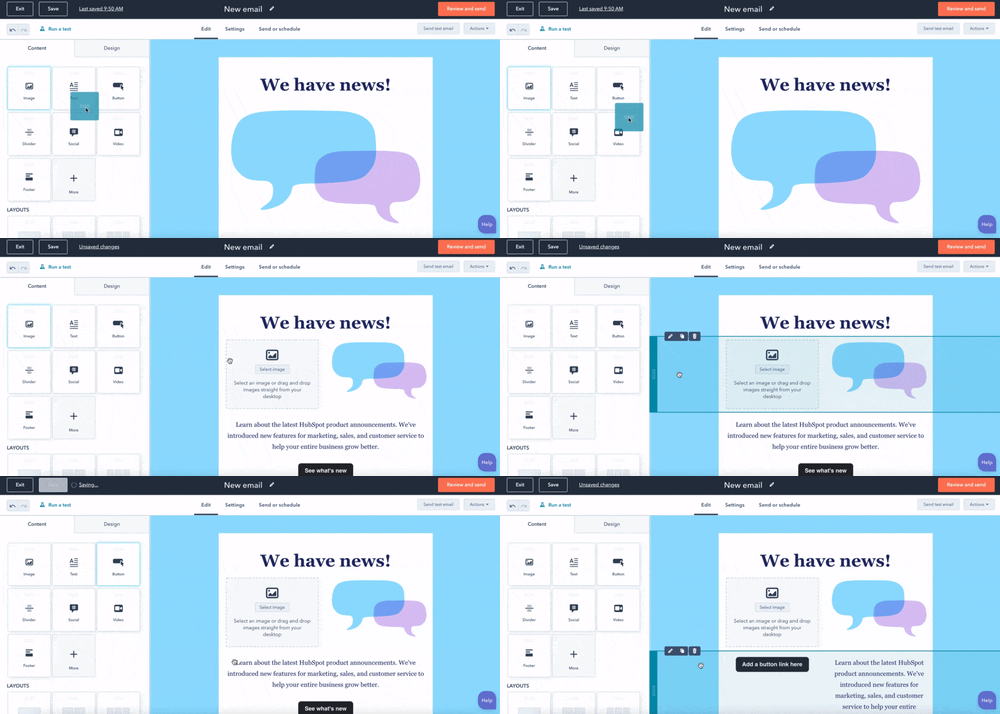
2. Drag-and-Drop

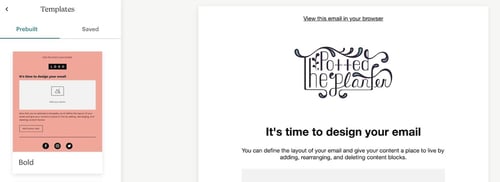
email drag and drop tool

A drag-and-drop tool makes designing your email easy. This intuitive feature allows you to select an element from the sidebar, like an image, quote, or button, and drag it to a section in your email.

This will save you time as you determine the best flow for your email and move things around.

3. Email Segmentation & Personalization

Segmenting your emails ensures that your emails are reaching the right people at the right time.

You should look for a bulk email service that allows you to segment your subscriber list based on:

  • Location
  • Actions taken in the email
  • Purchase history
  • Type of subscriber (ex: prospect vs current customer)

When you segment your list, you can get higher engagement rates, as the content will be more relevant to your recipients.

4. Split Testing

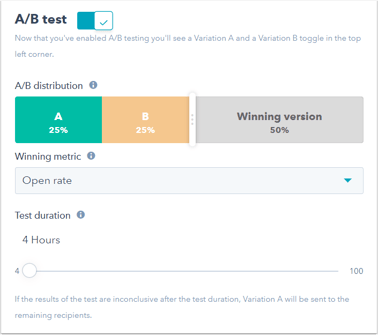
Split testing, also known as A/B testing, is a great way to understand what resonates with your audience.

A/B test example

Image Source

This feature is particularly helpful if you are struggling to generate high open rates and get subscribers to convert.

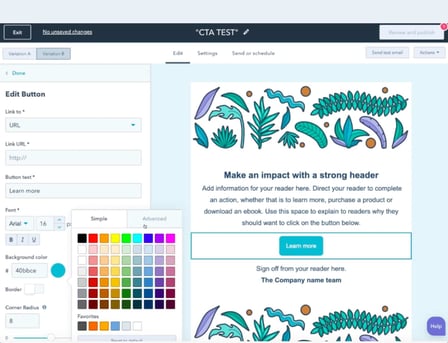
By testing out different subject lines and elements within the body of your email, you can determine what works best.

5. Automation

When you're scaling your email list, the name of the game is automation.

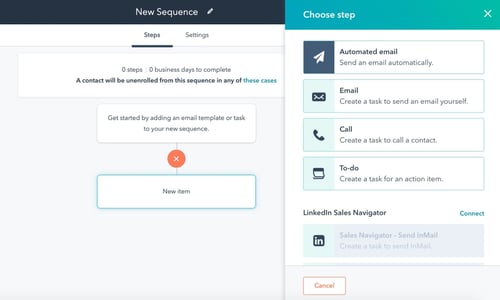
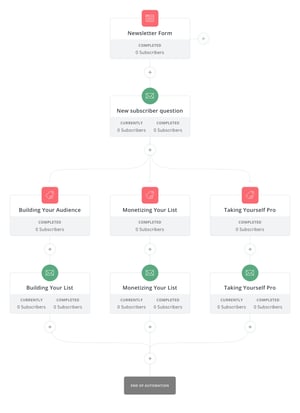
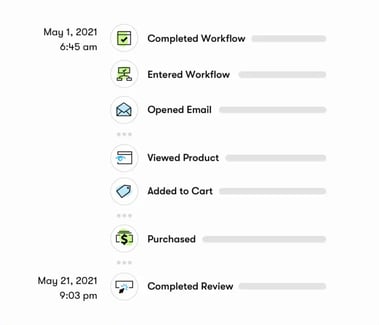
Say you have a content offer and you want to send a sequence of emails to leads after they've downloaded the offer. With an automation tool, you can pre-select which emails will go out, in what order, and how many days in each email.

email automation example

Once you complete the set-up, the automation does all the work for you – nurturing your subscribers and moving them down the buyer's journey.

This hands-off approach allows you to focus on strategy instead of the tedious work of sending out emails. It can also become impossible to keep track of each subscriber's stage in the journey and send the appropriate email.

With automation, you can take the guesswork out of the process.

6. Design Templates

If you're like me, designing isn't your forte. So, when designing an email, you'll take all the help you can get.

design template example from HubSpot

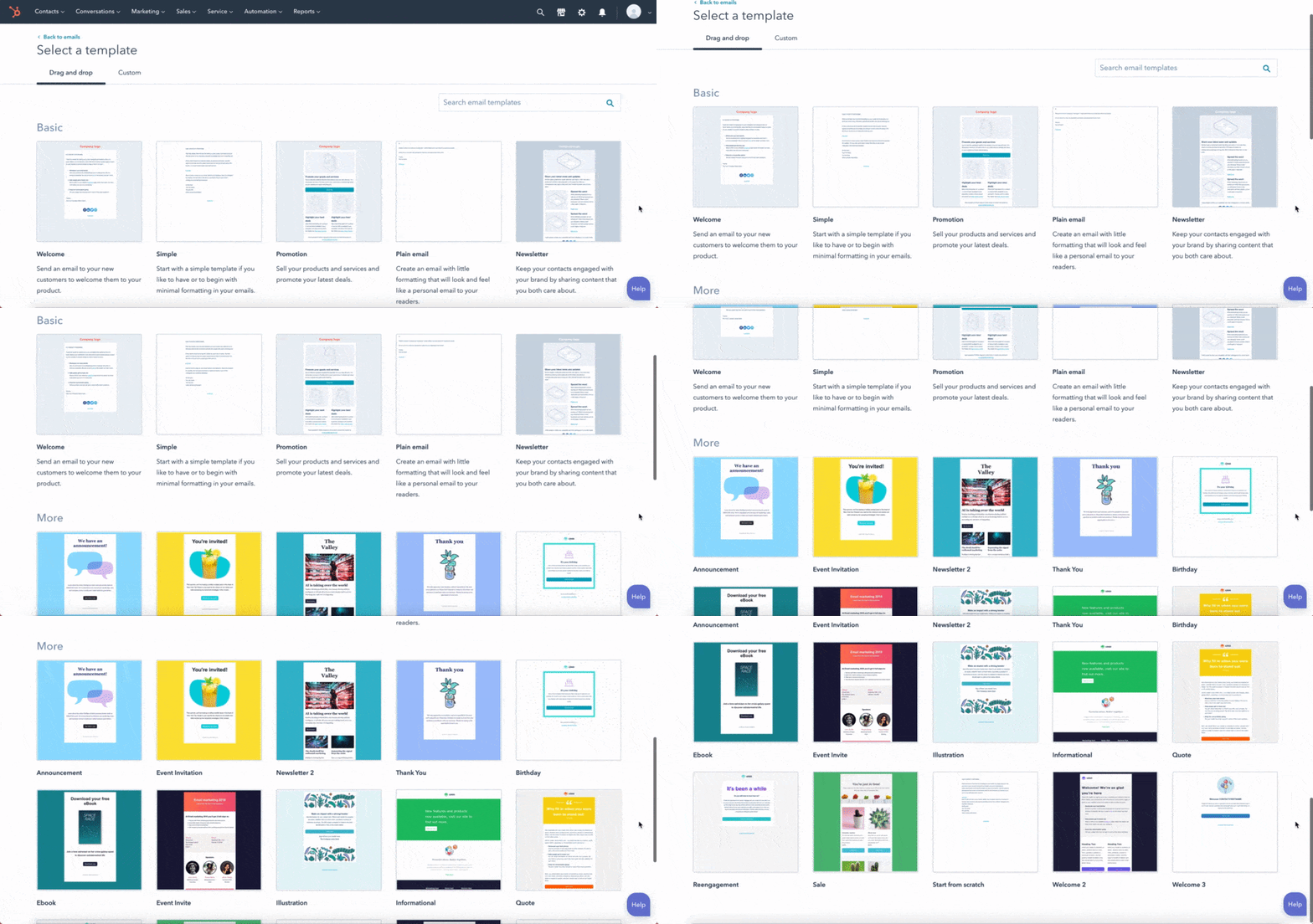
Having a design template based on the type of email you want to send can not only save you time but ensure you're following email best practices. This is particularly helpful if you have limited experience designing emails and are just starting out.

What's great about having a template is that it's a foundation. You can customize it to fit your needs, but it provides a blueprint from which to work.

7. High Email Delivery Rates

Imagine you work so hard on an email campaign, and it never reaches your subscribers' inboxes. Frustrating right?

That's why it's important to verify your provider's email delivery rates. You'll want to select a service with high email delivery rates, as close to 100% as possible.

Best Bulk Email Services

1. HubSpot's Email Marketing Tool

With HubSpot, you can create, customize and optimize your emails without any coding or design experience.

HubSpot bulk email service

Image Source

You can send up to 2,000 emails a month, and that doesn't include test emails to check functionality. The platform offers a user-friendly interface and tools like a drag-and-drop tool to easily design your email, tokens to personalize every email, and an a/b testing feature.

In addition, you can create custom reports based on the data you want to collect and analyze.

The best part? It's free.

2. ConvertKit

As their name suggests, the platform is designed to help you earn more conversions and generate more revenue.

ConvertKit is known for its advanced automation tools, including custom email funnels, smart filters, and link triggers.

Convertkit bulk email service

Image Source

Furthermore, the platform has a 98% delivery rate, ensuring that your emails will always reach your subscribers. In addition, the average open rate for ConvertKit emails is an astonishing 30%, according to their website.

ConvertKit offers a free version of its platform all the way up to custom pricing for enterprise-level businesses with over 365,000 subscribers.

3. Mailchimp

Mailchimp is a great email service for those who are just starting out in email marketing.

Mailchimp bulk email service

Image Source

The platform offers a user-friendly interface and over 100 templates to choose from.

With their free plan, you can send up to 10,000 emails a month to 2,000 contacts – a great option for small to midsize businesses. As your business grows, you can scale to the premium version, which includes unlimited audiences, multivariate testing, and advanced segmentation with up to 200,000 contacts.

4. Drip

If you have an ecommerce business, consider Drip for your email marketing.

The platform offers pre-built email templates that you can customize to your liking and a user-friendly workflow builder for automation.

In addition, you can schedule automation based on actions your subscribers take. For instance, viewing a product, abandoning their cart, and making a purchase.

Drip bulk email service

Image Source

With Drip, you can easily integrate your online store (like Shopify, Magento, and WooCommerce) to make data gathering easier and help you design more targeted emails.

Pricing starts at $19 and goes up based on how many subscribers you have.

5. Insycle

Insycle doesn't fall under the email provider list. However, this software does work in tandem with providers like HubSpot and Mailchimp to keep your contact list clean.

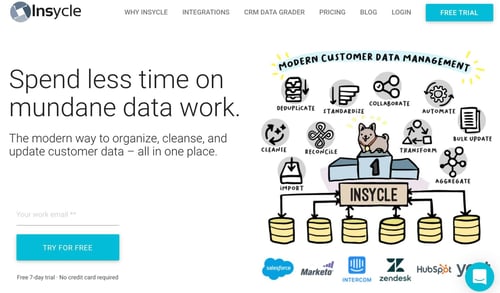
Insycle bulk email service

One of the downsides of having a subscriber list is the potential for duplicate contacts. This can not only impact your metrics (and consequently your data) but also make it difficult to tailor your emails.

Insycle allows you to clean your contacts in bulk, merge duplicate ones, and avoid overwriting data.

Knowing what to look for in an email service is half the battle. Now that you have a list of key features and few tools to choose from, you can find a platform that helps you grow your email list and generate revenue.

New Call-to-action


7 Features You Need in a Bulk Email Service [+ Top 5 Best Providers] was originally posted by Local Sign Company Irvine, Ca. https://goo.gl/4NmUQV https://goo.gl/bQ1zHR http://www.pearltrees.com/anaheimsigns

Why Blog? The Benefits of Blogging for Business and Marketing

With almost 4 billion people worldwide currently connected to the internet, there has never been a better time for businesses to include blogging in their marketing strategy.

Not only does blogging drive website traffic and promote your products and services, but it also helps you build trust with your potential customers.

In this post, we’re going to highlight the many benefits of blogging for business and how you can get started with creating relevant content that drives inbound links and traffic to your site.

Let’s get started.

→ Download Now: 6 Free Blog Post Templates

The Benefits of Blogging for Business

One question many people ask after starting a business is whether blogging is worth it in 2021.

Short answer: Yes! And here the reasons why we say so.

1. It helps drive traffic to your website.

Raise your hand if you want more website visitors. Yeah, me too.

Now think about the ways people find your website:

  • They could type your name right into their browser, but that's for an audience you already have. They know who you are, you're on their radar, and that doesn't help you get more traffic on top of what you're already getting.
  • You could pay for traffic by buying an email list (don't you dare!), blasting them, and hoping some people open and click through on the emails. But that's expensive and, you know, illegal.
  • You could pay for traffic by placing tons of paid ads, which isn't illegal but still quite expensive. And the second you run out of money, your traffic stops coming, too.

So, how can you attract new traffic or readers to your site? You can through blogging and optimizing your site for search engines.

Here's how it works.

Think about how many pages there are on your website. Probably not a ton, right? And think about how often you update those pages. Probably not that often, right?

Well, blogging is a great way to solve both of those problems.

Every time you create and publish a blog post, it's one more indexed page on your website, which means one more opportunity for you to show up on the search engine results page (SERP) and drive traffic to your website in organic search.

We'll get into more of the benefits of blogging on your SEO a bit later, but it's also one more cue to Google and other search engines that your website is active, and they should be checking in frequently to see what new content to surface.

2. You can repurpose blog content for social media.

Blogging for your business also helps you get discovered via social media. Every time you create a new article, you're creating content that people can share on social networks — Twitter, LinkedIn, Facebook, Pinterest — which helps expose your business to a new audience that may not know you yet.

Blog content also helps keep your social media presence going.

Instead of asking your social media manager always to create brand new content for social media (or creating that content yourself), your blog can serve as that repository of content.

You're strengthening your social reach with blog content and driving new website visitors to your blog via your social channels. Quite a symbiotic relationship, I must say.

blogging-inbound-image

3. It helps convert traffic into leads.

Now that you have some traffic coming to your site through your blog, you have an opportunity to convert that website traffic into leads.

Like every blog post you write is another indexed page, each post is a new opportunity to generate new leads.

The way this works is straightforward: Just add a lead-generating call-to-action to every blog post.

Often, these calls-to-action lead to things like free ebooks, whitepapers, fact sheets, webinars, trials, or basically, any content asset for which someone would be willing to exchange their information.

To be super clear for anyone unfamiliar with how traffic-to-lead conversions work, it's as simple as this:

  • Visitor comes to website
  • Visitor sees call-to-action for a free offer
  • Visitor clicks call-to-action and gets to a landing page, which contains a form for them to fill in with their information
  • Visitor fills out the form, submits information, and receives the free offer

If you scroll down in this blog post, you'll see a call-to-action button.

In fact, 99.9% of the blog posts we publish have call-to-action buttons, and yours should, too. That is how you turn your website traffic into leads for your sales team.

Inbound Marketing - Blogging Strategy Note: Not all blog readers will become leads, and that's okay. No one converts 100% of the people who read their blog into leads. Just get blogging, put calls-to-action on every blog post, set a visitor-to-lead conversion rate benchmark for yourself, and strive to improve the benchmark each month.

4. It drives long-term results.

The best business blogs answer common questions their readers and customers have.

If you consistently create valuable content or articles for your target audience, it'll establish you as an industry leader or authority in their eyes.

Can you imagine the impact of sending an educational blog post you wrote to clear things up for a confused customer? Or how many more deals a salesperson could close if their leads discovered blog content written by their salesperson?

"Establishing authority" is not a vanity metric as concrete as traffic and leads, but it's pretty powerful stuff. You can use it to measure sales enablement.

Because at the end of the day, that's what many of your blog posts are.

Think about it:

  • Suppose prospects find answers to their everyday questions via blog posts written by people at your company. In that case, they're much more likely to come into the sales funnel trusting what you have to say because you've helped them in the past — even before they were interested in purchasing anything from you.
  • Prospects that have been reading your blog posts will typically enter the sales funnel with more knowledge of your products and services, your place in the market, and your industry. That makes for a far more productive sales conversation than one held between two relative strangers.
  • Salespeople who encounter specific questions that require in-depth explanation or a documented answer can pull from an archive of blog posts. Not only do these articles help move the sales process along faster than if a sales rep had to create the assets from scratch, but they position the salesperson as a helpful resource to their prospect — thus helping to build trust.

5. Blogging helps with link building.

Inbound links or backlinks are among the 200 factors the Google algorithm considers when ranking a site on its search engine result page. Many experts and small business owners also believe backlinks to be the 3rd most crucial factor in search engine optimization.

Although generating inbound links is essential, 41% of SEO experts say link building is the most challenging part of search optimization.

When you create articles that are not only valuable to your potential customers but also to other companies that your audience sees as industry leaders, it’d be easier to gain relevant links.

Links for authoritative websites serve as a vote of confidence or recommendation from other websites. And it signals to Google that you’re trustworthy and an expert in your industry.

Another benefit of backlinks is that they help you build your domain authority, which helps improve your overall discoverability in search engines.

6. It drives long-term results.

It would be fantastic if you could take a trip to Hawaii, go to the gym, and sleep for as many hours as you want, and still be able to drive traffic to your site.

Good news, though! That's what blogging does — primarily through search engines.

Here's what I mean:

Imagine you sit down for an hour on Sunday to write and publish a blog post. Let’s say that blog post gets you 100 views and ten leads on Monday. You get another 50 views and five leads on Tuesday as a few more people find it on social media, and some of your subscribers get caught up on their email and RSS. But after a couple of days, most of the fanfare from that post dies down, and you've netted 150 views and 15 leads.

It's not over.

Since that post is now ranking, it means that for days, weeks, months, and years to come, you can continue to get traffic from that blog post. So while it may feel like day one or bust, in reality, blogging acts more like this:

Contact generation HubSpot Blogging

So while you're hitting your snooze alarm, surfing in Hawaii, and pumping iron, you're also driving traffic and leads. The effort you put in yesterday can turn into hundreds of thousands of views and leads in the future.

What’s more, you can monetize your blog content in many creative ways. Business models such as affiliate marketing mean you can generate an income from blogging on just about any topic — from makeup and beauty to camping and motorcycles.

There’s a wide variety of affiliate programs out there where you can generate an income from referring people to relevant products and services.

When it comes to blogging, most of your sales will likely come from your older articles.

More than half of the traffic generated each month on the Hubspot blog comes from posts published in previous months. They come from old posts.

The same goes for the leads generated in a current month — about 90% of the leads we generate every month come from blog posts published in previous months. Sometimes years ago.

We call these types of blog posts "compounding" posts. Not every blog post will fit into this category, but the more evergreen blog posts you write, the more likely it is that you'll land on one of those compounding blog posts.

In our research, we've found that about 1 in every ten blog posts end up being compounding blog posts.

Compounding blog posts

To me (and hopefully to you), this demonstrates the scalability of business blogging.

While you might not see immediate results, over time, you'll be able to count on a predictable amount of traffic and leads for your business without any additional resource investment — the work to generate that traffic and those leads are already done.

If you'd like to learn more about the long-term impact of blogging and how to reap even more benefits from the blog posts that are ranking in organic search for your business, check out this article, "The Blogging Tactic No One Is Talking About: Optimizing the Past."

7. It helps you share company news.

Another benefit blogging affords every big, and small business is a medium to share their company news and stories.

Blogs can contain not only articles but also news that highlight what a company is up to.

Have you hired a new content marketing manager? Share it on your blog.

Interviewed online marketing and industry experts? Post it on your blog.

Have a brilliant case study that showcases how your products and services help customers? Tell your audience about it on your blog.

Are you hosting a local fair or trade show? Drum up attention for the even through your blog.

Not only does sharing company news on your blog humanize your brand, but it also helps your audience see that you’re not always about selling.

Secondary Benefits of Business Blogging

There are other reasons businesses might want to blog, but I think they're smaller and stray from the core benefits of blogging.

For example, I love to use our blog to test out extensive campaigns on the cheap before investing a lot of money and time into their creation. I also love to use our blog to help understand our persona better.

And while this shouldn't be their primary use, these are all significant usefulness of a business blog, but they're secondary benefits to me.

How to Start Blogging for your Business

You’ve seen the benefits your business blog can get you — more traffic, leads, authority, and a better relationship with your audience. And you’re undoubtedly itching to get started.

But how?

Our guide on how to start a successful blog has everything you need.

Editor's Note: This post was originally published in November 2020 and has been updated for freshness, accuracy, and comprehensiveness.


Why Blog? The Benefits of Blogging for Business and Marketing was originally posted by Local Sign Company Irvine, Ca. https://goo.gl/4NmUQV https://goo.gl/bQ1zHR http://www.pearltrees.com/anaheimsigns

Tuesday, May 25, 2021

Why Blog? The Benefits of Blogging for Business and Marketing

With almost 4 billion people worldwide currently connected to the internet, there has never been a better time for businesses to include blogging in their marketing strategy.

Not only does blogging drive website traffic and promote your products and services, but it also helps you build trust with your potential customers.

In this post, we’re going to highlight the many benefits of blogging for business and how you can get started with creating relevant content that drives inbound links and traffic to your site.

Let’s get started.

→ Download Now: 6 Free Blog Post Templates

The Benefits of Blogging for Business

One question many people ask after starting a business is whether blogging is worth it in 2021.

Short answer: Yes! And here the reasons why we say so.

1. It helps drive traffic to your website.

Raise your hand if you want more website visitors. Yeah, me too.

Now think about the ways people find your website:

  • They could type your name right into their browser, but that's for an audience you already have. They know who you are, you're on their radar, and that doesn't help you get more traffic on top of what you're already getting.
  • You could pay for traffic by buying an email list (don't you dare!), blasting them, and hoping some people open and click through on the emails. But that's expensive and, you know, illegal.
  • You could pay for traffic by placing tons of paid ads, which isn't illegal but still quite expensive. And the second you run out of money, your traffic stops coming, too.

So, how can you attract new traffic or readers to your site? You can through blogging and optimizing your site for search engines.

Here's how it works.

Think about how many pages there are on your website. Probably not a ton, right? And think about how often you update those pages. Probably not that often, right?

Well, blogging is a great way to solve both of those problems.

Every time you create and publish a blog post, it's one more indexed page on your website, which means one more opportunity for you to show up on the search engine results page (SERP) and drive traffic to your website in organic search.

We'll get into more of the benefits of blogging on your SEO a bit later, but it's also one more cue to Google and other search engines that your website is active, and they should be checking in frequently to see what new content to surface.

2. You can repurpose blog content for social media.

Blogging for your business also helps you get discovered via social media. Every time you create a new article, you're creating content that people can share on social networks — Twitter, LinkedIn, Facebook, Pinterest — which helps expose your business to a new audience that may not know you yet.

Blog content also helps keep your social media presence going.

Instead of asking your social media manager always to create brand new content for social media (or creating that content yourself), your blog can serve as that repository of content.

You're strengthening your social reach with blog content and driving new website visitors to your blog via your social channels. Quite a symbiotic relationship, I must say.

blogging-inbound-image

3. It helps convert traffic into leads.

Now that you have some traffic coming to your site through your blog, you have an opportunity to convert that website traffic into leads.

Like every blog post you write is another indexed page, each post is a new opportunity to generate new leads.

The way this works is straightforward: Just add a lead-generating call-to-action to every blog post.

Often, these calls-to-action lead to things like free ebooks, whitepapers, fact sheets, webinars, trials, or basically, any content asset for which someone would be willing to exchange their information.

To be super clear for anyone unfamiliar with how traffic-to-lead conversions work, it's as simple as this:

  • Visitor comes to website
  • Visitor sees call-to-action for a free offer
  • Visitor clicks call-to-action and gets to a landing page, which contains a form for them to fill in with their information
  • Visitor fills out the form, submits information, and receives the free offer

If you scroll down in this blog post, you'll see a call-to-action button.

In fact, 99.9% of the blog posts we publish have call-to-action buttons, and yours should, too. That is how you turn your website traffic into leads for your sales team.

Inbound Marketing - Blogging Strategy Note: Not all blog readers will become leads, and that's okay. No one converts 100% of the people who read their blog into leads. Just get blogging, put calls-to-action on every blog post, set a visitor-to-lead conversion rate benchmark for yourself, and strive to improve the benchmark each month.

4. It drives long-term results.

The best business blogs answer common questions their readers and customers have.

If you consistently create valuable content or articles for your target audience, it'll establish you as an industry leader or authority in their eyes.

Can you imagine the impact of sending an educational blog post you wrote to clear things up for a confused customer? Or how many more deals a salesperson could close if their leads discovered blog content written by their salesperson?

"Establishing authority" is not a vanity metric as concrete as traffic and leads, but it's pretty powerful stuff. You can use it to measure sales enablement.

Because at the end of the day, that's what many of your blog posts are.

Think about it:

  • Suppose prospects find answers to their everyday questions via blog posts written by people at your company. In that case, they're much more likely to come into the sales funnel trusting what you have to say because you've helped them in the past — even before they were interested in purchasing anything from you.
  • Prospects that have been reading your blog posts will typically enter the sales funnel with more knowledge of your products and services, your place in the market, and your industry. That makes for a far more productive sales conversation than one held between two relative strangers.
  • Salespeople who encounter specific questions that require in-depth explanation or a documented answer can pull from an archive of blog posts. Not only do these articles help move the sales process along faster than if a sales rep had to create the assets from scratch, but they position the salesperson as a helpful resource to their prospect — thus helping to build trust.

5. Blogging helps with link building.

Inbound links or backlinks are among the 200 factors the Google algorithm considers when ranking a site on its search engine result page. Many experts and small business owners also believe backlinks to be the 3rd most crucial factor in search engine optimization.

Although generating inbound links is essential, 41% of SEO experts say link building is the most challenging part of search optimization.

When you create articles that are not only valuable to your potential customers but also to other companies that your audience sees as industry leaders, it’d be easier to gain relevant links.

Links for authoritative websites serve as a vote of confidence or recommendation from other websites. And it signals to Google that you’re trustworthy and an expert in your industry.

Another benefit of backlinks is that they help you build your domain authority, which helps improve your overall discoverability in search engines.

6. It drives long-term results.

It would be fantastic if you could take a trip to Hawaii, go to the gym, and sleep for as many hours as you want, and still be able to drive traffic to your site.

Good news, though! That's what blogging does — primarily through search engines.

Here's what I mean:

Imagine you sit down for an hour on Sunday to write and publish a blog post. Let’s say that blog post gets you 100 views and ten leads on Monday. You get another 50 views and five leads on Tuesday as a few more people find it on social media, and some of your subscribers get caught up on their email and RSS. But after a couple of days, most of the fanfare from that post dies down, and you've netted 150 views and 15 leads.

It's not over.

Since that post is now ranking, it means that for days, weeks, months, and years to come, you can continue to get traffic from that blog post. So while it may feel like day one or bust, in reality, blogging acts more like this:

Contact generation HubSpot Blogging

So while you're hitting your snooze alarm, surfing in Hawaii, and pumping iron, you're also driving traffic and leads. The effort you put in yesterday can turn into hundreds of thousands of views and leads in the future.

What’s more, you can monetize your blog content in many creative ways. Business models such as affiliate marketing mean you can generate an income from blogging on just about any topic — from makeup and beauty to camping and motorcycles.

There’s a wide variety of affiliate programs out there where you can generate an income from referring people to relevant products and services.

When it comes to blogging, most of your sales will likely come from your older articles.

More than half of the traffic generated each month on the Hubspot blog comes from posts published in previous months. They come from old posts.

The same goes for the leads generated in a current month — about 90% of the leads we generate every month come from blog posts published in previous months. Sometimes years ago.

We call these types of blog posts "compounding" posts. Not every blog post will fit into this category, but the more evergreen blog posts you write, the more likely it is that you'll land on one of those compounding blog posts.

In our research, we've found that about 1 in every ten blog posts end up being compounding blog posts.

Compounding blog posts

To me (and hopefully to you), this demonstrates the scalability of business blogging.

While you might not see immediate results, over time, you'll be able to count on a predictable amount of traffic and leads for your business without any additional resource investment — the work to generate that traffic and those leads are already done.

If you'd like to learn more about the long-term impact of blogging and how to reap even more benefits from the blog posts that are ranking in organic search for your business, check out this article, "The Blogging Tactic No One Is Talking About: Optimizing the Past."

7. It helps you share company news.

Another benefit blogging affords every big, and small business is a medium to share their company news and stories.

Blogs can contain not only articles but also news that highlight what a company is up to.

Have you hired a new content marketing manager? Share it on your blog.

Interviewed online marketing and industry experts? Post it on your blog.

Have a brilliant case study that showcases how your products and services help customers? Tell your audience about it on your blog.

Are you hosting a local fair or trade show? Drum up attention for the even through your blog.

Not only does sharing company news on your blog humanize your brand, but it also helps your audience see that you’re not always about selling.

Secondary Benefits of Business Blogging

There are other reasons businesses might want to blog, but I think they're smaller and stray from the core benefits of blogging.

For example, I love to use our blog to test out extensive campaigns on the cheap before investing a lot of money and time into their creation. I also love to use our blog to help understand our persona better.

And while this shouldn't be their primary use, these are all significant usefulness of a business blog, but they're secondary benefits to me.

How to Start Blogging for your Business

You’ve seen the benefits your business blog can get you — more traffic, leads, authority, and a better relationship with your audience. And you’re undoubtedly itching to get started.

But how?

Our guide on how to start a successful blog has everything you need.

Editor's Note: This post was originally published in November 2020 and has been updated for freshness, accuracy, and comprehensiveness.


Why Blog? The Benefits of Blogging for Business and Marketing was originally posted by Local Sign Company Irvine, Ca. https://goo.gl/4NmUQV https://goo.gl/bQ1zHR http://www.pearltrees.com/anaheimsigns