Saturday, March 6, 2021

Surge in anti-Asian hate crimes raises fears in Southern California

For several weeks last April, Garden Grove resident Linda Nguyen didn’t leave her home.

She worked remotely. She ordered her groceries and food online. She didn’t take walks in the neighborhood. What Nguyen says “paralyzed” her was not the coronavirus. It was the fear that she, like many other Asian Americans, would be physically attacked by someone who might mistakenly blame her for the pandemic.

“The fear that someone would physically hurt me was very real,” she said.

Linda Nguyen, who has been the victim of anti-Asian hate.  (Photo by Leonard Ortiz, Orange County Register/SCNG)

By April 2020, said Nguyen, who is Vietnamese American, she had already experienced several hate incidents. It started in her workplace when a couple of colleagues looked her in the eye and said the words “China virus,” a moniker popularized by then-President Donald Trump, who blamed China for causing the global pandemic. Next, she was ridiculed by two people standing behind her in the checkout line at a Target store.

“There were a couple of times when I was stopped at a red light when I saw cars inching closer to me,” she said. “At this point, I was scared for my safety. I didn’t want to be outside.”

Surge in anti-Asian sentiment

Anti-Asian hate crime in the 16 largest cities in the country jumped by 149% in 2020, according to an analysis of preliminary police data by the Center for the Study of Hate and Extremism at Cal State San Bernardino. The first spike in hate crimes occurred in March and April 2020 amid an increase in coronavirus cases and negative stereotyping of Asian people related to the pandemic, according to the report, released Tuesday, March 2.

The spike in anti-Asian crimes occurred during a year when hate crimes overall declined by 7%, the report stated. Trump’s rhetoric linking China and Asia to the pandemic is connected to the surge in anti-Asian hate crimes in 2020, said Brian Levin, director of the CSUSB center.

“What we’re seeing is the effect of a combination of a catalytic, fear-inducing event (the pandemic) along with conspiracy theories and invective from the president,” Levin said. He pointed out that on March 23,  2020, Trump spoke about being tolerant toward Asians during a news conference. On that day and at least a couple of days after that, there were no anti-Asian hate crimes in Los Angeles or New York, Levin said.

“That’s illustrative of the strong correlation between the bully pulpit and hate crimes,” he added.

The increase in anti-Asian hate crime was the highest in New York City, which saw a ninefold increase in 2020 compared to 2019, according to the CSUSB center’s report. Four other U.S. cities saw anti-Asian hate crimes more than double in number, including Los Angeles, which reported 15 (up from seven in 2019), and San Jose, which reported 10 hate crimes (up from four the previous year).

The group Stop AAPI Hate, which tracks hate crimes and hate incidents against Asian Americans, reported 245 incidents of hate in Los Angeles County against Asian Americans between March 19 and Oct. 28, 2020. A majority of those incidents, about 76%, involved verbal harassment. The group documented about 2,800 hate incidents against Asian Americans nationwide over nine months in 2020.

Levin drew the distinction between hate crimes — acts that could be charged as crimes, such as assaults or vandalism — and hate incidents, such as verbal harassment. While offensive speech is protected, he said, bona fide threats are not.

Violent crimes against Asian elders

Violent crimes against Asian Americans have also recently made the news. Last month, in Los Angeles’ Koreatown, Denny Kim, a 27-year-old U.S. Air Force veteran, was knocked to the ground and berated with racial slurs, LAPD officials said. Kim suffered facial injuries including a broken nose.

In the Bay Area, community members have formed groups to chaperone older Asian Americans after recent violent hate crimes targeting elders.

In January, Vicha Ratanapakdee, an 84-year-old Thai grandfather, was taking a morning walk in his San Francisco neighborhood when a man ran across the street and violently shoved him to the ground. Ratanapakdee died of a brain hemorrhage. In Oakland’s Chinatown neighborhood, police said a man violently shoved three unsuspecting people on Jan. 31, injuring them all, including a 91-year-old man.

Such violence against elders has induced fear and great sadness in Southern California’s Asian American community as well, said Don Han with OC Human Relations, which tracks and responds to hate crimes countywide. Orange County is already on track to see a tenfold increase in anti-Asian hate crimes in 2020.

For many Asian Americans, elders are venerable, said Han, who fled Laos with his family in 1980 and came to the U.S. as a refugee.

“I think about the elders as those people who brought us here to build a better future, a foundation for our lives,” he said. “For them, being attacked is like being traumatized over and over again. Many of us who fled oppressive regimes view America as our home. But these hate crimes are making us feel like we’re being rejected all over again.”

Nadia Kim, a professor at Loyola Marymount University, says she was nearly run over in a crosswalk in Culver City, where she poses on Thursday, March 4, 2021, by a man who mocked her for being Asian.  (Photo by Sarah Reingewirtz, Los Angeles Daily News/SCNG)

That ‘sinking feeling’

In Southern California, Asian Americans of different national origins have been victimized. Nadia Kim, a professor of sociology at Loyola Marymount University, said she was crossing the street in a marked crosswalk in her Culver City neighborhood in June 2020 when a driver ran a red light and nearly hit her.

“He then looked right at me, put his hand over his mask and laughed at me, mockingly,” said Kim, who is Korean American. “He flipped me off. I was in shock. To this day, I’m afraid to walk outside my house. I look around, just to make sure.”

A couple of months before that episode, Kim said she was with her daughters, then 9 and 5, at a coffee shop. A waiter, seeing her approach, leapt out of her way.

“It bothered me that my daughters saw it, especially the older one,” she said. “I had this sinking feeling in the pit of my stomach because you can see the seeds of inferiority germinate within her. I had to have a talk with her, which was really hard.”

Racist rant caught on camera

Irvine resident Hannah Li said she had a frightening encounter with a man who threatened to “punch her in the face” in the parking lot of The Marketplace in Tustin. Li believes he was lashing out after she complained to a Sephora store clerk that he was not wearing a mask and was standing too close to her at the checkout line.

After he threatened her verbally, Li pulled out her cell phone and recorded him going on a racist rant, which she later posted on social media. The 39-second video shows the man telling Li to go back to China and stay there and then calling her a “stupid (racial slur directed at Asian people).” As he’s leaving, the man can be heard saying: “Stay home, and thanks for giving my country COVID. Have a great day.”

Li, who is Chinese American, said she made the video public because she wanted to create awareness about hate incidents.

A similar rant caught on camera at Torrance’s Wilson Park went viral in July, prompting a coalition of Asian American groups to call on the state to establish a task force to investigate hundreds of anti-Asian incidents since the pandemic began.

“Asians usually tend to keep quiet because we don’t want any trouble,” Li said. “Most people won’t record it. They won’t even repeat what happened to them because they’re afraid of retaliation or worried about their employment prospects. But we need to speak up.”

Recording the man on her cell phone was the only thing that made her feel safe that day, Li said.

“I understand freedom of speech,” she said. “But what happened to me that day was very wrong. If I don’t expose this, people will continue to get away with this stuff without facing any consequences. It’s not right.”

Neighbors host the Lantern Festival of Hope to show their support for an Asian American family that was being harassed in Ladera Ranch.(Courtesy of OC Human Relations)

Neighbors stand up against hate

In the community of Ladera Ranch in South Orange County, neighbors rallied around a Chinese family harassed by area youth, guarding the home against possible harm, said Joyce Sanchez, hate crime prevention specialist at OC Human Relations.

Haijun Si told Sanchez that the youth would loudly knock on the front door, throw rocks, ring the bell while yelling racial slurs, or awaken Si’s two young children at night. Si told Sanchez he and his wife would take turns to stay up at night and keep watch.

“He told me that it was extremely stressful and hurtful for him to see his children being exposed to insults and bad language,” Sanchez said, adding that the last such incident occurred on Feb. 13. The incidents stopped when neighbors began to take turns to guard the home. The Orange County Sheriff’s Department is now investigating.

History and education

Asian Americans have been “historically invisible” as a race in America, often caught between being “unassimilable aliens and a model minority,” said Edward T. Chang, professor of ethnic studies and founding director of the Young Oak Kim Center for Korean American Studies at UC Riverside.

“This feels like de ja vu all over again,” he said, remembering Korean store owners who were attacked during the Rodney King riots in Los Angeles and Vincent Chin, a Chinese American man who was killed in Highland Park, Michigan, in 1982 by workers who resented competition from Japanese automakers.

“People forget about our history in this country,” Chang said. “Asian Americans become visible only when there is a need for scapegoating. This has been a consistent pattern.”

It’s time for Asian Americans to speak up against hate and injustice, something the community has been hesitant to do in the past, he said. But that has changed now with more Asian Americans engaged in civic life, and a younger generation that is more politically savvy.

“We are also victims of racism,” Chang said. “We need to find ways to build relationships with other communities of color while safeguarding our own rights. We need to make sure our voices are heard.”

Chang said hateful behaviors should be made unacceptable.

“A majority of what is happening to Asian Americans is being categorized as hate incidents, which means they cannot be prosecuted,” he said. “We need to demand that they be prosecuted as hate crimes.”

Eastvale Mayor Jocelyn Yow stands against the dusk sky outside the Eastvale City Hall on Thursday, March 4, 2021. At age 26, Yow is the youngest woman of color in California to serve as a mayor. (Photo by Watchara Phomicinda, The Press-Enterprise/SCNG)

Education is crucial when it comes to preventing hate crimes and hate incidents, said Eastvale Mayor Jocelyn Yow, the youngest woman of color at age 25 to become mayor of a California city. She is the daughter of a Vietnamese refugee and a Malaysian immigrant.

“We need to educate an entire generation of kids about Asian American history and experience,” she said. We are not a monolithic community. We are a very diverse community.”

Yow, now 26, and mother of a 9-month-old, said parenthood has made her more grateful for the community’s elders — those people who have been under attack in the most recent wave of violent hate crimes.

“We have to stay humble, and know how far those who came before us have come, and how hard they’ve worked to get to this place,” she said. “It’s something I don’t want my child to take for granted.”

  • Members of the Vietnamese community and others placed luminaries at Fountain Valley Sports Park in Mile Square Park in Fountain Valley on Thursday, March 4, 2021 in the shape of a heart and a message, “Stop Asian Hate,” during a ceremony to commemorate the one year of the coronavirus pandemic and honor those who have died and to bring attention to the growing number of anti-Asian hate crimes where Asian Americans have been subject to hate because they have been linked to bringing the virus. (Photo by Leonard Ortiz, Orange County Register/SCNG)

  • Lia Vo of Fountain Valley holds up a cell phone with a message to stop hate against Asians as members of the Vietnamese community gather at Fountain Valley Sports Park in Mile Square Park in Fountain Valley on Thursday, March 4, 2021 to commemorate the one year of the coronavirus pandemic and honor those who have died and to bring attention to the growing number of anti-Asian hate crimes where Asian Americans have been subject to hate because they have been linked to bringing the virus. (Photo by Leonard Ortiz, Orange County Register/SCNG)

  • Buddhist monks stand at a shrine to recite a prayer for peace as members of the Vietnamese community gather around at Fountain Valley Sports Park in Mile Square Park in Fountain Valley on Thursday, March 4, 2021 to commemorate the one year of the coronavirus pandemic and honor those who have died and to bring attention to the growing number of anti-Asian hate crimes where Asian Americans have been subject to hate because they have been linked to bringing the virus. (Photo by Leonard Ortiz, Orange County Register/SCNG)

  • Linda Nguyen, right, a victim of anti-Asian hate, joins members of the Vietnamese community and others hold up a banner against Asian hate during a gathering at Fountain Valley Sports Park in Mile Square Park in Fountain Valley on Thursday, March 4, 2021 to commemorate the one year of the coronavirus pandemic and honor those who have died and to bring attention to the growing number of anti-Asian hate crimes where Asian Americans have been subject to hate because they have been linked to bringing the virus. (Photo by Leonard Ortiz, Orange County Register/SCNG)

  • Buddhist monks recite a prayer for peace as members of the Vietnamese community gather at Fountain Valley Sports Park in Mile Square Park in Fountain Valley on Thursday, March 4, 2021 to commemorate the one year of the coronavirus pandemic and honor those who have died and to bring attention to the growing number of anti-Asian hate crimes where Asian Americans have been subject to hate because they have been linked to bringing the virus. (Photo by Leonard Ortiz, Orange County Register/SCNG)

  • Linda Nguyen, who has been the victim of anti-Asian hate, joined others in the Vietnamese community to put out luminaries at Fountain Valley Sports Park in Mile Square Park in Fountain Valley on Thursday, March 4, 2021 to commemorate the one year of the coronavirus pandemic and honor those who have died and to bring attention to the growing number of anti-Asian hate crimes where Asian Americans have been subject to hate because they have been linked to bringing the virus. (Photo by Leonard Ortiz, Orange County Register/SCNG)

  • Linda Nguyen, right, a victim of anti-Asian hate, joins members of the Vietnamese community and others hold up a banner against Asian hate during a gathering at Fountain Valley Sports Park in Mile Square Park in Fountain Valley on Thursday, March 4, 2021 to commemorate the one year of the coronavirus pandemic and honor those who have died and to bring attention to the growing number of anti-Asian hate crimes where Asian Americans have been subject to hate because they have been linked to bringing the virus. (Photo by Leonard Ortiz, Orange County Register/SCNG)

  • Eastvale Mayor Jocelyn Yow stands outside the Eastvale City Hall on Thursday, March 4, 2021. At age 26, Yow is the youngest woman of color in California to serve as a mayor. (Photo by Watchara Phomicinda, The Press-Enterprise/SCNG)

  • Eastvale Mayor Jocelyn Yow stands against the dusk sky outside the Eastvale City Hall on Thursday, March 4, 2021. At age 26, Yow is the youngest woman of color in California to serve as a mayor. (Photo by Watchara Phomicinda, The Press-Enterprise/SCNG)

  • Nadia Kim, a professor at Loyola Marymount University, says she was nearly run over in a crosswalk in Culver City, where she poses on Thursday, March 4, 2021, by a man who mocked her for being Asian. This has been a common experience for many Asian Americans during the pandemic. (Photo by Sarah Reingewirtz, Los Angeles Daily News/SCNG)

  • Nadia Kim, a professor at Loyola Marymount University, says she was nearly run over in a crosswalk down the street from Fox Hills Park in Culver City, where she poses on Thursday, March 4, 2021, by a man who mocked her for being Asian. This has been a common experience for many Asian Americans during the pandemic. (Photo by Sarah Reingewirtz, Los Angeles Daily News/SCNG)

of

Expand

from Irvine Business Signs https://ift.tt/3bl3nNR
via Irvine Sign Company


Surge in anti-Asian hate crimes raises fears in Southern California was originally posted by Local Sign Company Irvine, Ca. https://goo.gl/4NmUQV https://goo.gl/bQ1zHR http://www.pearltrees.com/anaheimsigns

New York cinemas reopen after almost a year

By Jake Coyle | Associated Press

NEW YORK — After growing cobwebs for nearly a year, movie theaters in New York City reopen Friday, returning film titles to Manhattan marquees that had for the last 12 months instead read messages like “Wear a mask” and “We’ll be back soon.”

Shortly after noon at the Angelika Film Center on Houston Street, Holly Stillman was already feeling emotional coming out of the first New York showing of Lee Isaac Chung’s tender family drama “Minari.” “My mask is drenched,” she said.

But she was equally overwhelmed by being back in a cinema. Though Stillman feared the experience would be too restrictive because of COVID-19 protocols, she instead found it euphoric.

“It was just you and the movie screen,” said Stillman. “It was wonderful to smell the popcorn as soon as I got into the theater — even though I don’t eat popcorn.”

Less than half of movie theaters are open nationwide, but reopenings are quickening. Theaters in many other areas reopened last summer around the release of Christopher Nolan’s “Tenet,” but that attempted comeback fizzled. Throughout, theaters remained shut in the five boroughs. For a year almost to the date, one of the world’s foremost movie capitals stayed dark.

For a theatrical business that has been punished by the pandemic, the resumption of moviegoing in New York — is a crucial first step in revival.

“It’s a symbolic moment,” said Michael Barker, co-president of the New York-based Sony Pictures Classics, which on Friday released the Oscar contenders “The Father” and “The Truffle Hunters” in Manhattan theaters. “It says that there is hope for the theatrical world to reactivate itself.”

For some moviegoers who consider the big screen the only way to see a movie, the long-in-coming day had almost religious significance.

“Moviegoing for me is like going to church,” said JM Vargas, who had tickets Friday to “Minari,” “The Last Dragon” and “Chaos Walking.” “I’ve been waiting a year to go back to church.”

Cinemas in the city are currently operating at only 25% capacity, with a maximum of 50 per each auditorium. As in other places, mask wearing is mandatory, seats are blocked out and air filters have been upgraded.

Many theaters were caught off guard when Gov. Andrew Cuomo said cinemas could, under those conditions, reopen. Some of the city’s prominent theaters, including the Film Forum, the Alamo Drafthouse, the Metrograph and Regal Cinemas were targeting openings in the coming weeks. Some needed more time to prepare. After sitting dormant all winter, the Cinema Village in Manhattan two weeks earlier burst a pipe, flooding the lobby — one last bit of bad luck in a grueling year.

“This was the worst horror movie. I don’t think any Hollywood director could have dreamed it up,” said Nicolas Nicolaou, owner of the Cinema Village and theaters in Queens and New York. “We didn’t realize we’d be 100% shutdown for this long.”

New York, along with Los Angeles (where theaters are still closed), is one of the top movie markets. For smaller films, it’s a vital epicenter of word-of-mouth. For blockbusters, it’s a lucrative necessity. Without New York or Los Angeles open, Hollywood studios have pushed most of their larger productions until more theaters are open, or they’ve steered films to streaming services.

“The New York opening is very significant to the theater business in New York, in the nation and in the globe,” says John Fithian, president of the National Association of Theater Owners. “We in the movie theater business live off of movies that play all around the country and all around the world. We keep seeing those movies leave the theatrical release schedule to move to later dates because there just haven’t been enough markets. New York is the most important of those markets.”

Lately, with President Biden’s prediction that every adult can be vaccinated by the end of May, the outlook for theaters has been brightening for the first time in a long time. Last weekend, “Tom & Jerry” overperformed at the box office with $14.1 million in ticket sales, even while it streamed on HBO Max. Though Universal Pictures pushed the “Fast & Furious” sequel “F9” from late May to late June, other movies have moved up on the calendar, reversing the postponement tide.

Sony Pictures said it will release “Peter Rabbit 2: The Runaway” in May. Paramount Pictures’ “A Quiet Place II” moved into the May 28 date vacated by “F9.” The Walt Disney Co.’s “Black Widow” currently remains slated for May 7. Adding to the optimism: Southern California theaters are expected to reopen over the next few weeks.

“It’s not that we’re going back to record-breaking business this summer,” said Fithian. “We’re going to crawl, then we’re going to walk and then we’re going to run. It’s going to take into 2022 before sustained profitability comes back into the business.”

But at least on Friday, New York’s cinema lobbies were, if not crowded, again bustling. Sold-out signs for the evening adorned box-office windows. Even a little star power returned. Liam Neeson was to stop by the AMC at Lincoln Square to introduce “The Marksman.”

At the IFC Center in Greenwich Village, masked moviegoers flocked to films to play catch up — even if the movies were streaming. IFC is hosting a four-week “What’d We Miss?” series of movies the theater couldn’t play over the last 12 months, including “First Cow” and “MLK/FBI.”

“We’re used to being present for the birth of these movies for New York audiences when they move into the public realm,” said John Vanco, senior vice president of the IFC Center. The circumstances, he granted, weren’t ideal. But they were better than nothing. “I don’t look at 25% as being not good enough,” said Vanco. “I look at it as better than 0%.”

At the IFC, Tykon Herman settled in for “Ma Rainey’s Black Bottom,” and had tickets for a 5 p.m. of “The Trial of the Chicago 7.”

“I’m one of the very few that don’t have Netflix,” said Herman, laughing. “I’m just old-fashioned. I’ve loved the theater experience from the time I saw ‘E.T.’ It’s not going to be the same but sitting down in front of this screen makes me feel like things may be getting back to normal soon.”

from Irvine Business Signs https://ift.tt/38gLbDb
via Irvine Sign Company


New York cinemas reopen after almost a year was originally posted by Local Sign Company Irvine, Ca. https://goo.gl/4NmUQV https://goo.gl/bQ1zHR http://www.pearltrees.com/anaheimsigns

Will new COVID-19 vaccine rollout bypass hardest-hit communities served by health clinics?

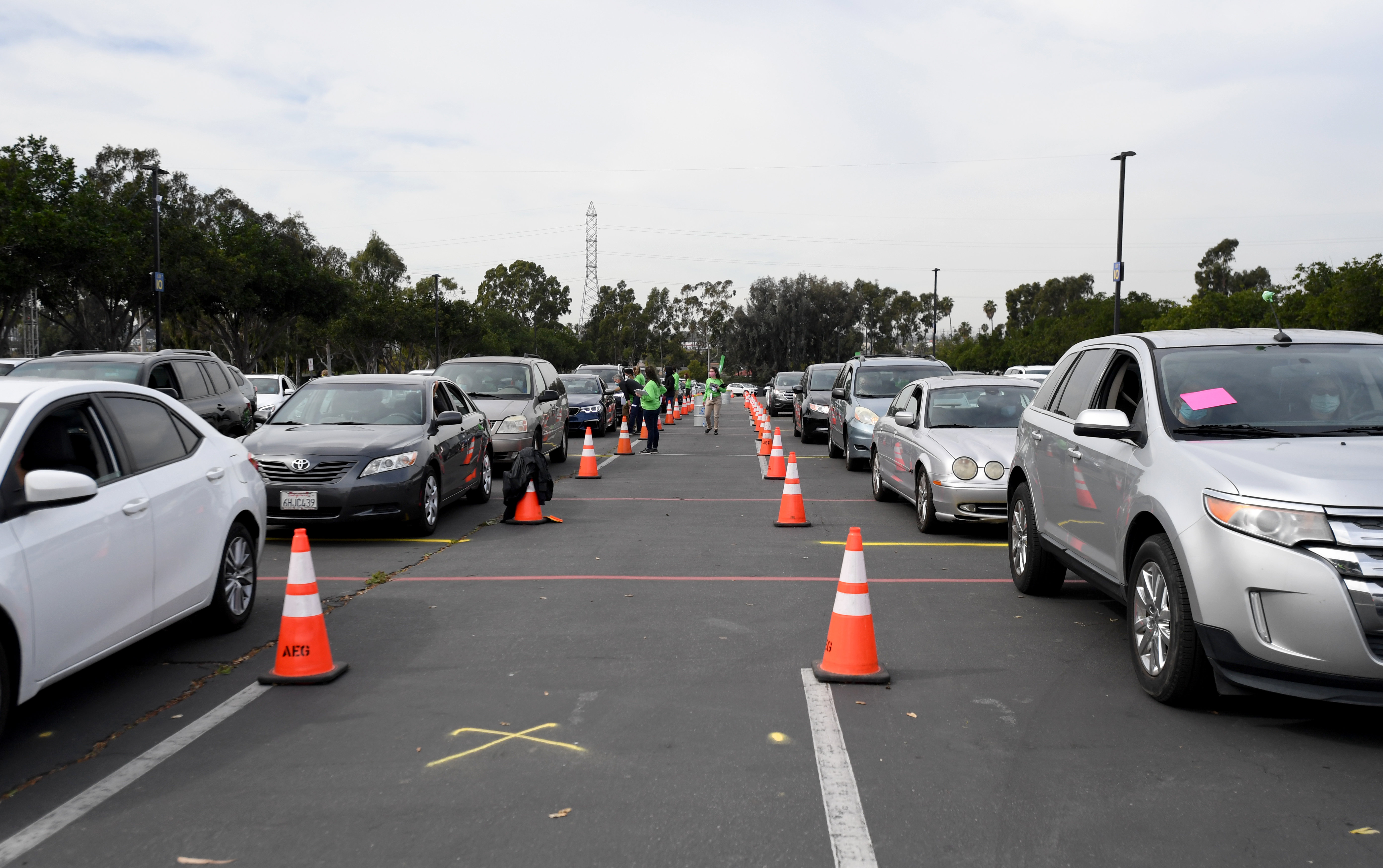
Long lines of people wait to get their COVID-19 vaccine at a drive-thru event at Dignity Health Sports Park in Carson in February. (Photo by Brittany Murray, Press-Telegram/SCNG)

This war-time mobilization can inspire awe: Giant sports stadiums transformed into massive COVID-19 vaccination sites. Cars snaking along city streets for miles. Uniformed military troops wielding computer tablets to check patients in for computer-generated appointments.

But not everyone has a car. Or a computer. Or the tech savvy and time to devote to snagging a coveted appointment online.

“Unfortunately, the most disenfranchised people don’t get to those megasites,” said Alicia Mardini, CEO of the nonprofit East Valley Community Health Center serving East San Gabriel Valley and Pomona. “One of our nurses was saying, ‘What are our patients going to do? Walk to the megasites and stand between the cars?’ People making the decisions sometimes forget that there is another way of life. Maybe they don’t even know.”

Sarah Flores, director of clinical education at Families Together of Orange County Community Health Center, located on First Street in Tustin, prepares the COVID-19 vaccination for those people with appointments on Thursday, March 4, 2021. The health center has done more the 10,500 COVID-19 vaccinations since they began getting them. (Photo by Mark Rightmire, Orange County Register/SCNG)

Health clinics in limbo

Nonprofit community health clinics — which accept government insurance and are nestled in neighborhoods where the pandemic’s burdens are greatest — have had to work hard over the past three months to build relationships with county governments and ensure they get a share of precious vaccine shipments for their patients.

But the universe’s one constant, they’re discovering, is that everything changes: Just as they’ve settled into smooth sailing with their county partners— up to now, the powers-that-be on the local vaccine distribution front — the entire system is changing.

Blue Shield of California is taking over vaccine distribution duties for the state in an effort to speed things along and standardize the experience. Community clinics are the little guys. Officials say they’ve had trouble reaching Blue Shield to figure out how it will work; one went so far as to appeal to a congressional representative in an effort to get Blue Shield to return calls.

At the same time, Gov. Gavin Newsom has announced that 40% of the Golden State’s vaccine supply will be dedicated to the hardest-hit communities.

The combination stokes trepidation and elation in nearly equal measure.

“There is still a lot we don’t know,” said Alexander Rossel, CEO of Families Together of Orange County Community Health Center. “Will the registration process accommodate everyone? Will we have enough doses?

“We’re currently still waiting on the contract and we are fighting to make sure that we continue to receive the amount of doses necessary for us to keep up with our current pace of vaccinations. We are hopeful that the handover process, and any steps that will need to be taken for patients to register, will not hinder our efforts — or any other vaccination hub’s efforts — to continue a steady pace of vaccinations.

“After all, the most important thing here is to get our community vaccinated and back to normal as soon as possible.”

‘Rearranging the deck chairs’

Community clinics can administer thousands of vaccines a week, whereas the mass vaccination sites can administer thousands a day. But community clinics could easily distribute twice as much vaccine as they’re getting, officials said.

“It hasn’t been one process — it’s been a collision of various initiatives and I feel we’re somewhere in the midst of the melee,” said Louise McCarthy, president and CEO of the Community Clinic Association of Los Angeles County, which represents 64 organizations providing medical, dental and mental health services to patients regardless of their ability to pay. “It feels like we’re rearranging the deck chairs a little here.”

Seated socially distant apart, people get their vitals taken before receiving their COVID-19 vaccination in the parking lot at Families Together of Orange County Community Health Center in Tustin on Thursday. (Photo by Mark Rightmire, Orange County Register/SCNG)

Only a handful of clinics had received contracts from the “third-party administrator,” as Blue Shield is technically called, by this week. There’s concern they’ll be left out of the loop, and vaccine distribution will bypass at-risk communities in favor of those with greater access to technology and more expensive health care.

It’s already happening. Data show that communities with the highest COVID-19 case rates have some of the lowest vaccination rates, and communities with the lowest case rates have some of the highest vaccination rates. Black, Latino, Native American and other minorities are getting vaccinated at much lower levels, compared to their portion of the population, than are White and Asian people.

“The spigot just opens up a little bit at a time for our clinics — and at the same time we’re watching the floodgates open up for the mass vaccination sites and, frankly, lower-risk people,” she said.

‘Untenable for underserved’

It hurt when McCarthy saw that, as of March 1, all university faculty and staff were eligible for vaccinations as part of the education and child care sector. “It’s devastating for me to hear that someone working from home for UCLA can get a vaccine, but if you’re 63 and live in a tent on Skid Row you can’t,” she said. “One part of that is the supply issue — there’s just not enough to meet demand yet. The other part is rigid ideas around tiers and phases. The combination of those two have made it untenable for underserved communities.”

There also are concerns about contract language saying clinics must serve anyone who’s eligible — not just their own patients, who are heavily impacted by the pandemic. Officials are pushing back on that language.

Ailissa Leroy, left, an educator from Mission Viejo, receives her COVID-19 vaccination from Rita Ray, a nurse practitioner, as Leroy’s daughter, Eva Holihan, 4, takes a photo at Families Together of Orange County Community Health Center in Tustin on Thursday. (Photo by Mark Rightmire, Orange County Register/SCNG)

It’s a volume vs. value equation, they argue. Vaccinating a lot of people who tend to be healthier makes the rollout numbers look good, but vaccinating a smaller number of people in highly impacted communities — where the virus spreads most rapidly — may be of far greater value in squelching the pandemic.

“In my best-case scenario, if you’re a community health center patient, we should be able to vaccinate you,” McCarthy said. “Clean up the prioritization tiers and give the health centers as many doses as they can deliver. It’s not giving up a lot. The mass vax sites get tens of thousands of doses. Shave us off a bit.”

Getting enough doses

Friday would often arrive and clinics had no firm idea how many doses they’d be getting the following week — making it hard to book appointments with confidence. The Blue Shield contract is supposed to address that, projecting supply several weeks out.

“(T)he providers already administering the vaccine will continue to receive doses during this transition period to ensure vaccines are available to as many Californians as possible equitably, efficiently and safely,” said Erika Conner, a spokeswoman for Blue Shield. “Our aim is to enhance the state network to support the state’s goal to increase its capacity and be able to administer 4 million doses a week — and we are well on our way to meeting that milestone.

“We are working diligently to have as many eligible providers participate in the enhanced network including Federally Qualified Health Clinics, community clinics, multicounty entities, hospital systems, medical groups, pharmacies and others. Together, our goal is to build a network that reaches every corner of our state, especially those communities that have been hardest hit by this pandemic.”

Seated socially distant apart, people get their vitals taken before receiving their COVID-19 vaccination in the parking lot at Families Together of Orange County Community Health Center.  (Photo by Mark Rightmire, Orange County Register/SCNG)

Different platforms

Counties currently are using myriad different platforms to book vaccine appointments, which are different from the state’s My Turn system. Many clinics, meanwhile, make appointments for their non-tech-savvy patients by phone. Worries are high over how all that will play out.

Mark Ghaly, secretary of the California Health and Human Services Agency, acknowledged the challenges in a media call Thursday.

“We know that equity work is hard work,” he said. “It’s easy to do on paper, and takes a lot of attention and time and resources to do in practice. Community-based groups have already done a great deal of work and we will build on that. We’re working to make sure things like My Turn don’t get in our way, and we use it as a tool to protect and target appointments for the community and ultimately achieve even higher levels of equity in our vaccine distribution.”

With a third vaccine added to the arsenal and promises of a vast increase of supply in the coming weeks, Rossel of Families Together of Orange County feels hopeful. “It’s promising,” he said.

Mardini of East Valley Community Health Center finally got a contract from Blue Shield on Thursday, and is poring over the details. “That’s really good news,” she said.

About 75% of East Valley’s patients sign up for vaccinations as soon as they’re eligible, she said — a number that could help achieve herd immunity.

” ‘Every day is a new day’ is what I tell people,” she said. ” ‘Every week is a new week.’ It seems like things are looking up — we are all learning.”

from Irvine Business Signs https://ift.tt/3sUR0hG
via Irvine Sign Company


Will new COVID-19 vaccine rollout bypass hardest-hit communities served by health clinics? was originally posted by Local Sign Company Irvine, Ca. https://goo.gl/4NmUQV https://goo.gl/bQ1zHR http://www.pearltrees.com/anaheimsigns

Senior Living: Reopening of long-term care facilities is ‘an absolute necessity for our well-being’

For nearly a year, nursing homes and assisted living centers have been mostly closed to visitors. Now, it’s time for them to open back up and relieve residents of crushing isolation, according to a growing chorus of long-term care experts, caregivers, consumer groups and physicians.

They’re calling for federal health authorities to relax visitation restrictions in long-term care institutions, replacing guidance that’s been in place since September. And they want both federal and state authorities to grant special status to “essential caregivers” — family members or friends who provide critically important hands-on care — so they have the opportunity to tend to relatives in need.

Richard Fornili, 84, who lives in a nursing home in St. Marys, Georgia, supports a change in policies. He hasn’t seen any family members since last summer, when a granddaughter, her husband and her two children stood outside his window and called him on the phone. “The depression and sense of aloneness affecting my fellow residents, it’s terrible,” he said. “Having our relatives come back in to see us, it’s an absolute necessity for our well-being.”

“At this point, residents are becoming more likely to die of isolation and neglect than COVID,” said Jocelyn Bogdan, program and policy specialist at the National Consumer Voice for Quality Long-Term Care, citing new data linking COVID-19 vaccination to sharp declines in COVID-related deaths. Her organization has launched a petition drive calling for nursing homes to safely reopen and for essential caregivers to have unrestricted access to loved ones.

Since late December, when vaccinations began, COVID-19 cases in nursing home residents have plunged 83%, while deaths have dropped by 66%, according to an analysis by KFF. As of Monday, 4.6 million residents and staff members in nursing homes and other congregate facilities had received at least one shot of the Pfizer-BioNTech or Moderna vaccine, including more than 2 million who had received a second dose.

Vaccines have “changed everything” and nursing homes are now among “the safest places you can be in your community in terms of COVID,” said Ruth Katz, senior vice president of public policy at LeadingAge, an association representing more than 5,000 nonprofit nursing homes, assisted living centers and senior housing providers.

Last week, LeadingAge called for federal authorities to expand visitation in a letter to top officials at the White House, the Centers for Medicare & Medicaid Services and the Centers for Disease Control and Prevention. In an email, the American Health Care Association, which represents more than 14,000 long-term care providers, also urged CMS and the CDC to review its visitation guidance. AARP, the nation’s most powerful seniors’ lobby, chimed in with a letter noting “a critical need” for new recommendations.

Medical directors at long-term care facilities are also weighing in while sounding a cautious note in new guidance about resuming communal activities and visitation in long-term care facilities. With new coronavirus variants circulating and significant numbers of staffers and potential visitors still unvaccinated, “we’re recommending a measured, step-wise approach,” said Dr. Swati Gaur, chair of the infection advisory committee for AMDA — the Society for Post-Acute and Long-Term Care Medicine.

Facilities that reopen to family members should do so “carefully,” she said, scheduling visits, screening those visitors for symptoms and ideally requiring a negative coronavirus test before entry; limiting the number of visitors in a facility at any time; sending them to designated visitor sites, not residents’ rooms; and requiring the use of masks and gloves, among other precautions.

No one wants to see COVID-19 outbreaks reappear in long-term care facilities, Gaur said — the site of nearly 173,000 coronavirus-related deaths, about 35% of the nation’s total.

CMS instructed nursing homes to lock down almost a year ago, on March 13, as the coronavirus pandemic accelerated and the CDC said no one except relatives making end-of-life visits should be let in. In September, new recommendations allowed outdoor visits, so long as safety precautions such as physical distancing were in place, and indoor visits, so long as a facility was coronavirus-free for 14 days and the positivity rate for cases in the surrounding community was under 10%.

Federal recommendations apply to nursing homes. States regulate assisted living and other congregate care facilities but tend to follow the CDC’s lead. In practice, long-term care facilities vary considerably in how they implement recommended policies.

Also, federal authorities recommended that relatives be able to make “compassionate care” visits when a resident is emotionally distressed, grieving the loss of friends or family members, losing weight or adjusting poorly to the recent loss of family support. But many nursing homes continue to deny these visits, and enforcement needs to be strengthened, AARP observed in its letter.

Melody Taylor Stark said her request for a compassionate care visit with her husband, Bill Stark, was denied in October, when his congestive heart failure worsened. Bill, 84, a resident at Huntington Drive Health and Rehabilitation in Arcadia, California, for five years, was subsequently hospitalized with pneumonia. Stark said she was permitted only one 15-minute visit with him, on Nov. 17, after he returned to Huntington — the last time she saw Bill before his death on Nov. 22. The administrator at Huntington Drive did not respond to a request for comment.

The Essential Caregivers Coalition, of which Stark is a member, is asking that every long-term care resident be able to designate one or two essential caregivers who can come in and out of facilities regularly to provide hands-on care to loved ones, as they did before the pandemic. As the anniversary of lockdowns approaches, the coalition has organized email blasts and letter-writing campaigns to federal and state authorities, a traveling lawn sign campaign in more than a dozen states and gatherings at several state capitols. The campaign’s slogan: Isolation Kills, Too.

Mikko Cook, 49, of Ventura, California, is one of the group’s co-founders. Her father, Ron Von Ronne, 77, has late-stage Alzheimer’s disease and lives in a 200-bed nursing home in Albany, New York. Before the pandemic, Cook’s brother visited almost every day.

“The home was severely understaffed and when my family members would go in to take care of him, my father’s sheets would be soiled. He wouldn’t have showered. The bathroom was never clean. But they would take care of that,” Cook said.

After the lockdown, Von Ronne went more than three months without seeing or talking to family members. Over the past year, he nearly stopped communicating, was assaulted by a fellow resident and lost almost all his belongings, which were either misplaced or stolen, Cook said. Von Ronne has since had two outdoor visits with relatives, and three short visits in family members’ homes at Christmas and in January and February.

Mary Daniel, 58, founded another activist group, Caregivers for Compromise, after getting a part-time job in July at her husband’s assisted living center in Jacksonville, Florida — the only way she could see him. Steve Daniel, 67, has early-onset Alzheimer’s, and she had visited every evening before the pandemic.

After stories about her went viral, Daniel created Facebook groups in every state for caregivers who wanted more access to their loved ones. Now, Caregivers for Compromise chapters in Connecticut, Florida, Illinois, Kentucky, North Carolina, New York, Pennsylvania, Tennessee, Texas and West Virginia are active in the Isolation Kills, Too campaign.

“We’re getting impatient: Our loved ones’ quality of life is deteriorating every single day. My husband has been vaccinated and he wants to go outside and feel the sunlight on his face. It’s time to open back up and let him live whatever time he has left with freedom,” Daniel said. “You cannot protect people like him forever, from everything.”

Kaiser Health News is a nonprofit news service covering health issues. It is an editorially independent program of the Kaiser Family Foundation, which is not affiliated with Kaiser Permanente.

Sign up for The Localist, our daily email newsletter with handpicked stories relevant to where you live. Subscribe here.

from Irvine Business Signs https://ift.tt/2PE18gl
via Irvine Sign Company


Senior Living: Reopening of long-term care facilities is ‘an absolute necessity for our well-being’ was originally posted by Local Sign Company Irvine, Ca. https://goo.gl/4NmUQV https://goo.gl/bQ1zHR http://www.pearltrees.com/anaheimsigns

Friday, March 5, 2021

After 27 years in prison for a crime he didn’t commit, college graduation is in sight

There’s a moment Jimmie Gardner has rehearsed in his head for more than three decades.

The scene first came to him in the late 1980s, when he was playing minor league baseball. Between seasons, he enrolled in his first college classes, imagining the day when he’d walk across a stage, flip his tassel, and take home a degree in business management.

That dream was deferred in 1989, when Gardner was arrested for a brutal crime he didn’t commit. The legal wranglings were complex but the gist was simple: While he didn’t actually look like the suspect, he fit the vague description of a tall black male.

Gardner spent the next 27 years in the West Virginia prison system fighting for his freedom. But he also continued taking classes, with professors from nearby colleges teaching a room full of inmates everything from computers to heating and air conditioning repair to culinary arts.

“Every opportunity I had to take a class or learn a vocation, I took advantage of it,” Gardner said.

Today, Gardner is getting ready to celebrate his fifth anniversary of being released from prison and cleared of all charges. He’s married to a high-profile woman who’s become his biggest supporter. And the 54-year-old is on track to earn his bachelors degree with honors this fall from Chapman University.

Gardner plans to use his communications degree to continue sharing his story, shedding light on other wrongful conviction cases and inspiring people to keep fighting for justice.

“I never gave up,” Gardner said. “Now I want to bring awareness and keep individuals informed on how you should react in these situations and how you survive to see another day.”

Gardner hopes the coronavirus pandemic will subside enough by the fall that he’ll get to walk across a stage rather than accept his diploma in a virtual ceremony. But if the last few decades have taught him anything it’s that, while life too often isn’t fair and dreams do in fact explode, they also can sometimes be put together again.

The wrong guy

Gardner was one of eight kids born in Georgia to a dad who built houses and a mom who worked for a sewing thread manufacturer. He grew up in Tampa, Fl., where he earned good grades and was a standout on his high school baseball team.

The Chicago Cubs drafted Gardner straight out of high school in 1984 for their affiliated minor league teams. He played professionally for the next four years, working part-time jobs, taking college classes between seasons and getting to know his newborn daughter.

Gardner was 20 years old, pitching for the Charleston Wheelers in West Virginia in 1987. It was a classic case of being in the wrong place at the wrong time.

On May 16, 1987, a man described as around 6 feet tall with light black skin broke into an 82-year-old Charleston woman’s home. He beat her, raped her 60-year-old daughter, then stole $90 and a cassette player.

A couple months later, another Charleston woman was assaulted in her home by a man with a similar description. Police believed the two crimes were linked, so they questioned more than 100 tall black men in the area.

Gardner is several inches taller than the attacker, at 6 foot 3 inches, and points to his dark complexion. He was questioned, fingerprinted and released.

Jimmie Gardner was in prison for 27 years for a crime he didn’t commit. Now he’s getting ready to graduate from Chapman University with a degree in communications. (Courtesy of Jimmie Gardner)

Gardner had put the incident behind him and was back in Florida two years later, attending college for business management, when police arrested him. They said his fingerprint matched one found on a vase in the first victim’s home. While that claim was later disputed, they charged him with both assaults.

None of the victims identified him as their attacker. One victim chose another suspect in the lineup.

But West Virginia’s chief blood analyst at the time, Fred Zain, said evidence from both sexual assaults suggested Gardner couldn’t be ruled out as a suspect. Then Zain claimed the man identified by one of the victims couldn’t have been her attacker.

Gardner later learned that lab results actually showed the attacker had Type O blood, while he had Type A blood. Also, genetic markers did not in fact rule out the other suspect. But that information wasn’t shared with Gardner’s defense team or presented to the jury during his trial.

On Feb. 1, 1990, a jury acquitted Gardner on charges of attacking the second victim, but convicted him of assaulting and robbing the first two women. At 23 years old, he was sentenced to up to 110 years in prison.

Fighting for himself

Three years later, in 1993, West Virginia’s Supreme Court of Appeals received complaints about Zain falsifying evidence. A judge determined that Zain’s “pattern and practice of misconduct completely undermined the validity and reliability of any forensic work he performed or reported.”

Zain’s testimony was used to convict an estimated 136 people in the 1970s and ’80s, Gardner later learned. His team insists the state of West Virginia knew as early as 1985 that Zain wasn’t qualified as a DNA or bodily fluids expert but still let the man testify in his 1990 trial, which hinged on exactly such evidence.

Zain was fired in 1993 and indicted for fraud, according to the National Registry of Exonerations at the University of Michigan. He died while awaiting trial.

Given the revelations about Zain’s testimony, Gardner first filed for the West Virginia courts to review his conviction in 1993. A state judge denied his petition.

“I went through 13 attorneys that were on my case,” he said. “My case lingered throughout the system for 23 years without me getting the opportunity to get a review in court.”

During that time, Gardner had been studying the law. In 2012, he filed his own petition for relief in federal court, knowing full well that it would likely be denied since he technically hadn’t exhausted his options in state court.

“I kept telling individuals, I’m doing to fight until the day I die. Just because the courts aren’t hearing me, I’m not going to stop.”

The federal judge denied Gardner’s initial petition but assigned him a federal defender and agreed to let them present his case in court. On March 25, 2016, the judge ruled in his favor.

“The judge said I had been held in legal purgatory for 23 years in state court and it was a complete miscarriage of justice,” Gardner recalled.

The judge released him April 1, 2016 on a $10,000 bond. He was 49 years old when he returned home and started getting to know his daughter, who was then 31 years old.

But while the federal judge had vacated his convictions, West Virginia opted to retry Gardner on all charges. His team spent the next five months preparing. On Sept. 7, 2016, West Virginia prosecutors took the uncommon step of dismissing all charges against Gardner with prejudice, meaning they can’t ever be filed again.

Out of the 136 cases convicted on Zain’s testimony, Gardner said he was only the sixth person who successfully challenged his sentence.

“All of those other 100-plus cases, they’ve either died off or been brushed under the rug,” he said.

Gardner is still fighting in court today, trying to get compensation from West Virginia for the years he was wrongfully imprisoned.

Starting over

While he was in prison, Gardner started hatching a plan to become a motivational speaker. He vowed to God that if he ever got out, he’d speak for free for one year.

From October 2016 to October 2017, with support from family and advocates, he volunteered to share his story and to advocate for social justice reform everywhere he could.

“I speak about resiliency, determination, never giving up, staying positive and being thankful for the opportunities you have,” he said.

After his year of service ended, Gardner started a for-profit company called J.C. Gardner Speaks. He also formed the nonprofit Gardner House to help get people out of prison and transition back into society. And he’s involved in multiple criminal justice reform efforts, including a seat on the board of the Georgia Innocence Project, which works to free wrongfully convicted prisoners.

It was through this work that he met his wife, Leslie Abrams Gardner, who became the first Black woman appointed as a federal judge in Georgia in 2014 and is sister to voting rights activist Stacey Abrams.

The two met at an event for the Georgia’s Black Women Lawyers Association. He started sharing his story, with no idea the woman he was speaking to was a federal judge.

“It’s funny because I was explaining to her how the law worked in my case,” Gardner says.

Instead of getting offended, Gardner said Leslie Abrams told him, “Wow, you could actually be an attorney.” She hesitated to tell him her job, he said, fearing his experience with the justice system would put him off. But Gardner was impressed with her accomplishments — and more than a bit smitten.

The pair got married in November 2018, and he said, “It’s just been wonderful ever since.

“She challenges me from a great position and I challenge her from a good position,” he said. “It’s a great opportunity to have two minds come together and be able to share opinions and just really get to know each other.”

Diploma in sight

It was Leslie Abrams Gardner who introduced her husband to Chapman University. In January, 2020, he sat in the audience as his wife gave the keynote speech during the Fowler School of Law’s annual Law Review Symposium.

Six months later, as university President Daniele Struppa committed to new diversity initiatives aimed at better supporting students of color on campus in the wake of George Floyd’s death, Gardner was invited to share his experience during a virtual town hall.

By the fall, he had transferred dozens of hours of credits he’d accumulated over the years and was enrolled at Chapman as a senior on a full-ride Presidential Scholarship.

While he’s been completing his courses remotely from Georgia due to the pandemic, Gardner hopes to move to Orange County to attend his last semester in person. It will mean a long distance relationship with his wife for a few months, though he suspects she’ll visit often.

Gardner said he has heard about Chapman’s struggles to attract and support Black students. But he’s been impressed with the concrete steps the university is taking to improve its diversity and said he wants to support those efforts.

“I don’t want to discount anyone else’s experience,” he said. “But I’ve had a pleasant experience and I look forward to attracting more individuals that look like me to come to Chapman.”

Once he graduates, Gardner hopes he might get a talk show or podcast that will help him bring his message to a bigger audience.

And he plans to keep fighting for others who are still sitting in prison cells, nursing their own deferred dreams.

from Irvine Business Signs https://ift.tt/3v0UnFI
via Irvine Sign Company

from Irvine Business Signs https://ift.tt/3ed4gtV
via Irvine Sign Company


After 27 years in prison for a crime he didn’t commit, college graduation is in sight was originally posted by Local Sign Company Irvine, Ca. https://goo.gl/4NmUQV https://goo.gl/bQ1zHR http://www.pearltrees.com/anaheimsigns

District attorney drops investigation into $400K paid to Inglewood mayor’s assistant and girlfriend

The Los Angeles County District Attorney’s Office has concluded Inglewood did not break the law by paying the mayor’s former assistant and ex-girlfriend more than $400,000 annually in salary and benefits, according to a newly released closing memorandum.

Deputy District Attorney Michele Gilmer found the city increased Melanie McDade-Dickens’ salary through simultaneous “acting” and “assignment” pay that violated the city’s contract with the Inglewood Executive Organization. But because City Manager Artie Fields later retroactively corrected the designations, Gilmer determined there was “no evidence to suggest anyone intended or was criminally negligent in failing to know he/she was without authority of law” to authorize the payments.

“Although the complainant feels that Dickens’ compensation is disproportionate to those in similar positions, the District Attorney’s office does not have jurisdiction to determine the salary of Inglewood city employees,” Gilmer wrote in the closing memorandum. “Aside from speculation, there is insufficient evidence to prove Dickens’ compensation was for ‘private purposes at the behest of Mayor James Butts.’ Accordingly, this case is closed.”

The blog 2UrbanGirls first reported the district attorney’s decision. The Southern California News Group independently verified the investigation and obtained a copy of the closing memorandum from the District Attorney’s Office.

Decision called ‘flawed’

In an email to several reporters, Marvin McCoy, the resident who filed the complaint, called the decision “flawed” because he felt it did not address whether McDade-Dickens’ employment was a direct result of her “sexual/romantic relationship” with the mayor. McCoy wrote he intends to push for the newly elected district attorney, George Gascón, to revisit the D.A.’s past investigations into Inglewood.

McDade-Dickens’ attorney, Carl Douglas, did not respond to a request to comment. He previously stated that McDade-Dickens earned her extra pay and assignments through merit.

Extra pay was for extra duties

In an email, Fields said he gave McDade-Dickens additional duties when there were vacancies at the department head level. Though her title remained “executive assistant,” McDade-Dickens served as the head of the parking, emergency management and city security division, as well as the housing department, according to Fields. She also filled in as an acting assistant city manager “as needed,” officials said previously.

In 2018, Fields requested that McDade-Dickens receive “acting” and “assignment” designations simultaneously, according to the District Attorney’s Office. Inglewood’s memorandum of understanding with the executive organization does not allow employees to receive “acting” appointments alongside special assignment pay. “Acting” pay requires an employee to fulfill the full duties of a position, while assignment pay is when an employee takes on extra work while continuing their normal job.

Fields said his request was an error that did not result in an overpayment. The “acting” pay was retroactively reclassified to additional “assignment” pay and did not require any reimbursement to the city. McDade-Dickens received about $24,291 for the reclassified work, according to Fields.

“There was no overlap as it was an administrative pay classification error, as opposed to a compensation error,” Fields wrote in an email. “Again, the acting pay was reclassified to assignment pay when the error was discovered.”

$403,308 in compensation

McDade-Dickens’ total compensation, including benefits, jumped from $135,069 in 2013 to $403,308 in 2019 largely because of the additional responsibilities and bonuses given to her over the years. The city paid her more than $100,000 extra in both 2018 and 2019, according to Transparent California.

None of those duties was reflected in the job description for the “executive assistant” position when the Southern California News Group investigated McDade-Dickens’ high pay in 2018. At the time, the description listed qualifications and experience for a secretarial position — five years of experience supporting elected officials, a proficiency with Microsoft Office and a valid driver’s license. The duties included managing calendars, screening communications and greeting visitors.

A new job description — uploaded to the city’s website hours after city officials were contacted by a reporter — contained new duties, such as overseeing the parking program.

Romance ended

McDade-Dickens and Butts began dating in 2010 while she worked on Butts’ mayoral campaign, according to McDade-Dickens. He hired her as his assistant after taking office. Bankruptcy documents in 2012 showed she made $17,430 in 2010 before Inglewood hired her.

Rumors circulated for years about the relationship between the mayor and McDade-Dickens. It was only confirmed by McDade-Dickens and the city after her firing in late 2019.

Inglewood terminated McDade-Dickens for allegedly falsifying a bonus check to make herself appear more financially stable for a home loan and for enlisting city employees to help with personal matters. McDade-Dickens denies the allegations and sued the city for wrongful termination. She alleges she ended her eight-year relationship with the mayor in 2018 and that he had her fired in retaliation. Her lawsuit alleges the mayor removed her extra assignments, stalked and harassed her following the break-up.

City officials say the additional responsibilities were only temporary and were removed once other employees were hired to fill the roles.

from Irvine Business Signs https://ift.tt/3ed7v4h
via Irvine Sign Company


District attorney drops investigation into $400K paid to Inglewood mayor’s assistant and girlfriend was originally posted by Local Sign Company Irvine, Ca. https://goo.gl/4NmUQV https://goo.gl/bQ1zHR http://www.pearltrees.com/anaheimsigns

The Plain English Guide to Demand-Side Platforms (DSP)

As a marketer, you might be focused on creating organic content most of the time. But you should keep in mind that paid advertising is just as important.

When you manage the paid ads for your business, you can go through individual ad managers such as Google Ads or Facebook Ads. However, that’s not the only option. You can also use demand-side platforms (DSP), which are automated, as a way to purchase and manage your online ads.

In fact, did you know that in 2020 $46.86 billion, or 88.7% of all US mobile display ad dollars, were transacted via automated means?

This means that a majority of marketers paid ads used DSPs as a way of purchasing, managing, and tracking online advertising.

Below, let’s review all the basics about DSP advertising.

Access Now: Free Media Planning Template

With a DSP, you can purchase mobile ads on apps, banner ads on search engines, and video ads on Facebook, Instagram, Google, and even more platforms. Instead of using both Google Ads and Facebook Ads, for instance, you can purchase those ads in one place on a DSP.

The purpose of this is to make ad buying faster, cheaper, and more efficient. Now, let’s dive into how DSP platforms work and why you should use one.

DSP Advertising

So, you might be thinking, “How do DSPs work?”

DSP’s work by using programmatic advertising, which is the buying and selling of ads in real-time through an automated system. With real-time bidding, ad placements are auctioned off in milliseconds.

When you get started with DSP advertising, you’ll need to begin strategizing how much you want to spend. Think about what an effective cost per click and cost per action might be. This will help you set up your online ads so the platform knows how much to spend in any given auction.

The best DSP platforms will allow you to include multiple rich media ads, including video, images, and animation.

Now you might be wondering, “Why would I use a DSP?”

The main reason is that it makes your digital ad experience easier and more cost-effective. You can control, track, and maximize all your digital ads in one place. This means you can manage an entire ad campaign across sites on one dashboard. For example, you can show someone an ad on Google, then show them ads on Facebook, and then across other sites they visit all in one campaign. Before DSPs, those would be separate campaigns on Google and Facebook Ads.

This means you can advertise on many networks, including all the major publishers, in addition to more. With the amount of networks, you’ll have a more global reach.

Additionally, DSPs often partner with third-party data providers, giving you better tracking and reporting capabilities than a single network usually provides. And in the planning process, the targeting options are more personalized, meaning you can get better conversion rates.

When you’re choosing a platform to work with, you’ll want to look at how many ad exchanges the DSP has access to because that affects how many people you can reach. Plus, you’ll want to consider cost, training (full service or self service), support, and ease of use.

Now that you know more about DSP advertising and how it works, let’s discuss the platforms that can help you do it.

Top Demand-Side Platforms

1. Centro

Centro is an omni-channel DSP built to generate better outcomes for your ad campaigns. One of the best features is that it uses AI machine learning to automatically analyze data from numerous campaign parameters to optimize your ads.

With this DSP, you’ll be able to target hyper-local audiences across devices and multiple touchpoints. You’ll also get access to the industry’s leading exchanges, along with 25,000+ audience segments across over 30 different data providers.

2. Google Marketing Platform

Google Marketing Platform is Google’s unified advertising and analytics platform for smarter marketing and better results. This DSP has several products for both small businesses and enterprise companies, including Campaign Manager 360.

With this product, you can save time with cross-channel ad management to maximize insights and optimize media and creative performance across all your digital campaigns. The flexibility is the standout feature on this DSP. You can use third-party features and integrations so you can choose the capabilities that best help you manage and measure your campaigns.

3. Knorex

Knorex is a universal advertising platform that automates personalized marketing across channels, devices, and ad formats. You can market on Google Search, Facebook, Instagram, and LinkedIn all in one place.

This DSP also uses AI to learn from past data to predict and adjust ad budget dynamically in real-time to drive higher efficiency.

4. Jampp

Jampp is a DSP that leverages unique contextual and behavioral signals to deliver customers and in-app purchases through programmatic advertising.

The key features of this platform are user acquisition, app retargeting, geolocated ads, dynamic ads, and predictive bidding. This is mainly a mobile user acquisition and app retargeting DSP where you can focus on mobile first ads.

5. Smadex

Smadex is a mobile DSP engineered for growth. The platform uses a combination of its own programmatic advertising technology, machine learning, and first-party data.

With this platform, you can reach global audiences at scale and re-engage audiences with its retargeting capabilities.

When you choose a DSP, make sure you understand how many inventory sources it accesses, which third-party data integrations it offers, and what targeting criteria is available. To successfully run programmatic ads on a DSP, you’ll need to reach global audiences with personalized ads.

paid media template

from Irvine Business Signs https://ift.tt/2OudXcE
via Irvine Sign Company

from Irvine Business Signs https://ift.tt/2OrotRI
via Irvine Sign Company


The Plain English Guide to Demand-Side Platforms (DSP) was originally posted by Local Sign Company Irvine, Ca. https://goo.gl/4NmUQV https://goo.gl/bQ1zHR http://www.pearltrees.com/anaheimsigns

Affidavit: Man found Tiger Woods unconscious after SUV crash

By STEFANIE DAZIO | The Associated Press

ROLLING HILLS ESTATES — A man found Tiger Woods unconscious in a mangled SUV after the golf star crashed the vehicle in Southern California, authorities said in court documents obtained Friday.

The man, who lives near the site in Rolling Hills Estates, heard the crash and walked to the SUV, Los Angeles County sheriff’s Deputy Johann Schloegl wrote in an affidavit.

The man told deputies that Woods would not respond to his questions. The first deputy on the scene, Carlos Gonzalez, has said Woods was able to talk to him and answer basic questions. Woods later told deputies that he did not know how the collision occurred and didn’t remember driving.

Law enforcement has not previously disclosed that Woods had been unconscious following the crash.

The information came in a statement of probable cause requesting that a search warrant be approved for the Genesis SUV’s data recorder, known as a black box. Schloegl requested data from Feb. 22 and Feb. 23. The crash occurred around 7 a.m. on Feb. 23.

“I believe the data will explain how/why the collision occurred,” Schloegl wrote.

Sheriff’s representatives have declined to say what was discovered in the recorder.

Woods was driving a 2021 GV80, made by the Hyundai luxury brand, as the tournament host of the Genesis Invitational at Riviera Country Club. The SUV went off a Los Angeles County road and crashed on a downhill stretch known for wrecks. The crash injured Woods’ right leg, requiring surgery.

Sheriff Alex Villanueva has said Woods was driving alone in good weather, there was no evidence of impairment, and the crash was “purely an accident.”

Schloegl previously told USA Today that he did not seek a search warrant for Woods’ blood samples, which could be screened for drugs and alcohol. In 2017, Woods checked himself into a clinic for help dealing with prescription drug medication after a DUI charge in Florida.

The lengthy surgery following the crash was to stabilize shattered tibia and fibula bones in his right leg. A combination of screws and pins were used for injuries in the ankle and foot.

It was the 10th surgery of his career, and came two months after a fifth back surgery. Through it all, Woods has never gone an entire year without playing, dating back to his first PGA Tour event as a 16-year-old in high school.

from Irvine Business Signs https://ift.tt/3c6bb5h
via Irvine Sign Company


Affidavit: Man found Tiger Woods unconscious after SUV crash was originally posted by Local Sign Company Irvine, Ca. https://goo.gl/4NmUQV https://goo.gl/bQ1zHR http://www.pearltrees.com/anaheimsigns

USC’s Isaiah and Evan Mobley cherishing time together with their father

Isaiah and Evan Mobley used to play one-on-one against each other in the driveway at home. But as they reached the end of middle school and beginning of high school, they soon realized this wasn’t a good idea.

Isaiah, the elder of the two by a year, always had a slight height advantage. But Evan had a four-inch growth spurt when he reached eighth grade. The evening height and each brother’s competitiveness soon made individual matchups untenable.

“When we both got into high school, we stopped playing just because it would get too out of hand,” Isaiah said. “It’s not necessarily that healthy. Around seventh or eighth grade, it started getting extremely competitive and it turned into shoving matches.”

In the end, they were better as teammates. But even that chapter must conclude eventually, and the Mobleys are nearing that point.

USC has provided one last opportunity for the Mobleys to play together, with their father, Eric, serving as an assistant coach. Evan is projected to be a top pick in the NBA draft this summer, and his departure at the end of his freshman season has been treated by most as a forgone conclusion.

And while Isaiah will eventually follow his brother to the NBA, there’s no guarantee they will get to suit up together again at the next level. So with one game left in USC’s regular season, on Saturday against UCLA, the Mobleys are trying to enjoy the moment together as a family.

“The end is near,” said Isaiah, a 6-foot-10 sophomore. “No matter what happens after this, we’ll always have these years together.”

“While I’m in it, I’m probably not appreciating it as much,” 7-foot Evan added. “But after when I realize what I had, I’m probably gonna be like, ‘Dang, that was amazing to have an experience like that.’”

Early years

Isaiah and Evan first played on the same team together in elementary school. It was a league where parents had to be on the court to help guide their children. After one season, Eric took over as the coach of the team.

In some games, Eric would hold Evan in his arms. The younger brother felt a little shy playing with kids Isaiah’s age despite being the same height as many of the players.

“We had to move on because Isaiah was too big and tall and very aggressive,” Eric recalled. “Parents were getting upset because he was knocking the kids down.”

It was usually the case that Evan would play up a year to be on the same team as his brother. Even when he didn’t, the Mobleys would play within the same club program so they still practiced together.

In 2012, Eric founded his own organization, Triple Threat, so that he could let his sons play multiple positions rather than be stuck in the post due to their height.

After middle school, Isaiah and Evan enrolled at Rancho Christian High in Temecula and in the summers would play for the Compton Magic AAU program.

It was with those Compton Magic teams, where Eric also served as a coach for the 16-and-under squad, that the Mobleys had the most fun.

There was the on-court success. Like the summer before Isaiah’s senior year of high school, when the Mobleys combined with former USC center Onyeka Okongwu to win the Adidas Gauntlet championship, and then beat Team Takeover in Las Vegas to claim the mythical AAU national championship.

But there were also the type of shenanigans that happen when kids travel together.

“Playing pranks on each other in the hotel, throwing cold water on someone while they sleep,” Isaiah said. “Or we all went to Cabo and just playing in the ocean, some of us could swim well and some of us couldn’t.”

College days

One by one, the Mobleys arrived at USC. Eric was hired as an assistant coach in 2018. Isaiah enrolled for the 2019-20 season, and Evan joined this year to complete the triumvirate.

The Trojans (20-6, 14-5 in conference play) are currently in second place in the Pac-12, with the chance to win the regular-season league title. If USC were to beat the Bruins in Pauley Pavilion on Saturday, then the Trojans would need Oregon State to upset first-place Oregon on Sunday. The Beavers have won four of the last five against the Ducks, so USC does have hope.

The Mobley brothers, who are rooming together this year, have played a big role in USC’s success. Evan leads the team in scoring (16.2 points per game), rebounding (8.5) and blocks (2.85), while Isaiah is averaging 9.1 points and 7.7 rebounds per game.

All the years playing together are evident as they start beside each other for the Trojans. In the first game of the season, they assisted each other on three baskets, half as many as they had in the Arizona State game two weeks ago.

It’s not dissimilar to the past 15 or so years, with Isaiah and Evan on the court and Eric as a coach. The biggest difference is this year their mom, Nicol, has had few opportunities to see them play in person due to COVID-19 restrictions.

“Whenever I look around, it’s definitely a difference,” Isaiah said.

There’s still a sense of a ticking clock. One regular season game left, then the Pac-12 Tournament next week in Las Vegas, then the NCAA Tournament, where USC’s success will determine how long the Mobleys get to play together.

Then this chapter will likely close, with the NBA and a professional career looming for the boys.

“I just try to stay in the now and not really think about the future too much,” Evan said.

But they’re trying to gather as many videos and photos as possible for future reminiscing.

“I try to record as much as I can. They don’t like it, but it’s all memories,” Eric said. “Because later on when we have these grandkids, I want them to sit down in their lap and say, ‘See your dad?’ And just crack up about these experiences that are moving right in front of us today.”

USC (20-6, 14-5) at UCLA (17-7, 13-5)

When: 1 p.m. Saturday

Where: Pauley Pavilion

TV/Radio: CBS/AM 790

from Irvine Business Signs https://ift.tt/3sUlOyV
via Irvine Sign Company


USC’s Isaiah and Evan Mobley cherishing time together with their father was originally posted by Local Sign Company Irvine, Ca. https://goo.gl/4NmUQV https://goo.gl/bQ1zHR http://www.pearltrees.com/anaheimsigns