Tuesday, November 24, 2020

How Saxo Bank transformed its display advertising

Saxo Bank Group is a pioneer of fintech and is one of the most trusted and respected names in the industry. For the past two years they have used Bannerflow and other partners to transform how they perform display advertising.

Before Bannerflow, display production at Saxo Bank was cumbersome and time consuming; from production timelines and review rounds, to hosting, and distribution. However, today display advertising is bringing in clients and providing value for money.

We spoke to Mads Cramer, Global Head of Brand, Content and Design at Saxo Bank about how he and his team have found success within display advertising.

mads cramer Saxo Bank body image

How have your digital marketing processes changed?

Mads Cramer, Global Head of Brand, Content and Design at Saxo Bank: To simplify our digital advertising, we decided to divide our internet advertising into two main areas, one being Facebook, the other being Google. Today we work with a very strict performance marketing strategy where we aim to optimise both our return on ad spend (ROAS) and what we call a lead value score.

What both these metrics do is that they enable us to forecast potential client intakes and the revenue coming from that. This is important because on those terms, marketing ends up being a significant voice in how we build our business performance strategy.

What are some of the challenges facing the financial industry when doing digital marketing?

Mads Cramer: Online investment banks and brokerage, which Saxo Bank is a part of, is at the forefront of finance.

Traditionally, a lot of retail banks are reliant on people walking into affiliates on the street. In comparison online investment banking is actually financial e-commerce. We reach clients online. We onboard them online. Our whole communication with our clients is online.

And on those terms, online advertising plays a quite crucial role for us in how we generate and predict growth over time. However, the challenge is that we are in a highly regulated industry. There are a lot of things that we can’t do. For example, certain products can’t be marketed, or we need a long disclaimer on all our marketing.

We also have a fairly complex product line. For example, we have some financial products that you can trade and invest in, in some markets, but in other markets, you can’t.
While, in some markets, such as France, we need to localise, and then in others we don’t.

Again, there are certain products, for example, in the MENA region that we can’t market. So the complexity around our messaging is quite high and that really sets a quite strict demand on our marketing production rollout needing to be intelligent.

Essentially, we are a global organisation and people can join our platform anywhere.

How does this affect how you do display advertising?

Mads Cramer: Going across borders, means we have to adapt to local legislation and restrictions.

For example, if you take Saxo Bank, we are Saxo Bank in Denmark, and in Singapore we are known as Saxo Markets. And that’s from the very simple point of view that in Denmark, we have a banking license, and in Singapore we don’t. There we call ourselves Saxo Markets and are an online broker.

The same goes for our branding and translations as well. It is essential to make these distinctions so as to provide a seamless customer journey when serving clients globally.

I heard somebody say that we are going from 4 to 400. 15 years ago, we produced primarily four formats: a TVC, a print ad, a radio ad and an out-of-home. And that was the four formats that all companies did. Today we are 400! Every time we produce one single ad, it needs to be in 400 formats!

It’s YouTube pre-rolls, Facebook formats, different display formats, regional formats, and formats for all the websites we serve programmatically. The complexity of doing one single marketing campaign has increased dramatically.

Then there is speed, availability, and the actuality of the market. We need to have assets going live the same day. However, we can’t expect to brief local vendors and have them code a HTML5 banner – sending it as an attachment in an email, for us to check and approve.

Our production instead needs to be super seamless. And through a fairly tight design system, and in combination with platforms, such as Bannerflow, we handle the speed of the market. Today, we have an idea in the morning, and by the afternoon we are live with a campaign.

Can you describe your display advertising strategy at Saxo Bank?

Mads Cramer: If you look across all campaigns, and all markets, and if you look at the mix, you see that social and display displays are two quite different activities. Whereas on social we tend to use a bit more storytelling, our communication via display is super on point.

At Saxo Bank we generally use three different types of display campaigns. We have upper funnel, mid funnel, and low funnel campaigns. Upper funnel is branding. Mid funnel is constant activities, and low funnel is tactical advertising

In total, I would say we probably produce between 2000–3000 display advertising variations a year.

Display is an interesting format to be designing as a designer, as you don’t have a lot of space to talk complex stuff, such as fintech. The more simple and design led we are, the better a display campaign performs.

How has display advertising changed with Bannerflow?

Mads Cramer: Originally display production was quite manual and it was quite time consuming, in such a way that it actually stressed the organisation. From production timelines and review rounds, to hosting, and distributing campaigns.

Now we are smarter in production, can A/B test easily and can utilise a creative concept much more effectively. Today our display advertising is really doable, and we can produce the creatives we need for display campaigns.

Not only that but we can create and control master concepts, which are shared with our smart production agency, Createch Garage, who finalise and scale-out our campaigns for us via our Bannerflow account. We’ve managed to save time by removing these repetitive tasks.

What are the benefits of using Bannerflow?

Mads Cramer: Firstly, I believe there are three main areas of benefit in using Bannerflow: production, hosting and the availability of assets, and innovation.

1. Production

Programmatic display is a really important part of our media mix. Yet, producing for it can be cumbersome. However, through the use of A/B testing, and automation, we have found the display ad formats that we know work best for us, and now focus on creating sizes which provide the most value.

2. Hosting and the availability of assets

I would say our production time is minimised too because there is less complexity around hosting ads, making variations for new markets, and publishing. For example, we can take a large bulk of ad creatives and reproduce a campaign for say Switzerland, based on an ad set for the Italian market. We just copy it, re-scope it, and add new text before distributing.

3. Innovation

The last benefit – but not the least important – is innovation. Previously animation in our display ads was a hurdle because the code added a lot of weight to our ads. Instead, Bannerflow, automatically optimises ads so they don’t weigh more than a hundred kilobytes. And that’s super important for us: a fast loading speed. After all, it’s the small things that make a huge difference.


We’re also exploring personalisation through dynamic creative optimisation (DCO). Embedding smart data into our assets, such as live pricing or rolling news feed in our live banner assets, and targeting affinity audiences with tactical messages.

In my opinion, programmatic display is a great opportunity to get bang for your buck. Bannerflow reduces our production costs greatly and because we are lean in the production part of the project, we have more time on creative optimisation.

How would you describe the collaboration between you and your production agency?

Mads Cramer: It’s really good. With Createch Garage, we have a relationship where we are super efficient, and still really creative – probably even a little bit more creative because we are now design led.

However, together we have found that creativity, like really crazy creativity is not always needed. This is especially true for low funnel, tactical elements, where display is particularly useful.

I heard a really nice quote from somebody saying “that by the time that the creative format, or the creative concept reaches production, there is nearly no money left”. And I think this is what brands and agencies often tend to forget.

The simplicity of using Bannerflow, with our agency is that we can just say, “hey, reuse the same concept as last time. Take this CTA and the copy and let’s just refocus it for a new format. Let’s run it again, see how, see how it performs.”

What’s more, If we can increase the reuse of assets, minimise our production spend and optimise the activation of assets, this provides a better return on ad spend. In fact this type of design scalability is something I think we’ll be talking more about going forward, especially for global companies, because Corona has made it so obvious.

If you were to sum-up what Bannerflow means to Saxo Bank what would it be?

Mads Cramer: Today, when it comes to display advertising, we are constantly increasing our click-through rates and our return on ad spend (ROAS) of display. Thanks to a combination of us becoming better at buying and optimising our buying of audiences, and building campaigns in Bannerflow.

Bannerflow’s Creative Management Platform (CMP) has made it possible for us to work with a not so prestigious ad space, display, and actually optimise and utilise it effectively to bring in clients successfully. Helping us to meet our performance marketing and business performance goals.

We are very much satisfied with the solution and looking forward to going to the next level.

The post How Saxo Bank transformed its display advertising appeared first on Bannerflow.


How Saxo Bank transformed its display advertising was originally posted by Local Sign Company Irvine, Ca. https://goo.gl/4NmUQV https://goo.gl/bQ1zHR http://www.pearltrees.com/anaheimsigns

Monday, November 23, 2020

What Are Direct Costs & How Do They Differ From Indirect Costs?

It's surprisingly inexpensive to start a business today — as little at $5,000, reports Fortunly. However, as encouraging as that is to aspiring business owners, the costs to run that business every day are a bit more complex.

Before research and development, and before you even rent an office space, you might want to know how much money you'll need to make your product. These are your direct costs.

What are direct costs?

Direct costs are what you spend specifically to develop and maintain your product or service. These costs can vary over time as the product is improved upon. Direct costs range from employee salaries to the price of the items needed to build each unit of your product.

Direct cost is particularly important to factor in when setting the price for your offerings because it acts as the minimum amount to break even on production. From the break-even point, you can determine the margin you need to cover your business's indirect costs (overhead) and turn a profit.

Increases in direct cost can be caused by increases in material or manufacturing costs, lowered production efficiency or delays, and other similar issues. For this reason, it's a good to have a finger on the pulse of your direct costs as an indicator for preempting major problems.

In addition, direct cost can help managers determine if new products or projects are profitable and whether it's more viable to outsource or tackle in-house.

Are direct costs different from fixed and variable costs?

Actually, direct costs are a type of fixed or variable cost. These expenses are not mutually exclusive. Whether or not a direct cost is fixed or variable simply depends on how likely (or regularly) the cost is to change as your business grows. Here are two examples:

  • Variable direct cost: A SaaS company that sells cloud-based software is responsible for storing the data their customers put on their software. That information is stored on servers. The more clients the company has, the more servers the business will need to buy to store client data so the product can continue to operate. Server costs, in this case, are a variable direct cost to the business.
  • Fixed direct cost: Consider the variable cost example, above. This company also employs an IT administrator to manage the storage of its customers' data. Barring changes to his/her compensation, the salary the company pays this administrator remains unchanged each month. IT salaries are a fixed direct cost to the business.

Direct vs. Indirect Costs

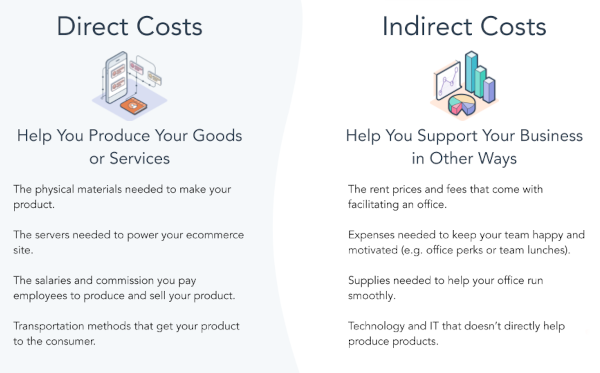
Direct costs are invested "directly" in the development of a product or service. Indirect costs may affect the business's overhead, but they do not directly contribute to the creation and quality of that service. These costs include office space rent, office security, and staff supplies.

Direct costs get their name because they have a "direct" line to the creation and management of your goods and services. You pay cost A in exchange for item B, you use item B to make product C. Cost A is a direct cost because product C can be traced back to the cost A you paid.

Indirect costs are more complicated and do not have this direct line to your product's end result. You pay cost A in exchange for facility B, you use facility B to host machine C, machine C is used by team D to make product E. Cost A is an indirect cost because product E cannot be directly traced back to the cost A you paid. There are other direct costs that took place between A and E.

direct costs help you produce your goods or services while indirect costs help you support your business in other ways

Examples of Direct Costs

  1. Physical materials
  2. Employee salaries
  3. Sales commission
  4. Servers
  5. Data center space
  6. Product transportation
  7. Power

It's easy to attribute your direct costs to the money you spend physically making your goods and services. An automotive company, for example, might pay a steel manufacturer for the material used to create each car body. This is a direct cost to the car company.

However, there are other direct costs that can go into a product even if those costs don't pay for the material your product is made out of. Here are some common examples of direct costs you can attribute directly to your product:

1. Physical materials

The raw materials, ingredients, and parts needed to build your product are all direct costs to your business.

For example, if sell computers, you'll need to factor in the materials needed for the screen, the keyboard, and the hard-drive, as well as any other material needed to build the device when designating a cost for it.

2. Employee salaries

The individual salaries, particularly the ones you pay to those who make and sell your product, are direct costs.

If you hire any freelancers or contractors, you'll also want to factor in how much money you will need to spend on their labor.

3. Sales commission

This is different than salary and is usually specific to salespeople, which often work partially on commission.

Every time a salesperson sells a unit of your product, he/she is paid commission. This is a direct cost to maintaining the value or your product. Compare how many units you'd like to sell with the commissions you'll pay every time they get sold.

4. Servers

In 2020, almost every business needs some sort of a website. Meanwhile, every website needs a server. The servers needed to store customer data on your product, particularly if your product is in the form of software, is a direct cost to your business.

While you might be able to trim down costs buy building your website on a CMS that provides server support, you should still factor in the costs you'll need to protect and store your data.

5. Data center space

Just paying for your servers isn't the only thing you might have to factor in. You also might need to consider where you'll place them and how much that could cost. Data center space you rent or own to store those servers is a direct cost. 

6. Product transportation

Once a customer buys a product, how will it get to them? Will it come in the mail, or will a delivery tech from your company bring it? You'll need to determine which strategy you'll use and add up the costs associated with that. While mail will result in regular shipping costs, having your own company deliver it will results in costs of labor and costs related to purchasing your own modes of transit, such as trucks. 

7. Power

Electricity or fuel consumption is an example of a cost that could go in either the direct or indirect cost bucket. On one hand, the entire business (including the indirect functions of the business) consume power, so unless you're splitting how much goes to direct production vs. indirect functions, it's best left as an indirect cost. However, you might be able to do that attribution easily if arms of your business operate in different facilities or use different types of power.

How to Calculate Direct Costs

direct cost = direct material cost + direct labor cost + expenses

Direct Material Cost

This is the amount of materials that are needed to produce the item or complete the project. Add up all the materials that go into the production of a single unit.

Direct Labor Cost

This is the amount of labor that is required to produce a the item or complete the project. List all the employees that contribute directly to the production of a single unit. Then, determine how much time each of them is expected to put into producing a single unit. From there, you can use their salaries to determine the labor cost of a unit.

Other Expenses

Use the list above to determine other expenses that might directly contribute to production.

You might choose measure direct cost on a monthly basis by taking the cost to produce a single unit and multiplying that figure with the number of units you intend to produce per month. Or you could analyze on a quarterly or yearly basis. Just be sure that you're comparing apples to apples in terms of how you're measuring material cost, labor cost, and other expenses in this regard. You don't want to add a monthly figure with a quarterly figure, for example, because that will throw your calculations off.

By understanding your direct and indirect costs (overhead), you're well on your way to creating a pricing structure and turning a profit. These are important components to your business plan as you determine how to operationalize and grow.

Editor's Note: This blog post was originally published in March 2019, but has been updated for comprehensiveness.


What Are Direct Costs & How Do They Differ From Indirect Costs? was originally posted by Local Sign Company Irvine, Ca. https://goo.gl/4NmUQV https://goo.gl/bQ1zHR http://www.pearltrees.com/anaheimsigns

How Neuromarketing Can Revolutionize the Marketing Industry [+Examples]

If digital and traditional marketers faced off in a debate about whose promotional philosophy is superior (which would probably get more heated than an NSYNC versus Backstreet Boys dispute), one of the points digital marketers could hang over traditional marketers' heads is their ability to measure a campaign's performance -- and their opponent's inability to do the same.

Whether its views, social shares, scroll depth, subscriptions, leads, and sometimes even ROI, digital marketers can measure it all. But even though we have access to a laundry list of metrics, we still can't measure what is arguably the most crucial indicator of a campaign's performance -- emotional resonance.

Don't get me wrong, I love seeing a spike in traffic as much as the next blogger. But in an industry where skimming a page for 10 seconds counts as a view, leaving your desk to grab some string cheese will result in a time-on-page of five minutes, and 50% of web traffic and engagement are generated by bots and Chinese click farms, claiming digital metrics are a surefire way to gauge your content's emotional impact is a stretch.

But what if we could actually measure emotional resonance? What if we could place a resonance score next to a piece of content, just like we do with views?

Interestingly enough, there are companies spearheading this movement and developing technology that can gauge people's emotional response to your content without needing to draw blood or scan any brains.

In 2017, Immersion Neuroscience developed the INBand, an armband that can measure your brain's oxytocin levels by tracking the cadence of your Vagus -- a nerve that controls your heartbeat.

Immersion Neuroscience INBand is used to study consumers oxytocin levels.

Image Source

Oxytocin is known as the empathy chemical. When it's coursing through your brain, you relate to others more, care about them, and feel an urge to help them. And when your brain synthesizes the chemical while consuming marketing materials, it's one of the best indicators of emotional engagement and, in turn, quality content.

In 2018, Immersion Neuroscience wanted to compare people's oxytocin levels while they watched Superbowl ads to their self-reported preference of the same ads. So they hooked eight people up to the INBand and measured their neurochemical responses to 17 ads from the 2018 Superbowl. Then, they compared each ad's immersion scores to their ranking on USA Today's Ad Meter, which is ranked by the public.

What they found was quite shocking -- their results were almost the complete opposite of USA Today's Ad Meter rankings. In fact, the ad that generated the most emotional engagement in the study was ranked the least popular ad in USA Today's Ad Meter.

Immersion Neuroscience's findings suggest that knowing what the brain actually resonates with is much more important than knowing what people say they like, especially when you test ideas in focus groups -- participants are prone to shielding their true opinions due to groupthink and the urge to please authority figures.

So to accurately gauge our content's emotional resonance, and in turn, its ability to grab people's attention, make them feel something, and compel them to act, we need to focus more on neuroscience and less on web metrics and in-person interviews.

Neuromarketing Research

Neuromarketing research commonly uses either brain-scanning technology or physiological measurements to assess consumers' subconscious preferences and can help inform advertising, product development, or marketing materials.

This is typically done through brain scanning — either with fMRI or EEG technology — or physiological tracking, including eye movement measurements, facial coding, or measurements related to body temperature and heart rate.

fMRI and EEG technology have different strengths. For instance, Dr. Roeland Dietvorst, Scientific Director at Alpha, told the Neuromarketing Science and Business Association, "Normally we use EEG for the measurement of dynamic stimuli, like video, TV shows, commercials, online user experience. In such cases, it is interesting to see the brain responding moment-to-moment. We use fMRI mainly for static stimuli, like packaging design, campaign slogans, pay-offs, outdoor messaging."

Measuring physiological tracking is typically much easier to do. There are tools available to the marketplace including FaceReader by Noldus, which measures facial expressions, or various eye tracking software.

However, even though leveraging neuroscience to inform your marketing strategy is an ideal and exciting opportunity, the tactic still seems more suited for a time where Black Mirror storylines are a reality.

In fact, one of the main questions people have is, "Is neuromarketing even ethical?"

Below, let's dive into that question.

Neuromarketing Ethics

While the purpose of neuromarketing is to determine how consumers respond to brands or campaigns, a rather innocuous study, not everyone is convinced that it's ethical.

The study, "Is Neuromarketing Ethical? Consumers Say Yes. Consumers Say No," addresses ethical questions such as, "Will brands be able to influence buyer decisions too much?" and "Is neuromarketing manipulative?"

In and of itself, neuromarketing isn't unethical. However, it's important that companies hold themselves to a high standard of ethics when studying their consumers.

For instance, brands shouldn't intentionally promote anything that's harmful, deceptive, or illegal. Additionally, you shouldn't study minors to figure out how to hook them on a product.

Neuromarketing should be used to create effective ads and eliminate ads that just don't work, and that's all.

The main ethical questioning has more to do with your product or service, and less to do with how you market it. If you're ever in doubt, ask yourself if the product or service is good for the customer.

In actuality, neuromarketing has already permeated into the content space. Netflix, Hulu, and some television networks use neurotrackers to predict how successful their shows will be -- at an 84% rate of accuracy -- and this methodology could soon seep into the marketing industry.

To help you envision a world where neuromarketing is widespread, here are five practical ways brands can nail their marketing with the help of neuroscience.

1. Brands can tell more compelling stories.

When Shane Snow, an author, journalist, and co-founder of Contently, first tried out the INBand to see what the neuromarketing fuss was all about, the CEO of Immersion Neuroscience, Dr. Paul Zak, played this advertisement for him:

After Shane finished watching the ad, he started tearing up. But as he wiped away his tears before Dr. Zak could see them, he realized it was a lost cause -- the INBand had already revealed that the ad made him cry.

Study shows ad viewer was emotional during peak moments of the ad.

Image Source

At each point of the ad where the father gets rejected, the corresponding points on the graph show that Shane experienced bursts of emotion because he developed empathy for him. And at the end of the ad, you'll notice a corresponding spike in emotion on the graph that shows exactly where he cried. The ad's emotional effects even bled over to Shane's reality, making him feel empathetic toward the father after the ad ended, which is evidenced by the last spike's gradual fade.

Shane's emotional response to this ad suggests that telling great stories, chock-full of conflict, surprise, and emotion, is one of the best ways to trigger the release of oxytocin, helping you emotionally engage your audience and, ultimately, make them care about your brand.

In a nutshell, great stories are about the journey of overcoming adversity and how that journey changes people. “Little Moments,” tells the story of a father who so desperately wants to connect with his teenage daughter but ultimately can't make it happen. And at the end of the ad, her constant rejection clearly weighs on him, prompting him to lay down on her bed. But that's when he sees all the photos they've taken together over the years taped above her bed, making him realize that she's always had a connection with him -- he just didn't know it.

2. Businesses can save millions of dollars on ads.

In the same study of 2018 Superbowl ads mentioned above, Immersion Neuroscience discovered that M&Ms' “Human” was the second most immersive ad on their list.

As you can probably predict, “Human” generated the most emotional engagement when the truck plows Danny DeVito into the basket of produce. But a few seconds after this shocking and hilarious climax, Immersion Neuroscience discovered that emotional engagement plummeted, suggesting M&Ms could've shaved off the last 10 seconds of this ad -- and saved over $1.5 million.

3. Companies can host more engaging conferences.

At a major global conference in Houston last year, Immersion Neuroscience put INBands on attendees and measured their immersion during certain presentations. They discovered that concise, energetic talks generated the most emotional engagement.

On the other hand, longer talks need to revolve around a strong narrative or else they can't hold an audience's attention. Additionally, they realized the brain responds well to multimedia-heavy presentations due to the high variety of stimulus.

Based on these findings, Immersion Neuroscience believes tracking attendees' emotional engagement during presentations can help companies refine their conferences by cutting out boring talks and even providing attendees with relevant presentation recommendations.

4. Brands can design more effective ads.

The main goal of neuromarketing is to gain insight into what would make an ad more effective. That's exactly what Roger Dooley did in a study using an ad for baby products.

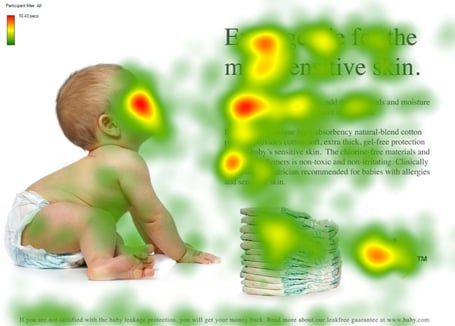
To figure out if an ad was effective, Dooley used a heat map to see where viewers were looking. Are they reading the text? Just looking at pictures?

In the ad below, the baby is looking straight out of the page. Unsurprisingly, viewers love the image of the baby. Most people give the image of the baby more attention than the headline and copy.

Heat map of an ad with a baby facing straight on.

Image Source

However, when you have the baby "look" at the headline and copy, viewers started to give the copy more attention. That's because people will look at the same thing the models are looking at. So, with the image above, where the baby was looking right at us, you weren't directed to look at anything else, so you probably stopped looking around.

Heat map of a baby looking at the text of an ad.Image Source

Ultimately, this neuromarketing study helped create a more effective ad. In your future ads, try to make sure your models are looking at what you want the viewer to see.

5. Brands can sell more by using FOMO.

The fear of missing out, otherwise known as loss aversion, is a widely used tactic in marketing and sales.

In fact, in a study, 62% of consumers were more likely to gamble their money than to lose their money.

Here's the scenario consumers were given:

If you were given $50, would you rather:

  • Keep $30.
  • Gamble, with a 50/50 chance of keeping or losing the whole $50.

When an experimenter posed that question to subjects, 43% of the subjects chose to gamble. Then the options were changed to:

  • Lose $20.
  • Gamble, with a 50/50 chance of keeping or losing the whole $50.

With that slight change, there was a 44% jump in the number of people who gambled.

In fact, when more studies were done like this, 100% of subjects gambled more when the other choice was framed as a loss.

The neuromarketing takeaway is that framing will have a large impact on peoples behavior. And people are loss averse.

You can implement this method by changing the language on your ads. If you can pose the outcome of not buying your product or service as a loss, then you can sell more.

6. Brands can ensure their packaging is effective.

Brands might consider using neuromarketing to measure viewers' emotional reactions to different packaging designs and determine which packaging option evokes the highest level of position emotion and engagement.

As we'll discuss more in the section below, Frito-Lay did exactly that after using neuromarketing to determine which type of packaging appealed most to women. The company came to the conclusion that packaging with healthy ingredients on the front evoked a better reaction from women, and as a result, re-designed packaging to show images of dressing or spices to highlight the natural ingredients in Frito-Lay's snacks.

frito-layImage Source

7. Businesses can determine the right price for a product or service.

Pricing is all about psychology.

For instance, University of Florida marketing professors Chris Janiszewski and Dan Uy wanted to evaluate whether consumers' will truly evaluate a product as more fairly priced if its $19.95 rather than an even $20. They conducted a range of experiments and found people "create mental measuring sticks that run in increments away from any opening bid, and the size of the increments depends on the opening bid."

Or, put another way: If you see a product priced $19.95 you might wish it was $19.75 or $19.50, but you'll be thinking in terms of nickels and dimes. However, if you see a product priced to the nearest full dollar — such as an even $20 — you instead might wish it was priced at $19 or $18, moving the range further away from the actual price.

Similarly, you might consider evaluating consumers' perception of price using neuromarketing. If you ask a focus group whether they believe your product is priced fairly, they might be wary to admit the truth based on groupthink. Neuromarketing, then, can be a useful measurement of consumers' subconscious reactions to certain prices.

8. Brand's can evaluate website performance.

In the Roger Dooley ad described above, Dooley used a heat map to determine the most effective version of an ad.

The same can be true for your entire website. Consider using eye movement measurement technology or other heat mapping software to track which areas of your website are most engaging to viewers, and which areas or pages are least effective.

You might consider using neuromarketing to measure reactions to website layout, color scheme, text, or even font size.

Companies that Use Neuromarketing

It's important to note — some of these brands tested out neuromarketing years ago, ranging as far back as 2009. However, neuroscience is slow to progress, so there are still helpful and relevant lessons we can learn from each of these examples.

1. Microsoft

Microsoft wanted to test the effectiveness of its campaigns on the Xbox platform — and, more specifically, how Microsoft's 30-second and 60-second TV ads performed compared to in-game ad runs on Xbox.

To conduct this research, Microsoft worked with neuromarketing companies Mediabrands and EmSense, and fitted test subjects with a headband that could track brain activity, breathing rate, head motion, heart rate, blink rate, and skin temperature. The company then showed three types of ads to test subjects – a 30-second Kia Soul TV ad, a 60-second Kia Soul TV ad, and a Kia Soul in-game ad.

The results? The TV ads caused the most brain activity in the first half of the ad. The Xbox Live ads, on the other hand, caused peak brain activity at the repeat image of the Kia Soul car, which suggests viewers will remember the ad better on Xbox.

These results were supported by more traditional metrics — for instance, the Xbox live ad delivered a 90% unaided brand recall rate, compared to 78% with the traditional TV spot.

2. Frito-Lay

Frito-Lay worked with Juniper Park, an advertising agency, in 2009 to develop a campaign that would appeal more to women. To do so, Juniper Park used neuromarketing to study women's brains, and found the hippocampus — a memory and emotional center — is larger in women, suggesting women may look more for ad characters with whom they can empathize.

Juniper Park's research also found women may have a stronger link between decision-making and feelings of guilt. Once Juniper Park explored this research with NeuroFocus, they began testing various ads to investigate how women responded.

Ultimately, the ad agency recognized women may often feel guilty, particularly when it comes to eating habits. As a result, Frito-Lay shouldn't try to get rid of this guilt — instead, the brand should highlight its healthy ingredients in its snacks, and showcase spices or dressing on the packaging to demonstrate the health quality to avoid the guilt-factor entirely.

3. The Shelter Pet Project

Nielson Consumer Neuroscience worked with the Ad Council and The Shelter Pet Project to evaluate consumers' non-conscious response to the "Meet A Shelter Pet" ad. The team used EEG and eye-tracking measurements to A/B test the impact of the Shelter's ads.

The results demonstrated that faces — including a dog's — on-screen boosted viewers' emotional engagement, and when the dog was off-screen the attention dropped. To mitigate these issues and capture higher viewership and engagement, the team shortened the dog's off-screen time and cleaned up the ending.

The Shelter Pet project saw 133% increase in website visits and a 28% increase in pet finder database searches as a result of neuromarketing.

4. German Financial Institution

In 2017, a German financial institution worked with Nielsen Consumer Neuroscience to figure out which version of their ad garnered the most trust. To do this, the team used EEG measurements to assess how emotionally engaged viewers' felt when watching two versions of an ad.

The only difference? One ad played classical music, while the other played more modern notes.

The participants were then asked to perform a task to assess how well the ad had communicated messages on a subconscious level. The results demonstrated the traditional music outperformed the more modern version, and evoked a sense of "trust" in viewers. It's likely that classical instruments are associated with a sense of stability, versus modern music which evokes a sense of excitement and risk.

Even though we live in an age of data overload, where you can measure almost anything, Google Analytics will never be able to accurately gauge the most important element of your marketing campaign -- its ability to make your audience feel something.

Fortunately, the neuromarketing space is rapidly evolving, and its technology is becoming more affordable and practical for marketers today, hopefully leading to its mainstream use tomorrow.

Editor's note: This post was originally published in January 2019 and has been updated for comprehensiveness.


How Neuromarketing Can Revolutionize the Marketing Industry [+Examples] was originally posted by Local Sign Company Irvine, Ca. https://goo.gl/4NmUQV https://goo.gl/bQ1zHR http://www.pearltrees.com/anaheimsigns

How to Blend Web Analytics and Digital Marketing Analytics to Grow Better

Measuring the effectiveness of digital marketing is one of the greatest challenges facing organizations today.

The trouble is, when most marketers hear "digital analytics," they tend to think of the metrics you'd typically associate with a simple web analytics tool like Google Analytics — traffic, bounce rate, unique visitors, etc.

However, web analytics is only part of what encompasses digital analytics.

While web analytics can provide you with a wealth of insight into the performance of your website, marketers need richer data to understand the impact of their marketing campaigns on conversion rates and a buyer's journey. Looking at top-level web analytics metrics like traffic is only the first piece of the puzzle.

Enter: digital marketing analytics, which offers a much more comprehensive view of what's working (and what isn't) when it comes to your marketing strategy.

Regardless of how you fit into your company’s marketing mix, learning how to understand and leverage digital marketing analytics is incredibly important. Analytics data not only tells you if your marketing is working, but it also tells you precisely how and where you can improve. This type of insight can benefit everyone.

That’s why we built this guide. We want you to master marketing analytics so your business can grow better. Below, we’ll talk about what marketing metrics to monitor, how to read and apply them to your marketing decisions, and how to leverage them to grow your business and bottom line.

Bookmark this guide for future reference and use the chapter links below to navigate through the content.

Digital marketing analytics also give the creative, fluid side of marketing a data-driven foundation on which businesses can build a profitable, scalable marketing strategy. Analytics draw the line between opinion and fact.

Before we dive into how to use digital analytics for your business, let’s talk about what marketing metrics you’ll be measuring and analyzing.

Digital Marketing Metrics to Know

Digital marketing metrics are statistical measures that marketers use to determine the success of various marketing efforts as they relate to their overall campaign goals and industry standards.

You’ve heard of vanity metrics, yes? Vanity metrics are the surface level numbers that often tease you into thinking your efforts are working.
vanity metrics

Source

Unfortunately, to get a clear picture of your campaign’s impact, you need to look at a wider variety of actionable metrics. We’ll be covering both in this section.

Here’s a comprehensive list of all the marketing metrics you need to know — and what they can tell you.

Digital Metrics for Websites

The following are digital marketing metrics associated with websites and web activity — a.k.a. web analytics.

Visitor

A Visitor (or User) is someone who visits your site. Visitors are tracked by a cookie placed in their browser by a tracking code installed on your site.

Page View

A Page View is when a page on your site is loaded by a browser. A page view is measured every time your tracking code is loaded.

Session

A Session is a series of activities taken by a visitor on your website, including page views, CTAs, and events. Sessions expire after 30 minutes of visitor inactivity.

Traffic

Traffic (or Visits) is the total number of site or page visits in a given time period

Traffic by Channel

Traffic by Channel is the total number of site or page visits per referral channel, e.g. social media, email, landing pages, etc.

Traffic by Device

Traffic by Device is the total number of site or page visits per device type, e.g. smartphone, tablet, desktop, etc.

Ratio of New Traffic to Returning Traffic

The Ratio of New Traffic to Returning Traffic is the percentage of net new site or page visitors you receive as compared to the total amount of returning traffic

Time on Page

The Time on Page is the average time each visitor spends on your site or page

Interactions per Visit

Interactions per Visit are what actions your visitors took did when on your site or page

Bounce Rate

The Bounce Rate is the percentage of people who visited your site or page but didn’t take any action or look at any other pages as compared to the total number of page or site visitors

Digital Metrics for Lead Magnets

The following are digital marketing metrics associated with lead magnets and content offers.

Call-to-Action (CTA) Click-Through Rate

The CTA Click-Through Rate is the percentage of total clicks on a CTA as compared to the total number of page or site visits

Submissions

Submissions is the percentage of total people who filled out and submitted your web form

Conversion Rate

The Conversion Rate is the total number of actions taken (e.g. a download, sign-up, etc.) on your lead magnet as compared to the total number of visits

Free Trial Conversion Rate

The Free Trial Conversion Rate is the percentage of free trial users who converted to customers

Pop-Up Conversions

Pop-Up Conversions is the percentage of total pop-up form completions who converted to customers

Ratio of Generated Leads to Marketing-Qualified Leads (MQL)

The Ratio of Generated Leads to MQL is the total number of “good fit” leads collected from your lead magnet as compared to the total number of leads generated

Leads to Close Ratio

The Leads to Close Ratio is percentage of leads converted to customers as compared to the total number of leads

Digital Metrics for Email Marketing

The following are digital marketing metrics associated with email marketing.

Open Rate

The Open Rate is percentage of opened emails as a proportion of the total number of emails sent

Opens by Device

Opens by Device is the total number of email opens per device type, e.g. smartphone, tablet, desktop, etc.

Click-Through Rate

The Click-Through Rate is the percentage of total clicks on an email link, or CTA, as a proportion of the total number of email opens

Bounce Rate

The Bounce Rate is the percentage of undeliverable emails as a proportion of the total number of emails sent

Unsubscribe Rate

The Unsubscribe Rate is the percentage of people who unsubscribe from your email list over a given period of time

Digital Metrics for Content and Social Media

The following are digital marketing metrics associated with content and social media.

Engagement Rate

The Engagement Rate is the total number of engagements (e.g. comments, clicks, likes, etc.) as a proportion of the total number page or post views

Follows and Subscribes

Follows and Subscribes is the total number of people who’ve shown interest in your content and want to receive updates when new posts or pages are published

Shares

Shares is the total number of times a post or page has been shared on social media, a website, or a blog

Digital Metrics for Product and E-Commerce

The following are digital marketing metrics associated with e-commerce.

Shopping Cart Abandonment Rate

The Shopping Cart Abandonment Rate is the total number of online shoppers who put items in their shopping cart but don’t complete a purchase as a proportion of the number of people who complete a purchase

Tip: We’ve found that you can improve your e-commerce conversion rates by changing your shipping options.

This section serves as a high-level review of the most important marketing metrics per channel. Depending on what software you use or marketing channels you pursue, you may see different metrics.

So, why exactly do digital marketing analytics matter? Let's take a look at what makes digital analytics so important today, and how they compare to (and improve on) the insights offered by more basic web analytics.

Digital Marketing Analytics vs. Web Analytics

Quite simply, web analytics (like many of the metrics we defined above) just isn't enough. The data that web analytics provides alone doesn't cut it for marketers who need to understand how their work makes an impact throughout the entire marketing and sales flywheel.

Let's face it: Today's marketing extends well beyond the bounds of your website. It also includes how your marketing channels interact, the insight you gain from those outcomes, and the progress you track through your reporting.

This perspective provides the foundational data you need to structure your flywheel — delighting your existing customers enough to attract and engage new ones.

Web analytics measure things a webmaster or technical SEO specialist cares about, like page load speed, page views per visit, and time on site. Digital marketing analytics, on the other hand, measure business metrics like traffic, leads, and sales, and allows you to observe which online events determine whether leads will become customers.

Digital marketing analytics include data not only from your website, but also from sources like email, social media, and organic search.

How Digital Marketing Analytics Connects Every Business Activity

With digital marketing analytics, marketers can understand the effectiveness of their entire marketing strategy, not just the effectiveness of their website. Using digital marketing analytics allows marketers to identify how each of their marketing initiatives (e.g., social media vs. blogging vs. email marketing, etc.) stack up against one another, determine the true ROI of their activities, and understand how well they're achieving their business goals.

The central question is: How can you structure an appropriate business goal to visualize your marketing team's efforts in the most accurate way possible?

As a result of the information they can gather from full-stack digital marketing analytics, marketers can also diagnose deficiencies in specific channels in their marketing mix, and make adjustments to strategies and tactics to improve their overall marketing activity.

You can spend hours and hours slicing and dicing data in web analytics tools, comparing new vs. repeat visitors month over month. But when it comes down to it, you'll come up short of a truly comprehensive view of your marketing performance.

There's no doubt that marketers are aware there's a deficiency in how they're able to measure the effectiveness of what they do; here's how full-stack digital marketing analytics makes up for that deficiency.

A digital marketing analysis is the first step to developing a strong digital marketing analytics strategy. This process can be used to structure a business goal into outcomes based on three broad categories:

  1. The relationship between different marketing channels
  2. People-centric data on the buyer's journey
  3. Revenue attributed to specific marketing efforts

Download our free ebook on inbound marketing analytics — the key metrics your executives really want to see.

Let's highlight these main differentiators.

1. The Relationship Between Marketing Channels

Digital marketing analytics provides a good, solid look into the direct relationships between your marketing channels. It's great to be able to see how each of your individual channels (e.g., social media, blogging, email marketing, SEO, etc.) are performing, but the true power of analytics comes into play when you can easily tie the effect of multiple channels' performances together.

For instance, let's say you sent an email to a segment of your database. Digital marketing analytics not only tells you how many people clicked through from your email to your website but also how many of those people actually converted into leads for your business when they got there.

Furthermore, you can compare the impact of that individual email send with other marketing initiatives. Did that email generate more leads than the blog post you published yesterday? Or was the content you shared via Twitter more effective?

2. People-Centric Data on the Buyer's Journey

As we mentioned earlier, a key differentiator between web analytics and digital marketing analytics is that the latter uses the person — not the page view — as the focal point.

Digital marketing analytics enables you to track how your individual prospects and leads are interacting with your various marketing initiatives and channels over time. How did an individual lead first come to find your website? From Google? Facebook? Direct traffic? Is that lead an active part of your email subscriber base, clicking and converting on marketing offers presented via email? Do they read your blog, and have they downloaded any content offers that could indicate an interest in your products/services?

Full-stack digital marketing analytics can tell you all of this and more, providing you with extremely valuable lead intelligence that can help inform the direction of your future campaigns.

Looking at all of this information in aggregate can help you understand trends among your prospects and leads and which marketing activities are valuable at different stages in the buyer's journey.

Perhaps you find that many customers' last point of conversion was on a certain ebook or white paper. Having this data makes it possible to implement an effective lead management process, enabling you to score and prioritize your leads and identify which activities contribute to a marketing-qualified lead (MQL) for your business.

3. Revenue Attributed to Specific Marketing Efforts

One of the most useful functions of marketing analytics is its ability to attribute specific marketing activities to sales revenue. Sure, your blog may be effective in generating leads, but are those leads actually turning into customers and making your business money? Closed-loop marketing analytics can tell you.

Download our free ebook on closed-loop marketing and take your digital marketing analytics to the next level.

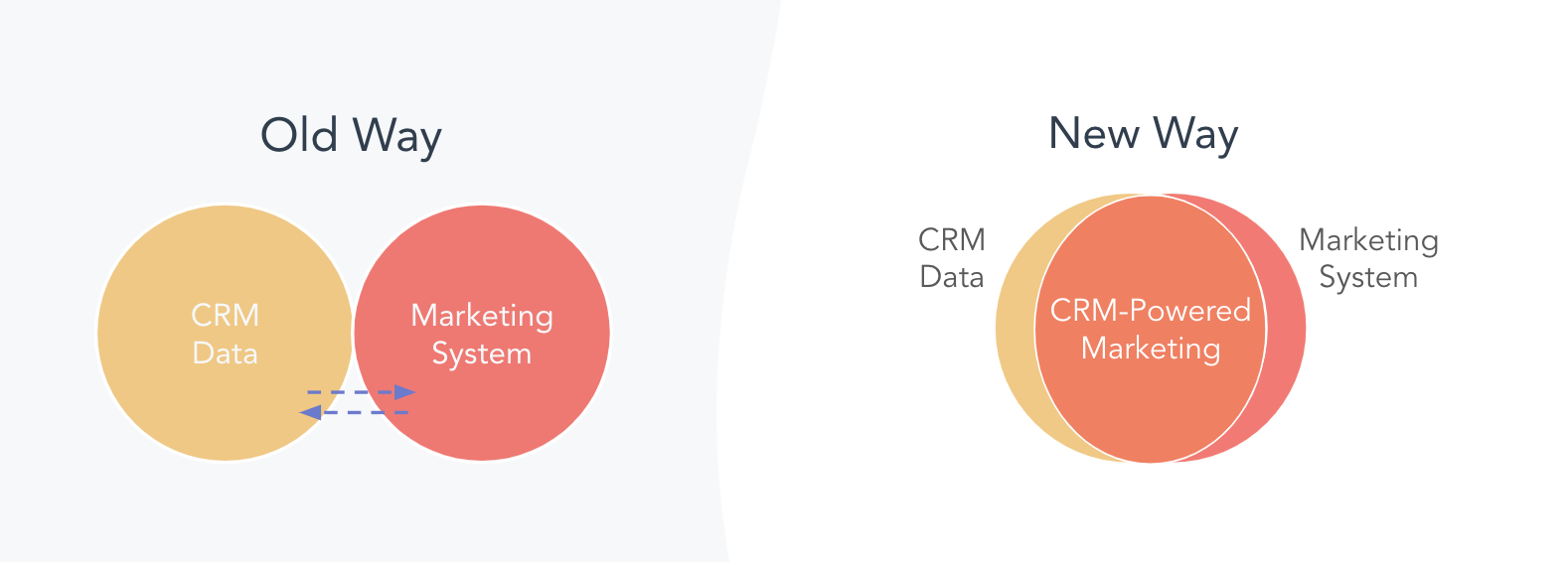
The only requirement here is that your digital marketing analytics system is hooked up to your customer relationship management (CRM) platform.

Having this closed-loop data can help you determine whether your individual marketing initiatives are actually contributing to your business' bottom line. Through it, you can determine which channels are most critical for driving sales.

Perhaps you find that your blog is your most effective channel for generating customers, or conversely, you find that social media is really only powerful as an engagement mechanism, not a source of sales.

By measuring the relationship between marketing channels, tracking people-centric data, and analyzing what revenue is linked to which efforts, you’ll be equipped to set goals that support your bottom line.

Now, let’s talk about how to use these marketing analytics effectively.

How to Use Digital Marketing Analytics Effectively

Most marketers know they need to be looking at more than just traffic and website performance to get the insights we've talked about so far. But why do so many of us still struggle to measure the impact and prove the ROI of our online marketing activities?

Probably because:

  • We don't have solid goals in place for our campaigns, or
  • We don't have the means to measure our success.

Quite often, you'll find it's a combination of the two.

Master SMART Marketing with our free, goal-setting Excel template.

S.M.A.R.T. Goals

One way to mitigate this is to have an actionable business goal combining your marketing team’s priorities. Typically, this can be achieved using the S.M.A.R.T. format. In this strategy, each goal you create must be:

  • Smart
  • Measurable
  • Attainable
  • Relevant
  • Timely

A good business goal will inherently organize your team’s tasks towards producing specific outcomes or metrics to measure their progress. For marketing teams, this can be broadly summarized into three major categories:

  • Web traffic and diversity of sources
  • Conversions generated from traffic to produce leads and (eventually) customers
  • Identifying net new revenue as a direct result of certain marketing efforts, laying a roadmap for further growth and cost-effective marketing investments

The fact is, in order to gain the insights needed to understand their marketing performance and make sound decisions, most marketers balance a number of different digital analytics platforms. (Remember how many categories of marketing metrics we reviewed above?)

For example, they gather data about their email marketing through the analytics provided by their email service provider, information about their social media performance through their social media monitoring tool, blog analytics from their blogging platform … and the list goes on.

But this fragmented approach to reporting makes it really difficult to connect the dots and make informed decisions about the future of your digital strategy.

The ideal solution is to implement an all-in-one marketing and reporting platform that offers end-to-end visibility on your marketing activities, allowing you to measure everything in one place.

Campaign-Based Reporting

Rather than just looking at canned reports for each traffic source you can use custom reporting capabilities to construct data charts that depict an entire marketing campaign's progress, not just how certain content is doing through certain channels.

Here's how you can configure your digital analytics to capture this holistic view, showing you where a potential buyer came and where they are going. We'll use HubSpot's Marketing Hub as an example. Here are some of the types of analytics you can see in a quality marketing tool:.

Web Traffic by Original Source

This is an easy report that you can configure by date range and/or original source to show what marketing channels you can capitalize on to turn more of that traffic into leads and customers. You can use HubSpot's Traffic Analytics tool to get access to this.

First Conversion by Original Source/Persona

This report quantifies your impact by the number of new contacts you’re able to create based on the first content offer or form submitted, and tie that back to the original source of that lead.

Another way to look at this is to segment your contacts by a particular persona to show which ones are giving the most return for which your team is creating content.

Contacts Funnel Report

This calculates the conversion rates down the marketing and sales funnel, showing new leads that become marketing qualified leads, sales qualified leads, and, ultimately, new customers.

Marketing Contribution to Revenue

This custom report depends on your use of the marketing qualified lead lifecycle stages, visualizing those that converted into customers and their relative value in terms of revenue generated.

Customer Acquisition Cost

This can be seen in HubSpot by using calculated fields or custom properties to depict the amount of money spent by your marketing team to attract, engage, and delight your buyer persona.

These closed-loop reports are just some of the capabilities available to depict your progress towards your business’s bottom line.

All of the insights, information, and data you can gather from your digital marketing analytics tool(s) is really only useful if you do something with it. The true value of analytics isn't just to prove the value of marketing to your boss; it's also to help you improve and optimize your marketing performance — on both an individual channel-by-channel basis as well as an overall, cross-channel machine.

With digital marketing analytics, you should also be able to implement closed-loop reporting, making it easier to prove how your marketing efforts are positively impacting your sales team, who are being fed much higher quality leads.

Digital Advertising Analytics

Digital advertising is an important part of any digital marketing strategy. Nearly one quarter of marketers spend the same amount of their marketing budget on advertising (25%). 

Traditionally, the effectiveness of digital advertising (e.g. paid search and social media ads) has been measured by click-throughs and the cost of each click (CPC). While these are powerful metrics, you can’t truly know the cost of each click unless you’re measuring the value of your conversions and ROI of your campaigns.

One way to measure this is by putting a full-stack marketing solution in place to join your impression, click, and cost data from all active digital advertising channels to your CRM. Doing so will help you link the cost of each click-through to the value it provides your business.

Moreover, digital display advertising should be considered powerful tools for brand awareness — not measured by click-throughs (or the lack thereof). These types of digital ads can boost organic and cross-channel performance as consumers see your ad, become interested in your brand, and search for your website or social media.

Apply this new perspective on digital advertising analytics and watch how it transforms your overall digital marketing strategy.

Grow Better with Digital Marketing Analytics

The most important takeaway from this article is: If you're relying solely on top-level web analytics, you're missing out on a lot of powerful data that can help inform your marketing strategy and better connect with your audience and customers. So, when evaluating digital analytics tools for your business, be sure you're looking for evidence of digital marketing analytics, not just web analytics.

While web analytics provide a rosy picture of your top-line activity, digital marketing analytics can help you turn your business objectives into measurable outcomes that support your bottom line. Prioritize the data that reflects people — not page views — and you’ll be growing better in no time.

Editor's note: This post was originally published in February 2019 and has been updated for comprehensiveness.


How to Blend Web Analytics and Digital Marketing Analytics to Grow Better was originally posted by Local Sign Company Irvine, Ca. https://goo.gl/4NmUQV https://goo.gl/bQ1zHR http://www.pearltrees.com/anaheimsigns

The Simplified Guide to Google's RankBrain Algorithm

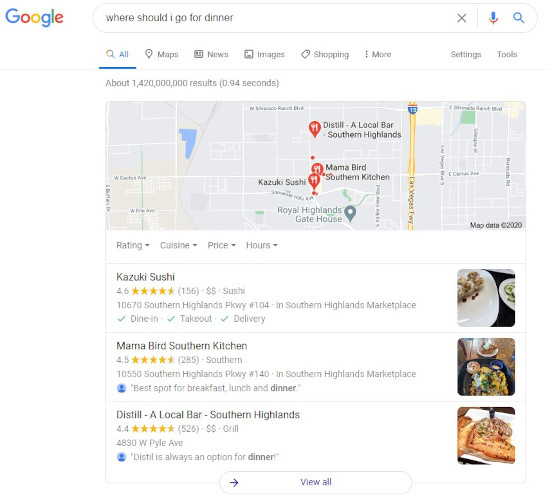
Not long ago, if you wanted to find a place to eat, you needed to search for a term like “Boston restaurants”. But, today, you can instantly find a good restaurant that’s nearby if you just search for the term, “Where should I go for dinner?”

That’s because Google is sophisticated enough to recognize your intent or the implications of your query. However, prior to 2015, you needed to type the most straightforward queries into the search engine to find the answers you were looking for.

So how did Google evolve to understand their searchers’ intent and implications so quickly? Well on October 26, 2015, they confirmed that they updated their algorithm with a machine-learning artificial intelligence system called RankBrain.

In other words, RankBrain helps Google understand a searcher’s intent and serve the most relevant content to them.

How Does Google's RankBrain Work?

As explained above, RankBrain was designed for the searcher's experience in mind, particularly when it comes to understanding the intent and relationships behind seemingly complex searches. 

In order to better explain this functionality, we break down how RankBrain works in conjunction with Google's algorithm as a whole:

RankBrain and Other Ranking Signals

Before RankBrain, Google used a number of ranking signals to determine:

  • Relevance to the searcher's query
  • The authority of a particular website and page to provide a trustworthy answer
  • User experience so that the searcher would have their needs met in an enjoyable way and without friction

Some of these signals (or ranking factors) include: 

  • Crawlability/indexability
  • Quality content
  • Backlinks
  • Page speed
  • Mobile experience

While these ranking factors are still relevant, they don't tell the whole story anymore. For one, they are largely static and don't factor in semantic search, and that's where RankBrain differs from these components of Google's algorithm.

RankBrain and Machine Learning

Machine learning is a form of artificial intelligence that "learns" from data and improves based on experience. The advantage of machine learning is that it can analyze and connect multitudes of variables to "understand" beyond what a human analyst would be able to — if it has a sufficient amount of data.

Why is this relevant in the context of RankBrain? Because RankBrain is an example of machine learning as implemented by Google.

To accurately determine a searcher’s intent, Google feeds RankBrain a massive amount of data. Then, RankBrain analyzes it and teaches itself how to serve the most relevant results based off certain search signals, such as search history, device, and location.

google semantic search example for the query "where should i go for dinner" showing local restaurant results

For example, if you type the query “Where should I go for dinner?” into Google, the search engine will first pinpoint your location and detect the device you’re using. Then, it’ll use these factors to interpret your query’s intent, which Google will translate to “Which restaurants are currently open for dinner within walking distance of my current location?”, helping it serve the most relevant results to you.

RankBrain and Hummingbird

Hummingbird is a version of Google's search algorithm that extracts the meaning of the whole query rather than particular words. This component is the reason why Google can determine semantic meanings from specific queries to produce the best result.

RankBrain feeds user signals into this aspect of the algorithm, enhancing Google's ability to infer meaning. To be more specific about the relationship between the two, Connectica makes the following analogy that: "RankBrain is the thinking and Hummingbird is the memory."

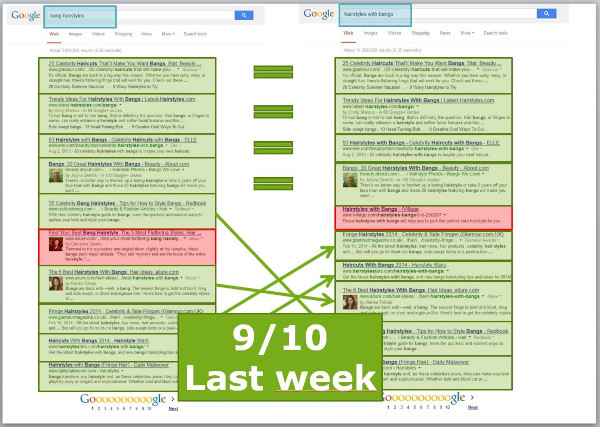
An example of RankBrain's capabilities in this way is how similar the search results are for semantically similar but different keywords. For example, "bang hairstyles" and "hairstyles with bangs" have similar results, including keywords that are not optimized word-for-word for the specific query. 

serp comparison of "bang hairstyles" and "hairstyles with bangs" that have 9/10 similar SERP results

Image Source

How Do You Optimize for RankBrain?

Even though RankBrain helps Google adapt to changing search behavior, most marketers still haven’t adapted their SEO strategy to this transformation. Here are some mindset changes you should adopt when thinking about modern-day SEO. 

1. Stop thinking of SEO in terms of keywords alone.

"One of the main reasons we keep drilling our audience with the idea of topics over keywords is that search has evolved but our customer's content marketing strategies are lagging behind,” says Victor Pan, HubSpot’s Head of Technical SEO. “Practices like purposely creating pages with misspellings and poor grammar just because there is search volume need to go."

Today, people rely heavily on Google to provide accurate and relevant answers for most of their questions, so the search engine needs to understand the intent and context behind every single search.

To do this, Google has evolved to recognize topical connections across users’ queries, look back at similar queries that users have searched for in the past, and surface the content that best answers them. As a result, Google will deliver content that they deem the most authoritative on the topic.

2. Implement the pillar-cluster model.

To help Google recognize your brand as a trusted authority, consider implementing the pillar-cluster model on your blog. Using this strategy, you’ll create a single pillar page that provides a high-level overview of a topic and hyperlinks to cluster pages that delve into the topic’s subtopics. This signals to Google that your pillar page is an authority on the topic.

Hyperlinking all of the cluster pages to the pillar page also spreads domain authority across the cluster, so your cluster pages get an organic boost if your pillar page ranks higher, and your cluster pages can even help your pillar page rank higher if they start ranking for the specific keyword they’re targeting.

3. Move toward long-form, high-quality pages and posts.

On the editorial side of things, RankBrain has pressured content marketers to scrap a tactic that they should’ve abandoned years ago -- prioritizing volume over quality. Nowadays, spending more time and effort crafting insightful and compelling content at a lower volume is one of the best ways to bolster your standing with Google.

"If you have a huge inventory of 2000-era SEO tactics, I'd highly recommend consolidating the pages that are driving zero value to your business with 301 redirects,” says Pan. “It's not that less is more, but better is more. It's very common for a strong piece of content to rank for over hundreds of long-tail keywords of the same intent.”

RankBrain has advanced Google’s search engine to the point where people can interact with it like they're chatting with their friends -- and it’s time for content marketers to catch up.

If you apply the lessons learned above to your SEO strategy, however, you could adapt faster to RankBrain than Google’s search algorithm evolved after they implemented the AI system.

Editor's note: This post was originally published in April 2019 and has been updated for comprehensiveness.


The Simplified Guide to Google's RankBrain Algorithm was originally posted by Local Sign Company Irvine, Ca. https://goo.gl/4NmUQV https://goo.gl/bQ1zHR http://www.pearltrees.com/anaheimsigns
How to Predict and Analyze Your Customers’ Buying Patterns

Buyers don't think like marketers or salespeople. Anyone who works in these departments can admit that. More importantly, buyers don't think like each other either.

Each consumer follows their own set of buying patterns, whether they recognize it or not. For instance, someone who walks to work every morning may grab a coffee from the Starbucks on the corner — to them, that's part of their routine. To Starbucks, that's an established buying pattern.

But if this person happened to move neighborhoods, they’d likely establish a new routine (and buying pattern).

Buying patterns are important to recognize, analyze, and measure because they help businesses better understand and potentially expand their target audience. Buying patterns also fall in step with the customer journey, although they connect more with the psychology and motivations behind each stage.

In this post, we are going to discuss buying patterns and how to predict those of your customers.

What are buying patterns?

Buying patterns refer to the why and how behind consumer purchase decisions. They are habits and routines that consumers establish through the products and services they buy.

Buying patterns are defined by the frequency, timing, quantity, etc. of said purchases.

These patterns are determined by factors such as:

  • Where someone lives
  • Where they work
  • How much money they make
  • What they enjoy and prefer
  • What their friends and family recommend
  • What their goals and motivations are
  • The price of the product or service they're interested in (and any active sales or discounts)
  • Any product displays
  • The necessity of the product or service
  • Festivals, holidays, rituals, or celebrations

For example, let’s say the customer mentioned in the introduction is named Robert. Robert’s coffee-buying pattern is one coffee every weekday morning, and this pattern is primarily influenced by where he lives and what he likes to drink.

Therefore, when Robert moves neighborhoods, he’ll likely choose a new morning routine (and establish a new buying pattern) that allows him to still snag that morning coffee.

So, in this case, why should Starbucks care?

Well, by understanding Robert’s buying pattern, Starbucks could better understand the buyer persona he represents, predict in-store traffic, and analyze how they could better market their products to similar customers.

Predicting Customer Buying Patterns

Many, many things influence a customer’s buying behavior and patterns. In the case above, Robert’s neighborhood and coffee cravings influenced his daily Starbucks routine, but that’s just one example of his buying patterns. Robert also has established buying patterns for his groceries, gym usage, clothing purchases, and more.

These types of purchases fall into four consumer behavior categories:

  1. Routine purchases (e.g. weekly grocery shopping)
  2. Limited decision-making purchases (e.g. a new salon recommended by a friend)
  3. Extensive decision-making purchases (e.g. a new car)
  4. Impulse purchases (e.g. a pack of gum at the register)

Buying patterns are present in all of these types of consumer behavior, but they’re most prevalent and predictable through routine purchases. (We’ll dive more into these types and examples in the following section.)

Marketers at companies in all these industries work to uncover and understand the buying patterns of their customers. Most buying patterns are established through the typical buyer journey: awareness, consideration, and decision.

When a pattern is established, however, the buyer then no longer has to become aware of their problem and consider a solution — they simply repeat the decision stage over and over, thus creating the pattern.

So, how can marketers and salespeople uncover the current buying patterns of their customers? The most straightforward way is to ask. Once you set a baseline of customer behavior and expectations, you can then start to predict their patterns — and those of similar shoppers.

Here are some questions to ask in a customer survey or focus group:

  • Why did you first purchase [product or service]?
  • Who in your household decided to purchase [product or service]? Does this person make all the buying decisions?
  • Where do you go when looking for [product or service]?
  • How long does it take to decide to buy [product or service]?
  • Do you buy other [products or services]? Why?
  • What’s your budget for [product or service]?
  • How far would you travel to buy [product or service]?

These questions help you understand the why and how behind your customer purchase decisions, thus uncovering their buying pattern as it relates to your product or service.

The most important takeaway about buying patterns is that they’re ever-changing. Not only do they differ between your customers and buyer personas, but they may also change as an individual’s life changes — as we saw above with Robert.

Customer Buying Pattern Examples

In the previous section, I outlined the four main types of consumer behavior. Below, I’ll unpack an example of a customer buying pattern for each of the types of consumer behaviors.

1. Routine Purchases

I mentioned above that routine purchases typically yield buying patterns. This is true because these patterns are the most prevalent and predictable.

For example, let’s say Betty goes grocery shopping every Monday morning after taking her kids to school. She buys many of the same items every week since her kids are young and prefer to repeat their favorite meals for dinner. Sometimes, she’ll splurge on an extra dessert or fancy coffee, but for the most part, she sticks to the same list.

On one Monday, her kids’ school is closed for maintenance. She has to take them to the grocery, vastly changing her grocery routine as her kids pull a variety of snacks and treats off the shelves. She decides to buy a few to placate her kids and treat them to a special day off.

This is also an example of how a buying pattern can be altered based on who accompanies the decision-maker.

2. Limited Decision-Making Purchases

Limited decision-making purchases are typically rendered through a trusted recommendation by a friend or family member. Because of the recommendation, the decision-maker doesn’t consider it to be a tough decision or feel the need to do much research. This type of purchase can actually be the catalyst for an altered buying pattern.

For example, let’s say Georgia has gone to the same hair salon for five years. She's never disliked her services there, but when her friend mentions an amazing new salon that has opened down the street, Georgia is curious to try it.

When she goes, she is so impressed with the service that she decides to make it her new routine salon, thus altering her buying pattern due to outside influence or recommendation.

3. Extensive Decision-Making Purchases

Extensive decision-making purchases are usually those that are for expensive, seldomly-made purchases. These may include a new car, computer, or even a home. Because of their ticket size, there’s little room to establish a buying pattern between purchases.

However, some consumers are loyal to certain brands or stores. For example, let’s say Austin decides it’s time for a new car. He and his family have always owned Fords, so when it comes time to shop for cars, he doesn’t think twice about looking for a new Ford.

While he’s uncertain of what model he’ll buy (sedan versus SUV), he knows for sure that he’ll purchase a Ford vehicle, thus creating a buying pattern between his few-and-far-between car purchases.

4. Impulse Purchases

Impulse purchases are exactly how they sound — impulsive purchases made with little planning, research, or forethought. For this reason, buying patterns are hard to establish with these kinds of purchases.

However, one consistent factor in impulse buying is convenience; consumers often make impulsive purchases when they need something quickly or see something they (think they) need. The convenience factor of impulse purchases allows for buying patterns around location and proximity.

For example, let’s say Gio likes to add a little something extra to his takeout purchases when he orders on his food delivery app. He often changes where he gets food from, but he typically throws in an add-on (e.g. fries, a drink, or a cookie) when prompted before check-out.

In this case, there’s no buying pattern established in what Gio orders or where he orders from, but the app tracks his add-on purchases to analyze how often he makes impulse buys on the app. Then, they know to continue prompting those add-ons or perhaps increase the number of products listed.

Tools for Analyzing Customer Buying Patterns

Customer buying pattern analysis is all about analyzing customer behaviors, and there are plenty of tools that can help.

1. Google Analytics

Google Analytics provides a deep-dive view of your customers’ behaviors on your website. From traffic numbers to user demographics, Google Analytics can show you how your customers are interacting with your website. It can also help you establish baseline behaviors from which you can track patterns (or new behaviors that indicate breaks in patterns).

2. Facebook Audience Insights

If your audience is active on your Facebook Page, you can learn a lot about their behaviors and patterns through Facebook Audience Insights. These patterns may not always result in a purchase, but understanding how your audience behaves on social media can teach you how to optimize your social and other promotional content to better entice them to buy.

For example, if you see your followers engage the most on posts that ask a question, perhaps you start posting inquiries that relate to your product or service (versus blatantly promotional posts that don’t otherwise interest your audience).

3. HubSpot CRM

Here at HubSpot, we’re strong advocates of customer relationship management (CRM) tools. So much so that we offer a free one. Not only do CRMs help align your sales, marketing, and customer service teams, but they provide natural, seamless places to store and track customer behaviors — including buying patterns.

If you link your CRM to your register and/or ecommerce platform and track your customer’s purchases, it will quickly show you patterns in purchase frequency, timing, and more. All you have to do is stay diligent in your data collection.

4. HubSpot Service Hub

HubSpot Service Hub includes valuable Customer Feedback Software that can help you run surveys and collect insights about your customer buying patterns. The tool offers many pre-written and templatized survey options so you can dive right into gathering information around your customer behaviors and preferences.

For example, if you surveyed 25 known customers through HubSpot Service Hub, their answers and preferences would then be recorded in your HubSpot CRM, making it easier for you to track behaviors and establish buying patterns.

Buying patterns can tell you a lot about who’s buying from you and why. Use this information to better understand your customers, and fashion your marketing to match their expectations and meet them where they are.

To dig deeper, read our blog post on marketing psychology next.


How to Predict and Analyze Your Customers’ Buying Patterns was originally posted by Local Sign Company Irvine, Ca. https://goo.gl/4NmUQV https://goo.gl/bQ1zHR http://www.pearltrees.com/anaheimsigns
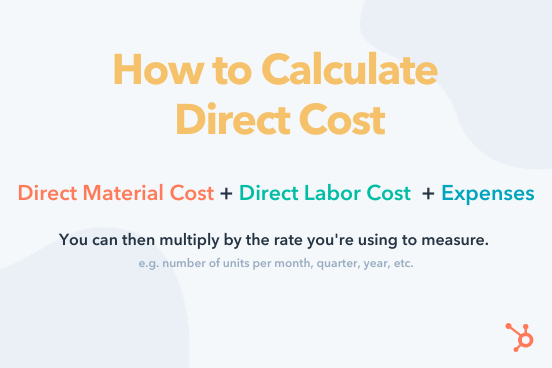
How to Get Started With CRM-Powered Advertising [+ Why You Should]

HubSpot was founded during a time when people were under constant attack from aggressive outbound marketing tactics.

I'm sure nobody misses the unwanted ads, spam emails, and cold calls that used to interrupt their day back in the mid-00s.

Ad retargeting wasn't a thing, so we all had to settle for repeatedly seeing the same ads for products we had absolutely no interest in.

Marketing has changed a lot since then. Thankfully.

Nowadays, companies have the ability to develop engaging advertising campaigns that complement their inbound strategies and speak directly to their audiences' needs. The concept of journey-based advertising has been widely adopted and marketers can now create customized content for individuals at every stage of the buyer's journey.

Targeting has become more sophisticated, meaning that ads are now less interruptive and more informative — so sophisticated, in fact, that that we now take for granted the quality of the ads we get served in our Instagram feeds and YouTube videos.

Dare we say it — in some cases, the ad suggestions are actually really useful: "Oh, hey ad for that new running watch that I didn't know I needed but now am obsessed with." There is still a lot of bad advertising and mediocre marketing out there, but it's important to recognize just how far we've come.

But, as advertising capabilities have evolved, so too has the digital landscape. And that has created a host of new challenges for marketers.

Cutting Through the Noise

There's more choice online now than ever before, and what was previously helpful has, in many cases, become noise. Where we were once served two ads a day for a new jacket, we're now served 22. Where there was once three restaurants in the local area offering takeaway menus, there's now 30.

In 2020, this trend has accelerated due to COVID-19, as more and more businesses have moved online and added to the ever-increasing competition for attention. This increased volume of noise is causing consumers to tune out, and customer acquisition costs to go up. And marketers are struggling to make an impact.

To overcome these new challenges, marketers need a new approach — one that allows them to adapt the way they advertise to how consumers like to buy.

Today, the buyer's journey is rarely linear. Consumers now interact with brands on laptops and smartphones and via social media, websites, and third-party influencers on the path to a purchase. And they still expect a consistent brand experience throughout.

Nowadays, the only way advertisers can break through the noise online and deliver a seamless experience across multiple touchpoints is with extreme relevance: both in terms of content and location.

Relevant messaging is the key to grabbing consumers' attention, engaging them, and guiding them to the next stage of the buyer's journey. The first step towards delivering this is meeting the audience where they are. With over four billion people worldwide now working from home, consumers' purchasing behavior and content consumption habits are changing rapidly.

In the U.S., staying home has led to a 60% increase in the amount of content consumed — Americans are now watching roughly 12 hours of media content a day, according to Nielsen data. Knowing where an audience is paying attention is as important as knowing what messaging is likely to resonate.

Once a marketer understands where their target audience is spending their time, the next challenge is to create ad content that addresses their needs in an engaging way and is tailored to whichever stage of the buyer's journey they are at.

For example, if a prospect is at the attract stage, an ad that helps them become more familiar with a brand name and core value proposition would probably perform much better than a niche ad that highlights a specific new feature. That type of ad would likely work better with audiences that are much closer to a purchase decision and comparing the feature sets of different products.

However, most companies today are struggling to deliver the type of relevant, engaging ad content that resonates with consumers. And, in most cases, the cause can be traced back to a disconnection between their marketing, website, and sales efforts.

When these elements aren't working in unison, it becomes extremely difficult for marketers to get a clear view of where prospects are spending their time and which stage the buyer's journey they are at. This makes it virtually impossible for them to deliver relevant messaging and leaves them with little choice but to resort to those dated outbound tactics I mentioned earlier.

In 2021, the secret to delivering better advertising lies in marketers' ability to unlock the data at their disposal and leverage it to deliver hyper-relevant messaging and a unified buying experience.

At HubSpot, we call it 'CRM-powered advertising.'

A Data-Driven Approach to Advertising

CRM-powered advertising enables marketers to create more relevant, engaging ads for prospects in three key ways:

  1. By providing them with up-to-date customer data, which allows them to understand their audiences' preferences and purchase intent.
  2. By giving them reliable reporting based on holistic customer data, which provides insights into what's working and what's not.
  3. By enabling them to automate their ads based on live CRM data, which allows them to continually deliver relevant ads as prospects move to different stages of the buyer's journey.

Let's take a look at an example.

Say you're a demand generation specialist working at a B2B company. Competition is rising in your industry and you've seen a decline in the number of qualified leads coming from your ads each month. You know that a more targeted and personalized approach is needed. And you turn to CRM-powered advertising.

As a first step, you create a different campaign for each stage of the buyer's journey. For the attract stage, for example, you use data in your CRM to create a lookalike audience based on your happiest customers. This will be your target audience. You know that your company's security features are a key differentiator in the market so you create ads that highlight that aspect of your value proposition.

Because the target audience you've created is reflective of your best customers, you get a high percentage of click-throughs. This leads prospects towards the next stage of the buyer's journey, where they get the opportunity to download an ebook to learn more about your company's products and services. Your software gives you the ability to create custom fields on the download form, which helps you to gain more granular preference data, and ultimately, get to know your prospects better.

You have set up your campaign to automatically route these new leads to your sales team, and because you're working out of a shared CRM, you see a number of prospects move into the "demo" stage of their journey.

Again, using your CRM data, you sync these lifecycle stages to the display network you're using, which automatically begins to serve a new set of ads to prospects based on the next stage of their journey. This allows you to deliver hyper-relevant messaging that addresses the pain points that are specific to prospects who are on the verge of making a purchase decision, such as social proof from happy customers.

As deals close, you then use attribution reporting to see exactly which new customers engaged with your ads and report to your leadership team on the number of deals your CRM-powered strategy influenced.

How to Get Started With CRM-Powered Advertising

HubSpot's Marketing Hub is built to enable marketers to launch CRM-powered advertising campaigns and deliver a seamless experience for prospects — from the first time they see an ad to the moment they become a customer and beyond.

It offers ads tools that allow marketers to build deeply segmented audiences, serve different ads for different stages of the buyer's journey, and precisely measure the performance of every campaign — all informed by rich CRM data.

Advertising has come a long way since the days of interruptive, irrelevant, and irritating content that once dominated our screens. A new era is unfolding — one in which consumers expect relevant messaging across every touchpoint and in which companies must find new ways to cut through the ever-increasing volume of noise online.

A CRM-powered advertising strategy, driven by a CRM platform built with this purpose in mind, empowers marketers to not only gain deeper insights into their customers' needs, but to turn those insights into engaging content with the potential to delight prospects at every stage of the buyer's journey.


How to Get Started With CRM-Powered Advertising [+ Why You Should] was originally posted by Local Sign Company Irvine, Ca. https://goo.gl/4NmUQV https://goo.gl/bQ1zHR http://www.pearltrees.com/anaheimsigns