Thursday, October 29, 2020

How to Post on Instagram: A Step-by-Step Guide

With over 1 billion active users, Instagram is undoubtedly one of the most far-reaching social media networks you can use for marketing purposes.

Instagram has proven a viable advertising option for businesses today, and shows no signs of slowing down -- in fact Instagram ad revenues will exceeded $20 billion in ad revenue in 2019, an exponential increase from 1.86 billion in just three years.

If you're not already using Instagram for your business, you're missing out on a ton of opportunity to grow brand awareness and reach a wide audience. Fortunately, adopting an Instagram strategy can be relatively easy with enough time and effort.

However, if you've never used the app, you might be daunted by the first question likely to cross your mind -- How can I post my first image?

If you're ready to post an image to Instagram, we've got you covered. Here, we've cultivated a quick-and-easy guide to posting on Instagram, to ensure you can begin attracting the attention of  your audience with Instagram marketing.

How to Post to Instagram

Posting to Instagram consistently can help businesses find resonance with their audience and grow better, but doing it right is just as important. Here's how to post to your Instagram account step-by-step.

1. Tap the + icon at the bottom of your screen.

Instagram Post Icon on Home Screen [+]

See that plus sign [+] in the image above? That's your starting point. See that post from our culture account? That's your end point. Click that plus sign and you'll be ready for the next step, below.

2. Choose a photo or video from your library -- or shoot one in the app.

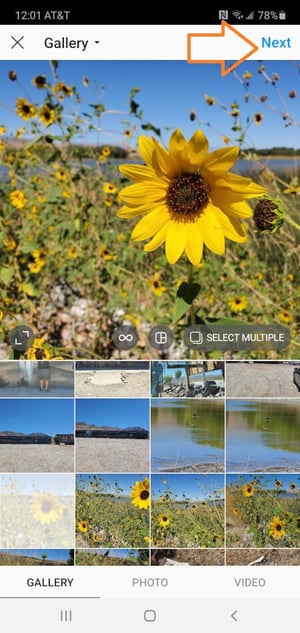
Instagram will show you the photos already saved to your phone. Choose one of those to post. Alternatively, you can click "Photo" or "Video" in the bottom to take a photo or video within the Instagram app itself, if you don't already have an image you want to use.

Once you choose an image, click "Next" in the top right.

Instagram Gallery Photo Picker

3. Crop the image.

You aren't limited to just a square image on Instagram. You can actually share horizontal or vertical images as well. To get more of your image seen, pinch the screen of the photo you've selected on the Library screen.

Cropping Photo on Instagram by Pinching

However, while Instagram does allow vertical and horizontal options, the images still need to fit into some specific dimensions. So, you might still need to crop a tiny bit of your photo to get it to fit.

4. Try a carousel post.

Do you have multiple photos and want to highlight them all? Instagram allows you to do this with its carousel feature.

Instagram "Select Multiple" Feature for Carousel Posts

As you go to tap a photo or video, first tap the icon just above your photos to the right that looks like stacked squares. Once you tap this, you'll see a number on the corner of every image or video you tap. This number notes where the content will show up in the carousel.

5. Pick a filter.

Instagram offers 24 filters -- scroll to the right to peruse your options, and click on one to preview how it will look on your photo. (Take a look at our Ultimate Guide to Instagram Filters to learn more).

Instagram Filters

6. Edit your photo.

You can also click "Edit" at the bottom right to adjust contrast, brightness, etc.

Instagram Photo Editor

When you're ready, click "Next" in the top right.

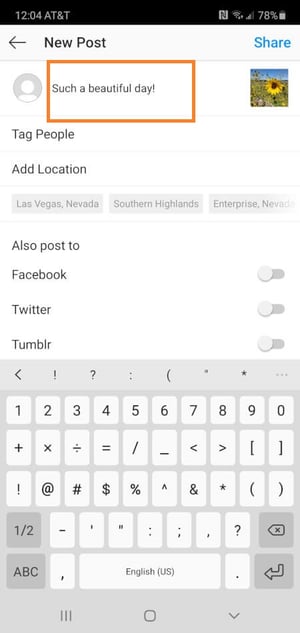
7. Type your caption.

Get creative and write a nice, interesting caption to go with your photo. Since text can help optimize your post in Instagram's search, writing something can only benefit you.

Instagram-Caption

8. Use hashtags for post optimization.

With Instagram's search feature, users can search by hashtags. So, you should make sure to write relevant hashtags in your caption. If someone does a search of a hashtag you placed in your caption, they might find your post as well as others that included the same one.

9. Tag friends.

Want your friend or their followers to see a photo that you posted of the two of you? Tag them!

On the post page, you can click "Tag People" to tag other Instagram accounts in your post. Alternatively, you can include their handle (or their username beginning with an @ symbol) in your caption.

10. Add your location.

If you're on a fun vacation or at a neat event and you don't feel like including that information in your caption, you can mark where you are in another way. On the post page, tap "Add Location" to put a location on your image (which makes it easier for people to find your post).

When you post an image or video with a location, it will show up between your name and the block of content on the feed.

11. Play with emojis.

Emojis are fun and can make your caption more eye catching. If you know of a few relevant emojis that could fit with your post, stick them in the caption area.

For example, if you're posting a vacation photo, you could include a beach umbrella or a plane to show you flew somewhere.

Be sure not to go overboard and post emojis just for the sake of posting them. If you post a bowling emoji along with a photo of a beach, that obviously won't make sense to people. Similarly, if you post 20 emojis that loosely relate to a post, you might just annoy your followers or come off as desperate.

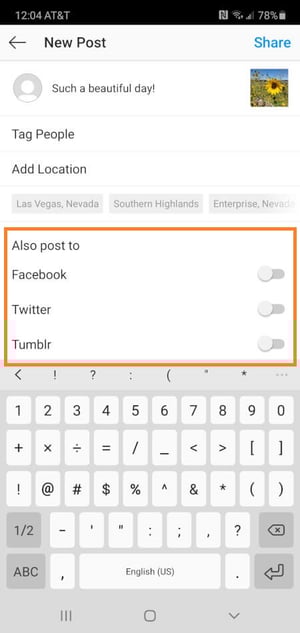
12. Share the post on other social media platforms

Finally, if you want to share your content on your other, connected social media sites (like Facebook or Twitter), simply slide the bar from the left to the right.

When you're ready to post, click "Share" in the top right.

Instagram-Share-Post

Instagram Saved Drafts

If you're not ready to post right away, you can also save it to your Instagram Saved Drafts. Simply go back to the filtering and editing step, tap the back arrow in the top left, and select "Save Draft."

13. Edit the post.

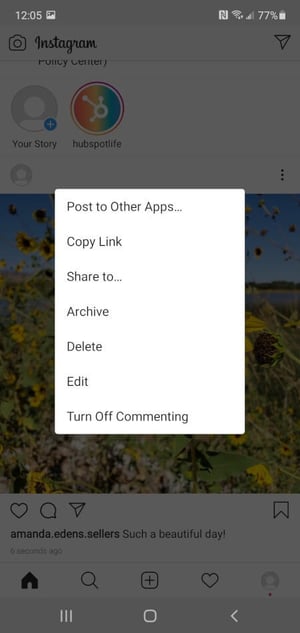
Typos happen to everyone! If you just posted something and notice a glaring spelling error, don't panic. Simply tap the three dots that appear on the right across from your name, then tap "Edit."

Instagram Post Edit Menu

Now that you know how to post to Instagram, you can begin creating content for the platform and connecting with your audience. If you're a business or brand, you'll want a solid strategy for earning engagement and awareness. 

Editor's note: This post was originally published in November 2019 and has been updated for comprehensiveness.


How to Post on Instagram: A Step-by-Step Guide was originally posted by Local Sign Company Irvine, Ca. https://goo.gl/4NmUQV https://goo.gl/bQ1zHR http://www.pearltrees.com/anaheimsigns

The 18 Best Lead Generation Plugins to Add to Your WordPress Site

Collecting high-quality leads is a challenging task that marketers face. Even once you've created a fantastic, high-converting landing page, you're not done.

The good news is that there are a number of plugins available that you can add to your WordPress website to help with lead generation.

Before we dive into 18 of the best plugins available, let's cover the characteristics of a powerful and useful lead generation WordPress plugin.

Learn how to build a WordPress website using Elementor with this free course.

What to Look For in a Lead Generation Plugin for Your WordPress Website

Here are some tips to help you pick the best lead generation plugin(s) for your website:

1. There are positioning options.

Your lead capture form's positioning and location on your website play a role in conversion rate. Make sure your chosen tool offers the positioning options you want. Ask yourself: "Do I want to use a popup? A two-step opt-in? An in-content form?"

2. You can add integrations.

Many lead generation plugins exist to help you capture leads and get those leads into your CRM or list management tool. Whether it's your CRM, Sales Hub, or management tool your team uses, make sure your plugin can integrate.

3. There are customizable fields.

Effective lead capture forms are all about balancing the number of fields on a form and the form's conversion rates. Usually, a shorter form means a higher conversion rate. But at the same time, it can also mean less qualified leads.

For each tool, you want the flexibility to collect as much info as you need to qualify a lead. Some tools will only let you collect a name and email, while others let you add and customize as many fields as you want — so keep an eye out for this option while browsing plugins.

There are a number of lead generation plugins for WordPress available — here are 18 of our favorites.

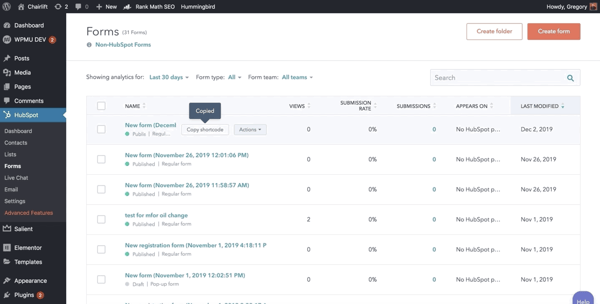
1. HubSpot WordPress Plugin

hubspot wordpress plugin for all in one marketing and lead generation

With HubSpot's WordPress plugin, you get lead generation support that helps you capture leads via multiple avenues on your website. Here are some examples:

  • Lead capture forms (use the drag-and-drop form builder to control what information you collect from your leads)
  • Popup options (use popups, top banners, and slide-in boxes to capture leads)
  • Free live chat module (connect with visitors and offer support or sales information)
  • Automated chatbot (respond to FAQs while live chat reps are offline)

No matter which avenue your leads come in from, they're all stored in your free HubSpot CRM which makes tagging and segmention simple.

The plugin can help with tasks outside of lead generation as well including email marketing, CRM and contact management, marketing automation, and reporting and analytics.

You have the ability to integrate HubSpot with over 500 other tools to further enhance capabilities and functionality. Lastly, HubSpot's WordPress plugin is simple to install and applies to all plans and products.

Price: Free

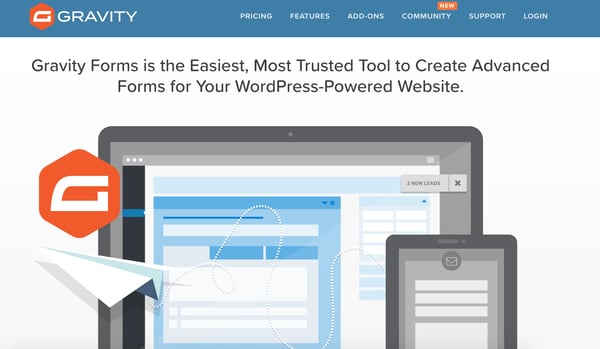
2. Gravity Forms

gravity forms lead generation wordpress plugin

Source

Gravity Forms is a general WordPress form plugin that you can use to create all kinds of lead capture forms. The plugin gives you a drag-and-drop form builder as well as 30+ custom field types to collect the information you want from leads.

There are also some neat extensions to enhance your lead collection. For example, the Partial Entries add-on lets you collect information even if someone doesn't fill out the entire form.

By default, Gravity Forms stores all form submissions in your WordPress dashboard — you can also integrate your forms with a variety of email marketing services, CRMs, and help desks. And if that's not enough, the Zapier and Webhooks integrations can help you connect to pretty much anywhere else, too.

Additionally, if you're already using HubSpot's WordPress plugin, HubSpot will automatically grab Gravity Forms submissions and put them into your CRM for easy management.

Price: Starts at $59

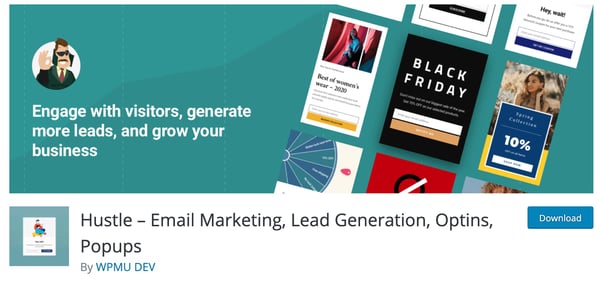
3. Hustle

hustle lead generation wordpress plugin

Source

Hustle is a WordPress marketing plugin featuring customizable popups, slide-ins, embeds, and social sharing bars. All include a wide array of display options, including:

  • Posts or pages
  • Categories or tags
  • Visitor logged-in status
  • Device
  • Referring website
  • Number of times a visitor has been seen
  • Specific URLs
  • If the visitor has commented before
  • Country
  • Include on 404 page or not

Embeds are your in-content ads or opt-ins — they can be displayed before or after your post content, or both. You can also use shortcodes or widgets to display the embeds in more specific locations.

What makes Hustle stand out is the fact that every feature and integration is included in the free version. You get all 18+ integrations, including Zapier.

If you're using our HubSpot WordPress plugin, Hustle will automatically grab your submissions and send them into your CRM. Alternatively, you can enable Hustle's native HubSpot integration.

The only limitation of the free version is the amount of popups, slide-ins, embeds, and social share bars you can create in each installation. It’s limited to 3 of each, but that should be plenty for the average user.

Price: Free to start, premium version costs $49 per month

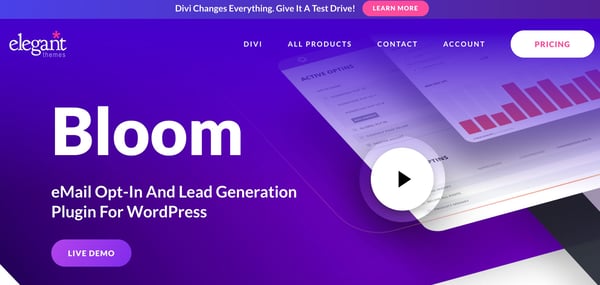
4. Bloom

bloom lead generation wordpress plugin

Source

Bloom is a popular email opt-in plugin from Elegant Themes. It helps you capture email leads using a variety of form types, including:

  • Pop-ups
  • Slide-ins
  • Content lockers (e.g. lock certain content behind an email subscribe form)
  • In-content forms

You get some unique options for triggering your lead capture forms like displaying a form after a person leaves a comment on your site.

The only downside is that you're limited in how much control you have over your forms. For example, you can only customize the existing templates — you can't make your own. And you're limited in the amount of information you can collect from visitors.

If you're okay with those limitations, this tool could be a good one for your team. Plus, you get a nice dashboard where you can view analytics and track lead growth as well as the option to run A/B tests.

Price: $89

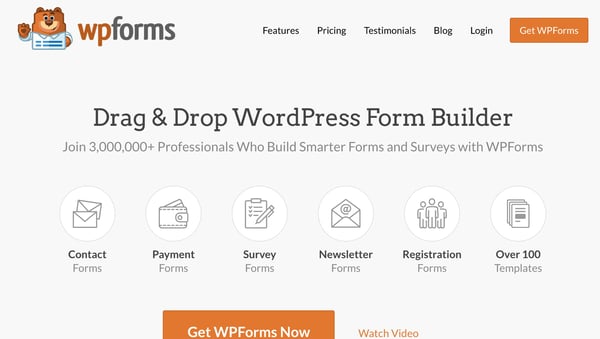
5. WPForms

wpforms lead generation wordpress plugin

Source

WPForms is a popular WordPress form plugin that you can use to create … well, pretty much any type of form.

Using its drag-and-drop builder and a variety of form fields, you can create customized lead capture forms to collect as much or as little information as you want from your leads.

Once you have your form, you have a few different ways to work with leads that you collect. WPForms stores all your leads in its own entry manager, which you can access from your WordPress dashboard.

Alternatively, you can sync your forms up with:

  • A variety of email marketing services
  • Zapier

Additionally, if you're using HubSpot, you can also automatically pull your WPForms submissions into your HubSpot CRM for tagging and segmentation.

Price: Starts free, paid plans range from $39.50 to $199.50

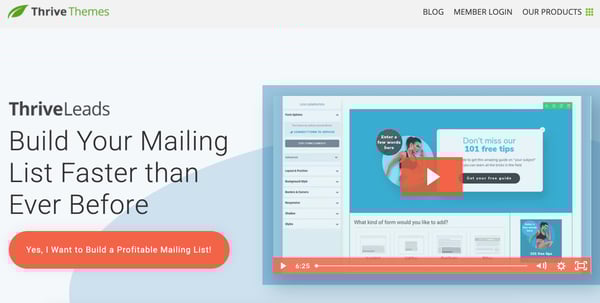
6. Thrive Leads

thrive leads lead generation wordpress plugin

Source

Thrive Leads is a popular WordPress lead generation plugin that helps collect email addresses with several different opt-in types, including:

  • Lightbox popups
  • "Sticky" ribbons
  • In-line forms
  • Slide-ins
  • 2-step opt-ins
  • Screen fillers
  • Content lockers
  • Scroll/welcome mat

For all the various form types, you can use the included templates and drag-and-drop builder to customize things to make them your own.

One area where Thrive Leads goes further than a lot of other solutions is its SmartLinks feature, which lets you display different forms to people depending on where they're coming from. With this feature, you can ensure you're sending different forms to your email list than what appears on your homepage.

Price: $67 for one license, $97 for five licenses

7. Elementor Pro

elementor pro lead generation plugin for wordpress

Source

Elementor Pro is a popular WordPress page builder plugin that can help you build both lead capture pages and lead capture forms.

Elementor gives you a visual, drag-and-drop builder interface that you can use to create posts or pages on your site — including standalone landing pages.

With Elementor Pro, you also implement a Popup Builder that lets you use the same interface to design and display popups anywhere on your site.

To actually capture leads, you can use Elementor Pro's Form widget, which lets you build custom forms with as many fields as needed. You can then connect those forms to Zapier to send data to your favorite CRM for tagging and segmentation.

Price: $49

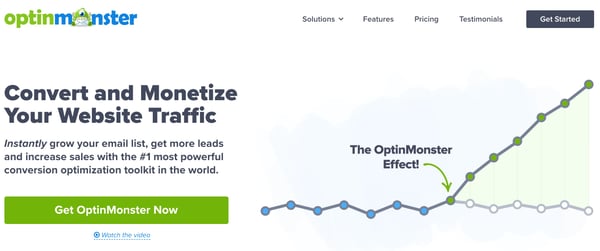
8. OptinMonster

optinmonster lead generation wordpress plugin

Source

OptinMonster helps you create a variety of different lead capture forms using 75+ pre-built templates and drag-and-drop form builder. With it, you can create:

  • Pop-ups
  • Floating bars
  • Fullscreen overlays
  • Slide-ins

One of the areas where OptinMonster really excels is with its targeting and triggering rules. Using detailed rulesets and AND/OR conditions, you can control exactly where and when your lead capture forms appear.

Another helpful feature is its OnSite Retargeting feature, which lets you display different offers to visitors who have already submitted a lead capture form.

OptinMonster isn't technically a WordPress plugin (it's a SaaS), but it's easy to integrate the OptinMonster service into your WordPress site via its dedicated plugin at WordPress.org.

Price: Starts at $108 per year

9. BoxZilla

boxzilla lead generation wordpress website

Source

BoxZilla, formerly known as Scroll Triggered Popups, is a useful lead capture plugin that helps you create simple forms that display as either popups or slide-ins on your site.

As the previous name of the plugin suggests, one way you can trigger these forms is as a user scrolls down your page. However, BoxZilla supports other triggers, too, like time on site or exit intent.

Price: Starts free, premium version starts at $48

10. Holler Box

holler box lead generation wordpress plugin

Source

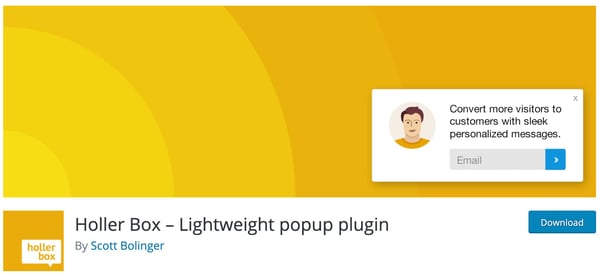
Holler Box is a simple lead capture plugin that targets itself towards WooCommerce and Easy Digital Downloads stores, but can really be used for all kinds of WordPress sites.

Holler Box lets you create seven different types of lead capture forms, including popups and slide-ins. However, the most unique option here is Holler Box's faux live chat widget.

This widget looks like a live chat box, but is really just a vehicle to capture leads. Your visitor enters their message and email address.

Then, you can either receive an email notification email yourself, or connect that information to popular email marketing services or your own custom HTML form.

Price: Starts free, premium version starts at $99

11. CallPage

callpage lead generation wordpress plugin

Source

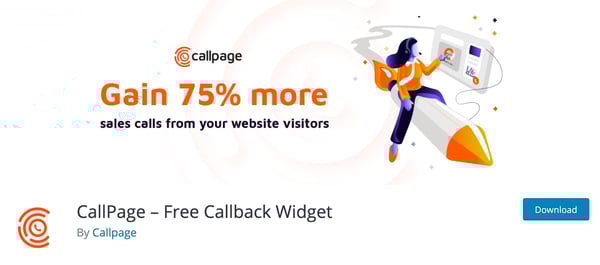
CallPage is a simple lead capture plugin that helps you collect telephone numbers from potential leads.

To collect phone numbers, it displays a widget that lets visitors enter their phone numbers to receive a call back either right away, or at some point in the future. If you want, you can also collect additional information about your leads, like names or email addresses.

By integrating with Google Analytics, you can also use CallPage to view call histories and analyze the call performance for each traffic source at your site.

Price: Starts free, paid plans start at $159 per month

12. Optin Forms

optin forms lead generation hubspot plugin

Source

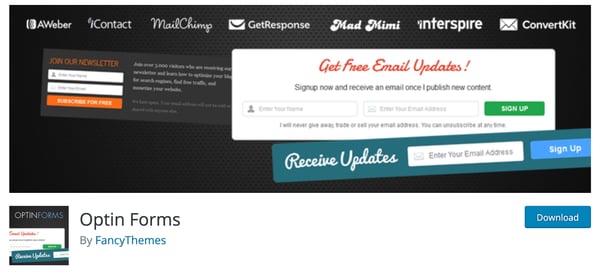
Optin Forms is a free lead capture plugin that helps you create simple email opt-in forms on your site and connect those forms to:

  • AWeber
  • iContact
  • MailChimp
  • GetResponse
  • MadMimi
  • Interspire Email Marketer
  • ConvertKit

You can choose from five different templates and customize all the text and colors to make them match your site and branding.

From there, you can either automatically add your lead capture form to all your blog posts, or use a shortcode to choose exactly where and when to include your forms.

Price: Free

13. Ninja Forms

ninja forms lead generation wordpress plugin

Source

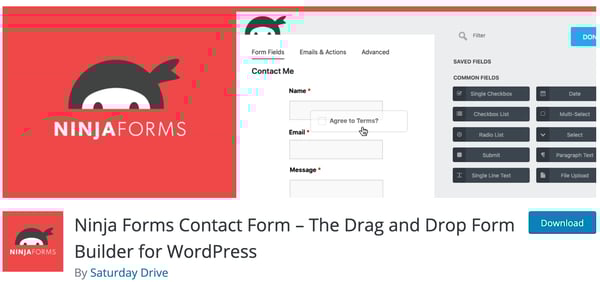
Ninja Forms is another WordPress form plugin that follows in the vein of WPForms or Gravity Forms by letting you use drag-and-drop to build your own custom forms and then hook that data up to various email marketing services, CRMs, or even Zapier or Webhooks. You can also automatically pull in form submissions to your HubSpot CRM as well.

Among other things, you can use Ninja Forms for:

  • Contact forms
  • Email opt-in forms
  • Surveys and polls
Price: Starts free, paid extensions vary in price

14. OnePress Opt-In Panda

OnePress Opt-In Panda lead generation wordpress plugin

Source

OnePress Opt-In Panda helps you capture leads by locking parts of your content behind a lead capture form. In order to "unlock" the content, your visitors will need to enter their email addresses.

Or, with the premium version of the plugin, you can also add custom fields to collect additional information about your leads.

The plugin works by wrapping your restricted content in a short code, which means that you can restrict as much (or as little) of your content as you want.

With the paid version of the plugin, you also get other helpful features like a lead management dashboard and analytics.

Price: Starts free, premium version costs $26

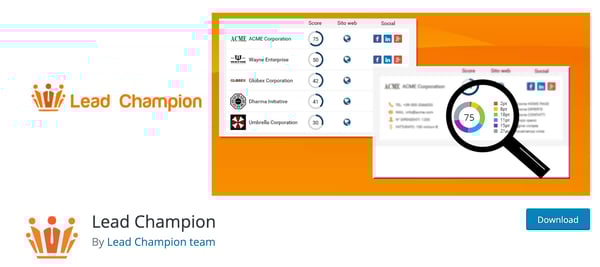
15. Lead Champion

lead chamption lead generation wordpress plugin

Source

Lead Champion detects the leads who leave your website whether or not they complete and submit one of your contact forms. The plugin assigns site visitors a score (that you establish) based on their behavior while on your website — this allows you to evaluate prospects, the effectiveness of your campaigns, and more. 

The plugin helps you easily create forms that complement your branding and website with the configuration panel. It also integrates with other tools — such as Mailchimp, Zapier, and CRMs — to enhance its capabilities. 

Price: Multiple plans available; must contact for price and must have a Lead Champion Booster License

16. Popups, Welcome Bar, Optins and Lead Generation Plugin

Popups, Welcome Bar, Optins and Lead Generation Plugin wordpress plugin for lead generaqtion

Source

This plugin allows you to design and share branded, eye-catching optins, forms, and calls-to-action on your website to attract your leads. There's never a need to hire a developer with the plugin, as it's simple to set up and use. You can quickly create unique popups with different themes and positions on your site to target leads that way, too. 

The plugin offers four types of optins you can choose from including: 

  • Lightbox Popups
  • Header & Footer Action Bars
  • Toast Notifications
  • Slide-in Messengers
The plugin comes with 20 customizable form templates that have responsive design so your leads can view and complete your forms on any device seamlessly. These forms have customizable elements so you can design them in a way that complements your branding and website.

Price: Free, or upgrade to one of two paid plans for more features

17. Forminator

forminator lead generatin wordpress plugin

Source

With Forminator, you can use the drag-and-drop builder to add and customize the layout of forms on your WordPress website. The plugin allows you to easily collect any information you want to ask your leads for, as well as make your forms interactive to boost engagement and generate more conversions. 

With Forminator, you can customize forms with as many fields as you want. You can also create interactive polls, quizzes (that are shareable on social), make calculations and take orders, accept payment, and more. 

The plugin integrates with a number of tools and over 1,000 apps — Forminator is compatible with integrations across multiple categories including email, CRM (including HubSpot), storage, and project managers.

Price: Free

18. Optinly

optinly lead generation plugin for your wordpress website

Source

Optinly is a WordPress lead generation tool that helps you grow your email list with ease. What makes this plugin stand out is its goal-based approach to campaign creation. You choose your marketing goal, a relevant popup template, and then set your campaign live. With the tool, you can create quite a variety of popups such as:

  • Fullscreen Overlays
  • Sidebar Widgets
  • Floating Bars
  • Notification Popups 
  • Gamification Popups

The tool comes with several methods to trigger a popup such as exit intent, time-delay, page-based, and device-based. You can also display popups to the same visitor after a specific number of days using the re-targeting options menu. 

With Optinly, you can make nearly any customization with a user-friendly WYSIWYG (What You See Is What You Get) editor. And with animation options such as fade-in, zoom, and flip-in, you can make your popups catch a visitor’s attention quickly.

You can easily integrate Optinly with email marketing platforms like HubSpot, MailChimp, Constant Contact Contact, and AWeber. 

Price: Free to start, growth plan costs $25 per month.

Build Your Lead Generation Plugin Toolbox

When it comes to the best WordPress lead generation plugins, you have a ton of options available — only you know which ones will best fit into your lead generation efforts.

The important thing to remember here is that you don't have to pick just one — you can combine multiple plugins into one cohesive lead generation strategy.

Learn how to build a WordPress website using Elementor with this free course.

Editor's note: This post was originally published in June 2019 and has been updated for comprehensiveness.


The 18 Best Lead Generation Plugins to Add to Your WordPress Site was originally posted by Local Sign Company Irvine, Ca. https://goo.gl/4NmUQV https://goo.gl/bQ1zHR http://www.pearltrees.com/anaheimsigns

The Marketer's Guide to Segmentation, Targeting, & Positioning

I once heard a new business owner define their target market as … wait for it … “everyone”.

*cringe*

While it’s nice to believe that everyone would be interested in purchasing your product or service, it’s not wise to define your target market as such.

Not only does this definition (or lack thereof) create way more work for you; it also does a disservice to your actual target market — by over-widening your scope, you fail to inform and educate your audience about how your product or service can improve their lives.

This is where segmentation, targeting, and positioning come into play. We developed this guide to help you understand how and why you should invest time into better understanding your audience and targeting your marketing. Let’s dive in.

At its core, STP helps you to better target your marketing messages and better serve your customer base.

The model can also reveal niche markets, uncover new customer or market opportunities, and, ultimately, make your marketing efforts more efficient and cost-effective.

STP allows you to take a large, anonymous audience and define how your different products (or different components of the same product) relate to specific consumer segments within that larger audience — thus understanding how to position your product(s) and messaging to grab the attention of each segment.

Let’s unpack each part of the segmentation-targeting-positioning model.

1. Segmentation

Segmentation refers to the process of dividing your audience into smaller groups based on certain characteristics. This process allows you to group your individual audience members into similar groups so you can better communicate your products, features, and benefits that may be most relevant to them.

You can segment your audience based on one or more of these criteria:

  • Demographics, which typically answer the question of who your buyer is (e.g. age, gender, education, location, and profession)
  • Psychographics, which answer the question of why your buyer buys (e.g. priorities, personality traits, and beliefs and values)
  • Lifestyle traits, such as hobbies, entertainment preferences, and non-work activities
  • Behavior, such as brand loyalty, channel preferences, and other shopping habits

Segmentation may sound a little familiar to another process we often discuss here on the HubSpot blog — creating buyer personas. The two are very similar as they help you drill down the most important factors in your target audience.

But where buyer personas help you create a handful customer profiles that represent your broader audience, segmentation allows you to split your audience into countless segments, each of which you can uniquely target.

For example, let’s say Paws & Tails is a Chicago pet-sitting company that offers pet-sitting, dog walking, and boarding services. Given the vast number of pet owners in the city, they need to segment their audience into smaller groups to better understand how to position their services.

Based on their research and current customer base, they split their audience into three main segments:

  1. Segment A is made up of high-income pet owners who work often and need daytime dog walking and pet pop-in visits
  2. Segment B is made up of middle-class individuals and families who travel and need overnight boarding or pet-sitting services
  3. Segment C is made up of older pet owners and retirees who need help caring for their pets

2. Targeting

With your audience segments in hand, it’s time to move on to the targeting phase. First, however, you must decide which segments are worth targeting with your marketing. To decipher this, ask yourself some questions about each segment:

  • Is this segment composed of enough potential customers to justify targeting? Would it yield enough profits if the segment were to convert?
  • Is it measurably different from the other segments?
  • Is it accessible by all members of Marketing and Sales?
  • Is your company equipped and able to serve the segment? Are there any physical, legal, social, or technological barriers that could prevent that?

Choosing what segments to target is a strategic decision. Thankfully, certain strategic planning models like the PESTLE analysis can help you better understand the viability of each segment.

It takes a lot of work to successfully target a segment of your audience. Whether you’ve identified two segments or ten, don’t feel the need to target more than one segment at once. Plus — targeting one at a time will help you better position your marketing for each specific segment much better.

Following our example from before, Paws & Tails conducts research to better understand its Chicago audience. Paws & Tails finds that Segment A makes up 60% of its market size, Segment B makes up 30%, and Segment C makes up 10%. Moreover, Segment A has a higher average income and is willing to pay more for pet-sitting and walking services. Because of this, they choose to focus on Segment A.

3. Positioning

At this point, you should understand the demographics, psychographics, motivations, and pain points of the segment(s) you’ve chosen to target, which can provide a place to start when it comes to positioning your product or service.

First, take a step back and examine your product or service through the perspective of your chosen segment. If you were in their shoes, why would you choose your product over a competitor’s? What features or benefits are most relevant to you, based on the motivations and pain points you’ve identified?

This information is important to defining your brand positioning and understanding how it stacks up next to your competitors. One way to understand where you, well, stand is by building a positioning map, which is “the visual plotting of specific brands against axes, where each axis represents an attribute that is known to drive brand selection.”

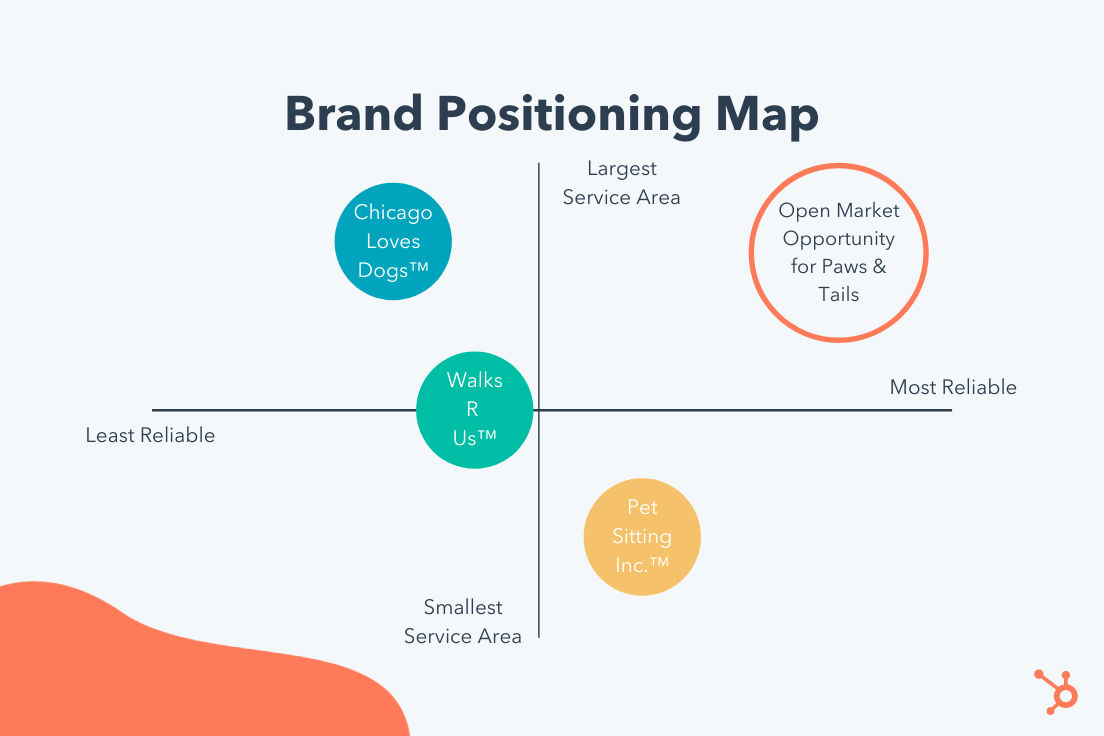
The segment you choose to target should dictate what two attributes you plot on your positioning map. For example, let’s say Paws & Tails decides Segment A selects pet-sitting brands based on two attributes: service area and reliability. Here’s what a brand positioning map (with fictitious brands) may look like.

brand positioning map example

By understanding 1) what the target segment deems most important for brand selection and 2) where its competitors succeed (and fall short), Paws & Tails is able to identify an open market opportunity and position its marketing to best fit the needs and goals of its audience.

What is segmentation, targeting, and positioning in marketing?

The STP model is a priceless addition to any marketing strategy, regardless of your industry, product, or audience. It prioritizes efficient and effective marketing and ensures you’re delivering only the most relevant, targeted messaging across the board.

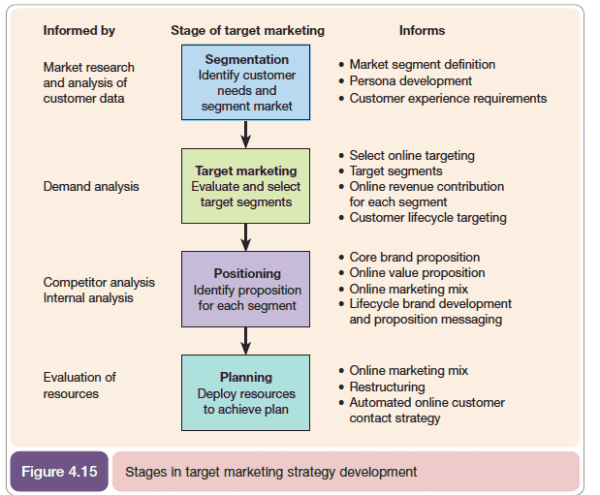
It also plays an important role in developing other strategies, such as your buyer personas, customer lifecycle stages, and core brand proposition.

segmentation targeting and positioning

Source

By leading with a consumer-centric approach like STP, you can be sure that every inch of your marketing is relevant to your audience — thus, increasing the likelihood that they convert, purchase, and become lifelong customers.

Examples of Great Market Segmentation and Positioning

Brands are segmenting, targeting, and positioning their audiences and marketing constantly, oftentimes without us (consumers) even noticing. Ever seen a brand or product and thought “Huh, that’s perfect for me” or “Wow, right place at the right time”? Yeah … you’ve been subject to the STP model.

Let’s review a few examples of great marketing segmentation and positioning.

1. Panera Bread

With countless fast casual restaurants on the map, it’s hard to decide where to eat when you’re in the mood for a quick meal, But, for some reason, Panera Bread always comes to mind (at least for me).

Panera has successfully cornered the “health-conscious” and “climate-conscious” segment of the fast casual dining industry. Is Panera’s food so different from other fast casual options? Not entirely.

But by branding themselves with the perspective that “we believe that good food, food you can feel good about, can bring out the best in all of us”, Panera remains top-of-mind as a place to get high-quality food, fast.

2. AllBirds

Like dining opinions, there are so many shoe brands on the market. But AllBirds didn’t let that stop it from carving out a new niche in a busy space full of comfortable, active shoe options.

How did AllBirds position itself to set itself apart from the competition? By elevating it’s eco-consciousness and placing that front and center in its marketing. According to the AllBirds website, the brand “crafts with planet-friendly natural materials, like merino wool and eucalyptus trees, because they're our best chance for a sustainable future.”

At first glance, AllBirds shoes don’t look too terribly different from other running or walking shoes. However, its audience segment that cares about sustainability and earth-conscious products knows the difference.

3. Billie

No longer can businesses simply segment their audiences by “men” and women” — the individuals within each broad gender group vary too much, and razor brand Billie took note of this.

In an effort to extinguish the “pink tax,” Billie markets cost-friendly razors and associated products. Moreover, they work to normalize body hair and other forgotten or shamed parts of women’s bodies.

Through this positioning, Billie is able to set their products apart from competitors and create a strong, positive community around their brand.

4. Hinge

The world of online dating is a busy, strange place. From Tinder to FarmersOnly.com, there seems to be a place for everyone to meet, well, anyone. Hinge came on the scene only a handful of years ago, yet it has skyrocketed to the top of the list of the most popular and reliable dating app.

Time and time again, I’ve heard that Hinge is a favorite because it works — meaning it helps people meet people and make real relationships. You wouldn’t think a dating app would position themselves to eventually be unnecessary, but that’s exactly what Hinge has done. In fact, it’s mission statement is “we built an app that’s designed to be deleted.”

By putting the needs and desires of its audience front and center, Hinge has created a more trustworthy, in-demand online dating experience and set itself apart from its competitors.

The segmentation-targeting-positioning model is designed to help you better target your marketing messages and better serve your customer base. It’s a win-win for you and your customers!


The Marketer's Guide to Segmentation, Targeting, & Positioning was originally posted by Local Sign Company Irvine, Ca. https://goo.gl/4NmUQV https://goo.gl/bQ1zHR http://www.pearltrees.com/anaheimsigns

Wednesday, October 28, 2020

24 Data-Backed Reasons to Personalize Your Marketing

When Larry Drebes, CEO of Janrain, set out to study online consumer experiences earlier this summer, he knew that relevant content would be at the forefront of consumer minds. We've seen for years that emails which are personalized to the recipient do better than their generic counterparts.

But perhaps what he could not have anticipated was just how much consumers have come to expect personalization at every stage in their buying process. In truth, nearly three-fourths of respondents in the national poll expressed frustration at content that does not recognize them and adapt to their interests.

“These results [indicate] that consumers have reached the tipping point when it comes to being shown content that isn’t relevant to them,” Drebes explained. “Consumers have been pretty consistent and clear in their feedback, the way to avoid alienating them is to give them what they want -- personalized, relevant content using their data in a responsible and transparent way.”

To put it plainly, consumers don't just like personalized marketing experiences. They expect them. Here are 24 stats to prove why you need to embrace personalized marketing in 2020. 

Benefits and Challenges of Personalized Marketing

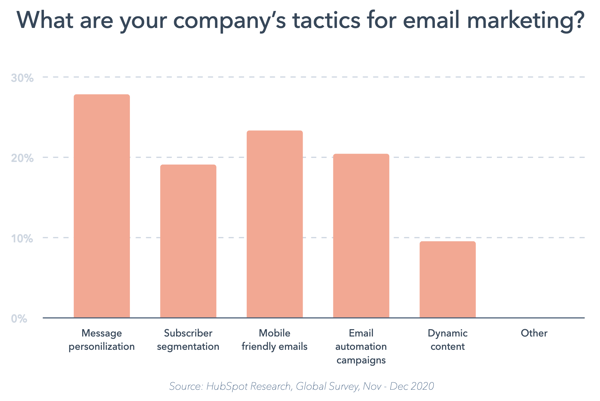
  • Message Personalization is the #1 tactic used by email marketers to increase engagement rates. (HubSpot)
  • More than 20% of marketers say personalization can improve email engagement. (HubSpot)

HubSpot State of Marketing 2020 data on personalized email

  • 99% of marketers say personalization helps advance customer relationships, with 78% claiming it has a“strong” or “extremely strong” impact. (Evergage)
  • 80% of consumers are more likely to make a purchase when brands offer personalized experiences. (Epsilon)
  • 90% of U.S. consumers find personalized marketing content somewhat to very appealing. (Statista)
  • 78% of marketers say email is the most personalized channel, followed by websites, which 56% of marketers noted. (Evergage)
  • The biggest challenge that ABM teams face is personalizing their strategy. (HubSpot)
  • 40% of marketers say their biggest challenge with personalization is linking to data-related technologies, while 34% struggle with poor data quality. (Experian)
  • 78% of brands say they struggle with "data debt" or not having enough quick data about their customers to not launch relevant personalization tactics. (Experian)

Consumer Preferences of Personalized Marketing

  • 92% of marketers say customers and prospects expect a personalized experience -- up from 85% in 2019. (Evergage)
  • 45% of consumers say the "coolest" personalized tactic they've seen is when a brand apologizes for poor shopping experiences. (Accenture)
  • 74% of consumers would find “living profiles” valuable if they could be used to curate the experiences, offers, and products they receive. (Accenture)
  • 67% of consumers think it’s important for brands to automatically adjust content based on current context. When brands don't adjust accordingly, 42% of consumers will "get annoyed" that content isn’t personalized. (Adobe)
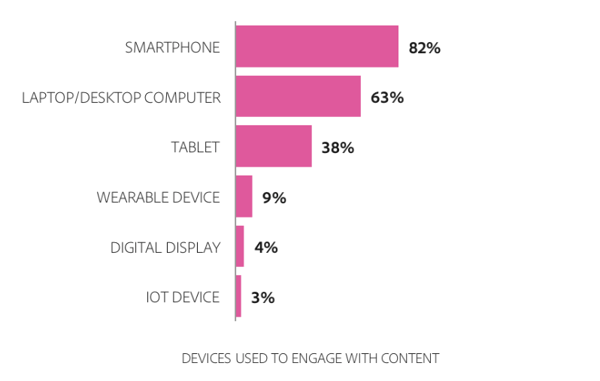
  • 82% of consumers primarily engage with marketing content on smartphones, while 63% engage with content primarily on computers. (Adobe)

which platforms do people use to consume personalized marketing content on most?

Source

Data Privacy Preferences

  • 83% of shoppers would exchange data for a more personalized experience. (Accenture)
  • In a 2019 study, 79% of consumers surveyed believed companies knew too much about them, but 90% were still willing to share behavioral data for a cheaper and easier brand experience. (SmarterHQ)
  • Three out of four consumers say a business has never communicated with them online in a way that felt too personalized or invasive. (Accenture)
  • Of the one-quarter of consumers who've received a personal or invasive brand experience, 64 percent) say it was because the brand had information about them that they didn’t share knowingly or directly. (Accenture)
  • In an Accenture survey, consumers said the "creepiest" personalized marketing tactics involved texting or sending a notification when someone walked past a brand's store and launching social media ads for items consumers browsed on a brand website. (Accenture)

Anonymous vs. Permission-Based Personalization

There are varying opinions in marketing about the appropriate time in the customer lifecycle to use personalization.

While some argue that personalization should only take place after the end-viewer has consciously provided information to the company, other companies use anonymous data, like the location attached to a viewer's IP address, in order to target viewers by location. In developing your personalization strategy, you'll need to decide what the right approach is for your company and customers.

  • Regardless of what technology enables, it's essential that your strategy start and end with the needs and preferences of the customer. For many, that will mean waiting until the customer has engaged with you before personalizing content.
  • 42% of surveyed marketers claim they personalize using anonymous data. (eConsultancy/Adobe
  • 57% are okay with providing personal information on a website as long as it’s for their benefit and being used in responsible ways. (Janrain)
  • 77% would trust businesses more if they explained how they’re using personal information to improve their online experience. (Janrain
  • 62% of adults under 34 are willing to share their location for more relevant content. (Jiwire

Navigating Marketing Personalization

We have entered into an exciting time for marketers and buyers alike. The ability to create unique experiences for each prospective customer will undoubtedly lead to buying experiences that are more relevant, useful, and enjoyable.

As we navigate this new space and develop strategies, it will be important to keep an open discussion going about what's working and what's not in the world of personalization.  

This data is helping to frame the early stages of that conversation. Hopefully, the coming year will result in more results and good case studies of companies using personalization to create a more "human" marketing experience.

Editor's Note: This post was originally published in September of 2013, but was updated in May 11 for comprehensiveness and freshness.


24 Data-Backed Reasons to Personalize Your Marketing was originally posted by Local Sign Company Irvine, Ca. https://goo.gl/4NmUQV https://goo.gl/bQ1zHR http://www.pearltrees.com/anaheimsigns

These 9 Brands Take Personalized Marketing to a New Level

When I sit down to write an article, I have a pretty standard routine. I outline the story in our Content Optimization System (COS), copy and paste it into a Google doc, find a good photo to accompany it, do research, write, proofread, and carry it back over to our COS. It’s a weird series of steps that doesn’t necessarily work for everyone, but it does for me. They’re my very own personal blogging habits.

Those habits aren’t just limited to my writing process. I have morning, evening, and weekend routines, as if my entire life has become a series of established patterns. Knowing what those habits are, I learned during step four of the above, is a veritable goldmine for marketers.

I figured that out from a 2012 New York Times article called, “How Companies Learn Your Secrets.” Penned by Charles Duhigg, it was written largely as a follow-up to what became a public incident: An angry father marched into a Minnesota Target store, demanded to know why his teenage daughter received coupons for baby products, only to later find out that she was, in fact, pregnant.

The retailer, it turned out, was able to predict her pregnancy and subsequently personalize the promotions she received, thanks in large part to a ton of (completely legal) data collection and analysis. Creepy — or great marketing?

Today, we're still asking ourselves that question. But, ultimately, it seems that there can be a good balance between knowing your customer way too well and solid marketing. In fact, in 2018, Harvard Business Review revealed that although people want to keep their information secure online, they still value personalized and meaningful marketing experience.

But how does personalized marketing work, and how have other brands put it into practice without coming off as creepy? Here are eight great examples of brands that nailed it in a way that came off as fun rather than intrusive.

9 Personalized Marketing Examples

1. Shutterfly

Shutterfly is a website and app that allows you to create canvases, photobooks, calendars, and even items with your own photos laminated on to them. While Shutterfly has gotten creative with personalized emails and subject lines, one unique thing it did recently was personalize item offerings on its app.

If you download the Shutterfly smartphone app, create an account, and give Shutterfly permission to access your photos, it will automatically identify photos with faces in them and place them on items that you can purchase from the app — like these mugs, for example.

example of personalized marketing on shutterfly

Source

The Takeaway

If you sell products that are personalized to begin with, it can be helpful to show your customer what they could look like before they buy them as well as photos or words related to their life that would look great on the product.

However, when you do this, be very careful that you get explicit permission to go through someone's information to pull this data. When it came to Shutterfly, Pamela had already given the app permission to access her photos and connected the account to her Facebook account where she approved a number of other related permissions. If you don't get proper permissions and pull appropriate personalization data, you could come off as untrustworthy or downright creepy.

2. Snapchat's Bitmoji

In 2016. Snapchat launched an app called Bitmoji which allows users to design cartoonish avatars of themselves that can be featured as their Snapchat profile picture and or on the Snap Map, if permitted.

Since then, Snapchat has also launched an autogenerated daily Story in its Discover feed, called "Bitmoji Stories."

When you click into a Bitmoji Story, you can see a series of comic-book-like images that tell a story about your own Bitmoji avatar. If you've recently spoken to a friend with a Bitmoji attached to the app, you can also see your friends pop up in your daily Story.

Below is an example of a Bitmoji Story where Pamela Bump's Bitmoji shows her cousin's Bitmoji a new app:
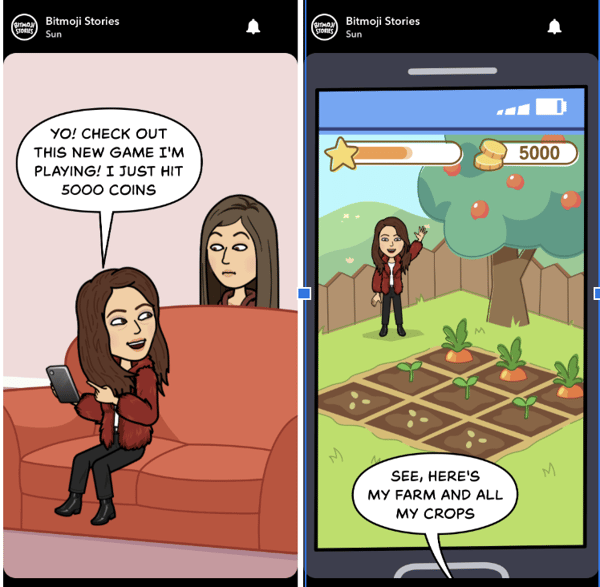
Personalized Bitmoji Story on Snapchat Discover

The Takeaway

Because Bitmoji Stories appear in Discover, with all the other branded content and advertisements on Snapchat, the app company has found a great way to bring people to this particular area of the app — even if they aren't interested in seeing branded content. While audiences are on this Discover page, they might find a brand or content that catches their attention and further interact with feed.

This is a great example of how an app creatively used personalization to bring traffic from one area of its app to another.

3. Target

To continue the above tale, we thought it might be helpful to share more information on how, exactly, the retailer pulled off the aforementioned personal prediction. As Duhigg explains in his article — which goes into much greater detail than I will here — every Target customer is assigned a Guest ID number after the very first interaction with the brand.

That ID is used to store the customer’s demographic information, ranging from ethnicity to job history, and to track buying behavior. And by doing the latter, specifically with those who had baby registries with the store, Target’s marketing analysts were able to form a “pregnancy prediction” score, which allowed them to determine which purchasing patterns indicated a customer was in the early expectant stages.

It was a game-changer. “Once consumers’ shopping habits are ingrained,” Duhigg writes, “it’s incredibly difficult to change them.” That is, until, a major life event takes place, like finding out that a baby is one the way.

That’s when routines are forced to change. Suddenly, there’s a deadline, and people start to buy products that they never previously considered, like “cocoa-butter lotion” and “a purse large enough to double as a diaper bag,” the article says. Those are the behaviors that trigger Target’s pregnancy prediction score, prompting the customer to receive special deals on baby-related items.

The Takeaway

While this level of personalized marketing is admittedly fascinating, it could backfire. Duhigg summarized it well in his article:

Using data to predict a woman’s pregnancy, Target realized … could be a public-relations disaster. So the question became: how could they get their advertisements into expectant mothers’ hands without making it appear they were spying on them? How do you take advantage of someone’s habits without letting them know you’re studying their lives?”

That’s not to say that marketers should completely do away with personalization, as it’s effective when done correctly — personalized emails, for example, have a 6.2% higher open rate than those that aren’t. But in an era with growing concern over privacy and security, tread lightly.

Let your customers know that you understand them, without being intrusive. Curious to learn how to do that with your HubSpot Marketing and Sales software? Read more about how personalization tokens work here.

4. Vidyard

Last week, my colleague, HubSpot Academy Sales Professor Kyle Jepsen, forwarded me an email with the comment, “Taking personalization to a whole new level.” The video below followed:

Source

He wasn’t kidding. This particular brand could have just superimposed each recipient’s name onto the whiteboard in this video and kept the same script for each one. But it didn’t stop there — Cole, the gentleman speaking in the video, not only addressed Kyle by his first name, but also referred to his specific colleagues and the conversations he had with them.

The Takeaway

Considering that the average online reader loses interest after about 15 seconds, personalizing your mixed media content is an interesting and often effective approach. “I mean, clearly he made the video just for me,” Jepson said. “It’s an interesting case study.”

And while this sort of personalization is memorable, it’s also extremely time-consuming. So if you set out to create it, be absolutely sure you’re targeting the right people. There’s nothing worse than taking the time to produce something highly customized, only to find out you’ve sent it to someone who doesn’t have the decision-making power you need.

5. Coca Cola
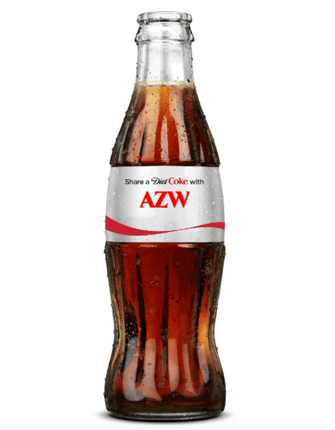
Personalized Coke Bottle.png Source

Back in 2011, Coca Cola launched its famous "Share a Coke" campaign in Australia, bringing it to the U.S. in 2014. It was an effort to reach millennials, in which each bottle contained one of the most popular first names assigned to that generation. Eventually, bottles contained semi-personal labels beyond first names, like “better half.” Today, according to Ad Age, over 800 first names are used.

According to that same source, Coke will soon be adding surnames to bottles, like Garcia and Thompson. “Last names give us an opportunity to invite more people into the campaign," Evan Holod, Coca-Cola’s brand director told Ad Age. "It's just a great way to up the reach."

In addition to that effort, according CNBC, Coca-Cola Great Britain will soon be including the names of famous vacation destinations on bottles, like Hawaii and Miami. The goal of that initiative is “to remind people of the refreshment and great taste that only an ice-cold Coke can bring on a hot summer day,” read the official statement. Plus, those bottles will come with the chance to win a trip to those locales.

The Takeaway

Putting first names on Coke bottles was a successful move. In the U.S., it resulted in increased sales volume for the first time in roughly four years. Plus, it provides a cheap thrill — I know that I internally squeal with excitement when I actually find a bottle that says “Amanda.”

The last name move, however, could be a bit different. While there is the option to customize your own bottle labels at ShareaCoke.com — which allows you to write whatever you want, like a customized event hashtag or something like “congratulations” — it could be deemed as exclusionary to those with unique or hyphenated last names.

For example, while my feelings aren’t hurt knowing that I won’t find a bottle labeled with “Zantal-Wiener,” I’m not about to pay $5 for a customized one, either. So when you set out to personalize a product, make sure it’s appropriately customized to reach the right segment of your audience, but isn’t restrictive, either.

6. Amazon

Amazon’s personalization efforts aren’t exactly new. Since at least 2013, its product curation and recommendation algorithm has made for headlines and case studies. And yet, every time I visit my Amazon homepage, I can’t help but scroll down and get a kick out of its recommendations for me. Have a look:
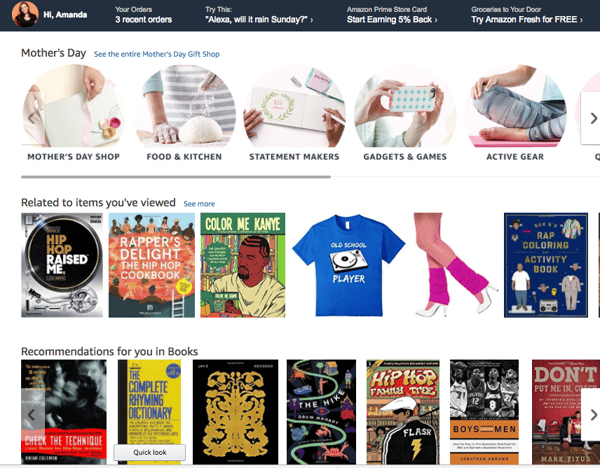
amazon's personalized marketing for customers Source

Those who know me are aware of my borderline obsession with hip hop, which is also the motivation for a lot of my online shopping behavior. Clearly, Amazon has taken notice.

And as I continued scrolling down, the fitting personalization went on. There was a header reading “For a night in” with recommendations on what to stream on Amazon Prime — an activity that comprised the majority of my weekend. Its recommendations for dog and kitchen products were on point, as well. After all, those are the categories where I make the most purchases.

It’s not just me. When I asked my colleagues what their Amazon homepages looked like, they were equally pleased. Sophia Bernazzani, a fellow Marketing Blog staff writer (and self-proclaimed “cat mother of three”), had a plethora of personalized cat food recommendations, while Managing Editor Emma Brudner’s suggested Prime streaming titles came with the header, “Bingeable TV."

“Amazon,” Brudner remarked, “You know me so well.”

The Takeaway

Here’s a personalization example where we don’t have a ton of complaints. As Brudner said, Amazon seems to know us pretty well, though I do question why, as per the image above, its algorithm thought I might like to buy a pair of leg warmers.

The nice thing about personalization of this nature, when it’s executed correctly, is that it often can lead to unplanned purchasing decisions.

For example, the purpose of my most recent visit to Amazon was to check out its personalization features for this article. But then, I discovered that Rapper’s Delight: The Hip Hop Cookbook was in my recommended books. Did I buy something I don’t need? Sure. But I also was left delighted by the fact that it was brought to my attention with very little effort.

If you’re in the business of personalizing curated items or recommendations for your customers, remember: The best part about it, for the user, is the resulting discovery of new things that we like — whether it’s a book, a tool, or an article.

7. Spotify

In 2015, Adam Pasick penned a story for Quartz explaining the “magic” behind Spotify’s “Discover Weekly”: A curated playlist of tracks that it thinks a given user will like. It’s carried out, like many other personalization and recommendation platforms, largely with the help of an algorithm that determines a user’s “taste profile,” based on listening behavior and the most popular playlists among the entire Spotify audience.

The technology behind it is from Echo Nest, a “music intelligence company” that was acquired, according to Pasick, by Spotify in 2014. Here’s a great diagram from the article that visually represents the process:
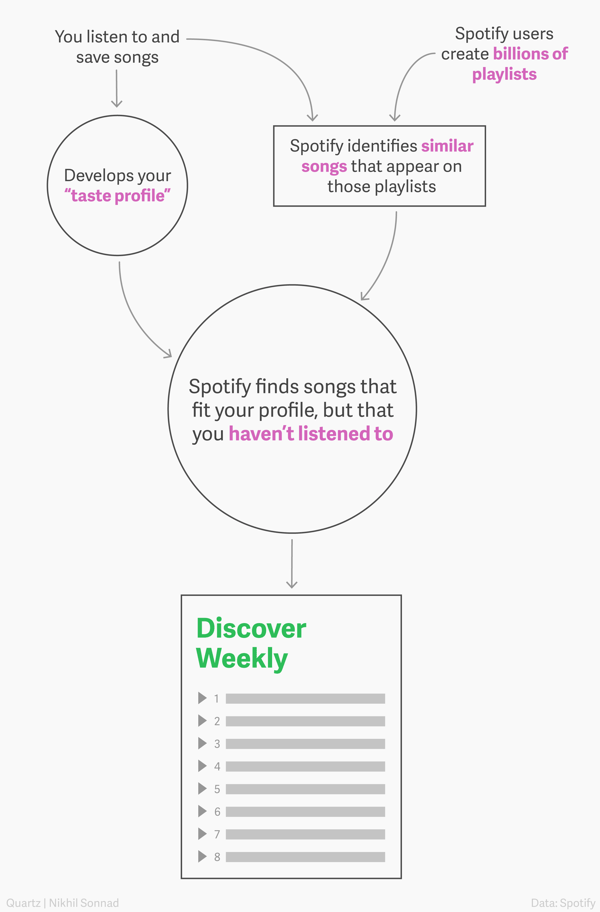
spotify personalized listening flowchat Source

As much as I use Spotify — which is close to daily — I’ve never actually bothered listening to my Discover Weekly playlist. So after a colleague brought it to my attention, I decided to take it for a spin.
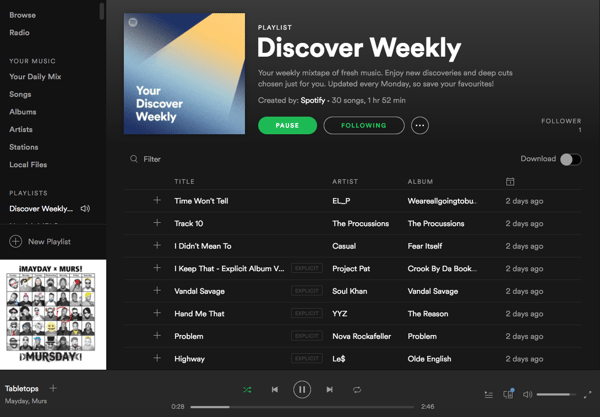
Spotify Discover Weekly personalized listening experience

The results were hit-or-miss. There were a few new songs that I was thrilled to discover and plan to listen to again. But for the most part, my experience was similar to Pasick’s, who described many of the songs on his personalized playlist as “meh.”

But those behind Discover Weekly acknowledge that personalization isn’t a perfect science. They also have suggestions for how to make it better, like adding the Discover Weekly songs you like to your library, or skipping the ones you don’t — “If users fast-forward within the first 30 seconds of a song,”

Spotify Product Director Matthew Ogle and Engineering Manager Edward Newett told Pasick, “the Discover Weekly algorithm interprets that as a ‘thumbs-down’ for that particular song and artist.”

The Takeaway

Most personalization initiatives aren’t going to be perfect. Even with a great algorithm, they are, at best, very educated guesses as to what’s going to be applicable to your customers. For that reason, it might be best to take a conservative approach to your recommendations, especially in the earliest stages of any personalization efforts you make.

This is an area where small-batch testing can be helpful. When you want to try out a personalization project or algorithm, identify your most active users, and invite them to pilot out the technology. Listen carefully to their feedback — good and bad — and see what you can do to make it better.

8. Iberia Airlines

During the 2016 holiday season, Iberia Airlines customers received emails posing the question: If you could visit any vacation destination, what would it be, and who would you go with? To answer, customers were redirected to a microsite where they would fill in responses, as well as the email address of the person they wanted to travel with.

Not long after that, the friend would receive an email with a holiday greeting about the dream vacation — only, in order to view the card, that person had to click a link to view it in his or her browser.

It was that last step, Skift writer Brian Sumers explained, where "Iberia ... put its advertising budget to work, using cookies [with the user's permission] so the traveler’s friend would see banners across the web, suggesting the perfect Christmas gift." That gift, of course, was the dream vacation.

Let's say, for example, I sent one of these cards to a friend. She might subsequently see several ads while browsing that said things like, "It’s never too late to fulfill Amanda’s dream. Do it with a trip to Mykonos.”

The Takeaway

The idea is certainly a cute one — and around here, we're suckers for a good holiday marketing campaign. But one of the most important items to highlight here is Iberia's use of cookies, and the fact that the brand wasn't sneaky about it.

As per the video above, a clear request was made to the user to allow cookies, and that's essential. Even the best-customized marketing becomes less personal, and definitely less desirable if it's carried out without the user's agreement.

9. Twiddy
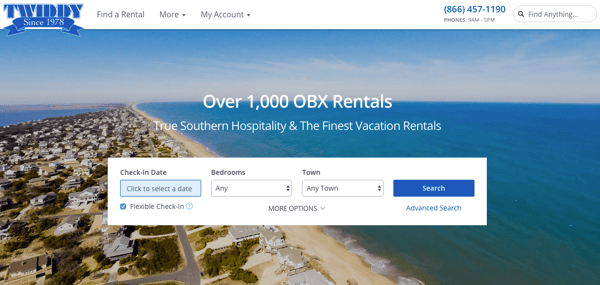
Twiddy example of personalized marketing Source

Having enough data is essential for marketing personalization — but knowing what to look at and how to use it is just as important. That's what made a tremendous difference for Twiddy, a vacation rental company based in the Outer Banks.

"Unless we had a good way of looking at the data," Marketing Director Ross Twiddy told Inc., "how could we make good decisions?"

One of the major pieces of information that Twiddy began to more closely examine was how rental volume and demand shifted from week-to-week. Noticing those trends allowed the company to start making "pricing recommendations" to homeowners, according to Inc., "on the basis of market conditions, seasonal trends, and the size and location of a home."

The week after Independence Day was one that stood out to the team in particular, in that rentals showed a precipitous drop during that period.

Because Twiddy observed that trend (among others), it allowed the owners of its managed properties to start experimenting with pricing for that particular week as early as January.

Not only did it benefit the customer — setting more realistic prices for lower-demand periods actually increased the bookings made for them — but it was just one way that Twiddy was delighting its customers with helpful, actionable information. It paid off, too. Since the brand began to use this data to help homeowners with decisions like pricing, its portfolio increased over 10%.

The Takeaway

There's a famous saying that goes, "Help me help you." Data, in general, can be a tremendous asset to brands. And it doesn't have to be about your customers' behavior — it can be about the habits of their customers, like the vacationers that rented from Twiddy's homeowner clients.

As long as it's something that can be shared ethically — like objective buying or seasonal trends — share the data and insights with your customers that's going to help make them more successful. That's the type of thing that makes a brand remarkable, and can help benefit your business, too.

Get Personal

One of the fundamental purposes of any personalization effort is to let your customers know that you’re paying attention to them. But striking a balance between, “We think you might find this helpful” and “we’re watching you” isn’t a simple process, so be sure to do some careful research, planning, and testing before you jump into any large-scale customization initiatives.

Remember that while you might be a marketer, you’re also a consumer. When it comes to experiments like these, put yourself into the shoes of the customer and ask, “Is this delightful? Or is it just creepy?” If it leans toward the latter, find out what’s giving it that vibe, and try something different.

Editor's Note: This post was originally published in December 2013 and has was updated for comprehensiveness in November 2019.


These 9 Brands Take Personalized Marketing to a New Level was originally posted by Local Sign Company Irvine, Ca. https://goo.gl/4NmUQV https://goo.gl/bQ1zHR http://www.pearltrees.com/anaheimsigns

How to Cultivate a Data-Driven Marketing Team

Data: You can't live with it, and you can't live without it. At least, that's how a lot of marketers feel. In fact, the affair between marketers and their data is often somewhat of a love-hate relationship.

Data can help you be a much more successful, analytical marketer who makes decisions based on facts rather than hunches. But wrangling together all that data — and then properly analyzing it ? It can give you quite a headache, and frankly, it can get pretty overwhelming at times.

But even though data can come with its challenges, successful marketers understand that it's a necessary evil, and most even learn to love data because it makes them better marketers.

When I first started working at HubSpot, I'll admit I wasn't the most analytically-minded person. But boy, has that changed.

So be empowered, marketers! Learning how to be truly data-driven can be extremely rewarding, helping you be more effective and achieve much better marketing results. 

11 Tips to Help You Cultivate a Data-Driven Marketing Team

1. Put the right analytics in place.

It's no wonder data can be such a headache — you need to have the right tools in place to collect it! And for many marketers, their analytics live in silos, making it difficult to compare data and metrics across channels.

For example, you might have analytics for your email marketing over here, social media marketing analytics over there, there ... and there, and blog analytics hanging out in an entirely different place. Furthermore, if you don't have this data connected to your customer relationship management (CRM) system, you're also missing out on some extremely valuable closed-loop analytics that can truly report on the ROI of each individual marketing channel — and your marketing strategy as a whole. You can imagine how all of this disconnected and incomplete data can make things awfully difficult to handle.

So if you're not happy with your current marketing analytics solution and its ability to integrate all your marketing data, searching for a new solution is a great place to start. We wrote a blog post to guide you through the process of selecting the perfect marketing analytics solution for your needs. It highlights important questions you should ask potential analytics providers (including HubSpot!) before making a purchase.

2. Assign specific metrics to individual marketers. 

Now that you have a reliable, integrated, and all-encompassing analytics tool in place, use it to its fullest potential. Measure everything you can possibly measure. Believe us, as a data-driven marketing team, we know there really is no shortage of metrics you can track — just check out this introductory marketing analytics ebook for some great ideas to get you started.

The best way to divvy up the measurement work is to hold individual members (or teams, if your marketing department is on the larger side) accountable for specific metrics. Identify the most important metrics you'll use to measure the success of each particular marketing channel and prioritize them by importance.

Then assign the tracking and managing of these metrics to individual team members. For example, you might assign your social media manager/team with the task of monitoring high-priority metrics such as customers, leads, and visits generated from social media overall, as well as those same metrics segmented by individual social network, plus even more granular metrics like engagement per social network (think "likes," comments, shares, etc.).

Not only will this ensure you have all your important metrics covered, but it will also hold your teams accountable for regularly keeping track of and reporting them.

3. Establish data benchmarks.

What are your company's typical email click-through rates? How many "likes" do you generally get on an individual Facebook post? What is your average landing page conversion rate? Setting benchmarks helps you not only understand what your business' marketing "norms" are, but it also gives you a standard that you can work toward meeting — and exceeding — incrementally. That being said, setting benchmarks is easier said than done. How are you supposed to know what "good" is to begin with?

There are a couple of ways to approach this:

  • First, you could do some research to see if there are any established industry marketing benchmarks out there to compare yourself to. This can give you a general sense of how others in the industry are faring, and how you stack up in comparison.
  • More likely, however, you'll probably want to establish benchmarks that are specific to your own business and industry. This is where your analytics come into play.
  • Once you've had some time (say, a few months) for your analytics to marinate, you can start to notice and record general patterns in the performance of your individual marketing metrics.
Use those as your initial benchmarks, and make it a priority to improve those benchmarks over time.

4. Set metrics-driven goals.

Now that you've some set benchmarks for your business' marketing, you can establish metrics-driven goals. Each marketer (or team) in your marketing department should not only be responsible for tracking and reporting on their key metrics, but they should also be assigned specific goals to achieve. How else will you know if your marketing is successful if you don't know what "success" is? In other words, setting goals helps you define success for your marketing.

The goals you set for your marketers will depend on a number of factors, but should mainly be based on the overarching goals of your business. This will likely involve meeting with your company's management team to determine your business' growth projections so you can understand how Marketing fits into this bigger picture.

For example, if your company is looking to grow by 5% in revenue in the following quarter, you’ll need to figure out how many leads you’ll need to generate in order to close 5% more customers or revenue. Based on this overall goal, you can then start to assign individual team goals based on those marketing channels' benchmarks. In other words, if you know that your email marketing typically contributes 20% of your business' overall new leads and your blog contributes 10%, you'd logically assign a larger overall leads goal for your email marketing team than you would your blogging team.

To help you with your goal-setting, download our free calculator for determining your monthly traffic and leads goals.

5. Regularly report on progress made towards goals.

Don't just set and forget your goals. Make it a priority for individual marketers to base their strategies and tactics on the monthly goals they're required to meet by reporting on their progress regularly. Do you hold weekly and monthly marketing meetings?

At HubSpot, we report on the progress of our most important marketing metrics (such as traffic, leads, and the status of our marketing SLA) at our weekly team meetings. And tracking traffic and leads is easy to do in HubSpot's software, where all you have to do is input your lead generation goal to easily track the number of leads you generate each day, week, month, or year.

We also have longer monthly meetings during which each individual team reports on their month over month progress and more niche metrics like email unsubscribe rate, social media reach, or blog subscriber growth.

In addition to reporting on these metrics within your marketing team, share a monthly marketing report that highlights the results of individual teams — and the marketing department as a whole — with the rest of your company. Not only will this keep your team more accountable for being data-driven (you want those metrics to look good, right?), but it will also prove to the rest of the company that Marketing does way more than the stereotypical party planning and arts and crafts all day.

6. Back up marketing decisions with data.

This may seem like a no-brainer, but if you refer back to the chart at the beginning of this post, it's a little less surprising. You're collecting all this marketing data, sure, but you need to actually do something with it. In other words, to really be a data-driven marketer, you can't just collect and report on the data. You need to actually use that data to drive your marketing decisions. This requires you to hone your analytical skills. It requires some critical thinking and problem solving.

For example, let's say you've been doing social media marketing for several months because that's what you've thought you needed to do. But now that you're actually tracking the success of your social media marketing with your marketing analytics tool, you realize that there are certain social media channels that just aren't performing for you. Maybe you've been spending equal amounts of time on Facebook and Pinterest, yet your analytics are telling you that Facebook has 5X the ROI of Pinterest. Wouldn't it make sense for you to reallocate some (or all) of the time you're investing in Pinterest to Facebook? By using data to back up your marketing decisions, you'll not only make smarter decisions, but you'll also improve your marketing results!

Learn how to think more analytically by checking out this post about nine terrific ways to make your marketing analytics actionable .

7. Find ways to measure "unmeasurable" things.

Truly data-driven marketers find ways to measure seemingly "unmeasurable" things. For example, one of the teams in HubSpot's marketing department is the Editorial team, which is responsible for HubSpot's branding. And you can imagine how measuring something like branding isn't really as cut and dry as measuring something like leads generated from social media, or the clickthrough rate of email marketing, right? But that doesn't mean our Editorial team is exempt from being analytical. So they measure things such as direct traffic to the HubSpot website and branded search term volume.

Furthermore, one of the challenges our Product Marketing team has is making sure people realize that HubSpot sells software. In other words, they need to figure out people's perception of what HubSpot. Not exactly an easy feat. As you can imagine, measuring their progress toward achieving this goal isn't something you can just take a look at a dashboard to gauge. So they administer brief, multiple choice surveys of our audience placed on various thank-you pages for our non-software related marketing offers such as educational ebooks and webinars. This survey simply asks respondents to select what HubSpot does. Their goal is to increase the number of people who select "software" vs. other things like "services" or "marketing content."

8. Reward record-setting achievements.

One of the best ways to get your marketing team on board with a data-driven culture is to incentivize them. Consider giving out a monthly award for the member of your marketing team that achieves the most impressive record-crushing results based on their specific metrics-driven goals. On HubSpot's marketing team, for example, we identify a marketing "champion" every month, who gets to attend a Champions Dinner hosted by one of HubSpot's executives and attended by other "champions" from other departments.

And don't stop at just incentivizing those record-setting achievements with tangible rewards. Recognize them publicly in front of the entire company, too. Sometimes the most rewarding incentive for your employees is public recognition of their hard work. You should also keep track of employees' individual metrics-driven achievements and incorporate them into your annual review process.

9. Use data in content creation.

The benefits of data in marketing don't have to be limited to your marketing analytics or making better marketing decisions. Data can also be used in a number of other ways in your marketing, such as improving your marketing content, including blog posts, ebooks, and other written collateral. In fact, incorporating a little data can go a long way, making your content much more high-quality, credible, authoritative, and interesting. Just be sure you're selecting trustworthy data and properly attributing it to the original sources .

There are quite a few ways you can go about spicing up your marketing content with data. Some techniques include demonstrating change/consistency over time, providing benchmarks, showing connection/correlation, proving a point, emphasizing why readers should care, backing up opinions, showing discrepancies, including social proof, showing success, offering clarity, showing scale, highlighting original data, and portraying data visually. To learn more about how to use any of these above techniques, read our comprehensive post on using data in your marketing content .

data driven marketing team show data in content creation

10. Leverage A/B testing.

The savviest data-driven marketers are always looking to get better data and to improve how the analytics look for the metrics they're responsible for. And what's one of the best ways to improve the looks of your data? Optimize your marketing with A/B testing, that's what!

A/B testing enables you to experiment with how different variables affect things like traffic, click-through rates, and conversion rates, and allows you to optimize your marketing efforts using the variables that contribute to the best results. Luckily, there's no shortage of variables you can test in your marketing , and you can also conduct A/B tests in practically every one of your marketing assets. Check out our complete ebook on A/B testing to get started.

11. Share data-driven research with the rest of your team and company.

If you're doing all that A/B testing we recommended in our last tip, chances are you're going to come away from those tests with a bunch of great takeaways about what works — and what doesn't — for your particular business and its audience. Don't hoard that data ... share it!

At the very least, the rest of the members of your marketing team could probably really benefit from those lessons learned. It will make them better marketers, and it will also probably teach them a thing or two about how your prospects respond to different marketing tactics. Encourage members of your marketing team to present lessons learned from specific A/B test they've run during your weekly marketing meetings so everyone can benefit.

Chances are, the rest of your business — even departments outside of Marketing — might appreciate this insight into your marketing lessons, too.

At HubSpot, we have a popular internal wiki, which the marketing team often uses to share the results and lessons from its A/B tests with the rest of the company. Marketing members also regularly present at meetings in other departments to share valuable marketing insights.

Not only is sharing these results educational to them, but it also shows them that the marketing department doesn't just sit on our butts and act on hunches! Marketing regularly tests its tactics and acts on proven data to make its decisions.

This is sure to boost the R-E-S-P-E-C-T of your marketing team, and it will probably even contribute to more marketing buy-in. And who doesn't want that?

Editor's note: This post was originally published in September 2012 and has been updated for comprehensiveness.


How to Cultivate a Data-Driven Marketing Team was originally posted by Local Sign Company Irvine, Ca. https://goo.gl/4NmUQV https://goo.gl/bQ1zHR http://www.pearltrees.com/anaheimsigns