Wednesday, September 2, 2020

21 Examples of Successful Co-Branding Partnerships (And Why They're So Effective)

Everyone has loyalties to their favorite brands, but there's a good chance your favorite products are the result of two separate brands working together.

One of my own beloved childhood memories was a product of co-branding: Betty Crocker partnered with Hershey's to include chocolate syrup in its signature brownie recipe.

There's something brilliant about that co-branded product: It's a fun way to marry two classic brands into one delicious experience for fans of baking and chocolate alike. In fact, these brands still create new co-branded products to this day.

Co-branding is a strategic marketing and advertising partnership between two brands wherein the success of one brand brings success to its partner brand, too. Co-branding can be an effective way to build business, boost awareness, and break into new markets, and for a partnership to truly work, it has to be a win-win for all players in the game. Both audiences need to find value -- like chocolate-loving fans of Betty Crocker and Hershey's.

There are a ton of great examples of co-branding partnerships out there. To show you what makes them so successful, we've curated a list of 21 examples of great co-branding partnerships to inspire you.

Co-Branding Partnership Business Examples

  1. GoPro & Red Bull
  2. Pottery Barn & Sherwin-Williams
  3. Casper & West Elm
  4. Kanye and Adidas
  5. BMW & Louis Vuitton
  6. Starbucks & Spotify
  7. Apple & MasterCard
  8. Airbnb & Flipboard
  9. Uber & Spotify
  10. Levi's & Pinterest
  11. BuzzFeed & Best Friends Animal Society
  12. Alexander Wang & H&M
  13. CoverGirl & Lucasfilm
  14. Amazon & American Express
  15. UNICEF & Target
  16. Nike & Apple
  17. Bonne Belle & Dr. Pepper
  18. Burger King & McDonald's
  19. Warby Parker & Arby's
  20. Taco Bell & Doritos
  21. Tim and Eric & Purple

1. GoPro & Red Bull

Co-branding Campaign: Stratos

GoPro doesn't just sell portable cameras, and Red Bull doesn't just sell energy drinks. Instead, both have established themselves as lifestyle brands -- in particular, a lifestyle that's action-packed, adventurous, fearless, and usually pretty extreme. These shared values make them a perfect pairing for co-branding campaigns, especially those surrounding action sports.

To make the partnership work, GoPro equips athletes and adventurers from around the world with the tools and funding to capture things like races, stunts, and action sport events on video -- from the athlete's perspective. At the same time, Red Bull uses its experience and reputation to run and sponsor these events.

"GoPro camera technology is allowing us to complement the programming by delivering new athlete perspectives that have never been seen before," said Sean Eggert, Red Bull's director of sports marketing. The collaboration allows exclusive GoPro content to enhance both companies' growth.

While GoPro and Red Bull have collaborated on many events and projects together, perhaps the biggest collaboration stunt they've done was "Stratos," in which Felix Baumgartner jumped from a space pod more than 24 miles above Earth's surface with a GoPro strapped to his person. Not only did Baumgartner set three world records that day, but he also embodied the value of reimagining human potential that define both GoPro and Red Bull.

2. Pottery Barn & Sherwin-Williams

Co-branding Campaign: Color Your Room

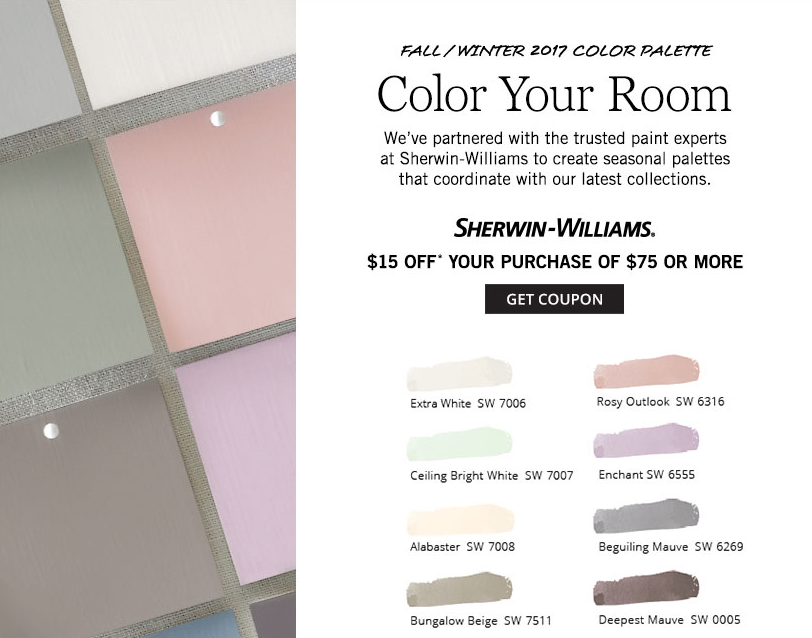
One of the biggest benefits of co-branding campaigns is the opportunity to expose your product or service to a brand new audience. That's exactly what home furnishing store Pottery Barn and paint company Sherwin-Williams did when they partnered together back in 2013.

Together, the two brands created an exclusive product line of paints, and then added a new section of Pottery Barn's website that helped customers easily select paint colors to complement their furniture choices.
pottery barn color your room.png

Source: Pottery Barn

Customers could coordinate paint colors with picture-perfect Pottery Barn furniture for a mutually beneficial partnership -- and style assistance for both brands' customers to boot. "Paint Landing," Pottery Barn's landing page for the partnership, contains helpful blog posts and how-to ideas for do-it-yourself painting and decorating.

3. Casper & West Elm

Co-branding Campaign: Test a Casper Mattress

You may have already heard of Casper -- it's an online mattress and bedding brand that sells mattresses in a box.

Casper mattress unboxing videos like this one have become a hit on YouTube, but despite the brand's 100-day return policy, some shoppers might still be hesitant to buy a mattress without getting the chance to roll around in it first.

Enter West Elm, a high-end furniture company. Casper and West Elm partnered so shoppers could try out the comfy mattress before purchasing -- and so West Elm could advertise its chic bedroom furniture.

west-elm-hero.jpg

Source: Casper

This is another example of a mutually beneficial co-branding partnership. It helps both brands appeal to a broader group of shoppers -- after all, Casper doesn't sell furniture, and West Elm doesn't sell mattresses. It also provides shoppers with options -- to try a mattress before buying, or to feel what it would be like sleeping in a bed frame.

4. Kanye and Adidas

Co-branding Campaign: Yeezy

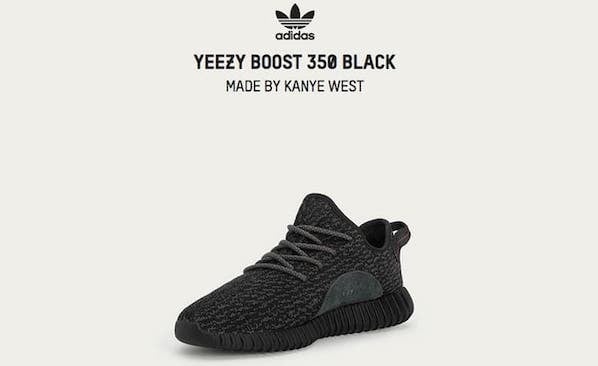
Kanye West, best known for his Grammy-winning rap albums, partnered with Adidas to develop a high-end footwear line called Yeezy. The combination of Kanye's personal brand and Adidas' growing streetwear segment has made for robust company earnings and brand growth since it was introduced. 

Kanye's celebrity appeal benefits Adidas by creating buzz around its apparel, and the athletic-wear brand gives Kanye a well-established platform to build his high-end clothing line. One of the strongest draws of Yeezy -- and most notably its shoes -- is its exclusivity: Kanye's celebrity status, extremely scarce roll-outs, and the high price tag make the lucky few to own Yeezy sneakers feel a little famous by association.

Adidas' co-branding relationship with Kanye and the resulting cult-like Yeezy following led to a stellar year for the company: in 2019, Adidas' net income climbed 19.5% to $1.9 billion.
adidas-kanye-cobranding

Source: Yeezy

5. BMW & Louis Vuitton

Co-branding Campaign: The Art of Travel

Car manufacturer BMW and designer Louis Vuitton may not be the most obvious of pairings. But if you think about it, they have a few important things in common. If you focus on Louis Vuitton's signature luggage lines, they're both in the business of travel. They both value luxury. And finally, they're both well-known, traditional brands that are known for high-quality craftsmanship.

These shared values are exactly why this co-branding campaign makes so much sense. In their partnership, BMW created a sports car model called the BMW i8, while Louis Vuitton designed an exclusive, four-piece set of suitcases and bags that fit perfectly into the car's rear parcel shelf.

louis-vitton-bmw.jpg

Source: Louis Vuitton

Although the four-piece luggage set goes for a whopping $20,000, the price is right for the target customer, as the BMW i8 starts at $135,700. A price like that kind of makes that luggage set seem like a drop in the bucket.

Not only does the luggage fit perfectly size-wise, but its design and appearance fit perfectly with BMW's image: sleek, masculine, and high-quality. Turns out both the luggage and some parts of the car's interior use carbon fiber, strong-yet-light composite material.

"This collaboration with BMW i epitomises our shared values of creativity, technological innovation and style," said Patrick-Louis Vuitton, head of special orders at Louis Vuitton. "Our craftsmen have enjoyed the challenge of this very special project, using their ingenuity and attention to detail to create a truly made to measure set of luxury luggage. This is a pure expression of the art of travel."

6. Starbucks & Spotify

Co-branding Campaign: First-of-Its-Kind Music Ecosystem

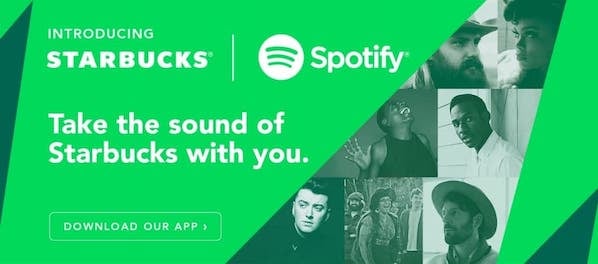
Starbucks scaled up a premium coffee shop experience into a massive global brand, using music to create an ambience around its coffee. Spotify, a music streaming platform, has powered almost 25 billion hours of listening around the world. Starbucks and Spotify forged an innovative co-branding partnership to build a "music ecosystem", offering artists greater access to Starbucks consumers and giving Starbuck access to Spotify's expansive discography.

Through the initiative, Starbucks employees get a Spotify premium subscription, with which they can curate playlists (that patrons can access through the Starbucks Mobile App) to play throughout the day in the shop. This music ecosystem is designed to expand the coffeehouse environment that Starbucks is known for while giving artists greater exposure to Starbucks customers. 

The "musical-ecosystem" partnership is mutually beneficial, an opportunity for the companies to reach the other's audience without sacrificing their brand.
starbucks-spotify-cobranding-partnership

Source: Spotify

7. Apple & MasterCard

Co-branding Campaign: Apple Pay

Sometimes, co-branding partnerships aren't just cool projects between two companies -- they actually have practical value when the companies work together.

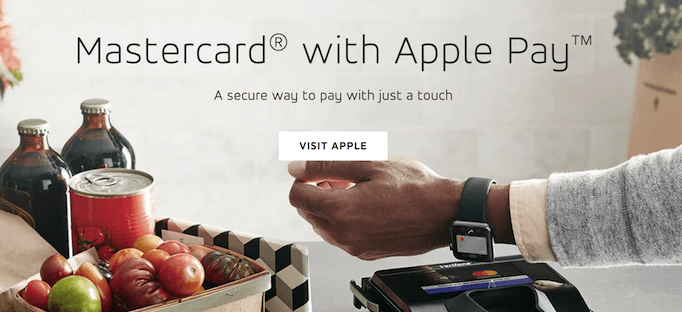
When Apple released the Apple Pay app, the brand effectively changed how people perform transactions. This app allows people to store their credit or debit card data on their phone, so they can use them without physically having the card with them. But in order for this app to succeed, it needs credit card companies to integrate with this technology. By the same token, credit card companies also face more competition themselves if they aren't compatible with the latest consumer purchasing tool.

To get out ahead of its competition, MasterCard became the first credit card company to allow its users to store their credit and debit cards on Apple Pay. MasterCard not only showed support of a major consumer tech developer in this partnership -- it evolved along with its own customers in how they choose to make purchases at the counter.
Co-branding partnership between Apple and MasterCard on Apple PaySource: MasterCard

8. Airbnb & Flipboard

Co-branding Campaign: Experiences

You've probably heard of Airbnb, the room-sharing application that allows you to find convenient lodging hosted by real people. But its newest partner, Flipboard, might not have been on your radar until now.

Flipboard is a news aggregator that collects news and topical content that users are sharing on social media, and allows you to "flip" through the material much like a social media feed. Well, Airbnb recently teamed up with Flipboard to create Experiences, which serve Airbnb users with lifestyle content tailored to their interests and shared by people with similar interests as the reader.

The ongoing campaign recently led to another co-created product called Trips, which allows Airbnb users to connect with hosts on common interests and actually book these experiences when traveling. This partnership is an impressive example of how businesses can connect their customers with information that caters to their individual interests and drive usage of the product as a result.
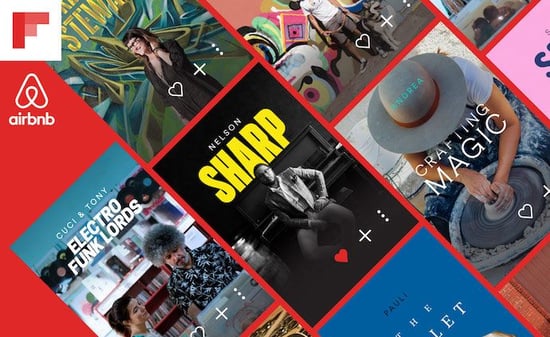
Co-branding partnership between Airbnb and Flipboard on ExperiencesSource: Flipboard

9. Uber & Spotify

Co-branding Campaign: Soundtrack for Your Ride

Music-streaming app Spotify partnered with ride-hailing app Uber to create "a soundtrack for your ride." This is a great example of a co-branding partnership between two very different products with very similar goals -- to earn more users.

Here's how it works: When riders are waiting for an Uber ride, they're prompted to connect with Spotify and become the DJ of their trip. Users can choose from their own playlists to determine what they'll listen to.
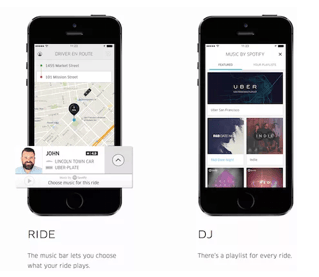
uber spotify.pngSource: The Verge

This smart co-branding partnership helps fans of Uber and Spotify alike enjoy better experiences thanks to the app. And they might be more interested in picking Uber and Spotify over competitors knowing they can enjoy their next ride listening to their favorite tunes.

10. Levi's & Pinterest

Co-branding Campaign: Styled by Levi’s

Levi Strauss & Co. -- one of the oldest and most recognized jean brands in the world -- recently joined forces with Pinterest, a social platform where users pin posts they like to their user profiles.

People often turn to Pinterest for fashion inspiration, making a co-branding partnership with Levi's a natural partnership. Styled by Levi's is a new initiative between Pinterest and Levi's offers a "personalized styling experience," or style insights tailored to each user's tastes and preferences.

The partnership offers an authentic and individualized brand relationship, which is difficult to come by in an increasingly digital environment. Pinterest offers Levi's a leading social platform with millions of users interested in visual offerings, and Levi's meets these needs with digital personalization and visual-focused boards. 
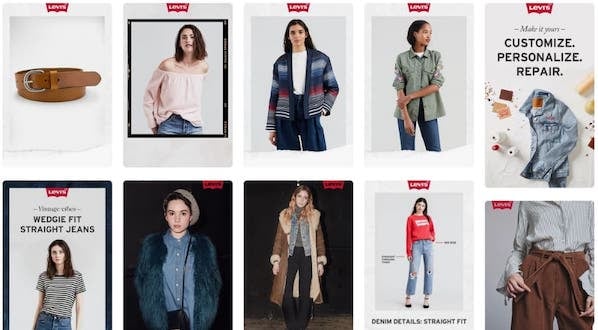
styled-by-levis-pinterest-cobranding

Source: Styled by Levi's

11. BuzzFeed & Best Friends Animal Society

Co-branding Campaign: Emma Watson + Kittens

Some co-branding campaigns are more complicated than others. This example from BuzzFeed and Best Friends Animal Society is one of the simplest ones out there -- and it goes to show a great co-branding effort doesn't have to take months of planning or millions of dollars.

For this campaign, the folks at Best Friends Animal Society wanted to leverage BuzzFeed's readership of over 200 million people.

To do this, they partnered with the folks at BuzzFeed to set up and publish an article called, "We Interviewed Emma Watson While She Played With Kittens And It Was Absolutely Adorable," which you can read here.

The article is exactly what it sounds like: Harry Potter and Beauty and the Beast star Emma Watson answered fans' questions while she played with cute kittens.
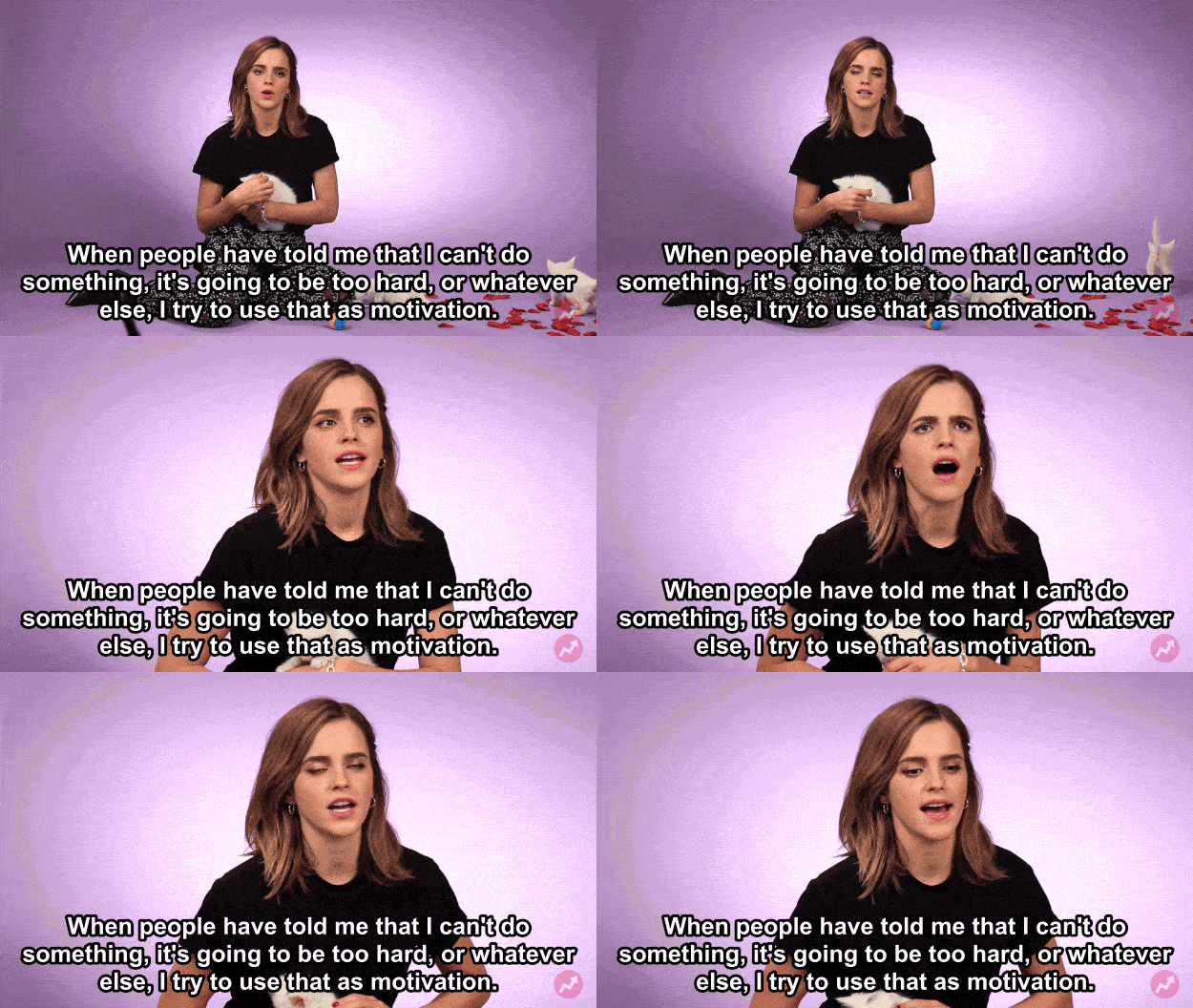
Emma Watson playing with kittens in a co-branding partnership between BuzzFeed and Best Friends Animal Society

Source: BuzzFeed

The article ends with a CTA advertising that the kittens featured in the video are, in fact, adoptable -- a win-win for both partners.

12. Alexander Wang & H&M

Co-branding Campaign: High-End Fashion

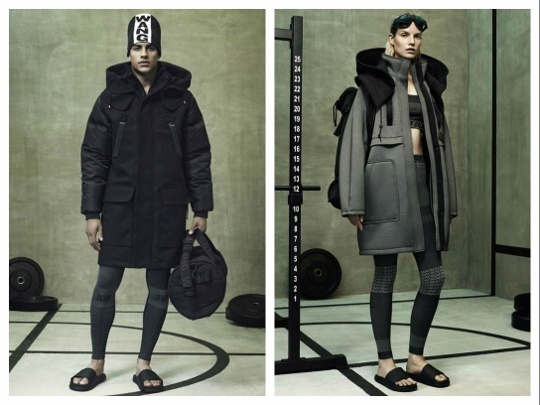
Anyone who's designer-conscious knows Alexander Wang and H&M aren't exactly the same caliber when it comes to quality. Shoes by Alexander Wang tend to go for around $350 a pair, whereas shoes sold by H&M tend to go for more like $35 a pair. See what I mean?

But that discrepancy in pricing is exactly why the two brands decided to partner with one another. To support their brand positioning as trendy and fashionable, H&M has traditionally paired with high-end fashion brands to offer exclusive branded items for a limited time.

In exchange, those high-end brands -- like Alexander Wang -- can expose their brand name to "a new generation of potential consumers, who will increasingly aspire to owning more pieces from his high end collection," writes Michelle Greenwald for Forbes.
alexander-wang-h-and-m.jpg

Source: Snobette

13. CoverGirl & Lucasfilm

Co-branding Campaign: Light Side and Dark Side Makeup

Whenever a new installment of the beloved "Star Wars" series is released in theaters, it causes global pandemonium, and the release of "Star Wars: Episode VII The Force Awakens" in 2015 was no exception. The series' parent company, Lucasfilm, partnered with CoverGirl to capture a broader audience to get fans new and old excited about the movie's release.

You might be wondering, "What do "Star Wars" and makeup have in common?" And the cleverness of this partnership is evident in the answer.

In the past, the space-age action movies were almost exclusively advertised and targeted toward men and boys. But in this day and age, that's nonsense -- because people of all genders can be interested in space exploration and makeup contouring alike.

The line was designed by famed makeup artistPat McGrath, and it features two styles: the Light Side and the Dark Side, which loyal "Star Wars" fans will recognize as the sides of good and evil in the movies.

This co-branding partnership was a win for both brand. Lucasfilm captured more attention and got CoverGirl shoppers (many of whom are young women) excited about the film's release. And CoverGirl hopped on the "Star Wars" advertising bandwagon that took over the internet, stores, and TV leading up to the film's release.

14. Amazon & American Express

Co-branding Campaign: Amazon Business American Express Card

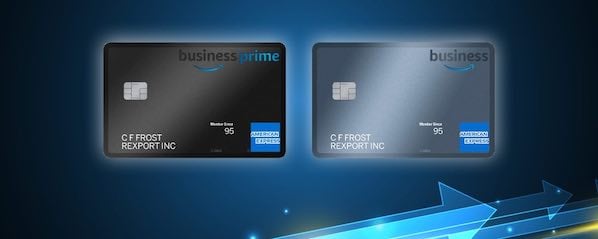
Ecommerce giant Amazon is a global enterprise with millions of users and almost two million businesses that sell on their platform. Amazon is looking to improve the way small businesses sell on their platform, so they've partnered with American Express on a co-branded credit card.

The card will help users buy goods and services, but also provide enhanced data insights on their purchasing activity. American Express and Amazon share a commitment to help small businesses grow in the U.S., and by combining their efforts, the two companies can enhance their performance while building brand trust.
amexamazon-cobranding

Source: Amazon Business

15. UNICEF & Target

Co-branding Campaign: Kid Power

If you have the chance to partner for a not-for-profit cause, it can pay off in multiple ways.

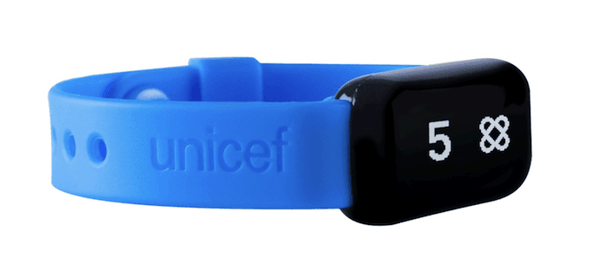
In 2015, Target partnered with UNICEF on a campaign called Kid Power, which committed Target to one of UNICEF's sustainable development goals (SDGs). The retailer sold kid-friendly fitness trackers encouraging the wearer to complete various fitness activities, which ultimately helped deliver food packets to underprivileged children around the world.

By selling this fun, inexpensive fitness product, Target encourages children to embrace a healthy lifestyle and uses kids' successes to supply underserved communities with the resources they need. It's an ongoing partnership that generates awareness of global malnutrition, helps UNICEF meet its demanding SDGs, and opens up Target to a demographic of giving families they might otherwise have had access to.

By the way, you can get your child a Kid Power band here.
Co-branding partnership between UNICEF and Target on Kid Power Bands

16. Nike & Apple

Co-branding Campaign: Nike+

Athletic brand Nike and technology giant Apple have been working together since the early 2000s, when the first line of iPods was released.

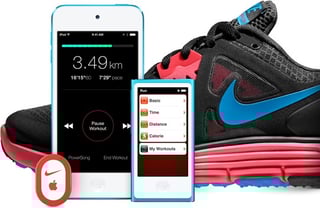
The co-branding partnership started as a way to bring music from Apple to Nike customers' workouts using the power of technology: Nike+iPod created fitness trackers and sneakers and clothing that tracked activity while connecting people to their tunes.
Nike+ shoe, iPhone, and iPod

Source: Apple

The partnership has since evolved to become Nike+ -- which uses activity tracking technology built into athletic clothing and gear to sync with Apple iPhone apps to track and record workout data. Tracking transmitters can be built into shoes, armbands, and even basketballs to measure time, distance, heart rate, and calories burned.

It's a genius co-branding move that helps both parties provide a better experience to customers -- and with the popularity of fitness tracking technology, Nike+ is ahead of the curve by making it easy for athletes to track while they play.

17. Bonne Belle & Dr. Pepper

Co-branding Campaign: Flavored Lip Balm

Dr. Pepper-flavored lip balm. I mean, it's genius.

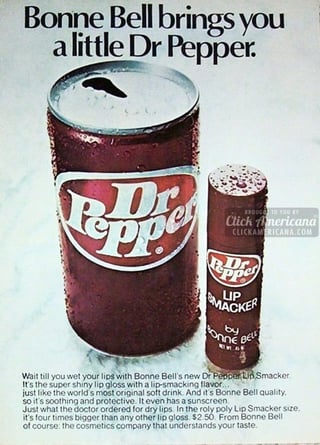
Bonne Belle first debuted Lip Smacker, the world’s first flavored lip balm, in 1973, starting with flavors like strawberry, lemon, and green apple. Just two years laterin 1975, they'd forged their first flavor partnership with the timeless Dr. Pepper brand. The result? A lip balm flavor that's been famous for decades among teenage girls.

If you're thinking the connection between lip balm and Dr. Pepper is a little thin, consider the copy on one of their vintage ads: "It’s the super shiny lip gloss with lip-smacking flavor… just like the world’s most original soft drink." And later, "From Bonne Belle of course: the cosmetics company that understands your taste."
bonne-belle-dr-pepper.jpg

Source:Click Americana

Most Surprising Brand Partnerships

Every so often, we hear about a brand partnership that we think doesn't make any sense -- but it leads to a few incredibly memorable, unexpected campaigns. If you want to broaden your horizons of who you should partner with, check out these surprising co-marketing successes.

18. Burger King & McDonald's

Co-branding Campaign: A Day Without a Whopper

Yes. You read that right, Burger King and McDonald's -- two of the fiercest opponents in the fast-food industry -- actually joined together for a co-marketing campaign in 2019. And, while we don't encourage competing brands to do this -- the campaign was for an amazing cause. 

At the time, McDonald's was donating $2 to childhood cancer charities for every Big Mac purchased. So, Burger King worked with the competing fast-food chain to host "A Day Without a Whopper." 

For one day, Burger Kings across Argentina and other countries took the Whopper off their menu in an effort to encourage people to buy a Big Mac from McDonald's instead. 

The Burger King King and Ronald McDonald hold hands in solidarity for the Day Without a Big Mac Campaign

Image Source

Although there were some criticisms of the campaign, due to the fact that it confused Burger King customers, it was an amazing example of two competing brands that worked together to help a charity. Because of how they partnered up for a good cause, audiences loved the campaign and buzzed about it all over the web.

19. Warby Parker & Arby's

Co-branding Campaign: The WArby Collection

Warby Parker is known for selling affordable glasses at stores across the U.S., and through nearly fully virtual fitting platform. Arby's is a restaurant chain known for it's slogan, "We have the meat!" 

Looking at the two companies, there's not much that they have in common. But, this didn't stop them from creating a co-branded April Fools Day campaign in 2018.

For the campaign, the two brands played up the one major thing they had in common -- the fact that the word "Arby" was part of both their names

On April Fool's Day, Warby Parker visitors could buy Arby's themed fashion items, which were part of the cleverly-named WArby Collection.

According to Nylon, items visitors could buy included a WArby's T-shirt, baseball cap, and tote bag (which also said, "Nice To Meat You" on it). They could also buy a pack of sandwich-themed microfiber cloths and glasses with a raw beef pattern.
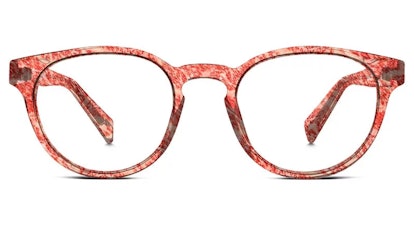
Image Source

Meanwhile, Arby's offered food with boxes that had the WArby's logo on it as well as onion rings with a box that read "Onion Ring Monocle."
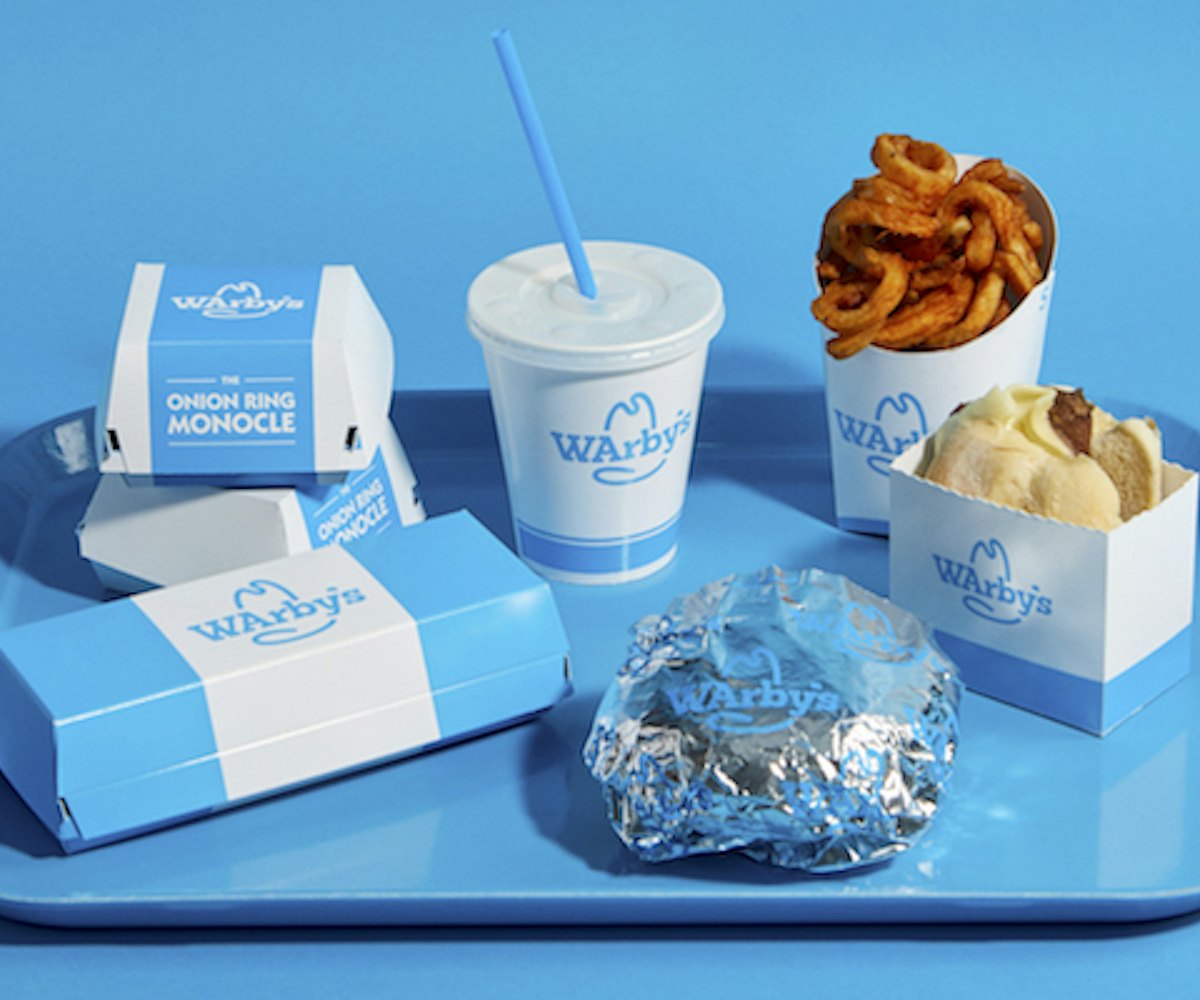
Food served during Warby Parker and Arby's comarketing campaign

Image Source

This campaign goes to show that you don't necessarily need a matching audience demographic or a partner in a similar industry to create a campaign that catches a large audience's attention. Sometimes all you need is a sense of humor and creativity.

20. Taco Bell & Doritos 

Co-branding Campaign: Doritos Locos Tacos

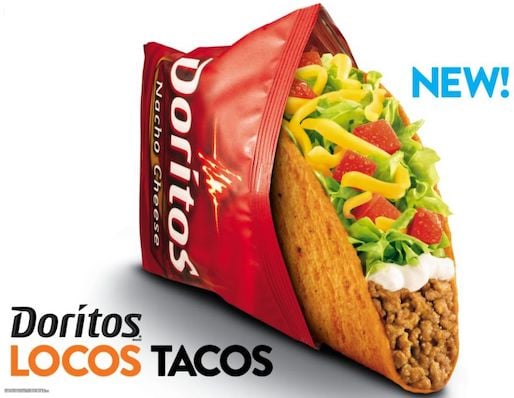
When the Doritos Locos Taco was first introduced, it quickly became one of the most popular and widely recognized items in the fast food industry. Frito-Lay took Taco Bell's crunchy taco recipe and gave the Locos Taco its special, signature twist: a Doritos shell. The two companies wanted to keep the shell as close to the original cheesy chips as possible, using the original corn masa recipe and coating it in that distinctive nacho cheese dust.  

The taco was an immediate and explosive success: Taco Bell sold an estimated 1 billion units the first year its was introduced. 

Taco Bell and Frito Lay advertised the Doritos Locos Taco by wrapping the taco in a classic Doritos bag, reflecting the co-branding partnership and appealing to both brands' audiences. The Doritos Locos Taco's extraordinary success is yet another example of why co-branding can boost reach and sales for both brands.
co-branding-partnership-doritos-taco-bell

Source: Taco Bell

21. Tim and Eric & Purple 

Co-branding Campaign: Purple Boys

Tim and Eric (a.k.a. Tim Heidecker and Eric Wareheim) are the comedic duo behind Adult Swim shows like Tim and Eric Awesome Show, Great Job!, Check It Out! with Dr. Steve Brule, Tim & Eric's Bedtime Stories, and Beef House.

Meanwhile, Purple, the company and HubSpot customer known for the popular Purple Mattress, often launches unique advertising campaigns which have caught the eye of millennial and Gen-Z demographics.

Although it makes sense for a company to team up with celebrities who can promote their product, Tim and Eric's comedic style is incredibly random and unique. Although they're pretty hilarious, as a marketer, you might wonder how this type of comedy style translates into a mattress marketing campaign that actually generates revenue.

While you might think Tim and Eric had dull down their iconic routine to sell Purple products, this is actually quite far from the truth. In a video series called The Purple Boys, they actually amped up their bizarre antics. 

The storyline of Purple Boys episodes often relate to a sleep-related pain point, such as the "Sunday Scaries." Although the script and special effects are incredibly random, the episodes almost always end with the Purple Boys supplying a sleep-deprived character with a Purple mattress.

To give you a visual of what this off-the-wall comedy series looks like, check out this episode that centers around a sleepy character named Joe Dunder:

Although hiring actors is technically more of sponsorship than a partnership, this large-scale campaign benefits both parties. While Tim and Eric are able to spread awareness of their comedy to Purple audiences, Tim and Eric fans might watch these videos for entertainment and learn about Purple's products along the way. 

Creating a Great Co-Marketing Campaign

Although you might not have the budget of the brands noted above, you can take a note from them in regards to their creativity, level of storytelling, how they pooled their resources to connect their separate brands in a mutually beneficial way. 

As you search for the best co-marketing partner for your brand, and build out a winning campaign, be sure keep the examples above in mind. If you're looking to learn more about brand partnerships and co-marketing, check out this helpful ultimate guide, or download the free resource below. 


21 Examples of Successful Co-Branding Partnerships (And Why They're So Effective) was originally posted by Local Sign Company Irvine, Ca. https://goo.gl/4NmUQV https://goo.gl/bQ1zHR http://www.pearltrees.com/anaheimsigns

The Ultimate Guide to Creating Compelling Webinars

Have you ever considered holding a unique and fun business event for your target audience and customers? An event with engaging content, interactive exercises, and networking — all with the potential of improving your brand awareness, converting more leads into paying customers, and boosting revenue?

While the idea for and potential results of this event are great, you also may have thought, "... it’s impossible to host this event — our base of customers, colleagues, and members of our professional networks are spread out all over the world.”

What if I told you that you can host this event and do so live with all of these people who are critical to your business’s success included?

You just need to host your event via webinar.

What is a webinar?

A webinar is an online video presentation, seminar, lecture, or workshop delivered via the internet. Typically, webinars are shared live, or in real-time, but they can also be recorded before being shared with audience members.

Whether or not a webinar is live, it must include an interactive element that allows viewers to participate, ask questions, make comments, or collaborate with the presenters and/ or hosts.

Let's review the typical anatomy of a webinar.

Elements of a Webinar

  • Main event
  • Host and presenter(s)
  • Attendees
  • Desktop computer or laptop with a camera and microphone
  • Presentation (usually in the form of slides)
  • Interactive element for attendees to participate in (e.g. survey, poll, or discussion)
  • Webinar software (we’ll review some of these options shortly)

What is the purpose of a webinar?

Webinars provide businesses with a way to host a digital, interactive event for members of their target audience and customers, no matter their location.

Webinars can be used to boost conversions, improve brand awareness, increase revenue, and establish yourself as an expert in your field.

Webinar Benefits

Webinars are an effective way of reaching many members of your target audience at once through an engaging event that doesn’t require anyone to be in the same location.

Let's dive into some of these benefits in greater detail.

1. Personalize your content and event.

Webinars are an easy way to create unique and personalized content for your brand. You can include a variety of presentation features in your webinar to enhance the experience for viewers and audience members. These include drawing tools, interactive activities, slides, surveys, chat, and more.

2. Stick to your budget.

Webinars are budget-friendly. Think about it this way: If you’re hosting an in-person event for your target audience and customers, you’ll likely have to rent out space, order food and drinks, purchase presentation equipment, and more.

If you have this event catered, you might need to organize wait staff and pay for clean up, too. Meanwhile, webinars are low cost and can even be hosted for free.

3. Educate prospects and customers on your product of service.

Webinars are a simple way to educate your audience. You might choose to explain the benefits of your product or service, review its capabilities and features, or even hone in on how it resolves the challenges of your buyer personas and current customers.

4. Demonstrate your product or service.

In addition to educating your webinar attendees about your product or service, you can also provide an instructional demonstration on how your attendees can use or implement your product or service.

5. Establish yourself as a thought-leader in the industry.

By hosting webinars, you can establish yourself as a thought-leader in your industry. If you're regularly hosting educational webinars through which attendees are gaining actionable tips and learning from you and your guests, you'll be more likely to gain more authority in your industry.

6. Improve your brand awareness.

And speaking of establishing yourself in your industry, webinars are just another way of improving your brand awareness.

You're able to target your target audience and personas through this channel and encourage audience members to share your webinar, or invitation to your webinar, with their peers and coworkers.

7. Boost conversions and revenue.

You can use your webinar as a source of conversions and revenue. By establishing yourself as a thought-leaders, prospects will be more inclined to trust you and therefore, your product or service. Additionally, as you promote and share your webinar, your increased brand awareness will naturally lead to more conversions, too.

Another benefit to hosting webinars is the fact that you can choose the format that is most complementary to your goals and whatever it is you're trying to achieve. Here are some of those formats to give you a better understanding of what I mean.

1. Industry Expert Panel

Invite an industry expert — internal or external — to discuss their niche, or whatever it is they're known for. You'll attract your audience and the experts' audiences, too.

2. Interview

Host an interview with an internal or external thought-leader, a member of your team, a current and loyal customer, or even someone outside of your industry.

Think about the various topics your audience members want to hear about, and then find the right interviewer and interviewee for the discussion.

3. Product/ Service Pitch or Demo

Provide your audience with a product or service pitch or demonstration to clearly show people the benefits and applications of whatever it is you sell.

4. Q&A

Host a question and answer webinar between your brand and the audience. You might invite a member of your leadership board to host the Q&A and have employees (sales reps, service reps, marketers, product managers, etc.) sit in to answer questions that audience members have.

5. How To

Offer audience members an instructional how-to webinar — teach them how they can achieve a goal that many of your current customers have. Or, look to your buyer personas and review their challenges — choose one of those roadblocks and offer a how to that describes effective resolution.

6. Casual Chat

Whether it's with a member of your team or an external thought-leader, have a casual chat during your webinar. This way, audience members can tune in, sit back, and enjoy wherever the conversation naturally goes — and they can ask questions to spark new directions for that discussion.

7. Case Study

Look at your past case studies — which one is most compelling or has the most views on your website or social platform?

Invite that client to come onto your webinar to talk about how your product or service resolved their challenges and why they're advocates for your brand. You may also allow time for Q&A at the end if you and your client choose to — this way, audience members can ask your loyal client any questions they may have.

Now that you have an idea about possible webinar formats, let's dive into how a webinar actually works.

The webinar should educate, demonstrate, instruct, or explain something to your attendees. Results of the webinar may include: your business being recognized as an industry expert, improving brand awareness, or boosting conversions and sales.

Whether or not your webinar is live, it should always be recorded. This way, you’ll have the recording for your files, future reference, and your website since webinars are often an excellent source of evergreen content.

As you host more events, share your evergreen webinar content via a resource library — similar to HubSpot’s Free Webinars library — on your website. Your site visitors, loyal customers, and team members will be able to easily reference your webinars in a central location.

A major part of understanding how a webinar works is also understanding associated best practices.

Webinar Best Practices

Let’s cover some webinar tips and best practices so your event is sure to be a success.

  • Choose an intriguing, personable, and qualified presenter(s) to get your audience excited about attending and to hold their attention throughout the event.
  • Determine whether the webinar is going to be live or pre-recorded based on factors such as topic, presenters, industry, and audience.
  • Invite members of your target audience and your buyer personas to register (this will ensure your webinar content is shared with people it’ll be relevant and valuable to).
  • Clearly set and share the event’s date, time, and other logistics so attendees can log on, view, and participate without experiencing any roadblocks.
  • Stick to one major topic per webinar to avoid confusion and keep attendees engaged.
  • Establish a format for the webinar (e.g. panel, FAQ, single or multi-presenter, demonstration, interview, or discussion).
  • Complete a dry run (or several) before going live or recording the webinar.
  • Find the right webinar software for your specific business needs.
  • Allow ample time for attendee participation.
  • Record and save your webinar —whether or not it’s shared live — to your webinar library.

Now, how do you actually record your webinar? Let’s review the answer to that question next.

No matter how you decide to format your webinar, simply click Record when your event begins and Stop Recording when your event ends (or similar commands).

Speaking of webinar software, let’s look at some of your options. Your software is how you’ll host the webinar, share it with attendees, analyze its performance, and more.

Webinar Software

Webinar software offers features that streamline all aspects of hosting your event. There are many webinar software options available with a range of features and pricing options. Here are four options to get you started.

1. GoToWebinar

GoToWebinar simplifies your event planning, promotion, engagement, and reporting. The software provides several webinar templates, custom registration, different presenter webcams, interactive surveys and polls, source tracking, and webinar analytics.

Note: GoToWebinar integrates with your HubSpot CRM.

Cost: GoToWebinar offers three plans starting at $89 per month.

2. ClickMeeting Webinars

ClickMeeting makes hosting and sharing your live or pre-recorded events easy no matter your webinar format (e.g. conference, group discussion, Q&A, or product demos). The software includes a feature to live stream your event via Facebook or Youtube to expand your audience.

Note: ClickMeeting Webinars integrates with your HubSpot CRM.

Cost: ClickMeeting is free for your first 30 days, and then you can choose to upgrade to one of their three paid options, which start at $25 per month.

3. Zoom

Depending on the Zoom plan you choose, you can share your webinar with over 10,000 people at once. The software offers HD video and audio, live broadcasting features, reporting, and analytics. There are also various participant engagement tools such as chat, attendee-raise-hand, and polling to ensure your webinar is interactive.

Note: Zoom integrates with your HubSpot CRM.

Cost: Zoom has a freemium option in which you can host a discussion-based webinar event where everyone can see and interact with each other. If you choose one of their paid options, which start at $14.99 per month, you can host your webinar in any format (e.g. lecture-based, single presenter, or multi-presenter).

4. EasyWebinar

EasyWebinar is a great option for anyone new to the world of webinars because the software has users work through a five-step campaign process to ensure event success. It includes customer tracking tools to learn more about who your attendees are and why your content is relevant to them. EasyWebinar integrates with WordPress and YouTube so you can expand your reach among your target audience and current customers.

Cost: There are three tiers of EasyWebinar which start at $78 per month.

How to Host a Webinar for Free

To host a webinar — and do so for free — you’ll need to combine all of the elements we’ve reviewed above. You might think about the following five steps to hosting a webinar for free as your webinar strategy.

1. Choose free webinar software.

The first step in hosting your webinar requires you to choose software that suits your specific needs. We reviewed some popular examples above, but for more options that are easier on your budget, take a look at these free webinar tools.

2. Invite your target audience to register for and attend your event.

It’s time to invite people to register for and attend your webinar. When you invite these members of your contact list and network to register, likely via email, clearly indicate the date and time of your event. This way they’ll know if they’re available or if they need to make time on their calendars to attend.

3. Send a confirmation email to anyone who’s registered to attend.

Next, confirm webinar registration is complete for each attendee who has signed up. You might do this by sending registrants to a new landing page with their confirmation details. Another option is to send a follow-up email to attendees shortly after they complete registration.

Either way, include details in your confirmation message about the equipment needed to participate in your webinar such as a laptop with stable Wi-Fi, speakers, a microphone, and a camera. You can also provide information about your presenters or the interactive element of the webinar to get attendees excited.

4. Provide a link for attendees to “Join” if the webinar is live or “Watch” if it’s pre-recorded.

One of the most important things you do pre-webinar is provide clear directions on how your attendees will join or watch the event. For example, you may include a link to Join or Watch your webinar on the confirmation landing page or in the follow-up email we mentioned above.

5. Set expectations for webinar participation.

Again, webinars must be interactive in some way. Set these expectations early on, and have your presenters reiterate them at the beginning of the event, so everyone is on the same page. If your event is live, facilitate participation and discussion throughout the event or set aside time for discussion and Q&A at the end.

If your event is pre-recorded, set a window of time after the webinar has been shared for attendees to send in questions. Then, presenters can either record or type their responses and send them back to the corresponding attendee.

6. Host the webinar, and follow up with attendees afterward.

It’s time to host your event! Explain the agenda to attendees at the beginning of the webinar so they know what to expect. (This is also a great time to reiterate those expectations for participation we mentioned above.)

Don’t forget to review all other details, like follow-up communication, any further inquiries, future webinars you’re hosting, and how attendees can learn more about your business. Feel free to email this information to your attendee contact list post-webinar so they can review it in greater detail later on.

Reach Your Target Audience With Webinars

Webinars have the power to propel you towards becoming a thought-leader and expert in your industry. They can also help you improve brand awareness, reach your target audience and buyer personas, and boost conversions. Determine which webinar software is right for your business, keep the best practices we reviewed in mind, and begin hosting your online events.

Editor's note: This post was originally published in October, 2019 and has been updated for comprehensiveness.
The Ultimate Guide to Creating Compelling Webinars was originally posted by Local Sign Company Irvine, Ca. https://goo.gl/4NmUQV https://goo.gl/bQ1zHR http://www.pearltrees.com/anaheimsigns

The Critical Role Ethics Plays in Modern Marketing

As much as it might be difficult to define what "ethics" is in relation to marketing, it's easy to define what it isn't.

Take, for instance, a product pricing landing page that gives incorrect information (or, hides the price entirely … ).

Alternatively, consider a social media advertisement that claims a product will do X, Y, and Z — but then, when you order it, you find it can only do X.

These types of disreputable, dishonest, and corrupt marketing strategies are what we mean when we say a company behaved unethically.

Ultimately, while unethical marketing can potentially succeed in the short-term, it's not a good long-term strategy. Over time, customers will distrust your brand as a whole, and you'll find it difficult to find brand advocates who are willing to spread awareness about your product or service through word-of-mouth marketing.

In short, unethical marketing will make your job as a marketer much harder in the long run, not easier.

Here, let's explore the critical role ethics plays in modern marketing (and leadership as a whole), and how you can ensure you're following best practices to create ethical solutions to all your marketing challenges.

The Role of Ethics in Leadership

To start, let's define what ethics means.

While it's easy to define ethics as "the difference between right and wrong", the truth is a bit more complex than that.

For instance, the concept of "right" and "wrong" is typically a relatively subjective one. What's "right" culturally in the U.S. might be frowned upon in Asia, and vice versa.

The Markkula Center for Applied Ethics defines ethics as two things: "First, ethics refers to well-founded standards of right and wrong that prescribe what humans ought to do, usually in terms of rights, obligations, benefits to society, fairness, or specific virtues … Ethical standards also include those that enjoin virtues of honesty, compassion, and loyalty."

The Markkula Center for Applied Ethics adds, "Ethics [also] refers to the study and development of one's ethical standards. As mentioned above, feelings, laws, and social norms can deviate from what is ethical. So it is necessary to constantly examine one's standards to ensure that they are reasonable and well-founded."

In the context of marketing, then, ethics refers to the practice of promoting fairness, honesty, and empathy in all marketing activities.

One of the easiest ways to promote ethics in a business sense, of course, is to ensure it's instilled in your company's culture and values.

However, it's important to note, it's not enough just to have a set of values and mission statement. Truly ethical companies need to live out these values every day (as noted in this article about core values by HBR).

To further investigate what this means in practice, I spoke with Joan Harrington, the Director of Social Sector Ethics at The Markkula Center for Applied Ethics.

Harrington told me, "The key to integrating ethics in organizations is leadership. The leadership must set the example by living the organizational values and incorporating them into all aspects of the business. So having a code of ethics or a set of values in a handbook is not enough to shape an ethical culture."

Harrington adds, "Employees need to be trained on, or at least exposed to, how to make ethical decisions. Ethics is not about what you think is right versus what I think is right. It is how we — in all of our different relationships — ought to behave."

Harrington suggests in an ideal scenario, an entire organization will go through an ethical decision-making training — but, she adds, there are some areas of an organization that are higher-risk for ethical issues than others (like, for instance, engineers working on projects involving AI that might affect millions of people). For those higher-risk groups, these ethical decision-making trainings should be mandatory, not optional.

As Harrington told me, "This is not to say that there may be more than one ethical response, but it is not purely subjective. In training, people need to be exposed to real life situations, relevant to their jobs, so they can really work through how to identify, approach, and decide ethical issues."

To create a truly ethical culture, it's critical leaders model ethical behaviors and values, create a strong community, and design ethical systems in which all employees can thrive.

To do this, Ann Skeet, Senior Director of Leadership Ethics at the Markkula Center, advises leaders to "use goals, mission, and values to make decisions about compensation and other rewards, like promotions."

Ultimately, ethical leadership needs to be baked into the processes, not an "afterthought". This way, it isn't just one person's sole responsibility to raise her hand and say, "That doesn't seem fair to me." Instead, the very foundation of the organization should be built upon ethical pillars, including honesty and fairness, so that each business decision is made with these values top-of-mind.

Next, let's dive into how ethics plays into your role as a marketer.

The Role of Ethics in Marketing

Ethical marketing refers to a marketer's responsibility to ensure all marketing activities adhere to core ethics principles, including integrity, humility, and honesty — both internally, and externally.

To further recognize the difference between internal and external marketing ethics, let's consider an example.

Let's say your marketing team hires a design agency for a new marketing campaign. Halfway through the campaign, your team discovers the agency doesn't treat its workers fairly, and doesn't align well with your values in terms of environmental and social responsibility.

Even if your customers don't know about this alliance, it's still in your best interest to discontinue a working relationship with the agency as soon as possible, and re-align yourself with agencies that uphold the same standards you've set for your own team internally.

Equally importantly, of course, is the public-facing component of ethical marketing. This includes ensuring you don't stretch the truth or lie about your product or service (including pricing, functionality, release date, current customers, etc.) to try to attract new customers — lying about Beyonce's use of your product might seem like a good idea in theory, but it won't take long before you're caught out.

Additionally, ethical marketing also means treating workers fairly, using sustainable materials, and doing your part to support environmental or social causes that feel important to your brand.

For instance, consider the brand Toms, which gives away $1 for every $3 it makes, and has given nearly 100 million pairs of shoes to people in need since 2006.

As Harrington notes, "Marketing has its own, built-in, ethical issues. For non-profits, do they do 'storytelling' about their clients in an ethical way when they are engaged in fundraising, i.e., how are they representing their clients? Have they included clients in deciding how to present them? Are they operating from stereotypes?"

Harrington adds, "For all organizations, to figure out whether marketing is ethical, you'll want to ask whether marketers are operating transparently? Is the product accurately described? Is the marketing ahead of the actual product? And is there undue pressure on potential consumers?"

In 2020, ethical marketing is more important than ever.

Consider, for instance, that it costs five to 25 times more to acquire a new customer than to retain an existing one. Brand loyalty is critical for the long-term success of your company.

Additionally, did you know people don't trust businesses nowadays as much as they used to? In fact, 81% trust their friends and family's advice over advice from a business, 69% do not trust advertisements, and 71% do not trust sponsored ads on social networks.

Ultimately, there's only one long-term solution to the ever-growing problem of a distrustful customer base: ethical marketing.

Of course, it's important to remember, ethical marketing needs to influence every aspect of your marketing strategy, not just one or two areas. You need to show honesty, transparency, and integrity across the board — from the Instagram Stories you post, to the new product demos you promote.

To learn more about ethical marketing and how you might apply it to your own team, take a look at The Markkula Center's framework for ethical decision making.


The Critical Role Ethics Plays in Modern Marketing was originally posted by Local Sign Company Irvine, Ca. https://goo.gl/4NmUQV https://goo.gl/bQ1zHR http://www.pearltrees.com/anaheimsigns

The Facebook 20% Rule: How to Check Your Ads With a Text Overlay Tool

The best billboards demand your attention with bold fonts, in-your-face messages, and bright, eye-catching graphics. The best Facebook ads take the exact opposite approach.

If you want to reach and engage with potential customers on Facebook, you need to create ads that blend as seamlessly as possible into the rest of the content on their newsfeeds. This means focusing on simple, high-quality images, straightforward messages, and most importantly: minimal text.

Facebook knows that the best performing ads include images with little to no text, which is why they created the 20% rule. This rule states that in order to run an image-based ad on Facebook, your image(s) must contain less than 20% text.

For a complete guide to creating Facebook ads, check out our article here.

It's important to note that the 20% rule only applies to text that covers images attached to your ad. It does not include text on your ad outside of images, like the description copy or call-to-action button.

There are a few exceptions to the 20% rule, including images of book covers, album covers, event posters, video games, and some product images that contain text (e.g., a cereal box). Text-based logos are not an exception to the 20% rule, and will be counted as text when Facebook reviews your images.

So, why exactly does the Facebook 20% rule exist? It all comes down to what users want to see and engage with in their newsfeeds. Ads with less overlay text actually perform significantly better than images crowded with text, so the rule actually creates a better experience for both users and advertisers.

Facebook Text Overlay Tool

When Facebook reviews your ad images, they examine how much of your images are covered by text. While you're creating an ad, it can be tricky to evaluate the exact percentage of text covering your image -- fortunately, Facebook provides a tool you can use to check before you even submit your ad for review. You can access that tool right here.

1. Ad With Acceptable Text Overlay

Facebook ad image from "Cooking School" with acceptable text overlay.

Your best approach when creating a Facebook ad is to use little to no text.

In this example of an ideal ad image, there's only a small text-based logo and no other copy.

An ad with a simple image like this will blend more easily into users' newsfeeds and is much more likely to gain exposure and engagement among your target audience.

2. Ad With Minimal Text Overlay

Facebook ad from "Cooking School" with minimal text overlay.

In the next example, there's an extra line of text.

This image technically passes the 20% rule, but the extra line of text means you risk your ad being seen by fewer people.

Instead of adding copy to your image, try adding it directly into the body copy of your ad.

3. Ad With Excessive Text Overlay

This final example is exactly what Facebook does not want to see:

Facebook ad from "Cooking School" with excessive text overlay.This ad contains too much text over the image. The information displayed here could easily be incorporated into the body copy of your ad, creating a much cleaner look in users' newsfeeds.

While it's tempting to throw important information onto your images like this, you risk having your ad rejected by Facebook or alienating users who are turned off by the busy copy.

Here's a simple rule to remember: the best way to capture users' attention on Facebook is to use an eye-catching image with no text. The 20% rule isn't just an arbitrary standard -- it helps advertisers reach their target audiences more effectively, and prevents users' newsfeeds from becoming overwhelmed with disruptive advertisements.

Editor's note: This post was originally published in June 2019 and has been updated for comprehensiveness.


The Facebook 20% Rule: How to Check Your Ads With a Text Overlay Tool was originally posted by Local Sign Company Irvine, Ca. https://goo.gl/4NmUQV https://goo.gl/bQ1zHR http://www.pearltrees.com/anaheimsigns

Tuesday, September 1, 2020

7 Creative Company Profile Examples to Inspire You [Templates]

We all know about the infamous rivalry between Dunkin' Donuts and Starbucks. At the end of the day, they both sell coffee -- but they've each cultivated strong, unique brands, and have attracted very different audiences as a result.

You can often overhear heated arguments regarding the topic, with people vehemently claiming one coffee chain to be better than the other.

But let's say you didn't know about the rivalry, and you'd never heard of either Starbucks or Dunkin' Donuts before.

Instead, you stumble across these two very different company profile statements:

Image courtesy of Dunkin' Donuts

Image courtesy of Starbucks

From their opening paragraphs alone, I'm willing to bet you're persuaded to check out one brand in more detail over the other. It isn't just the language itself that gives you a sense of their business -- it's the design, the font, and the color.

Ultimately, your company profile matters. It can intrigue a new visitor to check out your products or services in more detail, and nudge potential customers into choosing your business over competitors.

What's a company profile?

A company profile is an introduction to your business, and aims to tell an audience about your products or services. However, a company profile shouldn't just tell your audience what you sell -- it should also tell viewers why you sell it. A company profile often includes a compelling story about how the company began, as well as the company's vision and values.

Here, we'll explore seven of the most creative company profile examples, to ensure you're able to create a company profile in 2019 that will attract and engage the right audience. Once you're done perusing these impressive examples, take a look at our template to get started designing your own.


Company Profile Examples

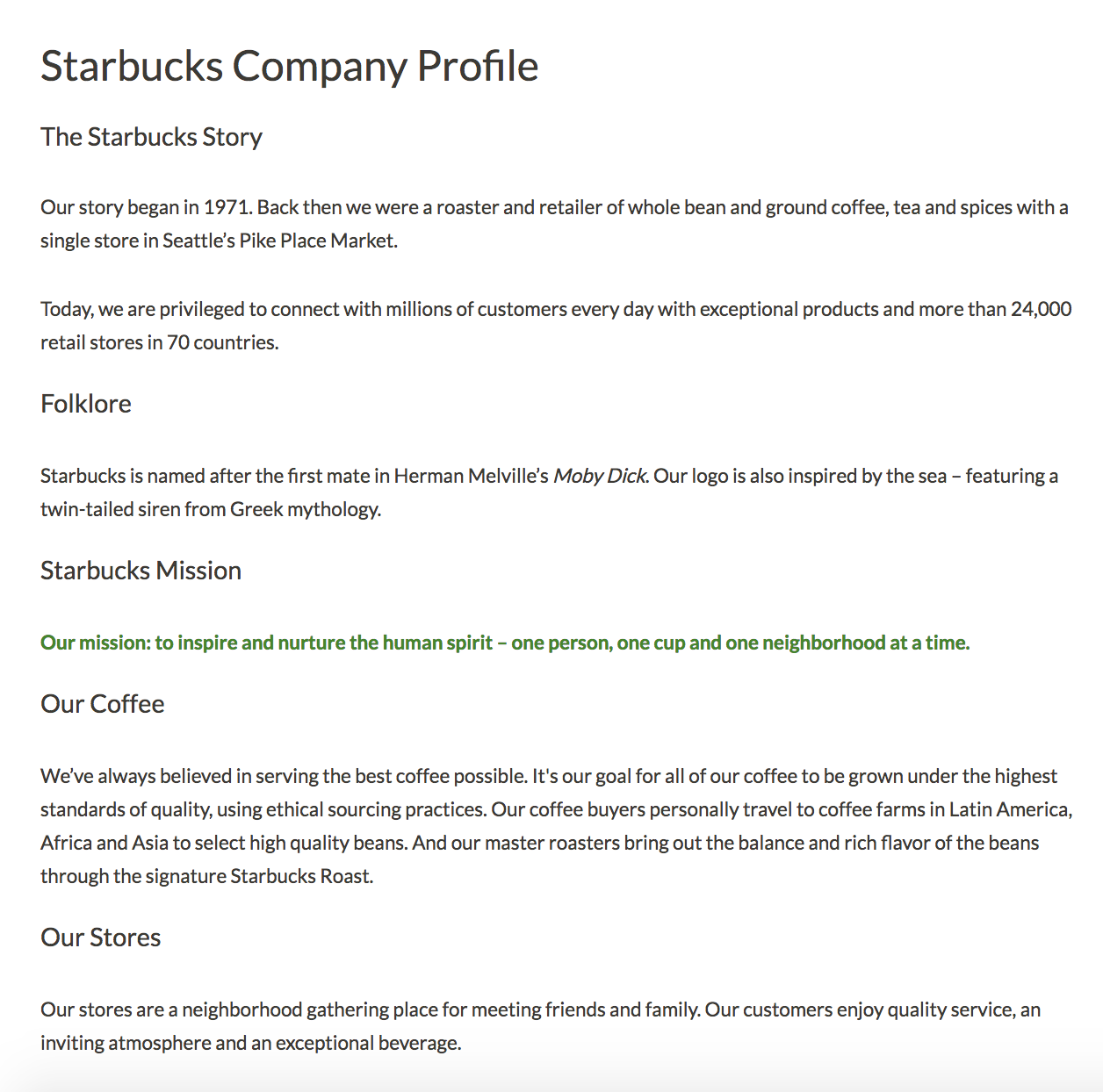
1. Starbucks company profile

Starbucks' company profile has it all -- the company's mission, background story, products, store atmosphere, and even folklore regarding the name. Best of all, they somehow manage to pull off sounding both genuine and grandiose. I don't know many other coffee stores that could claim, "our mission: to inspire and nurture the human spirit". Starbucks' company profile is a fantastic example of a store with a common household product -- coffee -- managing to stand out from the competition through their mission and values.

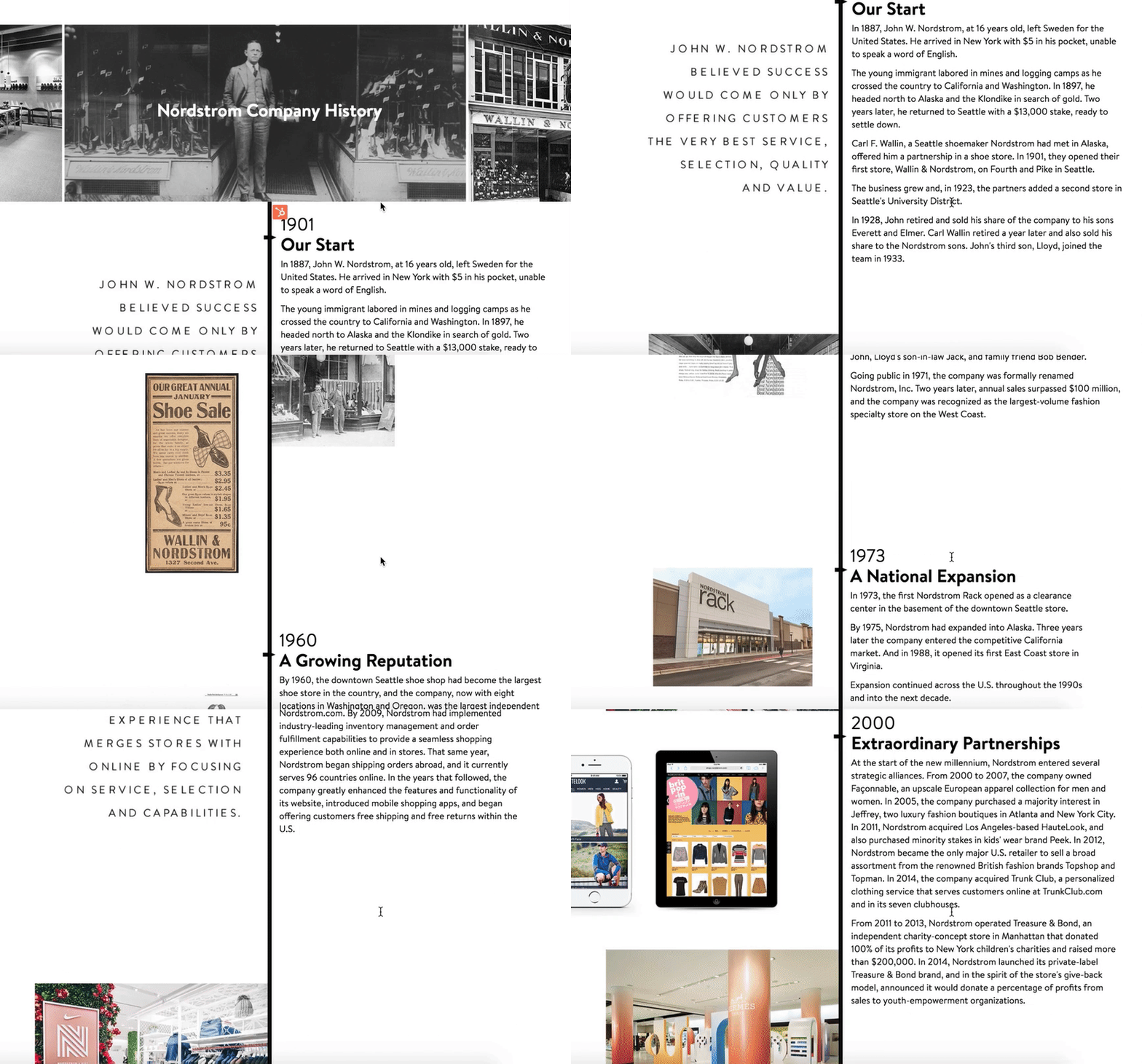
2. Nordstrom company profile

If your company has an interesting and lengthy history, you might consider creating a visual timeline, like Nordstrom did on their company profile. The profile reads like a creative story from the very first line -- "In 1887, John W. Nordstrom, at 16 years old, left Sweden for the United States. He arrived in New York with $5 in his pocket, unable to speak a word of English." With a good balance of image and text, the timeline serves as a reminder of Nordstrom's stability and growth.

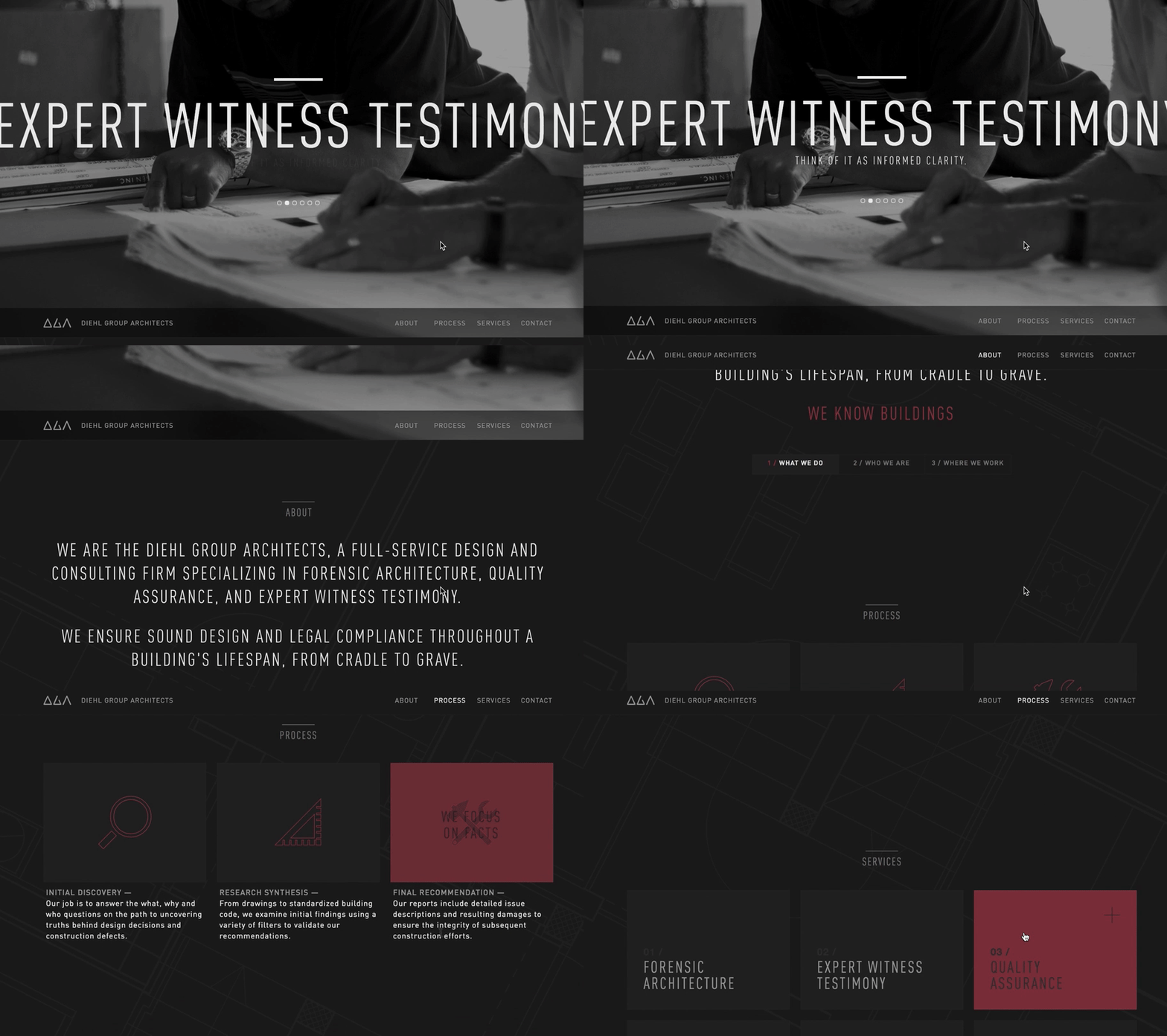
3. Diehl Group Architects company profile

For both cleanliness and ease-of-use, take a look at Diehl Group Architects' company profile. The web page uses clickable boxes to separate topics, allowing users to choose which subject they'd like to learn more about. Additionally, the entire design -- including the page's background, which displays a floor-plan -- mirrors the company's purpose.

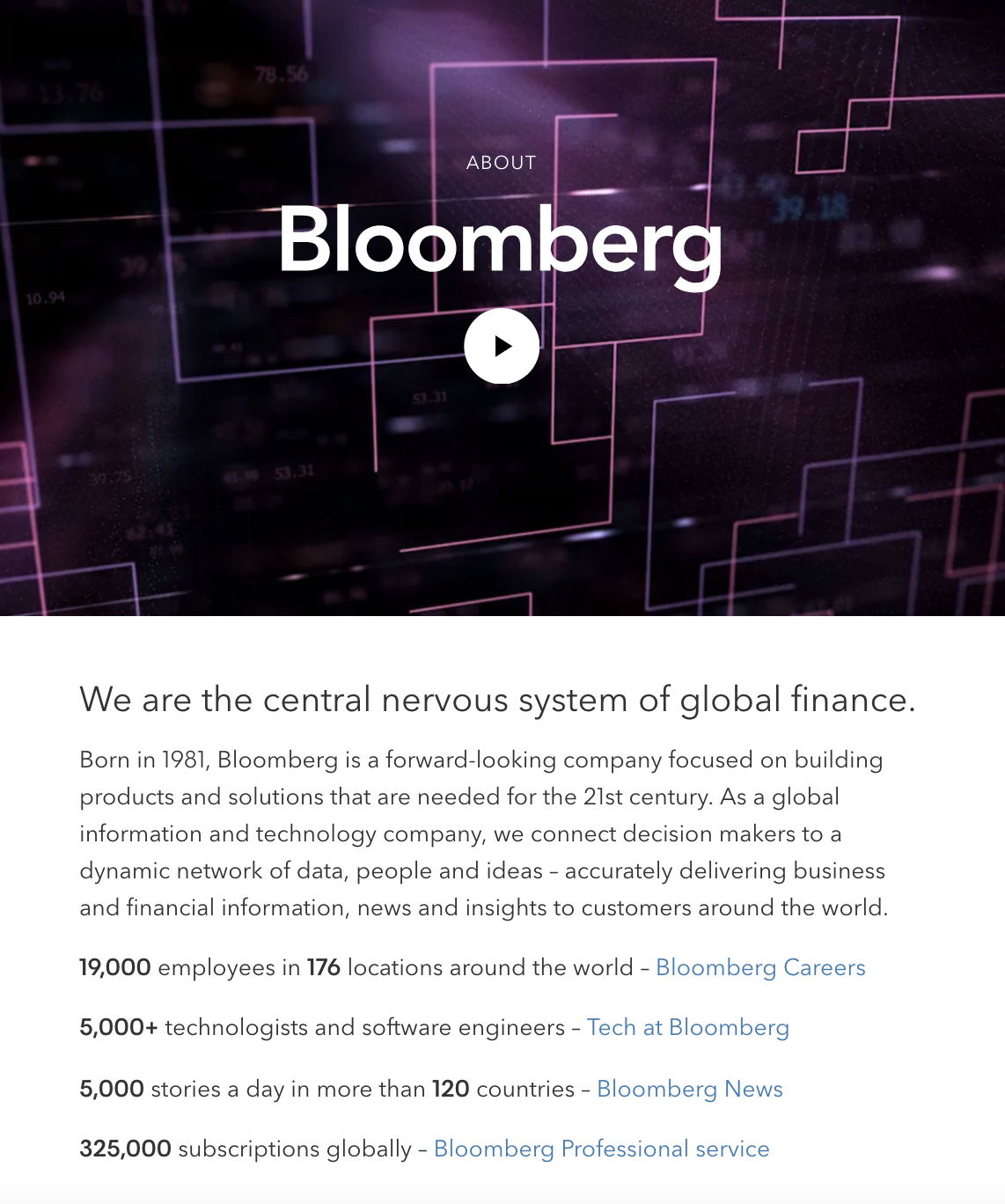
4. Bloomberg company profile

If both video and text are available on the same page, 72% of people would rather use video to learn about a product or service. You might consider using a compelling video to convey your company's story, like Bloomberg does in their company profile.

Additionally, Bloomberg's profile proves the company knows its audience -- they offer a few quick statistics, and then link to other areas of the site, such as Careers and Tech. While another business might do well offering a creative, long-form story, Bloomberg's typical demographic is likely more analytical.

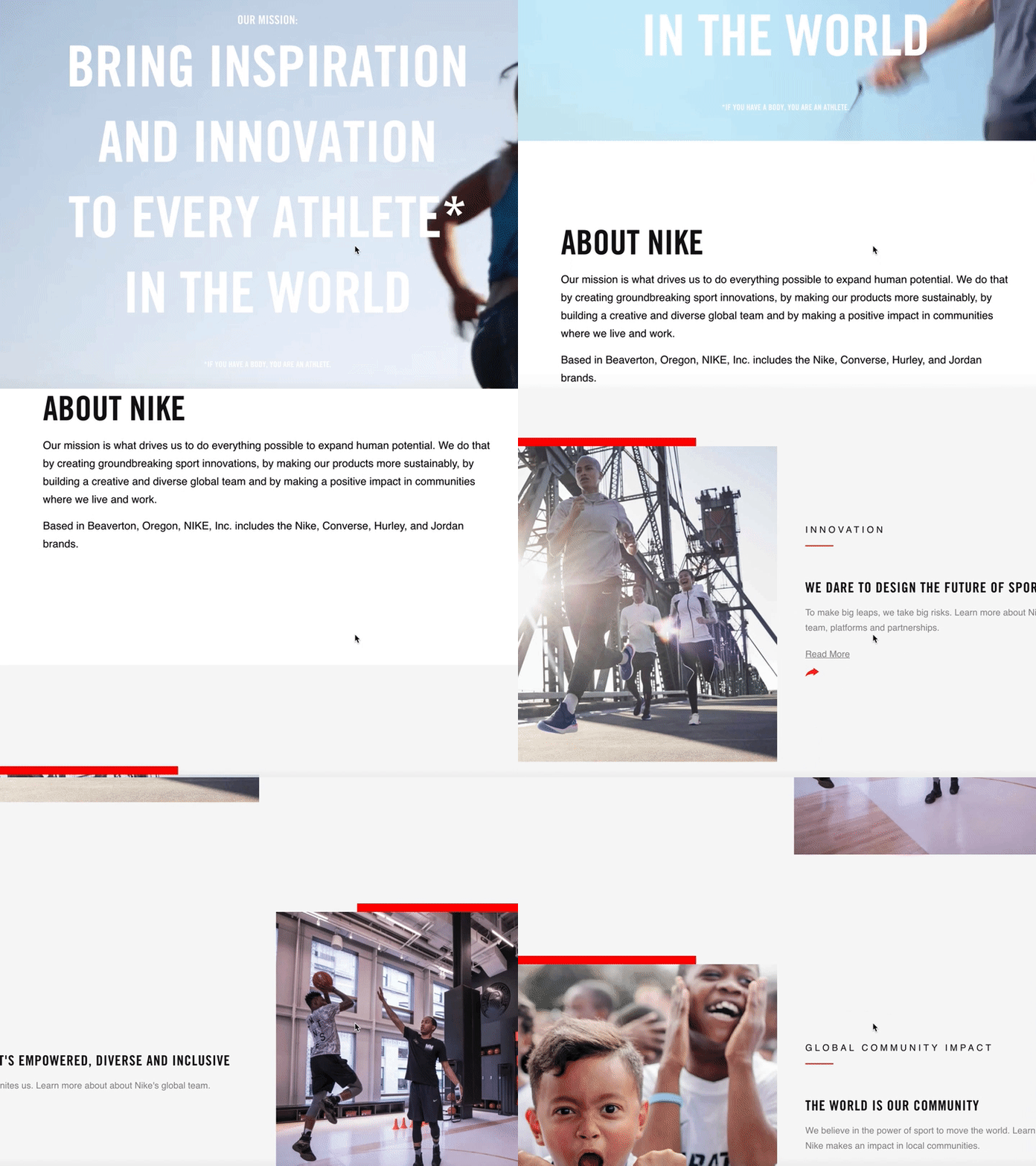
5. Nike company profile

You can get a sense for Nike's two primary purposes almost instantly -- fitness, and people. When you first open their company profile you're greeted with videos of people of different ages, gender, and nationalities playing sports.

Additionally, their initial introduction is this: "Bring inspiration and innovation to every athlete* in the world". Below, beside the asteric, it says, "If you have a body, you are an athlete". As you scroll, you'll see information on their internal diversity and inclusion initiative, their global community impact, and their sustainable business program, with very little mention of their products.

Nike's company profile portrays a larger, grander vision, compelling an audience to believe in their brand even before they purchase a product.

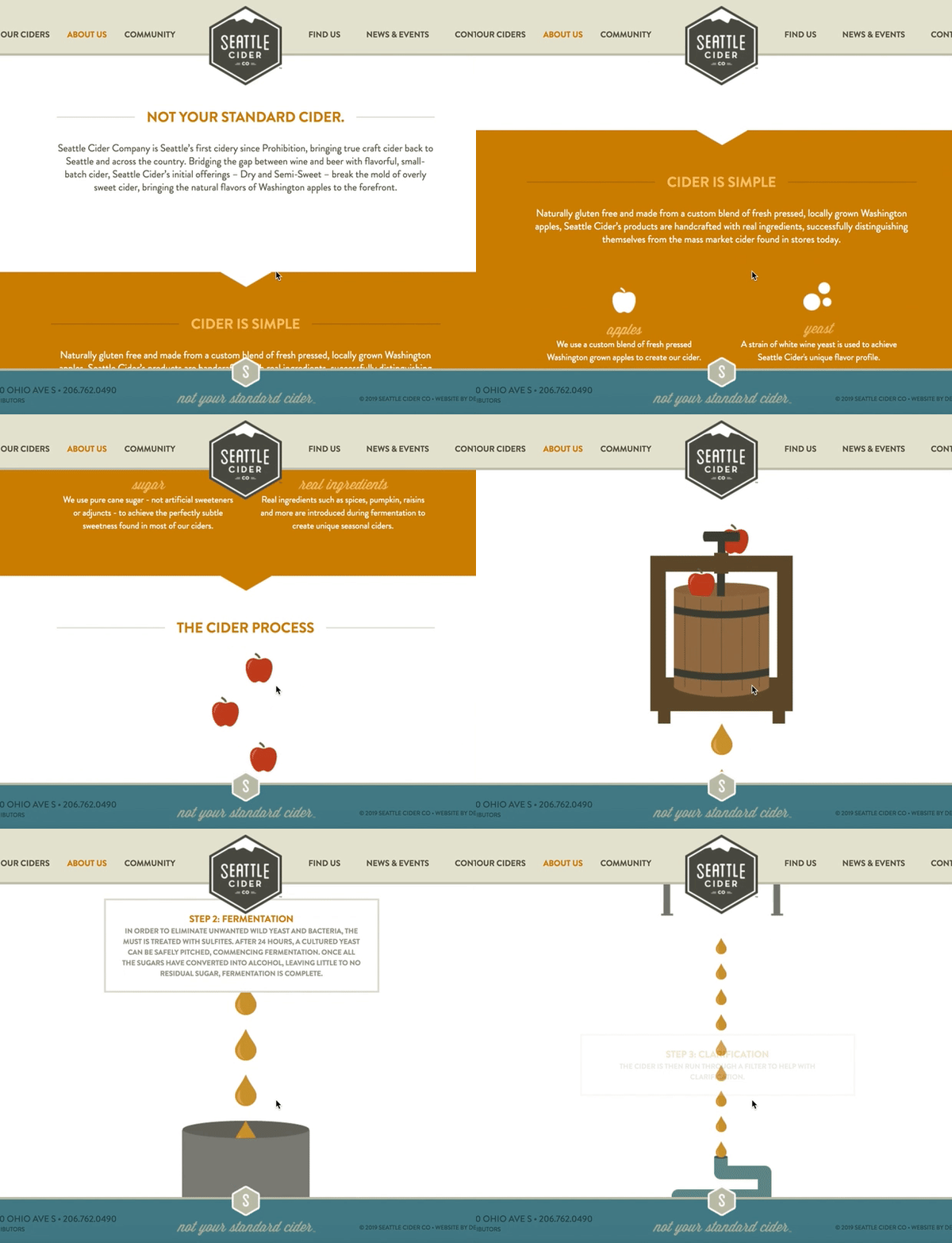
6. Seattle Cider company profile

Seattle Cider Company's profile is fun, and engages the user through compelling graphics that demonstrate the company's cider process. The page flows seamlessly, and provides critical information regarding the product before displaying the company's mission and values. This profile is a good example of a company that understands its users' concerns (in this case, quality ingredients), and addresses those issues while still displaying personality and flair.

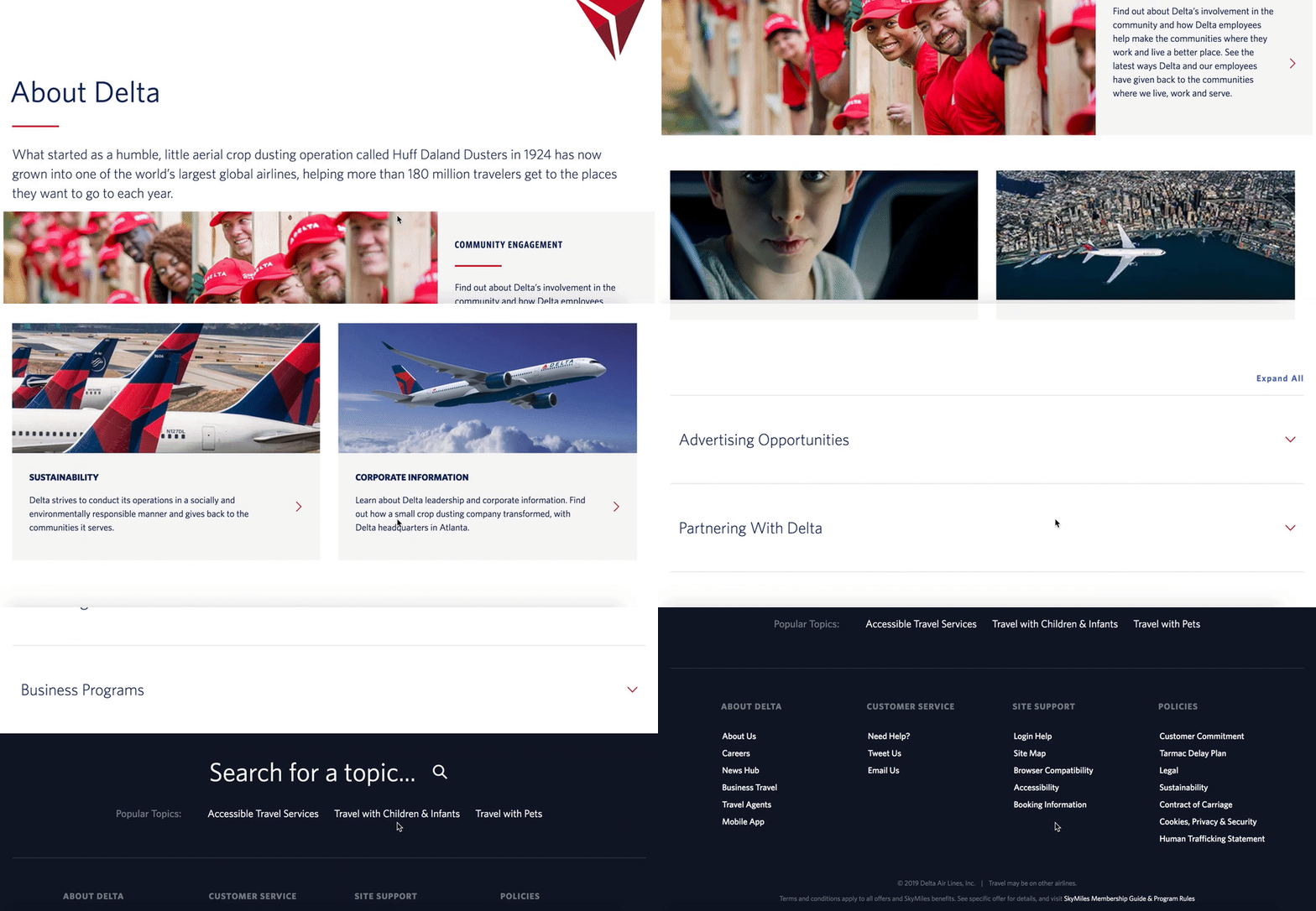
7. Delta company profile

Delta's page is well-organized by topic, and showcases the company's values, including efforts to engage with the community and promote sustainability. They've included brief meta-descriptions below each category. The design allows for users to click-through if they want to learn more. Overall, Delta's company profile is simple and uncluttered, but includes all the necessary information to demonstrate why Delta is unique.

Company Description

While a company profile highlights many different aspects of your business, a company description is the piece of the profile that quickly and concisely describes what your business is or does. In place of a company description, businesses might also include a mission statement or summary of what the company does and what motivates it.

Here are two examples:

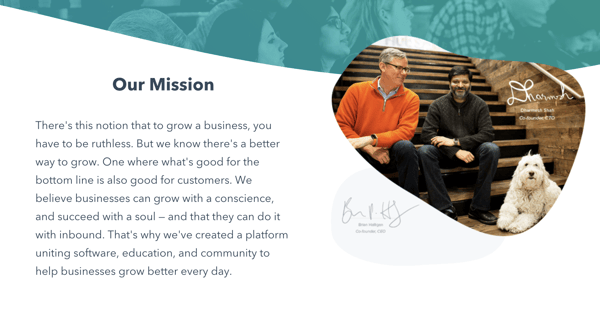
HubSpot

On HubSpot's company profile page, you can find a quick description of the company's mission and what it does. In just a few words, HubSpot explains that the company's goal is to help businesses grow through its specialized inbound software.

HubSpot Company Description and mission statement.

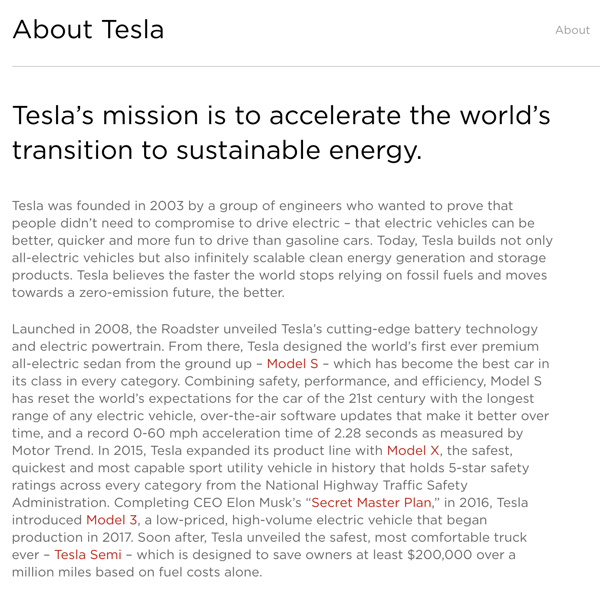
Tesla

In this description, Tesla explains when it was founded, the company mission, and what types of products it specializes in. It also gives added information about the history of the company and how it has continued to grow with the same values. 

Tesla Company description

How to write a company profile

  1. Focus on a high-level overview of your company.
  2. At the beginning of your company profile, include important information such as your company name, your business's physical location, a website URL, contact information, and an established date.
  3. Consider adding a timeline or synopsis of your company's history, including information regarding expansion or growth.
  4. Aim to express your company's values or mission in your company profile, rather than just your products or services. A user won't care about what you're selling until they believe in your brand.
  5. Include any awards or recognition you've received, and highlight what makes your company different from your competitors.
  6. Depending on your audience, you might choose to include graphics, visuals, or video.
  7. Add statistics to back up your claims.

Company Profile Templates

  • Company name
  • Established date
  • Physical address per location
  • Contact information

About Us / Our Story / Our Beginning

Here, you'll want to include a brief introduction to your company, including where, when, and by whom the company was founded, the company's mission statement, and/or the company's vision and purpose. In this section, you don't necessarily want to include products or services -- instead, focus on your bigger meaning, and how you stand out from competitors. Tell your story in a compelling way -- for instance, HubSpot starts their About Us section with, "More than ten years ago, we had a vision -- an inbound world". HubSpot doesn't mention their products until further down the page.

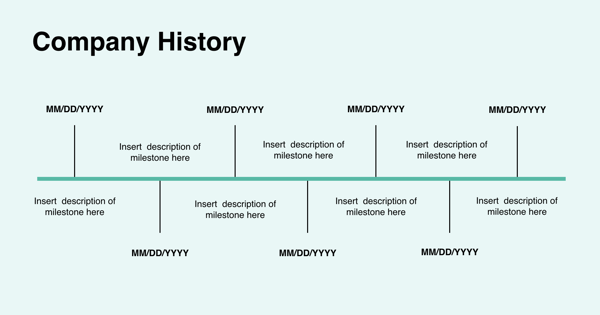
If you want to add your company history in a more compact way, consider adding a company timeline, like this one:

Company history on profile template

Our Mission / Values

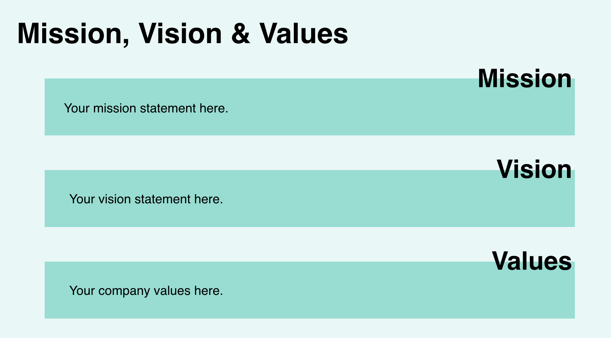
Here, you'll want to say what your company stands for on a larger scale. What is your ultimate goal, and what do you hope your products or services will give people? Take a look at 17 Truly Inspiring Company Vision and Mission Statement Examples for ideas. Here's an example:

Compact Mission, Vision, Values slide in company profile template.

Our Team

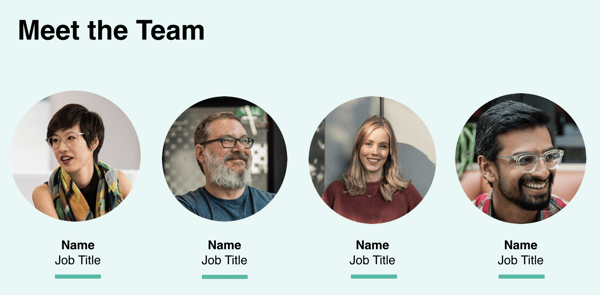
Provide a picture or brief paragraph describing your team -- you might focus on leadership, or provide an explanation of your company's culture. Ultimately, this section should help users understand how your employees can uniquely serve them.

Our team template

Our Product / Services

Describe a high-level overview of what your product is, and how you hope it will positively impact the user's life. You can link to a Product page if necessary, so keep this section relatively general.

Start Your Company Profile Today

Ready to get your company profile started but still need some added guidance? Check out this free, downloadable collection of company profile templates.

Editor's Note: This post was originally published in January 2019, but was updated for comprehensiveness in February 2020.


7 Creative Company Profile Examples to Inspire You [Templates] was originally posted by Local Sign Company Irvine, Ca. https://goo.gl/4NmUQV https://goo.gl/bQ1zHR http://www.pearltrees.com/anaheimsigns

Monday, August 31, 2020

The Best 16 Landing Page Builders for Any Business

Lead generation is essential for driving sales and growing an online business.

There are plenty of different methods for generating leads, but one of the most effective options is a well-designed landing page.

Building a fully-optimized landing page has never been easier -- in fact, it's now possible to create a lead generation gold mine using drag-and-drop tools without seeing a single line of code.

Whether you're managing one or multiple pages, there are now so many options available that it can be tricky to find the best one of your needs.

More than likely, the hardest part of designing a landing page is choosing the right tool to get started -- plus, you don’t want to waste months designing a landing page before realizing the software simply isn’t up-to-speed with what you need.

To ensure you’re able to choose the best landing page builder for your team's goals, we've cultivated a list of the 14 best -- but first, let's explore some key features to look for in a landing page builder.

Key Features of a Landing Page Builder

Although there are many landing page builder options with unique strengths and weaknesses, there are certain features you'll want to see in any landing page builder.

Here are four:

1. Easy-to-use visual builder.

These days, users demand ease-of-use, and landing page builders tend to feature a drag-and-drop interface which makes it easy for anyone to build a landing page quickly -- without coding. You'll want to ensure your landing page builder offers a simple and intuitive interface. If it doesn't, you should check out alternatives.

2. Integration with CRM software.

The point of a landing page is to generate leads or make sales, so it's vital that your landing page builder integrates with software that can store those leads and allow you to analyze data on potential prospects.

Ideally, a landing page builder will link to a powerful CRM that can pull together a customer's data and integrate with marketing, sales, and customer management software.

3. A/B testing and optimization.

Testing and optimizing your landing page is an integral part of the process.

It's unlikely you’re going to nail it on the first try, so you want software that enables testing customer behavior and optimizing the content and layout to maximize conversions.

This can either be a part of the product itself, or provided by a third-party, as long as your landing page builder offers the option to integrate with third-party A/B testing tools.

4. Analytics tools. 

Most services offer built-in, specialized landing page analytics tools which enable you to dig into your user data.

Whether providing detailed reports, heat maps, or plain old page-views, analytics tools are essential in assessing how your landing page is doing.

Now that we've explored four key components of any landing page builder, let's take a look at 14 of our favorite options.

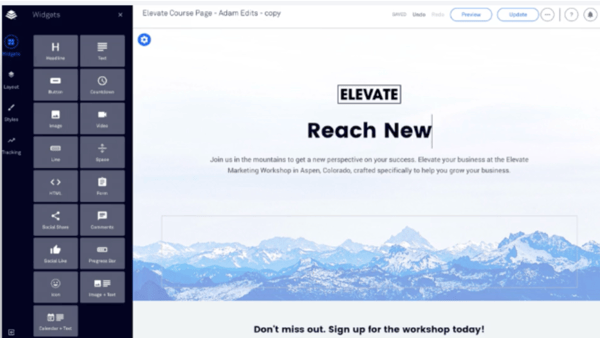
1. HubSpot Landing Pages

HubSpot offers one of the most feature-rich, intuitive landing page builders on the market -- which becomes even more useful when combined with HubSpot's free CRM. As with most things HubSpot, the landing page builder is slick, easy-to-use, and powerful.

The software is suitable for single users, small teams, large teams, and even agencies managing multiple pages. You can simply add more paid features as you need them.

For beginners, the software walks you through the process of building a fully-customized landing page, starting with one of the hundreds of tried-and-tested templates.

For more advanced users, there are a host of tools and technologies to play with. One of the most advanced features is the capability for personalization to individuals, utilizing your existing HubSpot contacts and data. The builder also features HubSpot's advanced analytics tools and testing software so you can optimize your page to capture as many leads as possible.

Pages are fully responsive on all devices, as you would expect, and it's possible to create professional looking pages in minutes.

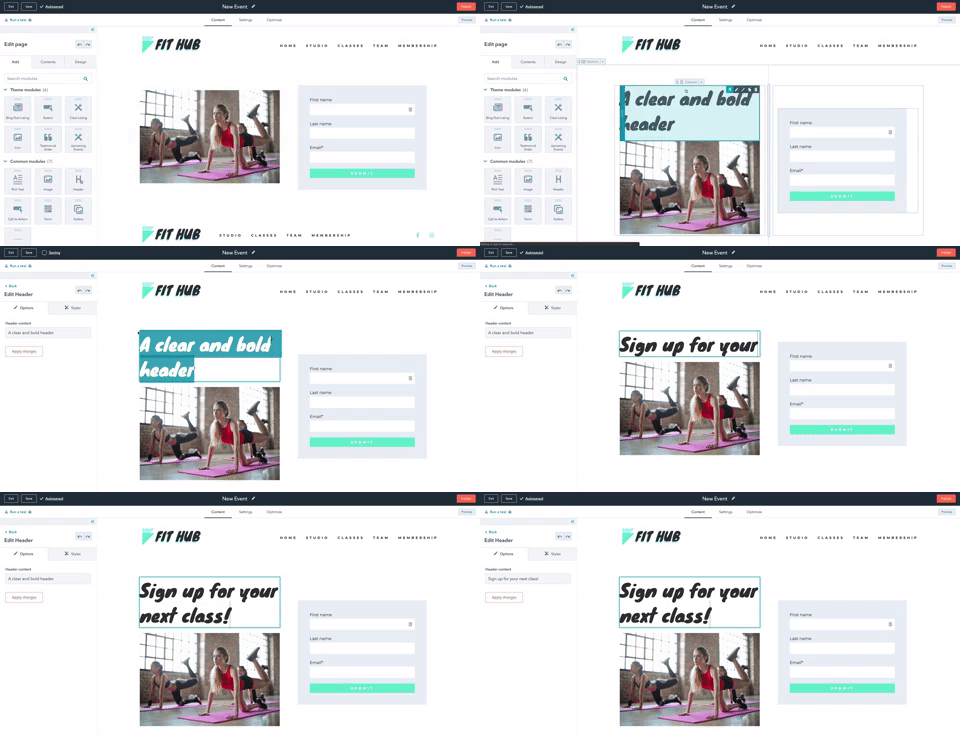
creating a landing page with hubspot's free landing page builder

2. Landingi

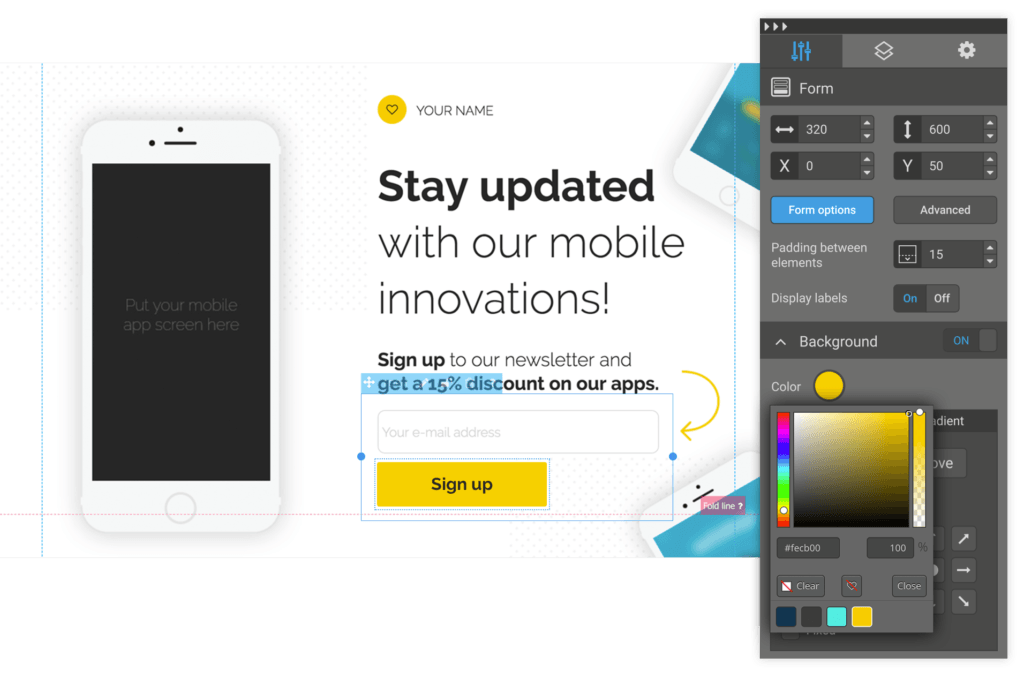
Landingi bills itself as the "landing page builder for non-programmers" -- it's all about ease-of-use, and offers more than 200 templates. The interface is drag-and-drop, which enables you to build a page in minutes. It also offers A/B split testing and optimization features.

This is a cheaper option and one that's good for beginners, but if you are looking for more advanced features or scalability, the premium tiers quickly bring you up to the price of more powerful tools without offering the same functionality.

landingi landing page builder

Image Source

3. OptimizePress

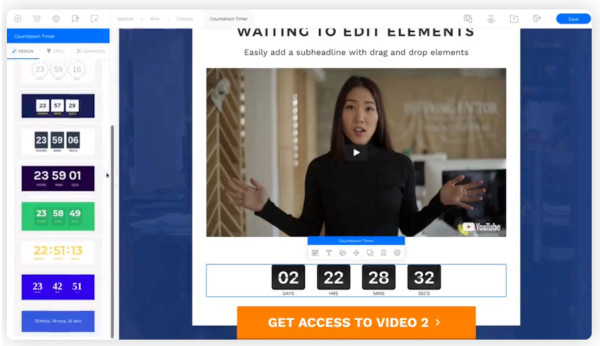
OptimizePress is a WordPress-based landing page builder with hundreds of templates for lead generation pages, sales pages, and more. It has a library of graphic elements and useful plugins for easy customization, and also integrates with email marketing services like Mailchimp or ActiveCampaign.

It operates on a one-off fee structure, which includes one year of support and updates. This means you only pay for the features you need as you grow.

optimizepress landing page builder

Image Source

4. GetResponse

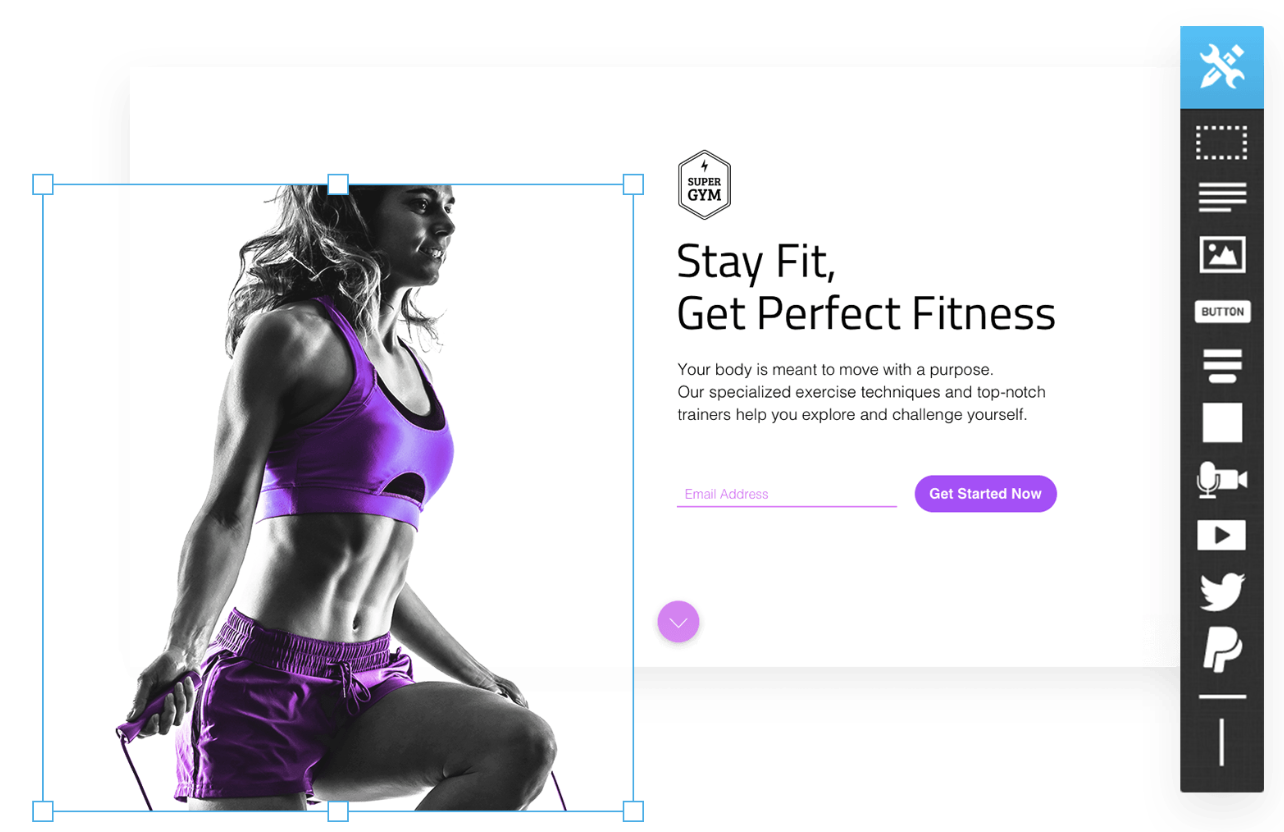
GetResponse is a good option if you want to quickly build optimized and responsive landing pages. It has a user-friendly interface and allows you to publish your page to your own domain.

Along with landing pages, you can also create webinars and email marketing campaigns. Additionally, GetResponse has built-in analytics features and the ability to add a PayPal button for easy mobile payments.

Although it offers an intuitive landing page builder and an all-in-one marketing suite, landing pages are not what GetResponse specializes in -- but it's still a good option for marketers at this price point.

The most basic option offers email marketing and landing pages for up to 1,000 responses. If you grow beyond this point, you will have to go for the more expensive Pro tier, which offers the full landing page building capabilities.getresponse landing page builder

Image Source

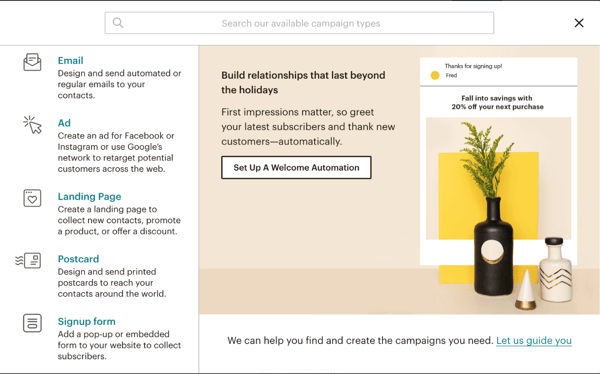
5. Mailchimp

Mailchimp's landing page builder, unsurprisingly, is geared towards email marketing. It's all about building pages that visually match your Mailchimp email campaigns, and enable you to easily add contacts to your existing lists.

The software is easy-to-use and offers impressive support with a ton of troubleshooting content available. The seamless integration with the Mailchimp suite is a plus if you already use the software, but landing pages are not Mailchimp's main focus, so the editor is limited. In fact, it's not much more advanced than Mailchimp's simple email creation tool.

It is good for email campaigns but a bit limited as a landing page builder. More advanced users will want to go with the optimization, testing, and analytics features of some of the other options in this list.

On the plus side, for novices, you can get a landing page built for free on the most basic tier and build up from there.

mailchimp landing page builder

Image Source

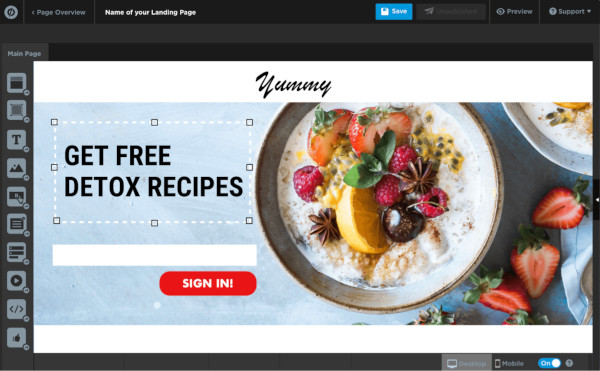
6. Unbounce

Unbounce was one of the first dedicated landing page builders to come to market and remains one of the leaders. It features an easy-to-use drag-and-drop editor, custom plugins, mobile optimization, and the ability to add pop-ups and sticky bars.

The product is feature-rich -- it offers WordPress integration, A/B testing, and dynamic keyword insertion for SEM campaigns. While it doesn't offer its own analytics tools, it can be integrated with other services like Mailchimp, HubSpot, or WordPress to achieve this.

Overall, Unbounce is one of the best tools out there -- but it comes at a premium. It is favored by larger marketing agencies with a focus on search engine marketing, but doesn't have the all-rounder capability of tools like HubSpot.

unbounce landing page builder interface

Image Source

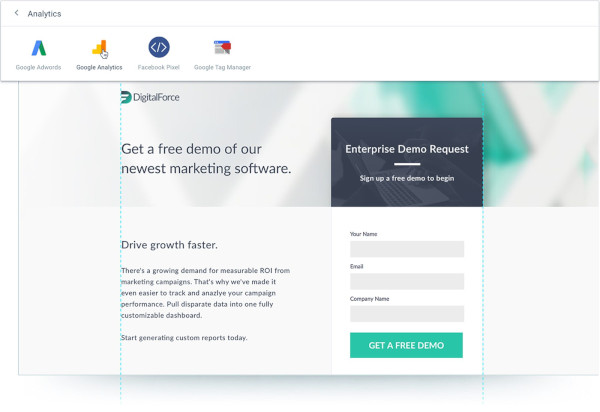
7. Instapage

Instapage is another leader for landing pages, with a user-friendly drag-and-drop builder and the option to easily integrate your landing pages into your website without coding. It is one of the easiest tools to use, comes with a host of plugins for maximum customization, and offers a simple analytics tool and report generator.

For optimization, there are heatmaps, A/B split testing, dynamic keyword insertion for PPC campaigns, and codeless integration with Google Analytics and Facebook ads. For more advanced options, you'll have to contact the sales team for a tailored price, but you'd be looking at upwards of $175 per month for an agency or team plan.

instapage landing page builder

Image Source

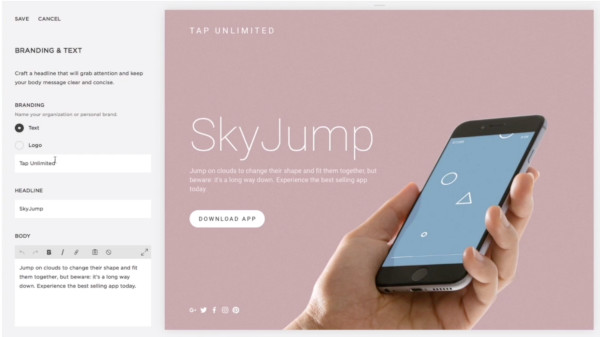
8. Squarespace

Although Squarespace is considered a website builder, not a specific landing page tool, it has all the functionality of a landing page builder -- including the benefits of hosting your site and providing you with analytics, G Suite, integration with other CRM's, and much more.

Squarespace is a great option for beginners who don't need all the specific optimization features of a dedicated landing page builder. With the Cover Pages tool, it's easy to create a page using one of the hundreds of templates and drag-and-drop tools.

There is a built-in analytics tool. Additionally, you can hook up Squarespace with a CRM software to use the CRM's optimization and email marketing tools on your Squarespace page.

squarespace landing page builder interface

Image Source

9. Leadpages

LeadPages is a cheaper option with a fairly easy to use drag-and-drop builder. However, the interface is a little awkward to use at times and looks a little outdated.

If you want to publish to your own URL, it's not as easy, although if you are a WordPress user there is integration with your site. Overall, it's a reasonable value option if you don't need the higher-end functionality and support of the market leaders -- but it's tricky to get the page looking exactly as you want. 

building a landing page using leadpages

Image Source

10. Thrive Architect and Thrive Optimize

Another WordPress-based builder, Thrive Architect is probably the best bargain option available, especially when combined with Thrive Optimize, its optimization tool.

It offers a simple drag-and-drop builder with 250+ templates and a number of conversion elements including testimonial blocks, timers, and CTAs to choose from. This makes it a good option for a quick build at a low price.

Best of all, you can get it for life for a one-off fee.

example of a lead capture form using thrive builder

Image Source

11. Lander

Lander targets small businesses and entrepreneurs with a rock-bottom price point and simple builder. Although it doesn't offer the best customization or advanced features like some of the others in this list, it's nonetheless a good option as a simple landing page at a low price.

The app offers over 100 SEO-optimized templates, and supports A/B split testing. It also offers a rare feature among landing page builders -- Facebook integration. Without any coding, you can build your own Facebook tabs and connect them with your account.

Pricing tiers are limited by the number of visitors and domains, so it's prohibitive to larger businesses and agencies.

lander landing page builder

Image Source

12. LaunchRock

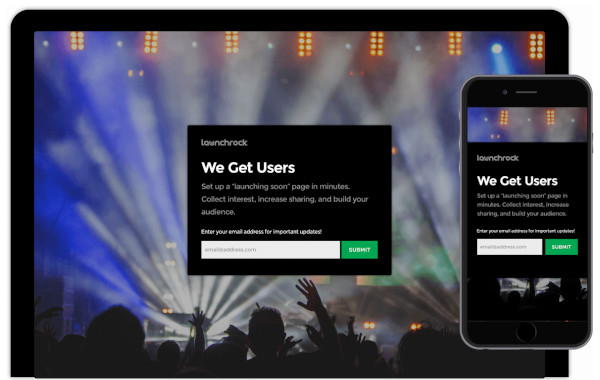
If you're looking to quickly create high-converting landing pages for free, LaunchRock is the most basic option in this list.

With a focus on simple but impactful visuals, it comes with loads of customizable templates and is an effective starting point for small businesses to jump into the world of landing pages and lead generation forms. Plus, it includes promotional features for running competitions.

It lacks A/B testing and customization is limited, but the super-quick builder is perfect for those who need a landing page without all the bells and whistles, fast.

example of a landing page on desktop and mobile using launchrock landing page builder

Image Source

13. KickOffLabs

KickOffLabs is based on the idea of generating leads via viral marketing campaigns -- it allows you to run appealing contests, sweepstakes, and product launches.

It also happens to be a decent landing page builder in its own right, but focuses its marketing efforts on the promise of viral traffic generation.

The templates are mostly geared towards coupon giveaways, referral rewards and the like, so if this is something you're interested in, KickOffLabs helps you quickly and easily create a professional-looking landing page. Whether or not it will go viral -- who knows?

example of a landing page built with kickofflabs

Image Source

14. ShortStack

Shortstack specializes in landing pages for contests, giveaways, and quizzes.

It includes email marketing tools to run the competitions and keep contact with participants. The drag-and-drop builder is focused on speed and offers a multitude of templates.

With built-in analytics, you can keep track of your campaigns. Plus, integrations with email services like Mailchimp make it easy to store the leads you collect.

You can build all the pages you want with the free tool, and upgrade at any time for additional features and tools.

examples of mobile and desktop landing pages using shortstack

Image Source


15. ConvertFlow

ConvertFlow is a fantastic option when you need both the power of an easy visual builder as well as more complex features suxh as multi-page forms, conditional logic, and automation.

You can have prospects skip steps based on previous actions, add automation for list segmentation, run custom code for event tracking and retargeting, and increase conversion rates by providing a personalized experience. Best of all, it integrates with CRMs, allowing you to get a comprehensive understanding of your leads' behavior.

convertflow landing page builder

Image Source

16. involve.me

With this tool, you can create landing pages without a developer and either host them as standalone pages or as part of your existing website.

One powerful feature of involve.me is the ability to get data from partial submissions that can lead you to conversion optimization insights. In addition, the software comes with the ability to create automated drip sequences to collected leads.

involve.me website that reads "converting lead pages for your website within minutes"

Image Source

There are so many tools available to build landing pages, but it ultimately comes down to which is right for your specific purpose.

If you're looking for a user-friendly landing page builder that integrates all your customer data and analytics tools from HubSpot's market-leading software suite, get started with HubSpot Landing Pages today.

Editor's note: This post was originally published in May 2019 and has been updated for comprehensiveness.


The Best 16 Landing Page Builders for Any Business was originally posted by Local Sign Company Irvine, Ca. https://goo.gl/4NmUQV https://goo.gl/bQ1zHR http://www.pearltrees.com/anaheimsigns