Monday, October 4, 2021

The Beginner's Guide to LinkedIn Marketing

Did you know LinkedIn has over 774 million users across the globe? This metric alone makes the platform one of the top social networks today.

Is your business using LinkedIn to its fullest potential to improve brand awareness, build your network, boost leads and conversions, and increase revenue? With new social networks sprouting up constantly, LinkedIn is a platform that's often underutilized. The truth is, LinkedIn can be a powerful addition to your social media content strategy.

This guide is chock full of LinkedIn tips you can begin implementing immediately to help you learn how to use the platform to improve brand awareness, share your marketing content, and grow your business.

Free Guide: How to Use LinkedIn for Business, Marketing, and Networking [Download Now]

When you use LinkedIn to market your business, you gain access to useful features related to analytics, connections, and brand-building, just to name a few. (Don't worry, we'll review all of these in-depth momentarily.)

But first, here's a quick primer for those of you who may be new to LinkedIn.

About LinkedIn

LinkedIn launched in 2003 with a focus on networking, building careers, and sharing ideas. The platform enables its members to connect and share content with other professionals including colleagues, potential employers, business partners, competitors, new employees, and customers.

This is why having your business on LinkedIn is so powerful — the platform is a fantastic marketing tool.

For a quick guide on the tips below, check out our video on "How to Use LinkedIn for Business and Marketing."


Now, let's review the ways you can use LinkedIn to market and grow your business.

LinkedIn allows you to drive traffic to your website, identify quality leads, share your expertise through thought-leadership content, and grow your network. It's also a great way to market job openings and attract new talent to your company. These are just some of the reasons why LinkedIn is an ideal platform for all businesses to market on. Here are a few more tactical ways you can incorporate LinkedIn into your social media content strategy.

1. Use hashtags.

Hashtags are often used to add emphasis to your LinkedIn post, but they actually serve a purpose that can change your marketing strategy for the better. These simple phrases preceded by a hashtag symbol are goldmines for tapping into new audiences, industries, and niches. But using too many, or worse — the wrong ones, can hinder your reach.

That means you'll want to strike a balance between relevant and popular hashtags by doing hashtag research on LinkedIn. Use the search bar to query a broad hashtag first. For example, if you work in growth marketing, start by searching #growthmarketing to see how many people are following the hashtag, and how often it is being used.
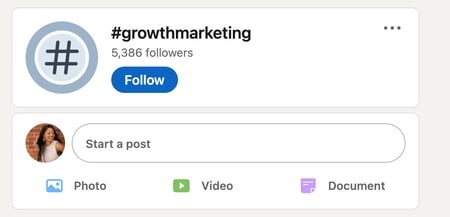
Linkedin hashtag example for growth marketing

From here, start with three to five hashtags that reach the audiences you want to speak to. These hashtags should vary in the number of people following them, so don't get too fixated on high numbers. Related but lesser-known hashtags can narrow your reach to an audience who would be likely to engage with your LinkedIn content.
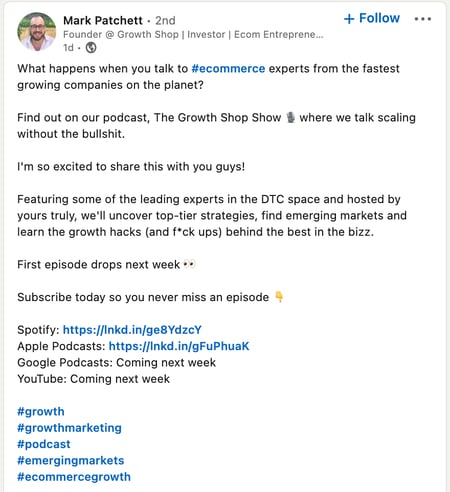
example of a linkedin post using several related marketing hashtags

Image Source

LinkedIn Pages are able to be followed without sending a connection and waiting for approval. That means when a LinkedIn user shares your Page with their connections, those individuals will be able to follow your page and see your business' content right away which has the potential for high engagement. LinkedIn Pages and LinkedIn Profiles serve different purposes in LinkedIn marketing. Pages are public and used primarily by businesses. Profiles are private and used by individuals. Each of them works with the LinkedIn algorithm, but you'll have different tools that you can leverage to grow your audience.

LinkedIn Profiles can be followed as well, but what makes them unique is the ability to have one-on-one, private conversations with connections who request to join your network. If you're a consultant, work in direct sales, or prefer to take an individualized approach to your business, you'll want to have a LinkedIn Profile to capitalize on this feature.

Both of these LinkedIn entities can work in tandem to create the ultimate marketing workflow. For example, you can list yourself as an employee of your business by listing your business' LinkedIn Page as your employer on your personal Profile. That way, when a visitor lands on your Profile, they'll see your Page, too.

3. Create posts of varying lengths.

Quick, bold posts pack a punch on LinkedIn. Long-form stories capture the readers' attention and lead to a longer dwell time on the app. Both of these types of posts should have a place in your LinkedIn content plan.

You don't want to become known as the person who only shares monologues because your network won't always have time to read them. Along the same lines, too many short posts can come across as lacking substance which could make you seem less authoritative as a thought leader.

Varying the length of your posts (as well as adding images and videos) can keep your content fresh and relevant to your network. You'll have content that gets people excited to see what gems you drop next.

4. Share external articles on the platform.

Unlike other platforms such as Instagram, LinkedIn's algorithm supports external links to blogs and websites. So long as the content you post has value and is relevant to your audience, you'll find success posting other people's content on the platform.

Although you don't have to worry about formally crediting the author if you're linking directly to their website, it's not a bad idea to tag them in your post or use their hashtag to give credit. Sometimes, they'll share your post with their own followers, or comment under the post which introduces your Profile to their audience. How cool is that?
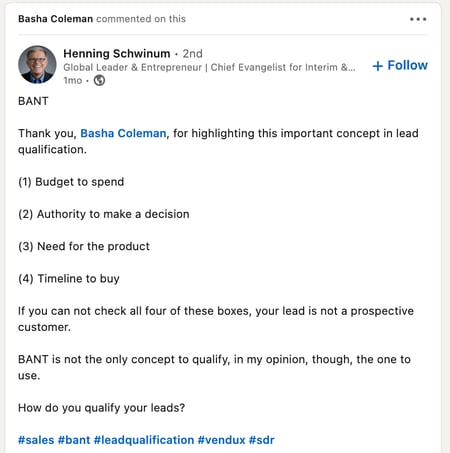
example of sharing external articles on linkedin

Image Source

5. Keep your publishing schedule consistent.

Known as the platform for having one of the longest content lifespans, LinkedIn is a platform that doesn't need a 'round-the-clock publishing schedule. What it does need is a consistent one.

Whether you publish every day, every other day, or even once a week, your network will come to expect your content regularly which builds trust. Choose a schedule that makes sense for your business and stick to it for a month. See what days and times are yielding the best engagement and make those part of your publishing schedule.

Below, we'll cover some effective ways to use the LinkedIn platform. These tips can be tailored to your needs — whether you have a personal LinkedIn page, business page, or both — no matter your industry or size. However, you'll notice some of the points we're going to cover are more suited for businesses looking to boost brand awareness or share content while others are more tailored towards those looking to recruit and hire new talent.

1. Customize your public Profile URL.

Make your Profile look more professional, and easier to share, by customizing your LinkedIn public Profile URL. Instead of a URL with confusing numbers at the end, it will look nice and clean like this:

http://www.linkedin.com/in/amandazantalwiener.

You can do this by clicking View Profile and then clicking Edit Public Profile and URL. Here you can change your URL to anything you'd like — such as your first and last name or business name — assuming it hasn't already been taken by another LinkedIn user.

2. Add a LinkedIn background photo to your Profile.

Give your LinkedIn Profile a little bit more personality by adding an on-brand background photo. Although one is automatically provided to you, you can update it to showcase your personal brand, special interests, or catch the eyes of hiring managers and recruiters.

LinkedIn recommends a background photo size of 1584 x 396 pixels, and it must be a JPG, PNG, or GIF file under 8MB.
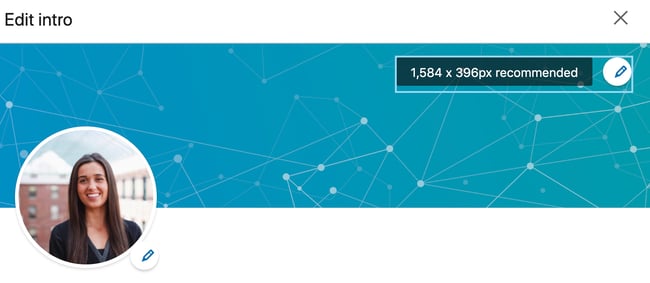
add a cover photo to your linkedin page

3. Add a ProFinder Badge to your Profile.

You might consider adding a ProFinder Badge, which is used to identify freelancers within LinkedIn's ProFinder. This service matches contractors with project managers who are seeking help. Freelancers can display a ProFinder badge on their Profiles to show prospective clients their skills, expertise, and recommendations.

LinkedIn offers two badge themes for you to choose from:
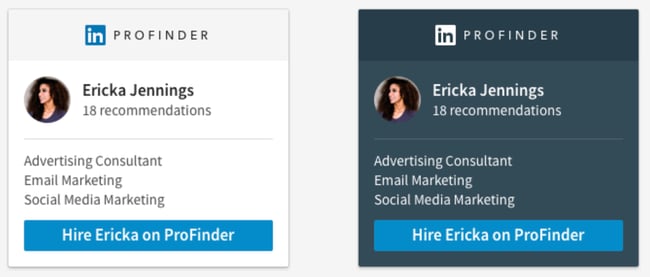
linkedin badge themes

4. Take advantage of the blog and website links on your LinkedIn Profile.

You can add portfolio links and social networks to your LinkedIn page. Links to your content and business information can also be added to your Profile to increase clicks. This feature allows you to draw greater attention to specific areas of your page to drive traffic elsewhere.

For example, if you produced a podcast, you can share links to your episodes on LinkedIn (e.g. SoundCloud tracks) to promote your work.

5. Optimize your LinkedIn Profile for the search engines.

Search engine optimization (SEO) isn't limited to blogging — you can also optimize your Profile to get discovered by people searching LinkedIn for key terms you want to be found for. You can add these keywords to various sections of your Profile, such as your headline, your summary, or your work experience.

Download a free SEO starter pack to learn everything you need to know about optimizing your business' content.

6. Add, remove, and rearrange sections of your Profile.

You can edit and reorder sections of your LinkedIn Profile to highlight specific pieces of information in any way you see fit. When you're in edit mode, simply hover your mouse over the double-sided arrow in each section. Your mouse will turn into a four-arrow icon, at which point you can click, drag, and drop to another position on your Profile.

7. Use Saved Searches and Search Alerts in LinkedIn Recruiter.

If you use LinkedIn Recruiter, you can use Saved Searches to save your search criteria — if you're marketing job opportunities via LinkedIn, this is a great addition to your tool belt.

With the feature, you can save as many searches as you want and receive alerts when new candidates match your filter refinements and criteria. You can elect to receive daily or weekly search alerts from the system about relevant results via the Recruiter homepage.
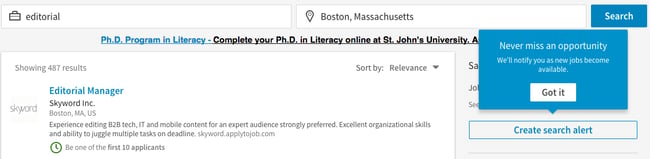
linkedin saved searches and search alerts with recruiter

8. List job opportunities and recruit new talent with LinkedIn's job postings.

And speaking of your business' open job opportunities, don't forget to add and market your new positions on the LinkedIn Jobs page.

Here, candidates can learn about your business and openings by searching for specific keywords such as job title, industry, location, salary, experience level, and more.
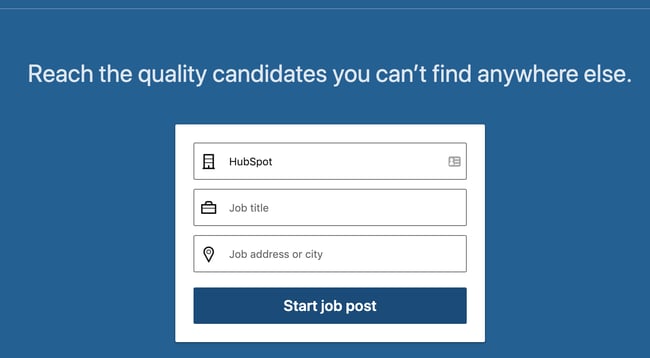
linkedin jobs homepage

9. Take advantage of LinkedIn Endorsements.

LinkedIn offers a feature called Endorsements — this allows you to recognize people you work with by endorsing their skills.

You can promote and endorse the skills of the people you work closest with to help refer them for other work, make their Profiles more impressive, show your support, and more.
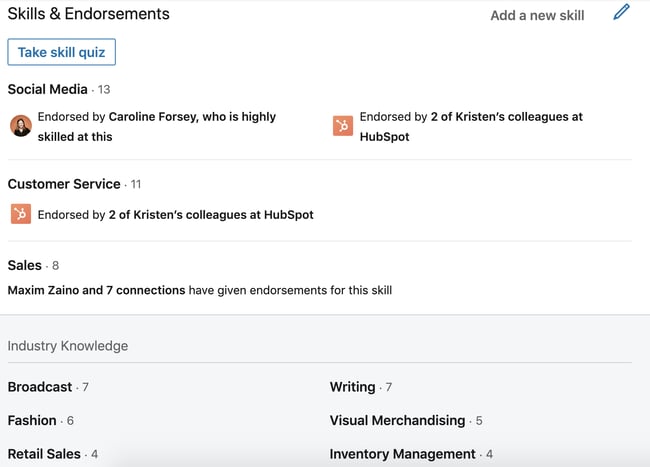
linkedin skills and endorsements

10. Use Open Profile to send messages to people you're not connected to.

To branch out and make new connections with potential partners, customers, and other industry leaders, you might want to send them a personalized message.

With the exception of fellow LinkedIn Group members, the platform only allows you to send messages to people with whom you share a first-degree connection. But did you know some people let you send them messages anyway, even if you're not connected?

Here's how that works: The ability to be part of the Open Profile network is only available to Premium account holders, but it allows those users to be available for messaging by any other LinkedIn member regardless of membership type.

Additionally, there are options for sending messages to those with whom you're not yet connected, similar to sending a request to connect with a note (though we don't recommend overusing this technique). Additionally, if you have a premium account, you can use InMail.

11. Check your Network Updates (or share your own).

Found on your LinkedIn homepage, Network Updates are essentially LinkedIn's version of the Facebook News Feed. Check this feed periodically for a quick snapshot of what your connections, customers, competitors, and others are up to and sharing. You can also share updates of your own, such as details about your products or services and noteworthy content your business has created and published.

You may choose to sign up for email notifications or sort by "Top Updates" and "Recent Updates" to filter your feed in any way you choose.

12. Be identifiable.

Your LinkedIn connections should recognize your Profile the moment they look at it. A great way to make your Profile easily identifiable is by ensuring your Profile's name, headline, and other simple identifiers are easy to see.

Note: You should always have your Public Profile setting enabled as well, to be visible and identifiable for your audience.

13. Check out who's viewed your LinkedIn Profile.

Learn a little about your audience members, potential leads, and customers who are viewing your Profile and marketing content that you're sharing on LinkedIn.

How? With the Who Viewed Your Profile feature.

This tool, which is accessible in the main navigation via the Profile drop down, enables you to identify the exact people who have visited your page. You can see how you stack up against the Profile views for your connections, other businesses like yours, and more.

14. Export connections.

Now, it's no secret that you can use the connections you make on LinkedIn to drive traffic to your site and grow your base of paying customers. Exporting your connections — to a contact management system, for example — is a great place to start.

Under your Advanced Settings, you can start exporting your LinkedIn connections.

export your linkedin connections

15. Customize your Connections to grow your professional network.

LinkedIn offers features to help you grow your professional network and make valuable connections. There are several ways to do this depending on what you're looking to accomplish.

Here are some examples:

  • Add, view, and remove connections depending on their level of value to your business.
  • Control who can see your connections — maybe you do or don't want your competitors to see that list of people.
  • Leverage your second and third-degree connections to grow your network and build new relationships.
  • Import and sync your contacts from your email and other sources to stay in touch with colleagues, partners, leads, and customers across the board. These connections will see your content in multiple places so they learn more about who you are as a business, deepening their relationship with your brand.

16. Join LinkedIn Groups.

LinkedIn Groups are a great way to make connections with people who work in, or are interested in, your industry. They serve as a hub for you and other members to share content, grow your contact list, establish yourself as an expert in the field, and boost brand awareness.

There are several other benefits that come from joining LinkedIn Groups. For example, by joining Groups related to your industry and participating in discussions within those groups, you'll inspire thought leadership in your industry.

Additionally, by joining Groups, you can view complete Profiles of other members of the same group without being connected. Also, if you're a member of the same group as another user, LinkedIn allows you to send up to 15 free 1:1 messages to fellow group members per month (typically, you can only do this if you're a first-degree connection).

17. Create your own LinkedIn Group.

Consider creating a LinkedIn Group of your very own, like HubSpot did with the popular Inbound Marketers Group.

example of a linkedin group inbound marketers groupYou can use your group to establish yourself as a thought leader in your industry, grow a community of advocates, generate new marketing content ideas, promote brand awareness, and generate new leads.

18. Communicate with your LinkedIn Group.

And on that note, there are more reasons to create your own Group on LinkedIn. In fact, one of the perks of managing a LinkedIn Group is that LinkedIn makes it simple to interact and communicate with the members of the Group you're in charge of.

You can either send messages to group members or create a group post. Sending messages allows you to write a member of your group directly, or share content with them, from your group's page. This is great if you have something to share with a specific person in your group. Creating a group post allows you to share any content you'd like on your group's page which is ideal for initiating a discussion.

19. Share your LinkedIn status updates on Twitter.

Add your Twitter account to your LinkedIn Profile so you can share status updates across platforms. This is also a great way to boost your Twitter followers and LinkedIn connections.

For example, if you're posting an update to LinkedIn that you'd also like your Twitter followers to see, you can easily syndicate that update to Twitter by selecting the Public + Twitter option in the dropdown menu within the LinkedIn update composer.
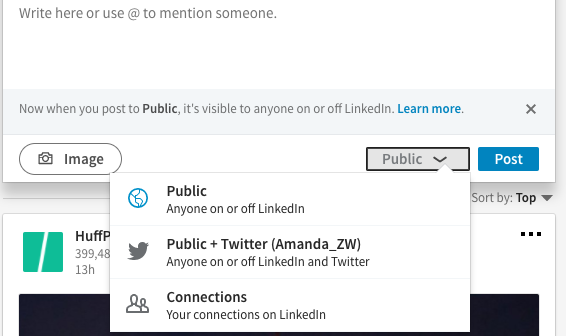
Share your LinkedIn status updates on Twitter

20. Leverage @mentions in your status updates.

Want another LinkedIn user or company to see your status update? On LinkedIn, you can tag — or @mention — users and other companies in your status updates much like the way it works on Facebook, Twitter, or Instagram.

Include the @ symbol immediately followed by the user's/ company's name in your status update or post. As a result, that user/ company will be alerted that you mentioned them, and their name will also link to their Profile and Page in the status update itself. This is a great way to boost engagement and interaction on your content as well as improve brand awareness.

21. Design all aspects of your LinkedIn page.

The design of LinkedIn pages has changed a lot over the years. Make sure yours is set up correctly and optimized for the latest layout, featuring a compelling and high-quality banner image.

Take a look at what HubSpot's Company Page looks like for inspiration:
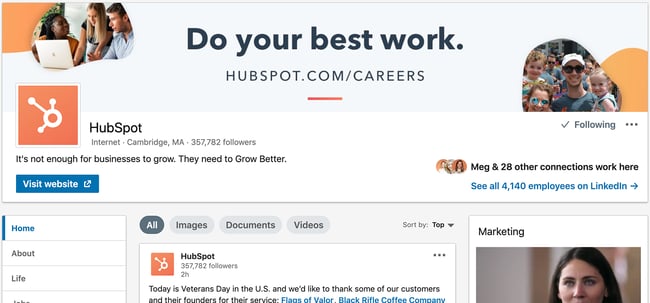
hubspot linkedin page design and layout

Use guides and templates to discover the best ways to design your LinkedIn page for optimal business, marketing, and professional networking.

22. Create LinkedIn Showcase Pages.

LinkedIn Showcase Pages are niche pages that branch off your business' page to highlight specific initiatives and campaigns or feature specific content you're working on.

Think of Showcase Pages as extensions of your main page that allow you to promote specific products or cater to your marketing personas — this provides a more personalized and targeted experience for your page visitors. This is a great way to expand your network on LinkedIn because other users can choose to follow your Showcase Page(s) even if they haven't followed your main page.

23. Post company status updates and target them.

Publish Status Updates for your business on your LinkedIn page for your followers to see. This keeps your LinkedIn connections engaged and in the loop regarding your business' latest developments, work, content, and updates. In your status updates, you can share written information, images, videos, documents, and more.

You can also post Targeted LinkedIn Status Updates tailored towards specific people and groups within your audience. To do this, use criteria such as company size, industry, job function, seniority, geography, language, or by including/ excluding company employees.

These targeted updates will appear on your page — or Showcase Page — as well as on LinkedIn for the targeted users (specifically, in their Network Updates feed).
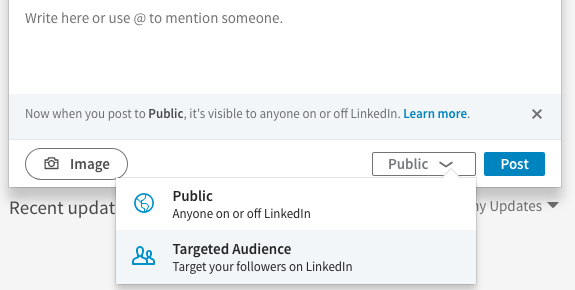
Post Company Status Updates and target them

24. Check out LinkedIn's Content Marketing Score & Trending Content resources.

You can learn how impactful your organic and paid LinkedIn marketing content is with the platform's Content Marketing Score and Trending Content resources.

Your Content Marketing Score tells you your impact on LinkedIn by measuring overall audience engagement with your content. Trending Content tells you which topics you are posting and sharing content about that are resonating with specific audience groups on the platform, allowing you to optimize your content for greater impact.

25. Experiment with LinkedIn Sponsored Content and Native Ads.

If you're looking to complement your organic LinkedIn marketing efforts with some paid advertising, LinkedIn Ads are a smart choice. One of the biggest benefits of LinkedIn advertising: the targeting options.

LinkedIn’s PPC ads let you target specific job titles, job functions, industries, or company size, to name a few — you know, the people who are more likely to want/ need what you sell.

If you want to get started with LinkedIn's advertising platform, check out our free guide to advertising on LinkedIn.

26. Share content through LinkedIn's publishing platform.

Good news! You no longer have to be a LinkedIn influencer to publish new articles on LinkedIn. Publishing is available to all users on the platform. Experiment with how this feature can support your marketing goals by creating content and promoting it on your business' LinkedIn page.

For example, you might experiment with syndicating content from your blog to LinkedIn — this way, you can promote subscriptions to your blog via LinkedIn.

27. Add a Page Follow Button to your website.

Add the LinkedIn Company Follow button to your website to promote your company's LinkedIn presence and the content you share on the platform. When your website visitors follow your LinkedIn page via your site, they'll automatically become connected to you and be able to view your company's latest updates on the platform.

Using this method, you can boost your engagement and number of connections on LinkedIn by driving traffic to the platform directly from your website.

28. Analyze your LinkedIn marketing performance.

So ... how are your LinkedIn marketing efforts faring? Analyzing your efforts and making necessary adjustments is critical to your success on the platform.

LinkedIn has in-depth page analytics as well as reporting tools for businesses to evaluate overall performance. There are specific data about how effective your status updates, content, and reach are as well as details about your page's engagement and followers (like audience member demographics).

Market Your Business on LinkedIn

Are you ready to get started marketing your business on LinkedIn?

With so many updates and additions to LinkedIn on the horizon, we can't wait to see how the network continues to make itself an integral resource and platform for marketers, job seekers, candidate seekers, and other professionals. Get started marketing on LinkedIn by experimenting with one of these best practices.

Editor's note: This post was originally published in August 2017 and has been updated for comprehensiveness.
New Call-to-action


The Beginner's Guide to LinkedIn Marketing was originally posted by Local Sign Company Irvine, Ca. https://goo.gl/4NmUQV https://goo.gl/bQ1zHR http://www.pearltrees.com/anaheimsigns

9 Best Youtube Ads of 2021 and 2020

Back in 2007, a research firm estimated that the average person saw up to 5,000 ads a day.

Fast forward to 2021, there's no official number, but we can assume that number has probably doubled. I mean, you can't stream a show or scroll on social media without being inundated with ads.

→ Free Templates: How to Use YouTube for Business [Download Now]

On YouTube, in particular, we've come to expect at least one ad per video. The question is, which ads are consumers paying attention to?

In this article, we'll cover the top YouTube ads of the last two years and what made them so effective.

Best YouTube Ads of 2021 and 2020

1. Amazon: "Alexa's Body"

At 78,344,440 views on YouTube, this ad had everyone's attention.

To promote its virtual assistant technology, Alexa, Amazon delivers a creative and hilarious ad featuring movie star, Michael B. Jordan.

The ad starts out simply enough with a woman admiring Amazon's Echo Dot. She then turns to the window, sees an ad for Jordan's movie "Without Remorse" and imagines a whole life in which Alexa is actually Jordan.

The audience takes this hilarious journey with her, as she enjoys life just a little too much with Jordan - that is until she snaps back to reality.

Here's why this ad is fantastic: It takes a product that can be hard to advertise and quite literally brings it to life with a celebrity, People Magazine's 2020 "Sexiest Man Alive" recipient no less.

A celebrity endorsement can definitely help boost brand awareness and recall, as long as they're well aligned. In this case, it made for a memorable and effective ad.

2. Nike: "Never Too Far Down, You Can't Stop Us"

When you think of Nike, one word that probably comes to mind is "inspiration."

That concept is embedded in the brand's values and mission statement. It's also reflected in their ads.

Featuring some of the world's top athletes, this ad dives into the ups and downs of success.

Footage of athletes at their lowest moments floods the screen, as basketball star Lebron James narrates the journey. He describes the struggle of falling down and the ability to get back up.

Nike has found which messaging resonates best with its audience. As a result, they don't try to reinvent the wheel. Instead, they focus on recreating the same impact with influencers, celebrities, and everyday people.

The takeaway here is if it ain't broke, don't fix it.

3. Ad Council: Child Car Safety

This PSA is a personal favorite of mine.

You've got to admit: Any commercial with kids is usually a winner. But this one, in particular, stands out because it doesn't rely solely on cuteness as the hook.

In this ad, two children stand in their yard as they watch their parents argue about the installation of a basketball hoop.

The father reassures the mother that "it's all good" but all it takes is the hoop slamming to the ground for him (and her) to lose all confidence. The perspective then changes to one of the children as they encourage parents to visit a website for safer car rides.

How does it connect? Well, the idea is that the father has proven he's willing to do anything for his kids including "routinely test [his] handyman skills" and "the strength of [his] marriage." So ensuring his kids are safe in car rides should be an easy task.

Who said serious topics required serious ads? Often, humor is the best way to get the message across.

4. Zillow: "Susans"

Making a decision isn't as simple as saying "yes" or "no." You often go back and forth discussing pros and cons, battling with different versions of yourself.

For instance, the indulgent me often struggles with the foodie me. One side says, "be conscious of the foods you eat," while the other screams "CAKE." That one usually wins.

This Zillow ad takes this concept and runs with it.

Susan, the woman featured in the ad, talks through selling her home and buying a new one with the various versions of herself, including Negative Susan, Spontaneous Susan, and Paranoid Susan.

The second best part of the ad – the first is when Late Susan sneaks into the meeting – is when Lazy Susan brings up the hassle of going through that process. Helpful Susan then brings up how Zillow is the solution to this issue.

What Zillow has accomplished here is tackle the objections consumers typically have about real estate in a relatable way. By understanding how their audience thinks and what they struggle with, they made an ad that was engaging and relevant.

5. AT&T: "Say Goodbye to Awkward Chats"

Bad video connection? We've all been there.

The person you're video chatting with starts buffering and frozen for seconds at a time. After you've taken the embarrassing screenshot, it stops being funny and you wonder how long it's going to last.

AT&T takes this situation one step further.

The ad shows a new mom introducing her sister to her newborn. Unfortunately, just as the baby reaches the screen, the aunt's signal lags and causes her to freeze as her face shows disgust.

The sister inevitably mistakes the sister's facial expressions regarding the internet and takes it to mean something about her baby.

In just 30 seconds, the ad takes something that happens in everyday life and turns it into a funny, relatable ad.

Moral of the story: You don't always have to go far to create a great ad. They can come from the seemingly mundane parts of our lives.

6. Masterclass: "Chris Voss Teaches the Art of Negotiation"

Masterclass' top viewed video on YouTube is an ad for one of their masterclasses: the art of negotiation.

Despite having other videos that feature more household names, this seems to be the video that captured most viewers' attention.

Some will argue it's the content, and they may be right. I think it's the formula they used.

From the second this ad starts, it sucks you in with the statement: "Everything in life is a negotiation." From there, you're immersed in the world of the subject and narrator.

The reason this ad is so powerful is that it answers the most important question: Why should I care?

It tells viewers exactly how this relates to them, how they would benefit from it, and how they can use it in their daily life.

Unless your ad is product-focused, it should give them the answer to those questions.

7. Travelers Insurance: "Legacy"

It wouldn't be a top 10 YouTube ad list without an insurance company listed, right?

Insurance companies are notorious for taking the funny route for commercials. Because how else do you market a product that's only needed in the event of something terrible?

Travelers Insurance did something different with this YouTube ad.

The brand told the story of a businessman passing his legacy, the family business, to his daughter. And they're able to do that because they had insurance to rebuild the store following a natural disaster.

Using the concept of legacy isn't something we've seen much from insurance ads. It's heartwarming without fearmongering and that's why it works so well.

8. Bluehost: "Build Beyond Boundaries"

When it comes to generating buzz for your product or service, showing is better than telling.

In 55 seconds, Bluehost delivered a fantastic ad that covered the brand's top features without overwhelming the viewer.

The ad serves as a mini product demo, showcasing how easy it is to use using a fictional website concept. Here's why it works:

  • The viewer leaves knowing how it works and what are some top features.
  • The video includes rich media to keep viewers engaged.

If you're interested in creating a media-rich ad like this, consider the audio and video content platform, Casted

9. The General Auto: "The Lunchroom"

For years, The General had commercials that many consumers thought were low-quality. In their 2021 ad, the brand came with a fresh new look.

This ad starts with two men approaching former athlete Shaq in a lunchroom as he eats with a young friend. They reference a previous conversation in which they disagreed with Shaq about The General and refused to sit with him.

They acknowledge that they "misjudged them based on their commercials" then ask for forgiveness, plus a seat at his lunch table.

Now more than ever, consumers crave transparency. This was a great move for the brand because it addressed the elephant in the room.

The General realized their ads were contributing to (or causing) a negative perception of their brand. Instead of quietly rebranding, they took the objection and tackled it head-on, weaving it into their new ad campaigns.

The messaging is clear: Our brand is still trustworthy and credible despite our old ads.

So, if there's a misconception about your brand, don't be afraid to use that in your next campaign.

So, there you have it – the top YouTube ads of the last two years. What they all have in common is a deep understanding of their audience's needs, behaviors, and own perceptions of the brand.

New call-to-action


9 Best Youtube Ads of 2021 and 2020 was originally posted by Local Sign Company Irvine, Ca. https://goo.gl/4NmUQV https://goo.gl/bQ1zHR http://www.pearltrees.com/anaheimsigns

Sustainable Marketing: Key Principles & How to Leverage It [+Examples]

In 2018, 63% of consumers surveyed in an Accenture study revealed that they preferred to shop from purpose-driven brands. Fast forward to 2021 and that sentiment has only grown.

IBM ran a study in 2020 on consumer behavior and found that 57% of consumers are willing to change their shopping habits to be more environmentally conscious. In the same study, nearly eight of out 10 respondents stated that sustainability is important to them.

→ Download Now: Free Marketing Plan Template

So, how does a brand leverage sustainable marketing to appeal to a growing, socially conscious audience? We'll cover that and more below.

Green Marketing vs. Sustainable Marketing

While both terms are often used interchangeably, there is a difference between green marketing and sustainability marketing.

Green marketing focuses on strategies that promote environmental awareness and protection. Sustainable marketing, on the other hand, is a little broader.

It encompasses green marketing but it also includes practices that go beyond the environment, like social and economic issues.

1. Have a larger purpose.

Brands typically judge their success by the numbers. How much revenue they have or will generate in any given period is usually the biggest indicator of success.

Sustainability shifts this perspective by having brands evaluate themselves by something bigger than profit.

As a brand, you have to promote something that's bigger than your products and services and transcends any particular industry.

Do you have a clear social mission? If not, spend time discovering what that is and how your brand plays a role in furthering that mission.

For instance, fashion brand Autumn Adeigbo sells clothing, accessories, and home decor items. However, its mission, as stated on its website, is to impact the lives of women on a global scale. They do so by using female-owned production facilities, employing female artisans, among other practices.

2. Think ahead.

Sustainability marketing is all about building long-term value.

Too often, brands focus on gaining immediate returns. For instance, many marketing tactics like running Google Ads and blogging are great lead generators.

However, what happens once your lead has made a purchase and turned into a customer? How will you build loyalty and create brand evangelists?

Sustainable marketing looks at ways to nurture consumers during the entire buyer's journey.

Education is one way to build loyalty with your audience early on. From when they first discover you on social media to after they've made a purpose.

For instance, a food brand could educate its audience on the importance of ethical farming on social media and continue this process post-purchase with package recycling tips.

3. Be customer-oriented.

You might be thinking, "Isn't being consumer-oriented what all marketing is? "

Ideally, yes but that's not always the case.

In traditional marketing, a brand will often try to push a product or service to a customer. With consumer-oriented marketing, it's more about understanding your customers' needs and tailoring your marketing to that.

For instance, say your audience is craving more transparency in your sourcing practices or want you to be more vocal on social issues. You could use that information for your next campaign.

With so much competition out there, one way to stay customer-oriented is by innovating.

We've all heard the Blockbuster and Netflix cautionary tale. But that speaks to a huge societal shift that Blockbuster was unwilling to make.

But the truth is, innovation doesn't always have to be so big. It can happen in small iterations – the key here is staying in touch with your audience's needs.

4. Reflect sustainability in every aspect of your brand.

Sustainability marketing doesn't work if it's not authentic.

Imagine finding out a business that claims to be sustainable has failed to implement any practices to promote its mission. Consumers would distrust that brand and it would be difficult to earn it back.

Make sure your brand is looking at sustainability from a holistic lens.

Are you preaching about sustainability but use unsustainable resources to build your product? Are you collaborating with brands that conflict with your mission? Is your team representative of the future you want to promote?

These are the questions you should ask to determine if your brand reflects the mission you've set out to achieve. Identify the areas that need work and go to the drawing board to figure out strategies that align with your mission.

Audiences don't expect perfection, they do, however, value transparency. It's OK – and recommended – to share where you currently fall short and how you plan to remedy these issues.

Sustainable Marketing Examples

1. Pangiai

Materials science company, Pangiai, wants to save the environment.

Every piece of marketing the brand puts out is centered around this core mission, including this video campaign.

In it, the brand explains its mission to "reverse the cycle from the unnatural to natural, from plastic to plants […], from the new to the recycled."

What's effective about this ad is that Pangiai describes the future they want to see and outlines the strategies it will implement to get there.

Throughout the ad, you see Pangiai products but they're not the focus. This tells viewers the mission drives the products, not the other way around -- and that's sustainable marketing done right.

2. Nada Duele

In the previous section, we discussed the importance of having a holistic approach to sustainability marketing.

With Nada Duele, their mission is reflected in everything: from their name, which represents the idea that products should not cause harm, to the initiatives they take part in.

sustainable marketing example

Image Source

When you visit their "How We Work" section, you learn about their collaboration with a Guatemalan institute dedicated to protecting the forestry sector.

It's important that the partnerships your brand takes on align with your values. Otherwise, you risk losing credibility and trust.

3. Satya + Sage

Social media is one of the best and easiest ways to implement a sustainable marketing strategy.

You can share a range of content, from educating your followers on sustainable practices to sharing ways your brand is being sustainable.

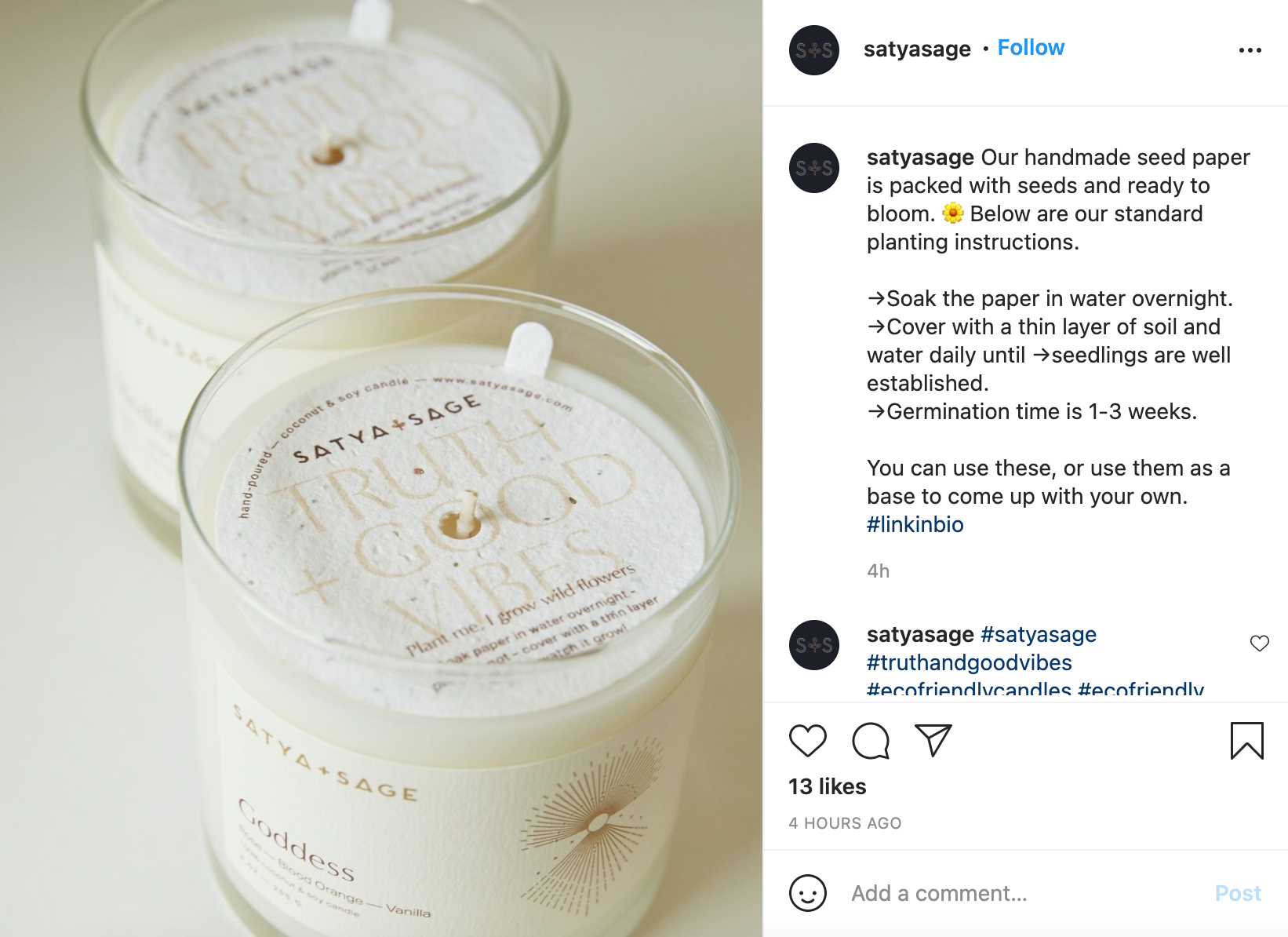
In this example from candle company Satya + Sage, they share tips on how to use the seed paper that comes with every candle.

sustainable marketing example

Image Source

On social media, in particular, pay attention to the questions your followers ask and the comments they make, as that can inform which marketing strategies you test in the future.

Why is sustainable marketing important?

Sustainability is a topic that has gained a lot of traction as of late, however, research shows it transcends age.

The 2020 IBM study on consumer behavior revealed that while Millennials are the most interested in sustainability awareness, Boomers (and all consumers in between) strongly consider it when choosing brands.

As a result, even if your brand isn't rooting in this mission, you will still find value in investing time and resources in sustainable practices and marketing to attract more customers.

Marketing Plan Template


Sustainable Marketing: Key Principles & How to Leverage It [+Examples] was originally posted by Local Sign Company Irvine, Ca. https://goo.gl/4NmUQV https://goo.gl/bQ1zHR http://www.pearltrees.com/anaheimsigns

Friday, October 1, 2021

Social Commerce: What It Is & How to Use It in 2021

Recently, I set an iPhone time limit on my social media use to "45 minutes".

I figured 45 minutes would be more than enough. Almost an hour? In between working at HubSpot, catching up with friends, and attending exercise classes, I had no doubt 45 minutes would be plenty of social media consumption.

Unfortunately, I learned pretty quickly that I actually spend 45 minutes on social media before I even get to work in the morning.

I know I'm not alone. In fact, the average daily social media use of internet users worldwide amounts to 145 minutes per day.

With all that social media consumption, it makes sense that more businesses are turning to social media to market to their audiences. But marketing is just one aspect of the buyer's journey -- what about sales? Can that be done within social media platforms, as well?

It's actually now entirely possible for businesses to sell products and services natively within social media sites.

Here, we're going to explore that very concept -- known as social commerce -- and take a look at some impressive examples of social commerce, so you can consider trying it for your own company. Additionally, we'll list some of the most popular social commerce platforms available today, so you can decide which one could give you the highest ROI.

Download Now: Social Media Trends in 2021 [Free Report]

Since many businesses are marketing on these social media sites already, it makes sense to allow users to purchase from within these platforms without leaving the site at all.

Should you leverage social commerce?

If you sell physical products online, leveraging social commerce is a great way to drive sales and revenue to your business. Users are used to the native purchasing experience at this point and prefer to be able to quickly make a purchase right on the social media app.

1. Social media checkout capabilities.

One of the best examples of social commerce is the ability to click a product and checkout right from within a social media site, like Instagram or Facebook.

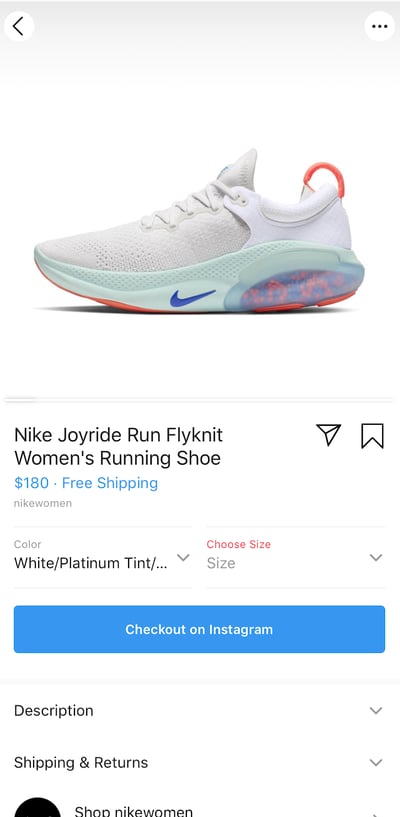
For instance, Instagram has a "checkout" feature on their app, which allows you to click on a product within a post, choose a size and color, and proceed to payment within the platform.

The first time you use Instagram's checkout feature, you simply need to enter your name, email, billing information, and shipping address. Once your order is complete, Instagram saves your information so you don't need to enter it the next time you shop.

Additionally, you'll receive notifications about shipping and delivery right from within Instagram, so you can also track your purchase without leaving the app.

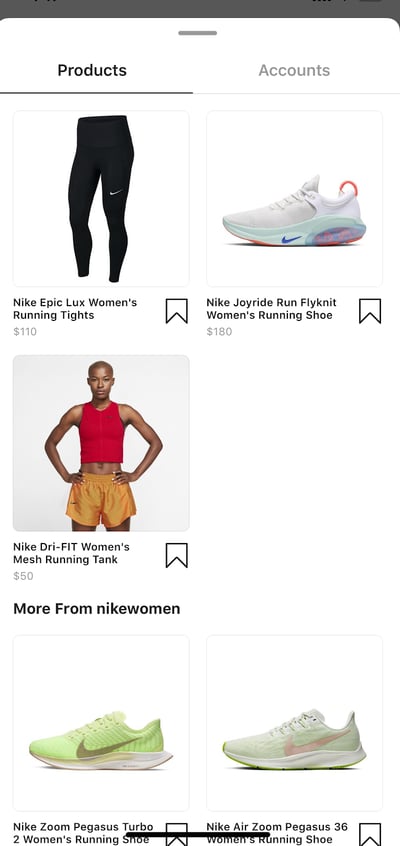
For instance, let's take a look at what happens when I click the "View Products" button (bottom right) on one of @NikeWomen's Instagram posts:

Instagram immediately pulls up a page with all the details of every product included in the image.

Let's say I'm particularly interested in the sneakers. From within Instagram, I can choose a color and size and then click the blue "Checkout on Instagram" button. If I've shopped on Instagram before, I don't even need to re-enter my information. Pretty simple, right?

Plenty of other social networks have these checkout features, including Facebook, Pinterest, and Twitter.

2. Social commerce plugins and apps.

As social commerce continues to rise in popularity, we'll continue to see more plugins and third-party apps emerge to make the process even more seamless for businesses and users alike.

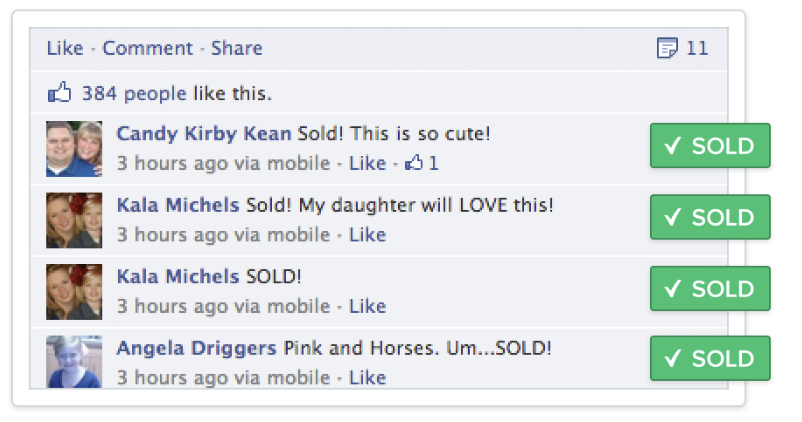
For instance, one third-party app called Soldsie allows your followers to make a purchase on one of your products by simply typing "Sold" into the comments section of a post. Once they've commented "Sold", the app takes care of the rest, emailing the user an invoice to complete.

Image Source

Soldsie notes -- "As fans comment, your sales trend on Facebook as each photo is shared with your fan's Facebook friends." For instance, if my friend comments "Sold" on a Facebook post of a cute sundress, I'll see the picture in my News Feed and might consider purchasing one for myself.

Ultimately, social commerce is a good opportunity to increase brand awareness while also increasing sales -- a win, win.

3. Shoppable ads.

Shoppable ads is another example of social commerce, and is currently available on both Instagram and Snapchat.

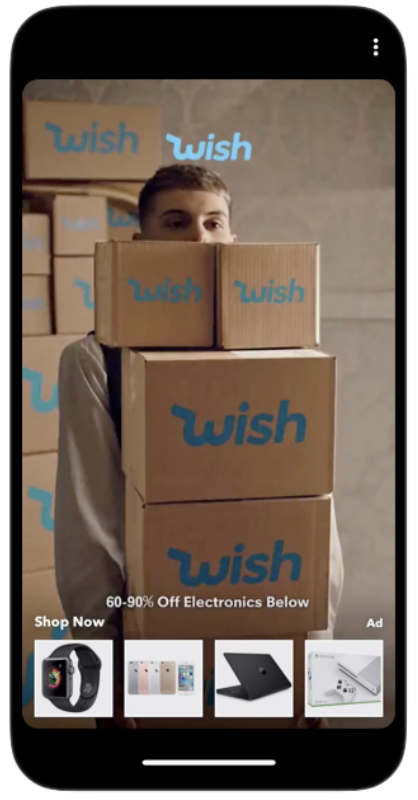
Simply put, shoppable ads allows businesses to tag products in an Instagram or Snapchat sponsored post, ideally creating a more efficient ad-to-purchase experience. Best of all, this type of social commerce helps businesses collect valuable data on which ads convert prospects into customers immediately.

The features you'll find on shoppable ads within both Snapchat and Instagram continue to improve -- for instance, Snapchat has advanced features on their shoppable ads, including collection ads, product catalogs, advanced pixel targeting, and 30+ new Snapchat partners.

Wish, an e-commerce app, successfully uses Snapchat's product catalog feature to create different Snap Ads and Story ads to showcase a large variety of their products, as shown below.

Image Source

Shoppable ads are undeniably profitable if done well -- on Snapchat alone, FabFitFun lowered cost-per-purchase by 36%, while American Eagle increased return-on-ad-spend (ROAS) by more than 3X.

With shoppable ads, you're able to market and sell directly to your intended audience without causing friction in a user's social media experience. For instance, 73% of Snapchat users are between 18-24 years old. If this is your ideal demographic, why not try including your products or services directly within the ads you're creating on Snapchat? This allows users to find products of interest to them without needing to leave the app at all.

4. Chatbot checkouts.

One final example of social commerce that's critical to point out is chatbot checkouts -- the ability for a user to find and purchase a product by chatting with a chatbot within a social platform.

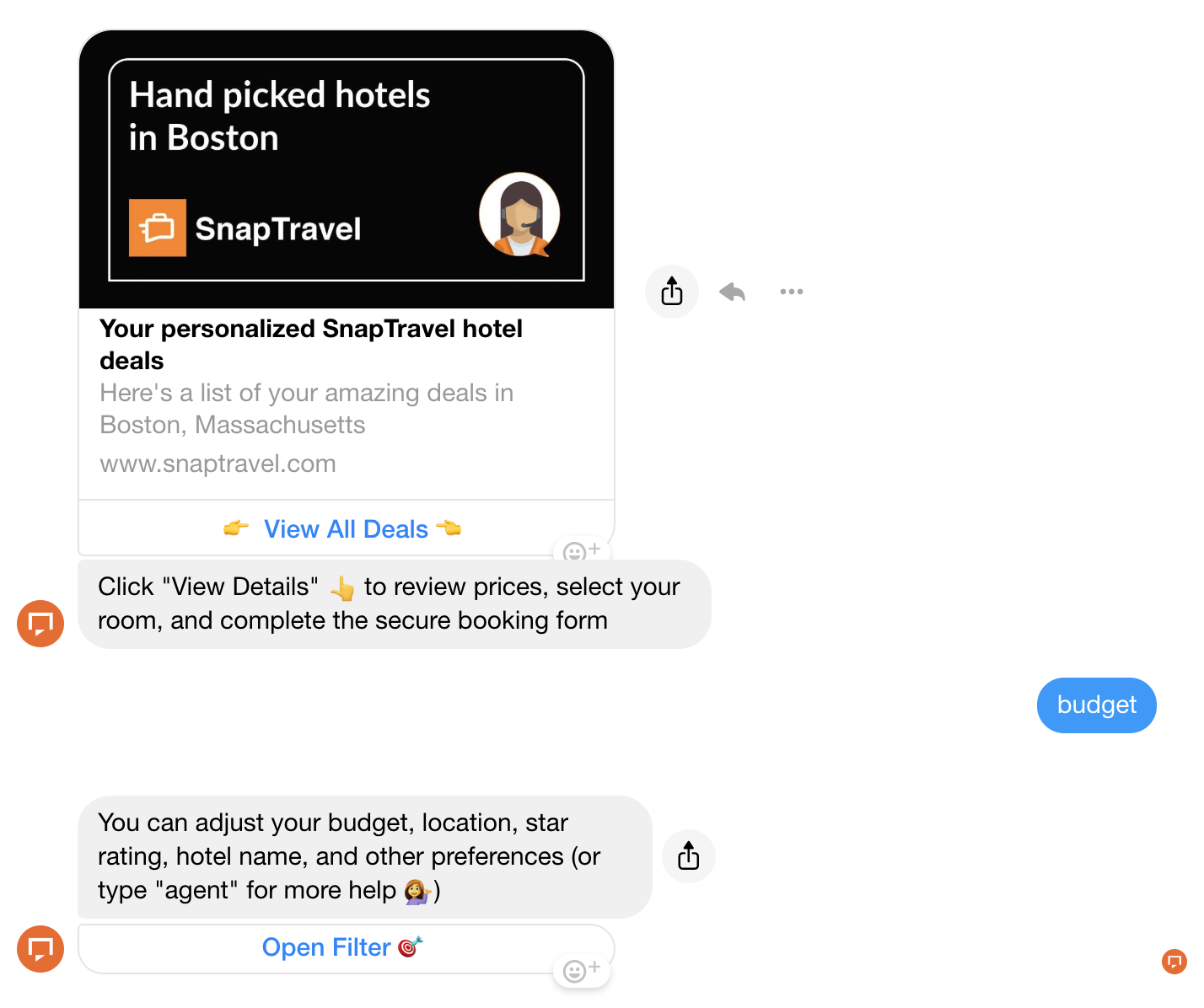
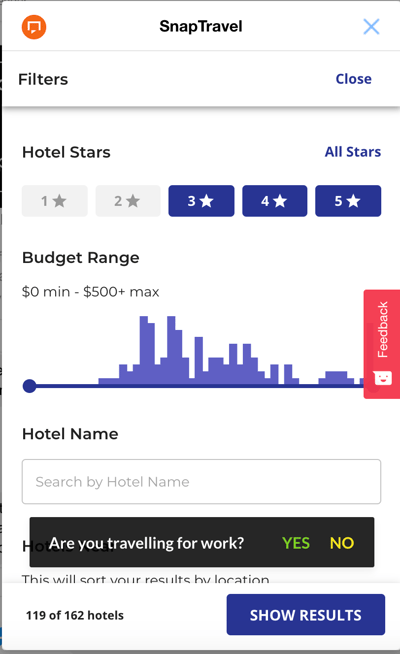
For instance, consider SnapTravel's Facebook Messenger bot, which helps people find hotel deals and book rooms right from within Messenger:

As you continue chatting with the bot, you'll receive better, more customized deals based on your requirements. Additionally, you can click "Open Filter" to further modify your search based on your criteria, and a new screen will open up right from within Messenger:

SnapTravel offers deals only available in Messenger, incentivizing users to book with the chatbot rather than on their website.

Using a chatbot to streamline your buyer's journey is particularly helpful for mobile users who want to find and purchase products on an app they already have on their phones -- like Messenger.

1. Instagram

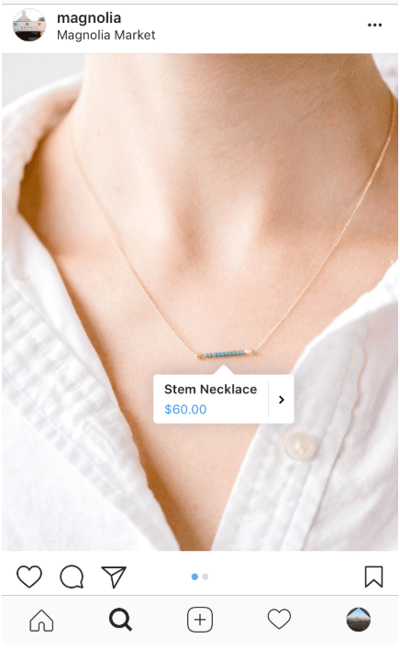
Between its checkout capabilities and shoppable posts tool, Instagram is undeniably one of the most popular platforms for social commerce. Many Instagram users are already using Instagram as an opportunity to discover and purchase new products -- for instance, 80% of users use Instagram to decide whether to purchase a product or service, and 83% use it to discover new products. Since these users are already prepared to find and purchase new products, it's critical that they're given the option to buy them in-app.

Image Source

2. Pinterest

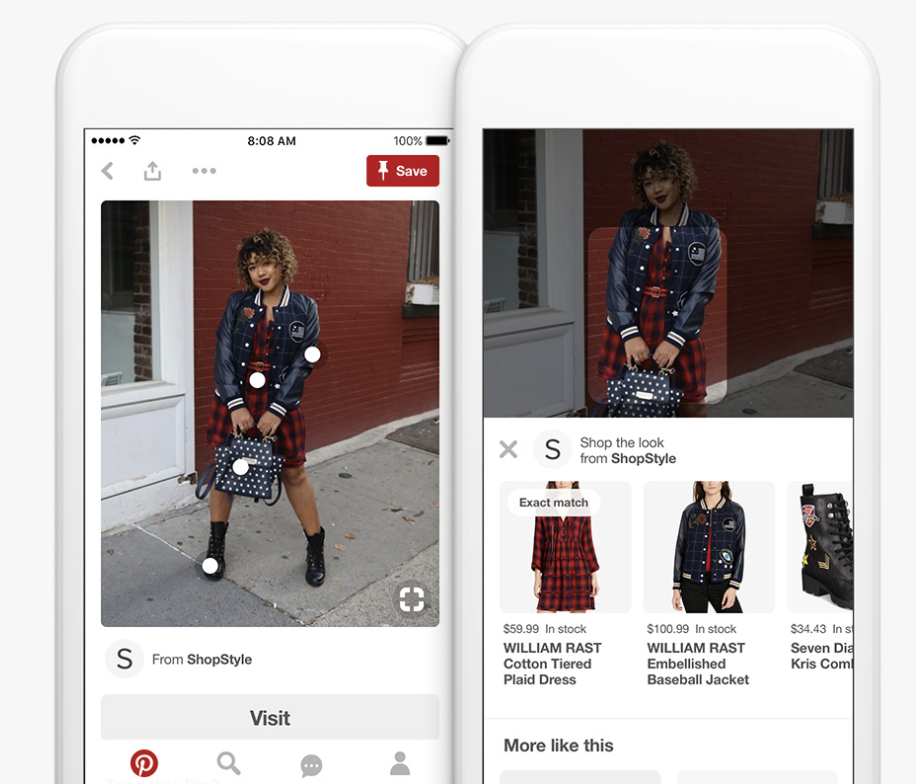
People often turn to Pinterest for fashion, home decor, or beauty inspiration, so it makes sense that Pinterest would be a viable platform for social commerce. In fact, 93% of active Pinterest users said they use Pinterest to plan for purchases, and 87% said they've purchased something because of Pinterest.

Pinterest's Shop the Look Pins allows users to click on small white dots on various products within a post, and either purchase that product within the app or browse similar products. They can make purchases on both desktop and mobile.

Image Source

3. Facebook

With over two billion active users, Facebook is one of the most popular social platforms in the world, making it a good place for social commerce.

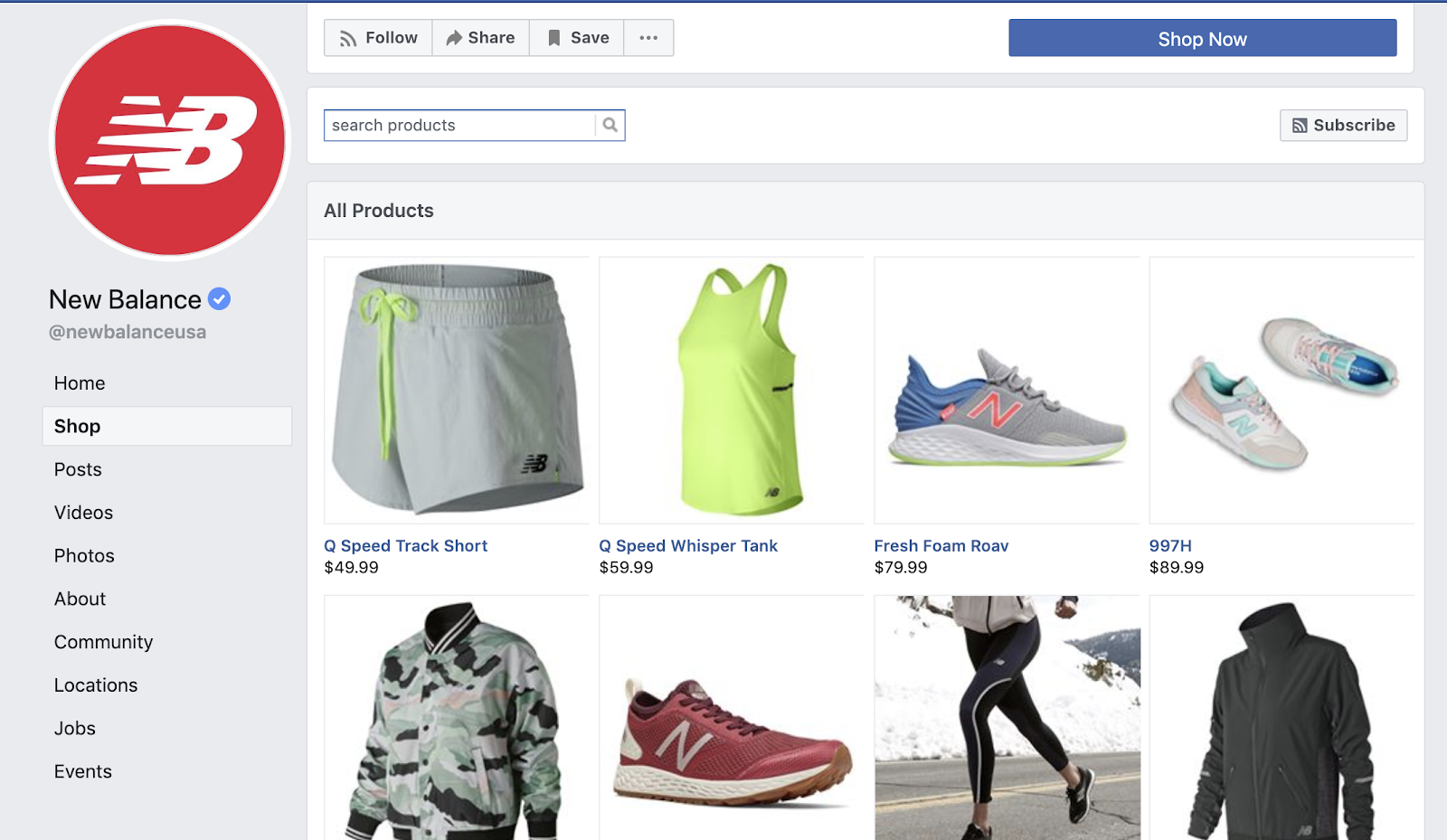
If you have a Facebook Business Page, you can set up a Facebook shop to sell your products and services directly within the social platform.

Facebook notes -- "While any business can have a shop, this feature best serves merchants, retail and e-commerce advertisers. We recommend it for businesses selling apparel, accessories (including bags and luggage), home furnishings, and baby or kids' products."

To upload your inventory to Facebook and create a shop section, you can either use a third-party ecommerce platform like BigCommerce or Shopify, or you can upload and manage your products yourself.

For further inspiration, try searching for major retailers and checking out how they've set up their Facebook shop. For instance, take a look at New Balance's Facebook shop:

Facebook shop is a fantastic opportunity for your business to reach a larger audience -- and, even if your customers don't end up purchasing your products on Facebook, having these products listed on your Facebook Business Page is a good idea for making Facebook users aware of the products you sell in-store.

4. Poshmark

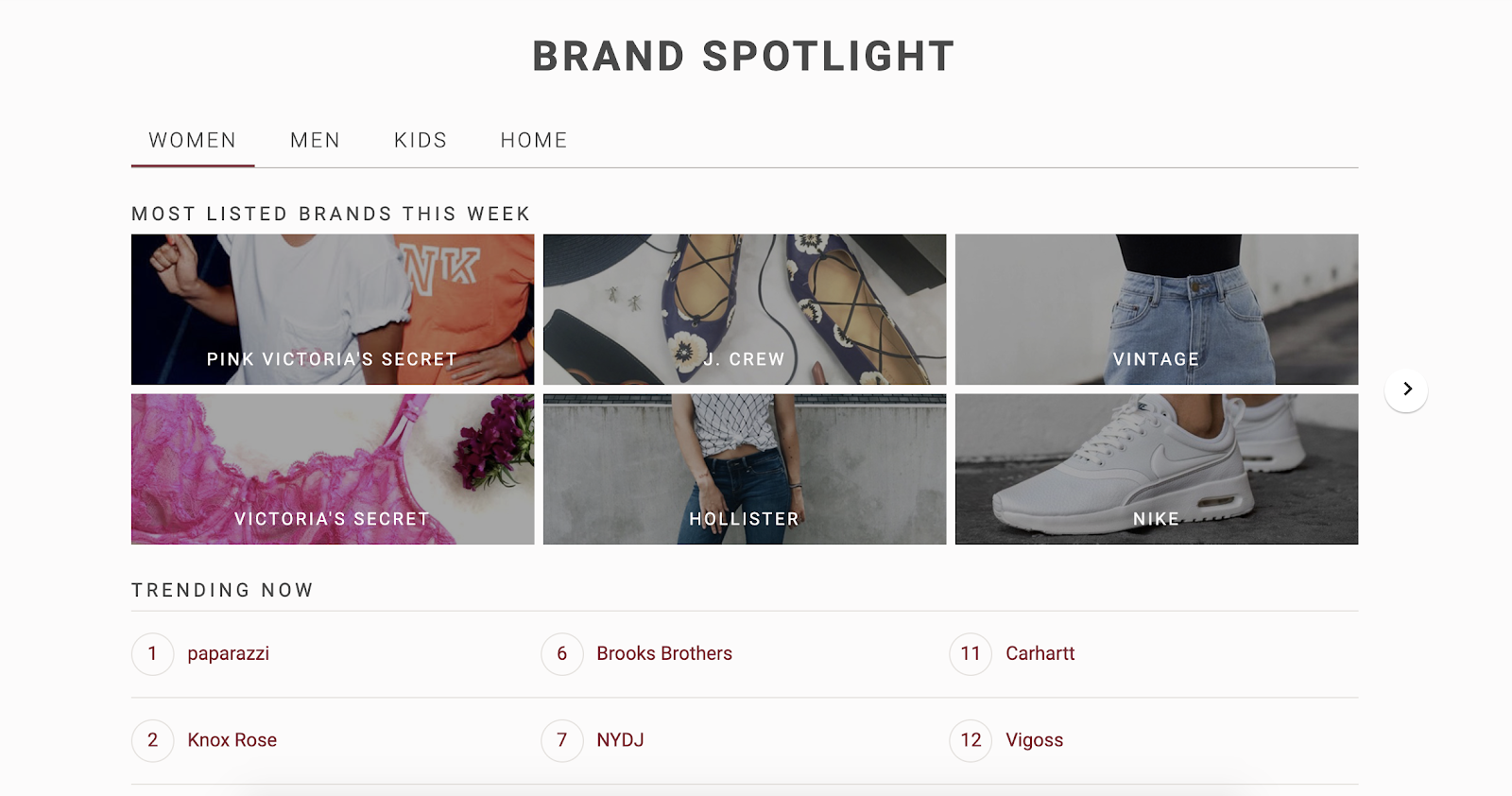
Poshmark is a social commerce marketplace that allows people in the U.S. to buy or sell clothing, shoes, and accessories, either new or used. Poshmark makes the experience even more social with features like "Posh Parties", which are virtual buying and selling events that you can attend with friends.

Popular brands on Poshmark currently include Nike, Lululemon, and Chanel -- to sell on Poshmark, simply download the app and follow seller instructions from there.

5. Shopee

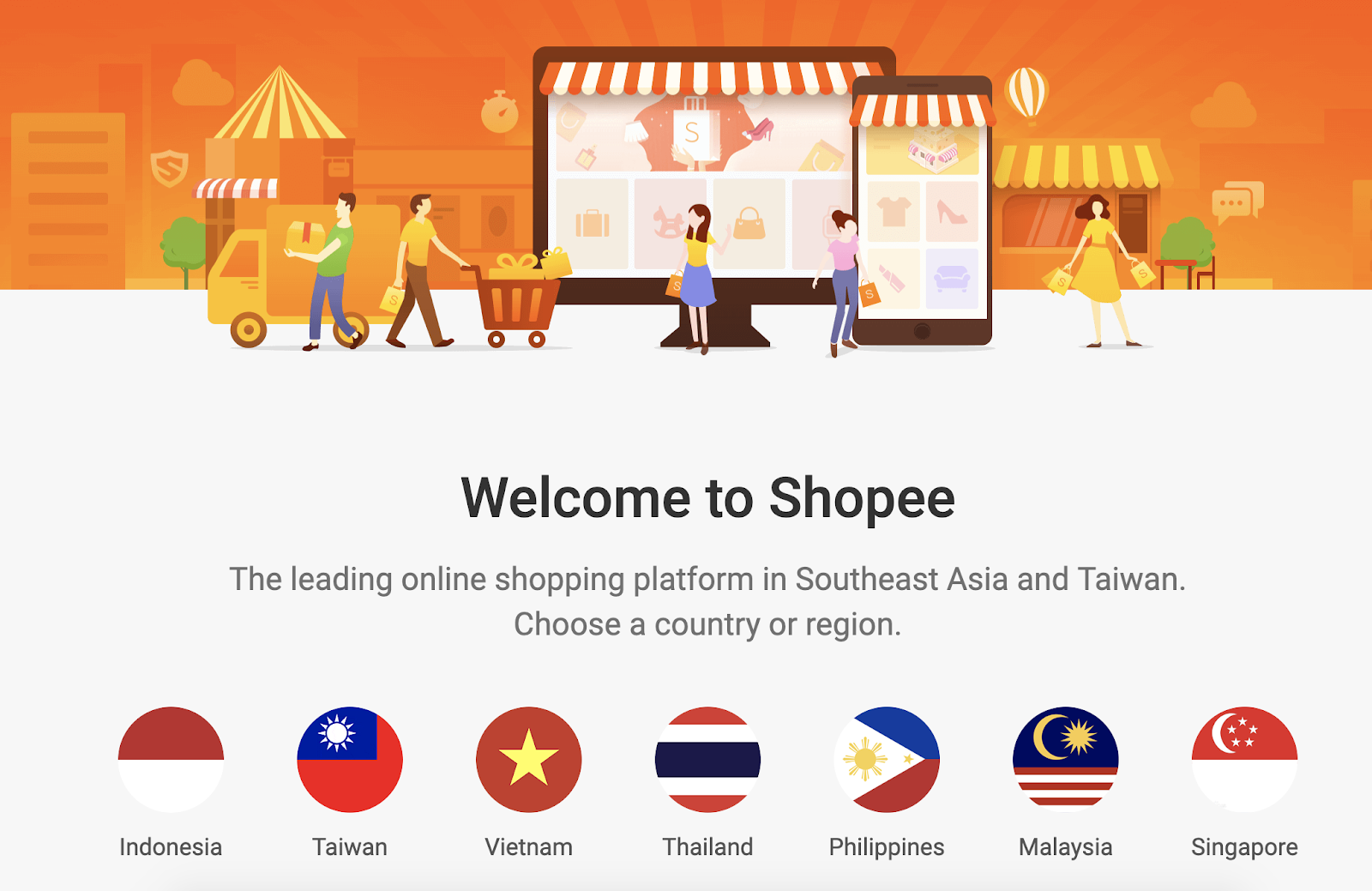
Shopee, reportedly the largest online shopping platform in Southeast Asia and Taiwan, is a social commerce marketplace that enables users to buy and sell products ranging from home & living to mobile & gadgets.

Major brands on Shopee include Kleenex, L'Oréal, and Oreos. Selling on the app is easy enough -- simply verify your phone number, ensure your products aren't prohibited and click "Add New Product" on your Shopee page. With over 95,000 users on the app worldwide and a unique focus on the Asian market, Shopee is a good option for brands looking to expand their global presence.

How to Create a Social Commerce Strategy

1. Align the brand experience.

Before you can get started with a social commerce strategy, it's important to consider your brand experience and target market.

When customers make a purchase online, do they need to look at multiple pages on your website? Do they have a lot of questions? Do they usually get in touch with a sales rep?

If so, then your brand experience might not be suited for social commerce.

On the other hand, if your brand experience has a quick sales turnaround, from looking up the product to purchasing, then your product might perform well on social commerce.

It's important to make sure the brand experience is aligned with social commerce before creating a strategy.

2. Consider your target market and choose which social commerce sites to use.

Once you decide to move forward with a social commerce strategy, consider your target market and think about what social commerce sites they use.

Are your customers on Instagram and Snapchat, but not on Pinterest? In that case, you'll want to make sure you focus your social commerce efforts in the right place.

To develop a social commerce strategy, you'll first want to think about which sites you're going to focus on.

3. Decide which products to sell on social media.

Next, think about which products are best suited to be sold on social commerce sites. If your products require more time and thinking before making a purchase, then those won't fit well within a social commerce strategy.

However, some of your products might work well while others don't. This means you should consider which products you're going to focus your social commerce efforts on.

Ultimately, social commerce has the ability to eliminate friction in a user's online shopping experience, and catch users' at moments when their excitement over your products is highest.

However, it's critical you do market research to ensure you're using the right social commerce platforms or apps to reach your audience in the social spaces they frequent the most.

Additionally, remember social commerce is fundamentally social in nature -- if your business doesn't also engage and communicate with its followers, then your company won't get much out of social commerce as a long-term strategy.

Editor's note: This post was originally published in February 2016 and has been updated for comprehensiveness.

New call-to-action


Social Commerce: What It Is & How to Use It in 2021 was originally posted by Local Sign Company Irvine, Ca. https://goo.gl/4NmUQV https://goo.gl/bQ1zHR http://www.pearltrees.com/anaheimsigns

10 Tips for Parents Working From Home With Kids

Working from home can sound like a dream for many people. You get to enjoy more time in your house, you cut out the commute, and you get to see much more of your family.

But the flip side has some not-so-dreamy realities, especially for parents having to balance work and childcare: a difficulty to focus; having to juggle work with looking after children and, in some cases, homeschooling them; blurry lines between work time and personal time, and kids lobbying for your undivided attention when you need to GSD.

On the least glamorous WFH (work from home) days, you might feel like you've got no work done and you've been a bad parent. Juggling work and looking after kids can be done, but it does require a recalibration of expectations and working styles.

To make your remote work reality more functional, here are some of our top tips for parents working from home.

Download our complete productivity guide here for more tips on improving your productivity at work.

10 Tips for Parents Working From Home With Kids

1. Focus on the positives.

Although some parents work from home by choice, others have had to unexpectedly adjust to this new reality.

This situation comes with its own challenges, but we can all find some advantages in working from home — whether that's avoiding the daily commute, having more time with the family, being home for dinner, or proximity to the fridge.

It won’t always be easy, but focusing on the positives (and reminding yourself of what you're avoiding in the office) can help enormously on stressful days.

2. Adjust your schedule.

Just like kids, adults thrive on routines and work much more efficiently when we have a schedule.

Having a WFH routine helps us to stay focused and avoid the productivity lulls that come with multitasking or battling constant interruptions.

To add more structure and predictability to your day, create a morning routine and be strict about it whenever possible. When it's wake-up time, get up and prep for the day as you would before going to the office. Then head to your home office, whatever this looks like to you, and get into a state of mind for work.

To optimize the rest of your day, adjust your work schedule to allow for home life, whether this includes breaks to relax or time to catch up on chores and take over childcare.

If you can, take advantage of a flexible schedule and come up with a routine that works for you and your kids — but remember that you can always adjust it to accommodate daily changes.

In our collection of remote work tips from our team, we shared this great tip:

Create a schedule with the people you live with. I work in the AM, watch kids (aged two and four) in the PM, and my husband does the opposite.

3. Be upfront with your colleagues.

While there are many steps parents can take to maintain their productivity while working from home, disruptions will still happen. Your kids will run into your office, throw a tantrum during a Zoom call, or require you to help with an emergency in the house.

The worst thing you can do is pretend everything is fine, approach work the same way you did in an office, and insist you don't need any help.

Be upfront with your team about what working from home will look like for you and think about what requests you can make to make it easier and more productive. This might be an adjusted schedule that allows for more flexibility, or just a bit of extra patience.

4. Optimize your workspace for focus.

Although you don't have to stick to this 100% of the time, assign one area of the house as your dedicated workspace.

This makes it easier to limit distractions and focus on work without having it seep into personal life.

When you start your workday by arriving at your dedicated workspace with a coffee and wearing daytime clothes, you let your mind know that this is the time and space where you start working.

Ideally, this would be a separate room that you can turn into a home office. But if that’s not an option, try to find a non-communal corner of your home to turn into your workspace. Agree with everyone in your household the rules for when and how they can get your attention.

Parents can also get their kids to help out designing homemade office signs, with green for "yes, you're allowed in" and red for "don't even think about it."

5. Work in short bursts.

Parents of babies and toddlers have a harder time of it than most, since you can't leave them alone.

If you're responsible for childcare, your best option may be to work in short bursts when you’re able to, such as when the children are sleeping.

But if you're lucky to be able to focus on work while your partner helps with childcare at home, design your schedule so you can come out of your office and help every so often, rather than locking yourself in all day.

6. Nurture creative activities.

Your kid probably isn't going to sit quietly and read a book all day while you're working. If you're responsible for childcare, keep your kids immersed in play by nurturing creative activities.

Rotating between different sets of toys and other activities can encourage deeper and more meaningful play while giving you a bit more time to focus. If your children aren’t used to playing independently, you can try sparking their imagination by making it into a game in its own right — one that encourages independent activities such as solving a puzzle or creating something from scratch with art materials, with a set time to show you what they've come up with.

If you're okay with your kids having some screen time while you're taking important calls or needing to focus, check educational resources like Scholastic Learn at Home, digital games that teach things like spelling and music skills, or even virtual museum tours.

7. Schedule meetings wisely.

Almost every parent who works at home has a few unfortunate mishaps to share.

While a lot of this is inevitable and all you and your colleagues can do is laugh, plan for interruptions by giving your children a nonverbal ‘do not disturb’ when you’re on conference calls.

Of course, that isn’t always going to work with free-roaming toddlers, in which case it can be better to schedule calls during their normal sleep times. At times, you might just need to mute your calls or even reschedule if you need to be on childcare duty.

8. Get technology on your side.

The rise of cloud computing is precisely what’s enabled the surge in remote working. Instead of having to manually exchange documents or log in to user accounts on-site, employees can now access the information they need to do their jobs online.

With collaboration platforms like Microsoft Teams, project-management software like Trello, and web-based CRM (customer relationship management) software, it's easier than ever to get work done at home.

Whether it’s having a bit of fun setting your own video conferencing background on Zoom or taking time to create a tech stack that makes your job that much easier, choosing the right applications can make a world of difference.

9. Know when to switch off.

Mastering the work-life balance has never been more difficult. While many are quick to praise the virtues of working from home, you can also end up feeling like you're always at work. That’s why it’s crucial to know when to switch off.

Being a parent, chances are you’ll need to account for some flexibility when it comes to drawing up your daily schedule. Still, it’s important to set a time when you can confidently say you’re finished for the day. This naturally requires some self-discipline and expectation setting with your team, but you need to have clear boundaries to keep stress at bay.

10. Be easy on yourself — and ask for help.

If you're a parent juggling work and childcare, you deserve a medal and all of the opportunities you can get for a helping hand.

This might mean getting support from a family member, hiring someone to help with childcare, or asking your employer for flexible hours or a bit more lenience during WFH.

But above all, don't expect yourself to balance everything effortlessly and effectively all the time. Look for the opportunities to make your work-life easier, but also be kind to yourself when things don't go as planned. If things are hard to manage, try to take some time off if you can, and remember to focus on self-care too. It can be a stressful situation for a lot of people, so it's important to focus on your own well-being and know your limits.

Take me to Projects


10 Tips for Parents Working From Home With Kids was originally posted by Local Sign Company Irvine, Ca. https://goo.gl/4NmUQV https://goo.gl/bQ1zHR http://www.pearltrees.com/anaheimsigns

How Ecommerce Businesses Build Healthy Relationships With Customers

A customer walks up to your store. What’s the first thing you do?

Ask them what they need? Show them a few choices that are trending? Let them check the store out before reaching out to them?

The question is: why?

Download Now: Ecommerce Marketing Plan Template

Why do you need to make contact with your customers and understand their needs?

Showing interest in your customer’s needs makes them feel valued and important. And that’s what every customer wants to feel when they walk into a store. It’s this feeling of attachment to a brand that makes customers come back and buy something again.

But how will you go about the situation if you’re starting an ecommerce business? How do you build relationships with your customers online?

It may seem like a difficult question, but it isn’t. There are so many ways you can build relationships with your customers online.

Here are a few tips that will help you build and maintain a relationship with online customers.

How Ecommerce Companies Build Relationships With Customers

1. Direct Engagement on Social Media

Every business needs to be on social media platforms like Facebook, Twitter, and Linkedin. They are some of the most significant online marketing tools that businesses can use to publicize product offerings, advertise the company, share news about the industry, and connect with customers.

On social media, you can create a page and fill it with content about your product. Potential customers will drop their comments, and you can reply and start conversations with them. When you get along with them they will be convinced to trust you. The trust you build with them will lead them to purchase your goods or services.

Apart from building trust, communicating with customers makes them feel confident and important. By talking to customers, you will provide them with your business contact and assurance of quality service. Other prospects can also go through your social media conversations and decide to support you.

When you have direct conversations with your customers you'll build personal connections and also make them see how responsive you can be to their questions and feedback.

2. Follow-Up

When a customer has made a purchase, following up is important. Calling or sending personalized emails may be ideal but you may not have enough time. You can use automatic messaging and emailing strategies to customize your messages and make them more personalized.

For a seamless process, create a base template and after each purchase, personalize it and reach out to the customer to make sure they got their product in good condition and if they are pleased with the experience.

This way, you will gather valuable customer feedback that will help improve the experience of future customers. You can even use automation to include the customer’s name and other relevant information in the email.

3. Email Communication

email marketing

You must build an email list if you intend to keep in touch with customers. And, make sure that the emails you're sending out are not sales-y. Every email sent to a customer should contain relevant content that can help them solve a problem. That way, you will create a connection with your customer and improve your online relationship.

Other than this, you need to have an email strategy: When do you plan to send out emails to your customers? What will you wish to achieve through emails? What USPs will you promote via emails?

Another reason to send out emails to your customers is to capture their feedback. Whether a customer avails your service or purchases a product through your website, it is essential to send out surveys and get an insight into their overall purchasing experience. This way, you know whether you need to improve upon your customer journey and what stops you from providing a delightful customer experience.

4. Creating/Hosting Events

When you invite your customers to a promotional event or a product launch, it allows you to socialize and improve your relationships. The invitees will know more about your brand from the event while it gives you the chance to meet with your customers personally, create a strong impression, and foster trust.

Let's say you run an online clothing and accessories brand. You can invite your online customers to attend a fashion show, for example, so you will have an idea about the audience you're targeting and they will have a close look at your products.

5. Excellent Customer Support

Your customer service should be top-notch, since there are only a few moments of two-way communication between your business and customers in the ecommerce world. Therefore, those few times should count.

You have a lot of options to choose from because online customer support has been improving steadily in the past few years. You can use FAQs, customer forums, searchable knowledge bases, and many other methods to provide information. Some businesses use self-service support, but if you are determined to maintain long-term online relationships, live chat and phone support are your two best bets.

This is because these support channels provide a direct line of communication between your business team and customers. If your support team communicates directly with customers, they'll be able to understand the customer's needs perfectly and improve their experience. These are some ways you can provide the best support experience for your customers:

  • Let support be your competitive advantage: Your customer base will increase if you're able to provide excellent support. You can use that as an advantage against competitors offering the same service and products.
  • Let customers have personal attention: When you provide live chat for your customers, support reps can attend to the problems of several customers at once.
  • Listen: Because of how many customer complaints they respond to, support teams may just pour out the first solution they think of. However, for customers to have a better experience, reps must break a little and listen so they can offer the best solution.
  • Equip support agents: Your customers will have a bad experience if you keep pushing them from one team of agents to another. Equip your support team with the mastery needed to solve real customer problems quickly and easily.

6. Customer Loyalty Programs

Another strategy to improve customer relationships and increase revenue is creating a loyalty program to benefit both old and present customers. They can be enticed with discounts or coupons so they can sign up for the program. You can also give extra benefits to those who buy repeatedly.

Also, show gratitude by celebrating with your customers on birthdays, holidays, and anniversaries with personalized messages.

Ecommerce businesses can also improve customer relationships by using applications to make things easy for them. However, no matter the method adopted, every online business should aim to build strong customer relationships.

Right from creating insightful surveys to providing 24/7 customer support, these tips will help you build a long-lasting relationship with your customer base.

ecommerce planning template


How Ecommerce Businesses Build Healthy Relationships With Customers was originally posted by Local Sign Company Irvine, Ca. https://goo.gl/4NmUQV https://goo.gl/bQ1zHR http://www.pearltrees.com/anaheimsigns

7 Effective Ways to Automate and Grow Your Business

There's more scope for automation in your business than ever before. With automation, you can schedule emails to be sent at the perfect time, follow up with leads that have abandoned their cart, sync data between apps, and notify team members of new tasks.

However, all of these options can be overwhelming, especially if your business isn't a huge corporation with a lot of budget and resources to throw at automation.

You might be wondering:

  • What types of automation will benefit my business the most?
  • What should I stay away from?
  • How can I easily implement these while keeping life simple?

Let's explore the best types of business automation so you can start implementing a strategy in your own organization.

Download our complete productivity guide here for more tips on improving your productivity at work.

7 Ways to Automate Your Business

1. Email Marketing Automation

When you think of automation, email marketing automation might come to mind first. It's not only one of the most popular types of automation, it's one of the most accessible, too.

Types of Email Automation:

  • Triggering emails based on actions, such as webinar sign up confirmations or abandoned basket notifications
  • Email drip workflows that send content at set intervals
  • Delivering content or requested information after filling out a form
  • A/B testing content and automatically sending the best performing version of the content
  • Personalizing each email you send
  • Segmenting groups based on data and automatically sending the right email to each group

A good way to get started with email marketing automation is to have a look at the automation capabilities that your email marketing platform already has and think about how you can use them to execute your strategy.

All popular email marketing tools have built-in automation functionality. However, if you haven't picked an emailing tool yet, make sure to pick an option with enough automation functionalities to meet the needs of your business.

2. Marketing Automation

What about the other types of marketing automation beyond email marketing? We can divide these into external automation that is customer-facing and internal automation that helps streamline the workflows inside your team.

Examples of External Marketing Automation:

  • Automated SMS messages
  • Scheduling or republishing social media messages
  • Unlocking new course content at set intervals after enrolling

Examples of Internal Marketing Automation:

  • Lead scoring and qualification
  • Routing qualified leads between apps, such as from your CRM to your email marketing platform
  • Notifying team members if a contact meets conditions or takes certain actions
  • Creating a strong bridge between marketing and sales
  • Streamlining multi-stage processes such as publishing content or setting up a new marketing campaign

3. Sales Automation

Sales automation is about managing your pipelines more effectively, reducing friction, and increasing conversion rates.

Benefits of Sales Automation

  • Stay on top of a busy pipeline
  • Better calendar management
  • Identify and focus on the most sales-ready leads
  • Collect and act on data insights
  • Sync the latest data across all apps
  • Create a strong bridge with marketing
  • Pass new customers to onboarding
  • Avoid spending time on bad-fit leads

To get started with sales automation, first look at any built-in automation functionality that your CRM offers. You can then look into adopting and integrating other apps to automate more powerful workflows.

4. Data Automation

Although automation is great for streamlining repetitive tasks and freeing up time for important work, it's also powerful at managing data behind the scenes.

While our brains are good at looking at data insights to draw conclusions and plan actionable next steps, we're not so good at manually managing that data. We don't have the time, attention to detail, or accuracy to control large data sets — and we don't need to.

With automated data management, you can leave the heavy lifting to the machines and free up time for taking action on the insights instead.

Ways to Automate Data:

  • Trigger/action workflows that push data between your apps
  • Syncing contact data two ways between apps and automatically making updates as soon as anything changes
  • Sending all contact data to your CRM for a centralized database
  • Combining data from all apps for integrated reporting on one dashboard
  • Automatically merging or fixing duplicate contacts in your database

To get started, first optimize the data in your individual apps. You can then use software integration tools to allow them to communicate data with each other.

5. Customer Care Automation

What about your support and customer care teams?

Ways to Automate Customer Service:

  • Optimize customer experience
  • Personalize interactions
  • Make sure your customer care team automatically has access to all available customer data

Automation is not about removing the human element from 1-1 interactions. In fact, it's about making more time for these and providing a better experience for your customers.

You can automate notifications to let you know when is the right time to reach out to a customer, meaning you can spend less time working out what you should be doing every day.

You can automate customer satisfaction surveys that alert you when a customer needs quick attention to reduce the risk of churn.

You can introduce chatbots or knowledge bases with built-in AI that quickly answer simple questions, or route a customer to the best support rep for their inquiry if that doesn't fix it.

Simply put, automation enables your customer care staff to manage a higher volume of customers more effectively, without burning out or diminishing the quality of 1-1 interactions.

6. Ecommerce Automation

It used to be that to sell products, you had to do it yourself. You had to oversee production of your inventory. You had to open up your shop in the morning, answer customers' questions, and process their payments for your products.

But that's all changed. As an ecommerce store owner, you don't even need to be there. You can keep your store open 365 days a year, even while you're sleeping or traveling.

Types of Ecommerce Automation:

  • Purchases via an online shopfront such as Shopify or WooCommerce
  • Online payments through providers such as Stripe and PayPal
  • Discount codes to prospects, first-time customers or engaged buyers
  • Abandoned cart notifications to customers
  • Product suggestions based on previous purchases
  • Inventory management
  • Requesting reviews post-sale

With dropshipping, you can even automate all of the fulfillment work for an order. As someone else creates the products, stores them in a warehouse, and sends them to the customer, all you have to do is create an online storefront and get eyes on it.

7. Management Automation

As with customer care automation, management automation isn't about removing the human-to-human interactions. Instead, it can free up a manager's time to look after their team and support their growth.

Types of Management Automation:

  • Team reminders to prep for meetings
  • Chasing overdue work
  • Following up on tasks after set intervals
  • Sharing onboarding materials with new hires
  • Collecting daily feedback on wins and blockers
  • Self-reviews and performance tracking
  • Reporting dashboards
  • Syncing data with meeting slides

For simple ways to start automating management processes, Trello, Slack, and Asana are tools you might already be using that also offer great automation functionality.

Automation is a long-term strategy: it's not about trying to change everything at once or creating processes that are overly complex for the stage your business is at.

Take a look at where your business is now. Where are the blockers, manual tasks, and inefficiencies?

Ask yourself how can you start automating these areas to free up your focus for the areas where you have the most impact.

Take me to Projects


7 Effective Ways to Automate and Grow Your Business was originally posted by Local Sign Company Irvine, Ca. https://goo.gl/4NmUQV https://goo.gl/bQ1zHR http://www.pearltrees.com/anaheimsigns